You are currently browsing the category archive for the ‘Picture Books’ category.
 by Floyd Cooper
I find inspiration in the oddest of places, at the oddest of times. Looking back after having illustrated about 100 picture books, of which only five I have also written, I find that I have been most inspired by things visual. Early in my developing years my mom told me stories or read to me and I would visualize her words. Picturing the tales as she spoke was easy and second nature. It would not change for me, the visualizing, as I began to read myself. I would also digest and consume visual media such as magazines like the Saturday Evening Post, Life, and Ebony. Comic books didn’t escape my attention, in particular Mad Magazine, DC Comics and Marvel.
Movies and television also provided visual stimuli to my budding imagination and I consumed everything within my orbit. There were periods in my youth when my household had no TV or the money for a movie or a new book. My imagination was forced to fly solo, on automatic pilot as it were. Seeking ways to keep the entertainment going, I would look at my surroundings in unusual ways like hanging my head over the edge of the sofa upside down and imagine walking through the house as if it were turned topsy- turvy.
I would zoom in real close to a clump of grass and dirt and visualize moving through this landscape as a tiny scout until a lazy beetle or hasty ant would come by and chase me from my daydream.
And I would draw and paint!

I would construct scenarios in my head about my siblings and gain revenge for perceived misdeeds and come out the hero in the end. My imagination didn’t skip a beat! These exercises helped develop the ability to easily and without much effort, create a narrative from nothing. To keep my imaginative acuity stretchy and fluid. But with all of this early cognitive stimulus, my career as an illustrator and the field in which I now work and make my life, making picture books, presents such pressure on the imagination, taxing the ability to produce day in, day out, book to book, original fresh ideas and visions on demand that eventually it became more and more difficult to stay inspired.
It began to take longer and longer for the muse to come.

Deadlines, editorial demands and even the trim size and gutters of the book became limits and hindrances to the creative process. The pressure of producing art in a stifling environment became the norm and began to take a toll. One day I sat down at my table and could not move forward. I had reached the point of burn-out! My instincts told me to get away. This is how I discovered the powers of walking outside at midnight. A midnight walk outside in any given season you’ll find the mind takes a rest from the pressures of production and allows the doors of the brain to fling wide open with the breezes of inspiration! It matters not whether country or town, noisy or quiet, as long as you can see the sky in it’s velvet caress. You may even catch a glimpse of the Muse’s own shadow, flitting about on the peripheral. Try it! Think hard about what you want to produce be it picture or prose. Then get up! Walk out into the night giving it not a single thought more. You will find upon your return, the sprouts of fresh ideas ready to grow and…
I can be inspired sometimes with a single image that will be so full of emotion as to lead to several more paintings and even the entire book.
I can be inspired by a visit to a museum or gallery with masterworks on display.
I can be inspired with rejection of my idea.


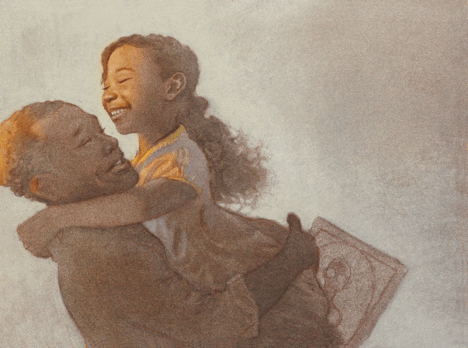
The image above was to be cut from the book when my sketch was unclear and the editors thought the ballet master’s hands belonged to the little girl. I poured a little more into the art after that!
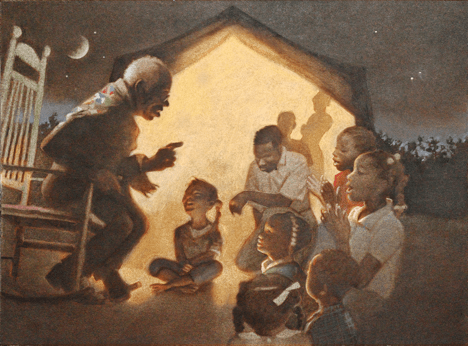
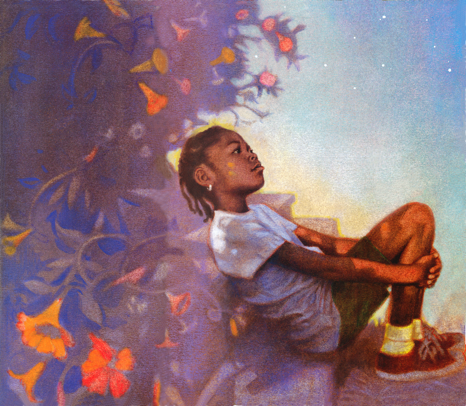
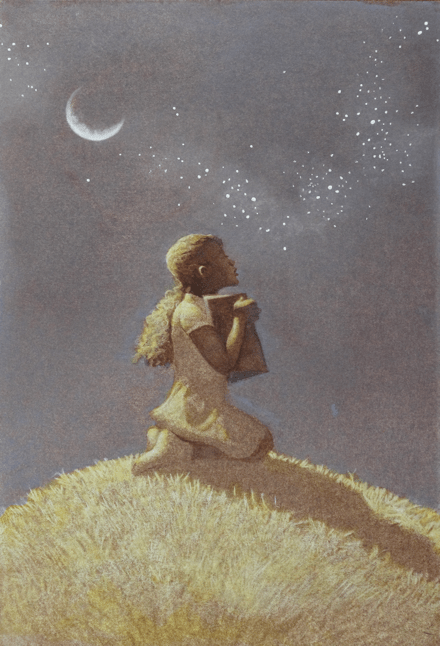
The one thing that inspires me most, more than midnight walks, more than a museum, even more than rejection is……
A text that sings, that embraces my imagination and injects it with energy. Good story inspires great art!

Floyd Cooper has illustrated more than 100 children’s books and has been honored with the Coretta Scott King award for his work. He recently released MAX AND THE TAG-ALONG MOON, one of only five books he both wrote and illustrated.

On being a children’s author Floyd says, “Giving kids a positive alternative to counteract the negative impact of what is conveyed in today’s media is a huge opportunity.” Floyd lives in Pennsylvania with his wife (and agent) Velma and two sons.
You can view the full scope of his work at FloydCooper.com.
 by
by In a million years I’d never have thought my first children’s book would be a picture book. While I was working mostly on YA historical novels during my MFA program at the Vermont College of Fine Arts, a friend teased and said picture books would be my future.
I write picture book biographies. Well, no, that’s not quite right. I write picture book historical fiction, because I invent dialogue based on real-life stories. And I did the unthinkable in my picture book, Goldie Takes a Stand! Golda Meir’s First Crusade—I wrote it in first person. The version I submitted to publisher Kar-Ben, the Jewish imprint of Lerner Publishing, was 1400 words (don’t worry, it got slashed).
There was no other way to write about Golda than in first person, because her voice was so strong. I had many other picture book drafts, but I knew I had something special with Golda. It all began when I was attending two weeks of retreat at the Highlights Foundation. Between the two weeks I had to attend an event at the Touro Synagogue in Rhode Island. I perused the shelves at the Highlights farmhouse and saw Golda’s autobiography, My Life (which I learned recently she didn’t write). Over the weekend, I read it and found a snippet about how as a child, Golda staged a fundraising event in Milwaukee, where she and her family had settled as immigrants from Russia, to buy schoolbooks for classmates. She mentioned a newspaper article had appeared about the event. Back home, I contacted the Jewish Historical Society of Milwaukee and the archivist knew exactly which article I was talking about. He sent it to me.
I wrote the draft on a Saturday night. Initially, I wrote it in third person, but that didn’t seem quite right. When I changed to first, the voice and story fell into place. I interpreted a true event but had to fill in the gaps to present the problem Golda and her friends faced. I invented dialogue. But the event itself was true and documented.
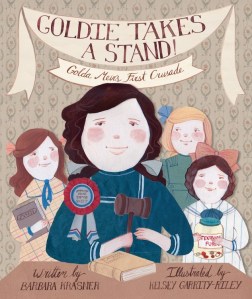
I drafted the story in October 2011. I took it to workshops. I submitted the manuscript to Kar-Ben the following April and received an offer in June 2012. The book was published in August 2014.
I had been researching the story of the MS St. Louis since 2010, when I interviewed eight survivors of the ill-fated voyage. In 1939, this ship of nearly 1,000 German-Jewish refugees left Germany for safe haven from Nazism in Cuba. But when it arrived there, the passengers weren’t allowed to disembark. Denied refuge, the ship roamed the Atlantic until a philanthropic organization negotiated landing in Antwerp and distribution of the passengers to England, France, the Netherlands, and Belgium.
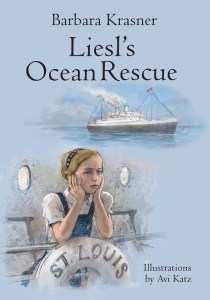
One of the women I interviewed, Liesl Joseph Loeb, was the daughter of the head of the passenger committee. I wrote a middle-grade narrative, but the story was difficult to tell, because so much happened that children on board wouldn’t have known about. Then it dawned on me to focus on Liesl in a picture book. That became Liesl’s Ocean Rescue, coming out very soon from Gihon River Press, a specialized Holocaust publisher. Again, I took dramatic license with Liesl’s story, but it is based on her interview and true events.
What I learned is absolutely true:
- Go with your gut. If something doesn’t feel quite right, change it.
- Make a weakness a strength. Some publishers rejected my manuscript, because it was in first person. I decided to make that my story’s strength.
- Keep trying. I graduated from VCFA in 2006. Eight years later my first children’s book appeared. I still have those YA historical novels under the bed. Maybe they’ll make it out some day, but for right now, my focus is on picture book biographies.
- Get your manuscript vetted. Even though my picture books are fictionalized, they are based on true events. I needed to find subject matter experts who could vet the manuscripts.
- Write a biography only if the subject wrote an autobiography. Since these two picture books, I’ve drafted a few biographies, now with my agent. But these stories are true—and are in first person.
Barbara Krasner holds an M.B.A. in Marketing from Rutgers University and an M.F.A. in Writing for Children & Young Adults from the Vermont College of Fine Arts (VCFA). She is currently an adjunct professor in the English department at William Paterson University, teaching introductory and advanced creative writing, fiction writing, and children’s literature. GOLDIE TAKES A STAND: GOLDA MEIR’S FIRST CRUSADE, released in 2014 with Kar-Ben Publishers, is her debut picture book. LIESEL’S OCEAN RESCUE is due from Gihon River Press this December.
You can connect with her at BarbaraKrasner.com and read her blog about Jewish-themed writing, The Whole Megillah. Follow her on Twitter @BarbaraKrasner.
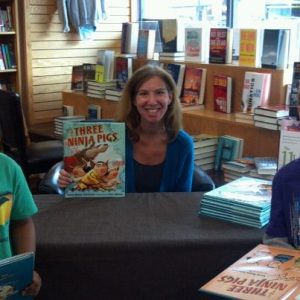
Barbara is giving away a copy of GOLDIE TAKES A STAND!
This prize will be given away at the conclusion of PiBoIdMo. You are eligible for this prize if:
- You have registered for PiBoIdMo.
- You have commented ONCE ONLY on today’s post.
- You have completed the PiBoIdMo challenge. (You will have to sign the PiBoIdMo Pledge at the end of the event.)
Good luck, everyone!
 by
by Are you having trouble getting to 30 ideas? If you are, the reason is most likely because you are censoring yourself. DO NOT LISTEN to that internal voice saying “No, don’t put that one down. It’s too overdone. Or too bland. Or too half-baked!” (Okay, I did not mean for there to be any food analogies here, but now that there are, maybe I should run with it?)
PiBoIdMo is the one time that I focus on quantity over quality. Your ideas do not have to be irresistible. They can be too vague, too corny, too irreverent, or too __________ (substitute your own preferred flavor of criticism here).
It doesn’t matter!
WRITE DOWN EVERYTHING from soup to nuts!
It does not need to be a hard-boiled synopsis. It can be just a title, a trait, a concept. Any tiny morsel is worth recording. If I waited for a full-blown plot to hit me, I’d never get to #2 on my list.
WRITE DOWN EVERYTHING!
Oh, did I say that already? Well, I’m sure some of you are still going to hesitate. “I can’t just write down a character name, can I?” YES, YOU CAN. And you should.
Think of it as collecting ingredients. The more ingredients you have to choose from, the more concoctions you can whip up.
Once you have a substantial list, then you can get cooking!
Look at your list. Look at last year’s list. Which ingredients can be combined?
In 2009, I was obsessed with Goldilocks. Here are two ideas from my list:
- Fractured fairy tale with a surprise twin? Goldilocks has a twin sister, or Little Red? Little Pink? Tawnylocks? Brownilocks?
- Using fairy tales to teach fractions. Goldilocks and the three and a half bears? How can you have half a bear? Bear in Mommy’s tummy? Could mama bear deliver right in the middle of the story?
Neither idea went anywhere, but those two concepts nagged at me…twins, fraction, twins, fractions…both seemed like topics I wanted to pursue.
And then during PiBoIdMo 2010, it hit me—the perfect way to combine the two!
TWINDERELLA: A FRACTIONED FAIRY TALE
Cinderella and her twin sister share everything. They each do half the chores—the chopping, the mopping, the baking. They each take half the fairy godmothers goodies. But when they each spend half the night dancing with the prince, and they both fall in love, they have a problem. After all, you can’t split a prince in half. Or can you?
So WRITE DOWN EVERYTHING. And let it all simmer.
And soon you’ll be ready to get cooking!
Corey Rosen Schwartz has cooked up a potpourri of fractured fairy tales and rhyming picture books. She lives with her husband and two children in Warren, NJ and as irony would have it, she is utterly useless in a kitchen!
Twitter: @CoreyPBNinja
Facebook: www.facebook.com/CoreyPBNinja
Website: http://www.coreyrosenschwartz.com
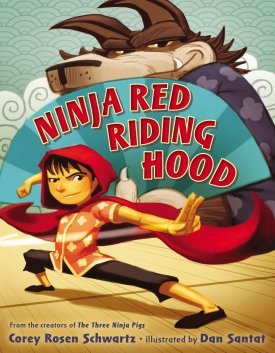
Corey is giving away a signed copy of her latest fractured fairy tale, NINJA RED RIDING HOOD.
This prize will be given away at the conclusion of PiBoIdMo. You are eligible for this prize if:
- You have registered for PiBoIdMo.
- You have commented ONCE ONLY on today’s post.
- You have completed the PiBoIdMo challenge. (You will have to sign the PiBoIdMo Pledge at the end of the event.)
Good luck, everyone!
 by Josh Funk
Someday someone will ask me why I write picture books. I won’t say “because I have stories that must be told” or “because my words are so important, all children simply must read them.” And I definitely won’t say “because I want to be rich and famous.”
I write picture books because I have funny ideas in my head that I think would entertain children.
But most importantly, I can’t draw. I mean, I’m allowed to draw, but I’m terrible at it. This was as good as I ever got as an artist…
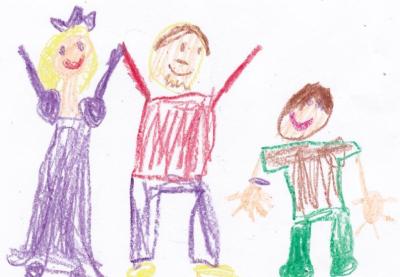
I drew this picture yesterday.
So what’s the easiest way to get these ‘entertaining’ thoughts out of my head and allow them to be visualized by me (and others)?
Write them down …
and hope that many …
many …
years later …
they’ll be published as picture books.
And in general, PiBo-ers, that’s how I come up with my ideas. I think of something I’d like to see illustrated. Something new that I haven’t seen before. Something that will make me laugh (and hopefully make children laugh). Something that an illustrator will have fun with.
Often this comes as interesting characters or their names. See: Lady Pancake and Sir French Toast.

It was harder to figure out what they should do. How do I fit these two into a plot with conflict and tension?
*Ding* They’re fighting over syrup (obviously). What started out as a quasi-political debate about who deserved the syrup more (I wrote the first draft around the 2012 presidential elections) needed more action and a bigger setting.
So I turned once again to my rationale for writing picture books: what would I find entertaining to see illustrated?
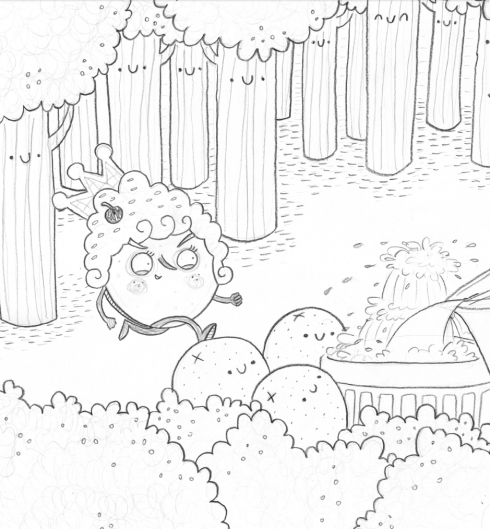
They’ll race for the last drop of syrup throughout an entire refrigerator landscape! 27 drafts and 45 rejections later I had LADY PANCAKE AND SIR FRENCH TOAST (Sterling, Oct 2015). [illustrations are by the fantastically talented Brendan Kearney]
Sometimes the answer comes in the way of an interesting situation. A boy and a dragon become pen pals? Ooh, that would be fun! But again, there’s no plot (meh, who needs a plot when you have dragons and an interesting situation? See: DRAGONS LOVE TACOS). But it still needed more.
What would be entertaining to see illustrated? Here I used the ‘what if’ technique. What if the boy thought he was writing to a boy … and the dragon thought he was writing to a dragon? That might make for some funny pictures due to misunderstandings?
16 drafts and several title changes later I had DEAR DRAGON (Viking, Winter 2016).
So if you want to see a Pancake run through Broccoli Forest and past Orange Juice Fountain …
Or you want to see a piece of French Toast go skiing …

Then just make sure it has an interesting hook, compelling characters, a riveting plot, and is appropriate for ages 0-10.
What do you want to see illustrated?
Josh Funk lives in New England with his wife and many many children. He is the author of the forthcoming picture books (all written in rhyme) LADY PANCAKE AND SIR FRENCH TOAST (Sterling, 2015), DEAR DRAGON (Viking/Penguin, 2016), and PIRASAURS! (Scholastic, 2016). Josh is terrible at writing bios, so please help fill in the blanks. Josh enjoys _______ during ________ and has always loved __________. He has played ________ since age __ and his biggest fear in life is being eaten by a __________. Find out more information at www.papajfunk.com, on Twitter @papajfunk, on Facebook at Josh Funk Books, at Victimless Rhyme, on goodreads, or the end of the ‘F’ section at a library in the future (time machine required).
As Josh does not (yet) have any books published, he is giving away FIVE signed books from his critique family: THE RAINDROP WHO COULDN’T FALL by Kirsti Call, REX WRECKS IT! by Ben Clanton, MONSTER NEEDS A CHRISTMAS TREE by Paul Czajak, RUTH THE SLEUTH AND THE MESSY ROOM by Carol Gordon Ekster, and ESTHER’S HANUKKAH DISASTER by Jane Sutton.

These prizes will be given away at the conclusion of PiBoIdMo. You are eligible for these prizes if:
- You have registered for PiBoIdMo.
- You have commented ONCE ONLY on today’s post.
- You have completed the PiBoIdMo challenge. (You will have to sign the PiBoIdMo Pledge at the end of the event.)
Good luck, everyone!
 by Tammi Sauer
For PiBoIdMo 2012, my blog post focused on a variety of ways a writer can structure a picture book.
This time around, I wanted to share a different approach to framing a story.
*drum roll, please*
THE HOW-TO… STRUCTURE
The How-To…Structure offers readers information on, you guessed it, how to do something.
Keep in mind, however, this structure isn’t just a list of bland, disjointed steps for accomplishing a task. Nope. Nope. Nope. These steps (along with the art) need to tell a real deal story. There should be a beginning, middle, and end. There should be characters, conflict, plot, setting…. There should be opportunities for your readers to feel something.
Some good examples of books that use the How-To… Structure are as follows:
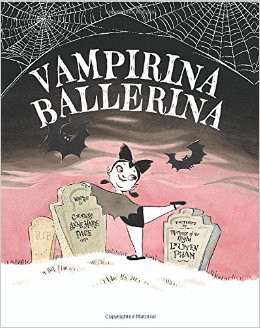
Vampirina Ballerina by Anne Marie Pace, illustrated by LeUyen Pham
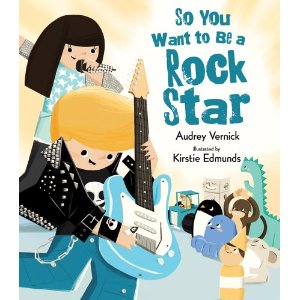
So You Want to Be a Rock Star by Audrey Vernick, illustrated by Kirstie Edmunds
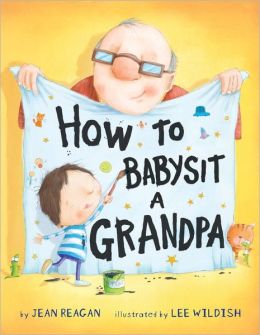
How to Babysit a Grandpa by Jean Reagan , illustrated by Lee Wildish
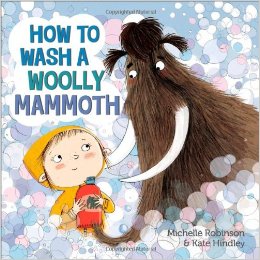
How to Wash a Woolly Mammoth by Michelle Robinison, illustrated by Kate Hindley
Your Challenge: Jot down a few possibilities for some How-To… books of your own. It might help to think in terms of a title. Even easier, just fill in the blanks to the prompts below and see where they take you.
How to__________
Guide to Being a ________
The __________ Handbook
This is what happened when I just filled in those blanks:
How to Catch a Dragon
Guide to Being a Big Brother
The Pirate’s Handbook
Extra Credit: Analyze the picture books I mentioned earlier in this post. How did those authors incorporate the How-To…Structure? Do you see some sort of story arc in these books? Did you notice any special word play? The rule of threes? What did you find particularly satisfying in those books?
Happy brainstorming, everybody!
Tammi Sauer is the author of Nugget & Fang, Princess in Training, and many other picture books. She has another eleven under contract. Her latest manuscript sold at auction. It followed the How to…Structure. Ooh.
You can visit Tammi at tammisauer.com and at picturebookbuilders.com.
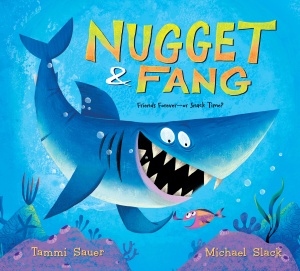
Tammi is giving away a signed copy of Nugget & Fang which won the 2014 Oklahoma Book Award, made the 2014 Texas 2X2 Reading List, and will be one of the featured books at the 2015 Scholastic Book Fair. Nugget & Fang was a PiBoIdMo 2009 Success Story.
Tammi will also give a picture book critique to another lucky duck winner.
These prizes will be given away at the conclusion of PiBoIdMo. You are eligible for these prizes if:
- You have registered for PiBoIdMo.
- You have commented ONCE ONLY on today’s post.
- You have completed the PiBoIdMo challenge. (You will have to sign the PiBoIdMo Pledge at the end of the event.)
Good luck, everyone!
by Molly Idle
It has been said that an infinite well of creativity springs within each and every one of us.
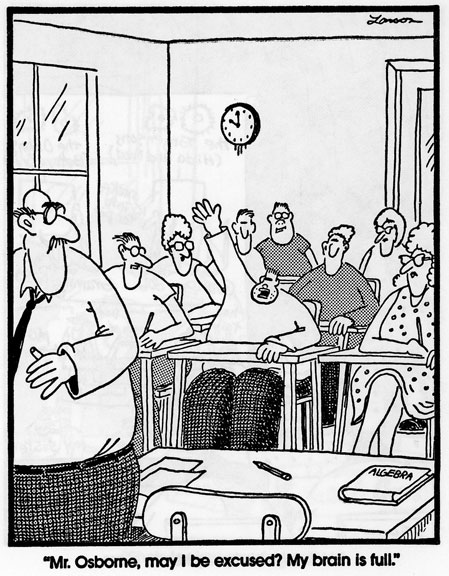
Well, I wasted a lot of time trying to draw inspiration from mine with a bucket that was already full. At least, that’s what I came to realize after years of worrying that my well had run dry.
Before I came to that realization however, this is the conversation I had with myself every time I was working on a book…
Me 1: I like the way this idea is shaping up. It’s all good right?
Me 2: Are you kidding me? Sure, this idea is ok, but what if I can’t think of an idea for the next book? Or the one after that? What if I’ve used up all my good ideas?!
Me 1: Um…I don’t have an answer to that.
Me 2: See! I’m out of answers just like I’m out of ideas!
Me 1: Oh. No.
*head/desk in a schlump of despair*
Thus I spent my time working on every project thinking that it would be my last.
Then, one day, as I boxed up a finished book, sent it off, and thought… “Well, that’s it then, I’m finished, this is the end…”
*Plink!*
A new idea sprang up in my mind.
And this mental conversation ensued…
Me 1: I have a great new idea!
Me 2: Wow, that’s lucky! I thought we were all out of new ideas…
Oprah: Luck is the moment when preparation meets opportunity.
Me1: Oprah, how did you get in here?
Oprah: (smiles mysteriously, then vanishes in a mist of chai tea)
Me 2: Okaaayyy…
When I finished up the next project it happened again (sans Oprah and chai). Another new idea came to me within days!
Mental conversation…
Me 1: Coincidence?
Me 2 : I think not.
Me 1: Alrirght then, prove it…
Me 2: Alright then, I will!
So, I started consciously keeping track of how and when I came up with new ideas, and what I discovered was this… It wasn’t luck. That is to say, it wasn’t random.
I discovered that my brain seemed to have a finite number of ideas it could hold as I worked on them. When my brain was full, I could try to pull up ideas from the wellspring of creativity all I wanted, and not be able to draw up so much a drop of inspiration. But, through preparing one idea, drawing it out—I simultaneously created the space, or opportunity, to draw up another.
So, Oprah, with her mysterious mental chai mist, was right! “Luck is the moment when preparation meets opportunity.”
Ergo, Luck = Work
Now, that’s not to say that every idea I draw up gets poured out into a picture book.
Sheesh, no!
Some ideas are forgotten (just like that two day old cuppa chai tea left sitting on my desk).
Some ideas get poured straight down the drain.
Some ideas may simmer for a bit, then get poured down the drain, only to be replaced by another idea that may not work out either, and another… and another!
But, as long as I keep working, sometimes, sometimes, I get lucky. Sometimes, I draw up an idea from the well, and it pours it out, through pencil and paper, into a picture book.

Molly Idle has been drawing ever since she could wield a pencil. But while she started scribbling before she could walk, her professional career as an artist began slightly later…
It was upon her graduation from Arizona State University, with a BFA in Drawing, that Molly accepted an offer to work for DreamWorks Feature Animation Studios. After five years, a number of film credits, and an incredibly good time, she left the studio and leapt with gusto into the world of children’s book illustration!
Molly now lives in Arizona with her brilliant husband, two wonderfully mischievous sons, and two snugly cats. When not making mischief with her boys or watching old Technicolor musicals, she can be found at her desk scribbling away, with a pencil in one hand and a cup of espresso in the other- creating a plethora of profoundly whimsical picture books!
www.idleillustration.com
Twitter: @mollyidle
Facebook: Idle Illustration
Instagram: @mollyidle
Molly is giving away a signed FLORA AND THE FLAMINGO poster!
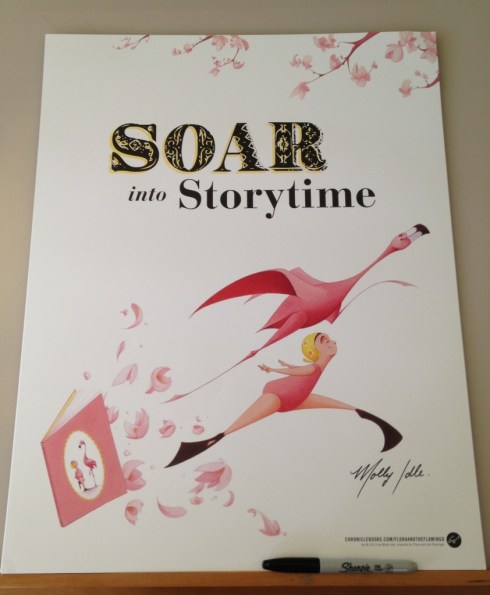
This prize will be given away at the conclusion of PiBoIdMo. You are eligible for this prize if:
- You have registered for PiBoIdMo.
- You have commented ONCE ONLY on today’s post.
- You have completed the PiBoIdMo challenge. (You will have to sign the PiBoIdMo Pledge at the end of the event.)
Good luck, everyone!

Click for full size.

Photo by Chris Randall (http://www.ilovenewhaven.org)
Deborah Freedman was an architect once-upon-a-time, but now she loves to build worlds in children’s picture books. She is the author and illustrator of Blue Chicken, The Story of Fish & Snail, Scribble, and By Mouse & Frog—to be published by Viking in 2015. Deborah lives in a colorful house in Connecticut, where she is busy at work on her next books.
Facebook: Deborah Freedman, Author & Illustrator
Twitter: @DeborahFreedman
Deborah is giving away a signed copy of THE STORY OF FISH & SNAIL.
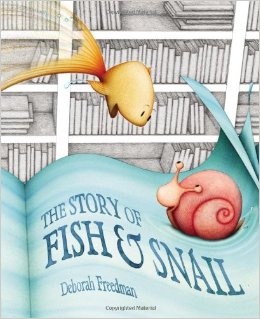
This prize will be given away at the conclusion of PiBoIdMo. You are eligible for this prize if:
- You have registered for PiBoIdMo.
- You have commented ONCE ONLY on today’s post.
- You have completed the PiBoIdMo challenge. (You will have to sign the PiBoIdMo Pledge at the end of the event.)
Good luck, everyone!
 by
by When I was an editor at Golden Books, I was lucky enough to work with many wonderful authors, but one who stood out for his good humor, his generosity, and his absolute joy in writing for kids was George Stanley. Around Golden, we had a nickname for him—Captain Hook, because, more than any other author we’d worked with, George had a knack for coming up with books with hooks, books that kids really and truly wanted to read based on the idea alone.
The first book I edited of George’s was Ghost Horse. It had a horse . . . who was a ghost! What’s cooler than that? The second book was Snake Camp, about a snake-phobic kid who accidentally gets sent to a camp for snake lovers. Both were brilliant, attention-grabbing ideas that kids were sure to like. (And they did!)
My boss and I began to joke that George had a sure-fire way of coming up with great ideas—a George Stanley Idea Generator. Back then, we pictured a hat, full of slips of paper, each printed with an idea that kids loved to read about. He’d pull out two pieces of paper, and no matter how crazy, mash those ideas together in one book.

George sent me this photo of a school visit he did. The kids made a giant paper chain snake in honor of SNAKE CAMP.
By that point, I had written a few books with hooks, usually nonfiction titles on cool topics, like Pink Snow and Other Weird Weather or Bugs, Bugs, Bugs, and, yes, my own snake book, called Slinky, Scaly Snakes, but the idea of mashing together hooks opened a new window on fiction for me. Everywhere I looked, I saw “George Stanley”-type ideas, not only in kids’ books, either. There were kids’ TV shows like Dinosaur Train, adult bestsellers like Pride and Prejudice with Zombies, and movies like Snakes on a Plane. Last year a true George Stanley-type idea became a cult hit—Sharknado, anyone?
So here it is, your shortcut to inspiration! Just pick any of these two words (or throw in some hook words of your own), and you’ve got a book idea. How do you know what a hook is? Animals are always popular. Holidays are great hooks because stores, teachers, and librarians feature these books seasonally. Don’t forget disasters and the supernatural. Dinosaurs are The Once and Future Hook, with dogs a close second, while something like ninjas probably wasn’t popular fifteen years ago, but is surging big time now.

Try it for yourself! Spider Baseball? I’d buy that. Dream Witch? Camp Halloween? Puppy Palace? Wait . . . I think that one has been done.
Of course, the idea is the easy part, the 10% of the iceberg that shows above the water. Now you have to find the inspiration in that idea and figure out what the story is, which is the other 90% of the iceberg. What does Pirate Panda want? What are the obstacles facing her? How will she overcome them? And that, PiBoIdMo’ers, is what being a writer is all about.
Last fall, I had a genuine George Stanley-type picture book published, called 100 Snowmen. ((jpeg cover of 100 Snowmen)) The number 100 ties into a holiday, the 100th Day of School, and snowmen are both seasonal and, especially after Frozen hit, very popular. I know that somewhere George Stanley was smiling down at me. “Yes, grasshopper,” he’d say. “That’s how it’s done.”

Jen Arena writes, edits, and mashes together ideas for everything from easy-to-reads to picture books to early chapter books, including her latest, a bilingual board book with Little Brown, Besos for Baby. Her picture books Lady Liberty’s Holiday and Marta Big and Small will be published in 2016 by Knopf and Roaring Brook respectively. Visit her on twitter at @hallojen or at her website: JenArenaBooks.com.

What? The George Stanley Idea Generator wasn’t enough of a prize? Okay . . .
Jen is giving away a thirty-minute brainstorming session/Q&A/editorial consult phone call. She has twenty years of experience as an editor with Putnam, Golden Books, and Random House and has been writing for kids just as long. Ask away!
This prize will be given away at the conclusion of PiBoIdMo. You are eligible for this prize if:
- You have registered for PiBoIdMo. TODAY IS THE LAST DAY TO DO SO!
- You have commented ONCE ONLY on today’s post.
- You have completed the PiBoIdMo challenge. (You will have to sign the PiBoIdMo Pledge at the end of the event.)
Good luck, everyone!
 y
y It’s still early in Picture Book Idea Month, and hopefully you’re all still overflowing with ideas that you can put down on paper. It does get tougher as the month continues, but bravo to you for taking up the challenge!
You’re going to come up with a lot of different kinds of ideas. You’ll think of titles, puns, and images that you see in your mind’s eye. You’ll imagine complicated scenarios and Holy Grails. You’ll draft punchlines and scenes that tug at the heart. All of these varied things can eventually grow into a beautiful, successful picture book.
But no matter what you start with, character is almost always the key to crafting a book that will be published.
POPPYCOCK! you say. CODSWALLOP! BUNK! After all, there are so many other things we hear about that make editors want to publish a manuscript. Compelling plots. Flawless writing. Powerful marketing hooks. And those are all vital things! Your plot has to be gripping and unique. The writing must be impeccable and beautiful to read. There has to be hooks to help the book sell.
But all of those things pale in comparison to the character.
It is the character that the reader will fall in love with. It is the character who he will root for. It is the character he will draw on his fan mail to you. It is the character who will live on in his imagination for week, months, years to come.
It is the character you have to get right.
Let’s talk about some ways to do that.
Character is Like the Salt

Every once in a while when I’m cooking dinner, I totally forget to add salt. The meal I end up with is nothing short of disgusting and inedible. Salvageable, yes—as long as I add some salt to it. But without that one ingredient, dinner is nothing like what it is supposed to be.
Character is the salt in your picture book idea.
Some meals use a lot of salt. Others, just a sprinkling. But salt is essential. The same holds true for character.
Even in a high concept idea (which is becoming increasingly popular in picture books), you still need that sprinkling of salt, errrr, character. Here’s an example: I have a book coming out soon called RUTABAGA BOO (which will be illustrated by the uber-talented Bonnie Adamson). The entire book is about the unbreakable bond between a son and his mother. Whenever the son needs his mother, he says, “Rutabaga!” To show that she is there, she answers, “Boo!”
On the surface, it may not seem like there is a lot of character in this idea. (I mean, how much character development can you show in 22 words?) But while the heart of this story is the mother/son bond, what draws the reader in is what you learn about the characters—and how much those details endear the characters to the reader. Every spread tells you something more about the characters—what they like to do, what scares them, what makes them feel better. The characters in this case may just be a sprinkling of salt—but without them, the story doesn’t mean nearly as much to the reader.
Think Wedding Cake, Not Cupcake
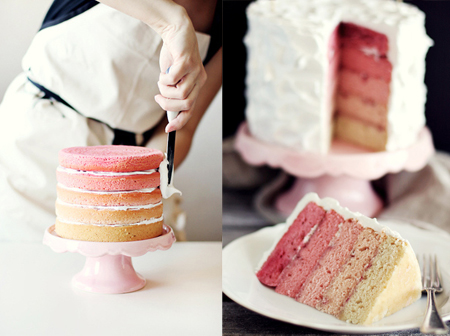
Let’s belabor the cooking theme some more.
As you are thinking of you PiBoIdMo ideas (and you are focusing on character because you, like me, believe character is the key), make sure you incorporate layers from the beginning. Just like a wedding cake is more impressive because of its tiered layers, you want to create a character that has, well, tiers and layers. Don’t let your idea stand at “Cindy wants a new puppy.” Push it to the limit (even at the idea stage):
- Can you enhance the theme? “Cindy wants a puppy so she can join the kids who walk their dogs afterschool and make some new friends” or “Cindy wants a puppy so she isn’t so lonely”
- Can you ratchet up the conflict? “Cindy wants a puppy but her father hates dogs” or “Cindy wants a puppy – but she only wants responsibility for the top half (the bottom half – and anything that comes out of the bottom – should be her brother’s responsibility!)”
- Can you make your character a study in contradictions? “Cindy wants a new puppy—and yet, she is allergic to dog hair!” or “Cindy wants a puppy but she already has a kitten who is deathly afraid of dogs”
Every time you add a layer to the idea, you make your story inherently more interesting. And no matter where you add the layer, try to leverage into making the character more complex.
To go back to the RUTABAGA BOO example, layers were very important to make that story meaty enough to merit a hardcover picture book. It wasn’t enough to say that the son wanted to be with his mother in a whole bunch of different scenarios. When I wrote the story, I thought about all the different reasons that children want their parents. Would he look for her when he was hungry? When he was scared? How would those look different? How about when the boy was excited – how would he look for his mother then? When he was lonely? When he was tired? What kinds of scenes would show all these diverse interactions that create a relationship?
I started with the cupcake model of “sons like having their mothers nearby” and added tiers to make the story mouthwatering. In 24 words (and Bonnie’s beautiful illustrations, the reader is left with a full depiction of the mother / son bond – and meets characters that they can identify with.
Envision Your Character
After I’ve lectured you on the importance of character, I’m sure you’re all committed to brainstorming great characters every day of PiBoIdMo 2014. So now I’d like to give you a tool to help you with that.
When I teach kids at author visits about developing characters, I give them a graphic organizer to help them get their thoughts down on paper. As it turns out, that organizer works really well for picture book authors, too. (I know. I use it!) So here you go, PiBo-ers! Your own Character Graphic Organizer to help you develop your ideas…
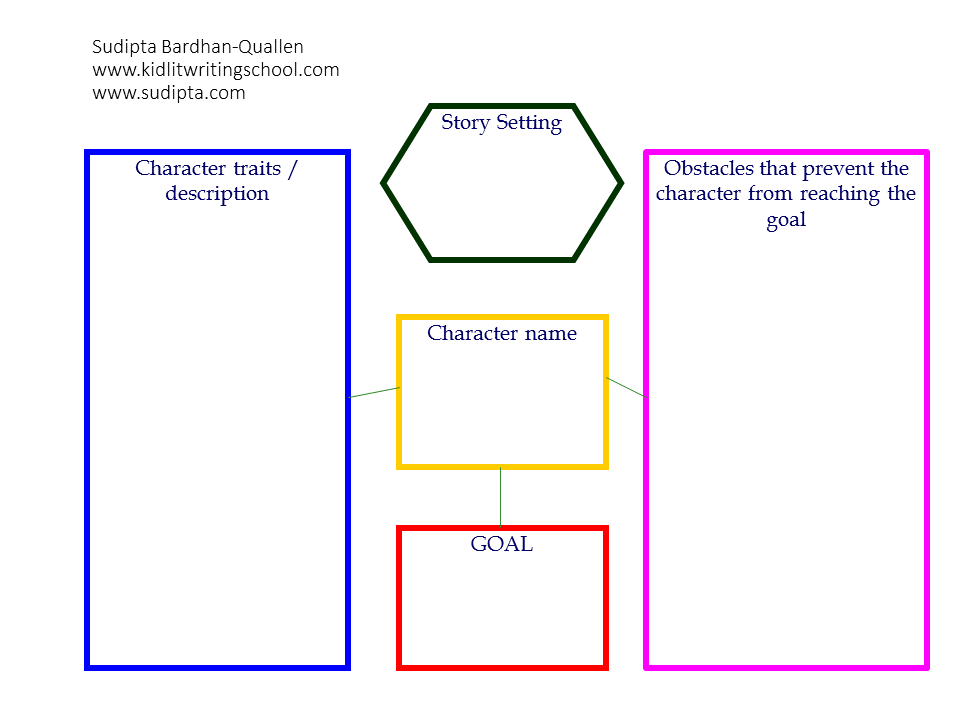
Click for full-sized, printable version.
Sudipta is an award-winning author of over 40 books and the co-founder of both Kidlit Writing School and Kidlit Summer School. Her books include DUCK DUCK MOOSE, TYRANNOSAURUS WRECKS, ORANGUTANGLED, and over thirty more books that have been acclaimed by the Junior Library Guild, the California Reader’s Collection, the Bank Street Books Reading Committe, the Amelia Bloomer list, and many more. Find out more about her by visiting SUDIPTA.COM or her blogs NERDYCHICKSRULE.COM and NERDYCHICKSWRITE.COM.
Facebook: https://www.facebook.com/SudiptaBardhanQuallen
Twitter: @SudiptaBQ


One lucky commenter will receive a free picture book course at Kidlit Writing School! Our next picture book course will be on character development in picture books. The winner can opt to take that course or any other picture book course offered in 2015.
This prize will be given away at the conclusion of PiBoIdMo. You are eligible for this prize if:
- You have registered for PiBoIdMo.
- You have commented ONCE ONLY on today’s post.
- You have completed the PiBoIdMo challenge. (You will have to sign the PiBoIdMo Pledge at the end of the event.)
Good luck, and happy brainstorming!
As a bonus, ALL PiBoIdMo participants who register for a class during PiBoIdMo can get a discount on picture book courses at Kidlit Writing School by going to the secret PiBoIdMo page: http://www.kidlitwritingschool.com/piboidmo-special-registration.html. Find the coupon code to get your discount—just make sure you register before November 30!
 by
by “What process do you follow to write your stories?” I’ve heard that question more frequently as I’ve sold more picture books, and I never know how to answer.
The people asking usually look as if they’re waiting for a golden ticket to inspiration. Like maybe I’ll say that I always walk three times around my living room, stand on one foot, hum the “Star-Spangled Banner” and then run to the computer to start writing before the muse I’ve conjured flies away. Then, they can do the same thing and wait for their own inspiration to strike.
When I tell the truth—that I don’t have a specific writing process—they seem disappointed. But, trust me. I’m doing them a favor. If they knew how things really go down, they might give up writing altogether. I’m a little haphazard.
But, just for you, in honor of PiBoWriMo, I am pulling back the curtain and sharing my process, such as it is. Here’s how I wrote WIDE-AWAKE BEAR, which is coming from HarperCollins in 2017:
Step One:
Have a cranky child.
Three years ago, my youngest daughter was happily napping on the couch. When I woke her to take her to volleyball practice, she had a world-class meltdown. There was wailing, tears and shouting. I tossed her into the car and took her anyway. Afterward, when she was calm, I said, “What was THAT all about?” Her response? “I was a hibernating bear. You woke me up, and I went into a bear frenzy.” (Author’s note: Is that not the best response ever? I love this kid.)
Step Two:
Forget about that adorable incident.
I filed that wonderful remark under the category of “Cool Stuff My Kid Has Said” and went about my business. For several years.
Step Three:
Be bored on a plane.
On a plane ride home from Yellowstone Park, where I was disappointed I hadn’t seen a bear, I thought I should use the flying time to do something productive. So I grabbed a notepad and pen and wrote a story about a bear cub who wakes up in the middle of winter and goes into a bear frenzy.
Step Four:
Listen to your critique group say, “Meh.”
I shared this story with my critique group and got a lukewarm response. They thought the bear cub got too cranky and deserved a timeout. They also didn’t understand why he got so angry. So I adjusted and reworked the story over several weeks. The title changed, and the storyline morphed into a bear cub who woke up midwinter, got scared and couldn’t fall back asleep. I shared it with some more writing friends and adjusted it even more. Then, I stopped, because I didn’t know what else to do.
Step Five:
Let it sit on your desktop for a while.
I wasn’t sure the story was ready. So I worked on other things and didn’t think much about it.
Step Six:
Send it to your agent on a whim.
Then one day, I opened the file and thought, “This isn’t so bad.” (See how I just glow with self-confidence?) I sent it to my agent, hoping she might give me a few ideas so I could work on it some more. But she thought it was ready to go, sent it out and it sold in about three weeks. That’s my quickest sale ever.
So, there you have it. How to write and sell a picture book in six simple steps. You know just what to do now, right?
I told another writer about my lack of a process, and she said, “You do have a process. It’s organic!” And she is absolutely right, because I’ve never once used pesticides in any of my books.
If there’s anything to learn from my post, it’s that everyone’s process is different. As long as you find something that works for you, you’ll be fine. If you’re not seeing the results you want and feel like your process may be fault, try a few different things.
- Be haphazard—I mean organic—like me.
- Be super-organized like another writer I know who sets her timer for 45-minute chunks and logs her writing time on a chart posted on her office door.
- Try writing mornings or evenings to see if something works better. Try different locations, too.
- Try standing on one foot in your living room and humming the national anthem. (It could work.)
Chances are something will seem more appealing to you and you’ll be well on your way to finding your own inspiration.
To learn more about me, visit PatZietlowMiller.com or follow me on Twitter at @PatZMiller.
If you leave a comment on this post you could be one of two people to win one of two prizes—a signed copy of SOPHIE’S SQUASH (Schwartz & Wade, 2013) to be sent immediately or a signed copy of WHEREVER YOU GO to be sent once it’s released from Little, Brown on May 5, 2015. Each of these books followed a totally different process than WIDE-AWAKE BEAR. I meant it when I said my process was haphazard.


This prize will be given away at the conclusion of PiBoIdMo. You are eligible for this prize if:
- You have registered for PiBoIdMo.
- You have commented ONCE ONLY on today’s post.
- You have completed the PiBoIdMo challenge. (You will have to sign the PiBoIdMo Pledge at the end of the event.)
Good luck, everyone!





 Writing for Kids (While Raising Them)