You are currently browsing the category archive for the ‘Illustrator Interview’ category.
This is the second art gallery by illustrators who participated in November’s 30-picture-book-ideas-in-30-days PiBoIdMo challenge. You can see ideas taking shape–in the form of characters. (If you didn’t already know, editors are keen on character-driven picture books these days.) And just think, once these stories are published, you can say “I knew them when…”
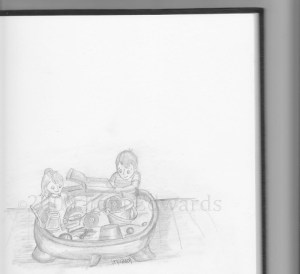
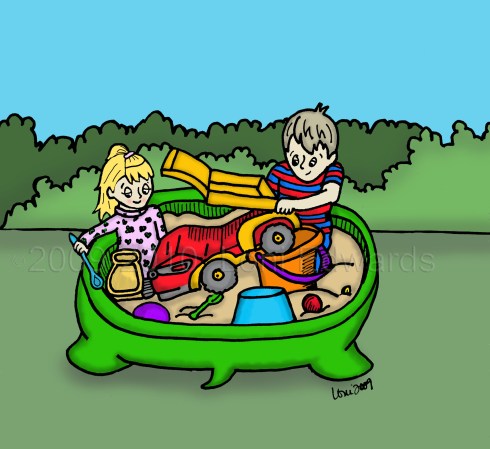
Loni Edwards
“This is a sketch from my story about going to Nana’s house. I’m entitling it ‘Two Kids in a Sandbox’ until I evolve the story more. I sketch, then I ink using a light table. I scan the piece into Photoshop where I color with a Wacom Tablet.”
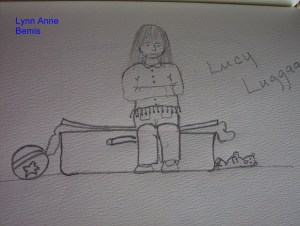
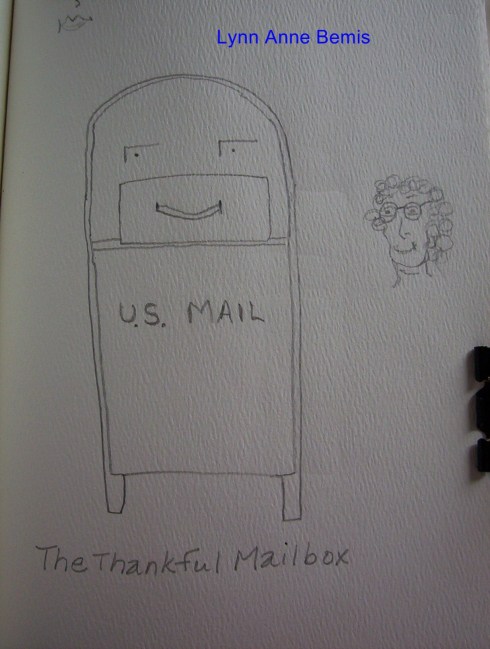
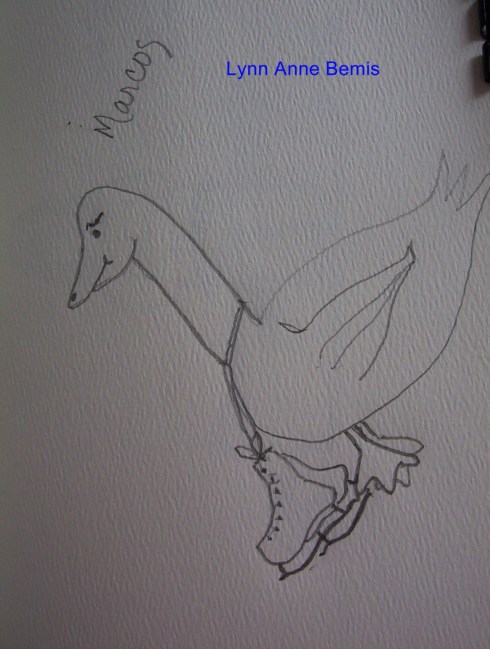
Lynn Anne Bemis
“I have not taken lessons as an illustrator. I am a ‘wannabe’ and this is the first year I started adding drawings to my story ideas. So as simple as they are, I am showing them to you. I am, you could say, ‘A work in progress.'”
Debbie Ridpath Ohi
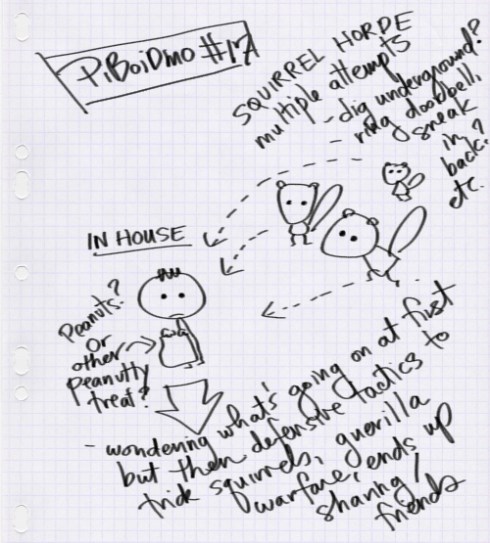
“Regarding the first sketch, this is how I brainstorm sometimes and I figured I’d try it for PiBoIdMo. As you can tell, um, my sketches are VERY rough.
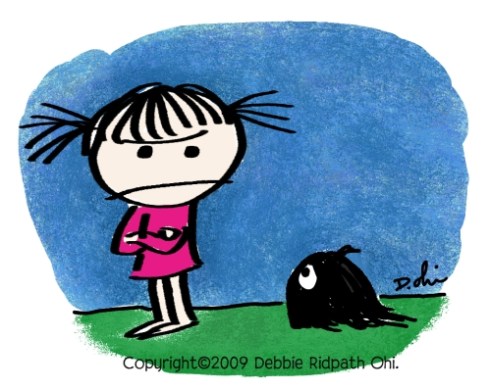
“I’ve always been fascinated by the juxtaposition of cute and scary. The monster guy in the second drawing was inspired by Little Nightmares, which I’d eventually like to include in a picture book. The girl is a character I came up with for my Snarkface cards and she demanded to be included in the drawing as well.
“The third sketch looks drawn on paper, but I actually did it in Corel Painter. I find that experimenting with different virtual media is fun, plus I enjoy trying out different styles. I did this sketch to accompany a text picture book idea. One of the reasons I enjoyed PiBoIdMo so much was because it not only inspired me as a writer but also as an illustrator.”

One more gallery to come, kidlit fans! Stop back soon for more insight into the illustrative process.
Drawings and sketches and art, oh my! Several children’s illustrators participated in November’s PiBoIdMo challenge by moleskining their way through the month. Below you can see what makes an artist’s brush tick…err, I mean flick.
And…this is just Gallery #1 in a series of 3. More illustrators and galleries to come!
Courtney Pippin-Mathur
“I’ve had these ideas bouncing around in my head for a while now, thanks to PiBoldMo, they are now on paper where they hope to grow into picture book dummies one day.”

The Bodyguard
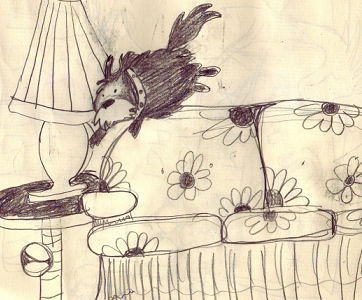
Fritz
Erin Nowak
“Attached is a sketch of the two main characters I got from this little sketch session: Warm & Toasty. Warm is a sweet cup of hot cocoa, and Toasty is her buttery wheat bread buddy. The VERY rough idea is that they’re used to being served up together on cold winter days, but the problem they’re having is that neither wants the other to shine too brightly. A friendship dealing with a little jealousy I guess. I also included my entire sketchbook page from that day as well, complete with scribbles and misspellings, just to give insight into the different ways illustrators work.”


Bonnie Adamson
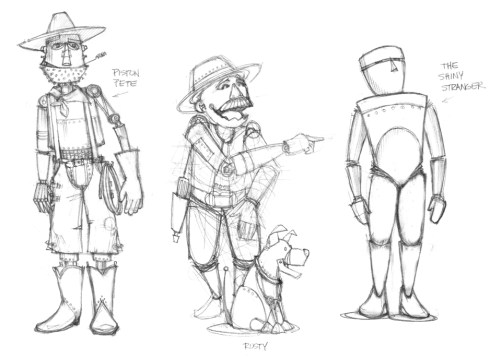
“The working title is “Robot Rodeo,” made up this summer while illustrating the bookshelf of the main character in Heather Burnell’s picture book, Bedtime Monster. It popped back into my head when I was trying to come up with an idea for day three of the PiBoIdMo challenge. The title was about all I had until I started sketching, and then the robot steer with his knobs and levers began to take on a sort of gentle steampunkish look, which gave me a bit more of a hook for the story. I’ve got a very rough first draft down, featuring a showdown between one of the battered old cowboy robots, Piston Pete, and the ‘shiny stranger,’ who’s, um, not from around here.”

More galleries to come, kidlit fans! Stay tuned…
BUGS MAKE IT BIG IN GRAPHIC NOVELS…HERE’S HOW
by Aaaron Reynolds & Neil Numberman
(Interior. Aaron Reynolds, a writer of children’s books and graphic novels, is sitting at his writing desk. He’s typing, but suddenly stops when a shadow falls over his screen. It’s a kid, about ten or eleven.)
Aaron: (looking up) Hey.
Kid: Hey. Whatcha doin’?
Aaron: Um…writing. Who are you? What are you doing in my writing room?
Kid: I’m just some random kid.
Aaron: Ah. A random kid in my writing room. Okay.
Kid: Yeah. Act like I’m not here. (pause…Aaron starts to get back to work, but is interrupted) Aren’t you an author?
Aaron: (turning back around) Ignore you, huh? That’s gonna be tricky. Yeah. I write kid’s books and graphic novels.
Kid: Graphic novels? Like comic books?
Aaron: Kinda.
Kid: Whatcha writing now?
Aaron: An article about how a graphic novel gets made, but I wanted to write it LIKE a graphic novel, so that’s what I’m doing.
Kid: But…there’s no pictures. A graphic novel has lots of pictures.
Aaron: Not at first. Not mine anyway.
Kid: What?
Aaron: Seriously. I don’t draw.
Kid: I must have the wrong house then. I thought the dude that lives here makes graphic novels.
Aaron: I do. But I don’t draw them….I write them.
(Kid pauses while he thinks about this, then…)
Kid: That’s messed up.
Aaron: No, it’s not.
Kid: You can’t make a graphic novel without being able to draw.
Aaron: Well, I do. Like my new graphic novel…it’s called Joey Fly, Private Eye…
Kid: Way to work that in there. Nice plug. Smooth.
Aaron: Yeah, thanks. Well, Joey Fly starts out like this. A script, just like this one.
Kid: Just the stuff people say?
Aaron: Mostly. I also write in what I see happening in each scene.
(Kid flops into a big cushy chair and puts his feet on Aaron’s writing desk, makes himself at home. He looks at Aaron like he’s lost his mind.)
Aaron: See? Like that. It’s called “stage directions.”
Kid: Oh cool! Like actions and stuff!
Aaron: Yeah, exactly.
Kid: Do it again.
(Kid gets up, kind of excited now. He’s putting it all together in his head, but then he notices a fresh sandwich on Aaron’s desk. Goes over, lifts the bread…he’s kinda hungry…but decides he doesn’t like tuna. Flops back down in the chair.)
Kid: Hey, that’s awesome how you made me do all that stuff! And I do hate tuna.
Aaron: It’s a script. In the graphic novel, I write the story. I come up with the characters. In Joey Fly, Private Eye, I create what happens, what characters are in it, all that stuff. Then I put it into a story…a script like this.
Kid: But it’s not a graphic novel. No pictures.
Aaron: Not yet. It will be soon. But first, I break it into panels.
Kid: Panels?
Panel
Aaron: Like this. Chunks. How I imagine it will get broken into boxes in the finished graphic novel. This helps me figure out the flow and pacing of the story, helps me cut extra junk that’s not needed, and helps the illustrator figure out how he’s gonna lay out the pictures on the page.
Panel
Kid: Cool. I notice you use lots of words like “gonna” and “whatcha” and stuff. My Language Arts teacher would go nuts on you for that.
Panel
Aaron: Yeah, well… I try to write how people really talk. I think that’s important, especially for a graphic novel. It all depends on the character. Like, Joey Fly says some gonnas, but he also uses lots of detective-y phrases…
Panel
Joey: Life in the bug city. It ain’t easy. Crime sticks to this city like a one-winged fly on a fifty-cent swatter.
Panel
Aaron: Like that. That’s his opening line in the book.
Kid: Okay, that’s pretty funny.
Panel
Aaron: Well, I try.
Panel
Kid: But it’s still not a graphic novel.
Panel
Aaron: Man, for a random kid who shows up in my writing room, you’re seriously pushy.
Panel
Kid: Do you know many eleven-year-olds? We’re all like this.
Aaron: That’s right. Not being one, I forget sometimes.
Panel
Aaron: Well, now that it’s all broken into panels, I give it to my publisher. And once she’s happy with it, she sends it off to the illustrator and he starts drawing.
Panel
Kid: You tell him what to draw?
Aaron: No.
Panel
Kid: You tell him what the characters should look like?
Aaron: No.
Panel
Kid: What do you tell him?
Aaron: Nothing. Most of the time, we never even meet.
Panel
(pause…the kid’s mouth is hanging open.)
Panel
Kid: That is seriously messed up.
Panel
Aaron: That’s how it works. Unless you are the writer and the illustrator (which I’m not…I don’t draw, remember?), that’s how it works.
Panel
Kid: So what happens then?
Aaron: The illustrator looks at it and begins to sketch out what he thinks the characters look like.
Panel
Aaron: Like, for Joey Fly, Private Eye, the illustrator is a guy named Neil Numberman.
Panel
Neil: Hey kid. What’s up? Hey Aaron.
Panel
Aaron: Hey Neil. So, Neil might decide after reading this script that you look like this:
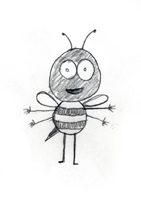
Panel
Kid: That’s me?
Neil: Yep.
Panel
Kid: You made me a bug!
Neil: Well, we’re talking about Joey Fly, Private Eye, so I’m thinking in bugs. It’s my job to use my imagination, to come up with my ideas of what Aaron’s characters and story look like.
Panel
Kid: Cool.
Panel
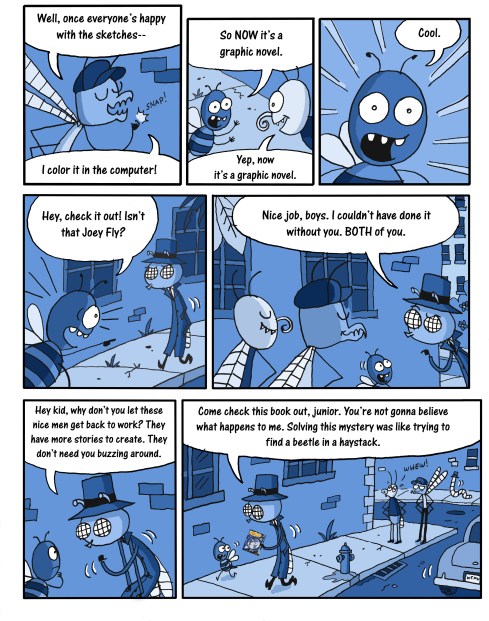
Neil: And as I start drawing and figuring out what it all looks like, Aaron’s story moves away from being a script and I start creating real characters…

Neil: …and pretty soon, I take Aaron’s written words and begin to put them into the mouths of the characters I’ve created.


Aaron Reynolds is a human, not a bug, but he often writes about bugs. He is the author of Chicks and Salsa, Superhero School, Buffalo Wings, and, of course, the Joey Fly, Private Eye graphic novels.
Neil Numberman is a termite currently residing in New York City. Joey Fly, Private Eye is his first graphic novel, but he is also the author/illustrator of the picture book Do NOT Build a Frankenstein.

So there you are, folks. That’s how to make a graphic novel. Thanks, Aaron & Neil. (And Joey & Sammy, too.)
PiBoIdMo’ers, maybe you’d like to approach your next picture book idea in graphic terms. Your story doesn’t have to be a novel to fit the format. Author/illustrator Sarah Dillard penned Perfectly Arugula in this style, with perfect results.
So, how’s it going today?
It’s Day 2 of PiBoIdMo. I hope you already have idea one down with more brewing. So go grab your coffee (and spoon) and sit down for the next piece of juicy inspiration.
(Yeah, today I’m making you sit down. Tomorrow I might make you jump up and run outside again. Ya never know. This month is gonna be crazy. Crazy like a Fox in Socks!)
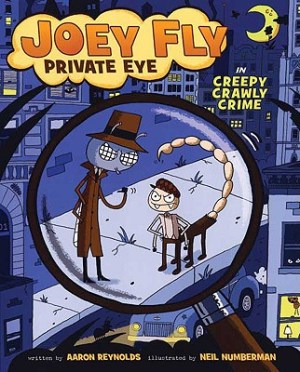 Today author Aaron Reynolds and illustrator Neil Numberman are stopping by to talk about their new book Joey Fly Private Eye (in Creepy Crawly Crime).
And since it’s Day 2, I’ve even got 2 blog posts for you!
First, I asked Aaron and Neil where the idea for Joey Fly originated and how it developed.
Aaron: It started for me with just a title…which was, at the time, Joey Off, Private Fly (get it, Off? Off bug spray?…get it?) Anyway, I loved the idea of a goofy mystery, having grown up with a steady diet of Scooby Doo and movies like Clue (and I’m a huge Agatha Christie fan). Bugs seemed the perfect cast of characters…all freaky and different, each with their own personalities and weird physical traits. From there, the story just took off.
See that, folks? The idea started with just a title.
Neil: When I first got Aaron’s script, I started buying all the film noir movies I could get my hands on, and creepy insect books from dusty old bookstores. That, and a couple books on city architecture in the 40s, and I felt good to go! I had my arsenal of bug characters and buildings to fill the street scenes, and noir-esque shots to compose many of the panels. I knew I wanted some Martin Handford (he of Where’s Waldo fame) type shots in there, too, because his books were always the greatest to sit and stare at for hours, and I want to bring that to Bug City.
OK, let me get this straight. Old movies and dusty books?
Eureka, picture book writers! Run to your local thrift store! (Sorry, I’m making you jump up today anyway. I told you things might get crazy!)
Got your idea yet? Well stay tuned, kidlit lovers. Aaron and Neil will be back later today with a graphic novel about how to create a graphic novel.
 Jonathan Woodward’s an artist, a nomad and a soon-to-be father. The man behind Zero2Illo.com, a blog for aspiring children’s book illustrators, Jon shares his passion for creativity and his good business sense.
Woodward grew up in Nottingham, the home of Robin Hood. (Hmm, no wonder he was drawn to children’s literature.) He was known as the “arty one” in school, the kid who would always be asked to draw the posters for school plays.
After studying Graphic Design in college, Woodward worked as an in-house designer before going freelance in 2006.
To Woodward, freelance means freedom to explore. He and his wife rented out their UK home in 2007 and have been on the road since, living in Panama, Buenos Aires, Grenada, Toronto, South Africa, Thailand, Hong Kong and Dubai. The internet makes running their marketing and design business from anywhere possible.
Jon, how do your travels influence your illustration style?
I wouldn’t say that they have directly influenced it from color or style perspective based on the different cultures that we have seen (although that is an aspect I really love about the travel), but having seen so much beautiful wildlife and nature around the world, it has definitely influenced the subject matter that I illustrate.
Tell us about some of your most recent illustrations.
One for Sorrow, Two for Joy is the piece that led to my current collage style of working. I’d been flicking through magazines and noticed how much the hair on a particular advert looked like tree bark–it was one of those light bulb moments!
The idea for the final illustration came from a song I was listening to at the time that coincidentally tied in with my idea for the tree (and my love of crows!).

The Phoenix is from a recent set of four illustrations based on mythical beasts. Here I was trying to pare down the collage to a bare minimum–to create a bolder, simpler illustration style that might be more suitable for a children’s book.
I enjoy finding textures of a particular surface that are perfect for conveying a totally different texture in the illustration. This happened with the feet of the Phoenix. I found a picture of a model wearing a sparkly bejeweled top and instantly knew that I had to use it for the feet.
This piece was done mostly in traditional collage, with just a bit of detailing, adding the white eye and pumping up the colours a little in Photoshop.
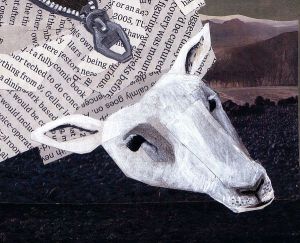

A Wolf In Sheep’s Clothing is where I first started using acrylic paint alongside the collage medium. It’s a technique born out of necessity, as I was struggling to find a magazine clipping to represent the wolf fur, so I started working into the collage with paint. I got a bit carried away in the end and ended up painting the sheep’s head and zipper on top of the collage, too.
This was an interesting piece personally, as I had previously been creating collages digitally using scanned magazine clippings, but I realized that my choice of texture ended up being a lot more interesting if I did the collage traditionally using whatever I could find within the magazines and materials I had. I don’t think I would have chosen the printed text to represent the sheep wool had I been doing the piece digitally.
Who are some of your favorite illustrators?
My illustration inspirations and interests are quite diverse, ranging from artists like Jon Foster, Dave McKean and James Jean all the way to Shaun Tan and J. Otto Seibold.
What is your ultimate goal as a children’s book illustrator?
I initially thought I wanted to go into comics or sci-fi and fantasy illustration for book covers, but the theme and content of my illustrations always seemed to gravitate back to one of my other passions: wildlife and nature. If I was only ever allowed to illustrate creatures great and small for the rest of my illustration career, I’d be a very happy man.
Thanks for sharing your wonderful artwork, Jon!
If you’re interested in learning more about the ilustration and design work of Jonathan Woodward, visit his blog Zero2Illo.com and follow him on Twitter at @jonwoodward.
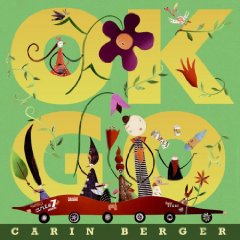 Carin Berger never deliberately set out to become an author/illustrator, but she found her true calling in picture books. She was awarded the Society of Illustrators Founder’s Award in 2006, the NY Times named The Little Yellow Leaf one of the top ten picture books of 2008, and Publishers Weekly called her “one to watch.”
And now’s a great time to watch.
Her latest title OK Go, a playful book about making greener choices, releases in bookstores today.
I had the opportunity to talk with Carin about her journey to publication (somewhat serendipitous) and her plans for the future (deliberately delightful). I shall follow PW’s lead and not only watch her, but predict the Caldecott will soon be calling.
Carin, how did you start on the path to becoming a children’s book illustrator?
I’ve always loved reading, writing, old paper stuff, children’s books, type and making things. I studied graphic design and spent almost 20 years working in the field. I worked my way down the (pay) food chain towards what I really loved: from very high-end annual reports and brochures to eventually designing book jackets for all the major publishers. I did jackets for poetry, fiction and non-fiction. I still do this and love it. I get to read manuscripts and can often use my own illustration or photography.
Anyhow, I had a daughter, and it turned out she was a sleepless wonder. (When she was little. Now she sleeps like a baby!) I spent much of most evenings hanging with her, waiting for her to fall asleep. I wrote the poems for Not So True Stories and Unreasonable Rhymes in those long hours, mostly to amuse myself.
 How did you first get involved in collage?
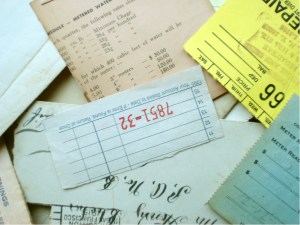
As for collage, that was kind of serendipity. I thought I would do paintings and was experimenting with different painting styles, some which included collage, and then my friend gave me a magic box full of old letters and documents and ephemera that she picked up at a flea market, knowing I had a thing for that kind of stuff. And that was the beginning.
Once I had pulled together some sample illustrations and manuscript, a friend-of-a-friend agreed to rep it; and she, amazingly, ushered it into the world.
And was Not So True Stories and Unreasonable Rhymes your first manuscript?
Yes, it was my first manuscript, though I’d written a bit, for myself, before.
 Wow. That’s a rare accomplishment and speaks volumes about your talent. Where did you go from that first success?
Not So True Stories was a quirky little book that got good reviews but sold…well, like a quirky little book. Chronicle Books graciously published my second book, All Mixed Up, another quirky and very little book. (It can fit in your pocket.)
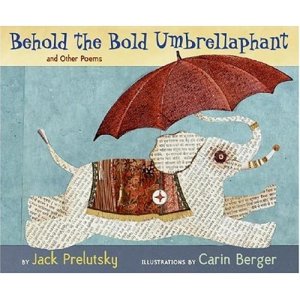
I was then called by Greenwillow Books and asked to illustrate Jack Prelutsky’s book. A real honor. And, because it was the amazing Master Jack’s book, it received lots of nice attention. He was named the first ever Children’s Poet Laureate right when the book came out which meant that there was a shiny golden sticker that went on the front of the book, too. I’ve been working with Greenwillow Books for the last couple of projects.
How has your illustration style evolved from one book to the next?
As for the collage style, it has sort of evolved in a few directions.
 All Mixed Up, a mix and match book where the heads, middles and legs (as well as the alliterative poems) combine in various ways to make new characters, was born out of the idea of collaging the collaged illustration. I had originally conceived it as a game, but Chronicle preferred to do it as a book. The illustrations are similar, yet somewhat simpler than Not so True Stories, so that the mixing worked.
For Behold the Bold Umbrellaphant, I wanted to do a slightly different style than the books that I had authored, and also, because the poems are about a conglomeration of animals and objects (such as Ballpoint Penguins), I thought it would be fun to play that up and make it really obvious.
I collect old dictionaries and army/navy catalogues that have engraved images, and so I used those images and integrated them into the collage. To do this I actually scanned engravings from the book, played with them in Photoshop, printed out pieces and used them to cut and paste with.
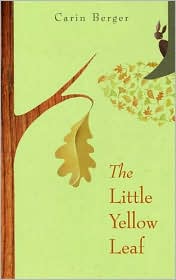 The Little Yellow Leaf felt like a really simple, nostalgic story and I ended up introducing a bit of paint (stenciling) to the collage to add another layer and also, at times, to age the paper.
Ok Go has a zillion funny little characters carousing throughout the book and feels much more like the art in the end papers of Not so True Stories and also in All Mixed Up. It was fun to change things up a bit and to do such playful art.
My next book, due out late next winter, is called Forever Friends and the art is much more similar to the art in The Little Yellow Leaf. I see it as a companion book to The Little Yellow Leaf because the bunny on the front cover and the bird on the back cover of Leaf are the characters in Forever Friends.
Your newest picture book OK Go is a playful book for the wee set, all about making greener choices. How did the concept for this book come together?
As best I can recall, it all sort of came as a whole piece. I liked the idea of introducing taking care of the environment to really young kids. I remember growing up in the 70s when “Give a Hoot, Don’t Pollute” was around and feeling very empowered to help make the world a better place. Here are some early sketches:
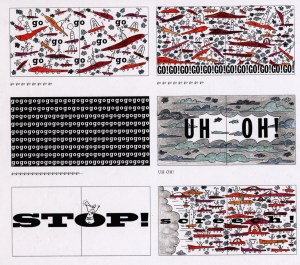
One of the biggest things I needed to figure out was how to emphasize the message in a powerful yet playful way. The gatefold came about because I wanted it to feel like a huge gathering or movement.
How do you choose which paper to cut for certain images? Does the paper speak to you?
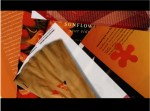 I have files of papers sorted by color—yellows/oranges, reds/pinks, blues/purples—and I also have files for some of my passions: polka dots, plaids, wood grain, buttons…
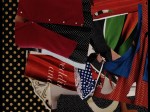 I actually cut a vellum stencil of the shape I need and hold it over the paper to find a good section. Something with good gradations for example, that help the piece, say a car, look more dimensional. Clothing catalogs are great for plaids and buttons. And then I use a variety of old stuff, both really old ephemera like letters and receipts with great calligraphy on them and also bits and pieces that I find around: ticket stubs, laundry tags, etc.
Do the words on the paper hold any significance?
I do think about the paper I use, where it comes from and what it says. Not in a huge way, but in a quiet, just-to-amuse-myself sort of way. And in almost every book I make sure to include, somewhere, my daughter’s name, Thea. In The Little Yellow Leaf it appears on the page with the giant sun, and in OK Go I use her name and the names and initials of lots of friends to decorate the cars.
Speaking of the glorious sun in The Little Yellow Leaf, do you have any idea how many pieces of paper you used? Or how long it took to create that page?

I always knew what I wanted to do with that illustration, but it took a little longer (well, w-a-y longer) than I thought it would. I spent probably close to a week on it. Actually, part of the reason it took so long is that I started from the outside and was working my way towards the center and I got pretty far before I realized that, because the sun is asymmetrical, it wasn’t going to work. I had to add another layer working from the center out. Ugh!
I have absolutely no idea how many pieces there are, and I can’t imagine anyone who would be nuts enough to count (though I’d be curious to know that)!
Circling back to your newest book, what kind of impact do you hope OK Go will have on green thinking among parents and young children?
There are some very simple things that kids can do to be more green and they are listed in the back of the book.
I think if you plant the idea early, children will live more careful, aware lives, and remind their parents to do so as well. Plus, what is more motivating than our kids to get us to take care of this planet and the environment?
But mostly I want kids to have fun with the book, and to be introduced these ideas in a playful, engaging way.
One last thought: all of my art is made with found and recycled materials, so maybe this will prove inspiring and enabling, too.
Indeed it is, Carin! So let’s use that inspiration for a contest!
Kids age 10 and under, create a collage with a green theme–reduce, reuse, recycle or whatever you can dream up! Email your illustration to tarawrites at yahoo (you know the rest, dot com) and include child’s first name and age.
With the help of Random.org, we’ll randomly select three winners.
The grand prize winner gets an autographed copy of OK Go. The second and third winners will receive an All Mixed Up promotional mini-book. And all three illustrations will be featured on Carin Berger’s website and/or blog.
In your email, be sure to grant your permission for sharing the illustration and the child’s first name/age online.
One illustration per child. Enter now through midnight E.S.T., Tuesday, May 12.
Carin, thank you for giving us a glimpse into your beautiful world! I bet everyone is going to GO! GO! GO! get your book today!

Take a peek inside OK Go or
Find OK Go at your local bookstore!
OK Go by Carin Berger
April 2009
Greenwillow Books
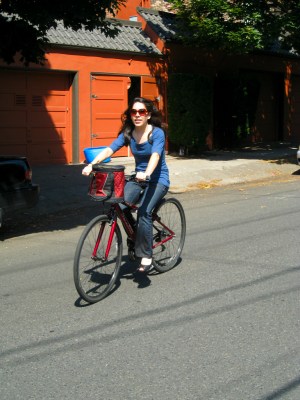 Marsha Riti grew up in Texas where everything is big, including dreams. So I assumed that she had always dreamed of becoming a children’s book illustrator. Truth is, Marsha knew she had a place in the arts, but it took her a while to discover where that place was.
Marsha currently resides in Austin but she was raised in “the sticks.” Living in a sparsely populated town forced Marsha to use her imagination for entertainment. (Good training for a children’s book illustrator, huh?)
When Marsha’s not at her desk, you might find her cleaning, cooking, gardening, creating pottery, doing math homework, and hanging out with her boyfriend and friends.
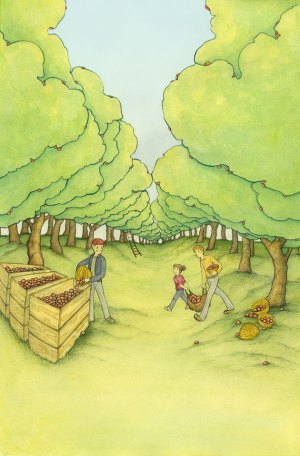 Marsha, how did you evolve from doodler to doer? What got you started in children’s book illustration?
I was always the best at drawing in high school so when I went off to college it was a no-brainer. In college I tried doing a little bit of everything. My only regret would be not taking metal working or lithography. Even though my interests were (and still are) all over the place I have always loved drawing.
After receiving my BFA from the University of Texas at Austin I went to work for a string of locally owned businesses, some of which were related to the arts, others were not. These jobs were great learning experiences: I can now show great professionalism in the face of adversity and I have also found my true love, illustration.
How did you find your true love?
I took a children’s book illustration class at a local art school. My teacher Mark Mitchell did a great job inspiring me to pursue children’s book illustration. He made the idea of being an illustrator accessible. Before I took his class I had no idea about where to start, but he did a really good job outlining ways to get into the field. I also got a better understanding of watercolor form taking Mark’s class.
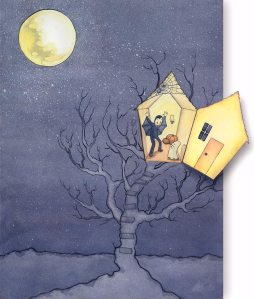

Can you tell us about the inspiration behind your illustrations?
Two of the sample paintings were assignments given to me by my boyfriend, artist and designer Adam Norwood. He just gave me a simple phrase like: “full moon over the treehouse” and “fun in the rain.” Then I thought of an image that would best fit the words.
The other sample painting titled “Treasure Apartments” is for a book dummy titled Treasure Hunt that I have not yet finished. Here is a description of the painting:
 Each apartment has a very specific owner: the top is a fashionable twenty-something who loves the mid-century look. The next apartment houses the main character, the little girl. Her father (behind the paper) has been everywhere and has the trappings to show it. Then there is the pink apartment—she has lived a long life and loves to listen to her vintage record collection. The bottom apartment is a stay-at-home programmer who is also a bike enthusiast.
I really enjoy using my imagination to think up all kinds of interesting scenarios and characters. Then I get to think about the attire and items that would best show their persona. It is like playing with a really elaborate doll house.
 How would you describe your illustration style?
I think my style is illustrative and cartoony with an emphasis on fun.
Some of my favorite children’s book illustrators are: Samuel Ribeyron, Jean-Baptise Monge, Graeme Base, and Lisbeth Zwerger. These illustrators are inspiring to me because their work is visually deep both in the sense of space but also because they have texture and substance.
I am inspired by the composition of Japanese woodblock prints by Katsushika Hokusai.
For figure study and line inspiration I like to look at drawings and etchings by the old masters: Rembrandt, Titian, and Durer.
I have a fondness for minimalist art by Donald Judd, Frank Stella, and Carl Andre. For an artist to be able to break their aesthetics about line, weight, color, composition, and form, down to its base level is very inspiring to me.
I love the color field paintings by Mark Rothko and Barnett Newman. They amaze me–the scale of their paintings envelopes you in color and can really change your mood.
I also find inspiration from installation art by James Turrell. His installations show beauty in nature in a deceptively simple way.
Other influences would be the early cartooning done by Winsor McKay and George Herriman. Their innovation, imagination, and humor are strong influences on me.
I guess I subscribe to the “less is more” school of thought that I am trying to merge with my love of lush illustration.
What are your goals for the future?
Finishing my first book dummy, getting work, and improving as an artist and storyteller.
Marsha, thank you for sharing your amazing art! Good luck to you!
Marsha Riti is a member of Austin SCBWI. To learn more about her work, visit MarshaRiti.com and follow Marsha on Twitter @MarshaRiti. (Besides her daily doodles, I enjoy Marsha’s daily vintage furniture picks from the Austin Craigslist.)





 Writing for Kids (While Raising Them)