You are currently browsing the category archive for the ‘Creative Writing’ category.
 How many of you have a budding young author in your home? Now’s little Johnny’s chance to see his words in print. Random House will be releasing Kids’ Letters to President Obama in 2009.
Editor Bill Adler wants your letters…err, I mean your children’s letters. The funnier, the better. But get them in soon. Deadline is December 31!
 Is there such a thing as too many critiques?
A writing friend and I debated this issue earlier this week. She told me that if one critique partner doesn’t like something, she changes it, even if no one else agrees. Her opinion is that a critique group represents a microcosm of editors. She knows she can’t please everyone, but she tries to incorporate everyone’s suggestions.
My reaction was: yikes! With the wide range of opinions I sometimes receive, it would be impossible to address every critcism. I might wind up with a muddled mess of a manuscript.
My story cannot be all things to all people. We all have our own tastes, which dictates the books we choose to read, the titles we recommend to friends, and the stories we stop reading after Chapter I. If not all people agree on published books, you don’t have to wait for a concensus vote on a manuscript before considering it finished.
I only revise based on solo suggestions if the comment resonates with me. If someone points out something I was already doubting, then that’s the confirmation I need to fix it. A writing peer can highlight something I never thought of, but I immediately see the validity of their argument and make the change.
If a comment doesn’t make sense to me, I ask questions. I have to understand the reasons behind the criticism. And if it still doesn’t feel right, I leave it behind. If six people love something and only one hates it, I’m not going to strive to please that person, especially if I just don’t agree. Ultimately, I’m the author.
Don’t get me wrong, I appreciate all peer opinions and I do my best to incorporate suggestions that I think will work, especially when at least three people wave a caution flag. But just one person? I don’t feel bad about leaving it.
So how do you feel about this issue? Do you try to address every criticism in a revision? And at what point do critiques become counter-productive? How long do you go on seeking opinions, changing and revising? I want your feedback about feedback!
Who doesn’t love first page sessions? Where else can you get two non-stop hours of professional, editorial feedback? They pack quite a picture book pow. (And a middle grade wallop. And a YA smack.)
But how do you get the most out of these sessions? Take care in what you submit and how you submit it. Let the editors focus on your story rather than procedure.
These suggestions are based upon the November 19 NJ-SCBWI first page session with Kendra Levin of Viking and Lauren Hodge of Little, Brown.
1. Format properly. Some submissions didn’t use standard paragraph breaks and indents. While the editors understood that these writers were eager to submit as much story as possible, the manuscripts were confusing to read. Everything ran together. Format your first page just as you would a professional submission. Honestly, you will get more out of less.
2. Use Times New Roman font. A serif font reads well. Courier, the traditional typewriter font, is a monospaced font, meaning each letter is the same width. This wastes space. If you submit with Courier, you’ll have 50% less story on your first page.
3. Research your genre. Some manuscripts felt inappropriate for the genre the author indicated. The topic, word choice and level of sophistication need to match your audience’s age. If you submit with the correct genre, the editors will spend more time assessing your writing than genre counseling.
4. Don’t limit yourself to one gender. One manuscript indicated it was for girls. If you write this on a submission, an editor will immediately think your work doesn’t have broad appeal. Let the editor decide if both boys and girls will love your story.
5. Skip the prologue. Go right to the story. Submit page one of the first chapter, not the backstory.
6. Don’t include an explanation. One picture book began with an intro about why the author had written the story, based upon an experience with her children. And here is where editor Kendra Levin was gracious and tactful. She thought the children in this author’s life were incredibly lucky to have such a playful, creative parent. But stating how children you know enjoy your work doesn’t help sell it. The story does. The intro only left room for five lines of the tale, so the editors could not comment fully. They also emphasized that if the story is written well enough, an explanation becomes unneccesary.
7. Take notes. Don’t just wait for what the editors/agents have to say about your manuscript. Listen to the comments about every page. There’s something to learn from everyone’s manuscript.
There’s more to come from this dynamic first page session. Watch for another post this weekend. And please add your own first page tips!
 This week my India-born critique partner submitted an engaging group of multicultural poems.
“Summer Paintings” featured three young girls decorating their palms in the mehndi tradition, embedding secrets in the scrolled henna designs—initials of boys and dreams and all the hushed longings of adolescence. Toward the end of the poem, the girls washed away the paste to reveal the designs. The next line, Finally freed from our impatience, caused debate among our group.
The girls in the poem had a wonderful time waiting for the henna to dry, for the patterns to stain their skin. They laughed and talked, giggled and blushed. Why were they impatient if they enjoyed the journey?
The answer? This is what childhood is about: impatient eagerness.
While children take pleasure in their activities, they are always rushing forward to the next thing. As a child, every experience is new. There is little time to let events soak in when there is something else to explore. They are motivated by an insatiable curiosity.
Moreover, children wish to repeat favorite experiences over and over again, and not soon enough. I’m reminded of this when my family leaves Chuck E. Cheese. Two seconds into the parking lot and my daughter pops like a balloon: “Mommy, when are we going to Chuck E. Cheese again?”
When writing, I will try to remember the impatient eagerness that my critique partner so eloquently showed.
Does your character display an impatient eagerness? What is next big thing for them?
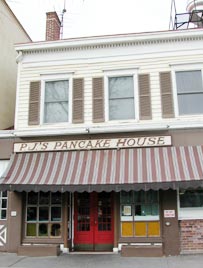
 Despite 40 years in business, changes in ownership, renovations and a fire, the names carved into the tables of PJ’s Pancake House remain a permanent record of all who have dined at the Princeton landmark. PJ’s must be the only restaurant that encourages patrons to slice into the tables and deface the walls with black Sharpies.
This morning my husband, youngest daughter and I sat at the “Table of Awesome.” How do I know the ranking of this booth? It said so right above the salt shaker.
Janine sat at our table the day she got her braces off: September 12, 2008. Katherine and Tate ate there in 2006 and they were in love. (I wonder if they’re still together?) Lena and Jeff traveled all the way from Gibson, GA. Dan drew a picture of the cigarette he wished he was smoking.
If a writer needs inspiration, a few minutes scanning the surfaces of PJ’s Pancake House promises to uncover thousands of stories.
Thankfully, I didn’t have to scold my two year-old when she took a red crayon and scribbled outside the lines. For once we had a peaceful meal out.
If you ever find yourself on Nassau Street in Princeton, definitely stop by. They serve fluffy, generous pancakes all day long, and if there’s a line to get in, don’t worry, it goes quickly. Plus, the griddle faces the window so you can decide upon your pancake order by watching what’s most popular. There’s chocolate chip, banana pecan, blueberry, pigs in blankets and even corn. Yeah, they serve other stuff, too…but when a food is in the restaurant’s name, you must order it! (Do you go to a steakhouse to order chicken?)
You might even dine next to friendly strangers if you’re seated at the long table in front, so say hello. Or, just listen to Groundhog-Day-like tales of Pennsylvania RV travels, like my husband did. One man’s peculiar voice rose above the plate clatter.
And the service goes miles beyond any restaurant I’ve ever seen. Today the hostess took a restless baby from her mother and bounced the little girl in her arms until the infant fell asleep. She held the baby while the mother enjoyed her pancakes. Wow. I hope the mother gave her a good tip!
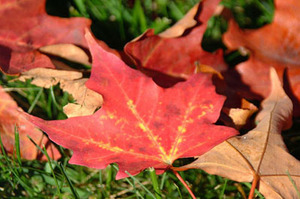 Leaves crackle underfoot and the early-morning air smells like an ice cube. It’s autumn. Time for apple picking and jack-o-lanterns. Time for the annual public library pie contest.
My mother did not bake ordinary pies. Creating a pie was a day’s event, begun with two knives cutting butter and shortening into flour until it resembled sand, a forgotten summer sight resurrected with culinary precision. She floated from cupboard to bowl, bowl to counter with a grace befitting a ballerina. She folded. She whipped. She dolloped. She made the house smell better than Willy Wonka’s factory.
And so, when I was nine years old, I thought my mother finally deserved public acknowledgement of her pie prowess. When I saw a poster announcing our library’s fall pie contest, I entered her name. When I returned home and told her, she was more excited than I was.
Which pie shall it be? The apple-cranberry? No, too predictable. The three-berry pie? No, out of season. Ahh, I know. The chocolate-amaretto chiffon pie.
Children aren’t supposed to have a taste for amaretto. I was the exception. The almond-flavored liquor enhanced the chocolate flavor so well, I thought I might faint. Her creation began with homemade chocolate pudding, then a tall dome of fresh whipped cream, onto which she drizzled an amaretto-chocolate reduction. Slivered almonds and chocolate shavings dotted the top evenly, like she had artfully arranged each piece with tweezers. I do not know how we transported the pie unscathed, but we arrived and unveiled the masterpiece to such gasps of amazement, the librarians had to shush us.
The event boasted eight pies, but zero competition. An apple pie with a rustic crust appeared soggy and deflated. Mom’s hand-fluted crust resembled the delicate ripples of a golden pond. My teeth stuck together at the sight of the gummy shoo-fly pie. The chocolate-amaretto pie melted on the tongue.
A librarian instructed three judges to score the pies on a scale of 1 to 3 according to three criteria: appearance, taste and originality. Yes, yes and yes. She would win all three. I would be so proud. She would remember that it was I, her eldest daughter, who launched her pie celebrity.
Then one judge glanced at another’s appearance score for Mom’s pie. “Wow, you’re a tough cookie!” she said. Translation: Mom probably received a 1 from the Russian Judge instead of a well-deserved 3. There would be a contest after all.
Tasting came next. The judges took one bite of each pie. There was tongue swishing, water gulping, and lip pursing. A gentle scribble, scribble on their note cards.
Finally, originality. With pumpkin, pecan, and plain ol’ lemon meringue, Mom’s fusion of almond and chocolate would take that category for certain.
Our entire family waited nervously for the awards to be announced. The whipped cream on Mom’s pie stood high and tall, proud and confident.
“Third place: the shoo-fly pie!” A tiny, elderly woman shuffled to the front of the room and accepted a ribbon and a cookbook. She posed for the town photographer.
If Mom did not take second, then I knew first prize would be hers.
“Second place: the pumpkin pie!”
Hooray! Victory! A pie for the record books! A pie to launch a career! My mother, the world’s best baker! Or, at least the best baker in this town of 20,000! My face warmed with excitement.
“And the winner is…and we have to say, this was a unanimous decision…the apple pie!”
What?! That sorry-looking blob? It’s just APPLE! Anyone can make an apple pie! It takes a creative genius to pair chocolate with amaretto (especially in 1979, before The Food Network)!
The worst part of the defeat was that the woman who won was not even present. Yep, it was a drive-by pie.
First prize remained on the judging table, unwrapped and unclaimed. I could only imagine what it might be–and it was far grander in my mind than in reality, I’m sure. The big fish that got away, growing ever longer over the years.
Once the winners were announced, the pies were cut and plates distributed. And which pie do you think disappeared first? Mom’s chocolate-amaretto chiffon. Our family snubbed the other pies and dug into our favorite.
In the end, I learned that people prefer the familiar and comfortable. That’s what Mom’s pie was to me, a little piece of her. The extraordinary was ordinary in our home, and that’s a family legacy I’m striving to uphold.
Pie, anyone?
This post is just one in a series about the 2008 Rutgers University Council on Children’s Literature One-on-One Mentoring Conference. Click the RUCCL tag above to read them all.
My notes have been exhausted. I’ve taken a week to think hard about all the suggestions I received. About all that I learned. So what lessons have I taken away from this experience?
I just gotta be me. I may be a little more educated now, but I can’t change who I am.
One of the questions posed to writers during the five-on-five discussion was where we get our ideas. I find it odd when non-writers ask this question because the answer seems very obvious to us: we don’t know.
A spark fires in our brains, as unexpected as a lightning strike on a cloudless day. We feel an attraction to the idea and it becomes a part of us. We cherish it and nurture it like a mother cares for her child. It is ours and ours alone; we have created it. If you asked me exactly how I arrived at the idea, I might have a concrete example to throw at you. Or I might not. Writers often look for the fabulous realities in everyday life, but I get just as many ideas while I’m flossing my teeth.
I don’t look at the current list of best-sellers to find my next idea. Stephenie Meyer’s Twilight series is wildly popular, but I’m not going to drop my projects to write about vampires. It’s not my thing. It’s hers. Graphic novels are hot. Not exactly my thing, either. Yes, it’s important to be up-to-date with market trends, but follow fads too closely and by the time your work has been completed and published, the fad may have faded. Know the competition, but know how to be different and fresh.
K.L. Going was correct when she told us to write what we like, even if no one else “gets it.” Our enthusiasm is what injects our story with excitement. It’s what keeps us writing. If you try to be someone else just to please a specific audience, you won’t be a happy writer. And that can lead to not being a writer at all.
A few days before the conference, I went shopping for a new outfit. (Yes, this segue has a point.) The business-casual clothes in my closet are six years old, from my life before daughters. They’re dated and they don’t fit anyway. So I bought something very professional-looking in neutral colors. The morning of the conference, I put it on. It didn’t feel right. I didn’t feel right. So I took it off and put on a ruffled magenta-purple blouse and wide-leg jeans. Ahhh. Much better. Now that’s Tara.
So I’m going to run with my ideas. Not only do I love them, I don’t know how to exist any other way. I do have a new appreciation for how to mold my ideas to the market, however. It’s all about balance, but with the scale tilted ever so slightly in my direction.
So what did you learn at RUCCL?
This post is just one in a series about the 2008 Rutgers University Council on Children’s Literature One-on-One Mentoring Conference. Click the RUCCL tag above to read them all.
After lunch, RUCCL attendees separated into groups of five mentor/mentee pairs to discuss industry trends.
The first question was posed to the editors: “What are the biggest mistakes you’ve seen new writers make?”
Senior Editor Erin Molta from Scholastic Book Clubs said she dislikes when writers claim “their book is the next Harry Potter, especially when I read it and think, no, not at all!” Yes, writers are encouraged to compare their manuscript with a successful title, but she’s seen way too many Harry impersonations. On the other hand, she likes when a writer tells her why they have written this story. If the story comes from your heart, the genuine enthusiasm shines through.
Grace Kendall, Editorial Assistant at The Blue Sky Press/Scholastic, emphasized the need for a concise cover letter that tells her “how you see your book positioned in the bigger world.” You might have a great idea and a great character, but is it a good story? She receives great projects without story, and story trumps all. Tell her that “your book is like this [other] book, but it’s different because…” And you’d better have a good because!
Kendra Levin, Associate Editor at Viking and award-winning playwright, said her biggest pet peeve is when people call her on the telephone. One of the writers asked about sending a status query instead. “If it makes you feel better,” she said. “Honestly, if I have your manuscript, I will read it.” She also suggested, “Do your research before you send it out.” Target your manuscript to specific editors. Let her know why you are submitting to her. Information about editors is available online and she suggested looking in a comparable book’s acknowledgements. Authors often thank their editors.
Kiffin Steurer is an Assistant Editor at Philomel (and fellow Dahl fan). He wants writers to “get to the heart of the story as quickly as possible in the cover letter.” His pet peeve is “picture book authors who send [poor] illustrations with the story.” An editor will match your story with an illustrator. So if you’re not a professional artist, don’t send pictures. They can sour the entire manuscript. Let your words stand on their own.
Agent Alyssa Eisner Henkin said her pet peeve is “when someone sends a query to me…and everyone else in children’s publishing!” Agents want to know that you’ve researched their preferences and that you’re not just submitting blindly en masse. She’s impressed with a query when it mimics jacket flap copy, so do yourself a favor and read a lot of jacket flaps!
Kiffin Steurer added that he’s not looking for a message. “I’m looking for good stories. If you have a good story with a message, then it’s just icing on the cake. But if there’s no story, we don’t want it.”
This post is just one in a series about the 2008 Rutgers University Council on Children’s Literature One-on-One Mentoring Conference. Click the RUCCL tag above to read them all.
After we heard from the panelists, Alyssa Eisner Henkin opened the floor to questions.
One writer asked, “In the editor and agent bios, a lot of you say that you’re looking for two things: high concept and unique voice. Could you please tell us exactly what you mean by that?”
Chad Beckerman couldn’t resist: “Diary of a Wimpy Kid: high concept, unique voice.” Then one of the editors explained high concept as boiling the essence of a story down to one line.
Agent Stephen Barbara offered an example, shouting down from the audience, “Phonebooth!” The movie is about a man trapped in a phonebooth by a sniper. You can summarize the entire film with that single concept.
On the other hand, a literary novel or a coming-of-age story isn’t necessarily about a single concept. You may still be able to describe the story in a sentence, but it doesn’t offer the instant understanding of a high-concept pitch. The industry wants the next big thing, and high-concept often delivers it.
Next, the editors talked about unique voice. One editor told us about her friend’s personality. “She’s the most bubbly, interesting person I’ve ever met. But in an email, she comes through flat. Hi. How are you? I am fine.” That’s not what you want to do. Your writing should capture the essence of your character. Inject your writing with its own personality. The voice is what makes your story stand out among similar tales. It’s the way you tell your story that allows kids to connect and relate to your characters.
Another question from the audience had the editors a little tight-lipped. “What are the new themes coming in the next 1-2 years?” They looked around but no one spoke. The writer pressed, “Come on, what are you working on right now that you think is going to be big?”
Chad Beckerman said he hoped there would be “more books without words.” Just like an art director! Lisa Cheng talked about a new novel that’s told in text, IM and blog posts. Chad offered, “High concept!”
Then Molly O’Neill gave a fabulous answer to the next question regarding the border between YA novels and adult fiction. What distinguishes them from one another? “This is going to sound like a perfect, rehearsed answer,” she said, “but honestly I’ve been thinking a lot about this lately.”
YA novels have a sense of immediacy. When you’re a teen, every experience is new. Every hour of every day is heartbreak, tragedy, elation. There’s a heightened sense of reality and being in the moment. There’s no time for pondering, you’re too busy living. Adults have their entire lives on which to base decisions, but a young adult doesn’t have that experience to draw on. They’re making decisions in the here and now, raw and full of emotion.
Lisa Cheng agreed and added that in a YA novel, she doesn’t want to leave the reader feeling hopeless.
With their thoughtful answers and wealth of industry knowledge, the editors didn’t leave any of the writers feeling hopeless, either. (Yeah, corny ending, but gimme a break, I’ve written a lot of these posts!)





 Writing for Kids (While Raising Them)