You are currently browsing the category archive for the ‘Children’s Books’ category.
You may have never heard of Ursula Oaks, but she’s a pioneer. She and her family are one of only a handful of East-Coast bibliophiles who have become stewards of a Little Free Library.
 What’s a Little Free Library? Just as it sounds, it’s a small structure—a little bigger than a breadbox—that houses books which are free to borrow. Take a book, return a book, leave a book. Visit as often as you wish. And there’s never an overdue fine!
The brainchild of Todd Bol and Rick Brooks, the Little Free Library enterprise began in 2009 and flourished in the Wisconsin and Minnesota region. Intended to support literacy, social empowerment, youth and community development, the libraries sit on front lawns and places of business, encouraging neighbors and patrons to read…and share great literature.
A map on the LittleFreeLibrary.org website displays registered LFLs around the country. I was hoping to find one in New Jersey, but alas, none exist. (Don’t worry, my neighbor and I plan to change that soon.)
But I did find Ursula Oaks in Silver Spring, MD, living just three miles from my brother’s home. Originally I planned to visit her and the little library-on-stilts in her side yard, but since that didn’t work out, we chatted via email about her experience with being a Little Free Library “home librarian”.
TL: When and why did you decide to open a Little Free Library?
UO: I first heard about the LFL movement on an NPR program out of Wisconsin Public Radio called “Here On Earth: Radio Without Borders”, which is hosted by the amazing journalist Jean Feraca. She interviewed the founders, and the whole thing sounded so fun and meaningful that I went home that night and told my husband and son about it. They were both interested, too, so we started making plans. We thought the idea was a perfect melding of our shared love for building things, for libraries, and for books. Our son Liam loved the idea that we could select books from our own collection to share, and that we could host something in our yard that the whole community could take part in. My husband Craig was excited to have a new building project. And we all loved the creative aspect of designing and painting something totally unique. That was September of last year. It took us five months to actually get it completely finished, due to schedules, weather, travel, etc. The finished library finally went up in the yard on January 25 of this year.
TL: How did it get built and why did you choose the Madeline theme?
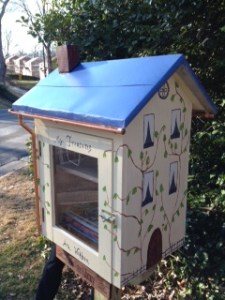
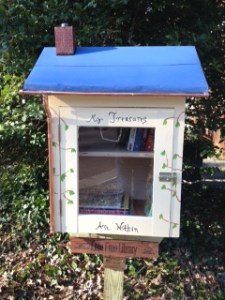 Craig is great with woodworking, so he built the structure, complete with copper run-off pipes, tin roof, and clear plexiglass front door. I sketched out the design based on the original Bemelmans drawings in one of our Madeline books, and everyone pitched in to paint, including 7-year-old Liam. Frankly we were surprised at how well it turned out, because none of us is particularly gifted with a paintbrush.
The story of how we ended up with the Madeline theme is a bit convoluted. We knew we wanted to do some kind of stylized approach to the house, so we thought about a barn or a farm house or bird house, and then at some point I suggested we try to come up with an idea that had some connection with a book we love—something that people would recognize and understand. Liam has always loved the Madeline stories, and we had recently returned from a visit to Paris for Thanksgiving, so the idea came to us pretty quickly once we went down that path, especially because while we were in Paris we passed an enormous house that looked incredibly similar to the Madeline house.
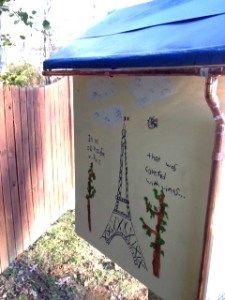 We decided to let Liam have free rein with the back of the house, but he needed help because he insisted on including an Eiffel Tower. He did the trees and the bird and the flag on the top of the tower.
TL: How does the Little Free Library work? Can people take any book they want? Do they have to return them? Can anyone add to the collection?
UO: The motto of the LFL movement is “take a book, leave a book”, but there’s no check-out/check-in system, and anyone is welcome to take a book. It’s been amazing to see how well this works, totally organically. Some people take and leave books, some just take, some just leave. I put a small notebook and pen inside inviting comments, and we have had many, all of them very positive. Many of them mention what a nice addition it is to the community, and many comment on the attractiveness of the structure itself. It seems to invite people to stop and linger. All of the books we originally stocked it with have been taken, replaced by an equal number of books from many other people.
 TL: Can you share some of the comments you’ve received?
UO: “This is beautiful and a treasure! Can we donate books to the cause?”
“We love it! My daughter has exchanged books three times already! Thank you!”
“Add a toilet.” (from a child)
“Gorgeous! Where did you get the cabinet?”
“We love your library!”
“Such a nice little library! It makes us happy just seeing it!”
“Amazing. Makes the world a better place.”
“I love this library.”
“So fun to trade books.”
“What a very sweet and thoughtful addition to our neighborhood. I will have to leave you a treat in return for your great idea.”
“The idea is so amazing. I want to make one when I grow up!!!”
“Thank you so much. We love the house, especially the rain gutters.”
TL: Have any of your neighbors expressed interest in starting their own Little Free Library?
UO: Yes, one person expressed interest. I think people have discovered ours after reading the recent USA Today article about how others have gone about establishing theirs.
TL: What has been the best part of owning a Little Free Library?
UO: The best part of it is seeing it every day and feeling like it is adding a bit of community-building and joy to our neighborhood.
I am always amazed at how it continues to enrich our lives. Let me share with you an interesting anecdote. Craig was getting ready to go to work and walked out to find an enormous FedEx truck in the street. He figured someone had ordered some furniture or something, but then he saw the FedEx guy looking at our Little Free Library. He said “hi” to him and the guy said he had seen a story about LFL on TV and had looked on the web site to see where there might be one in his area (he lives in northern Maryland). He realized there is only one in the state (ours) and said he finally had a chance to come down and check it out! I just thought that was pretty sweet.
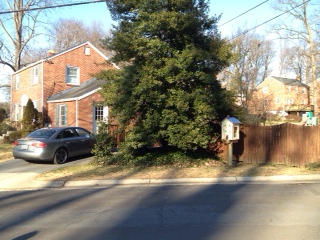
Thank you, Ursula and the Oaks Family! I wish you many happy years of home librarianship! Who knows…maybe the FedEx guy will deliver an endless supply of books!
So blog readers, how about you? Are you eager to set up your own Little Free Library? Let us know in the comments. And visit LittleFreeLibrary.org to get started!
One of the most frequently asked questions by new kidlit writers is “why do editors say not to write in rhyme?” There’s plenty of picture books written in rhyme, right? They get published somehow!
Well, the answer is a bit complicated. It’s not that editors don’t necessarily LIKE rhyme. It’s just that it is very difficult to do well. Here’s why:
- Rhyme scheme can dictate story–but shouldn’t. Tales should unfold organically, not be forced into the confines of the rhyme. Often it’s suggested to write in prose first—so you don’t get locked into a plot that doesn’t work—then translate it to rhyme.
- Common rhyme schemes can be stale. Editors see them again and again. Avoid overly simple, one-syllable rhyme schemes like go/show/know, to/you, me/be/she/he/see, run/fun/sun, day/may/way/say. If your reader can guess the word at the end of the line before they get there, your rhyme scheme may be too common. Editors want to read rhyme that surprises them.
- Forced rhyme or near-rhyme can ruin a story. This is when words don’t exactly rhyme unless you mispronounce them. Once in a while this is acceptable, but more than a few times in a manuscript and it distracts.
- The meter (or beat) must be spot-on. That doesn’t just mean the number of syllables in each line, but the emphasis on those syllables. Meter shouldn’t be so sing-songy and constant that it lulls the reader to sleep (unless maybe it’s a bedtime book) or so rough that it tongue-ties the reader and forces them to speak unnaturally. Some good rhyming books offer a break in the rhyme scheme for variety—not unlike a bridge in a song.
- Rhyming books are difficult to translate into other languages. An editor may not want to lose out on foreign book sales, so they’ll pass on a rhyming project.
However, if your heart is set on rhyme and if you have a talent for it, you should go for it. At first, Karma Wilson listened to the “don’t rhyme” advice.
“When I first started submitting some 15 years ago all the guidelines said, ‘No rhyme and no talking animals!’ For THREE years I avoided rhyme and talking animals. But guess what my first book sale was? BEAR SNORES ON! And guess what the guidelines said for McElderry books? NO RHYME AND NO TALKING ANIMALS! My passion is rhyme, and talking animals are great as long as they have something interesting to say.”
Yes, you can break the rules like Karma. But get your rhyme critiqued and know whether or not you can nail it.
Me, I’m terrible at rhyme and I know it. I cannot “hear” meter. I’ve tried and failed. My friends have coached me, but I still don’t get the right beat. I can’t dance to it. (I can’t dance anyway. Think Elaine from Seinfeld. Sweet fancy Moses!)
So what is successful rhyme? I’m glad you asked! I’ve got a few examples for you.
In HUSH, LITTLE DRAGON, Boni Ashburn spoofs the lullaby “Hush, Little Baby”. Instead of buying her baby a mockingbird, the mama dragon in the story brings her darling son various villagers to eat. It’s delightfully tongue-in-cheek. Some of the best lines:

Here she comes with a fresh magician.
Don’t mind the taste—he’s good nutrition.
…and later on…
If Mama finds a mean old queen,
Honey, you are lucky—that’s good cuisine!
Notice how these rhymes are out of the ordinary. They’re surprising and fun, plus the words have multiple syllables. She also rhymes “flee” with “fiery” and “bolt” with “revolt”. I challenge you to find these rhymes in another book! You won’t—and that is what makes this story so special.
Jean Reidy’s LIGHT UP THE NIGHT is an example of rhyme that elicits glorious illustrations. Remember that in picture books the art tells half the tale, and these lines create an expansive view of our world (click on image for larger version)…
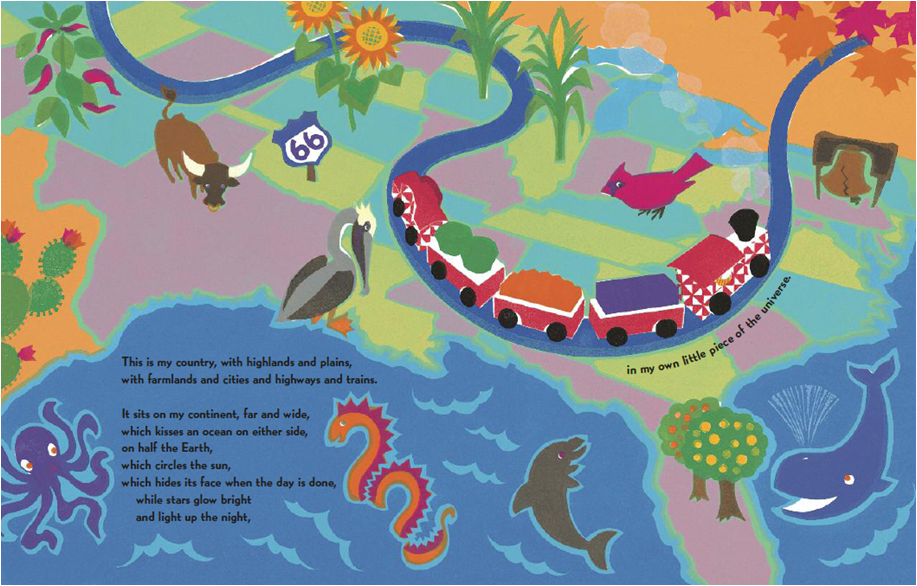
This is my country, with highlands and plains,
with farmlands and cities and highways and trains…
Notice how there is a break in the rhyme scheme at the end of the stanza—and that line is set apart in the illustration for emphasis. Coincidentally, Jean blogged today about her decision to write in rhyme. Go check it out!
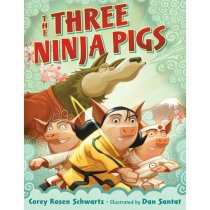 In Corey Rosen Schwartz’s THE THREE NINJA PIGS, the rhyme is infused with porcine puns. Kids and adults alike will appreciate the humor:
She then gave a swift demonstration
With backflips and butterfly kicks
The wolf looked quite shaken
but hollered, “Yo, Bacon!
I’m not at all scared of your tricks.”
There’s more great piggish laughs (like my favorite “pork-chop” line) but you’ll just have to wait until it’s released in September!
So I hope I’ve provided you with some background on why rhyming picture book manuscripts are a hard sell…but that if they’re done well, they can be spectacular.
What are some of your favorite rhyming picture books? Please share in the comments!
 Before Michelle Kwan, before the whole Tonya Harding-Nancy Kerrigan scandal, there was a figure skater who exhibited that perfect balance of power and grace: Kristi Yamaguchi. She had the high jumps and fast spins, but she also had a style and effortless elegance no one else could match.
OK, so why am I gushing? I used to be a competitive figure skater, but no where near the level of Kristi Yamaguchi. She was a role model to me. So today I’m very pleased to share with you her new picture book, IT’S A BIG WORLD, LITTLE PIG! And yes, it’s about figure skating!
 First, let me introduce the main character, Poppy. Isn’t she cute? In her first book, she had the courage to DREAM BIG and chase after her goals.
Now, in the sequel, Poppy receives an invitation to Paris to compete in the International Games. She musters up her porcine prowess to travel far from home–with encouragement from her friends and family, of course.
When Poppy arrives in Paris, she’s overwhelmed. She doesn’t know anyone and doesn’t know where to go. But Poppy is great at making friends. She bumps into Li, a panda snowboarder. And Poppy finds out that even though they are from different countries, they “both smile in the same language.”
 According to John Sellers, children’s reviews editor for Publishers Weekly, “There’s certainly a need for books that portray, mirror and show the value in all kinds of families: same-sex families, mixed-race families, stepfamilies, families with grandparents as guardians.” I also believe that books should reflect the diversity in the world around children. In my own neighborhood, there are families from Brazil, India, the Czech Republic, Spain, Portugal, China, Taiwan, Denmark, and Mexico. So I was pleased to see that Yamaguchi’s book introduces readers to animal competitors from all over the world.
Tim Bowers illustrates with such adorableness (is that a word???), bright colors and a jovial quality. You can’t help but smile at the wonderful world he’s created.
IT’S A BIG WORLD, LITTLE PIG brings together many cool themes (besides ice): following your dreams, making friends, diversity, independence, and doing your best. And it’s all rolled up in a figure-skating package! What could be more perfect?
Well, I’ll tell you! One hundred percent of Kristi’s profits from IT’S A BIG WORLD, LITTLE PIG will benefit early childhood literacy programs supported by her Always Dream Foundation.
I bumped into Peter Harren on Etsy where I discovered his adorable illustrations. We had a few convos and I encouraged him to join SCBWI. Peter and I got in touch again a couple weeks ago as he was gearing up for the SCBWI mid-winter conference. So I asked him to blog about it as a first-timer. Take it away, Peter!
 The co-founder of SCBWI Lin Oliver is hilarious. Part of her first day welcome address (at 7:30 am or some ridiculous turd hour like that) was this quote from the famous body builder Ronnie Coleman:
“Everybody wants to be a bodybuilder, but nobody wants to lift no heavy-ass weights.”
Of course the conference was going to be awesome, but Lin knew that it had a shadow for some people. The days were packed with activity starting at the wee hours and there was going to be a serious amount of information whipping past our heads. As Lin said, it was going to be work. And for people like me and my fiance Kayla Skogh (kick-ass children’s book writer and illustrator), one other shadow, one big shadow, was the socializing.
We’re introverts, and peppered throughout the info package for the conference and people’s advice for us was some scary stuff— “you gotta network”, “introduce yourself”, “mingle” and “talk to people”. We spent 5 years of our lives in New York City squashed up against people and still, the mention of a Saturday night Gala for networking and “fun” made our mouths dry.
The good news for us was children’s book people are really sweet. There were so many warm smiles and rosy cheeks. I think there were over 1000 people, and something like 70% of them were ladies. With 700 children’s book ladies in there you could really feel the nurturing energy. There were lots of hugs. When I remember the Ballroom I see a peach colored glow coming from the room. And as for the structure of the weekend, it went beautifully. It was really well organized and there were some nice breaks and awesome lemon poppy seed bread.
Now, on to the juice. I’ll share the words of wisdom from all the children’s book world royalty that I deemed worthy of note taking. I guess that’s called ‘noteworthy’. And before I start I should mention that everyone felt the children’s book industry is strong and steady. One guy even said it was robust!
Unfortunately, I didn’t write down who said what, but it’s safe to assume they’re a serious-ass children’s book professional of some sort. Also, all these quotes are in reference to picture books. So, here’s some quotes:
 “The keys to a good picture book are: character driven, brief, witty, light on text, and very young.”
- “Great children’s books have clear ideas, an emotional arc, simplicity, and compositional variety.”
- “Keep the story moving, don’t waste pages.”
- “Illustrations need to be narrative on their own.”
- “Make sure the left to right action is strong and promotes page turns.”
- “Character Driven!”
After writing those quotes I’m realizing that they don’t feel as huge as they did when I first wrote them down. I guess that’s evidence of a real benefit to the conference; being there. The conference was hugely inspiring and motivating. And the main reason I went was the portfolio review. My portfolio and book dummy were viewed by over a hundred editors, agents, art directors and book professionals.

If you want an in depth view of the conference you can go to scbwiconference.blogspot.com and find tons of information and videos of the conference. They had a whole team of people blogging the crap out of it.
And just for the fun of it, I added one of my pages of notes.
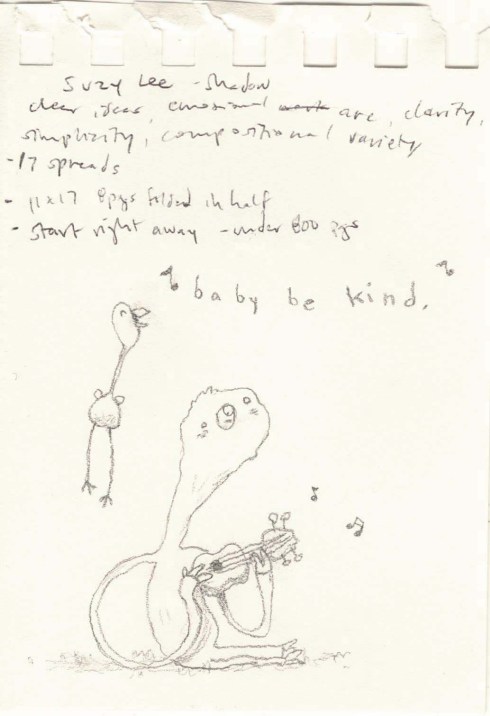
The bird’s lyrics are from Devendra Banhart’s song “Be Kind” which was in my head all weekend. In stressful situations I try to remember to be nice to myself and avoid judging myself for being anxious. This song shows up a lot when I need it.
Peter Harren is an aspiring author/illustrator. Track his progress at PeterHarren.com.
 Say what you will about Wikipedia—that it’s unreliable, that it’s unaccountable, that it’s run by a bunch of idealistic zealots—the fact remains that it is one of the most heavily accessed web resources in the world.
And so, one day as I was researching some of my favorite contemporary kidlit authors and illustrators, I found they were not mentioned in the online encyclopedia. Scott Magoon? Not there. Kate Messner? Nope. Tammi Sauer? Dagnabbit.
I think it’s time we rectified that situation. These folks deserve to go on record, especially those who have won awards for their work.
If you’re a frequent reader of this blog, I’d like to ask you a favor. Pick a favorite contemporary kidlit author or illustrator. Check to see if they’re in Wikipedia.
- List of Wikipedia Children’s Literature Authors
- List of Wikipedia Children’s Literature Illustrators
And if your favorite person is not there, pledge to create an article for that kidlitter by the end of March. Show your love for children’s literature and the people who create it!
Remember that Wikipedia wants you to source references when writing your article. There is a handy-dandy article creation wizard for those of you unfamiliar with the Wikipedia process.
If you are interested in participating, just leave your name and the name of your chosen kidlit personality below. I’ll check in at the end of this month with a master list of potential pages we’re creating.
C’mon, who’s with me?
The internet has been abuzz with Ryan Gosling memes—there’s the feminist Ryan Gosling, Silicon Valley Ryan Gosling, and even a Ryan Gosling who reads young adult literature. Just like NaNoWriMo, I’m feeling like picture book writers are being left out of the fun. So, I’m jumping into the fray with these:
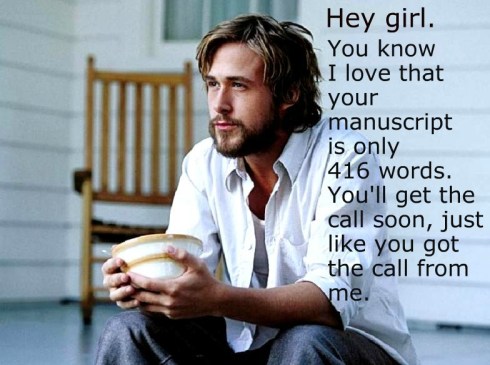

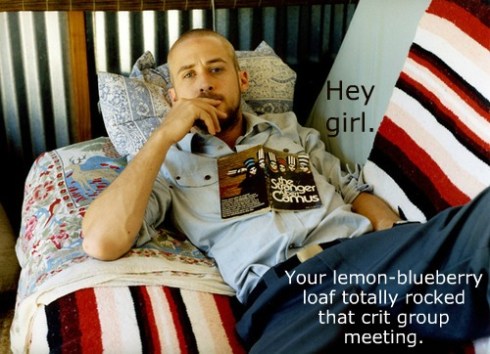
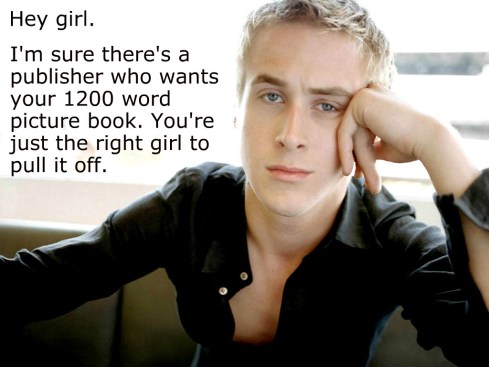

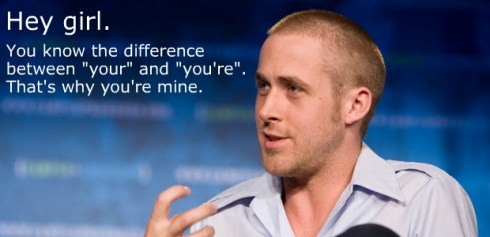
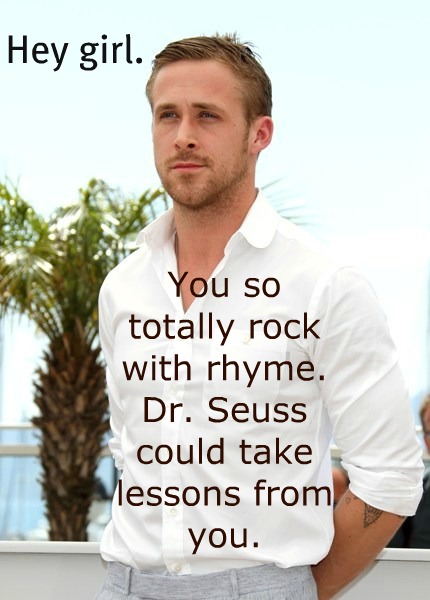

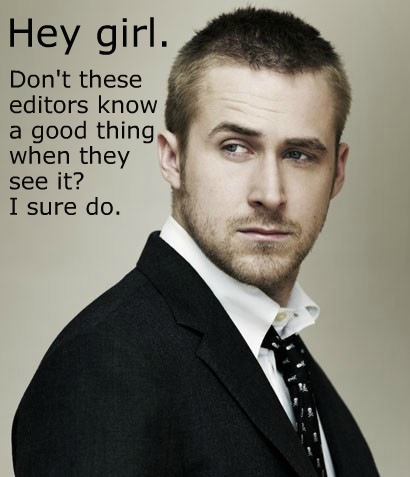
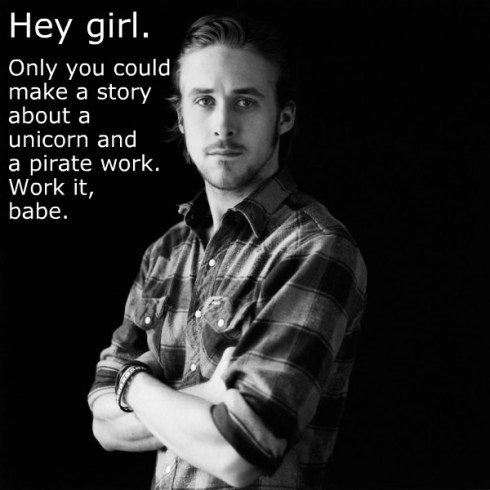
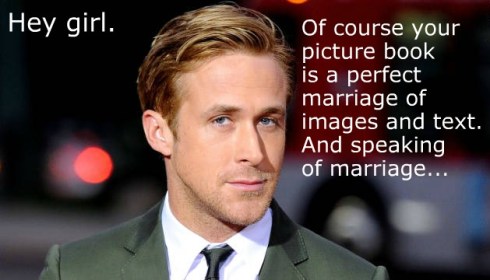
(Special shout-out to Julie Falatko who inspired some of these.)
But you know, Ryan is a little young for me. I need an older, more experienced man for my picture book meme. So I’m thinking about him instead:
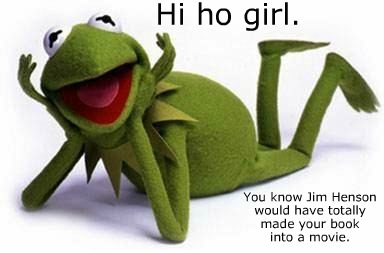
 There are all kinds of scenarios in which a manuscript becomes a book. Sometimes it’s a series planned well ahead of time, sometimes the author is well-known and the project is signed on the basis of a proposal, sometimes the agent knows that the idea in itself is a winner and he/she sends it out to vast range of different editors, generating a lot of buzz in the process.
As an acquiring editor, however, my favorite way to come across a manuscript is much more quiet than any of these scenarios. It’s when I stumble across something in a pile of submissions that strikes my fancy. The reason it’s fun to discover things in this way, is that I am not reacting to a trend, but to something that particularly suits my taste. And this means I’m going to remain excited about it right up until the release date and beyond.
I’ve had quite a few books like this on my list. It’s hard to pick just one. But I think there is one that is particularly illustrative of this kind of scenario. It’s Bow-Wow Bugs a Bug by Mark Newgarden and Megan Cash.
 I got a completely different submission from Mark and Megan in the slush pile—unagented. Mark and Megan decided to send it to me because they had come across another project of mine that made them think I might be interested in their work. Their submission was beautifully packaged, in a folder, with lots of visuals and a pitch sheet. I won’t mention that project, because I still love it and hope that it will come out eventually in some form. For various reasons I wasn’t able to pursue it. Anyway, alongside the mystery project was a proposed series of board books based on a intrepid little terrier. Bow Wow Bugs A Bug was created later, as an anchor to this series.
There are a couple of inspiring things about this story. First, the project came through slush. I know we hear about things being discovered this way. But these stories are told for a reason—they are remarkable because they don’t happen very often. The reason Mark and Megan’s work stood out was that it was impeccably presented and it was exactly the kind of thing that I like to read. They had built an entire pitch package of the quality that we might mock up for a marketing meeting, and they thought very carefully about to whom they were sending it. It was funny, clever and visually stunning with selling points and a target audience outlined. The other important point to note is that, despite the appeal of this package, we ended up having them do a different project all together. They were willing to work with us (and did to an absolutely heroic extent) in order to build a good publishing strategy. And I was willing to work with them, because I could see very clearly that they had more than one project in them.
There is one point I would like to make clear. Mark and Megan are not push-overs. A willingness to work on something doesn’t mean a willingness to surrender your vision to someone else. It simply means that you are willing to hear feedback and try to incorporate it in a way that suits the project. Mark and Megan have a strong aesthetic perspective and I had long email exchanges with them over what to keep and what to leave out. It’s important to work with your editor, but it’s also important to maintain your point of view. Do not compromise to the extent that you don’t want to be associated with the finished book. Every change should be considered carefully. And that doesn’t necessarily mean “Do I take it or leave it.” Quite often it means, “What is it that this change will accomplish, and how can I find a way to accommodate it and still make this something that I love.” You have to live with your name on the cover.
I chose this particular example to write about because I think it exemplifies what authors should be looking for from their editorial relationships (and vice versa, really). I still maintain contact with Mark and Megan. We share taste and inspiration. There should be a certain amount of base understanding and sympathy between an creator and editor. You should share a vision for the project. And when you diverge, you should be able to discuss it reasonably and come to some compromise that you can live with. That’s how good books are made.
Tamson Weston is a published children’s book author and editor with over 15 years experience at several prestigious publishing houses including HarperCollins, Houghton Mifflin Harcourt and Disney Hyperion. She has edited many acclaimed and award-winning books for children of all ages. Tamson loves to collaborate with people and help authors, illustrators, agents and publishers bring projects to their full potential.
Among the authors Tamson has worked with with are Adam Rex, Mac Barnett, Robert Weinstock, Adam Gopnik, Jane Leslie Conly, Anne Rockwell, Deborah Hopkinson, Jen Violi, Alexander Stadler, Dan Santat, Florence Parry Heide, Dandi Daley Mackall, Brian Biggs, Marilyn Singer, Megan Cash and Mark Newgarden.
Tamson has an MFA in Writing and Literature. You can visit her website at www.tamsonweston.com.
 You probably know the talented illustrator Ryan Hipp—he’s the guy who designed the first PiBoIdMo logo. Well, now he’s got a cool sketch service to check out. You want something drawn? A robot eating a cupcake? A cupcake eating a robot? Or, even more awesomer—a cupcake robot? He’s your man! Check out his very cool site www.SketchRequest.com!
Ryan told me he’s a world-class procrastinator and we battled a little over who was better at putting off things. I think I won. I said I’d continue the argument tomorrow.
But I did ask Ryan to guest blog about his New Year’s resolutions and how to turn procrastination into pro-magination. Take it away, Ryan!
 by Ryan Hipp
The New Year is upon us all, and along with all the diets and promises to give up vices, many of us set resolutions and battle with the evils of procrastination in our professional lives. This is no different in the business of children’s literature. Take it from me—someone that really knows the sinking, overwhelming feeling deep in the pit of the stomach—someone that often doesn’t even know where or how to begin.
People ask me all the time, “So when’s your next book out?”. Wow, its, the worst question to get. Lately I say, “Oh yeah, I’m totally working on this awesome thing that I totally can’t talk about because its like on the verge of blowing up big time and I don’t want to unveil it too soon and stuff, you know?” But in secret, I haven’t sat down to work on it in weeks in some cases.
For me, the irony is that the rigors of being a kidlit professional means I spend a ton of time trying to secure school visits or sending out mailings, and not doing the very thing that all of that work stems from—the writing and the drawing. I am often feeling underwater with all the business that goes along with making books, that I have trouble concentrating on…well…making books!
And then there’s just normal life getting in the way. We all can relate to that, excuse or no excuse.
But here’s an indefensible excuse—the other embarrassing reality is that when I do actually have time to be creative and productive, I still sometimes don’t . I’ll get easily swayed by a call from friends to go out to a movie, or whatever. I’ll have full intentions of turning a free 24 hour Saturday into a work day, then find a way to completely blow it on fun and frivolity.
I’ll say, “I can just do it on Sunday”. But do I? Nope. Encore performance.
I find myself making every excuse in the world to keep away from my desk. Its as if I have a subconscious mental barrier that won’t allow me to begin writing or drawing if my office is cluttered or if I have other things on my mind. And then when I do sit down, sometimes it is a battle to stop goofing around watching cat videos on YouTube.
So here is what I have been doing to combat this of late:
Slow & Steady for the Win
Every little bit helps. 15 minutes a day for a week is still better than failing your intention to sit down for 2 hours on the weekend and then not doing it.
Get Out of the House to Get Work Done
A quiet coffee shop or restaurant away from distractions at home. (Tara: I spend at least one day a week at the library. Otherwise the fridge calls me too often.)
Turn off Phone/Computer
The battle for me is my computer is a tool for research and design—but also a distracting temptation. So I draw my thumbnails away from my desk, and I scribble my notes away from my computer. Then I bring that stuff back home when the momentum will keep me on-task.
Ask Someone Else to Keep Accountability
When you are your own boss, nobody will get on your case if you didn’t write today. So schedule someone to critique your work on a set schedule so you have regular benchmarks to shoot for.
But, when I do get an urge to goof around on YouTube, I cut myself some slack, and remind myself to watch the one thing that usually puts me in the right mood to get productive immediately afterwards. It’s an episode of the Babar animated series titled “To Duet or Not Duet” and it’s a wonderful lesson in procrastination and setting realistic goals. So the next time you are distracted or frazzled, I give you permission to take a break to watch it here:
So what are my resolutions for 2012? I am going to defeat another battle I have—submitting. I am TERRIBLE about sending my work out. But it is really the most important part. I am going to make a better effort at sending out my queries and samples—because all that diligence and hard work means nothing unless it gets discovered.
Be Good and Work Hard!
What are some of your tricks for getting the BIC—butt in chair?
 Today is my first official day at work for 2012. Both kids are in school and I’m sitting in the library’s teen section, where it’s typically quiet all day. The seniors stay out of here and the children’s library (with the occasional screaming toddler)–is tucked away downstairs.
But I need a little help getting motivated again. And it’s not just because they moved my favorite table away from the window. I’ve been hanging out in my jammies for two weeks! It’s tough to get moving again when you’ve gotten used to being stuffed in rainbow flannel.
Maybe you need motivation, too. Well, you’re in luck. I roamed the stacks when I first got here and found the lovely “Artist to Artist”, a collection of children’s illustrators talking to children about their art. And here are some get-up-and-go gems I found inside:
“When people look at my work, they often say, ‘Your picture is so good. I can’t even draw a straight line.’ I think everyone can learn to draw. The important thing is to keep trying, keep drawing.” ~ Alice Provensen
“If I have an unusual gift, it’s not that I draw particularly better than other people—I’ve never fooled myself about that. Rather it’s that I remember things other people don’t recall: the sounds and feelings and images—the emotional quality—of particular moments in childhood. Happily an essential part of myself—my dreaming life—still lives in the light of childhood.” ~ Maurice Sendak
“The most important thing in the whole of life is to love what you do. If you want to be an artist, don’t draw from movies and television. That’s something someone else has already imagined. Draw from your life. Draw all the time. Expect to be different from other kids, because if you are an artist, you are different. Sometimes it’s hard to be different. Sometimes it hurts when people don’t understand you or laugh at you for not being cool enough, but stay the course. Believe in yourself. Believe in the paintings and drawings that come out of your mind and your hand.” ~ Rosemary Wells
“Your ability to see and respond sensitively to the beauty of the world around you will, in turn, be transformed into the ability to create art that other people will find to be beautiful. As long as you have this visual sensitivity, you will discover that the actual techniques you need for drawing good pictures are very easy to find. They are within you.” ~ Mitsumasa Anno
“Making pictures is how I express my truest feelings, my truest self.” ~Eric Carle
“In our earliest years there’s no how? to our plunge into art. The doing gives the answer. There is no one way. Your work is original and there is no end to the adventure…HURRAH!” ~Ashley Bryan
So get moving, friends. Keep doing what you’re doing. There’s joy for you and joy for the children who read and view your work. Joy to the world!
 by Carol Hampton Rasco
President/CEO, Reading Is Fundamental (RIF)
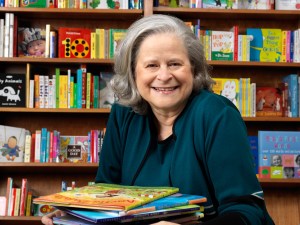
What a special week in the Children’s Literature World…two of my favorite “specials” this month are the start of Picture Book Idea Month (plus two days!) and the birthday of Reading Is Fundamental where the 45th birthday will be celebrated Thursday, November 3 with Lilly and her famous purple purse with lots of children and special guests at the Library of Congress!
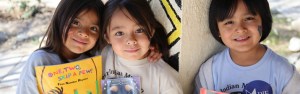 And you know what? I see PiBoIdMo as seriously connected to RIF and our mission. Each time I write or talk about this year’s major milestone birthday of 45 years for RIF, I talk about the 380 million magical moments, the 380 million books placed into the hands of children over these 45 years RIF has existed. And guess what? The majority of those 380 million moments have been brought about by picture books given our primary audience of birth to 8 years of age.
Within that age group, RIF seeks first to serve those children most in need and sadly, with poverty the greatest indicator of probable difficulty to read well and independently by the end of third to fourth grade, it means according to the latest poverty reports we have that even more children by comparison in years past to ignite, to motivate, to inspire to learn to read. This means in reality, we need so many different books in order to strike that chord deep within a child, to create the birth of that “aha!” moment, that “wow!” experience that has a child believing “If I can read, I can do anything, be anything.”
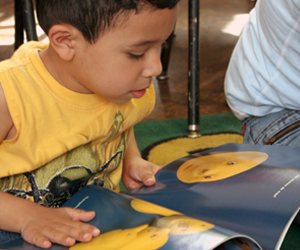 Last year I wrote in my guest post for PiBoIdMo noting three types of picture books we hear about most as on the “wanted” list by teachers, reading specialists, PTA parents, Kiwanis Club members—RIF volunteers of all stripes and professions: nonfiction that is “eye and mind catching”, bilingual books, and multicultural books. The requests continue to be the same. All three categories are also critical to the family involvement component RIF believes critical to the success of our mission in motivating children to love reading.
Last weekend I saw again in person the beauty of a picture book that had four generations of individuals pouring over a book, sharing common knowledge and experiences elicited by the book in front of them. It is a picture book about animals in winter—“it doesn’t look like a true fact book, they’re usually boring” as generation two noted in his 6-year-old voice. Generation one was intrigued by the pictures, generation two was eager to learn more about the animals he already had discovered, parents of gen two had no idea about some of the more unusual facts and gen three had information to add about ways these animals were viewed in “the olden days.” After going through the book the family discovered information added by the author at the back and headed to the computer, four generations together again! Gens one and two were reading the text even…what a great experience for the family together…it was a spontaneous activity shared following a meal and lasted with no whining for more than 30 minutes. This family is not unique, no reason this animal book would have been predicted to be the one to “catch their eyes” over others. But it connected for them; it was a prolonged magical moment. And to serve the children and families who need us most, we need lots and lots of books portraying life and our surroundings in oh, so many different ways!
 With Thanksgiving now on the horizon, our Hampton multi-generations will for the 32nd year read sometime before the meal begins “Thanksgiving at the Tappletons’” by Eileen Spinelli (1982 version) which was given to my son on his 6th birthday that year. It is a tradition every child entering the family savors when old enough to follow the laugh lines and even more when old enough to be a reader!
A magical moment…that is what you are creating in a picture book…memories that plant the seeds of a lifetime love of reading. My best wishes to all of you as you put those ideas into writing this month! Hurray, more magic is on the way!
Happy Reading!





 Writing for Kids (While Raising Them)