You are currently browsing Tara Lazar’s articles.
In all the blog posts I’ve published in the last 13 years, I’ve never delved into one subject because I thought it was near impossible to successfully broach it in a picture book. But author Jackie Azùa Kramer has, and the result is miraculous.

The subtle coloring on the cover by illustrator Cindy Derby should give you a clue as to what awaits inside.
Jackie, death is the toughest subject to discuss with children. Why did you want to venture into that territory?
Sadly, the story was inspired by true events as a result of Hurricane Sandy in 2012 which left two little sisters fatherless. But if it’s all the same with you, Tara, I’d like to reframe your question.
Why not write stories that reflect a diversity of experiences that children are facing today? We are living through challenging and difficult times on so many levels. I have the utmost respect for young readers, and I strive not to talk down to them. I feel we need to meet children where they are with hope and love.
As a creator, I’m inspired and emotionally moved by what’s happening in the world today. Children around the world are living unique and diverse experiences. I’m encouraged to see more of these books published recently. Books which allow children to see themselves…their lives reflected in books. We all have a need to be understood, accepted and loved.
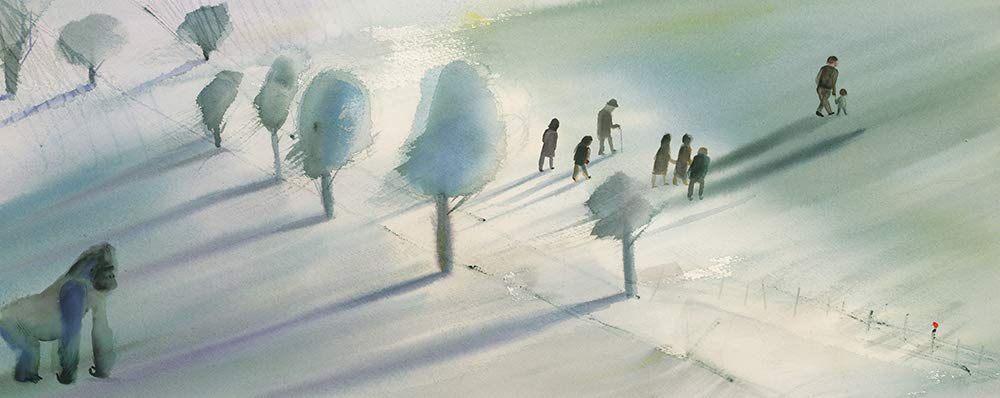
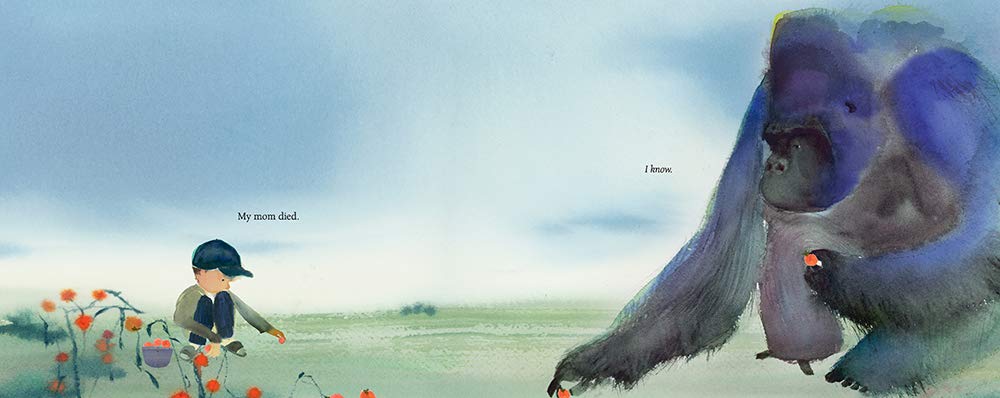
In the story, the gorilla represents the boy’s deep grief and sadness at the passing of his mother. Why a gorilla? Was this your first choice for the metaphor?
Yes. The Gorilla character came to mind as a I learned about how some children are affected by loss. In the story the loss of the boy’s mother left him confused about the complex feelings he was experiencing along with the questions he had about death and dying. However, his unspoken feelings become the metaphorical idiom of the eight-hundred-pound gorilla in the room. It was a fascinating visual to imagine this huge and imposing gorilla who’s also kind, honest and supportive.

What does it mean to you to have three starred reviews (so far)?
Tara, I’d be a pompous ass if I didn’t admit that it feels good. And you know, as much as me, if not more, about receiving great reviews! However, the reasons it feels good to me goes beyond the good reviews and stars.
It’s also about all one’s hard work being acknowledged, as well as, the village that made the book possible. Agent, illustrator, editor, art director, sales and marketing…each played an important role.
And in the end, all that matters is that books gets into the hands of readers. That books are read over and over, pages get worn and dog-eared and tucked under pillows. That books make readers feel something. Feelings of joy or sadness, happy, silly or even mad. Perhaps thoughtful or dreamy and wondrous. That each page turn is like a theatrical experience. That stories welcome readers and say, “Come on in, all are welcome, understood and accepted.”
Then we as creators have done our jobs well.
What I’ve learned from reading THE BOY AND THE GORILLA is that we writers shouldn’t shy away from subjects just because they are difficult. Children experience the width and breadth of the world, just like we do, and they deserve answers. They need to be heard and understood. This book fills a void by bringing comfort to children who are struggling to cope with loss.
Blog readers, you can win a copy of THE BOY AND THE GORILLA by Jackie Azùa Kramer and Cindy Derby.
Leave one comment below.
A random winner will be selected soon.
Good luck!
 Jackie is an award-winning and internationally translated children’s author. She earned her MA in Counseling in Education, Queens College. She has worked as an actor, singer, and school counselor. She is a member of the Bank Street Writers Lab. Her picture books include, The Green Umbrella, “2017 Bank Street College Best Children’s Books of the Year”. If You Want to Fall Asleep and That’s for Babies. Jackie’s upcoming books- I Wish You Knew (Roaring Brook, 2021); Dorothy and Herbert- The Story of the Postal Clerk and the Librarian and their Extraordinary Collection of Art (Cameron Kids, 2021); We Are One (Two Lions/Amazon,TBD); Manolo and the Unicorn (Cameron Kids, TBD) and Miles Won’t Smile (Clavis, TBD). She lives with her family in Long Island, NY. When not writing, you’ll find her reading, watching old movies and traveling to her family’s roots in Ecuador, Puerto Rico and Spain. Visit her at jackieazuakramer.com.
It’s almost time to dress in costume and eat tons of candy! (No, not Tuesday!)
Halloween!
There are spooky stories about monsters, ghosts and goblins, even pale green pants with nobody inside them…but when have you ever seen a haunted Halloween tale about a HOUSE?
Sure, there’s plenty of movies and books that make you scream DON’T GO IN THERE! But there’s never been one where the house itself was the main character. This story by Marcus Ewert puts a unique twist on the haunting trope.

And the vibrant illustrations by Susie Ghahremani are like nothing you’ve ever seen. How did she make a mix of sweet and spooky work together? I asked her!
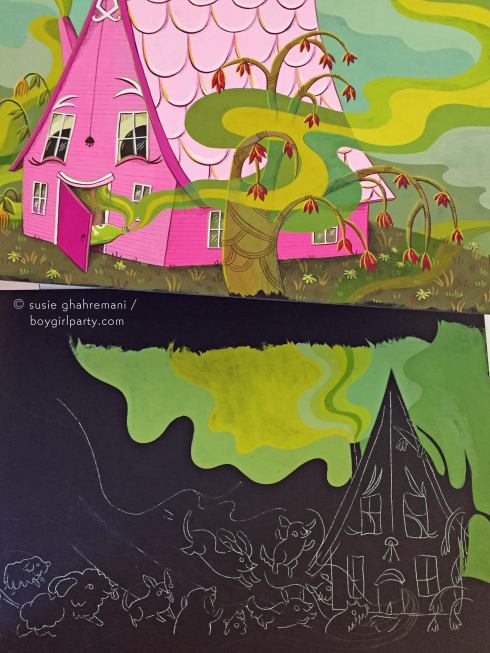
The main character Clarissa is an (unfortunately) cheerful pink house—and I wanted to be sure that her “world” felt colorful and friendly to contrast the muted, darker worlds of her scary parents, so there is some exaggerated color.
The color really pops! What’s your secret?
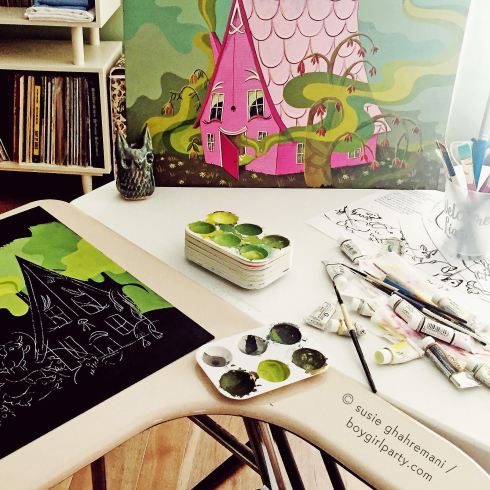
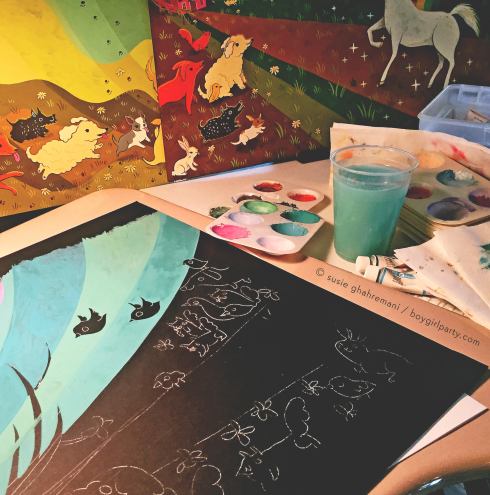
I painted the book on black boards so a little bit of black pokes through the paint, to hint at how inside she’s a little sinister—but it also allows the colors to really come forward and create contrast.
This book is *funny*, not scary, so I definitely wanted readers to be able to feel that from the moment they look at the images rather than to play up traditional Halloween motifs!
What other considerations did you have, besides color, in order to bring Clarissa to life?
Marcus (the author) gave me so many wonderful verbal details to work with, like her windows that “seemed to wink.”
I used to live in a pink house in New England that looked a lot like Clarissa, so I was able to draw from those memories— particularly the decorative trim and shingles!
I also use the tree on Clarissa’s side as an extension of her to assist her expressiveness.
I love that about the tree–it’s droopy and sad on one spread, all abloom on another.
Clarissa’s parents are a vampire’s castle and a witch’s hut–which is hilarious. Both are inherently creepy, but other creatures in the story, besides Clarissa, are adorable. How did you create such diverse characters but still keep the overall style of the book uniform?
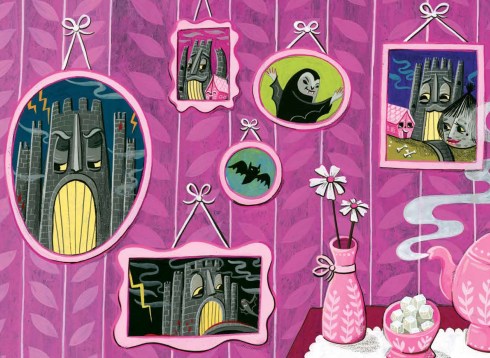
There’s also a character that transitions for cute to truly monstrous! I tried to create characters that can express emotional range in general—animals that frolic sweetly but then become worried or monstrous; a mother who is tough and fearsome but also can be tender. Using the same materials and process visually unified them, but so does giving them a little emotional range, too. No character in the book stays one fixed way throughout! Even the vampire has a campy moment in a family photo!
This story’s charm comes not only from the illustrations, but the playful rhyme and a surprise character at the end.
When editors and agents say they want a story to truly stand out, SHE WANTED TO BE HAUNTED is what they mean.
Thanks, Susie, for introducing us to your new book.
Blog readers, we’re giving away a copy!
Leave one comment below to enter.
A random winner will be selected on Halloween.
Good luck!
 Susie Ghahremani is an award-winning illustrator, an internationally exhibiting artist, a designer, and an educator. She is a graduate of the Rhode Island School of Design where she has also taught. She is the recipient of awards and honors from the SCBWI, American Illustration, the Society of Illustrators New York, and the Society of Illustrators Los Angeles, and has been profiled in several publications, including The New York Times. She served on the board of ICON the Illustration Conference. Ghahremani lives and creates art in San Diego, CA. Follow her on Instagram @boygirlparty.
Tara, thanks so much for having me on your blog. Today is exactly two weeks before my debut picture book, SEVEN GOLDEN RINGS, releases!
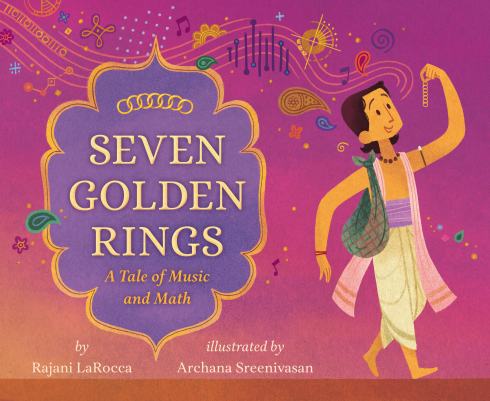
Set in ancient India, SEVEN GOLDEN RINGS is about a poor boy named Bhagat who wants to improve his family’s life by earning a place in the rajah’s musical troupe. Bhagat travels to the rajah’s city carrying his family’s entire fortune: a single coin and a chain of seven tiny golden rings. To stay at an inn, he needs to pay one ring per night in advance, but he doesn’t how long he will need to stay and doesn’t want to overpay. With his single coin, he can get one link broken. How can he separate the rings, pay one per night, and not waste any of them? Bhagat solves this conundrum and succeeds in an unexpected way. An author’s note explains the basics of binary numbers, how they’re related to Bhagat’s solution, and how they’re also related to modern-day computers.
Today, I’m going to talk about:
- Persistence
- Time
- The heart of your story
- Magic
1. I wrote the first draft of SEVEN GOLDEN RINGS back in October 2013. At the time, I had an idea for a novel (which would later become my MG debut, MIDSUMMER’S MAYHEM) and I’d written a couple of picture book texts. SEVEN GOLDEN RINGS was born from my memory of a logic puzzle I’d heard when I was a kid visiting my family in India. I took that puzzle, made it more complicated, and created a character who loved music and math (like my son) and who needed to solve this puzzle in order to save his family.
I then proceeded to revise this story almost 70 times before it sold. Let me emphasize that: SEVENTY. I revised it over four years, sometimes taking as much as six months between drafts because I was working on other projects (or perhaps doing other things, like my day job and raising my kids). The right ending for this story kept eluding me. I kept working on it, learned as much as I could about writing, and showed it to my critique partners over and over.
I started querying this book. And I got rejected. A lot! By agents who loved the folktale-like quality of the story but didn’t like the math. By those who loved the math but didn’t think they could sell something that felt like a folktale. By one who thought it was “too depressing” (which it is not) and others who never replied. Several agents did like it but didn’t like my other work enough to offer representation.

As many people will tell you, the path to publishing is a marathon, not a sprint, and the difference between those who get published and those who do not is all about persistence. So I kept going. I kept writing and writing, and over time I accumulated five picture book manuscripts that I thought were ready for agents’ eyes. And I finished revising my middle grade novel.
And then, in November 2017 I received multiple offers of representation for that middle grade novel. I shared my picture book manuscripts with the offering agents and got their take on them. And I made my choice: my fantastic agent, Brent Taylor of TriadaUS. Brent loved my novel and my picture books. My persistence had paid off.
In 2018, we submitted my novel and some picture books to publishers. And my books were rejected. A lot! (Do you see a theme here?). But we kept going, and I did revise and resubmits (R & R’s) when requested. We kept submitting. And what happened? SEVEN GOLDEN RINGS found the perfect editor and publisher: Cheryl Klein at Lee & Low books, who appreciated both the folktale-like quality and the math in the story, and who loved it enough to work on it with me to make it the best it could be. And friends, we sold FIVE books that year—my debut novel and four picture books!
2. You know how I wrote almost seventy drafts over four years, sometimes taking up to six months between drafts? When you step away from a story for long enough, it feels new when you read it again, and you can more easily see its flaws and find your way through what’s been confounding you.
It wasn’t until three years after I first drafted this story that I recognized the connection between the solution to Bhagat’s puzzle and binary numbers. So I wrote an author’s note that explained this connection, and why we care about binary numbers at all.
And the “right” ending to this story finally came to me almost four years after I first drafted it.
Sometimes time is exactly what we need to make a story right.

3. Through my revisions, some plot points changed. Words changed. But the heart of the story remained the same: a boy who loves music who sets out to save his family and must solve a math puzzle in order to do so.
When you are a writer, you’re going to get a lot of opinions on your work. Some will be helpful, and some not. But remember: YOU are the creator, and you decide what to keep and what to change. Develop your ability to recognize the heart of your story, what you really want to tell the world, and hold on to it, because that is what makes your story uniquely yours.

4. And after you’ve persisted and spent time working hard? When you find the right agent, editor, and publisher who also love the heart of your story? Friends, then it just feels like magic.
Thank you, Rajani, and best wishes with SEVEN GOLDEN RINGS!
Blog readers, you can win a signed copy of the book, just leave a comment below.
A random winner will be selected in a few weeks.
Good luck!
 Rajani LaRocca was born in India, raised in Kentucky, and now lives in the Boston area with her wonderful family and impossibly cute dog. She is a writer of stories for children, doctor of adults, and baker of too many sweet treats. Her debut middle grade novel, MIDSUMMER’S MAYHEM, was an Indies Introduce selection, an Indie next pick, a Kirkus Best Book of 2019, and a Massachusetts Book Award Honor title. Her debut picture book, SEVEN GOLDEN RINGS: A TALE OF MUSIC AND MATH, is set in ancient India and provides an introduction to binary numbers. Her virtual book launch will take place on October 27 at 7 PM EST with Silver Unicorn Books. You can register by clicking here.
I love watching illustrators at work. Sketching, painting, snipping paper for collage…seeing a blank page sprout something beautiful is miraculous. Plus, isn’t it a soothing way to spend some time? We all need it these days!
So it was with pleasure I watched illustrator Larissa Marantz paint CLYDE THE HIPPO, the character from her new series with husband Keith, published by Penguin Workshop.
Larissa, your video is mesmerizing!
How did you decide on the look and style for Clyde the Hippo?
Clyde was designed to fit in with a cast of characters called The Fuzz Budz which were a group of characters in our first self-published book. Those characters came about from a simple shaped art lesson that I taught my elementary school students. The idea was to use a rectangle shape as the basis for a bunch of animal characters. Clyde is made from a shape I call a “circ-tangle” which is basically a rounded rectangle.
Our first Clyde book was a self-published title called “Clyde Likes to Hide.” The style of that book is very different from the Clyde the Hippo series with Penguin Workshop because I started working digitally and wanted to use pastel brushes. I love the texture and richness in colors that you can get from working in pastels, but the mess is unreal. Being able to duplicate that look digitally was very satisfying. Keith and I also wanted the aesthetic of the book to be bright and graphic with elements of mid-century modern design thrown in, since we are fans of that era. I used a lot of pattern reference and strong shape language to keep things simple in my background illustrations.
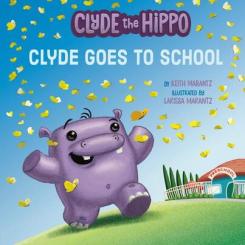
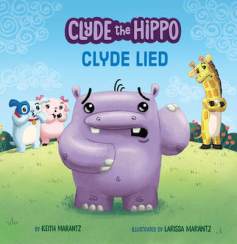
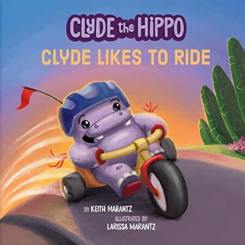

No wonder I love the Clyde style, I’m a fan of mid-century modern, too!
How did you and Keith take Clyde from self-published to traditionally-published with Penguin?
We initially wrote and self-published the first Clyde book but didn’t put very much effort into selling it. We knew that in order to succeed in self publishing it takes a lot of hustle, and we just wanted to write and illustrate stories. We had created a second story, Clyde Likes to Slide, with a completed dummy. We sent that to our agent who we had just recently connected with. She loved it and thought it had great potential. She shopped it to different publishers, one of which thought it would make a great series so they asked us to submit a series package. Ultimately they turned it down but Penguin saw something special in it and picked up the series.
Yes, I totally understand wanting to just make stories. Marketing and promotion is tough work (and not nearly as fun)!
Let’s jump back in time a little more…when did you and Keith decide you wanted to be children’s book creators?
Well, there’s a bit of a story behind that. I had been working in animation as a character designer for the Rugrats and Rocket Power. While I was there, I started illustrating picture books for Nickelodeon. When I left the studio to become a
stay at home mom, I illustrated more picture books for Nickelodeon. Keith had always wanted to write and actually wrote some spec scripts for the animated shows I was working on. He had been writing a screenplay as well. Our first picture book together was inspired by our oldest daughter who was 9 years old at the time. She was drawing these adorable animal characters based on the lessons she was learning in my art classes. Based on her drawings, we came up with a cast of characters and Keith wrote some fun rhyming poems about the kinds of food they’d love to eat. That was our first book together and it’s called Dream-O-Licious.
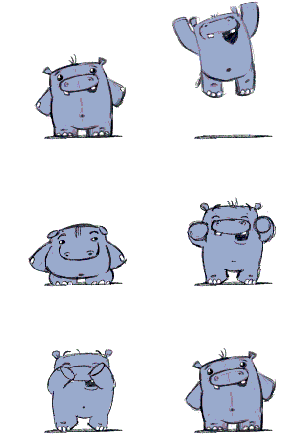 The idea for adding Clyde came about when our youngest daughter asked for a pet and my husband joked with her that we already had a hippo hiding in the backyard. After I designed Clyde, I fell in love with him and we knew we had to make stories for him. Keith loves to come up with a good title and he loves to rhyme, so we came up with Clyde Likes to Hide as our first story. He’s a very large hippo who loves to hide, but he’s not very good at it. Next came Clyde Likes to Slide and Clyde Likes to Ride. I came up with the idea for Clyde Lied and Keith wrote a really great story for that concept. Clyde Goes To School does not rhyme but we wanted to introduce Clyde and his world, so that became the first title in the series.
What a creative couple! Well, a creative family!
Did you always know you wanted to work in illustration?
I didn’t realize I wanted to until later on. I knew I wanted to be an artist, but I studied fine art in college. When choosing a major, I didn’t understand that illustration was basically painting and drawing but for a different purpose. I switched from fine arts to animation and then made a pivot into illustration when I became a stay at home mom. Once I started reading all those children’s books to my kids, I realized that I wanted to illustrate my own characters, not just Nickelodeon’s characters. That’s when I started working on creating my own style and trying to get an agent . It was harder than I thought it would be. I figured that since I had already illustrated a dozen books, it’d be simple enough. But my style was very steeped in animation, and I didn’t understand that just because I could draw animated characters well that I couldn’t just draw for picture book illustration. I had to learn a little more about style and narrative illustration. I had to develop my own voice. And Keith had to develop his voice in writing, too. We both worked on it and were able to connect with a wonderful agent who saw our potential and now represents both of us as a creative team. Keith is my author and I am his illustrator.


I love it!
Can you tell us what’s coming next for the Marantzes?
We are hard at work on a middle grade graphic novel entitled BLAKE LASER that will be published with HarperCollins in 2022.
Set in the 24th century, the book features a 12-year old inventor who, along with her parents and annoying brother, must stop aliens from stealing the sun’s energy. I’ve designed spaceships, aliens, and robots, which is very different from the cute stuff I’m used to drawing. One of my favorite things about this project is that we’ve written a story about a family that looks like us. Creating diverse characters for picture books is so important, along with developing heroes and heroines in stories who multiracial kids and children of color can identify with. There is no doubt that making a graphic novel is a tremendous amount of work but it’s something we both feel we’re suited for, given Keith’s love for cinema and screenplays and my experience working as an animation artist. We’re very interested in depicting epic stories with vast worlds for the remainder of our publishing career, so we are working nonstop at developing those types of stories for readers.
Thanks for chatting with me, Larissa. It’s wonderful to get to know you and CLYDE (and Keith)!
You can get to know them all better at ClydetheHippo.com.
We’re also giving away a CLYDE book: CLYDE LIKES TO SLIDE!
Slide in a comment below for a chance to win it.
A random winner will be selected later this month.
Good luck!

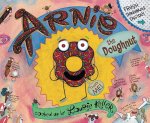 Boston Cream used to be my favorite doughnut until ARNIE rolled around. The original ARNIE picture book released the year my daughter was born and it was an instant hit in our house! I couldn’t get enough of the Ringy-Dingy-Doughnut-Making-Thingy™, Arnie’s owner Mr. Bing, and the humorous pastry asides sprinkled thru the story like so many…erm…sprinkles.
Arnie’s creator, Laurie Keller, wrote three chapter books about the delicious doughnut and now she’s circled back to a younger audience with HELLO, ARNIE!
Hello, Laurie! This is Arnie’s 5th book! When you wrote the first book, did you realize that you had a character worthy of multiple stories and genres?
No, I never thought about doing another book about Arnie. But when I decided to try my hand at writing a chapter book, my editor suggested writing one about Arnie. I wasn’t sure that could work—I figured his story had been told now that he was happily settled in as Mr. Bing’s doughnut-dog—but once I started playing around with it, I saw he was ready for some more adventures! And his latest story, HELLO, ARNIE! is more of a prequel to the original book for younger audiences.
I’m so glad you decided to write the chapter books about Arnie… Because we also got Peezo the pizza slice!
Why do you think Arnie is such a successful character?
Yes, Peezo! He evolved as I started writing the chapter books. I didn’t have a plan for a new BFF for Arnie but I’m glad he appeared—he has a wacky pizza-nality!
I’m not totally sure why kids like Arnie but perhaps because he’s very child-like himself. He has a natural exuberance for life but experiences ups and downs like we all do. And maybe just because he’s a DOUGHNUT! Who doesn’t like a good doughnut?
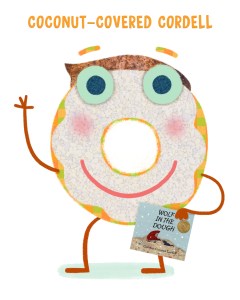
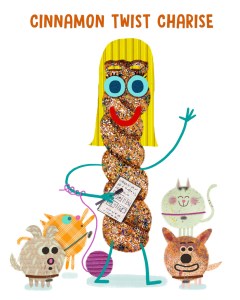
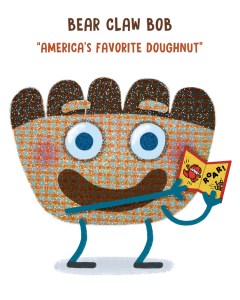
Of course, everyone LOVES doughnuts. They might love them so much, they want to BE a doughnut! I understand for the release of the book, you’ve re-imagined some children’s book creators in delicious, deep-fried forms. Care to share?
Absolutely! I was going to make about 20 “donut portraits” of some author/illustrator friends and a few teachers and librarians just for fun to celebrate the release of HELLO, ARNIE! but I got on a “roll” and ended up with over 40 (yours included, Tara Eclair)!
I am HONORED! And stuffed with cream! (The flower between my teeth is a nice touch.)

Here are the others! See if you can guess their authorly identity!



Do you think you’ll create any more ARNIE books?
Unless he gets eaten, I think I might!
We would all love that!
HELLO, ARNIE is a little different from the style of the original ARNIE book. Could you explain how and why you made the change?
Yes, it’s quite a bit simpler! The original Arnie story has quite a bit of text and also many asides (they’re not an integral part of the story, they’re just added jokes and banter). So many times over the years librarians and parents have told me that they love Arnie’s story but that it takes a long time to read since kids will never let them skip any of the asides! That’s kind of a fun problem really, but it can be difficult when it’s being read aloud for story-time or bed-time and and time is limited. So when I got the idea of making a “pre-quel” I decided to address that problem and make it a simpler/quicker read. As a result that skewed it to a slightly younger audience which I kind of liked since most of my books are in the 4-8-ish age bracket. That being said, I still tried to keep the humor in line with Arnie’s other books with the hopes that it would still appeal to a broad range of readers.
And I can attest that ARNIE is the same goofy guy with dozens of pastry friends, including one very special addition. It’s a mega meta delight and I’m certain that audiences will eat it up! (The book! NOT ARNIE HIMSELF!)
Thanks, Laurie, for sharing this adorable new ARNIE with me and Tara Eclair.
Hmm…I’m suddenly very hungry!
If you are, too, blog readers, leave one comment below.
A random winner will receive a copy of HELLO, ARNIE!
The winner will be chosen at the end of the month. Good luck!
by Steve Barr, Author/Illustrator and Founder of Drawn To Help
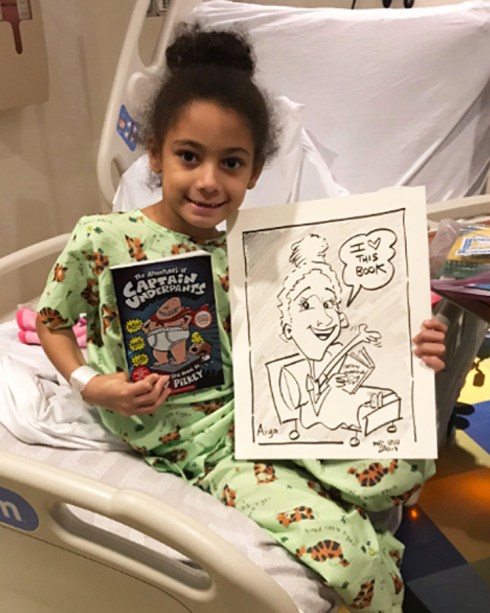
Children’s books provide a wonderful opportunity to escape from reality and get lost in a world of make-believe.
But did you know they can also help children heal?
It’s a process known as “pleasant distraction”. Creative activities like art and music have been shown to reduce stress in young patients and play a powerful role in their healing process.
Drawn To Help, a small (but growing!) nonprofit takes professional cartoonists and children’s book illustrators to visit pediatric patients in hospitals. We also serve camps for kids with a wide array of serious medical challenges.
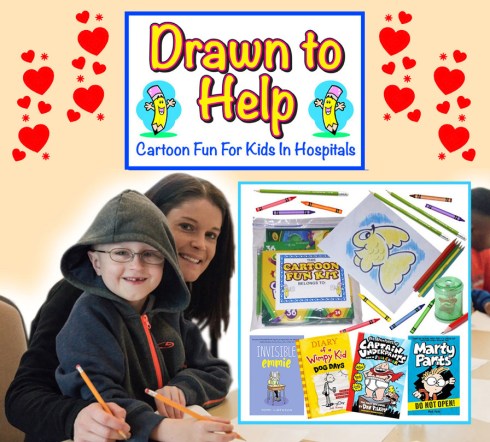
Every child Drawn To Help sees is given free drawing lessons and a packet of art supplies. They also get free books they can keep, and that’s where the children’s book community has really stepped up to help.
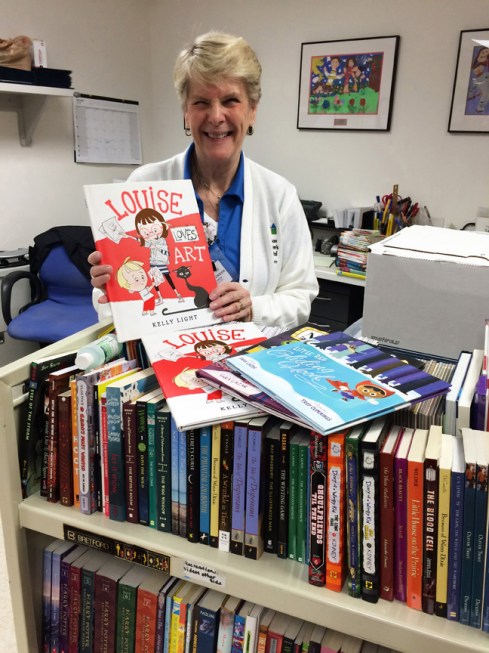
Most of the books that are donated to us go directly to the children. But sometimes they’re given to hospital staff members who put them on library carts and take them from room to room, so even more kids can enjoy them.
These books that were given to us by Kelly Light and Tara Lazar were shared with patients at Wolfson Children’s Hospital in Jacksonville and helped bring smiles to lots of little faces!
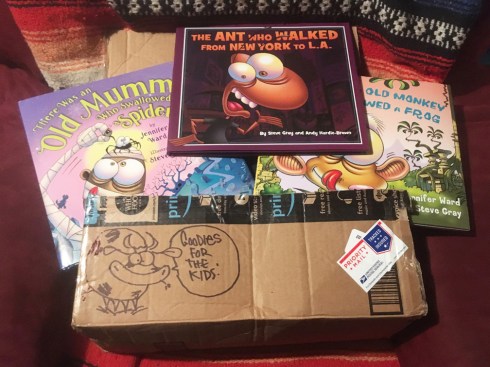
Illustrator Steve Gray sent us a package of autographed books with original sketches inside the cover, and the children who received them went absolutely crazy over the fact that someone they had never met in person was thinking of them and wishing them well.
Dav Pilkey and his wife have donated boxes and boxes of “Captain Underpants” and “Dog Man” books that are signed as well, and those have touched the hearts of little patients deeply.
You can watch their faces literally light up when they receive these gifts.
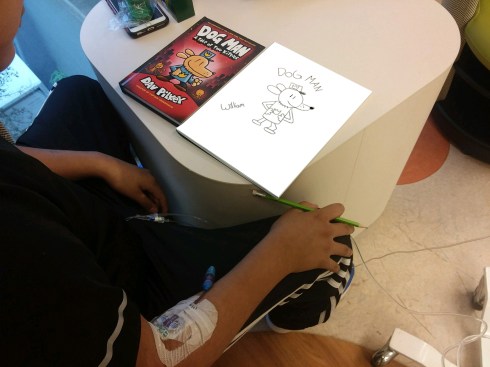
Getting an autographed book from an author or illustrator they admire can bring such joy to children receiving medical treatment. This young patient copied drawings of Dog Man from one of Dav Pilkey’s books to deflect his attention from his chemotherapy treatment, and then he read the entire book from cover to cover.
Writers and illustrators have donated their time to work directly with the children. Blythe Russo joined our volunteers in Cincinnati Children’s Hospital to share her love of art and her drawing by being part of a regular program we host via Seacrest Studios. Children who can’t attend in person can watch the shows on the televisions in their rooms and call in to participate.

Original art has been donated to help with fundraising. And when we’ve encountered kids who are seriously interested in growing up to become writers and illustrators, artists and authors have sent them helpful tips and information to encourage them to chase their dreams.
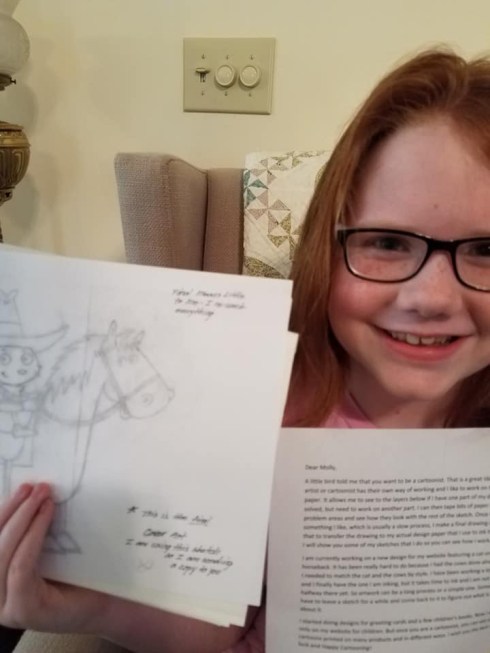
Nancy Herndon-Robinson sent an incredible amount of material to young Molly, explaining her processes and the preliminary work she does when she’s creating her work.
And now, in a time when Covid-19 makes it impossible to safely visit the children in person, Drawn To Help is expanding our digital outreach. We’re not only doing visits with young patients via Skype and similar programs, we’re also preparing a vast digital art activity library for them.
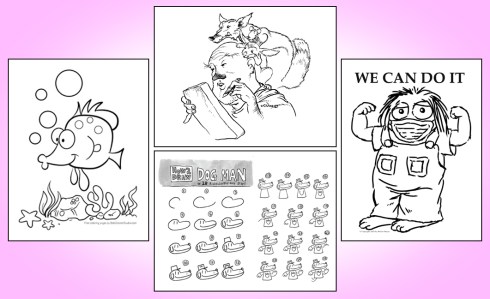
It will be given to caregivers on flash drives, and can be worn around the neck on a lanyard for easy access. And once again, people in the children’s publishing world have leapt to the rescue. They’ve given us permission to share a wide array of their coloring pages, mazes and other activities with the kids we serve.
Gifts of signed books continue to come in, and that’s great because we want to be fully stocked and “ready to roll” when we can safely return to the hospitals in person. But we can always use more, so feel free to contact us if you’d like to donate some and see them go to wonderful new homes.

Please don’t hesitate to reach out if you’d like to be a part of what Drawn To Help is doing. You can shoot us a note at info@drawntohelp.com and ask any questions you might have.
And perhaps you’ll help us not only lift the spirits of children who need us right now, but also inspire and encourage part of the next generation of children’s book writers and illustrators.
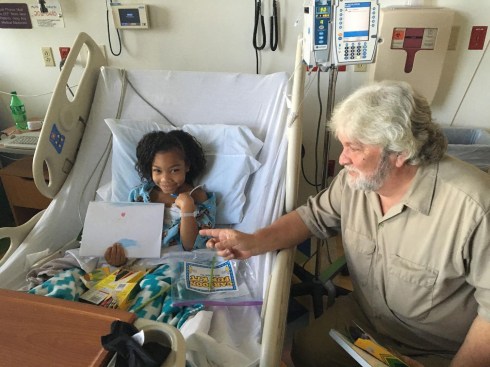
Together, we can make amazing things happen!
Drawn To Help is a 501(c)3 nonprofit organization. Contributions for the charitable purposes of Drawn To Help are tax-deductible to the extent permitted by law.
If you’d like to learn more about what Drawn To Help does, these links will help you find more information about us.
Visit the Drawn to Help website: drawntohelp.com. If you’d like to find out how you can get involved, please feel free to send us an email through our website.
Join Drawn to Help on Social Media Facebook Page: facebook.com/DrawnToHelp/
Home Sweet Home.
While we all hunker down at home and sometimes complain these days, really, it is our most treasured space. Be it ever so humble, there’s no place like home.
Jane Smith’s new book HELLO, NEW HOUSE seeks to inspire calm and comfort with what can be a major upheaval in a young person’s life, or really, anyone’s life—moving.

Jane, how did you get the idea for the book?
HELLO NEW HOUSE is inspired by my real-life, coast-to-coast move with my husband & young daughter from Hermosa Beach, California in the Southbay of Los Angeles to Wilmington, North Carolina. From the beginning, the move was a study in compare and contrast. We wanted to stay by an ocean in a warm climate, but we also wanted to settle down somewhere smaller, quieter, slower. For all that stayed the same, a lot was different; weather (hurricanes!), landscape, plant life, houses and more. I wrote HELLO NEW HOUSE as a kinda of meditation for those moments when settling into our new home was more challenging than fun. And I knew it would be comforting for others, too. Especially kids.
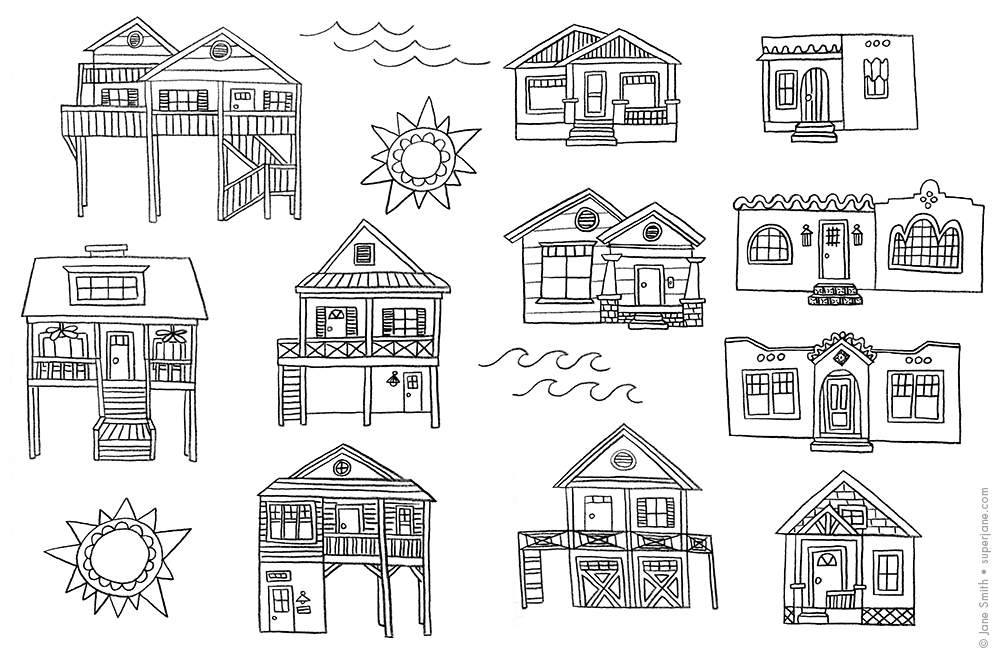
Coloring page!
Your spare language is so soothing. Was that a deliberate choice to keep the language simple?
Thank you! Yes, it was a deliberate choice. I wanted the text to have a gentle flow that was easy to read, easy to connect with and very direct in its meaning.
And the simplest things can be the most difficult! Did the story go through major revisions?
The only major revision along the way was a shift in the original ending that my editor, Andrea Hall, very smartly requested. Initially, the ending focused more on the new friend and that human connection to the new place, but Andrea saw right away that we needed to make one more leap from there, brining the story back full-circle to Callie’s family, which of course, is the most important thing that remains the same.
(All that said, though, the final manuscript was still the 11th draft!)
11th draft? Wow. What kind of changes did you make along the way and over what period of time? You’re also the illustrator, so when did you decide it was ready for the dummy stage?
Mostly, tweaks of language—creating better flow, pacing and musicality. I wrote the first draft of the manuscript early in 2017. It came fully formed for the most part, but I didn’t start creating the thumbnail dummy til late in 2018—over a year later. I was a bit in my head about the artwork as I wasn’t sure my style could capture the story. Drawing people and landscapes felt a bit intimidating. I initially felt that the story would be better served if someone else illustrated it! And since I always have multiple projects in the works at any given time, it was easy to put it aside for a good long while.
But then I turned 40 and was wondering if I’d ever sell another book and that lit a fire under me. I made it a goal to get a fully fleshed out dummy to my agent, Nicole Tugeau, that year, so we could begin the submission process. I found my way back into the story visually by playing in my sketchbook with character drawings as well as drawing houses specific to each region in the story. This process allowed me to ease into creating the thumbnail dummy. And by December 2018 the thumbnail dummy book was complete and Nicole had the project out to publishers by Christmas. We sold the project to Albert Whitman the following summer in 2019.
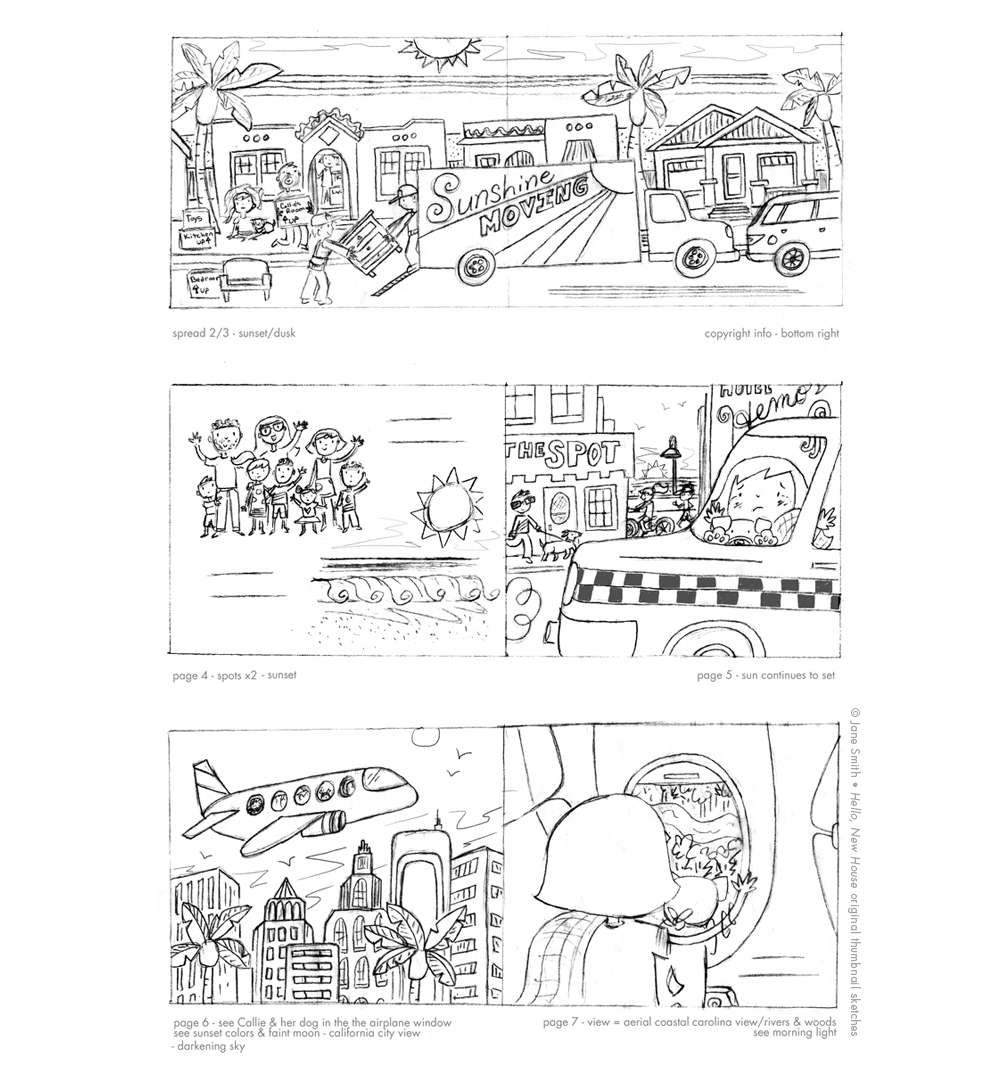
What do you hope children will take away from the story?
My hope is that HELLO NEW HOUSE will help kids identify and connect with the consistent touchstones in their lives (like comfort objects, pets, friends & family) in a way that helps them navigate big change. Like a big move! And that in doing so, they are also better able to embrace the adventure of big change. New places. New friends. New experiences.
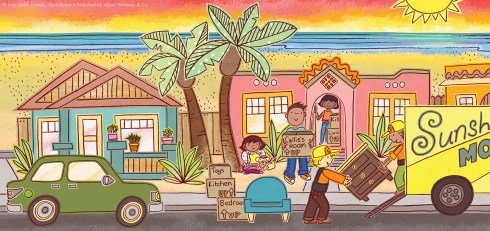
Yes! Change can be scary…but change is also exciting!
I’m excited for your book which releases from Albert Whitman on October 1.
Blog readers, you can win your own copy!
Just leave one comment below.
A random winner will be chosen next month.
Good luck!
 Jane Smith is the author-illustrator of the 6-book CHLOE ZOE picture book series, published by Albert Whitman & Co. Her forthcoming picture books, HELLO NEW HOUSE (Albert Whitman & Co.) and MISS MEOW (West Margin Press) will release in fall 2020 and fall 2021 respectively. Jane earned her BFA in Illustration at the Columbus College of Art & Design before beginning her career in publishing as an art director of children’s novelty books. She currently creates artwork for a variety of publishing and art licensing clients in her Wilmington, North Carolina studio. Visit her online at superjane.com, Instagram @superjanesmith and Twitter @SuperJaneArtist.
I’m wowed by many covers, but I’m especially jazzed about this one for Megan Hoyt’s picture book BARTALI’S BICYCLE, about an athlete who quietly saved Jewish families during the second World War.
It’s got this retro yet modern vibe, thanks to Italian illustrator Iacopo Bruno.
1938 Tour de France winner Gino Bartali was an international sports sensation! Then soldiers marched into Italy. Tanks rolled down the cobbled streets of Florence. And powerful leaders declared that Jewish people should be arrested. To the entire world, Gino Bartali was merely a champion cyclist. But his greatest achievement was something he never told a soul—that he was working with the Italian resistance to save hundreds of Jewish men, women, and children, and others, from certain death, using the one thing no authority would question: his bicycle.

Megan! Congratulations on your beautiful book!
How did you feel when you first saw the cover?
It was beyond my wildest expectations! The colors were so rich and the expression on Gino’s face was so serious and determined. And the fact that he included the medal Gino Bartali was awarded for being “righteous among the nations” after saving so many Jewish families—you’ll find out more about that when you read the book—made it extra special to me as a Jewish author. It’s on the back cover.
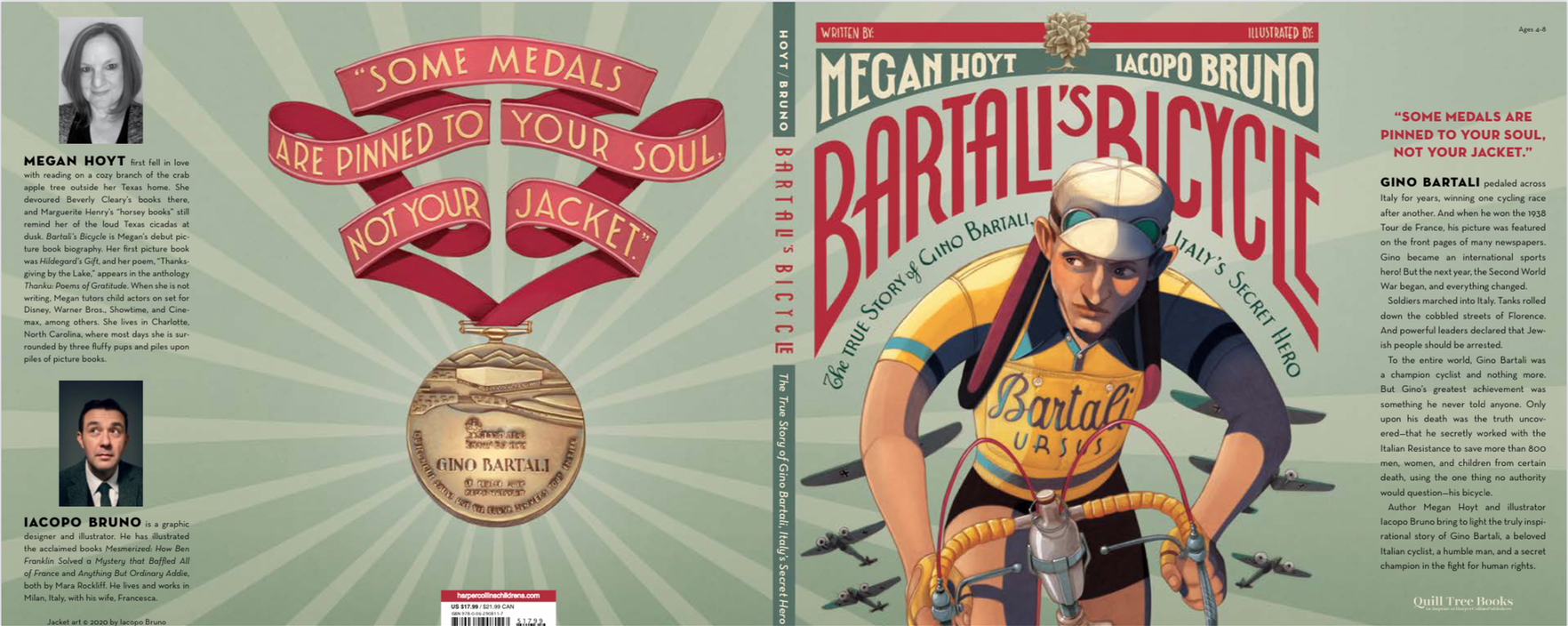
 I love Bartali’s expression of quiet determination in the illustration. Iacopo took the original photo and transformed it to reveal so much about what’s inside the man and the book.
What feelings do you want the cover to evoke in your readers?
Mystery! Intensity! I hope a child picking up my book for the first time will want to find out what secrets this award-winning cyclist is keeping. I hope it makes them curious! I also hope, after they read it, that Bartali’s Bicycle will inspire children growing up today in such a hostile political climate to become adults of integrity and courage and generosity. I have big dreams and high hopes for the coming generation! Kids today have been through a lot, and I hope when they read Bartali’s Bicycle they will be excited to learn what true heroism is all about.
Why is his story so special to you?
When I first heard about Gino Bartali’s success as a Tour de France winner just before World War II began, I thought, oh, that’s nice. He rides bicycles really fast. Good for him. Then when he died in 2000, suddenly people began coming forward to share their stories. He had secretly saved more than 800 Jewish Italians from certain death, and he never told anyone! When the story broke in Italy, elderly women ran out into the streets weeping. It was unbelievable. I knew I had to tell the story to American children, too. May we never forget. And during this particular time, at this moment when we are facing down racism and staring anti-semitism in the eye and saying no more, I hope our book will boost those efforts. I know in time we humans will learn the hard lessons we need to learn. And Gino Bartali’s story will, I hope, help us get there just a wee bit sooner!
I understand you went to Italy and had a chance to meet with the illustrator Iacopo Bruno!
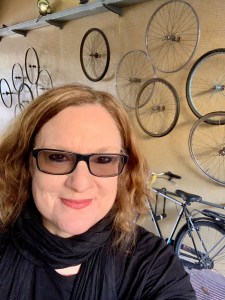
Yes! When I scored a $300 flight to Italy, I asked if he wanted to meet since he lives in Milan. Just name the place, I said. And he chose (of course) a bicycle cafe! There were bicycles hanging all over the restaurant, and they sold racing gear, too. It was the perfect spot! Thank goodness he brought his wife Francesca because he does not speak a lot of English, and I don’t speak much Italian. We went to his studio after lunch and I got to see sketches from his latest work in progress and final sketches of our beautiful book! And he gave me a gift! I didn’t think to get him a gift. Is that an Italian thing or is he just the nicest illustrator ever? And so talented—he created art for the book that makes you feel like you fell into a 1940s movie or something. It’s so retro and cool!

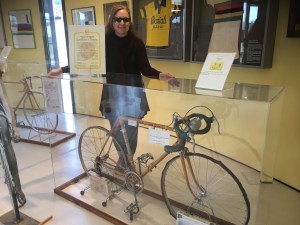
My husband and I also went to the Gino Bartali Museum in Florence and the Museum of Memory in Assisi. Everywhere we traveled, people wanted to talk to us about how wonderful Gino Bartali was. They told us the same stories over and over, but we never got tired of listening to his fans talk about him. And I interviewed his granddaughter, Lisa Bartali, who wrote a note for the back of the book. We messaged back and forth on Facebook, and she shared screen shots of books written about her grandfather in Italian. I typed each page, first in Italian, then put them through Google Translate to see what in the world I was typing. It was wonderful to find Italian sources. Writing non-fiction is no joke. This was difficult research! In the end, so worth it!
Amazing! So few authors have the opportunity to meet our illustrators in person. What a thrill!
And blog readers will also have a thrill…because Megan is giving away an F&G of BARTALI’S BICYCLE before it’s released on February 23, 2021 from HarperCollins/Quill Tree.
Leave a comment below to enter.
A random winner will be chosen in October.
Good luck!
I know. You’re still stuck at home. I’m with you.
But also…NOT with you. I’m in my home, without you.
So I’m glad to be talking about A CROWDED FARMHOUSE FOLKTALE today. It’s all about the home!
Author Karen Rostoker-Gruber is here (again, not really here) to tell us why is this tale is so appealing for our difficult times.
In my book, Farmer Earl has had enough! His home is too crowded! So, he visits the wise woman in town for help. She tells him to bring all his ducks in the house. And then all his horses. And all his goats too! How will there be more room with all these animals?
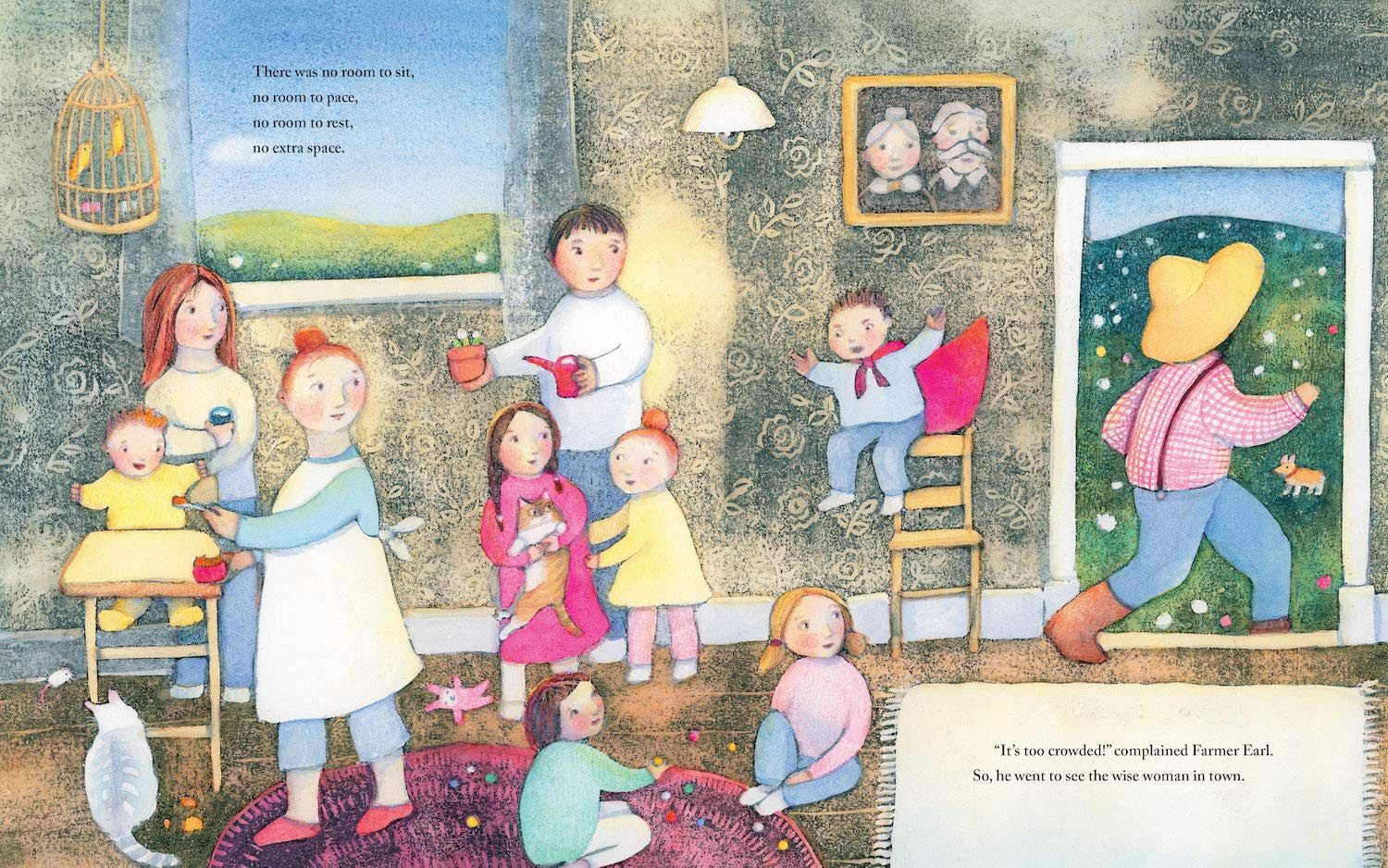
Once Farmer Earl follows the wise woman’s advice, he comes to realize that his crowded house was really not as bad as he originally thought.
Eureka, Farmer Earl! That’s a very wise wise woman.
The timing of this tale couldn’t be more perfect as people are stuck inside during COVID. Living quarters are being shared with families—24/7—with no breaks. Parents are working from home, kids are remote-learning, and a lot of people are getting frustrated. Computers can’t even take it anymore as they’re crashing as well.
We need to appreciate our homes, now that we’re spending so much time inside them.
Plus, this book has a toilet paper scene—very COVID—which really quacks me up! See the duck?
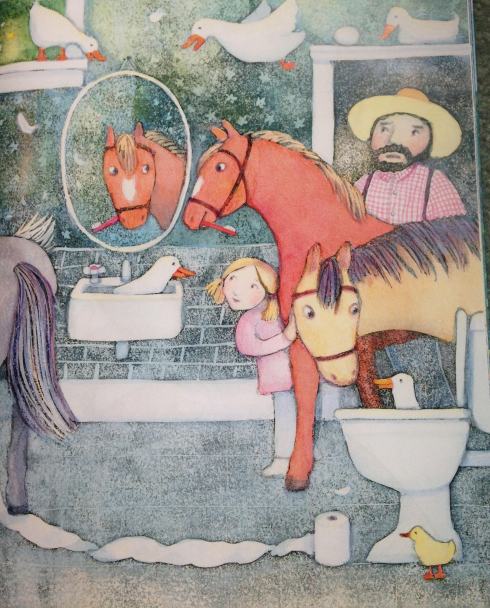
Kristina Swarner, the illustrator for this book, did a wonderful job adding humor to each spread.
I asked my editor if Kristina could make the duck on the front cover of the book take a bite out of the letter “A” in the word “FOLKTALE,” since the duck stood soooo close to the words anyway on the top of the roof. That was my contribution to the art.

If you look closely at some of the illustrations, the cats in the book are NOT amused with all of the ducks, horses, and goats coming into the house and wreaking havoc—typical of cats. It’s those tiny things that Kristina did that elevated my writing and made me laugh-out-loud.
Because this book is basically about being thankful for what you do have, I had Dawn Kiron, a social worker, write a teacher’s guide, which focuses on gratitude: how to keep a gratitude journal and jar/box and how to be thankful for the things that you do have.
OK, so Karen, let’s practice what you preach. What are you grateful for?
Hah! I’m grateful that an editor liked another one of my manuscripts enough to offer me a contract. This will be my 16th traditionally-published book. I’m very grateful for that, too.
These days publishing is tough and extremely competitive. Literally everyone (grandmothers, celebrities, and apparently cats) are writing books for children.

If you thought the publishing process was S L O W BC (before COVID) wait until you try and submit now. However, there’s a conference that is virtual this year, which was the best conference that I had ever been to—The RUCCL One-On-One Plus Conference. Two of my manuscripts were signed up as a result of the editors that I met there.
Up until this year, an applicant was accepted into the conference depending on their writing ability (by submitting a sample manuscript.) This year EVERYONE is invited to attend.
If you want to get published then. . .get out of bed, walk to your computer on October 24th, and log in! No more excuses!
Thanks for the RUCCL plug, Karen! I’m actually co-chairing the event this year, which we’re calling the RUCCL “Home-to-Home” Conference because, well, we’re all stuck at home. However, gratefully so! (Info on this year’s event will be on the website in a day or two!)
A CROWDED FARMHOUSE FOLKTALE releases from Albert Whitman on October 1, so you can pre-order now.
Karen is also giving away a copy to a blog reader!
Leave one comment below to enter.
A random winner will be selected at the end of the month.
Good luck!
A new non-fiction picture book biography from Laurie Wallmark? YES, PLEASE!
But first, let me tell you a few facts about my friend Laurie.
- We were in our first critique group together 13 years ago.
- We’re in a critique group together again now.
- She was the first person to tell me an agent wanted to talk to me. (Yes, this one’s about me.)
- We chair the RUCCL 1-on-1 Conference together. This year it will be the RUCCL Home-to-Home Conference.
- She loves writing about “dead women in STEM”.
When asked about why she likes writing about these women, Laurie says that she’s guaranteed they won’t make any major discoveries AFTER their biography is published.
Excellent point.
And now, let’s reveal the cover for CODE BREAKER, SPY HUNTER, illustrated by Brooke Smart!

CODE BREAKER, SPY HUNTER: HOW ELIZEBETH FRIEDMAN CHANGED THE COURSE OF TWO WORLD WARS tells the exciting story of how Elizebeth’s code-cracking skills helped capture rum runners and break up Nazi spy rings. But there’s more…
Take a look at the book cover. See how a ribbon of letters surrounds Elizebeth? It contains a coded message. Other hidden messages are scattered throughout the book’s illustrations. Can’t figure it what they say? When you read the book, the back matter will show you how to crack the code.
OOOH! EXCITING!
This book will be released by Abrams Books for Young Readers on March 2, 2021.
Let’s also take a sneak peek inside!
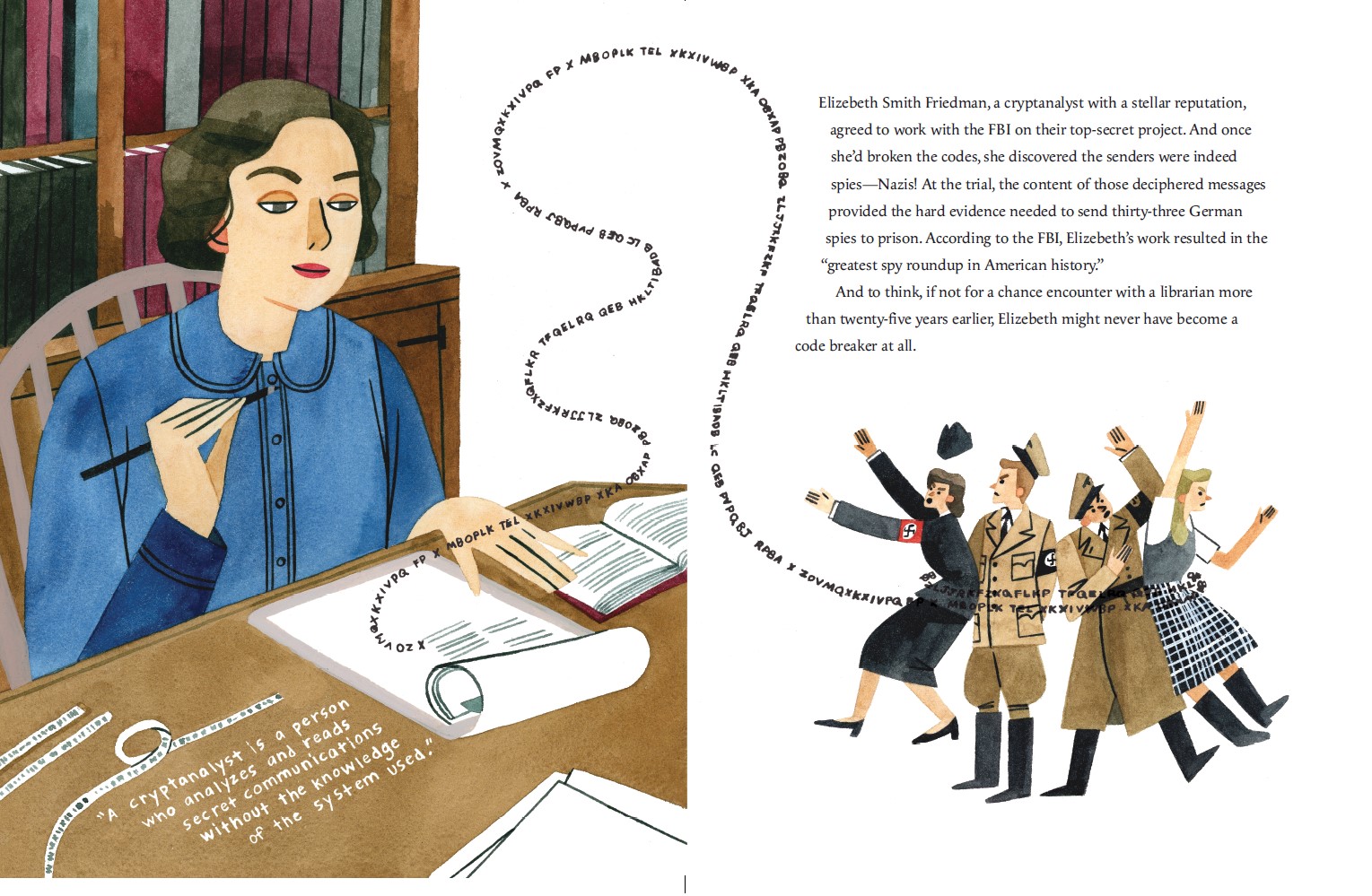
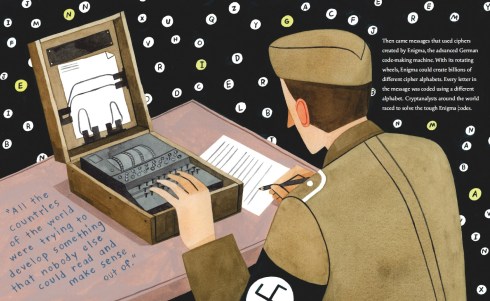
Looks like another winner by Laurie!
Now if I could only break the code of writing a picture book biography…





 Writing for Kids (While Raising Them)