You are currently browsing the monthly archive for September 2019.
Recently a film by Pixar called “Bao” received the Oscar for Best Animated Short Film at the 91st Academy Awards. The short featured a Canadian-Chinese mother whose son grew up and moved away, so she was feeling lonely. Enter a perfect, plump bao to give her a second chance at motherhood.
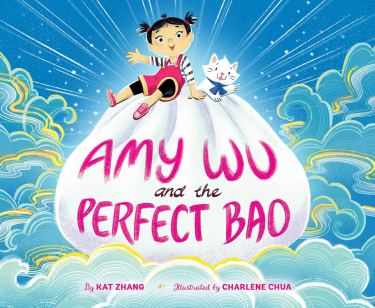
Since then, I’ve been a tad obsessed with the yummy bao. I enjoy one every time I shop at the Asian grocery. So I was excited to learn of a new picture book coming out on October 1: AMY WU AND THE PERFECT BAO.
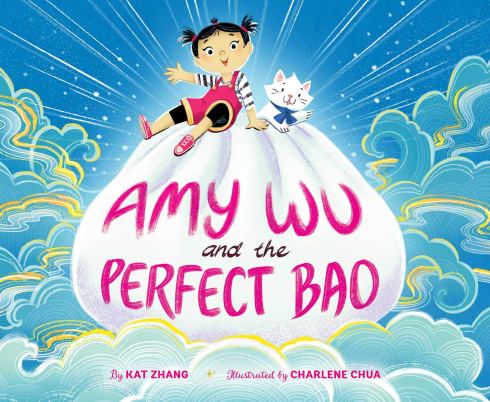
What a cover! Not only is there a perfect bao, but Amy and her kitty are pretty darn adorable, too.
I asked the author, Kat Zhang, and the illustrator, Charlene Chua, a few questions. I also had them interview one another. They discussed the story and the delicious ideas behind it.
Kat, what inspired you to write Amy Wu and the Perfect Bao?
Making bao and mantou (another kind of Chinese steamed bread bun) with my parents is such a treasured childhood memory for me. As I grew older, and the whole family got busier, we made them less. It wasn’t until I was in late high school or early college that the bao-making bug struck me again, and I became obsessed with making bao that were as good as the ones I had in restaurants. Many, many rounds of lumpy, leaky, over-and-underfilled bao later, I not only had a darn good bao recipe, but an idea for a new book!
What was your reaction to Charlene’s illustrations?
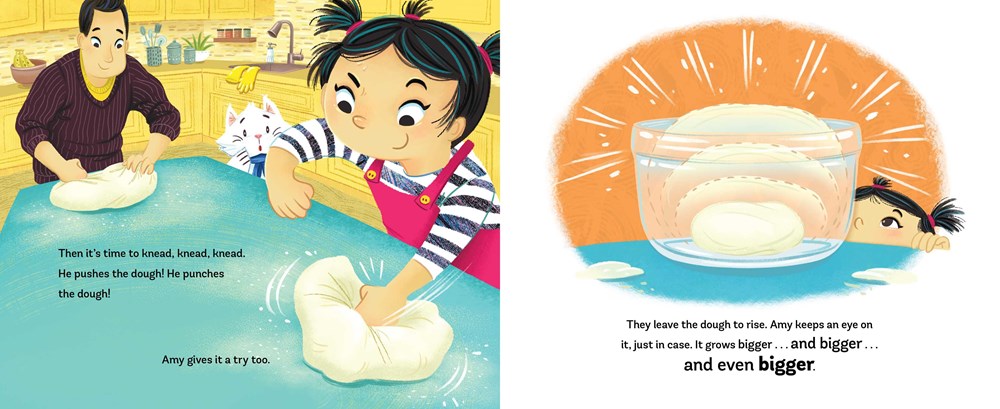
AMY WU AND THE PERFECT BAO is my debut picture book, and seeing Charlene’s illustrations has honestly been one of the most thrilling parts of the whole process! I had a general idea of how I pictured the characters and illustrations, but I was eager to see how an illustrator interpreted the text and the characters as well. Charlene did such an amazing job giving Amy’s family dimension and character through the illustrations, and I especially loved the addition of the little kitty, who wasn’t mentioned at all in the original text. Now I can’t imagine the book without it!
What do you hope young Asian-American/Canadian readers will get from this book?
The opportunity to see people like yourself in media is such a big deal, and honestly, something I don’t think I fully grasped until I was older. As a kid, I don’t remember specifically thinking that I wished there were more Asian-American characters in media. But not seeing myself reflected in the books and movies I consumed definitely contributed to my internalizing a lot of things as a kid about what sort of things I “fit” into. I was perpetually on the outside looking in. I hope that AMY WU is just one more opportunity for a kid to recognize themselves in Amy’s family. And of course, on the other side of things, I hope it lets non-Asian American kids explore a culture different from their own.
What is your favorite detail from the book that reminds you of your own homes/households?
I absolutely loved all the details Charlene snuck into Amy’s house! My mother has a total green thumb, so when I was growing up, we definitely had the bamboo plants, and the big leafy plants all over the house. Our steamer was metal, but I totally wish we had a cool woven one like Amy’s family!
What is your favorite bao?
I have a sweet tooth, and I love red bean paste bao and lotus paste bao!
Charlene asks Kat: Did the story change a lot from 1st draft till the version I got to illustrate? If so, what were the big changes?
Amazingly (at least for me, since my stories often undergo big changes from my first idea to the final draft!), AMY WU AND THE PERFECT BAO didn’t change much from the very first draft I wrote. The biggest tweak was probably having Amy herself come up with the solution of cutting the bao dough into smaller pieces so that they fit her hands better. In the first draft, it was Grandma who came up with the idea!
Kat, which is your favorite page/s in the book?
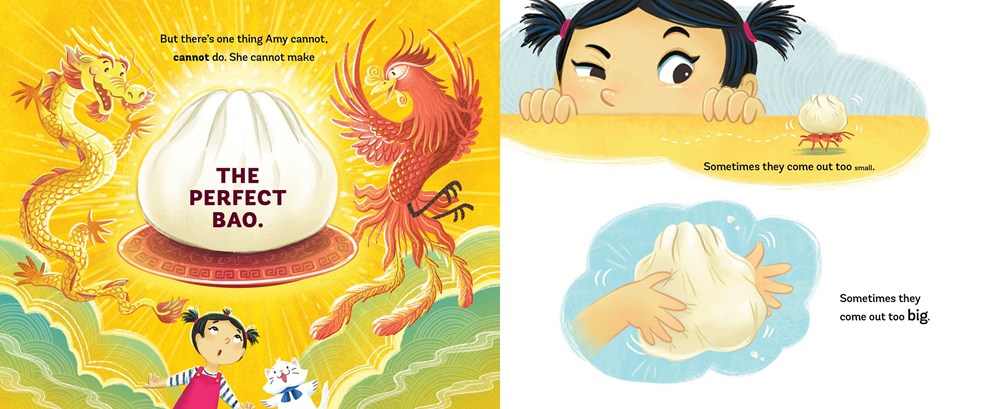
This is so hard to choose! I love, love the page with the phoenix and dragon surrounding Amy’s vision of a perfect bao, but I also laughed out loud when I first saw the page of her and Kitty with the three “messed up” bao. The “Perfect Bao Plan” page is also amazing. Really, I just love them all!
Did Amy and her family turn out looking like what you originally imagined them to be?
They did! I hadn’t originally imagined Grandma with pink hair, but I think it adds something great to her character. Amy is every bit the spunky, vivacious kid I wanted her to be!
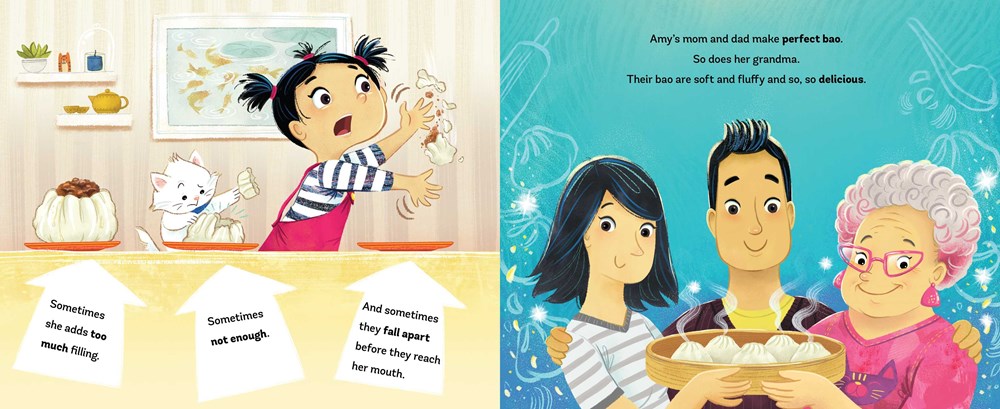
Charlene, what was your inspiration for Amy Wu’s look—her hair, her clothes, her body language, etc.?
When I first read Kat’s manuscript, I thought that Amy was a very cheerful, enthusiastic girl, with a good amount of confidence in whatever she set her mind to doing. It was great to have a story with a young Chinese girl who isn’t afraid of expressing what she wants or how she feels. Amy is also character that sort of needs to be All-Amy, all the time, and I tried to match her design to those qualities. Amy’s actions are depicted with bigger gestures, because she’s not shy at showing how she feels. Her clothes allow her freedom of movement, and feature bold and eclectic colors.
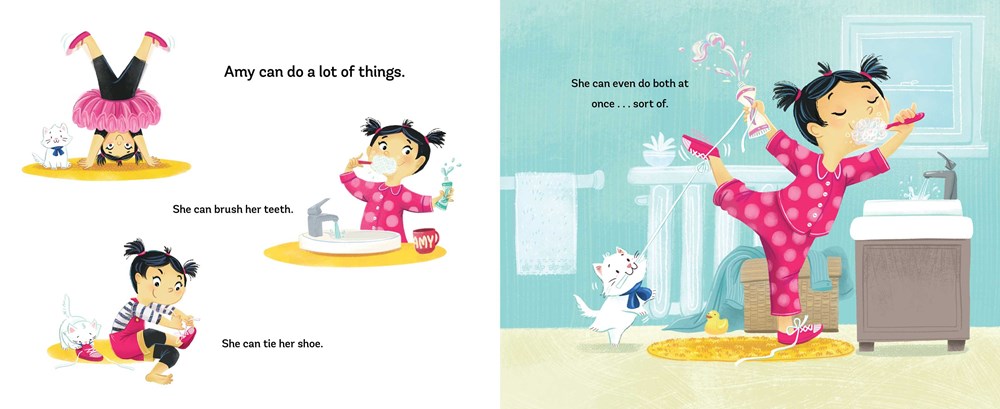
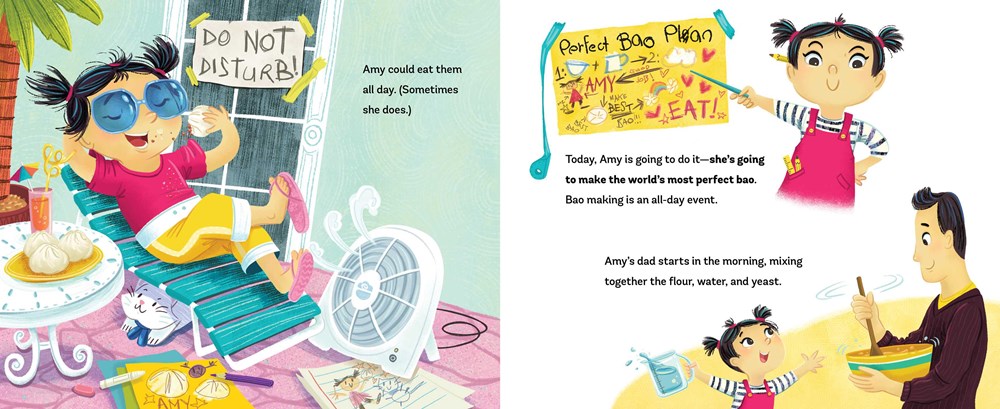
What inspired you to create Amy Wu’s cat friend?
I had attended a kidlit conference shortly before starting work on the book. At one of the talks, the speaker mentioned that animals were a way to add more visual interest to a story, without altering the narrative. The thought stuck with me, and I’ve been trying to incorporate it ever since. With Amy’s story, I also really like Amy’s personality, it’s very strong – but to really show that, sometimes you need to contrast it with a softer character, such as a younger sibling that can look up to or copy the ‘stronger’ character’s actions. Since Amy doesn’t have any younger siblings, I thought that maybe her having an animal companion would be able to achieve the same effect. I also just like cats, and will take any opportunity to stick one into a story!
What do you hope young Asian-American/Canadian readers will get from this book?
I hope that readers who identify with Amy and her family will be excited to see a family like their own in this book. But I also hope that readers from all backgrounds will enjoy it too. You don’t have to be from an Asian family or know about Chinese food to enjoy the book—it’s very accessible so I hope that people will check it out just because it’s a neat story.
What is your favorite detail from the book that reminds you of your own homes/households?
The kitchen stove in the story is more or less based on my actual stove. It’s a gas stove, because I’ve cooked with gas all my life. My mum cooked with gas, and my grandmothers did too (one grandmother liked using charcoal as well, but that’s another story). The rice cooker also looks similar to the cooker I grew up with, although the one I use now looks different.
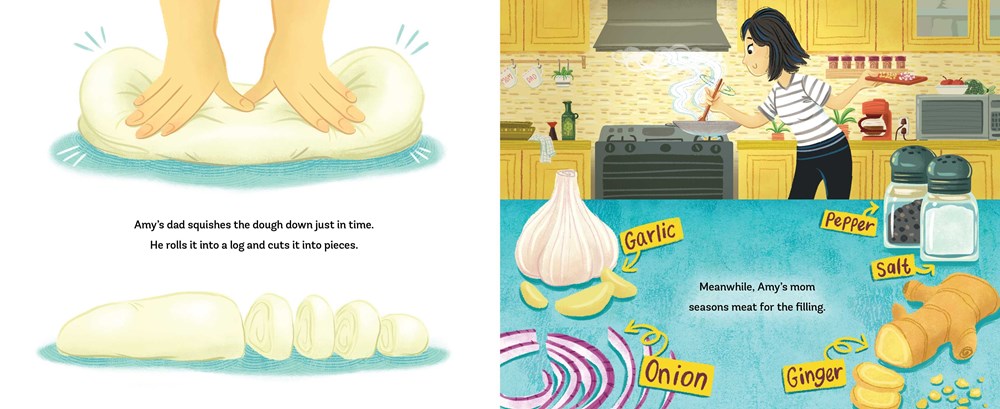
What is your favorite bao?
Char siu bao! (Chinese barbeque pork.)
Kat asks Charlene: I loved getting multiple versions of the illustration for each page during the initial stages of book coming together. How do you brainstorm various ideas for an illustration? What factors do you take into consideration?
I like trying out different layouts to see what works best – usually the first idea I come up with isn’t the one I end up going with. Most of the art for Amy Wu was done digitally, but the thumbnails were done with pencil on paper. I like to sit in a comfy chair and doodle out thumbnails—it works better for me that way as it’s just me and the paper, no fancy screens or Undo buttons to concern me. When working on thumbnails, I consider the text for a particular page or spread, and how best to bring that to life. I also think about what I could possibly add to make it more fun or impactful. When all the thumbnails are done, I try to look at them as a whole to see which ones connect the best. Sometimes there’s a thumbnail for a page that looks great on its own, but when it’s strung together with the rest, it doesn’t work as well.
Artists often have a very unique signature style. What would you say are the elements of yours? Do you feel like it’s still evolving a lot, or something that’s remained stable?
It’s kind of hard for me to pin down my own style (I think many artists have that problem!). I guess my art tends to be quite energetic, usually with pretty strong colors. I think it’s evolved over the years, especially now that I’m working with more non-digital art for some other projects. But at the same time, I think if you looked at the older and newer work, it’s still possible to see the same artist behind it.
Thank you, Kat and Charlene, for sharing the stories behind the story!
Blog readers, you can win a copy of AMY WU AND THE PERFECT BAO when it is released.
Just add one comment below and a random winner will be selected soon! (Tara has many winners of recent contests to select!)
Good luck!
You can visit Kat Zhang at KatZhangwriter.com and Charlene Chua at CharleneChua.com.
 by
by Online writing challenges have been key to my career as a children’s author. I’m the kind of writer who needs external goals and deadlines to jumpstart my internal motivation. Challenges have helped me develop my craft, given me strategies for revision, and connected me with a vibrant writing community. Some of my favorites include NaPiBoWriWee, ReFoReMo, Susanna Leonard Hill’s writing contests, and, of course, Storystorm.
I’ve been participating in Storystorm since 2011. Back then, it was called Picture Book Idea Month (PiBoIdMo). That same year I joined SCBWI and found a local critique group. I was finally taking myself seriously as a writer!
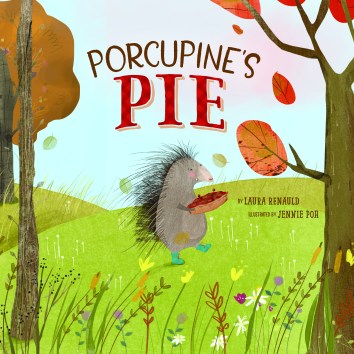
Fast forward three years. PiBoIdMo 2014 was in full swing and I was filling my notebook with ideas. After reading Tammi Sauer’s guest post about attempting ‘How-To’ books, I jotted an idea in my notebook that involved a pie and a porcupine. Little did I know that this alliterative idea was going to propel my writing career forward! Almost one year ago, in October 2018, my debut picture book, Porcupine’s Pie, was published.

Happy first birthday, Porcupine!
As I reflected on my journey to publication, the amazing connections I’ve made in-person and online in the Kidlit community, and the writing challenges that have motivated me along the way, I became aware of three things. First, I have benefited greatly from the generosity and support of other children’s authors and illustrators. Second, a debut author has an uphill climb when it comes to connecting with readers. Third, I wanted to find a way to give back. What better way to do that than to start my own challenge?
Introducing the DEBUT REVIEW CHALLENGE!

We’ve all heard about the importance of customer reviews. They act as a proxy for word-of-mouth recommendations. While there is some debate over how many reviews are “enough”, I think we can all agree: the more reviews, the better. Reviews lead to exposure and book buzz, which allows our books to get into the hands of more children. What could be better than that?
Anyone with a book can benefit from a review, but this challenge is designed to give a boost to first-time authors and illustrators. The Debut Review Challenge will encourage kidlit creators, teachers, librarians, and parents to write book reviews, specifically for debut books.
Here’s how the challenge will work:
- Read a debut book by a Kidlit creator.
- Write an honest review. Post it on Amazon, Goodreads, or other online sites
- Repeat! Once you complete 10 reviews, fill out this ENTRY FORM. You could win a signed book, a free Skype visit, or a manuscript critique, to name a few of the fabulous prizes donated by participating debut authors and illustrators. And you can enter every time you complete 10 reviews!
Be sure to follow #DebutReviewChallenge on Twitter and Instagram for debut creator interviews and chances for bonus entries. You can also find more info at my website, including a downloadable Review Record sheet. Go to LauraRenauld.com.
(And if you are a traditionally published debut kidlit creator who would like to shine in the challenge spotlight, click HERE!)
The first challenge begins in October. Won’t you join the fun?

Thanks, Laura! And congratulations!
To celebrate the first birthday of her debut picture book, Laura is giving away a signed copy of Porcupine’s Pie.
Leave one comment below to enter. A winner will be randomly selected soon!
Good luck!
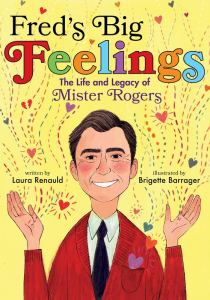 Laura Renauld is the author of Porcupine’s Pie and Fred’s Big Feelings: The Life and Legacy of Mister Rogers, which will be available January 14, 2020. (Just one of the many fabulous new releases from the 2020 Comeback Crew: @2020comebkcrew.)
Find out more about the Debut Review Challenge at laurarenauld.com, where you can also subscribe to her newsletter and blog.
Follow Laura on Twitter: @laura_renauld, Instagram: @laurarenauld, and Facebook: @kidlitlaura.
 by
by The year or two leading up to the publication of an author or illustrator’s debut book is a rollercoaster ride of exciting milestones (“I signed my contract!”), new experiences (“Hello, Copy Editor.”), and sheer terror (“You expect me to read my book aloud in front of how many children?”). And, like a rollercoaster, it’s best experienced with friends. That’s where debut groups come in.*
The Soaring ‘20s Picture Book Debuts is a collective of picture book authors, illustrators, and author/illustrators with debut picture books being released in 2020** and beyond. We’ve pooled our resources, talents, and sympathetic ears so none of us has to experience this ride solo—and that’s fitting because we certainly didn’t get this far on our own. We’re all in the happy position of awaiting the release of our books thanks to the authors, illustrators, teachers, editors, or agents who looked at our work and offered targeted feedback to help improve it.
And now we’d like to do the same for you!
To celebrate the launch our new website Soaring20spb.com, we’re giving away 20+6 free manuscript, dummy, or portfolio critiques in the MEGA SOARING ’20s CRITIQUE GIVEAWAY!
If you’ve been in the picture book game for a while, you probably already know the value of a thorough, thoughtful critique. But if you’re new to writing or illustrating for kids or you’re on the fence about whether or not to hand your baby over to a set of critical eyes, allow some of our members us give you a nudge:

“Critiques have been an essential step (many steps! multiple flights of stairs!) on my path to publication.”
Angela Burke Kunkel, author
DIGGING FOR WORDS: JOSÉ ALBERTO GUTIÉRREZ AND THE LIBRARY HE BUILT (Random House/Schwartz & Wade, Fall 2020)

“If you’ve put your all into your work-in-progress and are ready to see it with fresh eyes, a critique is a fun way to open new pathways in your brain and to rekindle your enthusiasm for your work.”
Shelley Johannes, author/illustrator
MORE THAN SUNNY (Abrams, Spring 2021)

“The more we embrace the journey of improving and collaboration, the more we learn and the better we become as authors, illustrators and artists.”
Sam Wedelich, author/illustrator
CHICKEN LITTLE: THE REAL AND TOTALLY TRUE* TALE (Scholastic Press, Spring 2020)
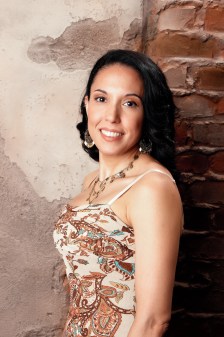
“I’ll always remember how Jo Whittemore, author of FRONT PAGE FACE-OFF, critiqued me years ago. She called problems in my manuscript ‘opportunities.’”
NoNieqa Ramos, author
BEAUTY WOKE (Versify/Houghton Mifflin Harcourt, spring 2021)
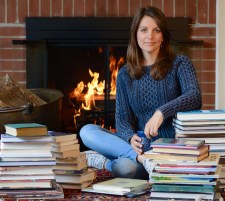
“The more you have your work critiqued, the less personal it becomes. You learn to listen for the gems of advice, questions, concerns, and ideas that other readers/writers have for you. Then when you take those gems and apply them to your work, the proof is in how much your writing is improved and how much your skill grows as a storyteller. And while this process sometimes has you feeling vulnerable and exposed, ultimately when you send your writing out into the world, you will feel so proud of it!”
Anna Crowley Redding, author
RESCUING THE DECLARATION OF INDEPENDENCE (HarperCollins, spring 2020)
Convinced? Go to our website to enter to win a free picture book manuscript, dummy, or portfolio critique in the MEGA SOARING ’20s CRITIQUE GIVEAWAY by midnight on September 15 and you could be one of 20+6 lucky winners!
*We’re not the only game in town! Check out KidLit411’s list of Debut Year Groups (scroll all the way down to the bottom).
**One of us got bumped up to 2019! Look for Author Saira Mir’s MUSLIM GIRLS RISE: INSPIRATIONAL CHAMPIONS OF OUR TIME (Salaam Reads/Simon & Schuster) on October 29.
Big thanks to Tara for letting us share the news about our giveaway on her blog!
(And Tara says thanks right back!)
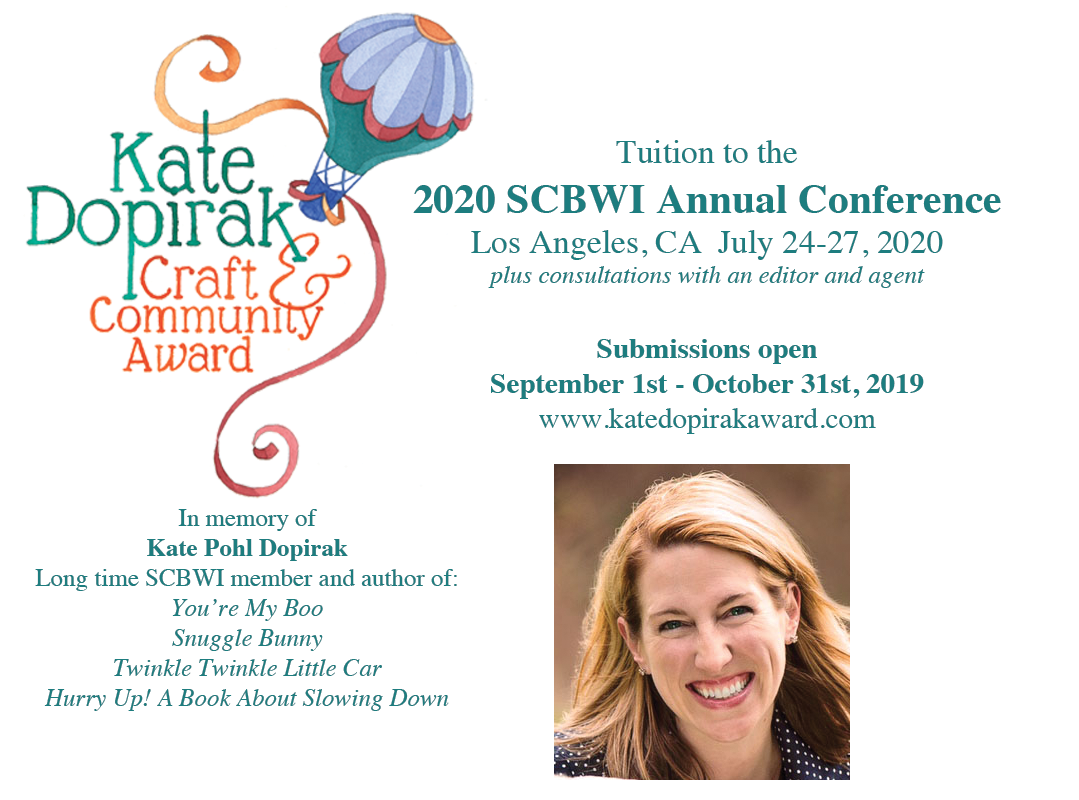
The Society of Children’s Book Writers & Illustrators (SCBWI) is offering a new award that honors the wonderful spirit and work of late children’s book author Kate Pohl Dopirak. The Kate Dopirak Craft and Community Award will offer one picture book writer:
- Full tuition to the SCBWI International Conference in L.A. in 2020
- A 20-minute phone consultation with Tracey Adams of Adams Literary (Kate’s agent)
- A 20-minute phone consultation with Andrea Welch of Beach Lane Books/Simon & Schuster (one of Kate’s editors)
The #KDCCAward will alternate yearly between picture book and middle grade/YA. Submissions will be accepted for this inaugural award from September 1 to October 31.
Please consider applying…and please help spread the word.
Thank you. ️ ️ ️
#KDCCAward20
#katedopirakaward
katedopirakaward.com
 by Salina Yoon
Ever wonder how those cute books with moving parts, lift-flaps, pop-ups, or touchable things get sold to publishers?
With a novelty book submission, the dummy is critical. Unlike other formats that may be story- or art-driven, a novelty book is format-driven. This means that the physical format can be even more important than the text, the story, the concept, or the art, though all of these elements have to work seamlessly together at the end. Creating a novelty book is like solving a puzzle on a multi-dimensional level. But the challenge is what makes it FUN!
The format has to be unique and versatile enough to work as a series.
But how do you build a book with moving parts?!
I’ll show you.

It begins with an idea. You sketch it out. This sketch is no bigger than 2”, but it’s got a lot of info here. The tail of an animal will wag by the pull of a pull-tab.
Since I already know that it would be important for the publisher to be able to make this into a series, I created a series title.
The things that I considered while creating the series title:
- Must highlight its most unique feature on the book
- Must be catchy
- Must inform reader how the book works
I came up with a WAGGING TAIL BOOK. But I revised the series title to A WAG MY TAIL BOOK for the final submission, which the acquiring publisher kept.
Then comes the tricky part. Before I do anything else, I have to figure out how to make the tail wag with a pull tab. What if you’re not a paper engineer? While I consider myself a format engineer, I’m not a paper engineer myself, so I sought one out. I happen to have a good friend who can really make paper do anything! Having some experience with novelty, though, I knew the possibilities and limitations. I explained how I wanted the tail to move with a tab on the side. She sent me various options, and this mechanic worked the best for me.
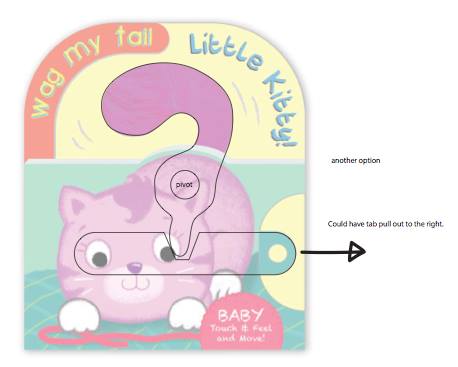
You could hire a freelance paper engineer, like Renee Jablow or carefully open up other books with a similar mechanic to the one you want, and see if you could recreate it. No need to reinvent the wheel. All paper-engineers pull apart other paper mechanics to learn from them! Don’t worry about making it perfect. This is for the purpose of submitting it to a publisher so they see how it works. If the publisher is interested, they would send this dummy to their printer, and the printer would re-engineer it (and clean it up)—and supply quotes to the publisher. Pricing is KEY in getting through the acquisition process. If it’s too pricey, it’ll be passed. Be sure to only include interactive elements that are absolutely necessary and cost effective.

Once I had the mechanic figured out, I worked on creating an art sample. But since I want to show this format as a series, I created four covers. After building the four dummies, I had to source the fabric for the touch-and-feel tail. This could be done by visiting a fabric store, or even a party store that sells costumes. All I needed was a tiny piece of fabric for my dummy. A fully designed dummy shows the publisher exactly how I am envisioning this series.
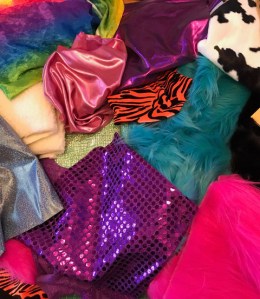
But I wanted to offer less-expensive versions of the dummy, too, so I did not put fabric on the tails of all of the animals. It’s nice to offer options.
After building the dummy, I created a video to show how the dummy works. This would allow me to share the dummy without actually sending it, unless it was requested.
The acquisition process for a novelty book typically takes far longer than a traditional picture book, even when the publisher is excited about it. Expect 7-12 months…or longer to get an offer, if one is coming! Some books have been acquired as late as 18 months after submission!
The Wag My Tail series was sold to S&S as a 3-book deal (though more are coming). Instead of going with the original concepts, the publisher asked for holiday themes, which was easy to apply to this format. The first book HALLOWEEN KITTY is available now, and the others will follow.

Don’t be afraid to tackle a novelty book idea. Take it just one step at a time—beginning with the format. It’s challenging on multiple levels, but you’ll have lots of fun and maybe less hair than what you started with. Good luck!
Thanks, Salina! What a fascinating process. You are the novelty master. How could any publisher resist?
You can visit Salina and her books online at SalinaYoon.com.
To celebrate the release of HALLOWEEN KITTY, Salina is giving away 5 copies of the book!
Leave one comment below to enter. Five random winners will be selected in a couple weeks.
Good luck!
I could not be more excited to celebrate my brand-new picture book KARATE KID on Tara’s blog. We all know she loves a good celebration.
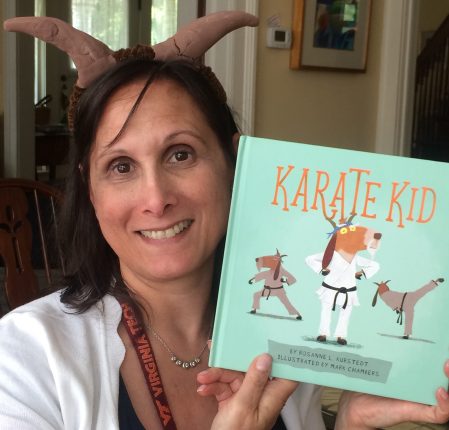
KARATE KID introduces readers to karate in a fun and engaging way with an emphasis on how karate can increase confidence. The simple, measured, and meditative text is complemented by playful yet instructive illustrations by Mark Chambers.
I’ve learned a lot in the last few months about launching a book in the age of social media…and about myself. So, I thought I’d share some thoughts from my experience.
My good friend Eva Natiello and I discuss writing and book promotion often. She is a self-published, New York Times best-selling author, so she knows a thing or two about reviews, pre-sales, and also finding angles to market a project.
Beginning in January, she started asking me what my thoughts were for promoting KARATE KID. I said I was going to reach out to some local bookstores, schools, and probably do a blog tour. She asked, “but what are you doing before the book comes out—on social media?” I said I hadn’t thought about it much yet. She then told me about an idea she had—find some karate students who are willing to dress up as Karate Kid and film them doing some of the techniques featured in the book. Then promote the book by using the videos on social media. I loved the idea. BUT. I dismissed it. I didn’t have the time. Where would I find kids who did Karate, would agree to dress up, and whose parents would be okay with me sharing all the videos?
I was talking to another friend of mine, the award-winning author, Laura Sassi, and she told me about her neighbor, James, who loves karate. Laura said she’d ask James’ mom if she’d let him be the star of the videos. Turns out James and his mom loved the idea. I was still skeptical. How would we dress him up? How would we film? I don’t have time. Laura and Eva persisted.
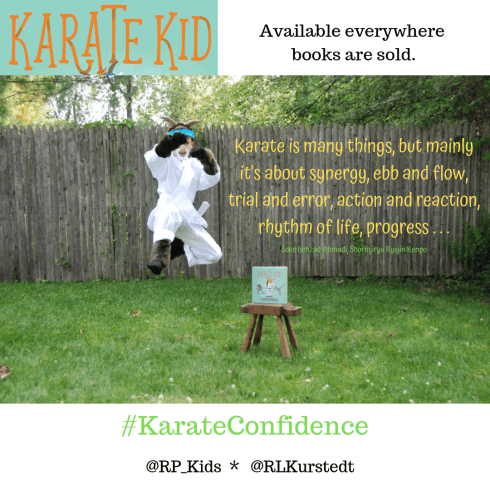
When Laura confirmed a date with James and his mom to film, I really had no more excuses. This was happening. I needed to get moving. One night, I went to Michaels and AC Moore with another friend. I had no idea how we would dress James to look like Karate Kid so I bought a lot of items. After much trial and error, for the horns we used a head band, model magic, and pipe cleaners. For the hooves, we used old socks cut and re-sewn, and for the arms and legs, we used fuax fur. Finally, we McGyvered a goatee by cutting and taping and reconfiguring a few stick-on mustaches.
While planning for the video Eva and Laura reminded me that I needed specific hashtags. I decided on #KarateConfidence and #KarateKidTheBook. The day of the shoot the weather was beautiful. With just an iPhone, the help of friends, and a patient and talented young Karate student, James, the filming went off without a hitch.
Next, I had to edit the footage with iMovie, which I hadn’t used in years. After a few mis-starts, slowly but surely the clips came together. I asked James to do some additional audio recordings since the audio from the filming wasn’t loud enough. I was able to layer that in seamlessly (well probably not seamlessly).
Two of the videos are below, so you can see (hear) for yourself.
With the videos at the core of the social media campaign, I also searched for goat jokes, karate quotes, and articles to post throughout the weeks leading up to the book birthday. I even made myself a calendar and designed some posts on Canva.
I’m not sure how effective the campaign has been in how many books were sold because of the social media, but I’m really glad I did it. I stepped way out of my comfort zone. (I’m really uncomfortable promoting myself and my work.) I realized I actually enjoy creating videos and images for posts. In addition, connecting with teachers and parents from across the country has been a real highlight. Below are the four main lessons I learned (or was reminded of) from this process:
- Lesson 1: Ask for help.
- Lesson 2: Try the uncomfortable.
- Lesson 3: Make the time. It might be fun.
- Lesson 4: I have awesome friends.
To celebrate KARATE KID’s birthday and all that I’ve learned, I’m extending the social media campaign with a new focus. Starting today, I’m beginning the #IAmAKarateKid campaign—kids and adults can send in pictures or words describing how they are a Karate Kid—someone with confidence and focus—someone who embodies the discipline and respect which is at the heart of karate.
So, if you are, or know of someone who is a Karate Kid, tweet, post to Instagram, or to my author Facebook page. Remember to use #KarateConfidence and #IAmAKarateKid. One person will receive a signed book and some awesome swag. If the winner is a teacher or a student, I will also do a free SKYPE visit. Kiya!!!
Rosanne L. Kurstedt, Ph.D. has been an educator for over 20 years. She’s been an elementary school teacher, staff developer, administrator, adjunct professor, literacy coach, curriculum writer, and most importantly an advocate for children and teachers. She is a co-author of Teaching Writing with Picture Books as Models (Scholastic, 2000) and author of the 100+ Growth Mindset Comments series (Newmark Learning, 2019) for grades K-6. She is currently the Associate Director of READ East Harlem/Hunter College and is so excited about the launch of her new picture book KARATE KID (Running Press Kids)—on sale September 3, 2019.
Finally, she is the founder and president of The Author Experience, a 501(c)(3) organization committed to the transformative power of sharing stories. In collaboration with students, families and educators, The Author Experience provides sustainable experiences that build a culture of literacy—one that elevates connections and delivers lasting impact. Please check us out at http://www.theauthorexperience.org and become a part of the story!
Rosanne can be found on Twitter and Instagram @rlkurstedt and on Facebook @rlkurstedtauthor.





 Writing for Kids (While Raising Them)