Every Monday at 10pm EST children’s writers and illustrators jump on Twitter to chat about picture books. The brainchild of Aussie authors Karen Collum and Kat Apel, #pblitchat churns away for an hour, with topic schedules and transcripts posted on the Picture Books Only blog. Below are highlights from this week’s chat on writing for the very young–children from birth to age 3.
- Unless you’re an author/illustrator, board books are a difficult sell. The word count is low and the stories are less complicated than picture books for 4-8 year-olds, so illustrations become even more crucial to bring life to the story. For example, the visual cues in Sandra Boynton’s Blue Hat, Green Hat allow non-readers to “read” the story themselves. As a new writer, you want to write a story with the broadest possible appeal to maximize your chances of being published, so writing specific to the board book format may limit you.
- A trend in board books is to republish books that have been popular sellers in hardcover/paperback. Board books are expensive to produce, and at the same time, parents want to pay less for them, so publishers may prefer to go with a proven story rather than a new one. Great example: Snowmen at Night by Caralyn and Mark Buehner was first a successful hardcover title, released in 2002. A few years later, the publisher created board books and sold them with a stuffed snowman during the winter holidays. A jigsaw puzzle board book and a pop-up version (a new story) were also created.
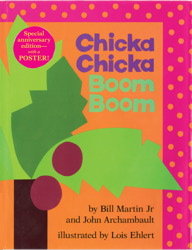 Rhyme (internal and external) and a jaunty meter delights young ears. Great examples: Chicka Chicka Boom Boom by Bill Martin Jr., John Archambault and Lois Ehlert; Hand, Hand, Fingers, Thumb by Al Perkins and Eric Gurney.
- Average word counts for young books are typically less than 500 words and could be fewer than 100 words.
- The market is saturated with ABC concept books, but books with a completely fresh take can be successful, like Shiver Me Letters, A Pirate ABC by June Sobel and Henry Cole.
- Repetition helps young children understand story and recognize words, plus it encourages participation in reading aloud.
- Lift-the-flap books offer peek-a-boo surprises and drive the story forward, but again, they’re a tough sell unless you’re an established author and illustrator.
- Novelty books (pop-ups, foldout pages, liftable flaps, or hidden sound chips) are often published by mass-market publishers and not trade publishers. What does this mean to you? In-house talent or work-for-hires create these books.
- The jury is split on interactive titles for the very young. Do parents want their toddlers drooling on an $800 iPad? Do electronic titles lose the “cuddle factor”? Or does the new interactive medium offer an unprecedented opportunity to unknown author/illustrators? A recent article cited a new 3D book as one of the top 20 ebook apps for the iPad, right up there with Dr. Seuss and Disney titles.
My favorite #pblitchat moment? Board books get gnawed and chewed by babies, so how about an edible board book? (As suggested by @RedStepChild a.k.a. illustrator Lynn Alpert.) I think this is an idea whose time has come, especially if they’re made out of freeze-dried astronaut ice cream. Mama may want to chow down on tasty kidlit, too! (I can see it now–Chicka Chicka Yum Yum.)
What else is important to know about writing and illustrating for the very young?





 Writing for Kids (While Raising Them)
6 comments
Comments feed for this article
May 19, 2010 at 11:06 am
Joyce
Submitting to publishing houses/editors that tend to specialize in that sort of book would also increase your chances – Blue Apple Books, Little Simon, Cartwheel Books, Chronicle Books – to name a few.
May 19, 2010 at 5:24 pm
tara
That’s excellent advice from an accomplished author/illustrator! Thanks, Joyce!
May 19, 2010 at 5:12 pm
Redheaded Stepchild
OMG! I had no idea you were gonna mention me in this post! :–) Thank you for that! More possible titles for edible books: ‘The Three Little Pigs in a Blanket’, or ‘Where the Wild Blueberries Are”. Yum! A blueberry flavored book! Maybe we could utilize whatever that stuff is that they make fruit roll-ups out of!
May 20, 2010 at 1:57 am
Myrna Foster
But most of the publishers Joyce mentioned don’t accept unsolicited submissions. How do you submit to them?
May 20, 2010 at 10:14 am
tara
By attending a conference with an editor from one of those houses–they will welcome submissions from attendees in most cases. So it’s still a difficult way, but not entirely impossible.
May 21, 2010 at 4:27 pm
Myrna Foster
Thanks for visiting my blog and for answering my question.