You are currently browsing the tag archive for the ‘The Carle Museum of Picture Book Art’ tag.

Illustration from The Very Hungry Caterpillar copyright © 1969 and 1987 by Eric Carle
The Eric Carle Museum of Picture Book Art will hold its annual Carle Honor Awards Gala this Thursday, celebrating significant contributions to the picture book. For the past several years, I’ve asked the four Honor recipients a salient question about the current state of the medium. This year I’ve had this on my mind:
Considering the rise of book banning in recent times, can you re-stress the importance of picture books and letting children choose what they read by having unfettered access to all matter of literature?


Uri Shulevitz, Artist Honoree
If I had had books, I would have been the happiest kid alive. But I did not have any. Luckily, what I had was a mother, who told me stories, while we lived in Central Asia during World War II, which you can read about in my book, CHANCE. In those years of terrible hunger due to lack of food, I can say the stories gave me hope and saved my life. Banning books, stories, deprives children of spiritual sustenance.

We Need Diverse Books, Angel Honoree
Represented by Ellen Oh, Co-Founder, CEO & President
My daughter just graduated from college and is now a brand new 2nd grade teacher at a Title 1 school. The first thing we did was build up a library filled with diverse picture books. She was determined that every child that came to her classroom would be able to find a book that represented them. And she marveled at the extraordinary amount of diverse picture books we were able to find for her extremely diverse student body. We talked about how different it was from when she was little. Every day, she gets the pleasure of seeing a child grab a book from her library and hug it tightly, exclaiming “Look Ms. Oh, this book is like me!” As a reading teacher, she knows how challenging her job is, especially now. Fortunately, she is in a county that has not had any book banning or challenges. Her community of parents are supportive of all children and their right to read. I wish this were true for all children across the country but know the harm that is being caused in far too many areas of the country. Book bans are rarely about protecting the children from real harm. They are about controlling morality and power based on the prejudiced beliefs of a self-righteous minority. Which is why books with LGBT+ and BIPOC stories are overwhelmingly challenged and banned. Picture books are a fundamental building block of literacy. When marginalized children don’t see themselves in the books they read, it impacts their ability to read because visual literacy is so important for young readers. It impacts their self-worth when they don’t see themselves in the pages of a book. It impacts all children who don’t learn to recognize the importance of all diverse stories. Book bans harm all children.

KidLitTV, Bridge Honoree
Represented by Julie Gribble, Founder
It’s crucial to emphasize the significance of visual literacy, the positive impact of seeing oneself reflected in the pictures of a book, and the long-term benefits of empowering children to select books that inspire empathy and independence. We can’t afford to underestimate targeted attempts to ban books with LGBTQ+ characters, characters of color, or themes of race and racism.
Here’s what I’d like to contribute to this conversation.
This is a political issue, yet many people refrain from discussing or following politics to prevent confrontation or conflict. However, it’s important to remember that politics will impact you regardless.
Let’s discuss the recent surge in book bans and the reasons behind it.
Sensing a changing demographic led fearlessly by an empathic younger generation who believe in equality, justice, and human rights, extremist right-wing groups are leading the effort to roll back the clock.
As a creator of books that instill kindness and fairness in young readers, you and your books pose a significant threat to an entire political movement. This is a testament to the power of children’s book creators. You’re a force that can shape the future. When these readers grow up, they become voters who are more inclined to challenge right-wing extremism. By limiting the literature available to children, extremist groups are attempting to
control the perspectives and values that young readers are exposed to, thereby influencing their future voting decisions. It’s no coincidence that book bans are often implemented by the same organizations that are restricting voting access.
So, as Michelle Obama says, “Do something.”
Here are a few resources to help us do something:
- Vote!
- From PEN America: 5 Ways to Fight Book Bans
- Do you know when school board elections happen in your state? School boards
play an important role in ensuring students in your schools have access to books, and often have the power to allow or prevent book bans. - Text “READ” to 26797 for more information from Let America Read and to register to vote.
- RESOURCES to Help FIGHT Against BOOK BANS & CENSORSHIP!
- The above post includes a link to this constructive initiative: We Are Stronger Than Censorship. At the center of this campaign is the pledge to distribute over 2,000 inclusive books to areas most affected by censorship, reinforcing the vital role that diverse voices play in promoting understanding and empathy within our communities.
Let’s be fearless in this fight. Speak up and take action.

The Horn Book Inc., Mentor Honoree
Represented by Elissa Gershowitz, Executive Editor
Picture books are usually the first encounters children have with books and reading, ideally setting them on a path to: engagement, enjoyment, escapism, entertainment; creativity, compassion, critical thinking; imagination, empathy, problem-solving, and more. In short: all the reasons readers love to read! The more diverse the books, the more diverse the readers, the greater chance a young person will feel seen and understood and will be open to the experiences of others (Dr. Rudine Sims Bishop’s classic “Mirrors, Windows, and Sliding Glass Doors” analogy). All young people deserve to find their books–the ones that speak to them and keep them turning pages. (Or they can put a book down–that’s fine too!)
Many thanks to The 2024 Carle Honor recipients and The Eric Carle Museum of Picture Book Art for inspiring creators and readers of all ages.
For more info about the museum and its mission, please visit CarleMuseum.org.
In one month, The Carle Museum of Picture Book art will hold its annual Carle Honors, awarding four people/entities who have made significant contributions to the art form.
Also that evening, September 26th, final bids will be accepted on original artwork by picture book masters. Today, The Carle Honors are pleased to announce the artists whose work will be auctioned this year.
The auction will go live on Friday, August 30th and you can register to bid here.
For the past few years, I’ve had the opportunity to ask the Carle Honorees a question about picture books. My question this year is…
“Picture books exude a certain kind of magic. How would you describe that magic?”
 Melissa Sweet
2019 Carle Honors Artist
In a picture book, the magic begins as a swift and surprising connection to the art and design of a book, and later the words.
Often I dissect a book from cover to flaps to endpapers and everything in between, in order to figure out the decisions that make it compelling.
But in thinking about magic, I also think of magicians. One thing that makes a magic trick awe-inspiring is the set-up, which takes practice, timing and repetition, and drawing in the audience.
Then a myriad of decisions so that every word, every movement, points to witnessing something extraordinary.
Creating a picture book also requires minute decisions by a cast of dozens. The words, images, and design come together to create something wholly new.
Often there’s a moment when a book seems to have a mind of its own. And when the final book feels effortless and like something we’ve never seen before, it seems…like magic.
 REFORMA
The National Association to Promote Library & Information Services to Latinos & the Spanish Speaking
represented by Kenny Garcia, President
2019 Carle Honors Angel
‘Picture books allow readers to imagine a world or a future that the reader exists in and thrives. It opens up new possibilities, words, and worlds full of love, hope, expressions, and emotions that affirms the reader’s life. This magical spark empowers children to imagine and create a better world for themselves and their communities. Multicultural picture books can be such a transformative experience for all of us, but for children of color, the ability to see and read picture books by illustrators of color can nurture the idea that they can also have a future career in writing and illustrating books, and continue the magic for future generations.
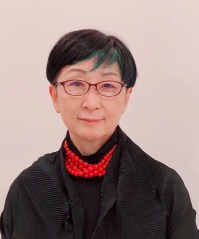 Chihiro Art Museum
represented by Takeshi Matsumoto
2019 Carle Honors Bridge
statement by Yuko Takesako
Executive Director of the Chihiro Iwasaki Memorial Foundation
Chief Curator of the Chihiro Art Museum (Tokyo & Azumino)
When children open the cover of a children’s book, a special kind of magic bubbles up. It gives a glimpse of a world yet unseen, enables the reader to experience something never done before, or brings back a memory of an event long forgotten.
The magic of picture books especially has a great impact on children of different nationalities or languages, or on babies who still cannot read, or at times on children who are not so adept at communicating with others. The visual magic cast on a young child once he or she opens a picture book is so powerful that memories of the book may suddenly come alive when the book is placed firmly in their hands—once again after a forgotten period of 10, 30, or even 50 years.
In this fashion, the yearning, understanding, and sympathy found through experiencing a different world helps to create another sort of magic which is respect and love for people of different cultures and the world they live in.
Such is the magic that exudes from picture books—something all too precious and special.
 David Saylor
VP, Creative Director, Trade Publishing
Publisher, Graphix
Scholastic Inc.
2019 Carle Honors Mentor
What I love most about picture books is how the words and artwork blend to create an enhanced and perfect entity: the book itself. Their heightened interaction is the alchemy that every picture book hopes to achieve, that moment where words spark a thought and the pictures expand the narrative spaces between and around the words and sentences. For that reason, my favorite picture books are fully alive with emotion and artistry.
I’ve often wondered why picture books that were read to me as a child have stayed so vivid in my memory. I don’t think it’s simply that my young mind was eager to discover the wider world. I think it may also be that hearing my mother and father read aloud to me was my first experience of artistic communication. Those moments—the warmth of a lap, the sounds of words, the lively pictures on the page—brought to life a moment where a writer and an artist spoke directly to me, to my innermost self. I felt suddenly more alive, more aware, more full of life than I had felt just a moment before.
There’s a beautiful scene in the play Wit, by Margaret Edson. The main character is Dr. Vivian Bearing, an English professor, dying from ovarian cancer. Her mentor, an older professor, visits and tries to comfort her by reading aloud. Then her mentor does something extraordinary: she lays next to her in bed and reads a picture book that she had intended for her grandson. The books is Margaret Wise Brown’s The Runaway Bunny, and it’s one of the most beautiful and touching moments I’ve seen in any play. In her final moments of life, when Dr. Bearing’s ebbing life has been paired down to the elemental, only a picture book could express the right feeling with such simplicity and depth.
Thank you, Honorees, and congratulations!

Blog readers, I hope you’ll visit the Carle Honors Auction, attend the Honors gala, or donate to The Carle Museum for all they do to celebrate picture books. Just visit carlemuseum.org.
You can celebrate, too, if you’re the winner of Eric Carle’s THE ARTIST WHO PAINTED A BLUE HORSE. Simply share this blog post and comment that you’ve done so…and you’ll be entered into the random drawing to win a copy. A winner will be selected next week.
Good luck!

In one month, The Carle Museum of Picture Book art will hold its annual Carle Honors, awarding four people/entities who have made significant contributions to the art form.
Also that evening, September 27th, final bids are accepted on original artwork by picture book masters. The auction goes live on August 31, and you can browse and bid here: https://501auctions.com/carlehonors2018.
If you could ask the Carle Honorees one question, what might it be? My question is here—
“Why are picture books an art form to enjoy not only in childhood, but through every age, every stage of life?”
—and the answers are diverse and delightful, just like picture books themselves.

Paul O. Zelinsky
2018 Carle Honors Artist
“Why are pictures an art form to be enjoyed by people of all ages? Well, that has to be a function of what picture books exist in the world to be enjoyed. Some, aimed at children in a pedantic and condescending way, are no fun at all for adults, and might be appreciated by only the most deluded or idiosyncratic child. But the world has come to contain an increasingly large number of picture books created by genuine artists, addressing the full extent of their humanity. These books may not look the same through the eyes of a four-year-old as they do to an adult of ninety-five (even putting aside questions of cataracts), but they somehow charm and enrich the thoughts and the vision of both. Picture books can be appreciated by people of all ages because there are picture books that deserve this kind of appreciation. One of the best ways to prove this is to visit The Eric Carle Museum of Picture Book Art!”
Dr. Rudine Sims Bishop
2018 Carle Honors Mentor
“Picture books are indeed an art form, and enjoyment of art is not limited by age. With their unique combination of interdependent visual and verbal art, picture books speak to readers and viewers on a fundamental level. In addition to their aesthetic appeal, their thematic content often evokes universal emotions and experiences. Picture books also offer opportunities for older students to examine and learn about artistic styles, media, and technique. Picture book texts, in their conciseness, are often poetic, and can evoke the same kinds of responses as poetry. And because many literary genres come in picture book format, picture books can be a rich source of information as well as entertainment. Like other art forms, picture books are never outgrown.”

Dona Ann McAdams
(and Lynn Caponera),
representing The Sendak Fellowship & Workshop
2018 Carle Honors Angel
“I never assume a picture book is just for children. When a picture book works it marries images and words in a way few other mediums can. Each time we revisit an old beloved picture book we discover something new within its covers and new within ourselves.”

Elena Pasoli
The Bologna Children’s Book Fair
2018 Carle Honors Bridge
“The language of illustration is borderless not only in terms of cultural and geographical heritages, but more and more often also in terms of the age of the readers. Who could describe ‘The Arrival’ by Shaun Tan as simply a children’s book? This is the same for most of the wordless books which have been sharply growing in production and sales in the last few years all over the world. Illustrations speak clearly to everybody; they tell stories and leave people free of traveling across pages and thoughts; they are powerful and add emotions to the words; they can engage the readers’ memories as well as accompany them to discover new worlds.”
 Andrea Davis Pinkney
Children’s Book Author, Editor &
2018 Carle Honors Presenter
“Come, little one. Climb onto my wings. Nestle, settle, celebrate. My feathered pages take you to places only the clouds can touch. Up, up! Here we go, soaring through words and pictures that fill you with my unforgettable flutter. Do you see the view from where my colors paint themselves into your quietest places, into the deep-down knowing that brings you comfort, giggles, wonder, discovery?
“Listen to my wisp of words spinning stories that will someday become your heart’s memories. Yes, child, I am a picture book. Our journeys—yours and mine, together—will last your whole life. This is what we picture books do—we lift you. We let you rise to skies filled with wonder. This, the awakening of your soul, starts from the day our wings hug your imagination. From there, we beckon you higher. Child, young or old, I am a picture book. No matter your age, stage, time or place, I give you the power to fly!”
Thank you, Honorees, The Carle Museum…and picture books!
What question would you ask the Honorees? Please tell us in the comments…
Tonight the Eric Carle Museum of Picture Book Art will present the winners of its prestigious Carle Honors. One recipient is selected in each of four categories: Artist, Angel, Mentor and Bridge.
I asked the honorees to answer one important question about the state of our craft and business, and I hope to elicit more responses from attendees this evening.
Children’s literature has experienced a renaissance of sorts in the last few years (as if people are rediscovering an art form that never faded away). What in particular makes picture books more relevant today than ever before?

Ed Young, Artist
Shadows dancing on cave walls by the crackling fire pit where an oral story is told under a starry sky….
Fast forward to a lone finger sliding make believe pages on a tiny screen where words and pictures are viewed in silence in pre-ordered sequences.
Yes, progress indeed has been made in the secured comfort of a home where everything is convenient and predictable. But at what price? Meanwhile, the heart is lost.
I came to America to learn making shelters for physical people, unwittingly ending by creating sanctuaries for impoverished inner ones.
Paper picture books are tiny lights in an increasingly dark and dehumanizing world of robots. Institutions like the free libraries and Eric Carle Museum provide refuge to keep those lights alive and thriving.
They keep us connected.

Dr. John Y. Cole, Angel
Historian, Library of Congress
The versatile and vibrant picture book has become an increasingly important part of the basic fabric of the Library of Congress annual National Book Festival. Since the first festival on September 8, 2001, dozens of picture book authors and illustrators have spoken directly to audiences, young and old; Eric Carle himself was featured in 2002 in one of the two pavilions for children and young adults. In 2004 children’s illustrator Floyd Cooper designed the cover of the festival’s printed program, inaugurating a tradition of featuring a well-known artist each year. A “Picture Book” pavilion in 2014 highlighted 11 writers and illustrators; in 2015 the number climbed to 16. Roz Chast was the featured artist at the 2017 festival; another popular favorite was graphic novelist Gene Luen Yang, who also has served as the Library’s National Ambassador for Young People’s Literature for the past two years.

Bank Street Writers Lab, Mentor
Represented by Dr. Cynthia Weill, Director of the Center for Children’s Literature
My sense is that there are several reasons for the rebirth of children’s books and their relevance in the world.
Parents have realized that a picture book cannot be replaced with an e-book device. Young children need and want tactile experiences. They want to feel the pages of a book. They want to carry them. Young children may gnaw on a board book. It isn’t quite the same experience with a tablet.
Secondly, publishers are becoming more attuned to diverse writers and the point of views and experiences they can share. This helps more children to see themselves in the pages of a book and ultimately to want to read.
Thirdly, parents and educators are also more aware that children must be exposed to someone else’s experiences to grow. There is more encouragement to read books outside of one’s own reality.
Finally, publishers are now able to offer more timely subject matter on issues such as refugees, protest and the environment. These books help parents and teachers help children make sense of the world at a time when it is very necessary.
The fourth honoree is Anthea Bell in the Bridge Category, for translating foreign children’s books into English. She will be represented at the Awards this evening by her son, Oliver Kamm.
To learn more about The Carle Honors, please visit The Carle Museum of Picture Book Art.
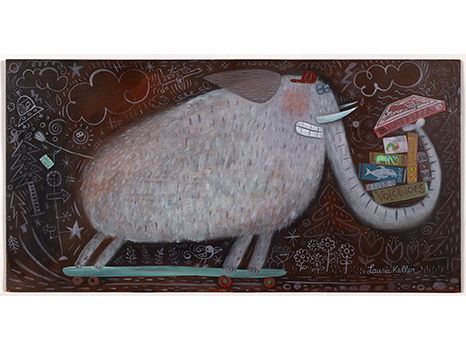
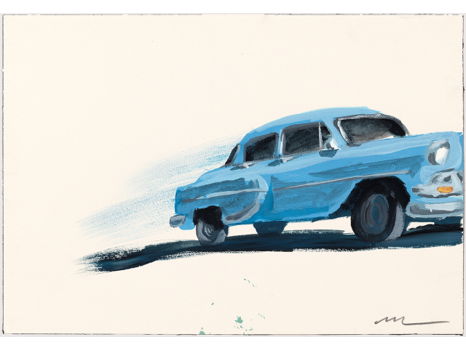
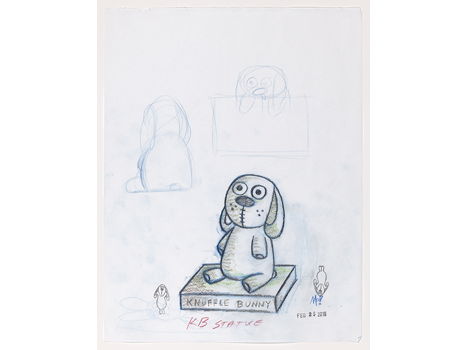
Bid TODAY on original art to benefit the museum. Find treasures by Sandra Boynton, Mo Willems, Laurie Keller, Mike Curato and many more celebrated illustrators at 501auctions.com.
Bidding ends tonight at the awards but absentee bids are accepted via the 501auctions website!





 Writing for Kids (While Raising Them)