You are currently browsing the tag archive for the ‘Margo Sorenson’ tag.
by Margo Leipua’ala Sorenson
Rejection! Rejection! Rejection! Poor Little Cup—no one wanted to publish his story. *cue sobbing* Here was the pitch: “Everyone in the kitchen has a very important job to do, except for Little Cup. He desperately wants to help, but no one believes he can do anything that counts. He needs to prove he can be the biggest helper of all.”
Many of us have been on this very same writing journey of rejection, shoulders drooping, steps shuffling, head hanging down, and we do so get it. The hard truth, as many of us reluctantly recognize, publishing IS a business, and if LITTLE CUP didn’t strum anyone’s ukulele (you’ll know in a minute why this analogy), then, maybe I needed to “repurpose” and “rethink” the story to make it more marketable to an editor and an audience.
Just because we have actually written something—of course, we’re positive that it’s amazing and wonderful 😉—we often conveniently forget Ellen Kozak’s First Commandment for Writers: “Thou Shalt Not Fall In Love With Thine Own Words.” After many rejections, we probably need to take a cold, hard look at the entire picture. Who is its market? Why would a parent or a librarian want to buy this book? What will make it stand out in a crowded market?
 As my manuscript sat sadly on the shelf—known as the hard drive—just as Little Cup sat sadly on his cupboard shelf—I had to admit to myself that LITTLE CUP was probably too generic—oh, sure, it had “hilarious” puns, (“You need to chill out,” the refrigerator said, frostily.), but it was too “oatmeal,” as I used to tell my students, and not enough “jalapeño.” Because our family had lived in Hawai’i for ten years (note my Hawai’ian name, Leipua’ala, gifted to me in ancient Hawai’ian tradition), I thought it might be a different idea to switch the setting to Hawai’i, and pitch it to some local Hawai’i publishers. (Now you get the ukulele part.)
 It was so much fun changing everything to local Hawai’ian references—Little Cup became Little Calabash—we have a calabash of our own, of course—Ethan turned into Keoki, and Keoki’s mom stirs guava frosting (not just boring buttercream), pours haupia pudding (no tepid tapioca), mixes mango cupcakes (definitely not plain vanilla), and chopsticks appear, too.
I was more than delighted when local publisher Island Heritage wanted to acquire it. My editor even came up with the idea of having a glossary explaining local food items, like starfruit and haupia pudding, that might be mysterious to Mainland young readers.

Now, you can find LITTLE CALABASH everywhere, not only in its Hawai’ian home, but kids on the Mainland enjoy it, too.


Young readers can broaden their horizons and get giggles from all the vivid, creative illustrations of talented illustrator Anneth Lagamo, who brings Little Calabash and all his kitchen friends to life. You’ll never look at a can opener in the same way, again.

 If you’re struggling with a manuscript—either because you just can’t seem to finish it—or because it’s been rejected multiple times (I’m talking weight in pounds not just counting rejections 😉), you can rethink and repurpose it by: changing the setting—instead of a home, what about a factory? Or a library? Or a schoolyard? Or a garage? A forest? The ocean deep? Outer space? Instead of a regular meal, how about a birthday dinner? A picnic? Or from day to night, afternoon to morning, summer to winter…You can also consider changing the importance of your characters by switching one of your secondary characters to becoming the main character. What would happen if you changed them all into animals? Or even into inanimate objects—think what fun an illustrator could have! Maybe your narrator is not the main character—as in my picture book CALVIN GETS THE LAST WORD, in which Calvin’s dictionary is telling the story. Once we repurpose and rethink, we can bring all sorts of new angles and ideas to mind, and our story could appeal to a different reading audience or fit into a different market. When we set our imaginations free, we never know what will happen!
When you have a story that really speaks to your heart, but things aren’t happening the way you want them to, keep believing in your story, but be flexible, and try to think outside the box—let your imagination go—and repurpose and rethink. The kernel of your story is the same—(think of playwright David Mamet’s concise plot outline: “Who wants what and why? Why now? What happens if her (sic) don’t get it?”) but everything else can be dynamic and fluid. You may find yourself with a published book that will find its way into young readers’ hands, after all!

 Children’s and Young Adult author Margo Sorenson is the author of thirty traditionally-published books, infamous for her hapless puns (just ask her long-suffering family). To learn more about her books, including CALVIN, featured in the NY Times, please visit: MargoSorenson.com. You can also find her on Instagram @margosorensonwriter and BlueSky @margosorenson.bsky.social.

Margo Sorenson is giving away a query critique for a manuscript for young readers.
You’re eligible to win if you’re a registered Storystorm 2025 participant and you have commented only once below.
Prizes will be distributed at the conclusion of Storystorm.
You’re done! Woohooo! you say to yourself, riffling through the pages of ideas you’ve concocted during Tara’s awesome PiBoIdMo. Rubbing your hands together gleefully (and maybe cackling, too), you can’t wait to start writing the zingy text for the next Caldecott winner, and then you stop. Stop dead, actually. *headdesk* Bewildered, you stare with glazed eyes at each idea you jotted down, some followed by questions you wrote (good), some followed by extraneous comments and ditherings (still good), and others followed by a vast blankness (not so good, but, hey, who said this was easy?).
Good.
Still good.
Not so good.
 To prioritize and organize, it can help us to be disciplined *she says, shuffling madly through all the writing tips in search of the shiny ones* and apply some ‘litmus tests’ to see which of these ideas might actually fly. This is not to say that some of our golden ideas that don’t pass these tests won’t eventually spark other ideas, or that they can’t be reworked into something else, but to save time (and agony!), it can help us (our mileage may vary) to concentrate on three or four out of the thirty ideas just to begin with.
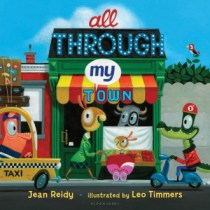
Test #1: Our first litmus test is thanks to Jean Reidy, author of fun picture books like TOO PURPLEY and ALL THROUGH MY TOWN. She asks in her Ten Power Premises: Will a kid like it? (Is it part of a kid’s world—real or imaginary? Is it relatable?) Aha! You may have seen this wonderful New York Times cartoon by Grant Snider, The Very Bad Picture Book.
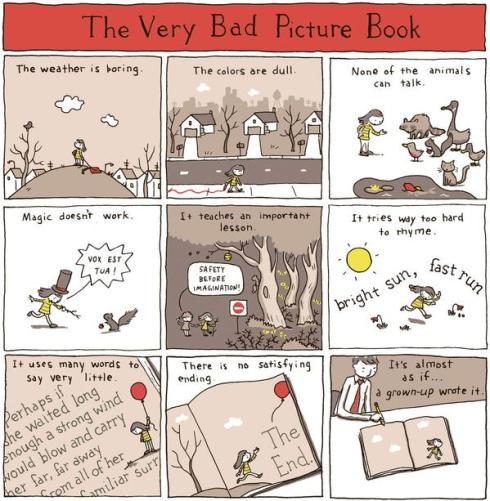
Yes, the last frame in the cartoon can be a wake-up call, can’t it? Does our idea seem didactic? Are we trying to teach children something they “should know”? Once we go through our ideas, one by one, asking that question, a number of ideas get shelved. This isn’t to say that from one or two of them, a connection to a kid’s world couldn’t be made in time, particularly by asking, “What if…?”, but, in the interests of prioritizing and efficient use of time, those can be put aside for now.
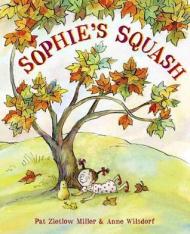 Test #2: The next litmus test, if we’re writing a story, not a concept book, is thanks to David Mamet, he of playwriting (Glengarry Glenross, etc.) and screenwriting fame. ‘Who wants what, and why? Why now? What happens if her [sic] don’t [sic] get it?’ To give substance to that framework, a good example would be what Pat Z. Miller, author of the wonderful SOPHIE’S SQUASH said: “Sonia’s love for her squash gave me the initial idea for the book. But by itself it wasn’t enough. If I had written the book exactly the way things happened in real life, it would have been an amusing anecdote, at best. And that’s kind of what my first draft was. It took me a while to build out a full story and figure out the problem (the rotting squash, a long winter apart) and the resolution (baby squash).”
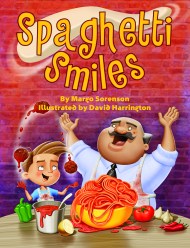 This step of plotting in our prioritizing takes more time, but the fun begins here. The metamorphosis from one of our daughters’ make-your-own pizza birthday parties (the amusing anecdote) to my most recent picture book SPAGHETTI SMILES took years to create, but, asking the right questions finally paid off. From my PiBoIdMo idea, “Click,” one of my written questions to myself generated the character of Little Bunny.
The story idea for TAIL-END BUNNY actually turned out to be the opposite of the thread of my initial questioning, but, that’s what’s exciting and mesmerizing(oh, and frustrating, too! ☺) about writing. We don’t often really know what we’re saying until we see it on the page.
Finally: Once we have a clutch of ideas that have passed our litmus tests of the moment, we can begin spending more time on each. Other good questions to ask about each idea are: (thanks, again, Jean Reidy!) “Is it highly visual? Can you imagine 14+ scenes coming from your story?; and (thank you, Tara!) Does it convey emotional truth? That is the kicker question! Ruminating, musing, writing as we think, taking a walk to clear our heads and letting ideas simmer on the back burners of our minds will end up helping us to cook up a great story.
Without Tara’s PiBoIdMo, though, we wouldn’t have thirty little lumps of coal, jostling each other to catch our attention, to rub and polish, so it’s with much gratitude that I thank Tara for continuing to inspire us and galvanize us as we embark on our own new writing adventures and pick just the right ones!
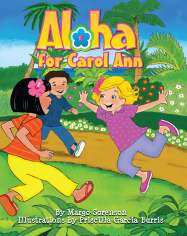 National Milken Educator Award recipient and author of twenty-nine books, Margo Sorenson’s most recent picture books are SPAGHETTI SMILES (Pelican Publishing) and ALOHA FOR CAROL ANN (Marimba Books/JustUs Books). Among Margo’s awards was being named a finalist for the Minnesota Book Award in YA Fiction. She enjoys Skyping and meeting with readers from Minnesota to California, Hawaii, the Philippines and the UK.
You can find Margo on the web at MargoSorenson.com and on Twitter as @ipapaverison.

Margo is giving away two books–one copy each of SPAGHETTI SMILES and ALOHA FOR CAROL ANN.
Leave a comment below to enter. One comment per person, please.
These prizes will be given away at the conclusion of PiBoIdMo. You will be eligible for these prizes if:
- You have registered for PiBoIdMo.
- You have commented ONCE ONLY on today’s post.
- You have completed the PiBoIdMo challenge.
Good luck, everyone!





 Writing for Kids (While Raising Them)