You are currently browsing the tag archive for the ‘Kirsten Pendreigh’ tag.
by Kirsten Pendreigh
For today’s nonfiction authors, there’s an ocean of fascinating topics at our fingertips—in magazines, documentaries, nonfiction books and social media. But which ones are picture book worthy? Which ones merit long months of research with no guarantee of publication? Which ones will sustain your interest—for years!—as you prepare and later share the book with kids?
When I’m drawn to a potential nonfiction topic, I ask myself two quick questions:
- Would this appeal to kids? and
- Has it been done before?
Then I do some cursory research, let it percolate for a week, and if I’m still excited, run the idea through a more rigorous checklist before diving in.
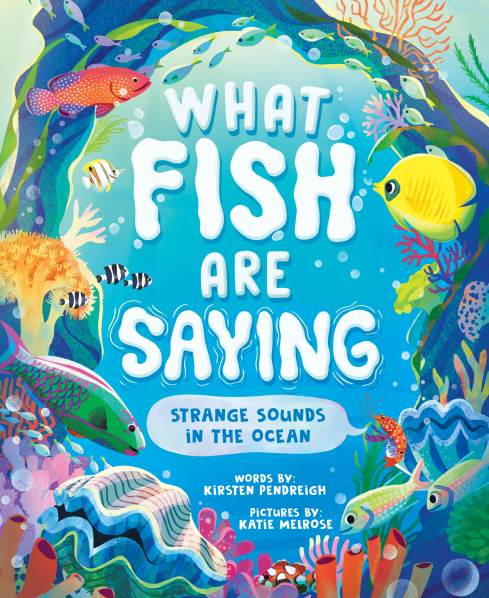
I’ll take you through how that worked for my recent nonfiction book WHAT FISH ARE SAYING: Strange Sounds in the Ocean, beautifully illustrated by Katie Melrose and published by Sourcebooks Explore.
One morning, my local radio station interviewed a marine scientist about a new library of fish sounds. A library of what now? I put down my coffee and listened closer. When he played some of the bizarre fish recordings, I was hooked. (Pun intended!) Fish can talk? Each species makes its own unique sound? We can study those sounds and use them to protect marine life?
I broke my own rule of letting the idea percolate and began my checklist while my coffee was still hot!
- Would this topic interest kids?
My gut told me yes. Like me, I imagined kids would be delighted to learn that fish “talk” and in such bizarre and funny ways. (I later surveyed kids at school visits and got a resounding thumbs up.) An especially kid-friendly aspect is that one of the loudest—and most important—sound makers in the sea is also one of the smallest: the snapping shrimp. It sounds are like popcorn popping, and noisy shrimp are a key indicator of reef health. (Also, there are fish that make sound by farting and burping. Crowd-pleaser!) - Has this topic already been done?
Nope! There was no other fish-sound specific kids book published. And the science of marine acoustics is so cutting-edge, new discoveries and recordings are being made daily.
*If a topic has been done before, can you approach it in a new way or add significant new insights?
I moved on to more questions:
- Does this topic have curriculum connections?
Yes. Elementary students typically do units on ocean ecosystems and organizations like Blue Schools run ocean education programs in many US and Canadian schools. I knew I could link sound libraries and lots of kid-friendly research sites for educators to further explore. - Do you have a unique approach in mind?
Yes! I could have taken a straightforward “here are some fish and these are the sounds they make and why they make them” approach. But in today’s competitive commercial nonfiction market I needed something more engaging. The fact that the story is about sounds dictated my direction. Onomatopoeia and rhyme swam into the mix! Right off the bat, I jotted down simple rhymes based on sound descriptions assigned by scientists: Boop! Whoop! Moan! Groan! So fun! I realized this could become an amazing read-aloud. (Later, I added a refrain, (It’s Noisy Down Below!), some direct questions to engage young readers, and recurring cameos by the amazing snapping shrimp—a little “Easter Egg” on each spread. Lots to explore visually and lyrically and encourage re-reads!)
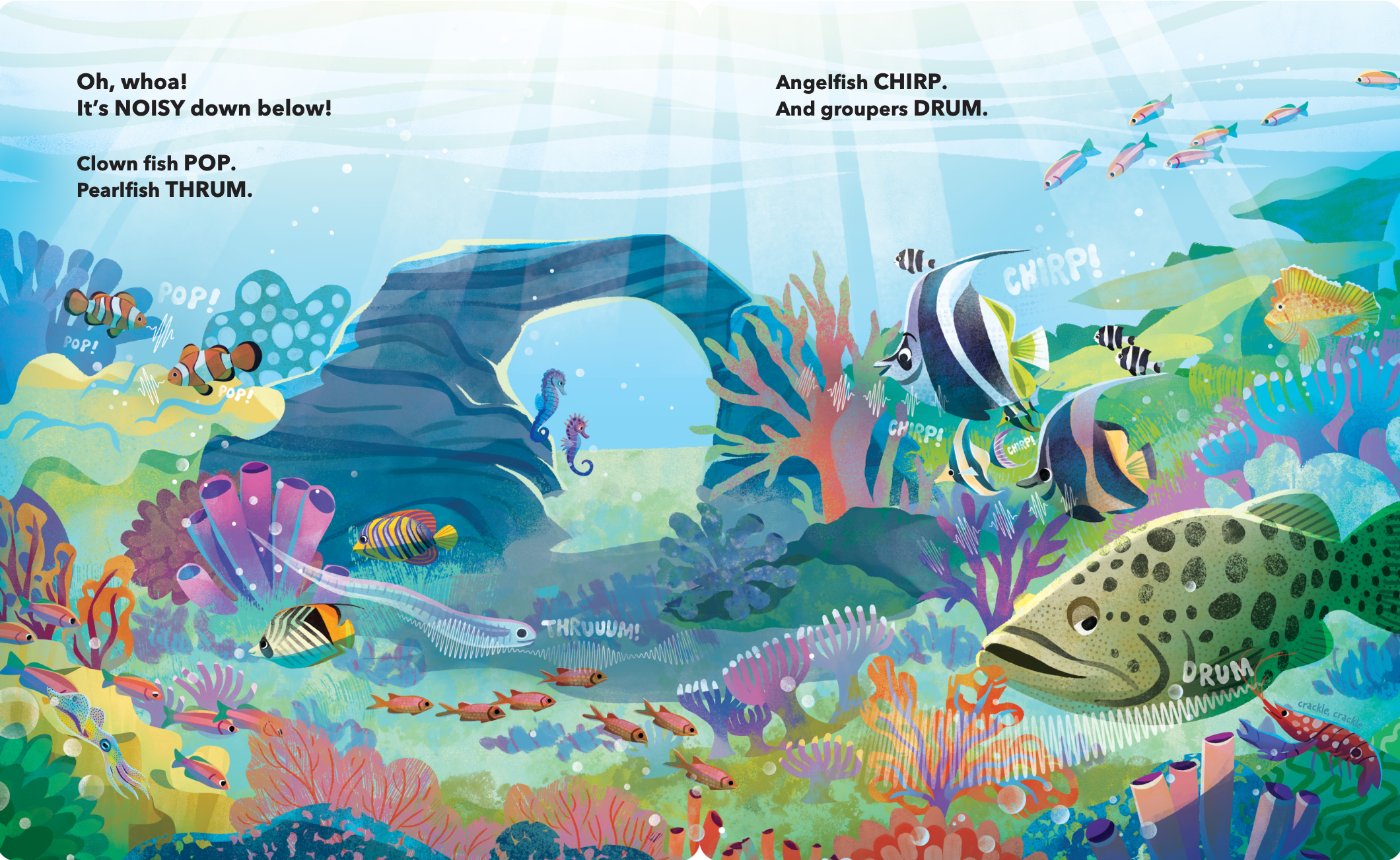
Can you spot the snapping shrimp?
- Are there layers?
Yes. To me, the best nonfiction books have many layers, and different entry points for different ages. The simple, fun, rhyming text was plenty for little ones. But for older readers the text and backmatter are a launching pad to discuss reef restoration, the impact of human noise, symbiotic relationships and so much more. (From the start I knew I’d be able to provide links to recordings and more amazing fish sound resources—feel free to check them out on my website). There’s also a literacy layer—teachers report that reluctant readers love sounding out the fish noises and become excited to read further. Finally, there’s a layer of scientific discovery and hope as sound mitigation is proving an affordable and practical way to help protect marine life. - Will my book inspire curiosity and further learning?
I think this is a great guiding question for any nonfiction author. Are you only interested in teaching kids about a specific topic or do you want them to enjoy engaging in your book so much that they seek out more information about the topic and more nonfiction books to read? As I was preparing this post, WHAT FISH ARE SAYING made a Best of the Year list in the category of Books that Build Curiosity. The reviewer said: “These are the stories that make kids ask questions, wonder about the world, and see things in a whole new way.” What nonfiction author could ask for more?
I encourage you to dive into topics you really love and find your unique way to engage kids. But first, protect your precious research and writing time by running a checklist!
I’ve abandoned many nonfiction picture ideas when they don’t make it through my checklist. That’s part of the process. Each time, I still learn amazing things and become better at figuring out what topics and treatments will sell. WHAT FISH ARE SAYING hit all the marks for me, and I’m delighted it received starred and glowing reviews. But the best reward is when I read it aloud, hear kids yell the refrain, and see them stretching their hands up high to ask me all their fishy questions!

Conducting the refrain at the Vancouver Writers Fest. Chopsticks double as sound makers and batons!
 Kirsten Pendreigh is a poet, journalist and children’s author from Vancouver. Her books celebrate our early instincts to care for the creatures that share our planet. Kirsten’s nonfiction titles, WHEN A TREE FALLS and WHAT FISH ARE SAYING use lyrical language, onomatopoeia, rhyme, and other poetic devices to engage children in the cutting-edge science of underwater species communication and the crucial role fallen trees play in regenerating the forest.
Kirsten’s fiction picture books include MAYBE A WHALE, LUNA’S GREEN PET and the forthcoming CAMPING IS A TERRIBLE IDEA. Find out more (and listen to the fish!) at kirstenpendreigh.com and follow Kirsten on Instagram @kirstenpendreigh.
by Kirsten Pendreigh
It’s Day 27, Storystormers! Phew! Feeling over-ideated? Need a breather?
Today, let’s forget about trying to cook up one big, delicious IDEA and instead focus on the tasty tidbits that, when mixed into idea bowls, make ideas deliciously irresistible to write.
I’m talking about Ideagrients™, a totally real, and not-made-up term for the specific details that move our ideas from Maybes to compelling concepts we can’t wait to begin writing!

Ideagrients™: distinctive fragments and descriptive sparks that elevate ideas. May include—but not limited to—gorgeous words, evocative images, sensory details, original names, and clever language devices. According to experts at PBIU (Picture Book Idea University), good ideas require a minimum of five Ideagrients before story writing can begin.
Look at your 27 ideas. Which ones have promise but are still kind of obscure? Maybe they feel predictable? Too similar to books that already exist? Could these ideas use a pinch of sensory salt, a sprinkle of funny sugar, or a splash of surprise food coloring to make them more intriguing?
Great ideas, just like great writing, are full of specificity. Readers struggle to connect to vague concepts; they love clear, evocative descriptions that surprise and delight. Writers do, too! Trust me, it’s a struggle to create a compelling picture book if you start with a half-baked, surface-level idea. I’ve learned the hard way, meandering from a generic concept, wasting my time, and ending up with unmarketable, unwieldy, and unoriginal stories.
More and more, especially now that I run ideas past my agent, I seek specificity and detail before I commit writing time. Setting, weather, foods I love, names I love, phrases I love, metaphors I love, etc. Assembling these Ideagrients™ beforehand—even as a mental checklist—ensures a more compelling pitch, a smoother writing process and a better end product. Ideally, a story that delights readers AND reflects my unique voice and style.
Let’s use my debut picture book, LUNA’S GREEN PET, as an example.

My initial idea was sparked by a photo of a girl “walking” a plant. I wrote: “A child wants a plant for a pet.” Hmmm, an okay concept, different from a dog or cat story, (and walking your plant is SO cute!) but it still felt flat.
It was time to raid my Ideagrient™ pantry. I looked for words and expressions to make this story idea unique and uniquely mine. I scanned my Brain Rolodex (every professional picture book writer has one!) and my notes app for details and images I’ve stashed away, hoping to find tidbits to take my idea from “Cute, but do I want to spend years with this concept?” to “Oh! I absolutely must write this!”
Here are 5 Ideagrients™ I brainstormed BEFORE writing.
- Humor:
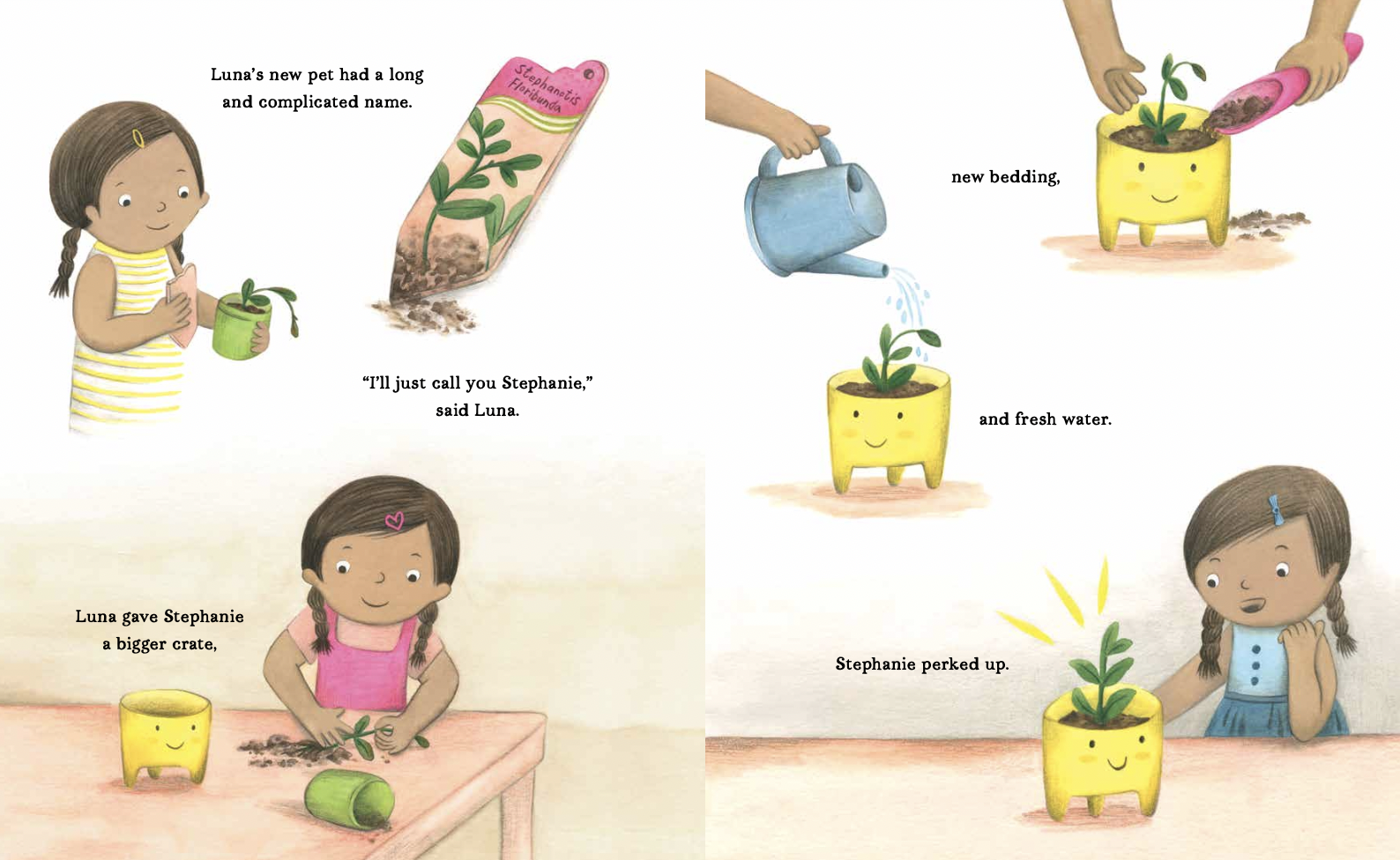
My kids and I love deadpan humor. What if I went all in and talked about the plant pet using animal terms? Animalpomorphizing . That way we are quickly on board with Luna’s perspective. A plant pot could be a cage or crate. Soil could be bedding. And of course, Luna’s plant should have a name! I love nicknames and clever abbreviations.
- Vocabulary:
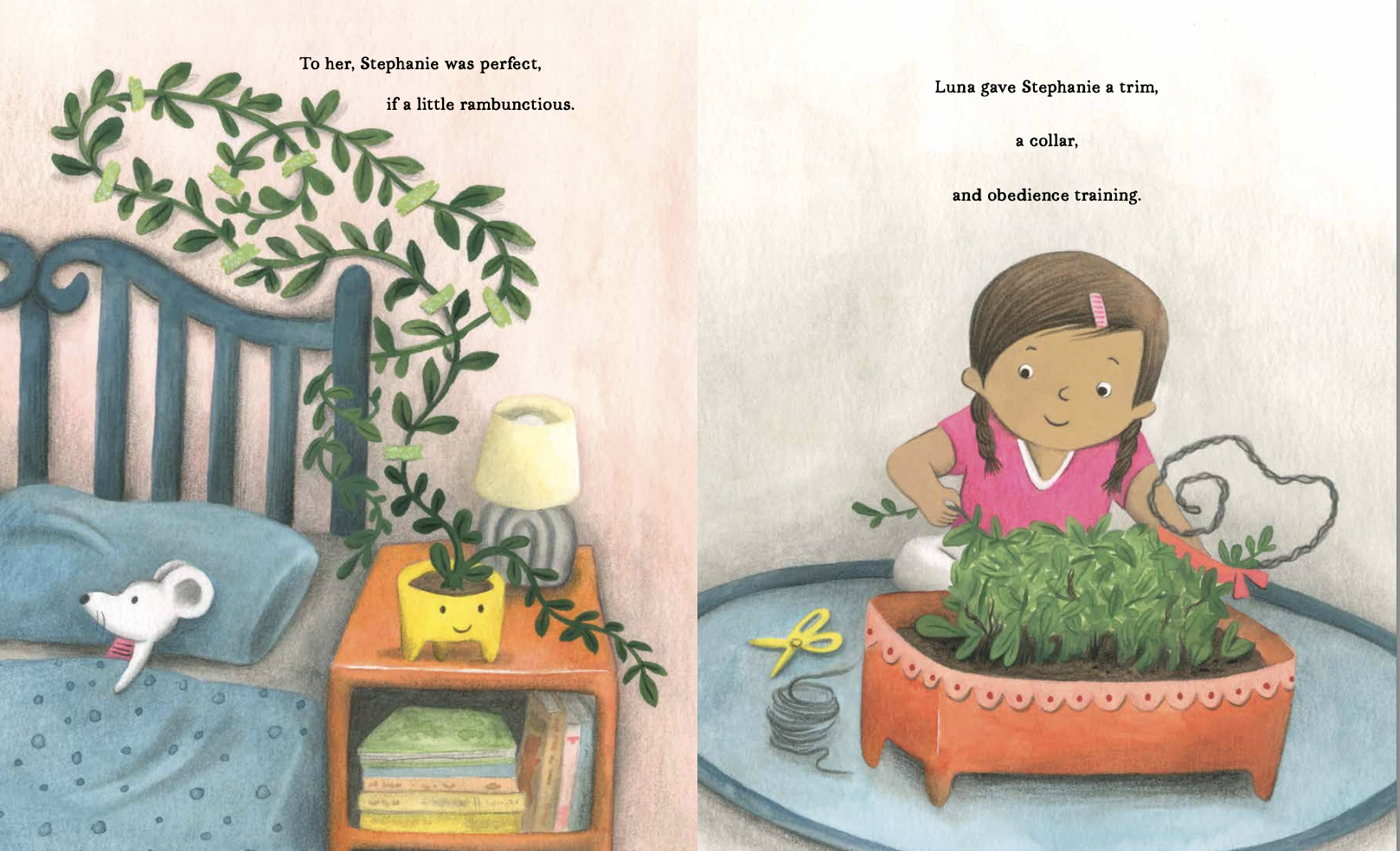
Words set the tone for stories, especially for picture books which are read aloud. I looked at a list of my favorite funny words. First up, rambunctious! To me, rambunctious sets a playful tone. It’s fun and it’s funny to read aloud. A key part of pet ownership is behavioral training. While a plant can’t bark or misbehave, it can grow! It can be rambunctious! This Ideagrient led to Stephanie getting a trim. That later led to Carmen’s brilliant idea—shaping Stephanie into a recognizable pet. Win, win!
- Heart:
I already had Luna walking her plant, but what other sweet ways could Luna nurture her pet? What about reading a bedtime story? Jack and the Beanstalk? Haha. Perfect tie-in with rambunctious! (And, sorry, not sorry about the dog pee, Stephanie, it was an Ideagrient™ I had to keep!)

- A Top Ten List:
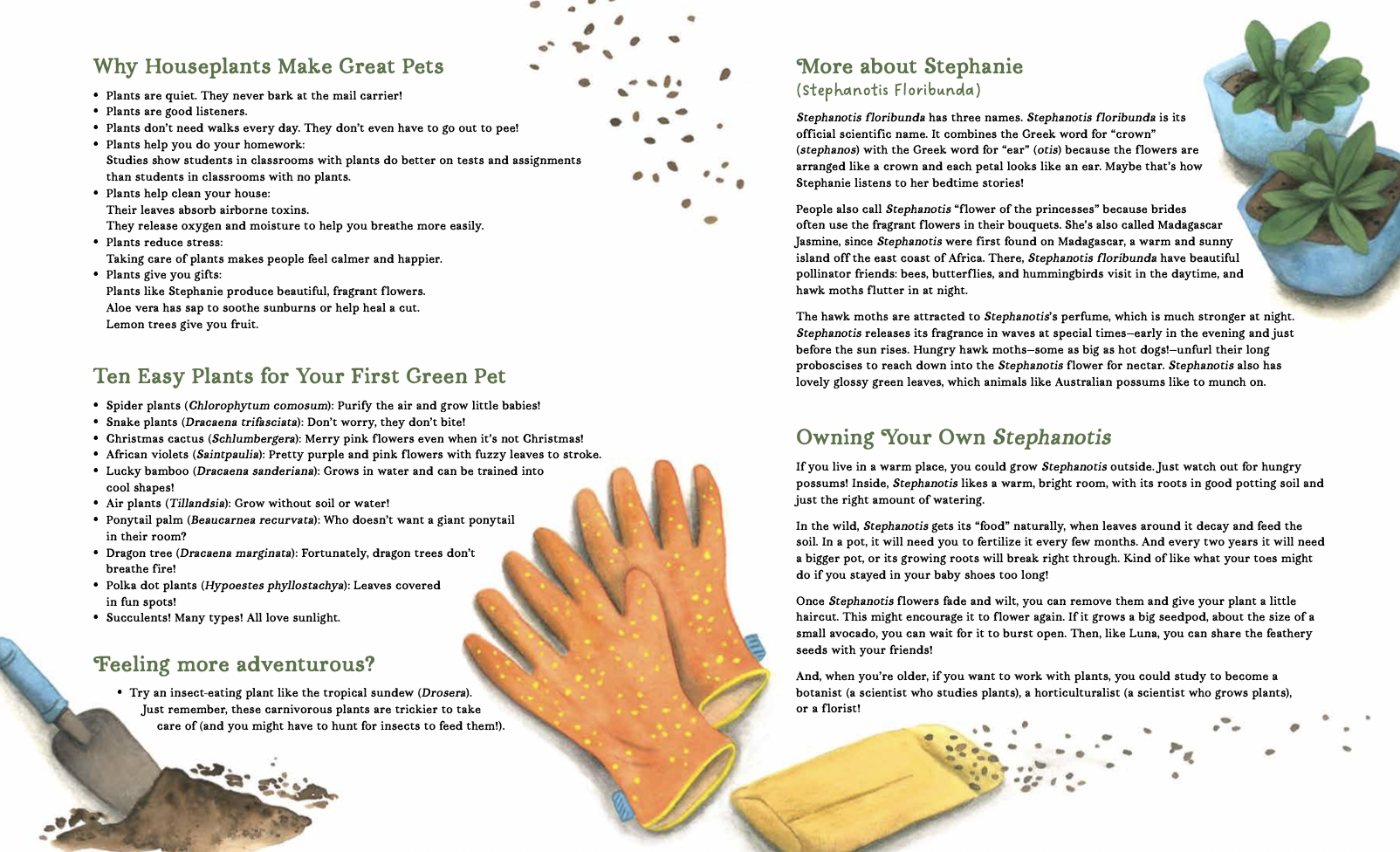
I LOVE fun backmatter and I LOVE top ten lists. Could I use one to convince people houseplants really are great pets? “Plants are good listeners” was a key Ideagrient™!
- A parade!
What’s a pet story without a parade? And of course, Stephanie must win something! Parade was mixed into my idea bowl. “Best in Scent” came later. Chef’s kiss!
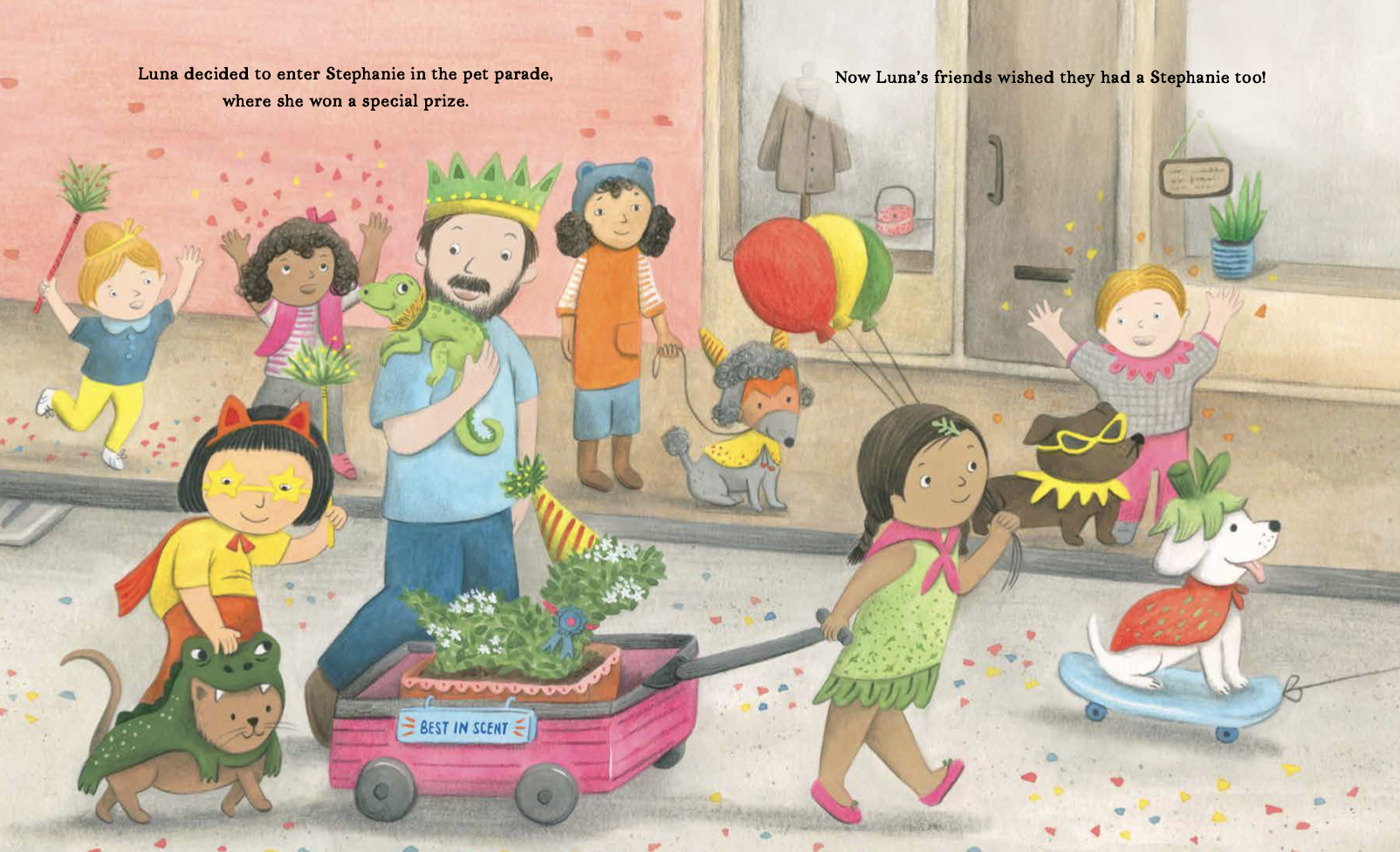
Of course, other details were later mixed into LUNA’S GREEN PET. But having at least five Ideagrients™ assembled beforehand reassured me this idea was absolutely worth pursuing. I was now excited to commit time and energy to writing it, knowing I could bring fresh, unique, fun elements to layer around a central theme of marching to the beat of your own drum. LUNA helped secure my agent and sold in our first round of submissions! Now, I look back and realize that initial photo was only an Ideagrient . You might realize that with some of your ideas. But that’s fine! Mix them with other tasty Ideagrients to make a compelling, layered idea!
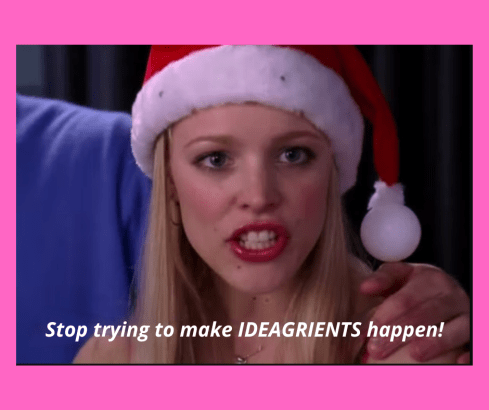
What five Ideagrients™ can you come up with today?
Some suggestions:
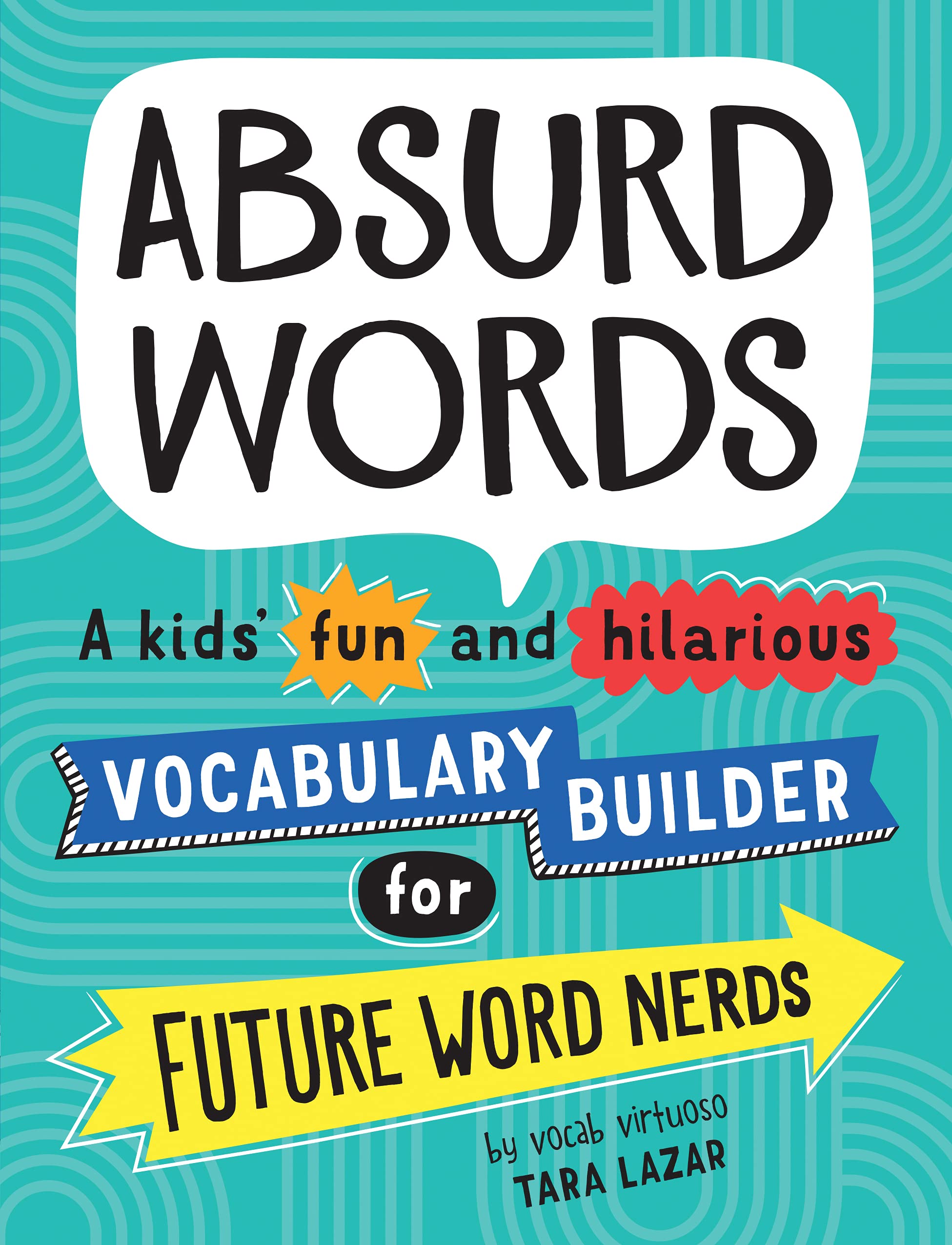
- A word. Consult Tara’s amazing book, ABSURD WORDS if you need inspiration!
- A phrase or metaphor. Maybe a family saying, something funny your kid says, a line from a song, a regional expression.
- A sensory description only you could write. How does snow feel on your skin? What does dinner smell like to you?
- A striking image. A photo of yours or something you see online or in a book.
- An example of a writing device you admire. A rhyme scheme, a clever alliteration, a type of humor.
Jot them down, organize your pantry in your own inimitable way, and soon, you’ll have plenty of Ideagrients on hand for a signature idea bake! Share one with us in the comments!
Thanks for reading! Please support all the guest bloggers (and Tara!) by buying, preordering, reviewing, and asking your library to order our books!
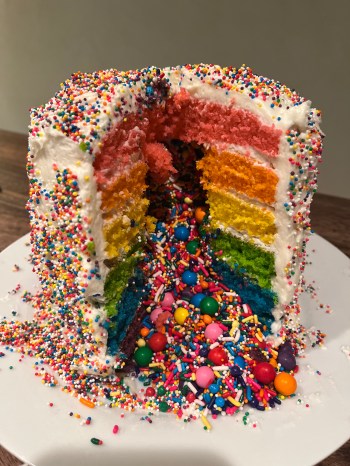
Now, after all those baking references, enjoy an imaginary slice of this beautiful and delicious cake, made by my funny, talented CP, Lisa Tolin (Author of HOW TO BE A ROCK STAR).
 Kirsten Pendreigh’s debut picture book LUNA’S GREEN PET, illustrated by Carmen Mok, is available wherever books are sold. MAYBE A WHALE, a lyrical story of healing in nature, illustrated by Crystal Smith, publishes in August with Groundwood Books and is available for preorders. WHEN A TREE FALLS, a nonfiction book about nurse logs in the forest, illustrated by Matthew Cruikshank, publishes with Chronicle Books in 2025. (Kirsten wrote about this story in a previous Storystorm post ). Kirsten is represented by Natalie Lakosil at the Irene Goodman Literary Agency. Visit Kirsten online KirstenPendreigh.com and follow her on Twitter @kpiependreigh and Instagram @kirsten.pendreigh.

Kirsten is offering one picture book critique, or a virtual classroom visit to read LUNA’S GREEN PET.
You’re eligible to win if you’re a registered Storystorm 2023 participant and you have commented only once on today’s blog post. ↓
Prizes will be distributed at the conclusion of Storystorm.
by Kirsten Pendreigh
I’m loving the inspirational Storystorm posts from successfully published creators! But I also know that the road from shiny new idea to publication is long and winding. There are potholes and wrong turns, dead ends and roadwork delays. So many delays! Sometimes you run out of gas. Sometimes you break down and wonder, should I take the offramp?

When my 2021 picture book debut got cancelled last summer, I had to pull over and refuel. I’d followed all the publishing advice. (Work Hard! Persevere! Be Patient! Toughen Up! Set Clear Goals!) It wasn’t enough. It was time to remind myself why I was on the road at all. Goalposts shift. Years of work can get swept away. Many things are out of our control.
I asked: What is it that sustains me and keeps me trucking along?
My answer? A lesson my son taught me years ago:
Joy in the journey.
Process over [unpredictable] product.
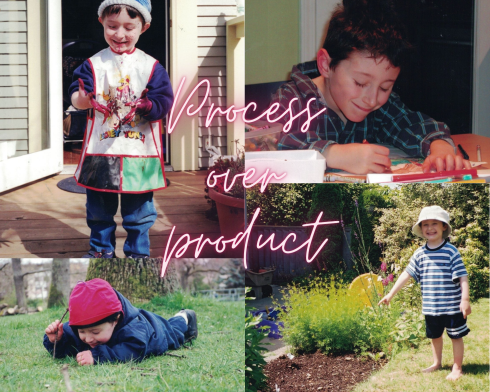
Kids model process over product all the time. My son loved to paint and draw and dig. But he never wanted to keep his paintings or drawings; he didn’t really care what we planted. To him, the joyful process of creating, of digging in, was more important.
What are the things that bring you joy on this writing journey?
For me it’s a long list, that includes:
- creating funny characters and stories in my unique voice
- playing with words: finding the perfect line, the perfect rhythmic pattern
- puzzling out picture books: page turns, art notes, pacing
- diving down rabbit holes of research
- editing and revising
- sharing stories with critique partners, helping them shape their work
- being part of a supportive and loving community of writer
But what do I love most? Generating ideas!
For me, Storystorm is the perfect way to rekindle my creative joy. In this tired old world, how magical, how hopeful, to join almost two thousand other people firing up their synapses and finding new stories to share!
This idea stage is free of judgement and full of possibility. Each new idea is a precious, fragile, exciting secret only your unique brain knows about. It could go anywhere!

Today I challenge YOU, fellow traveller on this long and bumpy road, to cherish this stage. Be open to the joyful sparks waiting for you—as you walk, as you eavesdrop on your kids, as you look out the window at birds, as you laugh about something you read. What calls to you? What triggers a faster thumpetty-thump of your pulse? What gives you that warm glow, that AHA moment?

Respond to those sparks. Nurture them!
Jot something down, even if it’s a fragment of a thought, a nonsensical doodle, or a question. And do it without judgement. Brainstorm like no-one’s watching!
Just for today, forget about all the webinars and craft books and agent/editor/author interviews you read. Forget about 3-act structures and hooks and pitches, and marketability. Forget about the destination.
Because if you start with joy, the rest will follow. Joy is contagious. Readers and editors and agents will feel it too. The stories I start with joy always fare better than the ones I try to “engineer” at the beginning. One of them landed my wonderful agent! Soon, I’ll be able to announce good news about another story, of whales who made my heart go thumpetty-thump. And that debut that got cancelled? It’s going out on sub again. If it doesn’t get picked up, that’s okay; I still love it. It still makes people laugh.

I’ve recently written a lyrical story about nurse logs—fallen trees that nurture new life in the coastal rainforests near my home. Clearly a metaphor for the poet in me! I feel my spirits lift each time I see this regeneration, even on these cold, dark days of isolation and uncertainty. It’s a gift to get to write about things I love. Maybe my log story will end up as firewood. I’ll try to bask in its warm glow. I’ll still be creating with joy. I hope you will too.
Happy Storystorm, fellow travellers!

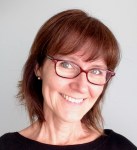 Kirsten Pendreigh is a children’s author and poet who lives in Vancouver, BC. She is represented by Natalie Lakosil at Bradford Literary. Kirsten writes both humor and lyrical stories for children, in fiction and non-fiction. Her poems are found in multiple literary anthologies and magazines. Kirsten is an active member of 12x12PB and Storystorm and a regular on Twitter. Please connect with her there @kpiependreigh or through her website or Instagram where she posts pictures of things that bring her joy.

Kirsten is giving away two picture book critiques.
Two separate winners will be randomly selected.
Leave one comment below to enter.
You’re eligible to win if you’re a registered Storystorm participant and you have commented once below.





 Writing for Kids (While Raising Them)