by Jennifer Arena

A year ago last autumn in Chicago during the Architecture Biennial, one exhibit captured my imagination. Situated in the middle of a large room were several dozen waist-high stands, each holding small everyday objects, such as fake flowers, egg crate foam, or a crumpled mini plastic water bottle.
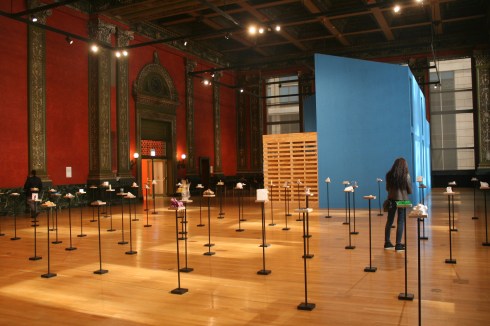
exhibit

What made the objects startling, though, was that the artist/architect had included tiny plastic people on or by each group of objects. Those plastic people changed the objects from everyday to fantastic—no longer just things you’d find in a junk drawer, they were now a whole new landscape for those little people. I had a moment of vertigo. I was looking at something small, a pile of Pringles, but to the plastic people, the Pringles were hills. And if the Pringles were hills, what did that make me?
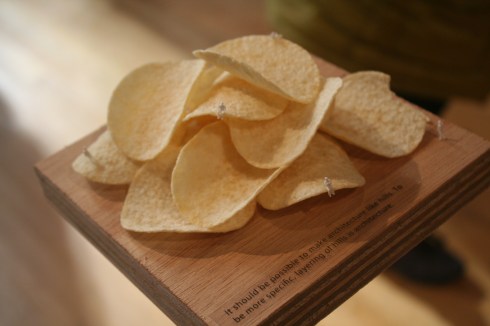
pringles

At this point you’re probably thinking, “Did I click on the right blog? Isn’t this supposed to be about WRITING?” But writing is the first thing that came to mind when I saw the exhibit, particularly writing for children, because the everyday can become fantastic if you just change your perspective. We do it all the time as writers of kids’ books. We imagine ourselves as we were when we were three or seven or ten. We remember what it felt like to be younger, smaller, under our parents’ control.

But as writers, we’re not limited to imagining ourselves as children. We can imagine ourselves as anything at all. A monkey. A vampire. A purple two-headed dragon. A little plastic person in a field of giant fake flowers. We can picture ourselves on the outside looking in . . . or on the inside longing to get out.

Perspective has been on my mind a lot lately. This year, I had two books come out that look at perspective differently. The first, LADY LIBERTY’S HOLIDAY, features a larger-than-life main character, the Statue of Liberty, and views America through her eyes. To her, Niagara Falls isn’t just a gorgeous waterfall—it’s the perfect spot to shower. And the Golden Gate Bridge? A great place to nap. The only thing that makes her feel small is the Grand Canyon.
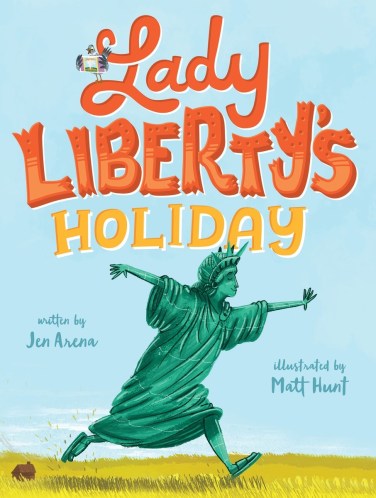
Lady Liberty_jkt_3p.indd

martaMARTA! BIG AND SMALL, on the other hand, takes on the idea of how perspective differs depending on what something is compared to. So compared to an elephant, Marta is small. Compared to a bug, she is big. (Or “grande”—it’s a bilingual book.) It’s the whole idea of me, the Pringles, and the tiny plastic people. We are all big, and we are all small. Everything is relative.

And this is where the inspiration comes from. If you’re looking for a new idea, change your perspective. What would it be like if you were the size of a mouse? What would you eat . . . or wear . . . or play with? What if you were as big as a Brachiosaurus?
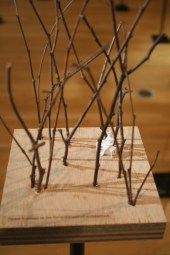
twigsLook around. A pile of Pringles can be a hillside. A handful of twigs can be a forest. A piece of egg crate foam on its side can be a modern housing development. Lie on the floor. Crawl on your knees. Climb a ladder and see what it’s like to be eight feet tall. Take an elevator to the top of a tall building and look down. Then look up. Who sees the world that way? There’s your character. What challenges would they face? There’s your plot.

In one of the explanations of the exhibit, the artist/architect wrote “Anything stacked is architecture.” He found inspiration for his craft in the everyday, just as I found inspiration in his exhibit. Who knows where your next idea might come from? Like architecture, inspiration is everywhere!

For more on the exhibit, Sou Fujimoto’s “Architecture Is Everywhere,” click on this link.
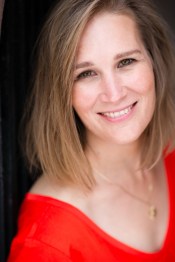

0007_arena_Jen Arena writes, edits, and finds for inspiration in the world around her for everything from easy-to-reads to picture books to early chapter books. Her recent titles include BESOS FOR BABY (Little Brown), LADY LIBERTY’S HOLIDAY (Knopf), and MARTA! BIG AND SMALLl (Roaring Brook), which the Huffington Post named in its Best Picture Books of 2016 as an Honorable Mention in the category of—you guessed it—“Best on Perspective.” Her next picture book SLEEP TIGHT, SNOW WHITE will be published in 2017 by Knopf. Visit her on twitter at @hallojen or at her website: jenarenabooks.com.
prizedetails
In honor of the very first Storystorm, Jen is giving away a thirty-minute brainstorming session/Q&A/editorial consult phone call. She has twenty years of experience as an editor with Putnam, Golden Books, and Random House and has been writing for kids just as long. Ask away!

Leave ONE COMMENT below to enter. You are eligible to win if you are a registered Storystorm participant and you have commented once on this blog post. Prizes will be given away at the conclusion of the event.

Good luck!
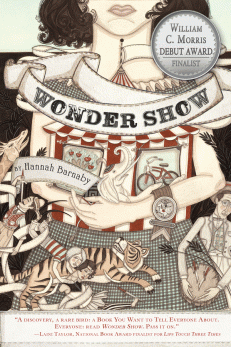
by Hannah Barnaby

Novels were my first love—as a children’s literature graduate student, as an editor, as a bookseller, and then as a writer. I loved long descriptive passages, the rising tension and angst, the unexpected twists and turns of complicated plots, and all the ways that casts of characters could clash, conflict, and come together. Novels were other worlds in which I could become fully immersed for long stretches of time, emerging only to jot down particularly beautiful sentences in my journal. However, these complications presented certain problems for me once I began writing my own novels.

image-1  image-2

It turns out that plotting is . . . not my strong suit.

While wrestling with the plot of my second novel, SOME OF THE PARTS, I turned to picture books for help. There were plenty in our house, but I knew those too well to read them objectively (and my kids kept interrupting), so I went to the library and gathered stacks of new ones, old ones, favorite classics and unfamiliar texts. I was searching for a sense of how stories were built, and I knew that picture books had patterns I could see clearly, structures I would recognize. The more I read, the more I fell in love. I felt like I was cheating on my novel, but I didn’t care. It was glorious—the humor, the energy, the sweetness, and unexpected twists and turns of uncomplicated plots were a revelation.

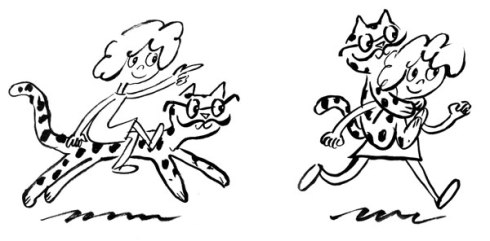
I began thinking in picture books, seeing new possibilities. My son’s preschool playground rule (“There are no bad guys at our school.”) sparked a story.

image-3

So did a conversation at an academic dinner, where I was seated between an astronomer and a marine biologist.

image-4

There were some practical things I did to put the picture books to work for myself:

  1. I typed out the text of books that were particularly successful in some way, so that I could see the words separately from the pictures. This is how picture book manuscripts arrive at a publisher (most of the time) and how mine look when I write them, because I am not the illustrator. When you can read the text alone, you get the clearest possible sense of how it operates, what jobs it has and what jobs it should not try to do (e.g. extensive description).
  2. I took note of elements like repetition, alliteration, rhyme, and plot structures to get a sense of what the rules were. I compared older books and newer ones, to see how the rules had changed. Word counts and formats vary wildly from then to now, and I wanted a strong sense of both the history of the form and the current trends, so I knew where my stories would fit.
  3. I allowed myself to start with themes and ideas that I knew had been written before. Because I had been reading so many picture books by other authors, my first efforts to write my own often mimicked what I’d read. (I could call it “an homage” and get away with it, right? Maybe?) But I let it happen, because I needed to warm up those muscles and strengthen them. It was like taking a class at the gym: for a while, I just followed along with what the instructor did. I couldn’t design my own routine right away.

Before long, I had a couple of drafts that I really liked (and several more that had yet to find their feet). I revised and fine-tuned them until I felt brave enough to send them to my agent. She replied almost immediately. “You’ve done it,” she said. “You’ve cracked the picture book code.”

So, what have picture books taught me? To be open to unexpected possibilities, to examine small moments and know that stories can grow out of anything that happens, and to be confident in my ability to structure a narrative. Writing both picture books and longer stories allows me a unique kind of balance between different forms, and has allowed me to see plot on a much smaller, more manageable scale and then expand that scaffolding to a larger one.

They’ve also taught me that sometimes you think your characters are elephants, but your illustrator has other ideas…

image-5


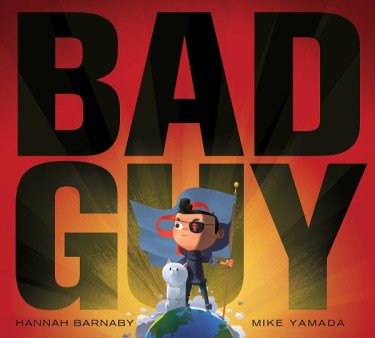
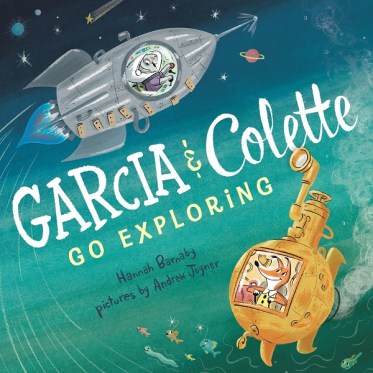
Hannah BarnabyHannah Barnaby is the author of WONDER SHOW, a 2013 Morris Award finalist, and SOME OF THE PARTS. She makes her double picture book debut in 2017 with BAD GUY, illustrated by Mike Yamada (coming in May from S&S), and GARCIA & COLETTE GO EXPLORING, illustrated by Andrew Joyner (coming in June from Putnam). Hannah lives in Charlottesville, VA, where she teaches creative writing and wrangles a variety of children and dogs. Visit her online at hannahbarnaby.com, Twitter @hannahrbarnaby and Facebook.

Her two picture books are now available for pre-order via Indiebound: BAD GUY and GARCIA & COLETTE GO EXPLORING.

prizedetails

Hannah is giving away her code-cracking secrets in a picture book critique.

Leave ONE COMMENT below to enter. You are eligible to win if you are a registered Storystorm participant and you have commented once on this blog post. Prizes will be given away at the conclusion of the event.

Good luck!


by Dan Moynihan

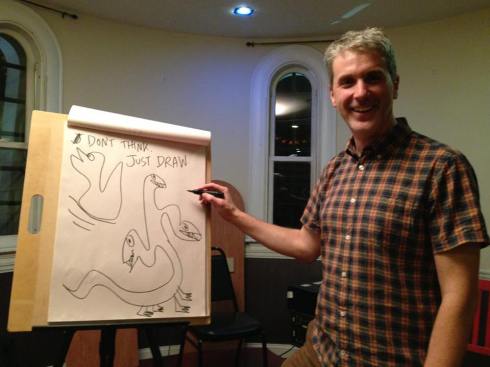
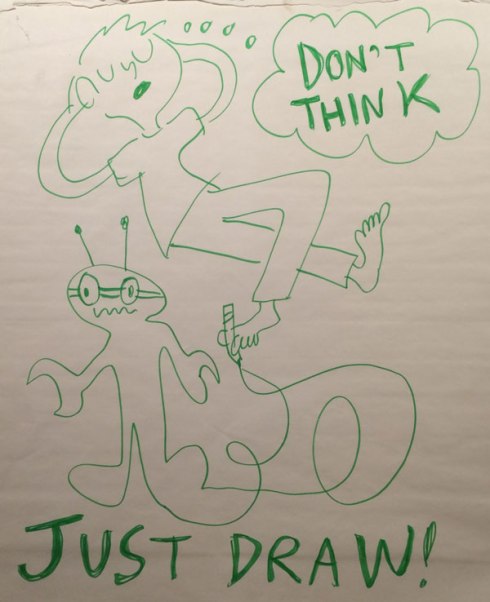
dont_think_just_draw1

“DON’T THINK. JUST DRAW.”

That’s what I’ll tell you in one of my collaborative story-making events. That’s our motto as we set forth to create a wild batch of picture book stories in about an hour. There’s no time for self-doubt or self-editing, so just draw, just write, just create. There’s no preparation of ideas, and no plan once we start, but we somehow create amazing stories that are joyful, surprising, and at least partly coherent. We’re not sure where we’re going, but we’ll get there together!

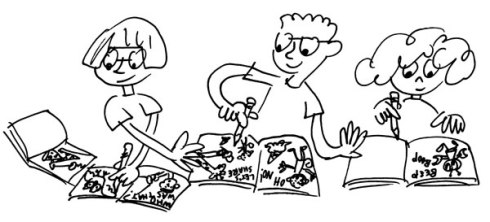
together2_danmoynihan

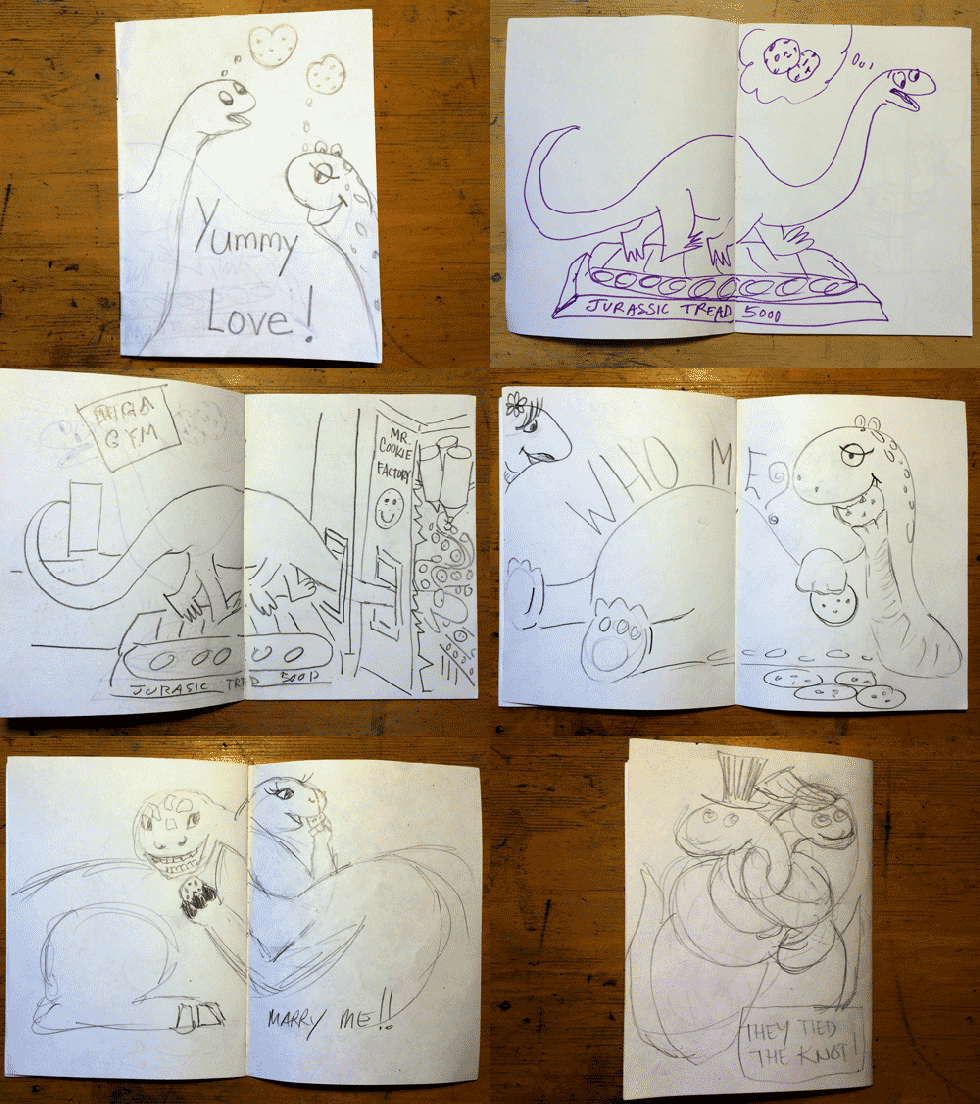
You’ll start off with a blank, 12-page booklet in which to begin a story—just to begin it. It could start with a single sentence or a bit of dialogue. It could start with a character or object in an environment. It doesn’t really matter what it is. The important thing is just to start. Just start moving your pen if you don’t have an idea yet. There’s a lot of power in just starting.

And you don’t need a plan. When you begin the story, you don’t need to know the end of the story yet or even what will happen next. In fact, in this case you can’t know. Because in just a few minutes, you’ll be passing that booklet to the person on the right, who will continue the story that you started.

pass_the_booklet_danmoynihan

When you pass that booklet, you let go of your story. It’s in someone else’s hands now, and you have no control over where it will go. But that’s the whole fun of this activity—you get to see the unexpected places that an idea can go. So when you’re working on your own stories, don’t hold on to them too tightly. Don’t be afraid to let them do anything they want to do. Don’t be afraid to explore a possibility just because you don’t know where it will lead.

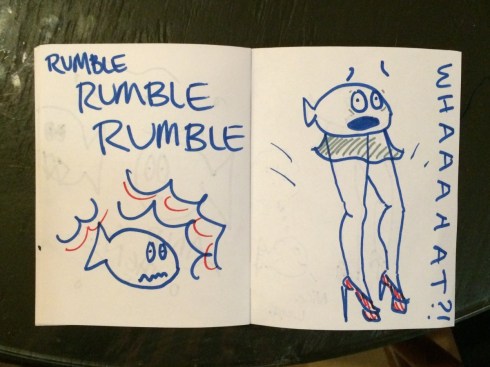
Just as you passed that booklet to your neighbor, you will receive another booklet. This one already has a story started in it, with characters, setting, and action that someone else created. Now it’s up to you to continue the story.

What will happen next? Again, you don’t need to know the ending or even what happens in two more pages. Just one step in the story.

fish_legs

Despite being limited by the story that someone else started, most people find the second step to be easier and more fun than the first step. With a blank booklet, you had total freedom. But when anything is possible, it might be that nothing feels particularly right. Having something to react against focuses your creativity. That’s why I love writing and drawing prompts. Paradoxically, arbitrary constraints make us more creative.

When I feel stuck on one of my own stories, I imagine that I’m actually in the midst of one of these collaborative picture book events. There is no longer a story that I’m struggling with, but a story that has appeared before me out of nowhere. I’ve got two minutes to come up with the next step in the story—not the whole story, just one step—without thinking at all about where it is leading. I come up with something, and then move on to the next step.

next_step_danmoynihan

I often find that my imagination will not allow me to see step two until I have taken step one. I try to see the path ahead in my mind, but I can’t. But I don’t get frustrated. I just start drawing, because I know that the story will only take shape through its own process of creation.

yummylove

Look at that story that you’re stuck on. What would you do if you had to come up with something—anything—for the next step of the story? Forget about plans. Just take one step. Anything is better than nothing. Then repeat. This process might take your story just where it needs to go. Or it might lead you down a cul-de-sac, but it keeps you moving. Just go back and try again. What else could have happened? And then what? Eventually, you’ll find the right path for your story.

Ideas and stories take shape through action. Don’t wait for them to form in your mind. When you don’t know what to do, just keep writing and drawing!

dont_think_just_draw


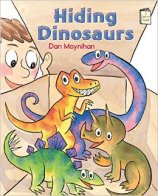
danmoynihan_photo600Dan Moynihan is the author-illustrator of HIDING DINOSAURS, which was named a Must-Read Picture Book by the Massachusetts Center for the Book. His comics have appeared in Nickelodeon Magazine and Heeby Jeeby Comix. He also enjoys teaching watercolor painting and illustration classes at Cambridge Center for Adult Education. Dan lives in Boston with his wife Cathy and an orange cat named Butters. Visit him online at danmoynihan.blogspot.com and follow him on Twitter .

prizedetails

Dan is giving away a signed copy of HIDING DINOSAURS.

hidingdinosLeave ONE COMMENT below to enter. You are eligible to win if you are a registered Storystorm participant and you have commented once on this blog post. Prizes will be given away at the conclusion of the event.

Good luck!
 

by Tammi Sauer

I am a huge fan of Storystorm (formerly known as PiBoIdMo). Many of my books started right here!

YOUR ALIEN, my book with Goro Fujita, for example, first appeared on my 2012 PiBoIdMo list. That year, I decided to step away from the classic picture book structure which has served me well in many of my books including BAWK & ROLL!, MOSTLY MONSTERLY, and PRINCESS IN TRAINING, and I challenged myself to try other approaches. I wrote ROAR! (Paula Wiseman/S&S, 2015), a book entirely in dialogue. I wrote MARY HAD A LITTLE GLAM (Sterling, 2016), my first rhymer. I also really, really, really wanted to write:

  • a circle story*
  • told in second-person narration**
  • that starred a little alien***.

I mean, who doesn’t?!

To come up with the plot for this manuscript, I asked myself the biggest two-word question I know:

whatif

  • What if…a little alien accidentally crash-lands in a boy’s yard?
  • What if…the boy wants to keep him?
  • What if…the boy takes him to school?
  • What if…the boy and the alien have an amazing day, but, when nighttime comes, the boy discovers something is wrong with his alien?

Each of these questions pushed me to consider what happened next in the story. If one question took me to a dead end, I gave myself a detour. I simply asked myself a new “What If..?” question.

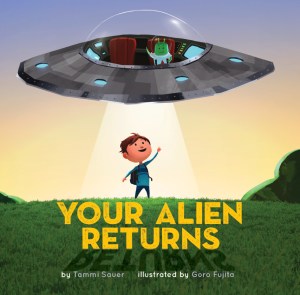
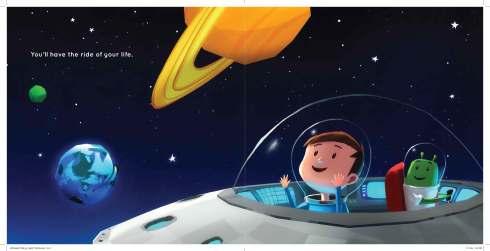
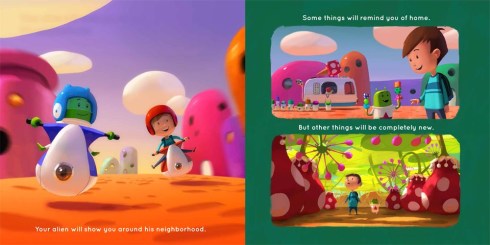
The sequel, YOUR ALIEN RETURNS, debuted in October. I used the “What if…?” approach for determining the plot for this book as well.

youralienreturns-cover
youralienreturnsspread1

youralienreturnsspread2

Maybe you’d like to give the “What if…?” approach a try.

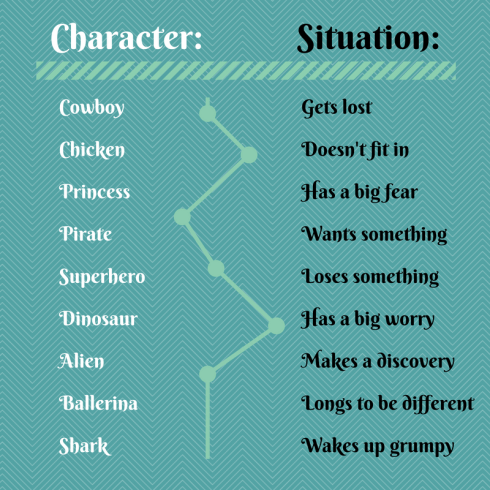
Select one character and one situation (or choose your own!). Ask yourself, “What if…a (character) (situation)?” Next ask yourself, “And then what? And then what? And then what?”

charsitch

*Circle Story: what happens at the very end of the story echoes something that happened in the very beginning of the story
**Second Person Narration: addresses the reader directly and uses the pronouns “you,” “your,” and “yours”
***alien
_________________________________________________________________________tammisauer-authorpic-2015bwTammi Sauer is a full-time children’s book author who also presents at schools and conferences across the nation. She has sold 28 picture books to major publishing houses including Disney*Hyperion, HarperCollins, Houghton Mifflin Harcourt, Penguin Random House, Scholastic, Simon & Schuster, and Sterling. In addition to winning awards, Tammi’s books have gone on to do great things. CHICKEN DANCE: THE MUSICAL is currently on a national tour, NUGGET & FANG was a featured book at the 2015 Scholastic Book Fair, and YOUR ALIEN, an NPR Best Book of 2015, was recently released in Italian, Spanish, Korean, and French which makes her feel extra fancy.

You can learn more about Tammi and her books at tammisauer.com.

prizedetails
alienbuttonsAttention, earthlings! Tammi is giving away a signed copy of YOUR ALIEN RETURNS, a bookmark annnnd an out-of-this-world alien button.

Leave ONE COMMENT below to enter. You are eligible to win if you are a registered Storystorm participant and you have commented once on this blog post. Prizes will be given away at the conclusion of the event.

Good luck!
by Josh Funk

Yesterday, Tara told us to be mindful and also to daydream. Mindfulness and daydreaming may seem like opposites; pay close attention to the world…and pay attention to only what’s in your head. And just to prove that ideas come from anywhere and everywhere, today I’m going to suggest you do a third thing—something right in between.

Only half concentrate on what you’re doing. Space out…a little. Don’t pay too close attention. You know you’re gonna anyway. You’re probably multi-tasking while you read this post; maybe you’re exercising (good for you!) or driving (please pull over before continuing. Seriously.), or in the bathroom (hey, that’s where I’m writing this!).

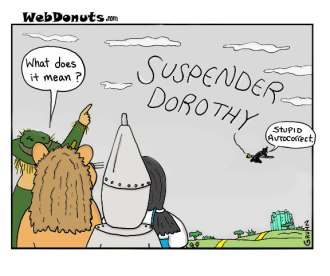
suspenderdorothyToday I’m going to tell you why I love otter car wrecks. Sorry, I meant autocrrects. Bah! I mean autocorrects. And typlos. Seriously? AUTOCORRECTS AND TYPOS! And how they can inspire goofy, absurd, and sometimes preposterous creativity.

Do you want a robust hobbit dude?

Why wasn’t I invited, poo-head?

I solved your evil baristas.

I said or wrote all those things over the past few years…sort of.

I like to think that I have pretty good hearing. But if you ask my wife, she’ll tell you I’m not the best listener. I clearly wasn’t paying close attention when I thought I texted my wife, “Do you want to go out for food?” but ended up asking her about a chubby cowboy creature from middle earth. While a book about a hobbit is probably copyright protected, I’ll be there’s a market for LOTR fan-fiction.

When Anna Staniszewski told me in gchat that she was having a book launch, I responded with what I thought was, “Why wasn’t I invited, though?” I can’t say that I didn’t not not start working on a manuscript about a birthday party for an anthropomorphic piece of—wait, never mind. As Tara always says, don’t give away your ideas.

And I honestly have no idea what I said when Siri searched for those evil baristas. My best guess is that I wanted a burrito. But I made sure to write it down because a villainous coffee artisan sounds like a perfect future foil for Inspector Croissant!

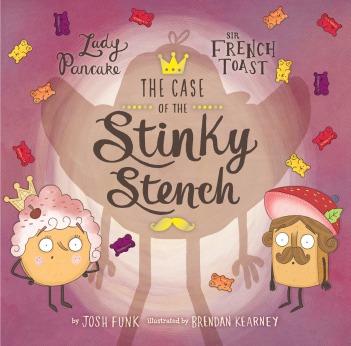
the-case-of-the-stinky-stench

So use those absurd auto-corrects to your advantage. If you mishear someone speak, maybe what you think you heard will bear a brainstorm. It may seem nonsensical now. But definitely write it all down. For all you know, a typo isn’t just a typo—it’s your subconscious genius giving you an inspirational kick in the barista.


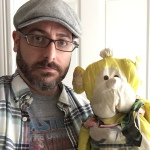
_josh-funk-headshot-with-monkey-dudeJosh Funk writes silly stories and somehow tricks people into publishing them as picture books, such as Lady Pancake & Sir French Toast and its upcoming sequel The Case of the Stinky Stench along with Pirasaurs!, Dear Dragon, It’s Not Jack and the Beanstalk and more! This morning he started drafting a book about otters getting into car wrecks.

Josh is a board member of The Writers’ Loft in Sherborn, MA and the co-coordinator of the 2017 New England Regional SCBWI Conference. He has a 12 Step Guide to Writing Picture Books in the ‘Resources for Writers’ section of his website. Josh grew up in New England and studied Computer Science in school. Today, he still lives in New England and when not writing Java code or Python scripts, he drinks Java coffee and writes picture book manuscripts.

Josh is terrible at writing bios, so please help fill in the blanks. Josh enjoys _______ during ________ and has always loved __________. He has played ____________ since age __ and his biggest fear in life is being eaten by a __________.

Find out more about Josh at joshfunkbooks.com and on Twitter @joshfunkbooks.

prizedetails
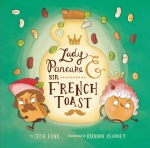
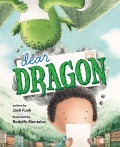
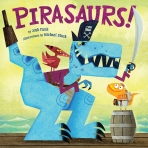
Josh is giving away one signed & personalized copy of each of his three books: Lady Pancake & Sir French Toast, Dear Dragon, and Pirasaurs!—one each to three lucky winners.

Lady Pancake Cover Image _dear-dragon _pirasaurs

Leave ONE COMMENT below to enter. You are eligible to win if you are a registered Storystorm participant and you have commented once on this blog post. Prizes will be given away at the conclusion of the event.

Good luck!

by Tara Lazar

Amidst the chaos and confusion of the past year, a Zen movement gathered steam, gently simmering in the background of our harried lives and minds. You may have noticed—albeit fleetingly—while shuffling through news of war, tragedy, and a deeply divided nation. You may have caught a glimpse, in the corner of your eye, as you rushed from work to home to school to conflicting calendar commitments.

Our technologically advanced, modern lives are supposed to be more efficient and productive, but instead we feel required to do MORE with the time we have—and to feel badly when we don’t, to somehow believe we are faulty, we have failed.

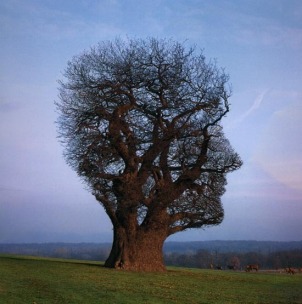
This picture has been reproduced by kind permission of stormthorgerson.com.

This picture has been reproduced by kind permission of stormthorgerson.com.

And for these reasons, “mindfulness” achieved an elevated status this past year. I witnessed it everywhere in 2016—in magazines and articles, on TV, and even in the opening of a sensory deprivation spa a few miles from my home.

I learned about mindfulness before it had a name. Newly diagnosed with MS, I became a worry-wart, imagining my future as a helpless invalid. I lamented the inevitable loss of independence, a retirement not surrounded by loving grandchildren, but by indifferent nurses. Finally, after what I refer to as “the lost year,” I learned that worrying about the future makes you miss out on the here and now. I strived to instead be present in the moment. This is mindfulness.

Mindfulness can work wonders for creativity. Being more aware of your environment, your actions, interactions and emotions gives you a better understanding of being human, which, in turn, is fuel for character development. Others’ reactions also serve as powerful material for storytelling. Being mindful can help us capture and remember pieces of daily life that lend an authenticity to our stories. Moving about with a constant, present focus, will allow you to see ideas, to be open to the inspiration that exists around you every day.

In being mindful, we should also make time just to be, just to think. The most successful entrepreneurs in the world schedule time to ponder their lives and careers. You should be similarly thoughtful about your writing path. Where do you want to go? What do you want to accomplish? Who do you want to be as an author?

This is where I often sit and just think. I call it the "brick oven" because it remains warm on sunny days...and because it bakes my ideas.

This is where I often sit and just think. I call it the “brick oven” because it remains warm even on winter days…and because it bakes my ideas.

And now I am going to confuse the Dickens out of you.

While I am all for the benefits of mindfulness, I also urge you to let your mind wander, to daydream. You probably already do. And you should not stop.

Not being mindful when performing routine tasks—like folding laundry, washing dishes, taking a shower—allows the mind to escape the doldrums of daily life. You do not have to think about how to do the things you have done thousands of times. You can free up your mind to go on an adventure. Some of the best ideas come when we are not focused on the here and now.

But wait, isn’t that the opposite of mindfulness?

Actually, I believe practicing mindfulness can lead us to become better daydreamers. They are not adversaries, but partners in creative living. According to daydream researchers McMillan, Singer and Kaufman, “Creativity lies in that intersection between our outer world and our inner world.” I interpret this as meaning we must pay strong attention to both daily duties and daydreaming. In other words, let the things around you stimulate the daydream. This is called inspiration, right?

We can set aside time just to daydream, or we can be aware when we lose our focus to daydream, and allow the thoughts to flow. If we stop our minds from wandering, I fear we may lose our ability to be creative. After all, the illusive ideas we seek ultimately come from within our own minds. So maybe when you feel a daydream coming, you can pay attention to it, let it happen. Grab a notebook. Yes, be MINDFUL of when you are not MINDFUL.

And this, my friends, is how you mine—and mind—your ideas.


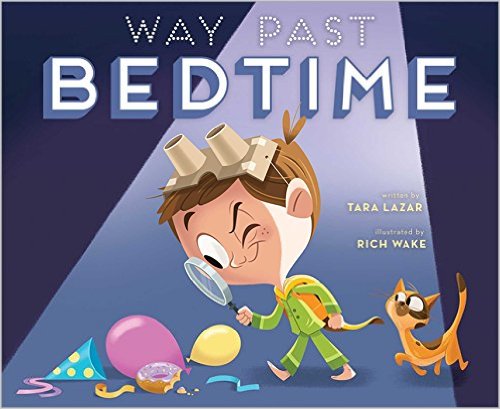
taramay2014blogTara Lazar is a picture book author and founder of Storystorm. She has two books releasing in 2017—WAY PAST BEDTIME from Aladdin/S&S and 7 ATE 9: THE UNTOLD STORY from Disney*Hyperion. Tara is a council member of the Rutgers University Council on Children’s Literature and a picture book mentor for We Need Diverse Books. She lives in New Jersey with her husband, two daughters, and far too many stuffed animals.

prizedetails

Tara is giving away an “Ask Me Anything” Skype session (or Facetime, or telephone). These typically last about an hour, but she will stay on the line (internet?) until you have answers to your most burning questions regarding children’s publishing. From initial idea to polished query, from deciding on an agent to marketing a book, she will cover it all. The opinions of Tara do reflect those of her employer, which, incidentally, is also Tara.

Leave ONE COMMENT below to enter. You are eligible to win if you are a registered Storystorm participant and you have commented once on this blog post. Prizes will be given away at the conclusion of the event.

Good luck!


by Deb Lund

I’ve been restless lately. Uncertain. Wondering what to work on next, but not taking action. Growing up in northern Minnesota, the outward version of that was an approaching storm—a blizzard, a tornado, torrential rains… It starts out in stillness and quickly gets dark.

storm-clouds

There’s something in the air that you can’t quite identify, and then it whooshes in…

storystorm

Energy builds. Everything whirls around you. There’s nothing to hang on to. It all feels impossible and there’s nothing you can do about it—except face it. Be brave! Lean into the wind! You got this!

Creativity needs chaos. It needs a storm. Once in a while we need to be shaken out of our pitiful patterns and hideous habits. You know what I mean. Those crazy excuses—I’m too old/young/busy/whatever. Or… just another game of Solitaire, or another snack. Yeah! That’s what I need!

storm-dance

When the storm hits, don’t hide out, and don’t run away. What matters to you? What’s your big dream? What would give your life more meaning? Claim it! Step into the eye of the storm.

Snatch the ideas flying by. Add more snatches to them. Don’t look for pieces that fit—go for curiosity, not judgment. Just grab them. Own the storm!

storystorm

Are you wondering what you’re getting yourself into? Feeling lost? Unprepared? Me, too! When it comes to creativity, if you don’t know what you’re doing—you’re on the right path!

Still feeling anxious? What do you say to yourself? Here are some of mine…

  • “Who do you think you are?”
  • “It was only a fluke that you ever got published.”
  • “Someday they’ll figure out you can’t write.”

Change those conversations! We all run around scared that someone else is going to find out we don’t really know what we’re doing. We’re afraid we’ll die in the storm.

Take back that talk, and talk back!

It’s hard work finding your way through torrential rains, hail, sleet, or snow. The wind might mangle your umbrella. You might slip on the ice. You might end up in your own version of Oz. Do it anyway.

blizzard

I grew up with stories of farmers tying ropes between their homes and barns so they could take care of their cattle during blizzards. We have no worries there. Tara is our tether, and she’s tenacious! You may feel lost now and then, but the rope is always within reach. Come back and read this post when your doubts drift up around your ears. I promise you can do this!

When a storm approaches, you get ready. You gather up all you need. You make a plan.

Here’s a short list to help you get started:

  • Piggyback on elements of your favorite stories.
  • Glance through book titles on bookstore and library shelves.
  • Start with first sentences from books you haven’t read.
  • Drag out past idea lists or folders to mix and match
  • Look at photos—your own, social media, online image searches.
  • Mine your memories.
  • Think emotions: Sad, angry, hurt, frustrated, relieved, determined, etc.
  • Search magazines, newspapers, and online resources for interesting stories.
  • Observe kids in libraries, stores, parks, schools, or your own at home.
  • Think “firsts”—teeth, steps, birthdays, school, friend, kiss, etc.
  • Identify epiphanies and turning points.
  • Ask kids, parents, teachers, librarians, friends, family—anyone!

I’m sure our amazing Storystorm line-up will cover some of these in detail and more. Still feeling anxious? Change your default reaction to calm. Tough order, I know. But it’s possible.

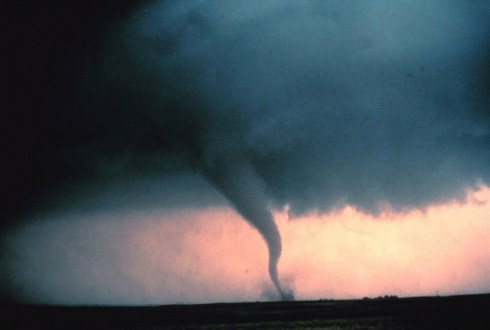
tornado

As tornadoes touched down around us on Minnesota summer days, neighbors without basements would run to our house and gather in ours. My mom would ask me to play the piano while we waited out the storm.

piano-hands

Playing through a storm is a pretty good analogy of the creative process.

Here’s how you do it…

Ignore the dangers around you. Stay focused, deny the distractions, and entertain yourself until the wind dies down enough to step out into the new landscape before you. And when you do, stay curious. If you label the storm a disaster, you’re not free to experiment and explore.

Keep an open mind as you assess the possibilities. You can shovel out a path or pick up pieces later. Until then, enjoy the wonder and the rainbows. After this month, you might just become a storm chaser.

deb-hearts


Deb Lund is best known for her rowdy, rollicking dinoadventures. She’s helped many writers forge their way through storms with her card deck, Fiction Magic: Card Tricks & Tips for Writers. Deb is a creativity coach who claims that outsmarting her own fierce inner critic makes her more qualified to lead storm troopers than all her training, teaching, and years of coaching experience. Visit Deb at deblund.com.

prizedetails

Deb is generously giving away three prizes: two 15-minute creativity coaching sessions and one set of Fiction Magic cards.

Leave ONE COMMENT below to enter. You are eligible to win if you are a registered Storystorm participant and you have commented once on this blog post. Prizes will be given away at the conclusion of the event.
Good luck!

***STORYSTORM REGISTRATION IS CLOSED. You can still join in the challenge by reading the daily posts and jotting down ideas, but you will not be eligible to win STORYSTORM prizes.***

dorothytoto

Oh, Toto, I have a feeling we’re not in Kansas anymore…

That’s right, Picture Book Idea Month has been blown away by STORYSTORM! Need to know why? Check here.

STORYSTORM is a month of brainstorming new story ideas. This event is open to any writer seeking inspiration, support and community.

How does STORYSTORM work? It’s simple…

  • Register here by signing your name ONCE in the comments below. Teachers participating with a class can register under the teacher’s name.
  • Registering makes you eligible for prizes.
  • Visit this blog daily (taralazar.com) for inspirational essays by guest bloggers—professional authors, illustrators and experts in creativity.
  • Instead of visiting the blog directly, you can receive the daily posts via email by clicking the “Follow Tara’s Blog” button in the left column—look under my photo for it.

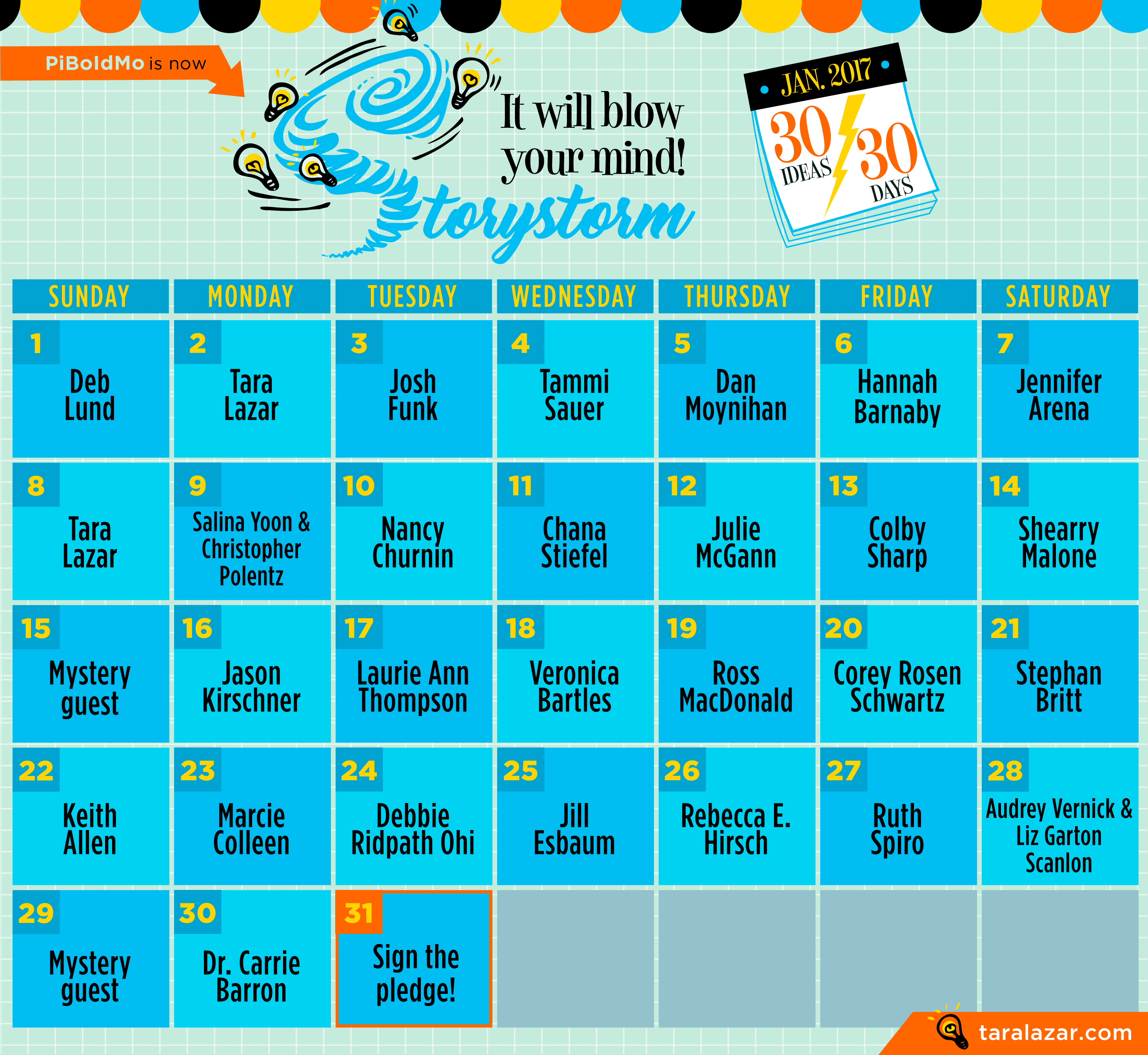
storystorm_calendar_v4

  • After you have read the daily inspiration, jot down a daily story idea in a journal, computer, anywhere you like to write. Some days you might have no ideas, but some days you might have five or more.
  • At the end of the month, if you have at least 30 ideas, sign the STORYSTORM pledge and qualify for prizes.
  • Prizes include professional consults, signed books, original art, writerly gadgets and gizmos.

Remember, do not share your ideas publicly. They are YOURS. No need to  prove that you have them at the end of the month. The pledge you will sign is on the honor system.

Are you in? Awesome. Pick up your Official Participant badge below and affix it to any social media account you wish. (Right click to save to your computer, then upload it anywhere.)

storystorm_participant

May I suggest a STORYSTORM journal to keep those ideas safe?

storystormjournal

Go to the CafePress STORYSTORM Store here: cafepress.com/storystorm.

All proceeds ($3 per sale—only if you use our URL) will be donated to Reading is Fundamental (RIF), to help put books into the hands of underprivileged children. Please remember to enter the store via cafepress.com/storystorm. If you search CafePress instead, we do not receive the funds.

Other merchandise will go on sale once the event begins, but you can order your journal now.

The final piece? Join the STORYSTORM Facebook discussion group. You need friends for the journey!

wizard

The group is completely optional, but it remains a year-round source of writing information and support, mostly focused on picture books, I admit, because that is where this all began.

Registration will remain open through JANUARY 7TH.

What are you waiting for? Register and go celebrate! I’ll see you back here on New Year’s Day.

joy

steam

Many thanks to S.britt for the logo design and Troy Cummings for the banners and badges.


Sorry for the delay. I’ll have Alex Trebek entertain you while you wait…

trebek

Well, that was certainly interesting, Alex. Umm, thanks.

(P.S. This kid did it better.)

dancingtoddler

In the meantime, need to know why PiBoIdMo became STORYSTORM? Check it.


Here it is, the moment you’ve been waiting for…

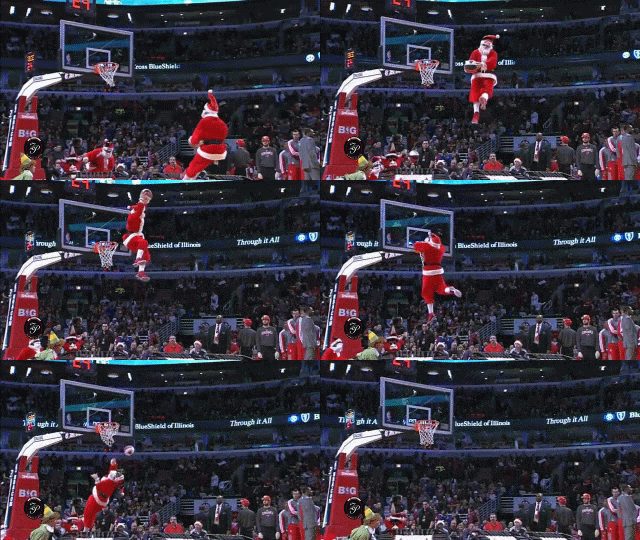
santaslamdunk

SANTA SLAM DUNK!

OK, maybe not what you were expecting. A little holiday humor. Let’s move on…

Those of you who participate in Picture Book Idea Month already know I moved the annual writing challenge to January instead of November. And you also know I changed the name. The new, much-easier-to-pronounce moniker is…

storystorm

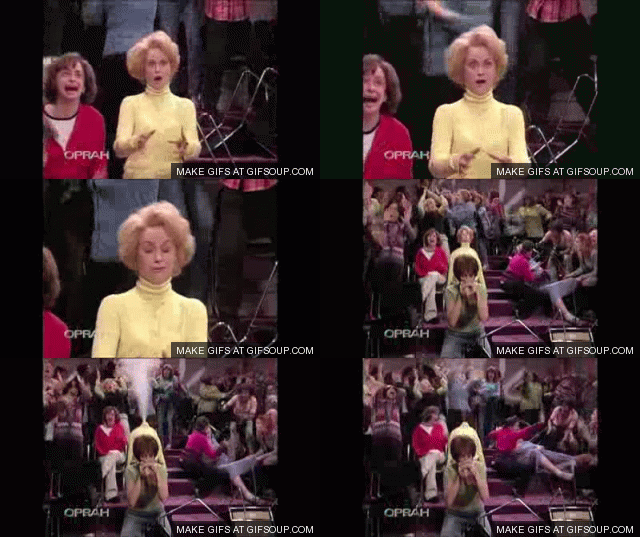
Did that just blow your mind?

amypoehlerhead

I hope so!

The new logo was designed by talented illustrator S.britt (of NORMAL NORMAN fame).

Now, I hear you asking some questions.

WHY THE NAME CHANGE?

The original challenge—to create 30 picture book concepts in 30 days—was named “Picture Book Idea Month” or “PiBoIdMo” for short. Everyone pronounced the awkward acronym a different way. And if you managed to say it, it didn’t make sense to others.

“STORYSTORM” is a portmanteau of story and brainstorm that is more immediately understood.

The new name signals a broader scope—any type of writer interested in being inspired in January can now join the challenge. Novelists, short story writers, non-fiction authors and even teachers and their students are welcomed. Any writer, anyone who wants to brainstorm for a month. 

The goal is for STORYSTORM participants to jot down 30 story ideas in January. Then everyone will have thirty new shiny ideas to ponder, flesh out and write in 2017.

WHY THE MONTH CHANGE?

PiBoIdMo was originally held in November because it was modeled after NaNoWriMo, which runs at that time. But November is so busy with the start of the holiday season. Starting fresh in January—a new year, new goals—will hopefully prove to be both inspiring and motivating.

IS IT STILL FREE TO PARTICIPATE?

ABSOLUTELY.

WHEN CAN I REGISTER?

After the slam-dunking of presents down the chimney is over. In other words, Boxing Day. In other, other words, December 26th.

Registration will remain open for the entire first week of January. You do not have to register, but doing so makes you eligible to win prizes—agent consultations, books, critiques, and a whole lotta fabulous stuff that even Santa can’t make possible.

So THANK YOU for being patient while I pondered these changes. More announcements soon—like the guest-blogger line-up!

But in the meantime, join our STORYSTORM Facebook group which is active year-round for friendly support and discussion.

staytuned


Like this site? Please order one of my books! It supports me & my work.

FLAT CAT is the winner of multiple state book awards, selected by kids!

Enter your address to receive this blog via email.

Join 14.6K other subscribers

My Books

Blog Topics

Archives