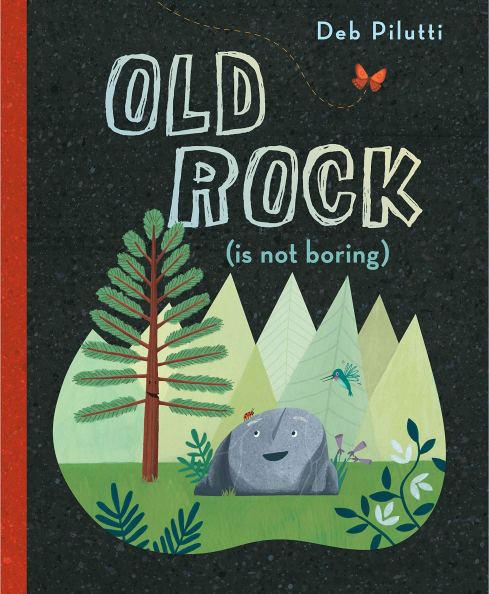
I hope you’ve been taking advantage of all the free webinars available to kidlit writers and illustrators! One introduced me to OLD ROCK (is not boring) by Deb Pilutti—which I must share with you! Because…often I’ll hear that certain subjects aren’t kid-friendly enough for a picture book main character. I’ll even say this myself while teaching. Yep. Guilty as charged.
But Deb Piluitti knew that an OLD ROCK could be a delightful MC with tons to teach nay-sayers.
Deb, how did the idea for OLD ROCK roll into your head?
I have two different answers for that, and both are true.
My family has always liked to hike. In Michigan there are many wooded trails with pine trees, wildflowers, gently sloping hills and every so often you will see a large boulder, sitting on a hillside, without any other rocks or boulders around. And you wonder, How did THAT get here? (Spoiler: glaciers were involved.) I think this question created space for the idea to form.
One day I was doodling in a notebook and drew a rock with a face on it. I liked it and wondered if I could write a story about a rock character. Then I thought, rocks don’t DO anything. They just sit there. That would make for a boring book—which became the premise for the story. Old Rock’s friends think being a rock must be awfully boring. They can’t imagine sitting in the same spot, day after day.
And right now we’re all sitting in the same spot for a long time! What serendipitous timing!
I love how OLD ROCK breaks a picture book rule, which is to NOT jump back and forth in time. But you do this so seamlessly in the story. How did you use the illustrations as a visual cue between the past and present?
Oh, is that a rule? Haha, I guess it helped that I didn’t know.
But seriously, it was a challenge to differentiate past from present day. The main device I used was to change the color palette.
The past starts out in fiery unnatural colors, pinks and yellows and oranges, and gradually shifts as time progresses.

Present day is depicted in blues and greens.
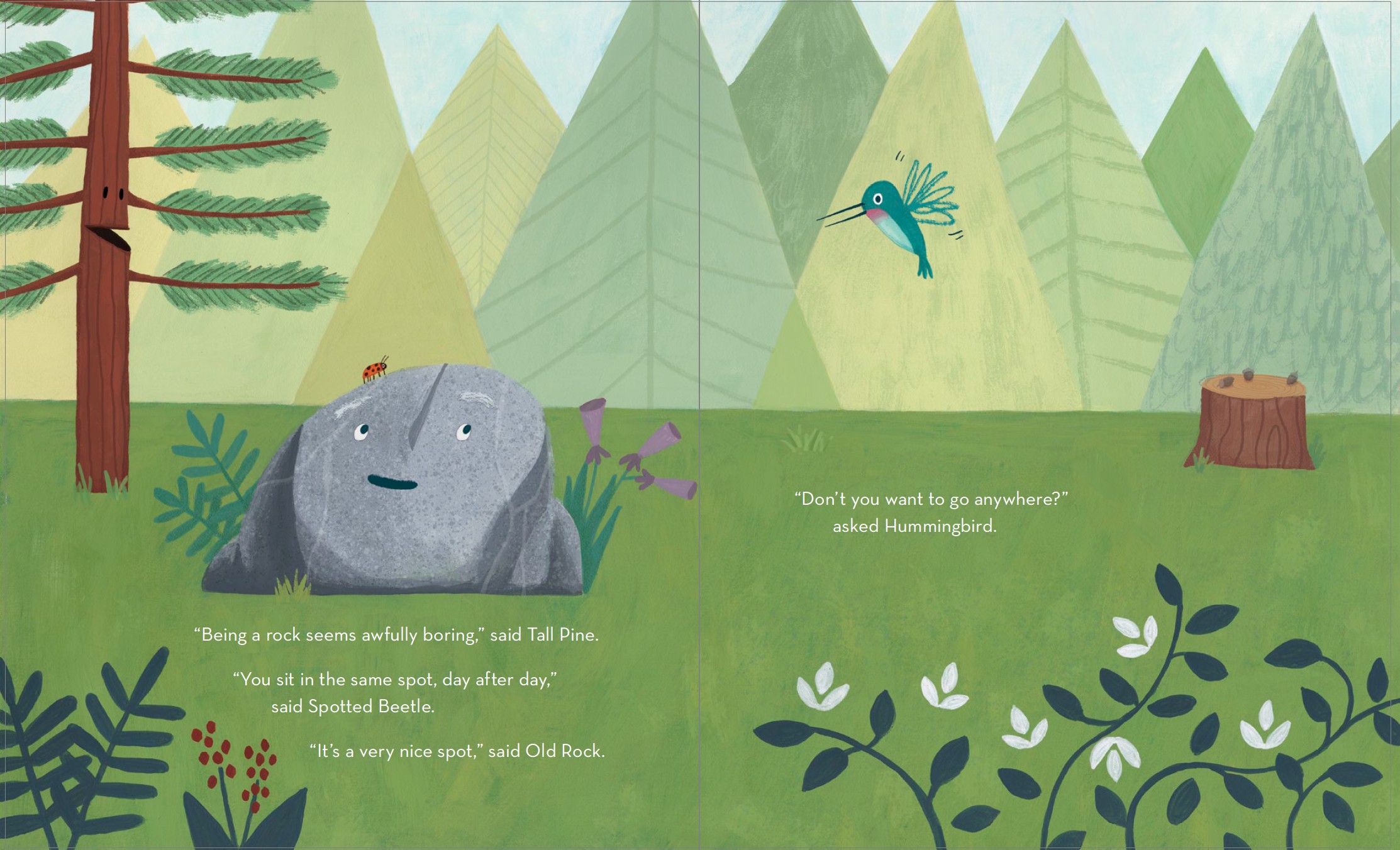
Old Rock’s appearance changes as time passes and becomes smaller, worn down with rounded edges, cracks and grey eyebrows.
Haha, I didn’t even notice the change in eyebrows! Then again, your humor steals the scene often…

Also, the present is always shown from a static vantage point, the spot at the edge of a clearing in the middle of a pine forest. Scenes from the past occur over a large geographical area, with angles and motion to suggest forward movement and genuine tumult.
Inanimate objects as main characters—like Amy Krouse Rosenthal’s “Spoon,” Josh Funk’s “Lady Pancake” series and now your OLD ROCK—do you think that’s a trend or is it here to stay?
 True, we are seeing more fun & silly anthropomorphic books for sure, including your own hilarious 7 ATE 9, illustrated by Ross MacDonald, but the concept has been around awhile.
One of my favorite books as a child was LITTLE BLUE AND LITTLE YELLOW, by Leo Lionni, a very dramatic picture book about two splotches of color.
I think it’s a childhood tendency to anthropomorphize an object. I remember my own children picking up a stick or a piece of food and giving voice to it. I talk to my Pez dispensers all the time or say “excuse me” when I bump in to a side table. And I have been talking to rocks and trees for as long as I can remember. I think of them as witnesses to life on this planet. Once they become a character, they can have feelings or empathy or misbehave and we can look at the world from their perspective. I think there are a lot more inanimate objects to explore. Any guesses on what the next big one might be?
Oh, you’ve put me between a rock and a hard place! I have no idea, but I welcome all the anthropomorphizing we can get!
You’re right, we make objects come alive as children, so why not do that in stories? I love it.
Do you have any secrets about the “making of” OLD ROCK?
I don’t know if I’d call them secrets, but a lot of research and background information went into the choices I made for the characters and illustrations. The book isn’t nonfiction, after all it does have a talking rock in it, but I think it would be categorized as informational fiction.
I did much more research for this book than any other. I talked with a geologist, an evolutionary biologist and a paleobotonist, plus read books and online resources about glaciers, volcanoes, and dinosaurs, and the research informed or changed the narrative.
In my first draft, Old Rock erupted out of the volcano as a blob of lava, but after researching rock types, I decided Old Rock should be a metamorphic rock which formed underground with heat and pressure and has course grains, like Gneiss. And though the location is never stated, I wanted Old Rock to end up in one of my favorite places: Along the western edge of the Michigan’s lower peninsula, overlooking Lake Michigan. That meant I needed to choose characters that were either native to Michigan, like Spotted Beetle (ladybug) and Tall Pine (white pine), or visitors, like Hummingbird. Ruby Throated hummingbirds spend the winter in Central America and then fly north in the spring. Old Rock is transported to the spot near Lake Michigan by the same glacier that formed it. None of this information is in the text, nor is it crucial that the reader know these facts, but they helped shape the story.
That is fascinating, Deb! Your research helped to make the story authentic with its cast of supporting characters.
Thanks so much for the opportunity to chat about OLD ROCK. It was a challenge and a joy to make the book.
And I know my blog readers will have a lot of joy reading your book. And winning it!
Leave one comment below to win a signed copy of OLD ROCK from Deb Pilutti.
A winner will be chosen randomly next month!
Good luck!
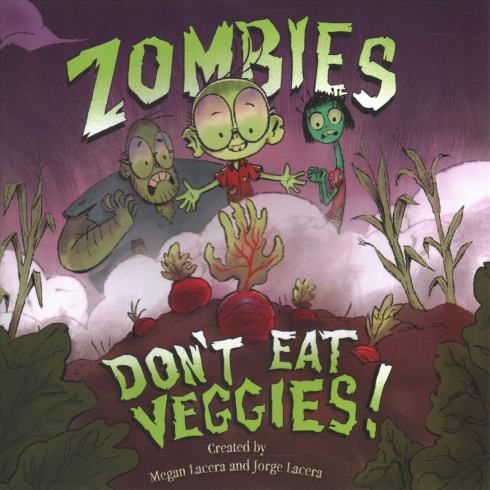
 So what does all this singing have to do with books? More and more, picture book and other authors are writing Book Songs for students that accompany their printed work. Megan & Jorge Lacera worked with Annie Birdd Music for their super-fun

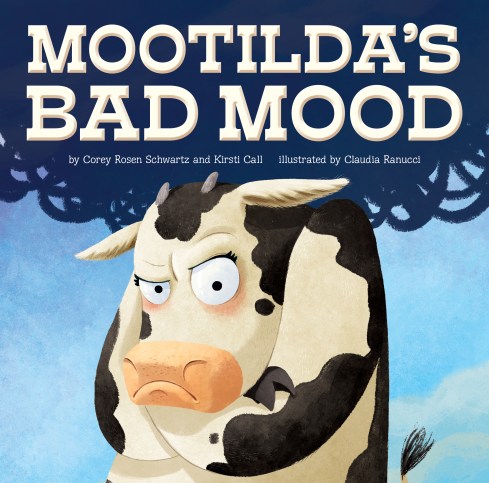



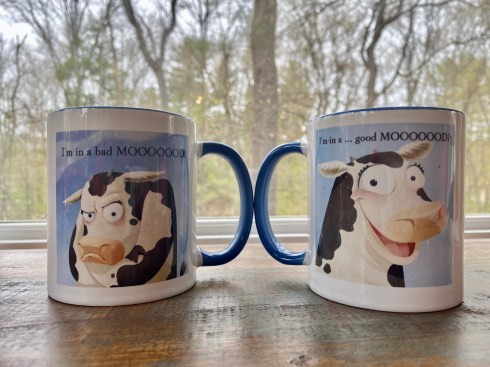
 Kirsti Call is the author of several farm-related picture books. She lives in Andover, Massachusetts, where she makes moosic with her husband and five children. Kirsti is often in a good mooood!
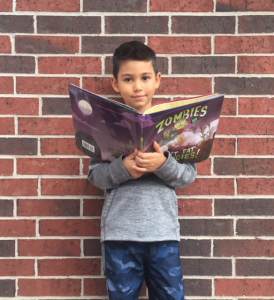 Megan: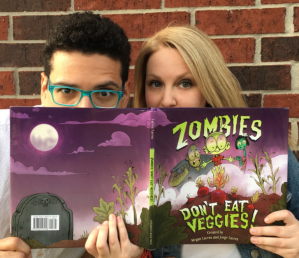
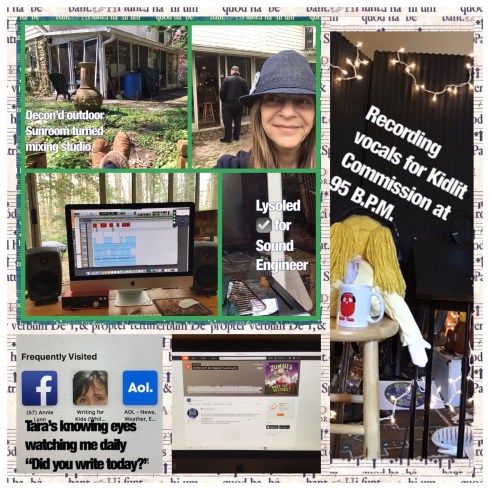

 Here is the story behind the story.



 You. can visit Maria and all her books online at
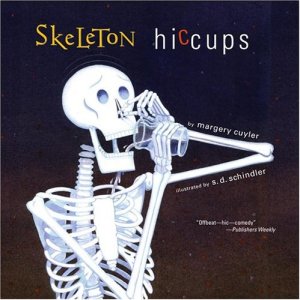
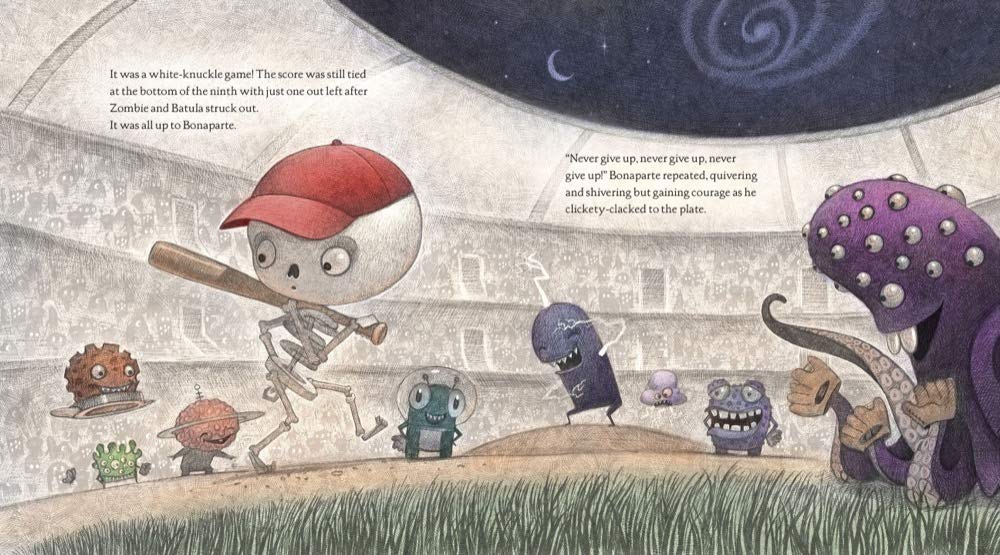
 Bonaparte is a skeleton whose loose bones occasionally fly off. In the first book, BONAPARTE FALLS APART, Bonaparte is reluctant to start school because he worries that the other “kids” (different monsters) will make fun of him. His friends try to help ease Bonaparte’s worries, but none of their suggestions work. Bonaparte finally adopts a dog named Mandible who retrieves his bones and accompanies him to school. They both turn out to be popular!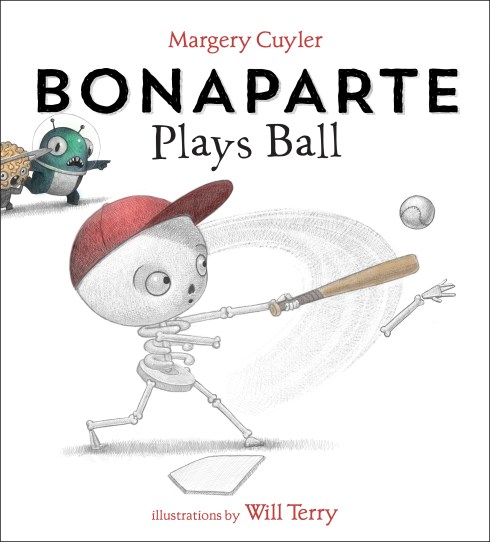
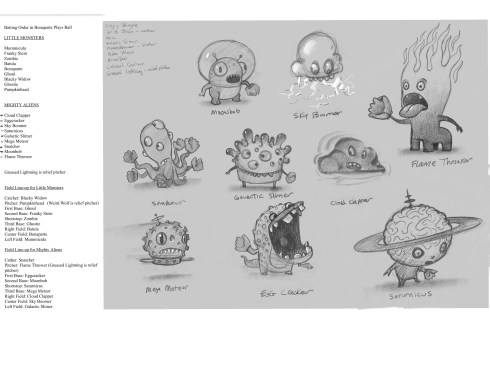

 OK, finally I have to ask about your interest in skeletons!
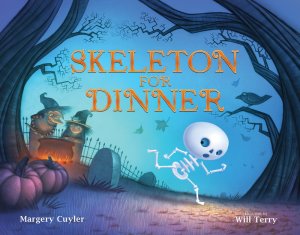
 Margery Cuyler’s career has been devoted to children’s books. She has written more than 50 books, served at the executive level in the children’s divisions of several publishers, and continues to enjoy interacting with children, teachers, and librarians on school visits. She and her husband, the parents of two grown sons, live in Lawrenceville, NJ. Visit her at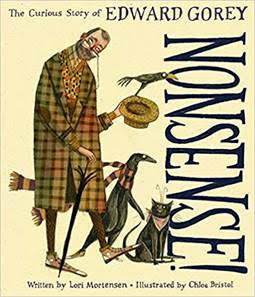
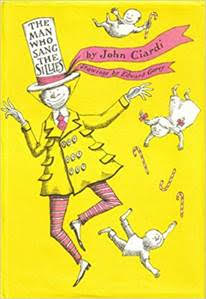 One of the most memorable poems, “The Happy Family” began:
 Lori Mortensen is an award-winning children’s book author of more than 100 books and over 500 stories and articles. Recent releases include her picture book biography, AWAY WITH WORDS, THE DARING STORY OF ISABELLA BIRD (Peachtree), about the first woman inducted into the Royal Geographical Society, IF WENDELL HAD A WALRUS (Henry Holt), CHICKEN LILY, (Henry Holt), Mousequerade Ball (Bloomsbury) illustrated by New York Times bestselling illustrator Betsy Lewin, and COWPOKE CLYDE RIDES THE RANGE (Clarion, 2016). When she’s not letting her cat in, or out, or in, she’s tapping away at her computer, conjuring, coaxing, and prodding her latest stories to life. For more information about her books, events, critique service, and upcoming releases, visit her website at
  When I was a kid, creative writing was a way for me to finally be in charge.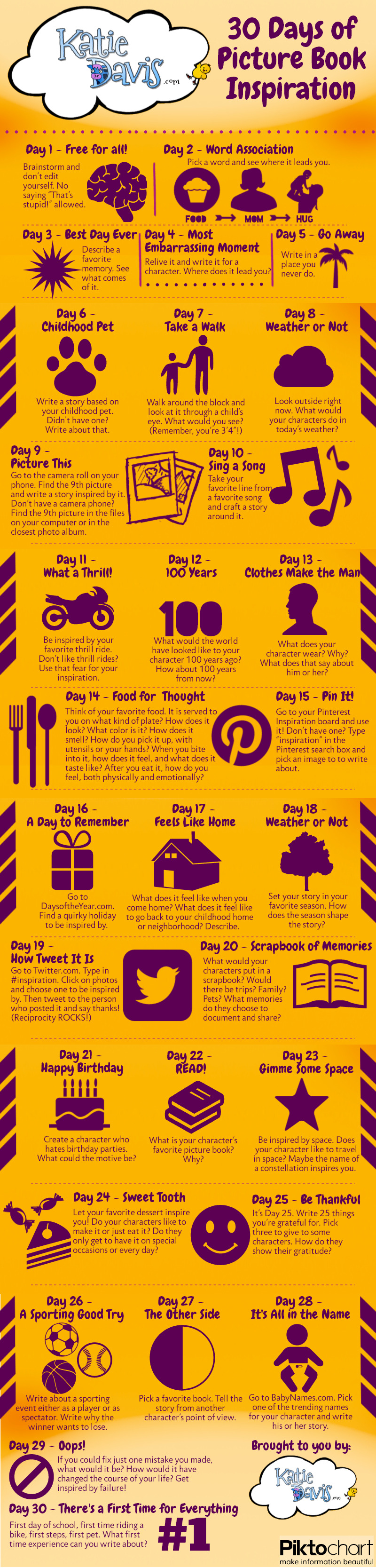





 Writing for Kids (While Raising Them)