Today I get to interview one of my favorite picture book peeps—Aaron Reynolds. His latest book, CREEPY CARROTS, is a NY Times Bestseller with the phenomenal Peter Brown.

PiBoIdMo is all about ideas. CREEPY CARROTS features a rabbit who’s paranoid that carrots are after him. How did that idea seed get planted?

I remembered as a kid how much I like to be scared. I loved scary TV shows and books. Don’t get me wrong…not REAL scared, not NIGHTMARE scared, but a little scared. I remembered watching shows like The Twilight Zone and how much fun it was to creep yourself out just a little. So I began thinking about ideas that were a little bit scary but mostly silly and an idea sprang to mind about a rabbit who loves carrots…until the carrots start following him. From there, the story came together pretty quickly.

In the book, there’s a question of whether or not the carrots are really following Jasper, or if it’s in his imagination. The grownups in the book don’t believe him…as is so often true in life. It was always clear to me that the carrots were real, they were really following him, and they had a plan.

So did you have the grownups who would be reading the book in mind when you wrote the story? Do you include something in your books to entertain parents and caregivers?

Yep, I always like to have double layers of humor in everything I write. If you look at Shrek and some of the best kids and family stuff out there that Pixar and Dreamworks are doing, there are always gags and jokes that go over kids heads that the adults bust a gut over. That’s the stuff I love and it’s definitely the kind of thing I like to do in my stories. Plus, it keeps me entertained along the way. Don’t get me wrong, I have the sense of humor and maturity of the average 7-year-old, but the subtle references keep my adult self happy as well. 🙂

Peter Brown illustrated the book with a film-noir feel, mostly black and white with the orange of the carrots in a starring role. Was the “classic movie” treatment part of your original concept?

My editor and I talked a lot about the look of the book early on. I was definitely inspired by 1950’s style hokey horror movies (being weaned on Mystery Science Theatre 3000 from early on) and always saw it as a mock-horror picture book, which isn’t exactly something you see every day and felt a little risky, but exciting to me. So a black and white feel was something I was really excited about. I talked about it with my editor, the idea of doing black and white with a single carroty accent color, and I was thrilled to find out that he really resonated with that, and further thrilled to find out that Peter really loved the idea, too. Peter definitely brought his own take on it, and you see that with the rounded corners (throwback to old TV screens) and extreme dramatic lighting, not to mention his homage to Hitchcock’s “Vertigo” on one spread.

How did you know CREEPY CARROTS was a winning concept? Did you sit down and write it immediately after it came to mind, or did you let it marinate a bit?

I didn’t know it was a winning concept at all. As often is the case, I felt like this idea could be a little too far out in left field for most editors to get excited about. Some initial responses were not only unreceptive, but downright offended at the story! But….you only have your own voice. If I can’t trust my own voice, who’s can I trust? I had to believe that the right quirky, goofy editor would snatch this up and that others would just have to be offended. In the end, it worked. But sometimes you think you’re crazy. You think “Can I truly be the only person in the world who thinks this is hilarious?!”

I didn’t sit down and write it immediately. It stewed for about a year before I finally sat down to put it to paper. But once I did, it came out pretty quickly.

Did the title CREEPY CARROTS come first or after you wrote the story?

Actually, the original title was EVIL CARROTS, and it came first, before I wrote the story. But my editor told me that people don’t buy picture books with the word EVIL in the title! Probably for good reason…

And CREEPY CARROTS made the NY Times Bestseller list! How did that accomplishment feel?

Woozy. I literally almost fainted. In the back of your head you dream that something like this might someday happen, but don’t really expect it to. So it was an amazing day.

What’s your best advice for PiBoIdMo participants as they go about capturing ideas?

Hmm. I guess it would be that there’s a fine line between a crazy, out-there idea and a really brilliant one. Who would have thought that a book where a pigeon is begging the reader to let him drive a bus would be a hit? If you’d pitched that to an editor at a conference before Mo Willems wrote it, most probably would have nixed it.

So many picture books out there seem to play it really safe. But there are editors out there that think like you do. So trust your voice. Trust your ideas, even if (and sometimes especially if) they seem out-there and crazy. This is a world where even a crazy story (or a creepy, carroty one) can become a success.

Aaron Reynolds is a New York Times Bestselling Author and has written many highly acclaimed books for kids, including CREEPY CARROTS!, CHICKS AND SALSA, BACK OF THE BUS, and the JOEY FLY, PRIVATE EYE graphic novel series. He has a passion for kids’ books and seeing kids reading them. He regularly makes time to visit schools where his hilarious hands-on presentations keep kids spellbound. Aaron lives in Chicago with his wife, 2 kids, 4 cats, and anywhere between zero and ten goldfish, depending on the day.

Hey, everyone! You can win a signed copy of CREEPY CARROTS! Leave a comment to enter. A winner will be randomly selected in one week. Good luck!

It’s November 17th and I only have four ideas on my PiBo list. You know, little things like “no power for a large chunk of November” got in the way of starting on time. My kids were home from school for two solid weeks and spent a large part of that time crying because Halloween in NJ was canceled for the second year in a row!
But am I worried? No! I’ve been through this before. In fact, this is my fourth time participating in PiBoIdMo so I consider myself quite a pro. I will have no problem getting to 30 ideas by November 30th and here is why… I brainstorm in themes. I pick a topic or concept and run it to ground.

2011 was the year of the MONSTER.

My list looked like this:

  1. Monster – Mistaken identity?
  2. Monster Mash (Monster Math?)
  3. Midnight Monster
  4. Monster in the Middle
  5. Mister Monster
  6. Monster who really wants a brother
  7. Attention Hog (yes, other things creep in! ☺)
  8. Monster who has bad dreams?
  9. Monster who is not ready for something? To move from under a crib to under a bed?
  10. Mini Monster
  11. Mini Me
  12. Monster who eats vowels
  13. Piwate Twouble
  14. Monster who is over-scheduled

I am currently working on #9 and #13.

2010 was the year of the DINOSAUR.

  1. Piratosaur – or Pira-saurus? Plundersaurus?
  2. Pizza-saurus or pasta-saurus – picky eater?
  3. Diapersaurus – toilet training?
  4. Tumblesaurus – dino who is the worst in her gymnastics class (Pike-a-saurus, stretch-a-saurus, bend-a-saurus, tuck-a-saurus) – handsprings, somersaults, cartwheels, splits- they nickname her bumblesaurus
  5. The Drama Queen
  6. Add-a-saurus, Minus-saurus
  7. Dino-snores
  8. Tyrannosaurus Specs – dinosaur who wears glasses

I took at stab at #8, but my real “winner” that year turned out not to be a dinosaur story after all!

2009 was the year of the FAIRY TALE

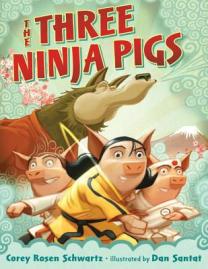
  1. Three Ninja Pigs sequel with Little red Riding Hood? Ninja Red?
  2. Technology- twisted tale with email, cell phone, digital camera. Goldilocks? Goes to three bears’ house and fixes all their gadgets?
  3. Fractured fairy tale with a surprise twin? Goldilocks has a twin sister, or Little red? Little Pink? Tawnylocks?
  4. Princess who is the bad guy? Could she be the villain in a surprise twist? A princess who is a pathological liar or something?
  5. Goldilocks and the Three Pirate Bears
  6. Goldi Rocks and the Three Bear Band
  7. Goldilocks shows her daughter an album of the three bears and daughter decides to pay them a visit? (tied to #24?)
  8. Using fairy tales to teach fractions. Goldilocks and the three and a half bears? How can you have half a bear? Bear in Mommy’s tummy? Could mama bear deliver right in the middle of the story?
  9. Coldylocks and the Three Polar Bears
  10. Little Red Gliding Hood

So far, three of these 2009 ideas have sold.

I sold #6 in 2010.

Then I sold #1.

And… are you ready for this?

Tara sold #10!

Tara had given me the idea for my Ninja Red story and I knew Tara used to skate competitively, so I suggested Little Red Gliding Hood to her one day. She loved it, wrote it and sold it to Heidi Kilgras at Random House.

So, if you’re stuck, pick a subject you love and run with it!

What’s my topic for 2012? Maybe… the year of the BLACK OUT.

Corey Rosen Schwartz is the author of HOP! PLOP! (Walker, 2006), THE THREE NINJA PIGS (Putnam, 2012), GOLDI ROCKS AND THE THREE BEARS (Putnam, forthcoming) and NINJA RED (Putnam, forthcoming). Corey has no formal ninja training, but she sure can kick butt in Scrabble. She lives with three Knuckleheads in Warren, NJ.

Corey is giving away a RHYMING picture book critique to a lucky PiBoIdMo’er who completes the 30-idea challenge. This is a fab opportunity for rhymers—after all, Corey’s one half of The Meter Maids!

Leave a comment to enter. If you also complete the challenge and sign the PiBo-Pledge in early December, you’ll be entered to win.

Good luck!

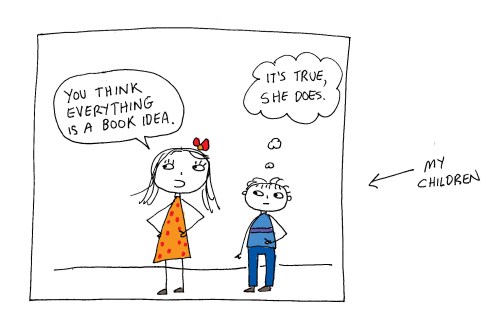
I write books and I have children. These things seem to go together, and yet at the same time, they do not.
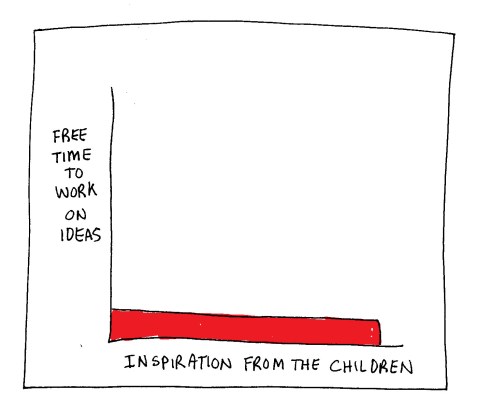
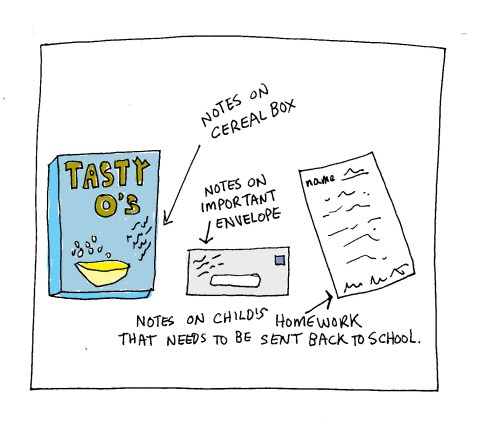
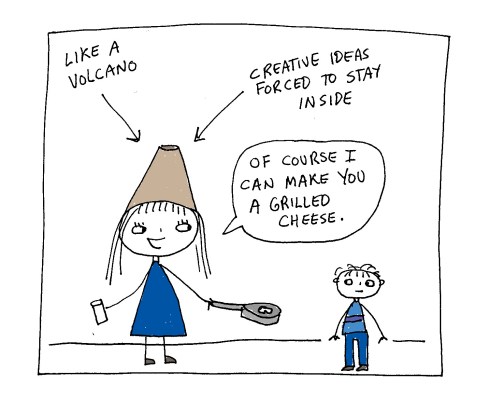
True, the children are inspiring, they say funny things, they’re occasionally cute, they help me remember my own childhood, but here is the not part—they take up a lot of time.

Because of the above graph I do two things.

1.) Furiously write notes on anything handy so I won’t forget them.

2.) Operate in a constant state of repressed creativity.

This I think is my secret to being productive, because when I finally get to sit down to work—I work. I don’t open emails, I don’t answer the phone, and I don’t shop on Etsy—though I’m very tempted by all those things. My work time is precious and scarce, so I can’t afford to be distracted. On most days I get up at 4:30 a.m. to write. I love my mornings, the house is quiet, dark, and when I start the chore of getting the kids to school, I already have some work done. It feels sneaky and clever, like I’ve cheated the day. It’s not a perfect schedule, but for now it works. And strangely, I’m more productive now, than before I had kids.

I read somewhere that it’s important to take breaks while you’re being creative. I guess I’m lucky—my days are filled with breaks, and each one is a surprise. It could happen mid sentence or mid thought. Suddenly I’m out of my chair and off to deliver a snack, a drink, change the channel on the TV, replace batteries in an electronic game, or play referee. If I can get forty minutes of uninterrupted work done while the kids are home and awake, it’s nothing short of a miracle.

But I’m pretty versatile; I can work in short bursts of twenty minutes, or long luxurious stints of three hours. But I wasn’t always this way, it’s taken years of training, but they did, the kids trained me.

There’s no one secret work pattern that is going to work for everyone, but if you are creative and consistent you can certainly find what’s best for you. If you want to reorganize the way you work, ask yourself some questions, it might help you get started. Here are some questions, and I plugged in my answers.

When am I most creative?
I like my early mornings, and I save these for writing, but I can also work in short bursts when the kids are around. I have illustrated more than one book while listening to SpongeBob and Pokemon cartoons.

Where am I most creative?
Sometimes I like a change of scenery. I’ll go to a coffee shop for a few hours, and then one day a week I really get away—I go into NYC and work at the Bryant Park Library.

Am I motivated by a deadline?
You bet! Nothing motivates me more than a looming deadline, and if I don’t have one, I give myself one.

Am I motivated by rewards?
Yes, who isn’t? In fact there’s a delicious piece of chocolate waiting for me when I finish writing this post. But if I’m not I the mood for sweets, I’ll cuddle with the cat, play with the dog, or go outside for a quick stroll around the yard.

And then at the end of the day, take stock. What worked? What didn’t? And if you had a success, repeat, and if not, try something new.

RECIPE FOR CREATIVITY

  • Think
  • Make notes
  • Think some more
  • Think while doing something completely different
  • Think some more
  • Think some more
  • Write

My kids make fun of me, and they are right.

I am always looking for the next book idea. Eyes open and ears listening—you never know where it is going to come from. About six months ago I was listening to my son and his friend complain about getting their ball stuck in some bushes. They were arguing back and forth about whose fault it was, and who was responsible for getting the ball out. It was cute, and listening to them made me smile. It was just a little moment on a sunny afternoon, but it stuck with me, and later became the basis for a story about two friends. The book is called Bean Dog & Nugget and it comes out this spring.

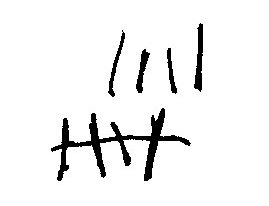
I want to close with two things. The first is this running tally.

This is how many times my kids interrupted me while I was writing this post.

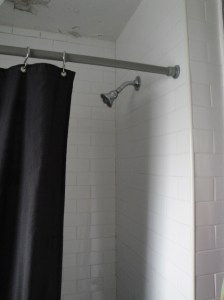
And this last image is where I end each day, my shower. It’s nothing special, but for some reason I get more ideas in the shower than anywhere else. Maybe it’s because it’s meditative, a calming release from the stress of the day—or it might just be that with the door shut, no one can bug me.

Charise Harper has been making comics and children’s books for many years. She is the creator of FASHION KITTY, the JUST GRACE series, and WEDGIEMAN. Her picture books include CUPCAKE, IMAGINATIVE INVENTIONS, and many others.  If you were to ask her which was her favorite; making the book, or holding the finished book in her hands, she would always have the same answer—making the book. She blogs (with pictures!) at Drawing Mom. Find out more about her books at ChariseHarper.com.

Charise is generously giving away THREE signed books from her JUST GRACE series!


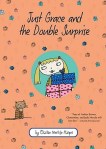
JUST GRACE AND THE DOUBLE SURPRISE, JUST GRACE AND THE FLOWER GIRL POWER and JUST GRACE STAR ON STAGE.

Three random winners will be selected in one week. Just leave a comment to enter! Good luck!

Kayla:
When I graduated from art school I wanted to get paid work right away. I wanted to be the super success story with two book deals my first year out of college, or something awesome like that. I thought the best way to do that was to write what I thought art directors would want to hear. That would surely get me a publisher.

Every time someone critiqued my illustrations, I took everything they said to heart and changed my work. I thought, “If this person wants to see me do this, then I will do it. Then I will get a job.”

But it didn’t happen.

At the end of the first year, I had a portfolio filled with work that I wasn’t passionate about, a handful of stories that meant nothing to me, and still no major book contract.

I can’t predict what other people want to hear. Everyone has different taste. Adjusting my stories to accommodate everyone’s opinion was too stressful.

When I was thoroughly discouraged and thinking about applying to beauty school or something, Peter told me to sit down and just think about things that make me happy. What made me happy when I was a kid? What struggles did I overcome and what really excited me? What makes me laugh and what makes my heart feel tingly and emotional? What do I want to read? That is what I should write about.

Not what I think anyone else wants to hear.

Peter is great at tapping into the mind of his inner child. I encourage you to connect with your inner child, too. Ask child-you what makes them feel stuff. Luckily, we have all been a kid at some point, so thinking like a child just takes a little effort. When I searched my memories for child-Kayla, I discovered a whole bunch great material.

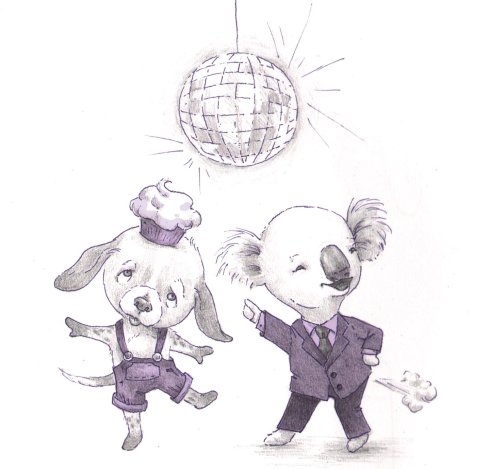
My spirits lifted and suddenly I was bursting with ideas. Puppies! Frosting! Koala Bears in suits! Farts! Disco Balls! Doodles! I have lived with myself my whole life, I know what images I want to hear and what images I want to see. Why try to guess the ideas of other people when there are so many ideas inside of ME?

When you write what you know and what means something to you, the reader can tell. Kids will know you had fun writing your story because they had fun reading it. Even if your story is not meant to be fun or happy, if you feel deep emotions about your work, then so will your audience.

Peter:
Jonathan Safran Foer was given a great piece of writing advice from Joyce Carol Oates when he was working on EVERYTHING IS ILLUMINATED. She told him to feel more.

That makes a lot of sense to me, and it seems to work really well with the children’s book world. Childhood was all feeling. Think of something from your life today and then see it through your memories as a child. I’ll start. Pizza for me now is “super cool”. But when I was a kid, pizza was “SLAP ME IN THE FACE, IT’S THE DOMINOES DELIVERY GUY!!”

Also, I love puppies today, but when I was a kid I used to pray for a hundred of them until my belly knotted up and I nearly squeezed the stuffing out of half a dozen stuffed animals.

For the “getting down to business” part of illustrating I try to start with a loose grip on the pencil. If I’m uptight and trying too hard, I end up with a dry, rigid drawing or I just freeze up and no drawing gets made. I’d like to broaden that too. Getting uptight (i.e. fearful and judgmental) about my life as a children’s book illustrator usually results in some serious paralysis as well. I want my drawings and my life to be playful. I’m not drawing medical illustrations after all.

Also, I try not to reject drawings or ideas too early on, because there’s no telling where it will end up. I usually start a drawing by making shapes. If it’s a head, then I play with shapes until a cool head shape shows up, then I add to it and play with it. It’s a little like staring at a textured surface or clouds and all of sudden you see a lion or a dog. I trust that my right brain will make associations and see something that I find interesting.

So hold your pencils and yourselves loosely my friends, and don’t worry about feeling so near sighted, because your brain will naturally rise up to meet creative challenges and will associate it’s way to the end of the drawing or story.

Now I’m gonna throw an awesome quote at you:

Writing is like driving at night in the fog.
You can only see as far as your headlights,
but you can make the whole trip that way.

And finally, if you guys need lasting inspiration then pick up a copy of HENRY IN LOVE by Peter McCarty. It’s a masterpiece!

.

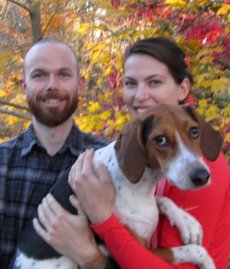
Kayla Skogh has been illustrating stories for the iPad app FarFaria for over a year. Stories she’s illustrated include: Bats, Where the Bears Sleep, Elephants. Kayla is Doodle’s mother. Kayla also does custom pet portraits.

Kayla is giving away this darling signed print to a PiBoIdMo’er who completes the challenge. Comment here to enter and then if you complete 30 ideas by the end of the month and take the PiBo-Pledge posted in December, you’ll be eligible to win!

.

Peter Harren is represented by Kelly Sonnack of the Andrea Brown Agency. Peter is the father of Doodle.

Ooh, something to win from Peter, too! Same rules apply–comment here *and* complete the PiBoIdMo challenge.

Both winners will be randomly selected in December. Good luck!

I’ve often heard people—Publishing Professionals—talk about wanting to “publish books that stand the test of time.”

There’s something unnerving about the way the phrase is used. As though it were written into their code, rather than contemplated carefully and reevaluated case by case. It’s a slogan, rather than a creed. And there’s a reason for that.

While it sounds good to be the publisher known for publishing books that “stand the test of time,” publishing is a business. And in order to be successful, units need to be moved. Not books. Units. Units do not stand the test of time.

Now, it’s true, publishing professionals often come to their jobs with a love of books. And for that reason, they often sell books in spite of their better judgment. They sell them out of love. Sometimes the PP will wake clear-eyed at a meeting a year later, looking at some abominably small number in a column and wonder what they ever saw in that silly little volume.

But sometimes that love will win the day and that number will not be small. It will be large. If it is large the first year, it will, perhaps, continue to be large the second year (this is often the case with the books that are loved very well). In fact, it will sell year after year. And we will, indeed, end up with a book that stands the test of time.

Friends, this is where you come in. When you look at a bestseller list of picture books, you are often—not always—looking at a list of units. When you look at shelves of sparkly pink princesses and less sparkly dumptrucks, you are looking at units. So, as you are making lists of ideas, I want you to consider the following five point entreaty:

  1. Don’ t pull your ideas from the bestseller list. Pull them from your soul. What combination of experiences, relationships and ideas has come together to make your thoughts what they are? This is the same equation that should make your book. Don’t try to insert some new variable derived from market research.
  2. Don’t follow the rules. At least, don’t follow them just *because* they are the rules. Use them as guidelines. Mitigate them thoughtfully with your own point of view.
  3. Your structure is a springboard. If you are using a traditional structure, of the kind that Tammi Sauer recommends in this post, great! But don’t use it as a fetter, let it be the springy energy beneath your feet (or keyboard, as it were).
  4. Don’t be afraid to steal. But if you’re going to steal an idea, make it good. Pay tribute to something that you’ve been in love with for some time and can’t seem to forget. Don’t riff on something because it’s marketable. Do it because it’s good and you love it.
  5. Be giddy. You know those ideas that are so good you can’t believe that they came from your brain? The ones that make you do a little dance and clap your hands with glee? Those are books. Use them.

There are a lot of wonderfully quirky picture books that are having their day out there. And you can bet that these books are not a result of market research. They are a result of love.

Tamson Weston is a published children’s book author, founder of Tamson Weston Books, and an editor with over 15 years experience. She has worked on many acclaimed and award-winning books for children of all ages. When she doesn’t have her nose in a book, Tamson likes to run, bike, swim, lift heavy things and, most of all, hang out with her family in Brooklyn, NY. Visit her online at www.tamsonweston.com.

When Tara launched this party, she quoted the fantastic Mr. Dahl:

And above all,
watch with glittering eyes


the whole world around you
because 
the greatest secrets
are always hidden

in the most unlikely places.
Those who don’t believe in magic

will never find it.

That’s just plain inspiring, no?

Well. Here’s my favorite sentence that man said, from THE BFG:

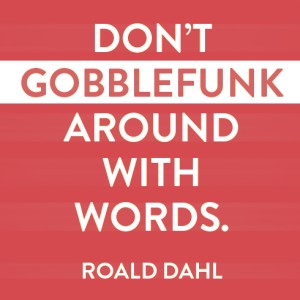
But let’s ignore that sage advice and gobblefunk a bit. That pretty much sums up what we do as writers anyway, right? Stir this, mix that, add in this word, trash those dumb ones, those unneccessary ones, those boring ones.

I’m always (always!) noodling around words in my brain. Odd I know, especially because my day job is all about pictures and graphics and effects. So at work recently, one dude asks the Boss Man, “Boss Man, what shot number is the one with the volcano?”

Too easy. I pipe up with, “Probably number e-LAVA-n.”

Maybe that was a bit of a groaner, or even a lot of a groaner if you have no funny bone. But since you are on the other side of the internet, and because I know we are all best friends, I have a feeling you laughed a little.

Did I write down “Punny Counting Book about Earth Science-y Things” in my PiBoIdMo notebook that day? Maybe.

(My honey’s fantasy football team is called the Favre Fig Newtons. Runs in the family.)

I figure if you look at the world like it’s one monster crossword puzzle, something unexpected is bound to tumble out.

Gobblefunked.

And why limit the gobblefunking to words? Why not gobblefunk with pictures?

I’m really no different than your average preschooler, because all day long I think about shapes and lines and color.

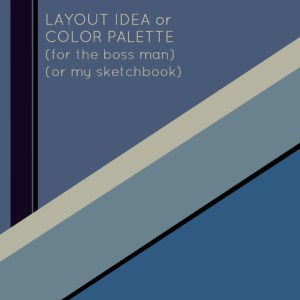
It’s when this:

Becomes this:

Which could easily become this:

OK, well maybe that’s boring unless you are in my line of work. But!

Couldn’t that same gobblefunking help us with ideas?

And since words are just pictures in different shapes, let’s do some of those, too.

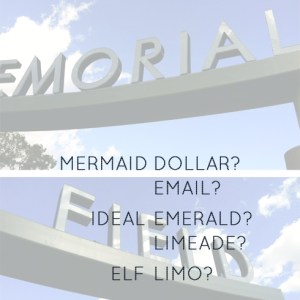
This is the high school football stadium up the road from me. I am obsessed with their signage. It’s strong and pretty, and it sparkles on Friday nights. I can’t explain my love for this tiny part of my town, I’m just drawn to it. (I secretly think Tami Taylor is in those bleachers, which may explain part of the love.)

So, switch around some letters, fire up the gobblefunking, and the leftovers might just be a flash of an idea.

Gobblefunked.

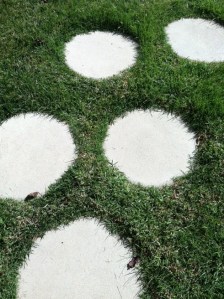
Every day when I leave my house, these are the stepping stones I hop.

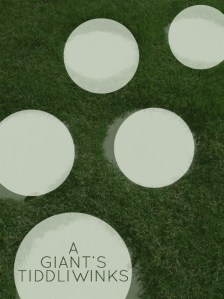
I hate them. They are awkwardly spaced, so in order to avoid the dewy grass I have to mosey with some serious cowboy swagger to land on each one. But remember that whole thing about being like a preschooler and thinking of shapes all day?

Maybe instead of stone circles they are actually…

Gobblefunked.

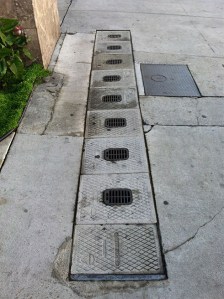
Or this:

All I see is a pet rock factory. Or a cement skyscraper. You?

This will be the only time I ask you to listen to me and not Roald Dahl. But go ahead and ignore that advice above, and get busy gobblefunking.

Carter Higgins is a motion graphics designer and a former elementary school librarian. She spends her days creating graphics, teaching, gobblefunking, and writing picture books. All of these interests combine in her blog at Design of the Picture Book, or you can find her on Twitter @CarterHiggins.

Carter is generously donating a picture book critique to PiBoIdMo. And you don’t have to wait until the end of the month to win it! Anyone can enter, right here, right now. Just leave a comment and a winner will be randomly selected in one week. Good luck!

People who aren’t directly involved in the publishing industry ask me where I get my ideas from all the time. I’m always tempted to respond with something like, “I steal them from first graders” or “I ask my Ouija board.” I think everyone reading this post knows that ideas come from absolutely everywhere and anything. From the mundane to the downright bizarre, everything is fair game. Consequently, writers are perpetual treasure hunters, the black crows of society.

Most writers I talk to can trace their treasure hunting days back to childhood. Once a seeker, always a seeker. When I was a kid, I had a secret drawer in my dresser where I hid my eclectic collection of treasures. It included things like my favorite Bonnie Bell Lip Smackers, sea glass, a cool cat’s eye marble, miniature Hello Kitty colored pencils, and a tiny box of Worry Dolls. There was no rhyme or reason to what I declared a treasure. They were just random objects that evoked feelings in me that really couldn’t be put into words. And for that reason, they were special.

If we’re really being honest with ourselves we know when our stories are rooted in something deeper than just a good idea. There’s an invisible connection to some intangible variable that we can’t always put our finger on. Love? Passion? Truth? Whatever it is, when it’s there, you know it. And for that reason, those stories are special.

While I believe that treasure hunting out in nature or out in the real world is infinitely more inspiring than virtual treasure hunting on the internet, physical expeditions aren’t always possible. So here’s what you do: Head over to Etsy, eBay, YouTube, Pinterest, Zappos—wherever your web weakness might be—and look for things you really love or really hate. You can pretty much find a story seed in anything that makes you ridiculously happy or sad. How do I know this treasure hunting exercise actually works? Meet French Bulldog Puppy Can’t Roll Over.

.

Holy cute, right?!

When I watched that video clip about two years ago, I wanted to reach into the computer screen and put that little hunk of sugar in my pocket. I was so punch drunk on puppy love I wrote a story about a French bulldog named Gaston. Just so we’re clear, GASTON isn’t a picture book about a dog that can’t roll over. Thirty-two pages featuring a beached dog may not be as endearing or as entertaining in print as it is on film. However, what YouTube puppy did do was inspire a new character and that character was very eager to tell me his story. The manuscript, which took several weeks to complete, sold to the first editor who read it. Christian Robinson is illustrating. The book will be published by Atheneum/Simon & Schuster next year.

So that’s my advice on Day 12, PiBo people. Go treasure hunting and find the shiny things that make you swoon, swear, sigh, or smile.

If you’re still stuck after that, go talk to a first grader.

Kelly DiPucchio is the award-winning author of fourteen children’s books, including New York Times bestsellers, GRACE FOR PRESIDENT, and THE SANDWICH SWAP, a book co-authored for Her Majesty Queen Rania Al Abdullah of Jordan. Kelly’s books have appeared on The Oprah Show, Good Morning America, and The View. Kelly’s new picture book, CRAFTY CHLOE, illustrated by Heather Ross, (Atheneum) received a starred review in Kirkus and was featured on The Martha Stewart Show. Visit Kelly at www.kellydipucchio.com, or follow her on Twitter @kellydipucchio.

Hey, crafty writers! Kelly is generously donating a picture book critique to a lucky PiBoIdMo’er who completes the 30-ideas-in-30-days challenge. Leave a comment here…and if you also end the month with 30 ideas and take the PiBo-Pledge (posted for you to sign in early December), you’ll be entered to win. Good luck!

Dear fellow PiBoIdMoers: my brave and beautiful sisters & brothers!
I’m going to keep this short and—hopefully!—sweet.

Several years ago, I was sitting in the far-too-messy front room of my apartment, glaring down at the notebook on my lap, pages blank as Antarctica.

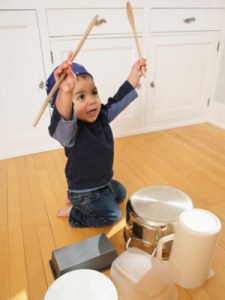
There was a very specific theme I was trying to write—NOT because it had been handed to me, gift-wrapped, by a Muse with ivory wings. No. This theme had arrived like a toddler with a pan and a wooden spoon: having plopped itself down on the kitchen floor, it was going to beat its makeshift drum—CLANG! CLANG! CLANG!—until it damn well felt like stopping.

Furthermore, the theme had told me—in no uncertain terms—that it was going to be a picture book… and not a shoddy one, either. There would be a proper story arc, with a beginning, middle, and end; there would be believable characters, and it would all take place in an interesting setting. And the finished product had to appeal to actual children, not some fusty adult idea of same.

Oh, and did I mention that the theme of the book was transgender identity? You know, something EASY. Total Berenstain Bears territory…

So: me, blank page, glares. A pitiless, pot-banging toddler. A zillion different ideas and approaches in mind, all of them lame, all of them contradictory.

CLANG! CLANG! CLANG!

Finally, using a tactic that I don’t recommend, I bullied myself into the job at hand: I took a stab at the first few paragraphs. What came out was the story of a girl coming to terms with the transition of her beloved uncle to a female identity. And it was TERRIBLE.

Even as I wrote, I could picture the heavy, plodding illustrations that would accompany this heavy, plodding tale: ‘Here are a bunch of clunky, poorly-drawn children arriving at school! Now they’re hanging their coats up! Now they’re putting their lunch-bags away! Now it’s recess time, and the blocky kids hang off monkey bars! Now it’s carpool time—what a long line of station wagons!’ …I was starting to nod off, literally.

But then—thank GOD—something else kicked in. It was like being shook by the shoulders. Some inner voice (a grown-up version of the toddler-with-the-pot?) had decided to be all frank and no-nonsense with me. And this is what it said:
“Oh, Marcus, COME ON! Get real here! You don’t give a DAMN about this boring girl, her dreary uncle, or any of her ‘After-School Special’ life. NO. What you want to write about—since you can write about ANYTHING IN THE WORLD—is dresses. Magical dresses: a dress made of real gold; a dress made of CHOCOLATE!”

At last, the real me was starting to participate. “What about a dress made of crystals?” I asked. “And whenever light hits it, it would flash rainbows, like a prism?”

“Now you’re talking!”

“Or a dress made out of FLOWERS?” I said. “Actual living flowers? The skirt would be roses, and, uh, lilies… and the sleeves could made out of honeysuckle vines! The little girl wearing the dress could pluck honeysuckles right off her sleeves, to taste the honey – just like I used to do, in Georgia!”

“See? Now you’re bringing your own life into the story. That’s so much better…”

“Or what about a dress made of windows?” I said, interrupting. “Magical windows that would show you things like the Great Wall of China, or the Pyramids?”

And so on.

You see? Everything had changed. Now my story had a spine—a series of marvelous dresses—and at last I had a character I actually cared about: the little girl who could dream up such luminous creations.

And of course SHE would be the one—not some hazy uncle—with the soul-deep knowledge of her own true gender, the one that didn’t line up with others’ expectations.

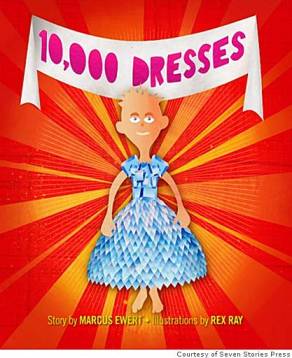
And that’s how my book 10,000 Dresses came to be, and Bailey, its courageous heroine…

My dear fellow PiBoIdMoers, my brave and beautiful sisters & brothers!
Here are my two pieces of advice:

  1. Notice which ideas put you to sleep with boredom.
  2. And, when in doubt, SEIZE THE DRESSES!

Marcus Ewert wrote the children’s book 10,000 Dresses (Seven Stories Press, 2008; illustrations by Rex Ray). The first book of its kind, 10,000 Dresses has received wide critical acclaim, awards and honors from the American Library Association, and has become a staple of anti-bullying curricula throughout North America. It’s also been banned a few times!

Marcus is hard at work on several other picture books as well. Did you know that eclairs can come to life and fight crime?

DianaMurrayBioPhotoIn 2009, I was humming the rejection blues when I spotted Tara’s post on Verla Kay’s Blueboards. PiBoIdMo sounded like just the sort of creative kick in the pants that I needed. And boy, am I glad I took up the challenge, because it started an exciting chain of events.
One of my ideas led to a picture book manuscript for which I was awarded the SCBWI Barbara Karlin Grant in 2010. I’m normally a pretty shy person, but after that, I would often catch myself singing “Zippity doo-da…” in public (much to the dismay of anyone within earshot).

When I emailed Tara to thank her, she invited me to share my story. Another exciting moment! And now, a few years and many revisions later, here I am with a sing-out-loud-worthy update. After signing with Brianne Johnson of Writers House, GRIMELDA, THE VERY MESSY WITCH—the manuscript I based on a 2009 PiBoIdMo idea—sold in a two-book deal to Katherine Tegen Books/HarperCollins. Plus, another manuscript, NED THE KNITTING PIRATE: A SALTY YARN, sold to Roaring Brook Press/Macmillan. Both are scheduled to be released in 2014. I hope my neighbors have industrial-strength ear plugs.

Speaking of singing, here’s a bit of inspiration to help you begin your own exciting chain of events.

If you’ve ever watched Glee, you’re probably familiar with the concept of the “mash-up”. This is when you take two different songs and smash them together to produce something new.

.

Bon Jovi and Usher? Who knew that could work?

And it can work with writing as well. The great thing about mash-ups is that they can give your story an immediate sense of conflict. And when you mix concepts that don’t normally go together, you can potentially create something unexpected and fresh. You can also create something really weird, like “Trucks at the Ballet” or “Pet Rock for President!”. But remember, one person’s weird is another person’s unique, funny, and/or intriguing. It’s all about execution (well, and also personal preference). In order to nail the execution, it helps if the idea is something you relate to. Something you connect with on a personal level. That will give you the passion you need to see it through.

By the way, when I posted on Tara’s blog in 2010, I mentioned one of my “bad” ideas about a do-everything hat. I believe it was called “Mabel’s Amazing Hat”. Well, I ended up giving that idea a sporty twist. The new title is “Automatic Baseball Hat” and I recently sold it as a poem to Highlights magazine. So you can even make your bad ideas work for you! And I’m not so sure there’s such a thing as a bad idea at all.

Now get out there and mash it up!

Diana Murray is a picture book author and poet represented by Brianne Johnson at Writers House. She lives in New York City with her husband, two very messy children, and a goldfish named Pickle. For more information, visit her website or follow her on Twitter @DianaMWrites.

“This person has no business being in children’s books.”
Read that again.

Imagine it being said in front of a crowd of over a hundred of your peers and various industry editors and art directors… at the NY SCBWI conference.

Your work is up in front of a big auditorium on a video screen with a panel with loud microphones when these words are spoken…

Imagine that person that it was said about was YOU.

DON”T WORRY! It wasn’t.

It was ME.

In 2009.

Yes. An art director declared me as a person who has NO BUSINESS being in children’s books … in front of the entire world of children’s books.

It felt worse than the worst college art critique I could have ever imagined. I was a grown woman. I had already had a hot career as a hot shot in cartoon merchandise. I shrunk in my seat. I wanted to run out of the room. My heart pounded.

I went home that night on the train back to Long Island… and cried. Crying on The Long Island Rail Road is like visiting Dante’s bonus level of hell. Those words echoing in my head…

The Art Director who said it—we shall call: “The A.D. WHO SHALL NOT BE NAMED”—but that name was burned into my mind. Branded onto my frontal lobe. I went home to google the crap out of this person. Bleary and blood-shot-eyed hours later…I knew everything they had ever worked on. I was sure some day… I’d encounter this A.D…

Now, I wasn’t automatically like Scarlet O’Hara shaking my fist in the air against the sunset vowing that “Tomorrow is another day!” No… I hit rock bottom. I questioned it all. Why? Why children’s books? Was I nuts to think I was good enough? Was I certifiably insane to think that I had the talent and ideas and stories to share with kids?

I went down, down, down into a pit of self doubt. I spent the good part of the next six months doing nothing. Hanging on to those words for a good long while…. but…

You just can’t keep a good pencil down… so eventually, I found myself, drawing myself out of that hole. I drew for myself. I made all kinds of silly art. Whatever I wanted to draw and paint, I made. I allowed myself to indulge in my imaginative whims. Whatever floated my boat, floated out of my pencil. This was new. The feeling of having nothing to lose, so why not? I was no longer thinking about what I thought the publishing industry wanted to see. I was drawing what I wanted to see for myself. I told myself stories as I drew. I wrote them down in messy notebooks.

Funny thing about this… I liked what I was drawing. So, I put it into my portfolio.

Then I had two important people enter my life. One a successful illustrator, who told me I WAS good. The other, my first agent. Who—obviously thought I was good enough to sign. That was the first time I thought of The A.D. Who Must Not be Named… and thought “…one day…you are gonna eat your words…!”

A year went by. I showed my portfolio a lot. The more I showed it—the better I got at reading the reviewer’s body language and interpreting the feedback. I listened at critiques but I chewed up the feedback and spit out what did not taste right.

I started to trust my own vision. The vision of what I wanted to do and who I wanted to be as an illustrator and maybe just maybe, a writer too.

I got my first books as an illustrator. One was a novelty book and some early readers. They were for small publishers and I found the work to be not what I wanted for myself. I wanted a picture book with a big publisher.

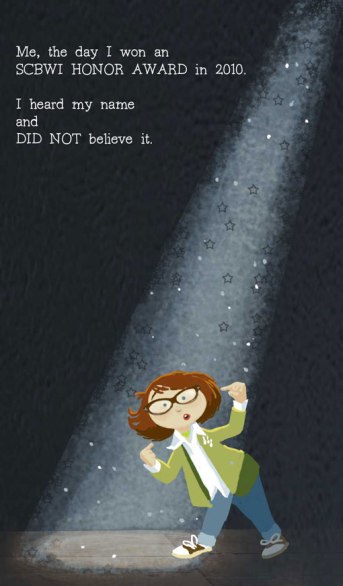
I went back to the 2011 SCBWI NY Winter Conference. I entered a piece in the art showcase and won an honor award. I got up on the same stage where “A.D. Gate “ went down and got hugs and recognition. Talk about a weird moment. I thought of that Art Director then… and those words. This time—those words felt like a dare.

“Oh yeah, A.D. Who Must Not be Named? I have no business in children’s books? You just watch me…” I was hoping that person would be there. I found out who was on the jury for the show. (The Art Director Who Must Not Be Named was not one of them.) I decided to find each one of the judges and meet them.

I did that for the next six months. I was like a bounty hunter. I crossed each one of the judges of a list as I met them. I made some amazing connections. I got my all of my work and myself in front of the eyes that already had a good feeling about what I do.

Some time went by. I did a lot of work on story ideas and characters. Still no bites from big publishers… so I did something way out of my comfort zone. I applied to give a character design workshop at the NE SCBWI Spring 2012 conference. While I was there… I got my first offer.

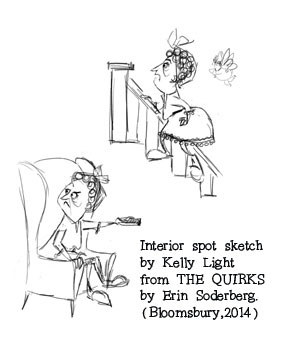
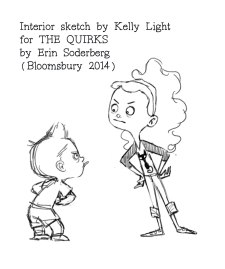
Donna Mark, Art Director at Bloomsbury wanted me to illustrate a middle grade chapter book called “The Quirks – Welcome to Normal”.


Take that Art Director Who Must Not Be Named.

Then I got a call from Alison Donalty, Art Director at Balzer and Bray, an imprint at Harper Collins. Another middle grade chapter book.


Those words from The A.D. Who Must Not Be Named were barely audible any longer. Now I HAD business in children’s books!

Next—an un-ending amount of calls about a character on a postcard that I mailed out… all from art directors and agents from all of the major publishing houses…

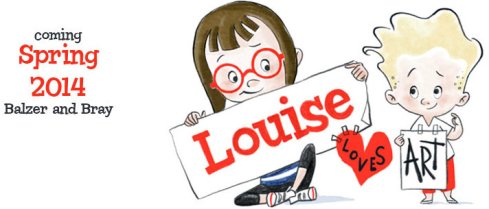
My first picture book as author/illustrator will be from Balzer and Bray as well , “Louise Loves Art”.

Those words in my head? Silenced.

“Who were you again? Oh, an art director? Oh yeah… that one who said something cruel…I think I remember your name… wait… I may have to google you…”

TWO more picture books with Harper Collins.

You, A.D. Who Must Not Be Named, have been (almost entirely) wiped from my memory.

You see, it’s kind of fabulous to have revenge—validation—someone to point to as a huge road block that I decided to drive through. I defied his label of me because only I can define myself. Don’t tell me I can’t—cause I will show you—not just that I can- but I will—and I will do it big.

Maybe… just maybe… I should be a tad grateful. That person forced me to grow. They could have been a hell of a lot more tactful in their choice of words in front of all of those people!!!! BUT—they don’t call these things “growing pains” for nothing….

I want everyone to take away from this, REJECTION is not a done deal. Critiques are not the end of the world. Public humiliation is tough—but if you know yourself—you can shed it. IF you hold on to who you are and what you do that is uniquely you and do it to the best of your ability. Do not stop! Keep getting better through the work. Follow your own heart—your own head—the beat of your own drum. Show those people in publishing—YOU are here.

These days, I am contacted, happily, by many art directors.

Last week, The A.D. Who Must Not Be Named contacted me. “Just wanted to drop a line to say that I love your work.”

One day—I will shake that hand and be gracious—cause that is what professionals do, but in my head… I will hear… BAZINGA!!!!

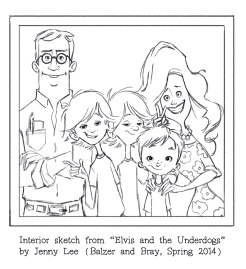
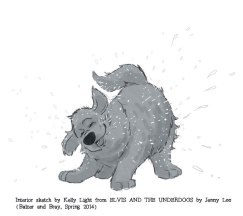
Kelly Light’s pencil is sharpened and she’s not afraid to use it.. She is currently working hard on her first three books. All due out Spring 2014: ,THE QUIRKS – WELCOME TO NORMAL, written by Erin Soderberg (Bloomsbury), ELVIS AND THE UNDERDOGS, written by Jenny Lee (Balzer and Bray), LOUISE LOVES ART, by Kelly Light (Balzer and Bray). Spring 2015 brings LOLA KNOWS A LOT, by Jenna McCarthy (Harper Collins).

Kelly lives in Long Island and currently has power!! She is, right now, drawing in her attic studio surrounded by old radios, books, cartoon collectibles and is usually singing very loudly. Head over to Kelly’s website and read her blog all the way back to 2009 and maybe you can figure out who The Art Director Who Must Not Be Named is! Sketch along with her on Twitter @kellylight.

I love Kelly’s art, and Louise loves art period, and now you can love both Kelly *and* Louise because you can win a Louise sketch by Kelly! Just comment on this post to enter (one comment per person). A winner will be randomly selected one week from today. Good luck!

Like this site? Please order one of my books! It supports me & my work.

FLAT CAT is the winner of multiple state book awards, selected by kids!

Enter your address to receive this blog via email.

Join 14.3K other subscribers

My Books

Blog Topics

Archives