You are currently browsing the category archive for the ‘Uncategorized’ category.
Many of you know I am Jewish, but I wasn’t raised in the faith. My parents were actually lapsed Catholics. We never went to church and we celebrated Christmas and Easter in a secular fashion.
After my parents divorced, I suppose my mother was intent on making us appear whole. So when our local newspaper published an article about the family-friendly activity of cutting your own Christmas tree, my mother decided that the three of us (plus her boyfriend) had to bond over this new-to-us holiday tradition.
Sounds homey, right? Well, it was a comedy of errors!
She therefore took pen to paper and wrote a letter to the editor detailing our misfortunes. The paper loved it so much, they splashed it out on the front page with a byline!
Many thanks to Raji at the West Orange Public Library reference desk, who assumed I had suffered from a false memory of publishing glory, and kept flipping until she found the December 13, 1984 article on the fifth page. It is enclosed for your enjoyment. Click to enlarge it.
I apologize for the lack of my usual Gifts for Writers post (but you can read the past posts). Please remember that my books make excellent holiday gifts! (Wink, wink.)

Once again, I’ve received so many requests to guest blog, that I’m asking for those writers interested in appearing in January 2025’s Storystorm to please fill out this application.
This way I can collect all of your details in one place and randomly select bloggers, making it fair for all. Your actual pitch for the blog post is still required, though, so I can avoid any potentially redundant posts.
I also ask that if you guest blogged in 2023 or 2024 that you refrain from applying this year so I can welcome new guests.
The Storystorm Guest Blogger Application is here, and it will be open until the end of November. Guest bloggers will be notified by email in early December.
Thank you!

by Barbara Nass
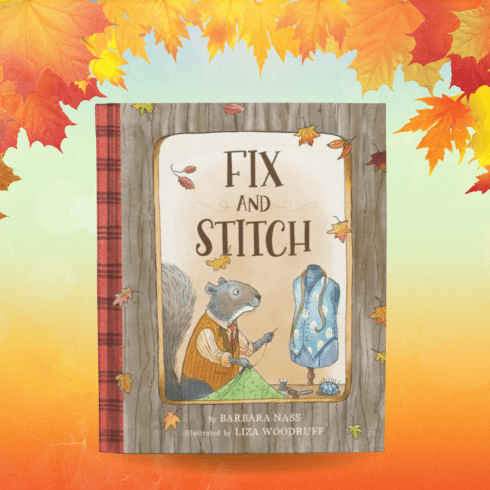
First, let me start by thanking Tara for hosting me and my debut picture book, FIX AND STITCH. Tara was a gift to me. And I mean that literally. When I retired, my work team gave me consulting time with Tara as a retirement gift. I can’t think of a better way to have jump-started my journey into picture book writing.
They say “write what you know”. And for a time, I struggled with the notion of writing a STEM story about tech and especially one to inspire young girls into this field. In my previous tech career, I mentored women across my organization and the few (emphasis on few) that were in tech. I also promoted tech careers at St. Elizabeth University as well as Rutgers University. I was all in on developing a tech-related story, but ideas that were picture-book-worthy didn’t come.
Other ideas did come, though. And the one that was the springboard for FIX AND STITCH began with the question of how a porcupine gets its first hug.

That idea could have gone in many directions. But instead, wound up about Squirrel, a creative tailor, who helps solve Porcupine’s problem. But in FIX AND STITCH, Squirrel has his own need. The birds have headed south, the last of the leaves are on the ground and winter is coming. Squirrel must build his winter home before it’s too late.

Instead, he delays, again and again, continuing to help his woodland neighbors, each with their own amusing dilemma. Squirrel just can’t say “no”.
Aha! I did write what I know. Squirrel grew up in a family like mine.
And while this story offers a message of kindness and friendship, what was the message that young readers would take away? I wanted a story about empathy, not self-sacrifice. Revision was needed and an author’s note added opening the door for discussion with children. In fact, I’ve already received notes from parents letting that they’ve had these important conversations after reading the story and author’s note. One even told me that it was quite a meaningful moment with his daughter. This feedback means everything to me. So, while I hope young readers will delight in this story of a clever tailor and his ingenious designs, I also hope they walk away with this life lesson in balancing empathy with attending to one’s own needs. A lesson that quite a few adults have now told me, they wished they had learned at an early age.
I want to thank Karen Grencik and Barb McNally for wanting this story told. And to Liza Woodruff, an amazing illustrator who truly captured the spirit of the story and its characters.
Congratulations on all your success, Barbara!
Blog readers, Barbara is giving away a copy of FIX AND STITCH. Just leave one comment below to enter and a random winner will be selected at the end of the month.
The winner of the last giveaway, MILKWEED FOR MONARCHS (critique), is Ashley Bankhead. Congrats, Ashley, and expect an email from me shortly.
 Barbara Nass grew up in Brooklyn, NY. married, and raised her son in New Jersey. There, the family enjoyed hiking New Jersey’s scenic park trails. A woodland habitat she used as the setting for FIX AND STITCH, her debut picture book. A tech executive, whose career roots began in early childhood education, Barbara will forever treasure those moments when her students first learned to read. Barbara now lives in Manalapan, New Jersey. Visit her at BarbaraNass.com, Instagram @barbara.nass.writer, and Twitter/X @barbara_nass.
by Kirsten Pendreigh
It’s Day 27, Storystormers! Phew! Feeling over-ideated? Need a breather?
Today, let’s forget about trying to cook up one big, delicious IDEA and instead focus on the tasty tidbits that, when mixed into idea bowls, make ideas deliciously irresistible to write.
I’m talking about Ideagrients™, a totally real, and not-made-up term for the specific details that move our ideas from Maybes to compelling concepts we can’t wait to begin writing!

Ideagrients™: distinctive fragments and descriptive sparks that elevate ideas. May include—but not limited to—gorgeous words, evocative images, sensory details, original names, and clever language devices. According to experts at PBIU (Picture Book Idea University), good ideas require a minimum of five Ideagrients before story writing can begin.
Look at your 27 ideas. Which ones have promise but are still kind of obscure? Maybe they feel predictable? Too similar to books that already exist? Could these ideas use a pinch of sensory salt, a sprinkle of funny sugar, or a splash of surprise food coloring to make them more intriguing?
Great ideas, just like great writing, are full of specificity. Readers struggle to connect to vague concepts; they love clear, evocative descriptions that surprise and delight. Writers do, too! Trust me, it’s a struggle to create a compelling picture book if you start with a half-baked, surface-level idea. I’ve learned the hard way, meandering from a generic concept, wasting my time, and ending up with unmarketable, unwieldy, and unoriginal stories.
More and more, especially now that I run ideas past my agent, I seek specificity and detail before I commit writing time. Setting, weather, foods I love, names I love, phrases I love, metaphors I love, etc. Assembling these Ideagrients™ beforehand—even as a mental checklist—ensures a more compelling pitch, a smoother writing process and a better end product. Ideally, a story that delights readers AND reflects my unique voice and style.
Let’s use my debut picture book, LUNA’S GREEN PET, as an example.

My initial idea was sparked by a photo of a girl “walking” a plant. I wrote: “A child wants a plant for a pet.” Hmmm, an okay concept, different from a dog or cat story, (and walking your plant is SO cute!) but it still felt flat.
It was time to raid my Ideagrient™ pantry. I looked for words and expressions to make this story idea unique and uniquely mine. I scanned my Brain Rolodex (every professional picture book writer has one!) and my notes app for details and images I’ve stashed away, hoping to find tidbits to take my idea from “Cute, but do I want to spend years with this concept?” to “Oh! I absolutely must write this!”
Here are 5 Ideagrients™ I brainstormed BEFORE writing.
- Humor:
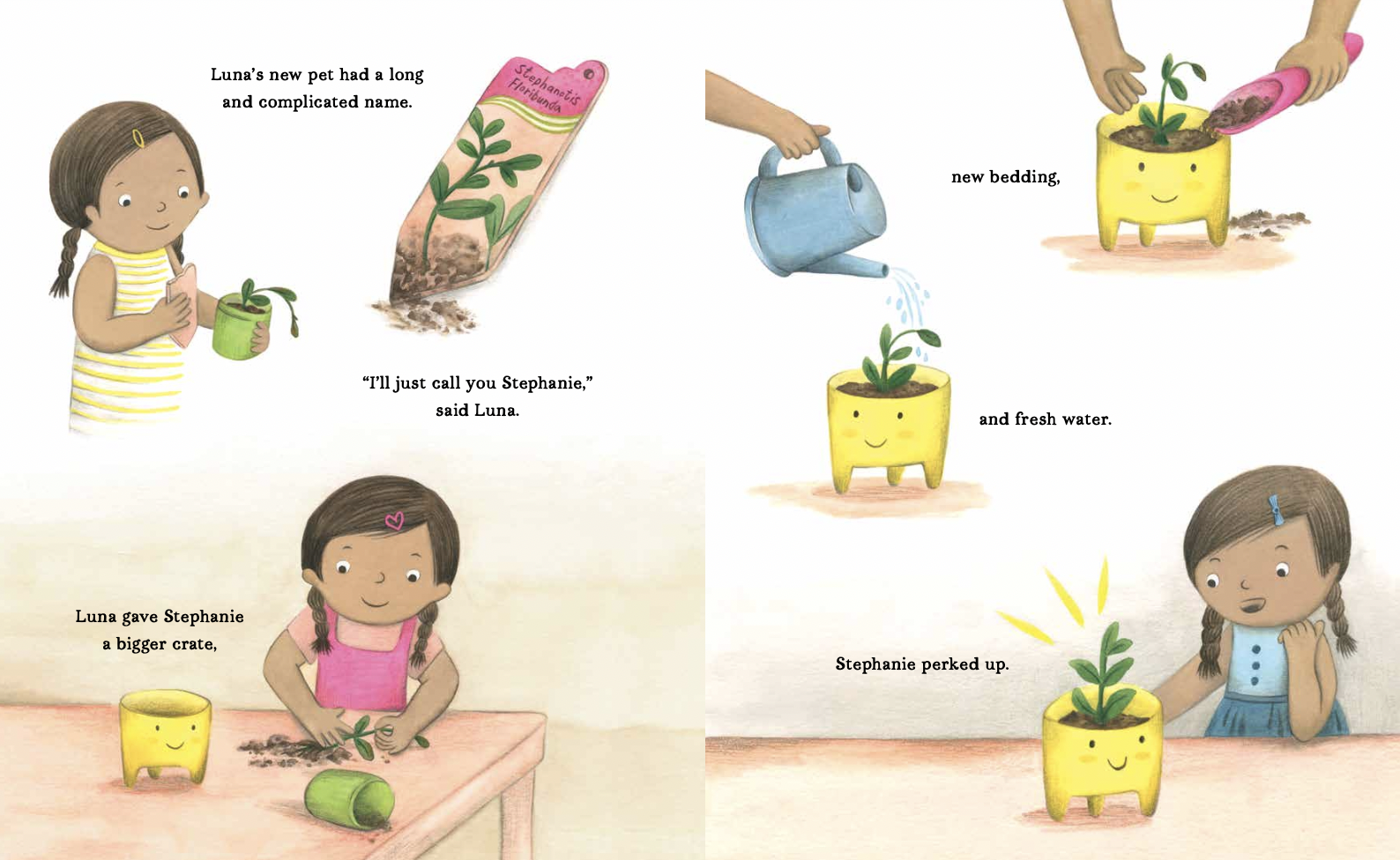
My kids and I love deadpan humor. What if I went all in and talked about the plant pet using animal terms? Animalpomorphizing . That way we are quickly on board with Luna’s perspective. A plant pot could be a cage or crate. Soil could be bedding. And of course, Luna’s plant should have a name! I love nicknames and clever abbreviations.
- Vocabulary:
Words set the tone for stories, especially for picture books which are read aloud. I looked at a list of my favorite funny words. First up, rambunctious! To me, rambunctious sets a playful tone. It’s fun and it’s funny to read aloud. A key part of pet ownership is behavioral training. While a plant can’t bark or misbehave, it can grow! It can be rambunctious! This Ideagrient led to Stephanie getting a trim. That later led to Carmen’s brilliant idea—shaping Stephanie into a recognizable pet. Win, win!
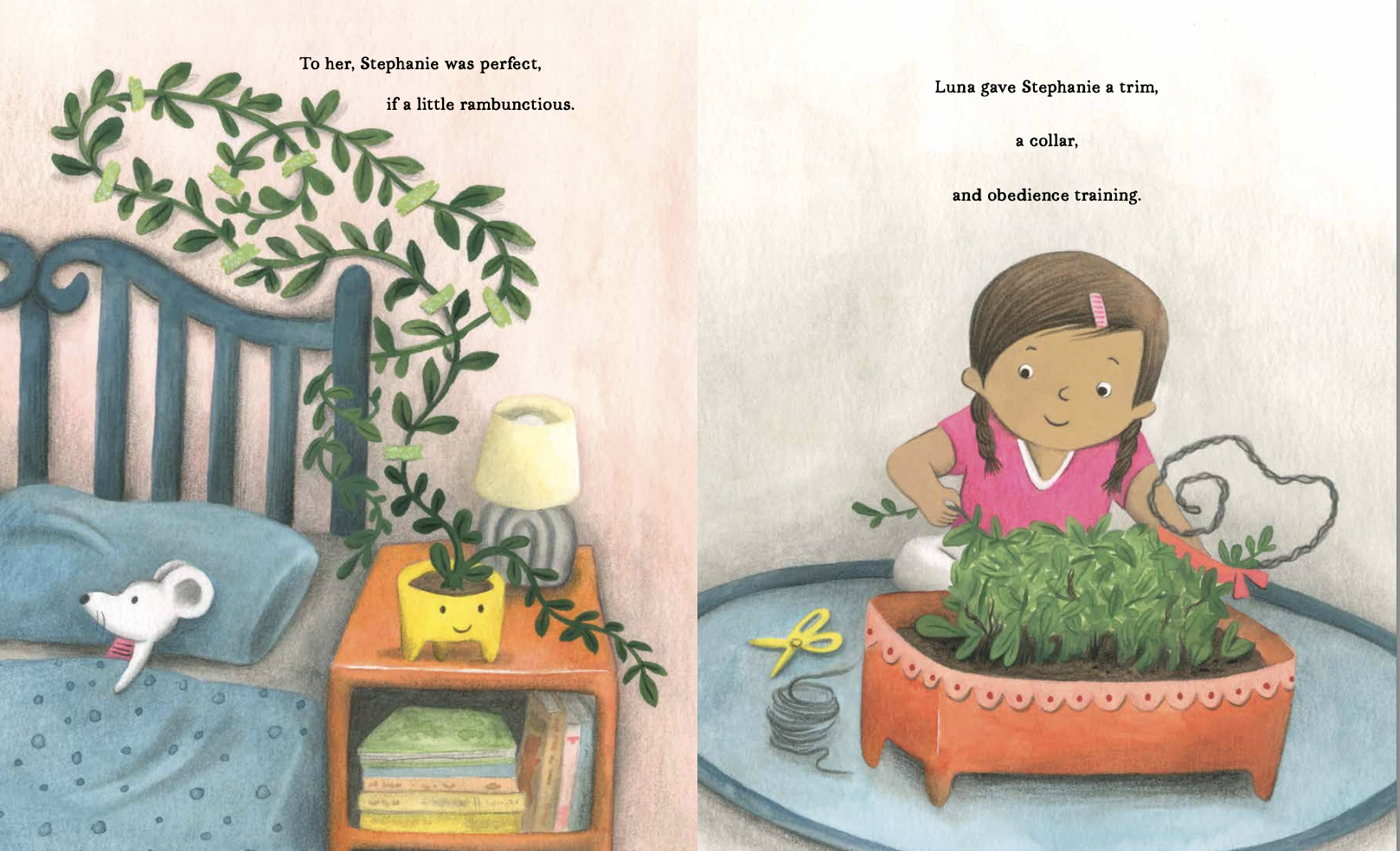
- Heart:
I already had Luna walking her plant, but what other sweet ways could Luna nurture her pet? What about reading a bedtime story? Jack and the Beanstalk? Haha. Perfect tie-in with rambunctious! (And, sorry, not sorry about the dog pee, Stephanie, it was an Ideagrient™ I had to keep!)

- A Top Ten List:
I LOVE fun backmatter and I LOVE top ten lists. Could I use one to convince people houseplants really are great pets? “Plants are good listeners” was a key Ideagrient™!
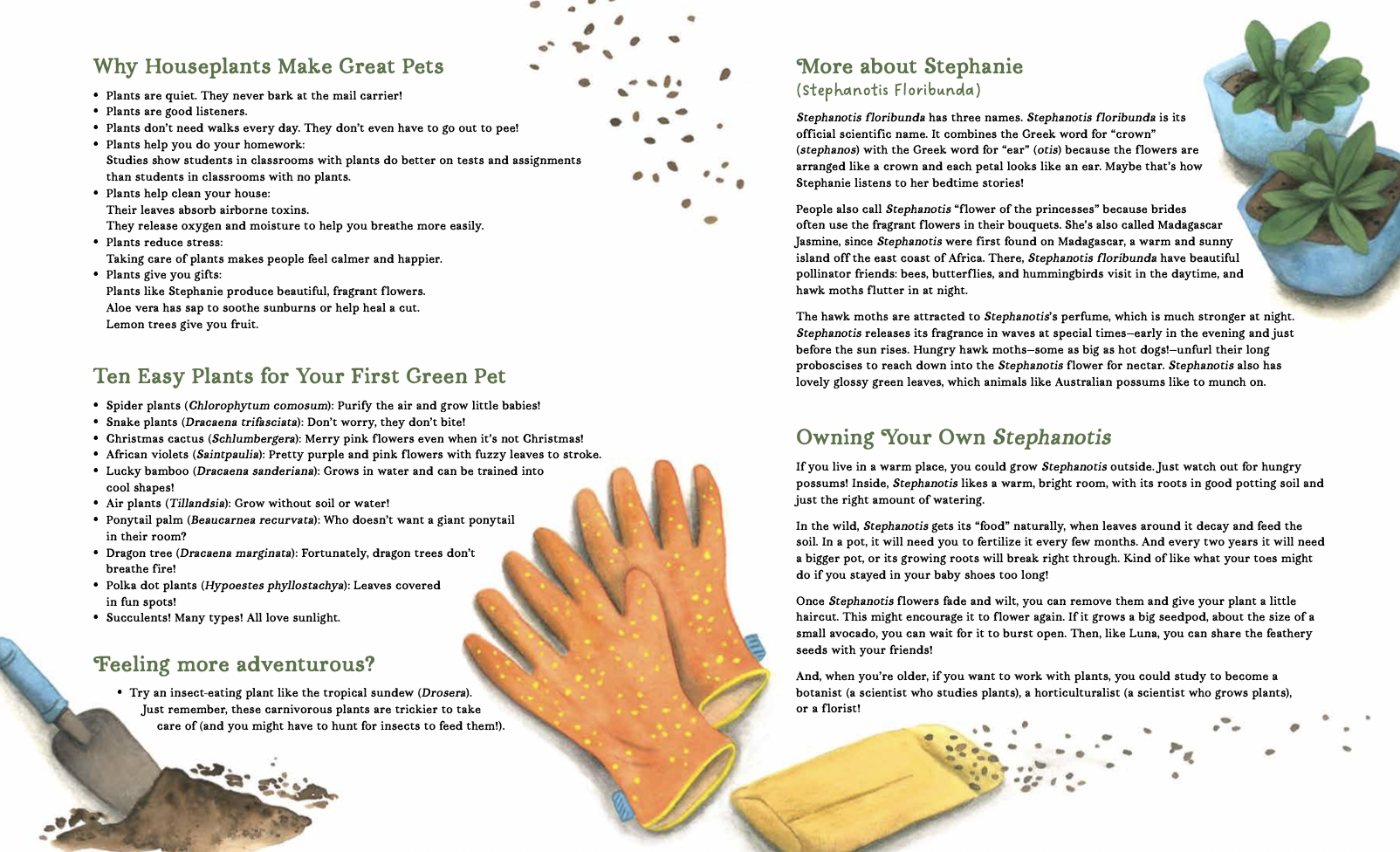
- A parade!
What’s a pet story without a parade? And of course, Stephanie must win something! Parade was mixed into my idea bowl. “Best in Scent” came later. Chef’s kiss!
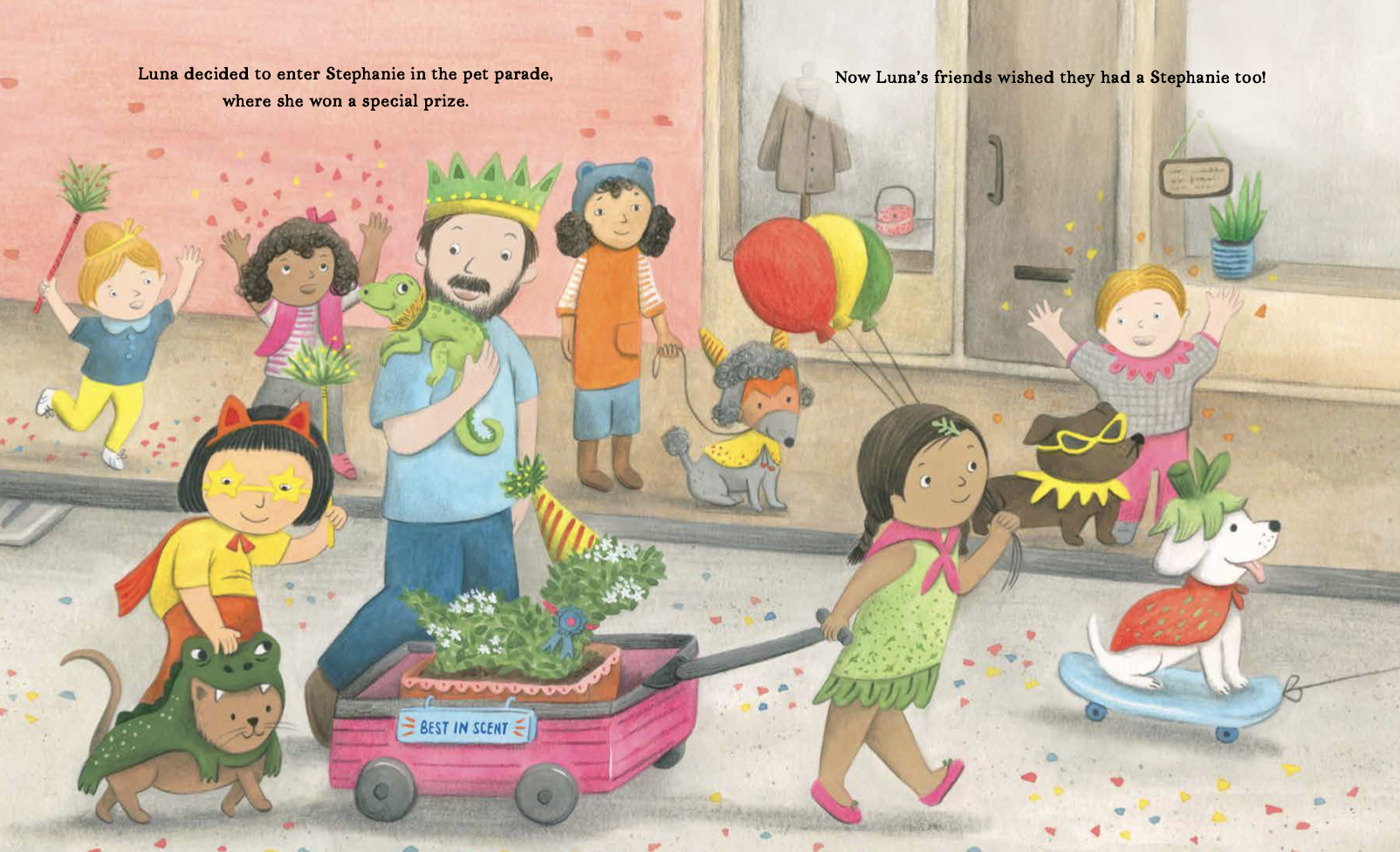
Of course, other details were later mixed into LUNA’S GREEN PET. But having at least five Ideagrients™ assembled beforehand reassured me this idea was absolutely worth pursuing. I was now excited to commit time and energy to writing it, knowing I could bring fresh, unique, fun elements to layer around a central theme of marching to the beat of your own drum. LUNA helped secure my agent and sold in our first round of submissions! Now, I look back and realize that initial photo was only an Ideagrient . You might realize that with some of your ideas. But that’s fine! Mix them with other tasty Ideagrients to make a compelling, layered idea!

What five Ideagrients™ can you come up with today?
Some suggestions:
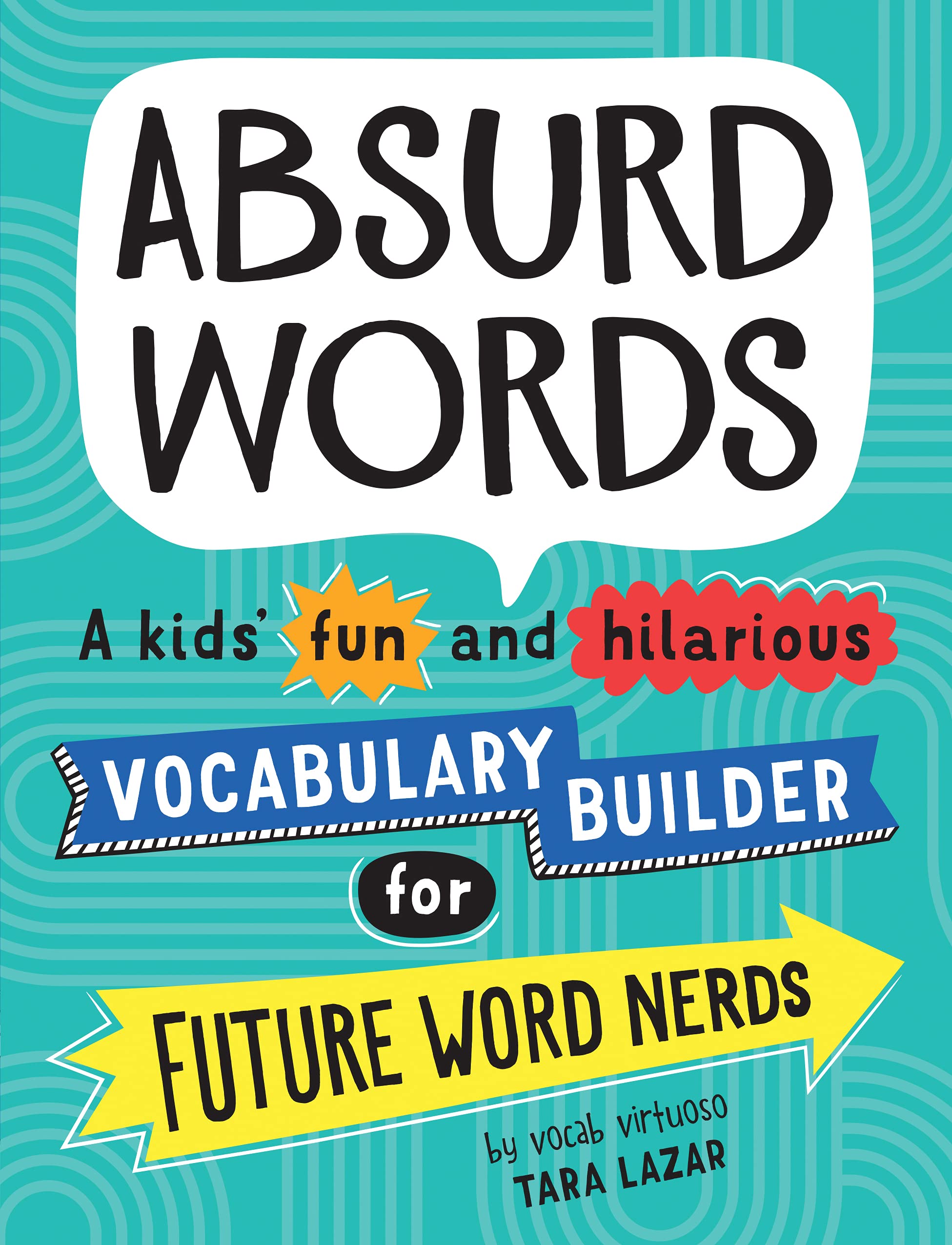
- A word. Consult Tara’s amazing book, ABSURD WORDS if you need inspiration!
- A phrase or metaphor. Maybe a family saying, something funny your kid says, a line from a song, a regional expression.
- A sensory description only you could write. How does snow feel on your skin? What does dinner smell like to you?
- A striking image. A photo of yours or something you see online or in a book.
- An example of a writing device you admire. A rhyme scheme, a clever alliteration, a type of humor.
Jot them down, organize your pantry in your own inimitable way, and soon, you’ll have plenty of Ideagrients on hand for a signature idea bake! Share one with us in the comments!
Thanks for reading! Please support all the guest bloggers (and Tara!) by buying, preordering, reviewing, and asking your library to order our books!
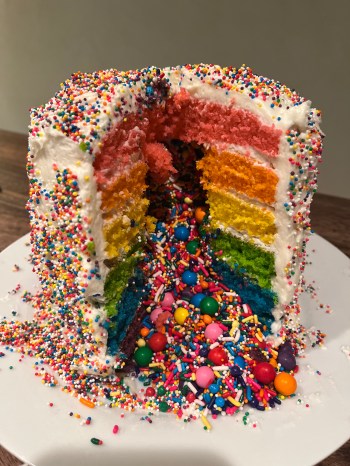
Now, after all those baking references, enjoy an imaginary slice of this beautiful and delicious cake, made by my funny, talented CP, Lisa Tolin (Author of HOW TO BE A ROCK STAR).
 Kirsten Pendreigh’s debut picture book LUNA’S GREEN PET, illustrated by Carmen Mok, is available wherever books are sold. MAYBE A WHALE, a lyrical story of healing in nature, illustrated by Crystal Smith, publishes in August with Groundwood Books and is available for preorders. WHEN A TREE FALLS, a nonfiction book about nurse logs in the forest, illustrated by Matthew Cruikshank, publishes with Chronicle Books in 2025. (Kirsten wrote about this story in a previous Storystorm post ). Kirsten is represented by Natalie Lakosil at the Irene Goodman Literary Agency. Visit Kirsten online KirstenPendreigh.com and follow her on Twitter @kpiependreigh and Instagram @kirsten.pendreigh.

Kirsten is offering one picture book critique, or a virtual classroom visit to read LUNA’S GREEN PET.
You’re eligible to win if you’re a registered Storystorm 2023 participant and you have commented only once on today’s blog post. ↓
Prizes will be distributed at the conclusion of Storystorm.
by Judy Bradbury
Thanks, Tara, for inviting me to your blog space to offer a few tips on writing chapter books! I’m honored to be here.
A bit of background: THE CAYUGA ISLAND KIDS is chapter books series is contemporary fiction featuring five diverse friends who embark on backyard adventures, solve mysteries, and grow as a result of their experiences. The kids are resourceful, kind-hearted “fact detectives” who use their varied interests, their smarts, kindness, and humor to overcome hurdles and solve problems. Above all, these are kids who value friendship and community. The stories feature history, community service, respect for the environment, brainstorming, teamwork, misinformation, disinformation, and the importance of gathering all the facts—from more than one source—when tackling a problem, seeking a solution, and before landing on an opinion or drawing a conclusion.
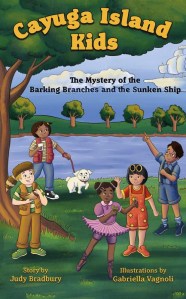 The first book in the series, THE MYSTERY OF THE BARKING BRANCHES AND THE SUNKEN SHIP, is based on real events involving a found cannonball believed to be from the Griffon, a treasure ship that sank somewhere in the Great Lakes in 1679 on the return from its maiden voyage. The ship has never been recovered, though over a million dollars has been spent trying. There’s even a Discovery Channel episode about it. When I first read a newspaper story about a cannonball found in a backyard on Cayuga Island, I was immediately intrigued. After all, the ship was built on the residential island a few miles upstream from Niagara Falls where I grew up. Heck, the street I lived on was Griffon Avenue. It was named after the ship!
I knew I wanted to write a children’s book centered on the found cannonball. But it took months to land on the genre and the format.
- Nonfiction or fiction?
- Historical or contemporary?
- Which format: picture book, chapter book, or middle grade?
Eventually, I formed the idea for a contemporary fiction story based on the true events. I chose to write a chapter book because the topic and the level of detail I wanted to include seemed best suited for the age and interest level of the chapter book audience, and the characteristics of the chapter book format.
Chapter books are vital stepping stones for newly independent readers. Smaller in cover size than picture books, they look and feel more grown up. But they are slimmer than middle grade novels so as not to intimidate or overwhelm the young reader. Building confidence in growing readers is a critical aspect of a successful chapter book.
Targeting 6-10 year-olds, chapter books span from easy first readers that are generally 48-64 pages with a couple of words per page, to more involved stories (80-130 pages) that naturally lead growing readers to middle grade novels. THE CAYUGA ISLAND KIDS chapter books intended for 7-10 year-olds fall into this upper range. For the purposes of our discussion, those are the level of chapter books I’ll offer writing tips for here.
Key elements form the bedrock to writing a winning chapter book—one that will cement an interest in reading and lead to a lifelong love of books:
- Short sentences and brief chapters—less text density than middle grade books. More white space keeps the reader turning pages, which reinforces a feeling of success in reading.
- Limited cast of characters; introduce few sub-plots and minor characters
- Fast-paced plots with minimal narration and plenty of action keep readers engaged
- Appropriate grade level reading vocabulary
- Age-level interests and experiences
- Well-placed and well-spaced illustrations aid comprehension and keep interest high
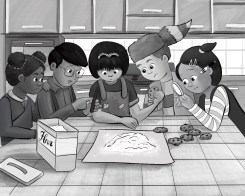
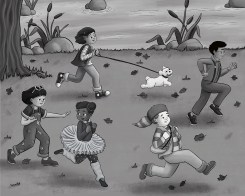
If you are interested in trying your hand at writing a chapter book, begin by reading widely in the format, particularly in the genre of your intended book. Read new releases as well as classics. Become familiar with grade-level reading vocabulary for the age range your book targets. Check reading level using a readability measure, such as Lexile levels. Is it within range? Young readers’ listening, speaking, and reading vocabularies vary, with their reading vocabulary being the least developed, and thus the biggest challenge—to the reader and the writer. Introduce new vocabulary or tougher, multisyllabic words by using the word in context, or providing a definition within the text, either within the sentence, or immediately before or after. Repeat new and unfamiliar words to foster recognition. The more often a word is encountered in print, the more comfortable the reader becomes with it. Reinforce unfamiliar words with illustrations details.
Illustrations in the best of picture books expand and enrich the text—and often offer a parallel story line. However, this isn’t the goal of illustrations in chapter books. Here, pictures are meant to support comprehension. Usually chapter books feature partial page or spot illustrations with occasional full-page art; black-and-white pen and ink drawings are common.

Engaging, high-interest topics, accessible language, and visual appeal are essential. Chapter book plots center on experiential knowledge and curiosity about the world around us. Friendships, family, school, and growing independence are common themes for chapter books. Humor is always appreciated, from gentle wittiness to raucous roll-on-the-floor hijinks. Children in this age group are curious, accepting, eager, and willing to be engaged. As they explore and embark on adventures in their own corner of the world, they are eager to broaden understanding of the larger world and acquire knowledge, tools, and skills. Book 2 in the Cayuga Island Kids series, THE ADVENTURE OF THE BIG FISH BY THE SMALL CREEK, focuses on a community project for recycling. The kids come to realize that though we are each just one person, together we can make a big difference. It recently was awarded the Ben Franklin Silver Award for Young Reader Fiction, 8-12.
Don’t underestimate the 7-10 year-old reader. In Book 3 of the Cayuga Island Kids series, released just a couple of weeks ago, misinformation and disinformation are introduced through events that take place in the story. These are big words, big concepts. But they are also a big part of our world today. THE CASE OF THE MESSY MESSAGE AND THE MISSING FACTS centers on the importance of getting all the facts and not just a fraction of the truth before forming on an opinion or drawing a conclusion. Readers encounter flour bugs, missing glitter pens, wonky websites, a Little Free Library, chocolate chip cookies, and more.
Finding meaningful, accessible, and entertaining ways to approach important concepts and mindsets is both a challenge and a reward for the chapter book author hoping to provide a sturdy bridge for the young independent reader’s journey to becoming a lifelong reader.
Thank you for the tips, Judy! I know plenty of PB writers who would like to try the challenge of writing Chapter Books.
And blog readers, you can win a copy of Book 3 in the Cayuga Island Kids collection, THE CASE OF THE MESSY MESSAGE AND THE MISSING FACTS!

Just leave a comment below about what you’ve learned about writing CBs. A random winner will be selected later this month.
Good luck!

Photo by Peter Scumaci
Judy Bradbury is an award-winning author and literacy educator who has taught students from preschool through college. Judy’s children’s books include the Cayuga Island Kids chapter book series and the Christopher Counts! picture book series. Judy is also the author of a number of resources for educators and host of the popular Children’s Book Corner blog featuring interviews with authors and illustrators and suggestions for using their books to enhance curriculum while boosting social-emotional learning. For more information, visit Judy’s website. Connect with Judy on Instagram @judy_bradbury; Twitter @JudyBWrites; and LinkedIn.
by Chiêu Anh Urban
What better way to celebrate a book birthday than with a creative, passionate and supportive book-loving community. Thank you Tara for hosting this book launch, with 123 ZOOM zooming into the world. Hooray!

Want to hear a secret? I’m not “into” cars and planes, like my husband, per se. My girly girls’ childhoods were dazzled with princesses, unicorns, fairies and pretty colors like purple and pink. It’s surprising to me that this is my second concept book featuring modes of transportation. Interestingly, what I do enjoy is drawing them.
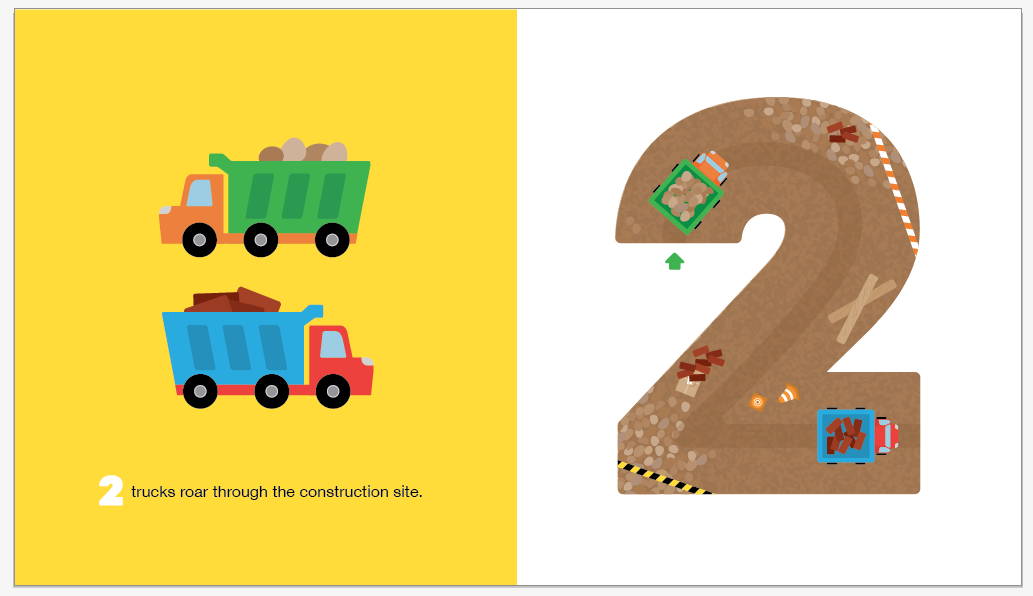

The truth is, I’m very art-driven and I focus on design and format first when brainstorming ideas. My goal was to develop a playful, interactive book for exploring numbers and counting. So why planes, motorcycles, and ships? They can fly, swim and zoom at amazing speeds, make loud, interesting sounds, and be bright and colorful. That was the inspiration I needed to dive into a format where little ones can adventure into their imagination and become powerful vehicles that journey through water, land, and sky. Number characters represent the scenes, from the deep sea to the big galaxy. How I present the art is key; highlighting different perspectives of the same vehicles in aerial and front views.

Where’s the novelty—the interactive features? This was the road maze that led to many dummies and production challenges. It’s been quite the journey, as novelty books go. I appreciate every speed bump, detour, and success along the way. My original idea consisted of cut-out vehicles on tracks that slide along the numbers, to encourage tracing and writing. This ultimately was cost prohibitive. I had to rethink the concept, and design a novelty that offered a similar experience, but was cost effective and inviting to touch. There was turbulence along the way, but also guidance and support from my amazing editor and agent. 123 ZOOM evolved with each spread featuring die-cut scooped out numerals and glossy, slick paths down the middle for tracing numbers, and discovering the many things-that-go. The dummy page pictured here was a work-in-progress, but the idea was to convey the novelty elements. There’s a seek-and-find element of surprise towards the end of the book, designed to encourage little ones to count backwards.

Its companion book, ABC ROAR, releases this July. This hands-on novelty introduces the alphabet and animals in their habitats. Thank you for letting me share my process and 123 ZOOM’s book birthday with you.

Enjoy a virtual no calorie treat and cheers to all ideas taking off!
Blog readers, to celebrate her book launch, Chiêu is giving away a copy of 123 ZOOM!
Comment once below to enter.
A random winner will be selected next month.
Good luck!
 Chiêu Anh Urban is an author/illustrator, and format designer who specializes in developing interactive, playful books that provide fun learning and exploration for the youngest readers.
Chiêu’s novelty titles include 123 ZOOM and ABC ROAR (2022) with Little Simon/S&S, and board book series ILLUSIONS IN ART (2023) with Candlewick Press. She is the creator of Color Wonder Hooray for Spring!, Color Wonder Winter is Here!, Quiet as a Mouse: And Other Animal Idioms, Away We Go! and Raindrops. Chiêu holds a BFA in Communications Art and Design. Visit her website at ChieuUrban.com to learn more about her children’s books, follow her on Facebook, Twitter @ChieuAnhUrban and Instagram @chieu.anh.urban.
by Shannon Stocker
Mega thanks to my mentor and friend, Tara Lazar, for hosting the cover reveal of my upcoming non-fiction picture book, LISTEN: HOW EVEYLN GLENNIE, A DEAF GIRL, CHANGED PERCUSSION (April 12, 2022, from Dial Books).
About three years ago, after listening to an SCBWI speaker talk about the importance of writing what you know and the #OwnVoices movement, I felt moved to write a book about a musician who’d overcome something huge. A musician who’d beaten the odds, defying the expectations of the world around them.
I, myself, am a pianist, a guitarist, and a vocalist. Music has fed my soul since the day I was born. But I also spent two years in a wheelchair due to a chronic illness called Reflex Sympathetic Dystrophy. For seven years, I fought for my life. Countless physicians told me I would not survive, my condition would not improve, I would never have children, and that my husband should put me in permanent care. Countless people gave up on me, insisting I should accept my fate.
But my husband never gave up on me. And, more importantly, I never gave up on me.
Shortly after that conference, I started doing Google searches for potential subjects. The very first person who popped up was Evelyn Glennie. She is the first person to ever have a full-time career as a solo percussionist. She’s won two Grammy Awards, and been knighted by the Queen of England. And she is deaf.
I continued looking for other potential artists, thinking Evelyn would be too big, too famous, too difficult to reach, but her story kept calling me back. It felt like home. So finally, on February 9, 2019, I wrote to her team to ask if she might have an interest in speaking with me about a potential non-fiction picture book. Only two days later, they replied in the affirmative.
Within a month, Evelyn and I had our first Skype. Although she had a translator attend, Evelyn’s lip-reading abilities and speech made communication simple and clear (she lost her hearing as an older child). Not only was she talented, determined, and kind, but she was also one of the most humble people I’ve ever met. Her story poured from my fingers like the most familiar piano concerto, and within two months it was written, revised, and had its first offer for publication.
Shortly after the book sold to Dial, my editor wrote to tell me Devon Holzwarth would be illustrating. It took me all of three seconds to fall in love with Devon’s work, which I often describe as “music on the page.” I contacted Devon, who currently lives in Germany, and she told me that Evelyn was scheduled to play in the “September Special” classical music event close to her home only two days later! I wrote to Evelyn, who provided Devon with tickets and later met her during a break at the concert.
The entire process felt magical.
At this time, LISTEN will also be published by Penguin UK, and I just recently learned that it’s been selected by the Junior Library Guild as a book club pick. I’m immensely proud to have been a part of this book’s creation. I’m grateful to Evelyn for trusting me with her story. I’m grateful to my agent Allison for seeing something in me beyond this story. I’m grateful to Jess, my brilliant editor, for her insights. And I’m grateful to Devon…who gave my words life and emotion beyond anything I could’ve dreamed.

How beautiful, Shannon! I love the movement of the music depicted in florals, streaming from the drum. It’s lovely; congratulations!
LISTEN: HOW EVELYN GLENNIE, A DEAF GIRL, CHANGED PERCUSSION will be published by Dial on April 12, 2022.
Shannon is giving away a non-rhyming picture book critique in celebration. Leave one comment below and a random winner will be selected next week. Good luck!
 Shannon Stocker is an award-winning author and proud word nerd who lives in Louisville, KY, with her husband, Greg, and their children, Cassidy and Tye. Her debut picture book, CAN U SAVE THE DAY (Sleeping Bear Press), released in 2019, her nonfiction PB bio about Evelyn Glennie comes out with Dial (Penguin/Random House) in 2022, and several of Shannon’s nonfiction essays have been published in Chicken Soup for the Soul. Shannon currently serves as SCBWI social co-director for Louisville, a judge for Rate Your Story, and she created the blog series, Pivotal Moments: inHERview, highlighting transitional life stories of female picture book authors. Cool facts: Currently writing her memoir, Shannon is a medical school graduate, a coma survivor, an RSD/CRPS patient and advocate, and a singer/songwriter who once performed two songs, including one original, as part of an opening act for Blake Shelton. Shannon is represented by Allison Remcheck of Stimola Literary Studio.
Visit Shannon at shannonstocker.com, Facebook, or follow her on Twitter @iwriteforkidz and Instagram @iwriteforkidz.
I have always loved novelty books—they are proof that big things come in small packages! With their brief yet powerful words, adorable pictures, and clever format, they are the book equivalent of a “fun size” candy bar. I’ve even tried to write a couple, but who knows if they’ll ever be published? I’m no Salina Yoon!
Today, author Terry Pierce tells us about her newest novelty book, illustrated by Suzy Ultman, and how it came to be.

Terry, I’ve often heard it’s extremely difficult to get a novelty book deal if you’re an author-only (and not an author-illustrator). Please tell us now that’s bunkum!
Oh, Tara, I wish I could tell you that’s bunkum, but I honestly have to say that LOVE CAN COME IN MANY WAYS (as a novelty book) was an extremely happy accident. It began as a picture book, strangely, born out of politics. After the 2016 national election, I was so saddened at the civil discourse in our country. People just weren’t being nice, in my opinion, so I found myself wanting to write about something up-lifting. Perhaps to lift my own spirits, but I wanted to create a book that would make children feel better about the world.
I decided to write a picture book about love, but wanted to make it super kid-friendly, so I used animals as the focus. For weeks, I poured over images of animals showing affection, which certainly filled my heart (and time—oh boy, what a rabbit hole it is to seek adorable animal photos online!). When I saw a photo of a mother and baby giraffe looking at each other, I had my opening line:
Nose to nose or gaze to gaze,
Love can come in many ways.
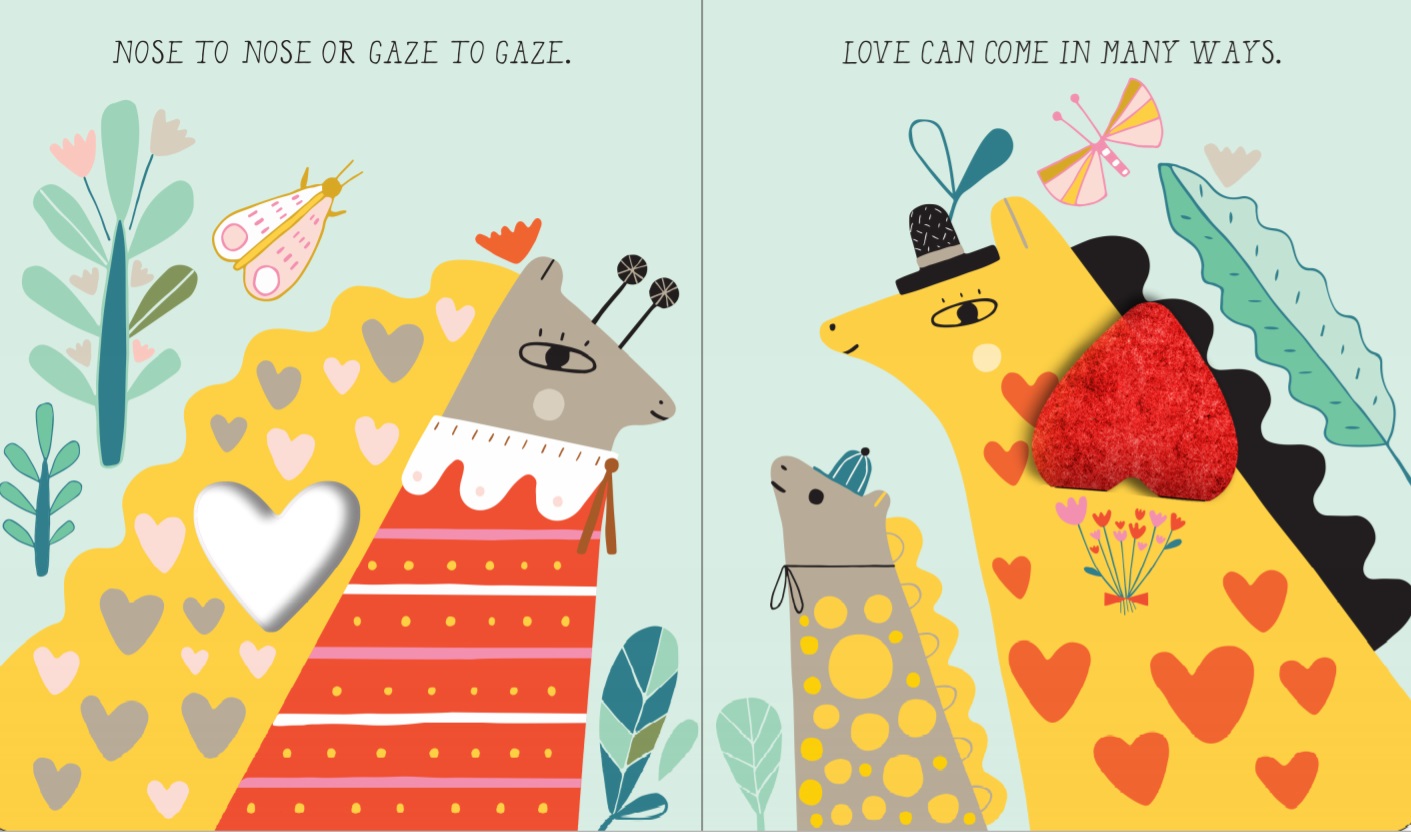
I worked on the manuscript (writing-revising-incorporating feedback from my critique group) for about three months. During that time, I realized it leaned more toward being a board book due to the sparse text and simple concept. When it was ready, I sent it to my agent, hoping she would love it as much as I did.
She held it for a few weeks before submitting it to a round of editors. Lucky for us, Chronicle Books expressed interest five days later. And it was my brilliant editor Ariel Richardson who envisioned it as a novelty book! Of course, I was thrilled! I’d always wanted to publish a novelty book, but as you wisely noted, it’s not easy for an author-only to sell one (I came close once, but ultimately it was a pass).
So was it your editor’s idea to do the felt flaps, uncovering the sweet surprises? How did that concept come together?
The initial idea was to publish it as a novelty book with various moving parts (flaps, tabs, etc.) but soon into the process, Ariel let me know they wanted to use felt flaps exclusively. She was excited about some gorgeous felt samples they’d found that were both beautifully colored and durable (to withstand the tugs and manipulations of small hands). When she emailed me the sample color palettes, I absolutely agreed!
Once we knew it would be a lift-a-flap book, it was then time for the amazing Suzy Ultman to start the rough sketches, which included possible flap placement. Suzy is such a talent for drawing “all things tiny” as I like to say, and she did a great job of incorporating the text into those sweet surprises under the flaps.
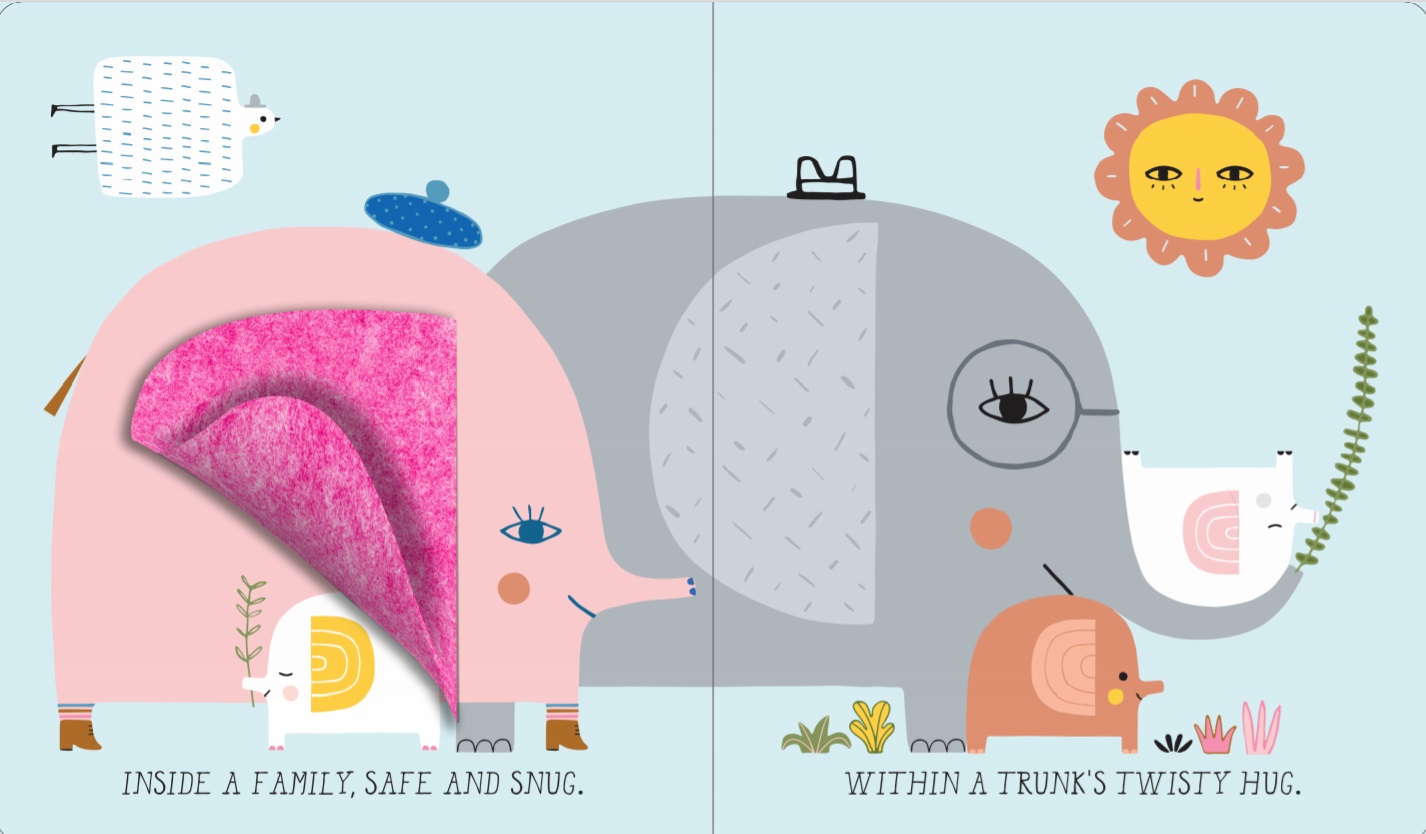
Did this concept change any of your text? Were animals brought in or moved out to make optimal use of the flaps?
We did make some slight changes to the text but not to adapt to the flap concept. Suzy was so creative in how she implemented the flap idea—some flaps were body parts (an elephant’s ear, a swan’s wing), others were part of their design (a heart-spotted giraffe has a felt heart that lifts, for example) that I didn’t need to change the text and one even became a leaf.
Where we did make some minor changes were to the types of animals. I wrote the line, “Enclosed in tender, toothy jaws” based on a photo of an alligator carrying her baby in her mouth. It was SO cool! But no matter how Suzy drew it, it looked like the mom was eating her baby! Yikes! We discussed other animals and decided pandas would work better since they have kid-appeal and do in fact, carry their babies in their mouths.
Another line I changed was, “Through soothing songs that mama sings” (originally featuring belugas) to “Through lively songs that mama sings” because Ariel thought it would work better visually to feature a full-spread pond scene with the raccoon and swan on the left, and frogs on the right.
One of my favorite flap ideas was with the final page. Originally, we were going to have speech bubble flaps, but it didn’t quite work out spatially because we really wanted to show a diverse cast of humans on the final spread. We opted for one speech bubble flap instead. Ariel had asked me to think of possible phrases and the first one that came to mind was how I always sign my first board book (Mama Loves You So), “You are loved!” The team agreed it was a great message to end the reading/snuggling/bonding experience, and with the neon pink flap over it, well, it’s perfect!

Terry, this book is sweet and adorable. Congratulations and thanks for talking about its creation!
Blog readers, you can win a copy of LOVE CAN COME IN MANY WAYS!
Just leave one (not many) comment below.
A random winner will be chosen soon!
Good luck!
 With twenty-five published books, Terry Pierce has experienced the joys of being a writer in many ways. She has a B.A. degree in Early Childhood Development and an international A.M.I. teaching diploma. Terry was a pre-primary Montessori teacher for twenty-two years before deciding to follow my dream of writing for children (what she calls, “the best mid-life crisis ever!”). She’s been writing since 1999, with her work appearing in magazines and the children’s book market. She has an MFA in Writing for Children &Young Adults from Vermont College of Fine Arts, including the Picture Book Concentration certification. She also teaches online children’s writing courses for the UCLA Extension Writers’ Program. Visit her at terrypiercebooks.com.
During quarantine, we’ve seen people connect and celebrate using song. Neighbors harmonize from their windows for front line workers. Friends croon from cars for drive-by birthdays. Families play “Name that Tune” via Zoom.
It’s no wonder; singing happens to release stress. As a former teacher, I often sang with students before tests or to reinforce tough topics. According to Julia Layton of How Stuff Works, singing lets out endorphins that help people feel good. When an individual sings in front of others, there is often an added benefit: improved confidence.
 So what does all this singing have to do with books? More and more, picture book and other authors are writing Book Songs for students that accompany their printed work. Megan & Jorge Lacera worked with Annie Birdd Music for their super-fun Zombies Don’t Eat Veggies song, Dawn Prochovnic wrote lyrics for Where Does a Pirate Go Potty?, Kwame Alexander shared “Kwame & Randy’s” MixTape 52, and Josh Funk created catchy tunes for his Lady Pancake & Sir French Toast books. I’ve also written songs related to my picture book My Quiet Ship, and also my latest Albert Whitman book, Way Past Mad. I felt lucky to record these songs with Leo Gade and Elizabeth Christman, amazing student singers from the Philly Boys and Girls Choirs.
I began using the instrumentals of my Book Songs as intros for a “Stuck at Home” video series that I started during quarantine to inspire kids/classrooms to create and connect in simple ways. In Video #7, the 76ers Sixth Man, a Philadelphia super fan, shared his idea: write and sing a song for someone you love.
EUREKA! That video led to a fun collaboration: the 76ers Sixth Man and Way Past Books are now kicking off the first annual Book Song Challenge!
With the school year coming to an end, our students, teachers and librarians have not only read a lot of books, but have also been under a lot of stress (#understatement).
For the contest, students are challenged to create their own Book Song about their favorite book this year. Hopefully, kids can feel good and confident as we celebrate books AND the end of the year for our hard-working students, teachers, and librarians.
Three winners will receive a $76 book gift card for themselves and a $1000 book gift card that will be sent to their school or library. These gift cards will be fulfilled by awesome indie bookseller, Children’s Book World.
As an author who writes small books about big feelings, it’s hard not to consider how kids and school professionals are feeling right now. I’m looking forward to piloting this challenge this year with the 76ers Sixth Man and growing it together as a community where we can share books, book songs, and celebrate the most important thing we have: our future.

 Hallee Adelman is the author of My Quiet Ship (2018), Way Past Mad (2020), Way Past Worried (coming Fall 2020), and two additional Way Past titles (2021). With a Ph.D. in Educational Leadership and Learning Technologies, Adelman has taught university and elementary students, having been nominated for the Disney Teacher of the Year Award on multiple occasions. She loves sharing writing tips with educators, children, teens and writers. She is married with two children and two dogs. Random facts: Adelman also produces documentary films. She keeps sour gummies in her desk drawer. She is currently engineering a giant leprechaun trap thanks to Tara Lazar’s most recent book!





 Writing for Kids (While Raising Them)