You are currently browsing the category archive for the ‘STORYSTORM 2024’ category.
by Colleen Rowan Kosinski
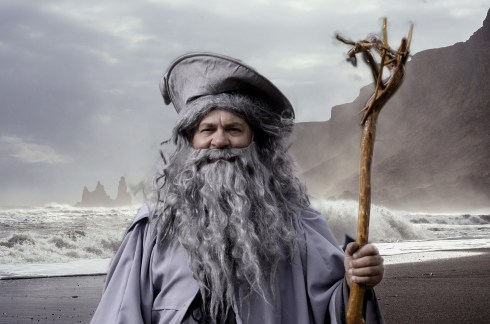
I’ve always been a “treasure hunter.” I’ll comb through yard sales, estate sales, and thrift shops searching for that piece of overlooked “gold.” Sometimes the treasure is not obvious, but if you surround it with a cloak of mystery and mythology then that simple walking stick can become a staff that was carried to traverse a mysterious land by a wizened wizard. Why, that cracked tea pot sitting all alone on the shelf. It was used to serve Hollywood’s biggest movie stars. If only it could talk! There are so many nuggets of stories all around us!

I guess in a roundabout way I am talking about imagination. Seeing into an object and creating a world for it. And, I would guess my specialty is creating stories about inanimate objects.
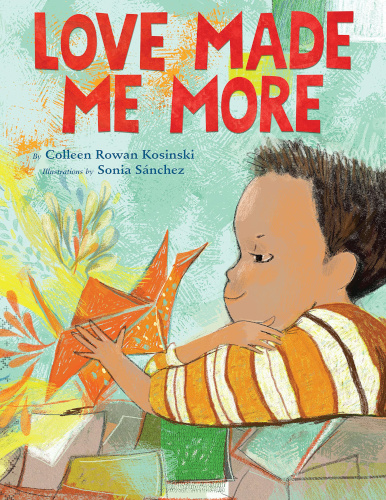
My last book told the story of an origami crane and how its life changed over the years. I love circular stories and this idea fit perfectly. But, back to inspiration. My daughter-in-law had made me a little blue origami crane. I’d nestled it on top of a piece of furniture in my bedroom. One night I was looking at the crane and thinking “what was its life like?” Did it like being stuck in this room? Did it wish to be a real bird? Ultimately, that was not the story I told but “what ifs” are a great way to get the imagination going. I finally landed on the idea that a child had made an origami crane and it had become the child’s best friend. But as the child grew, that relationship changed (as do most relationships.) The crane was forgotten for many years as the boy was occupied with life—and a girlfriend. Eventually, the boy proposed to the girl and used the crane’s paper to write his marriage proposal. Now the crane was also prized by the girl. Then the boy and girl had a baby. The boy used the crane in a mobile for the baby. The crane was then also prized by the baby. Although, their relationship changed, the boy and his crane always had love. The book is called LOVE MADE ME MORE.
In my book previous to LOVE MADE ME MORE, my inspiration was also an inanimate object—a house. How was I inspired? Well, my children are all grown and have moved out, so my husband and I were talking about downsizing. When we told our kids they were sad. They said they couldn’t imagine not being able to visit their childhood home. I was very surprised that our grownup children felt such a strong connection to our house. One day, while sitting out back looking up at the house, I started imagining how it would feel if we left it. Would it miss us? Would it accept new owners? These “what ifs” grew into an entire personality being created for a house, and led to my story A HOME AGAIN.

My obsession with making inanimate objects speak continues. I recently signed the contract for my next book. And, it’s about the relationship between a little girl and a fallen star. My agent is also currently shopping another book—told through the eyes of a boat!
My challenge for you:
Find an object. It can be anything. And start asking “what ifs.” For example, a glass of water. What if it remembers a time when it was a million raindrops. Or, what if it remembers the excitement of rushing around rocks in a river. Perhaps that was scary? Exhilarating? The possibilities are endless. Have fun! Maybe you’ll find your next story under a rock—or maybe the rock will be the subject!


Colleen Rowan Kosinski is giving away six copies of LOVE MADE ME MORE to be awarded to six random commenters.
You’re eligible to win if you’re a registered Storystorm 2024 participant and you have commented only once on today’s blog post.
Prizes will be distributed at the conclusion of Storystorm.

 Colleen Rowan Kosinski writes picture books and middle grade novels. Her picture books include LILLA’S SUUNFLOWERS, A HOME AGAIN, and LOVE MADE ME MORE (2022). Her middle grade novel is titled A PROMISE STITCHED IN TIME. For the last year she has been working as an editor at Reedsy.com and teaching classes on picture book writing. She is also involved in her local chapter of the SCBWI, and the Rutgers University Council on Children’s Literature. Colleen is a graduate of Rutgers University, as are her husband and sons. Her daughter followed the bright lights to work in the film industry in LA. Colleen works from her Cherry Hill, NJ studio with her canine assistant, Sage. Visit her online at ColleenRowanKosinski.com and follow her on Instagram @ColleenKosinski.
by Sharon Giltrow
Congratulations on reaching day 14 of Storystorm 2024.
By now I’m sure you have loads of picture book ideas.
But what if they aren’t all picture book ideas?
What if one of your ideas is in fact a middle grade book idea?
“Impossible!”
I hear you say.
“I’m a picture book writer. I write picture books.”
Well, you can be both.
Let me tell you a little story about how I became both a picture book and a middle grade book writer.
It all began during the storm of 2019. The Storystorm storm that is!
One of my ideas was ‘A Child’s Utility Belt’. I really loved the idea and at the end of Storystorm I chose to brainstorm it. I asked myself What would a child’s utility belt hold? What tools would a child want the most? Perhaps a tool… for time travel, endless supplies of lollies, to glow in the dark, invisibility, to fly. Or even better, a tool to overcome everyday challenges, such as a school bully.
Bingo!
I had my story. I started writing it in the only way I knew how, as a picture book.
However, when I shared the finished story with my critique buddy, she suggested it was more for an older reader. And asked, “Had you thought about turning the story into a middle grade book?”
My reaction was “Um, No! I can’t do that. How do I turn 500 words into 50,000 words?”
I put the story in the too hard drawer.
But I really loved the idea, and I couldn’t let it go. So… I looked in my own utility belt and found a middle grade course.
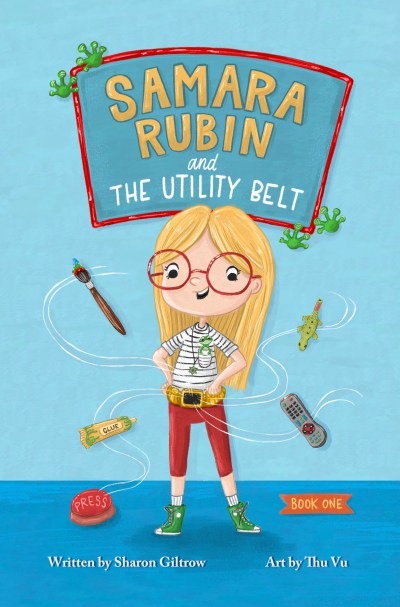
The course was a great success and by the end of 2019 I had turned my picture book story into a middle grade book: SAMARA RUBIN AND THE UTILTY BELT, illustrated by Thu Vu, published by Clear Fork Press, 2023.
My story doesn’t end with SAMARA though. I went on to write two more books in the series: TOBY KING AND THE UTILITY BELT and KAYA BELL AND THE UTILITY BELT, both to be released in 2024.
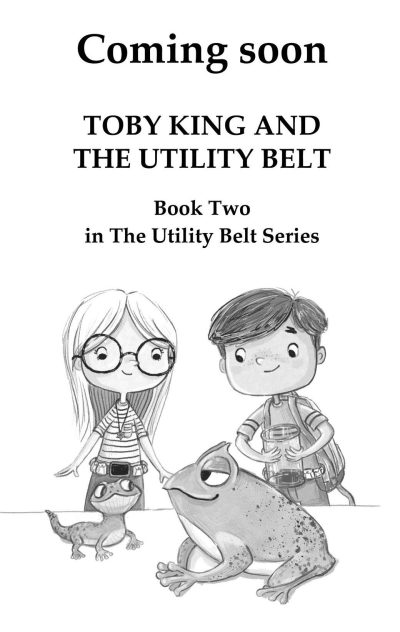
So, from one Storystorm picture book idea, three middle grade books were created.
My challenge to you, if you choose to accept it, is to take a close look at your Storystorm ideas. Can any of them be turned into a middle grade book? Or open your drawer of picture book stories and see if any of them will work.
Brainstorm the main plot ideas and scenes from your story and see if they can become chapters.
Examine your characters and see how you can develop them more. Especially their back stories.
Look in your own utility belt and see if you have the tools to help you.
I bet you do!
Sharon Giltrow is giving away two prizes to two separate winners: one copy of SAMARA RUBIN AND THE UTILTY BELT, and one Ask-Me-Anything Zoom chat.
You’re eligible to win if you’re a registered Storystorm 2024 participant and you have commented only once on today’s blog post.
Prizes will be distributed at the conclusion of Storystorm.
 Sharon Giltrow, an award-winning Children’s Author, grew up in South Australia the youngest of eight children, surrounded by pet sheep and fields of barley. She now lives in Perth, Australia with her husband and two children. Sharon has taught for all her career and now teaches young children with Developmental Language Disorder. Her humorous picture books include BEDTIME, DADDY, GET READY, MAMA! which is a SPEECH PATHOLOGY AUSTRALIA shortlisted BOOK OF THE YEAR and LET’S GO SHOPPING, GRANDMA! Awarded The Paper Bird Fellowship for Writers in 2019, Sharon used this time to write SAMARA RUBIN AND THE UTILITY BELT, book one of her debut early middle grade series, which released in August 2023. Book two and three are scheduled be released in 2024. Connect with Sharon online SharonGiltrowAuthor.com, Instagram @sharongiltrow1, and BlueSky @sharongiltrow1.
by Laurel Neme
Where do you store your ideas so that you can come back to them later? I used to jot mine down on scraps of paper to make sure I wouldn’t forget them. But inevitably they drifted from my pockets to who knows where.
A friend noticed and bought me a beautiful blank book for my birthday. It was the kind that feels good simply to hold. For about a year, it worked. Except that it ended up not being that useful. First, I only filled about 12 of the pages. Probably because I didn’t have the book handy when I got an idea. Those that did make it into the book were often too brief (I tended to write just a sentence or two), so they didn’t always make sense. And without any hint of where the idea came from (maybe an event or an article) or what I was doing, I couldn’t recreate my process and find my way back to it.

Worse was the fact that I couldn’t search it quickly. Rather, I would have to read each page to find an idea I was looking for—and typically gave up before I did. Eventually it sat on my shelf. Unopened.
In 2020, I took an Intensive Picture Book Workshop with Anastasia Suen and came away with what was for me a key takeaway—the idea of writing “zero drafts” on my computer. The basic idea was freewriting a draft before your first draft. With no expectations or editing. It was a way to get ideas out of your head and onto the page.
I loved the concept and soon expanded it into something bigger—a running journal of ideas. In essence, it was me stuffing my pockets with scraps of paper filled with ideas and inspiration. Except it was electronic, in one place, and easily searchable.
It started when my critique group did Storystorm together. We all shared a Google doc, and each day wrote down ideas inspired by that day’s post. We each had different “ink” colors, and would often comment and feed off each other’s responses.
The camaraderie deepened my thinking. But I also found the process itself helpful. Once I started jotting down ideas, the more I’d think of. Because I didn’t feel like I had to actually DO anything with them immediately, and they wouldn’t get lost, I couldn’t stop ideas from flowing. And in other areas my writing was benefiting from that.
When the month ended, I wanted to continue that regular brainstorming. But my critique partners didn’t have the time, and they wanted to develop the ideas they’d had.
So…I did it on my own.
Thankfully, I got a boost from Non-Fiction Fest—a month-long series of blogs about writing nonfiction for children. For me, it was perfect. Not only was it a continuation of blogs I could use for inspiration, but nonfiction is my jam. I write books and articles for kids and adults, and am also a freelance journalist for National Geographic and other media outlets.
I tried to recreate the same conditions and started another Google doc, just for me.
Each day, I got inspired by the NF Fest posts. And when it ended, I kept at it. Maybe not every day. But many of them.
I used the document as a placeholder for ideas.
Not just for picture book ideas, but ideas for articles, too. I’d cut and paste links and snippets from research papers or news items that I wanted to pitch to National Geographic. Or subjects I wanted to explore for a book. Or a topic I wanted to learn more about. Sometimes, it was a starting point for a volcano of ideas. And I let those ideas flow.
Other times, I knew I wouldn’t use it but it caught my attention. Like an article on Charmin updating its toilet paper to have a scalloped edge. It talked about the history of toilet paper and included a little info nugget that TP hadn’t changed much since 1857, except with the introduction of perforated lines to make it tearable in the 1890s, and again in 1930 to make it splinter free. It also said more than 7 billion rolls are sold in the US every year. Now, I don’t think I’ll ever do anything with any of that information. But I wrote it down.
The point is: I don’t edit myself. Who knows where an idea might lead?
Even as I write this post, I’m still intrigued by the history of TP and now I wonder about the history of other objects. Crayons? Remote controls? Shower steamers?
I like having a place where I can let ideas rip. It’s like a junk drawer that you never have to organize but that’s always easy to search and find things.
Here are some tips I’ve found useful for my own running catalogue of ideas—but try whatever works for you.
- Start each entry with the date and highlight it in blue. That helps separate ideas.
- Put key words or ideas IN ALL CAPS. That helps me notice the heart of an idea. It also can get me brainstorming additional related ideas.
- Highlight in yellow items you want to stand out. It might be ideas you want to work on first. Or keywords. Or a useful website.
- Every month or so, download the document and save it on your computer. That process will make you realize how much you’ve done and can do.
- From time to time, scroll through and see what inspires.
Where do YOU store your Storystorm ideas? Take this opportunity to start your own searchable catalogue of ideas. Happy Storming!
Laurel Neme will be giving away two prizes: one 30-minute virtual school visit and one 30-minute “Ask Me Anything” Zoom call to two separate winners.
You’re eligible to win if you’re a registered Storystorm 2024 participant and you have commented only once on today’s blog post.
Prizes will be distributed at the conclusion of Storystorm.
 Laurel Neme writes about nature and wildlife for kids and adults. She’s a regular contributor to to National Geographic and is the author of THE ELEPHANT’S NEW SHOE, about the rescue of a baby elephant who needs a prosthetic foot, ORANGUTAN HOUDINI, and ANIMAL INVESTIGATORS: How the World’s First Wildlife Forensics Lab is Solving Crimes and Saving Endangered Species. She’s also writes for New York Times for Kids magazine and other outlets. Visit her online at LaurelNeme.com. Stay in touch via social media: Bluesky @laurelneme.bsky.social and Instagram @laurelneme.
by Christine Evans
It’s day 12 and you’ve hopefully got a nice stack of ideas. How would you like to use a magic spell to multiply those ideas right now?
We’re children’s book creators so we all know that magic exists, in wishing wells, on stars, and in books. But you don’t need a wand to try this exercise.
Take one of your ideas. For example, you want to write a story about a dung beetle. Not the most popular book character maybe but we’re always looking for the next big picture book animal—maybe it’s Dung’s chance for fame.
Now, think about a picture book structure. How about epistolary? A particular favorite of mine and a structure I used in DEAR MR. G.
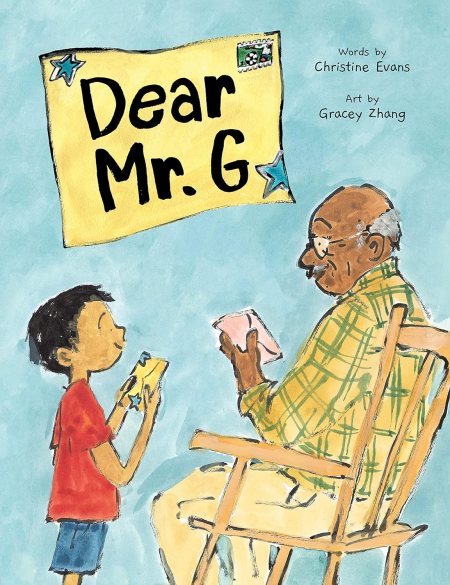
And now think about an emotion. How do you want your reader to feel at the end of your story? For this story, I want them to feel inspired.
So here’s my pitch: A picture book about Dung who wants to be the world record holder of the biggest dung ball ever rolled. It’s told in a series of letters between Dung and his best friend, Flea.
Now switch things up. What if it’s a cumulative story where you leave your reader rolling (yes, pun intended) on the ground in laughter?
Pitch: Dung rolls a dung ball and along the way collects objects that are increasingly absurd as he moves through the book.
Or a how-to book where Dung teaches us how to make our own dung ball that leaves readers informed.
Pitch: How to make a dung ball in 5 easy steps as told by Dung the dung beetle.
Yeah maybe not that one. But there’s no such thing as a bad idea in Storystorm so into the file it goes. You never know what else it might spark.
Finally, how about a nonfiction book about dung beetles that leaves readers curious.
Pitch: Do you know what the world’s strongest animal is? Find out in this book featuring heavyweight animals from dung beetles and leafcutter ants to gorillas and bears.
I think you get the idea! Go through each of your ideas and apply this formula:
Idea x (Structure + Emotion) = More Ideas!
I’m not sure that’s a very mathematical formula. But it is magical!
Good luck creating your own magic this month.
P.S. if you want to read a real picture book about a dung beetle, check out I EAT POOP! by Mark Pett. It’s hilarious! And so sweet.
Christine Evans is giving away a copy of one of her books to one lucky winner (winner’s choice).
You’re eligible to win if you’re a registered Storystorm 2024 participant and you have commented only once on today’s blog post.
Prizes will be distributed at the conclusion of Storystorm.
 Christine Evans is the author of eight books including DEAR MR. G., EVELYN THE ADVENTTUROUS ENTOMOLOGIST, and THE WISH LIIBRARY series. She particularly loves books with a touch of magic.
Christine is a British expat living in California with her husband and family. She invites you to visit her at pinwheelsandstories.com or on almost all of the social media platforms at @ChristineNEvans.
by Lauren H. Kerstein
Confession: I am a Hallmark movie-aholic!

I love having them on in the background while I work (even if I have to keep the sound off in order to concentrate). I love watching them with the sound on and reveling in the “happy ending” structure that is oh-so predictable and much needed in this chaotic world.
I also love reading (or listening to) romance novels. It’s a fun way to dissect story beats, enjoy happy endings, and of course, immerse yourself in someone else’s world for a little while.
Here’s the best part, while reading or enjoying Hallmark movie marathons, you can find ideas.
Here are a few examples: (I wish I wrote down the titles of the movies from which I snagged these, but alas, I didn’t.)
Scene:
A picture frame falls out of a child’s bag at the airport. She had decorated it as a gift.
Idea:
What about a picture book about Mother’s Day in which the MC can’t think of anything special and ultimately realizes that she is the gift. She decorates a picture frame with a picture of herself in the center. (Can you just see the sweetness of that final spread?)
Conflict Set Up:
The main character is a reporter. Her job ends up in direct conflict with her “love interest.”
Idea:
What if you have a child reporter as your MC in either a young graphic novel, chapter book, or picture book? The child MC might investigate stories in the neighborhood and bring them to light. At first, she brings them to light in a hurtful way. And so… her emotional journey is to figure out a way to bring the stories to light responsibly. (Do no harm.)
Movie Theme:
Valentine’s Day Themed Hallmark Movie
Idea:
What would happen if a child makes a Valentine’s Day card for a friend, but it ends up in the wrong hands?
Ooooh, and I got a nonfiction idea while looking up gifs for this. (See gif below.) If flamingos put their heads together, they form a heart. What other animals can make a heart with their bodies? (Dragonflies do when they mate!) There must be more!!

Remember, ideas are nuggets we capture and write down without dissecting them or assessing their worth. Our job during Storystorm is to generate ideas with as little judgment as possible.
Let your pen fly! Catch each idea. Then, later, you can assess them, combine them, turn them upside down, and massage them into fantastic stories.
So, consider this post an invitation to watch those movies you want to watch! Enjoy television. Read lots of books. And keep your notebook handy. You’ll be surprised by how many ideas you will find.
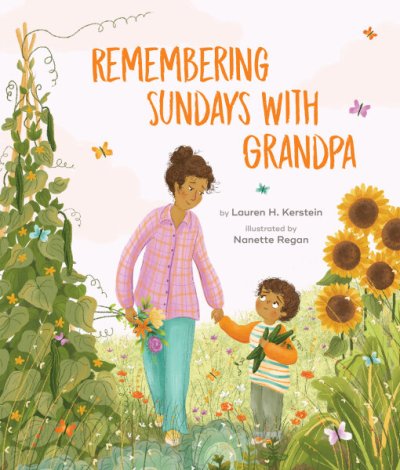
Lauren is offering two prizes: a 60-minute Zoom Critique Session and a copy of her latest book, REMEMBERING SUNDAYS WITH GRANDPA (Illustrated by Nanette Regan/Beaming Books) to two separate winners.
You’re eligible to win if you’re a registered Storystorm 2024 participant and you have commented only once on today’s blog post.
Prizes will be distributed at the conclusion of Storystorm.
 Lauren H. Kerstein is an author, psychotherapist, developmental editor, and a NYT bestselling ghostwriter. She is represented by Deborah Warren with East/West Literary Agency. Lauren enjoys highlighting strengths, strong women, and of course, dragons, in her books. Her writing goals are simple. Embrace feedback. Work hard. Be passionate. Write courageously. Touch children’s hearts. You can find more information at LaurenKerstein.net and @LaurenKerstein on most socials.
by Chiara Colombi
A wise person once said: “That’s one small step for Storystormers, one giant leap for Storystorming.”
Alright, I may have tweaked the quote a bit, but you’ll soon see that the sentiment holds true. Today, we’re storystorming our way to giant leaps of inspiration one small step at a time…literally. Ready to get meta? We’re going to create story ideas out of steps.
First, some context. The power of “one small step” is a key theme in my debut picture book ROCKET SHIP, SOLO TRIP, illustrated by Scott Magoon and releasing this February 2024. It tells the story of a young rocket braving the unknown on her first journey into space, in a celebration of the big firsts of life’s littlest explorers. Over the course of her mission, Rocket learns that when you’re faced with a big, overwhelming task, breaking it down into smaller steps can help you find your courage. Taking that first small step is all you need to launch yourself into success. Or in our case, inspiration.
This prompt is hands-on and involves steps of its own, so grab a pen and paper (or your Notes app, if that’s your jive). Let’s gather up some steps and see where they lead us!

Step 1: Gather your steps
Walk around your house and gather three to five items that each represent a step in a process. These items should be wholly unrelated to each other.
Examples: a hair dryer represents a step in a morning routine; birthday candles represent a step in a celebration; a watering can represents a step in gardening.
Step 2: Line them up
Once you’ve gathered your items, line them up and write down the order that they appear in. Then rearrange them and write down the order again, two more times.
Examples: Order #1: hair dryer; birthday candles; watering can. Order #2: birthday candles, hair dryer; watering can. Order #3: watering can; hair dryer; birthday candles.
Step 3: Turn your steps into stories
Storystorm one to three ideas that involve these items in the orders you’ve written down. How could these items combine to tell a story? Maybe you come up with a how-to book that guides the reader through a series of steps using your items in an unexpected way. Maybe you find an epic quest that only a kid reinterpreting everyday objects could possibly imagine. Maybe just one of your objects reminds you of an activity that filled you with wonder when you were younger—is there a story in that wonder and the path it could lead you down if you took that first step?
There is no right or wrong way to find inspiration in the objects you’ve gathered. The goal is to use one or a few small steps to launch yourself into story drafting success.
An example, to bring it all together…
Here’s a story idea I came up with, using the items in order #2 above (birthday candles, hair dryer, watering can): “How to Throw a Birthday Party for Your Pet Cactus.” (Goodness knows if I could get a cactus to live for a full year, it’d deserve a celebration.) Step one in the story would involve a cake and candles, naturally. Step two would require assisting the pet cactus in blowing the candles out by backing them up with a hair dryer. And step three would find the MC showering their cactus with gifts in the form of a downpour of water from their favorite watering can. Toss in a twist like the cactus not responding well to the hair dryer and sudden shower, and now there’s a problem my house-plant-loving MC needs to solve.
…Or perhaps I just run with the “Birthday Party for Your Cactus” idea and leave the steps out, because there’s gold in that tale of prickly affection all on its own!
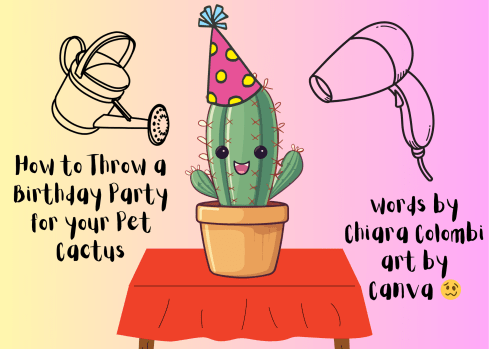
As Stephen King so wisely points out in On Writing, often the best stories come out of the collision of two “previously unrelated,” very disparate ideas. Think of your favorite picture books, and you’ll see this time and again. Bedtime for construction vehicles. Mild-salsa-taco-loving dragons. Misbehaving dinos doing all the things parents warn their kids not to do. A girl planting love. Mashing up previously unrelated steps is a way to create new collisions in your mind that just might spin and swirl in such a way that gravity pulls them together into a shimmering new planet, a.k.a. a story.
So, what are you waiting for? Start your next story with one small step.

Chiara Colombi is giving away a PB critique with a 30-minute zoom call and a signed copy of her book to two separate winners.
You’re eligible to win if you’re a registered Storystorm 2024 participant and you have commented only once on today’s blog post.
Prizes will be distributed at the conclusion of Storystorm.
 Chiara Colombi’s debut picture book, ROCKET SHIP, SOLO TRIP, illustrated by Scott Magoon and published by Viking, releases on February 27, 2024. An Italian-American bilingual wordsmith dedicated to the art of engineering with words, Chiara worked for a decade as a translator before pivoting into marketing at a data privacy startup, all the while carving out space for creative writing and storytelling. She is as comfortable talking about PII (personally identifiable information) as she is talking about PBs (picture books), though she’d love it if you asked her about Jupiter’s moons. She currently lives in California with her family and an open view of the sky. Connect with Chiara on Bluesky @chiaracolombi, Instagram @ChiaraBColombi, or through her website ChiaraColombi.com.
by David McMullin
Does Storystorm have superfans? Yes. Yes it does. This is the story of one. Let’s call him StormerX.
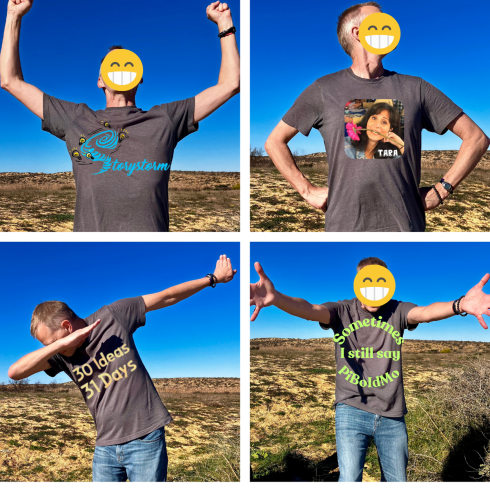
- December 2015. StormerX participates in his first Storystorm (PiBoIdMo). He is hooked!
- January 2018. The PB world is in its usual euphoric Storystorm frenzy of ideas and motivation. StormerX is joyfully sketching out his 30(+) ideas inspired by the encouragement of the bloggers and his fellow writers.
- February 2018. Storystorm comes to an end. StormerX is experiencing PSB (Post Storystorm Blues). No more blogs! No more ideas! No more being surrounded by other writers! Fortunately, the spirit of Storystorm doesn’t fade quickly. Inspiration is still dancing in his heart. What if he…doesn’t stop? What if he…continues generating ideas for another month?
The following months. Then, another month? And another? And another?
Fast forward to today! StormerX has never stopped. He has created at least one idea a day for…
- Over SIX YEARS.
- That’s 74 months.
- 2222 days.
- All resulting in 2496 ideas!
Now, I can sense what you’re thinking—What’s wrong with that guy?
You may also be thinking—David, is that obsessive oddball you?
It appears that for as clever as I have been, you’ve seen right through me. Yes, I am StormerX.
Let me explain. I am by nature a procrastinator. Also, a dilly-dallier, a fidgeter, a tinkerer, a meanderer and a doodler. I know many of you identify as at least one of these. And I know you all have different strategies you use to cope.
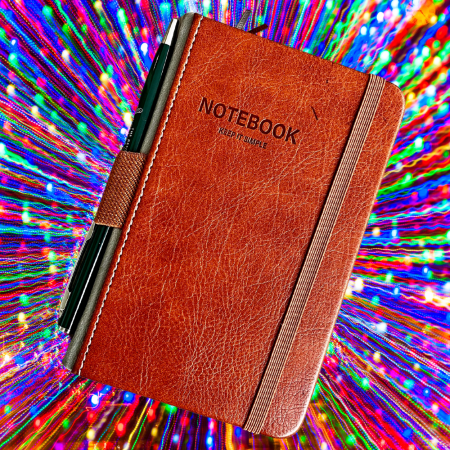
I personally need an anchor, something that holds everything in place. Giving myself one simple writing related task that I do every day, helps me focus. Daily idea generation has become one of the most important tools on my writing journey. I never go to bed without having jotted down at least one idea in my idea book. (Here’s the shiny little fella, now.)
This is how creating one idea a day has been of benefit to me:
- Routine and structure: Adding routine into one aspect of my life has made it easier to create routine in other aspects of my life. Routine has been shown to reduce stress. Who doesn’t want that?
- A constant reminder: Even if it’s just for 30 seconds, I think about writing every day. And because writing is often on my mind, I find myself wanting to do even more writerly things—improve my craft, engage with other writers, submit manuscripts, read, revise, and oh, actually write.
- Quantity: I write more. I am never without something to work on – At any moment I can just peruse my idea book, grab a pencil, and see where it takes me.
- Quality: This is partly a numbers game. With a new idea every day, there are bound to be a few winners. And it’s become easier to assess which ideas I think are the most writable (and hopefully, sellable).
- Confidence: This is maybe my favorite perk. I’ve stoped worrying if my ideas are good or marketable or kid-friendly or difficult or offensive or weird. I simply let the pencil do its thing. My writing feels more creative, more daring, and more honest than ever before.
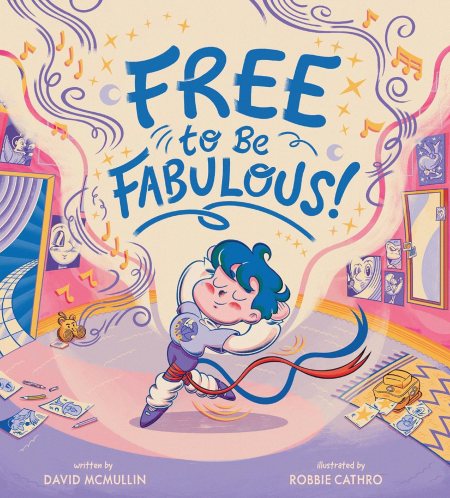
- And one last benefit: On May 19, 2018 I wrote the following in my idea book – When Jeremy met Fabulina. Jeremy is now Daniel, and Daniel never meets Fabulina, but on April 30th that scrap of an idea becomes my debut picture book, FREE TO BE FABULOUS! with Clarion Books, exquisitely illustrated by Robbie Cathro. If I had not been jotting down so many ideas this one may never have existed.
Remember, this is what works for me. You may find a different strategy that works better for you. Only weekdays? Saturday mornings? Whatever you choose, try to be consistent. And make sure it’s easy and fun—this should be helpful, not a chore.
If daily idea generating isn’t your thing, here are other simple anchors you can use:
- A daily affirmation.
- Writing sprints: Set a timer and write. 10 minutes?
- Set a daily word count goal.
- Read one picture book. (Heck, read half a picture book.)
- Read one kidlit blog post.
- Build community with a post or comment on social media.
- Write in a journal.
- Learn one of Tara’s fun, cool and interesting words.
- Mix and match several of these.
I know most of you are Storystorm superfans, too. (I’ve seen those participant badges popping up all over social media.) How can we not be, am I right? Have a great month and STORM ON!
Note: I recommend giving yourself an awesome Storystorm nickname. It will help you feel more in tune with your inner superfan. (Sorry, StormerX is taken.)
David McMullin is giving away a fiction critique, an Ask Me Anything Zoom call, or a combo of the two.
You’re eligible to win if you’re a registered Storystorm 2024 participant and you have commented only once on today’s blog post.
Prizes will be distributed at the conclusion of Storystorm.
 David McMullin is a picture book writer, illustrator, and children’s poet. His poems are featured in several magazines and anthologies. Honors include an SCBWI Ann Whitford Paul Award, an Astra International Picture Book Writing Contest award, a Madness Poetry championship and he was a Picture Book Rising Stars mentor. David and his husband are currently full time world travelers, bird nerds, and YouTubers. In past careers he was a Broadway actor, an educator, and a children’s librarian. Visit him at DavidMcMullinbooks.com and follow him on Instagram @davidmcmullinpb.
by Angela Burke Kunkel
In the Boston Public Garden, near the Charles Street gate, is a sculpture I’ve walked past dozens, if not hundreds, of times. Maybe you have, too. Locals and tourists do it every single day. The statue is Make Way for Ducklings, created in bronze by Nancy Schön and based on the book of the same name by Robert McCloskey.
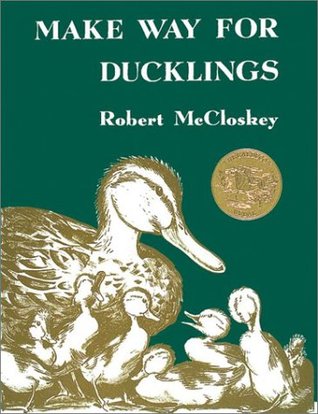

Now, I’d seen the statue and read the book to my children (again, maybe you have, too), but I hadn’t really thought about either in years—both were so familiar they’d become part of the background, for lack of a better term. That is, until I learned that there’s a replica of Boston’s beloved ducklings in Moscow. And with that, the idea for a picture book began . . .
I didn’t end up writing about the Moscow ducklings (turns out gifts made in the name of Cold War-era diplomacy don’t make for very good picture books), but that little bit of trivia did help me see the familiar in a new way. The more I learned about McCloskey and Schön, the more appreciation I had for their individual creative lives, how they inspired each other as artists, and how they became friends.
Mixing the familiar with a new spark of curiosity resulted in MAKE WAY: The Story of Robert McCloskey, Nancy Schön, and Some Very Famous Ducklings (illustrated by Claire Keane and published by Random House Studio).
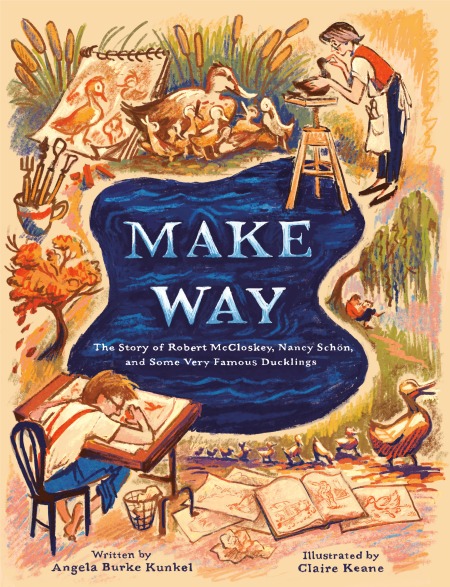
It’s worth noting here that Emma Bland Smith also wrote a wonderful biography, MR. MCCLOSKY’S MARVELOUS MALLARDS (Calkins Creek). Even though the books take on the same subject, I couldn’t have had the same approach. While I can’t speak for Emma’s process, I can say my own book took the shape that it did because for me, MAKE WAY FOR DUCKLINGS is very much tied up in a place. I love McCloskey’s work because of my years in Boston—I recognize and remember so many landmarks as I flip through the pages. And I love Nancy Schön’s sculpture equally, because that’s a landmark, too—it’s one of the first places my husband and I took our children to when we visited Boston as a young family.
Idea-wise, I didn’t think this familiar-becoming-new spark was likely to happen again. But it did, with Barbara Cooney’s MISS RUMPHIUS. Like MAKE WAY FOR DUCKLINGS, it’s a beloved classic I rediscovered with own children. But I never considered it as the subject for a book until listening to Betsy Bird’s Fuse8 n’ Kate podcast, where I learned there was a real “Lupine Lady” named Hilda Hamlin. Now, I thought I knew Miss Rumphius—I’d pored over the illustrations in childhood, and can recite most of the words from memory. But here was this new piece of information, and the very thing that sparked an idea for Cooney, too?

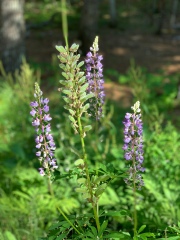
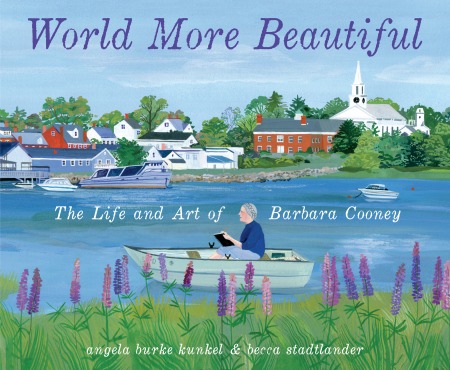
Much like those Moscow ducklings, there wasn’t quite enough there to make a book about Hamlin. But I turned back towards Barbara Cooney—and started to see ways in which her own life, travels, and artistic development aligned with the fictional Miss Rumphius. My picture book biography, WORLD MORE BEAUTIFUL: The Life and Art of Barbara Cooney, is illustrated by Becca Stadtlander and will be released by Random House Studio this August.
So here’s my advice, Storystormers—look at your influences, especially the ones that call to you over time (George Saunders has an amazing exercise for this). It’s OK to retread familiar territory! It’s great if ideas are Big, Expansive, Original—but also, don’t worry about it so much? What feels familiar about those Big Ideas? Why do they make your brain ping and your chest ache a little bit in recognition? What places, themes, and images keep recurring in your life? What keeps showing up for you, and how do you want to respond on the page?
Angela Burke Kunkel is giving away a copy of MAKE WAY: The Story of Robert McCloskey, Nancy Schön, and Some Very Famous Ducklings to one lucky winner.
You’re eligible to win if you’re a registered Storystorm 2024 participant and you have commented only once on today’s blog post.
Prizes will be distributed at the conclusion of Storystorm.
 Angela Burke Kunkel is the author of DIGGING FOR WORDS: José Alberto Gutiérrez and the Library He Built, MAKE WAY: The Story of Robert McCloskey, Nancy Schön and Some Very Famous Ducklings, PENGUIN JOUURNEY, and the upcoming WORLD MORE BEAUTIFUL: The Life and Art of Barbara Cooney. She lives with her family in Vermont, where she works as a school librarian. They visit Boston and Maine as often as they can. You can visit Angela at her website, AngelaKunkel.com, follow her on Instagram @angkunkel, or subscribe to her Substack newsletter.
Kidlit Works is a group of picture book authors with books coming out in 2024 and beyond. Today we are excited to share with our fellow writers the way that “how questions” inspire our work. Children ask “why?” all the time. They’re famous for it. But perhaps the foundation of those “whys” is really a “how”—how does the world work? As writers for children, we honor our audience’s constant curiosity. And as we reveal to children the grand and tiny ways in which the world works, we also discover how writing works. Below, nine Kidlit Works members discuss the “hows” that sparked our books, and “hows” we hope will spark ideas for you.
Sara Holly Ackerman
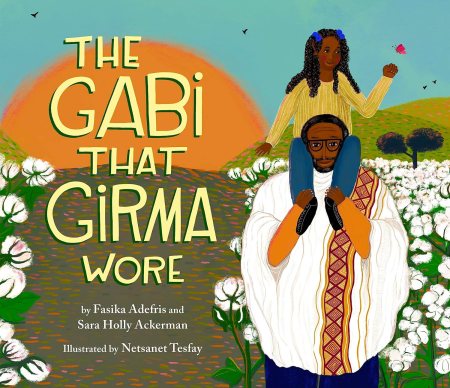
I’ve always been captivated by how things are made. In fact, adult me is still enthralled by Mr. Rogers’ crayon factory tour. As a teacher in Ethiopia, my favorite unit was all about fabric, particularly local weaving traditions. I wished there was a book about making Ethiopian garments…and soon there will be! A Gabi is made by a team, and so was this book. Fasika Adefris and I taught together and wrote together, so it made perfect sense we would author THE GABI THAT GIRMA WORE together. We chose a cumulative structure to highlight the process from cottonseed to finished product, and Netsanet Tesfay created the stunning illustrations.
Prompt: Pick an object that intrigues you. How is that object made? How can you use language and structure to invite children to experience the creation of this object?
Zainab Khan
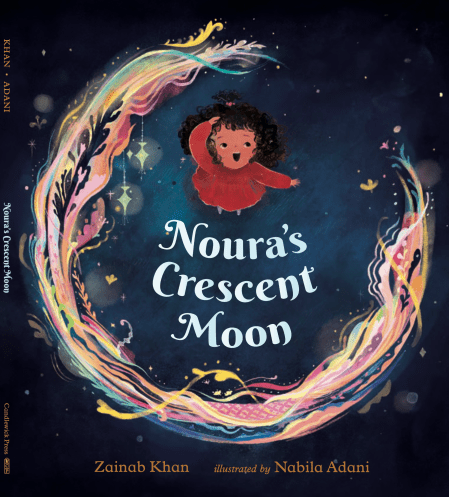
The idea for NOURA’S CRESCENT MOON (Candlewick, March 5, 2024) came as a bolt of lightning hitting the right place at the right time. A gift from God. I was inspired to write about fasting, Ramadan and Eid ul-Fitr all in one book. Then I imagined the story arc in my head as I wrote it down. I thought of the colors in the sky, the food Noura would eat, the things needed to be done for Eid to be special.
Prompt: Are you able to think up a story’s beginning, middle and satisfying end in your mind? How will you evoke the senses so that you are able to jot down what’s in your head into the written word? What colors and shapes do you see? What can you almost smell and hear? Is there something special your character can touch? How will all of these answers be part of the puzzle?
Sylvia Chen
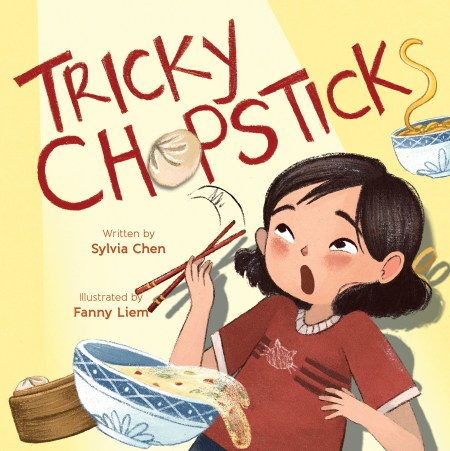
How did TRICKY CHOPSTICKS (illus. Fanny Liem, Atheneum/Simon & Schuster, March 19, 2024) come about? I was brainstorming “How can I write a fun PB with some sort of STEAM tie-in like my other stories, that also captures my cultural background?” when the title TRICKY CHOPSTICKS popped into mind. From there, so many “how can…?” thoughts helped to shape and deepen my arc: How can I express that the MC Jenny feels all this cultural pressure in a relatable way for any reader? How can other characters add tension without being too mean or intense? How can Jenny use STEAM thinking for her solution? How can she succeed in an entertaining but realistic way? How can I phrase the ending with an encouraging takeaway and fun wordplay?
Prompt: How can you add elements from your personal experience to help your manuscripts stand out even more? As you revise, try imagining yourself as your MC and use a “how can…” lens to explore adding more depth to your story: How can you express what’s really driving your MC? How can your characters interact to strengthen the story arc? How can you show (vs. tell) the various emotions your MC feels? How can your MC work through certain challenges or circumstances in a relatable way for young readers?
Marzieh Abbas
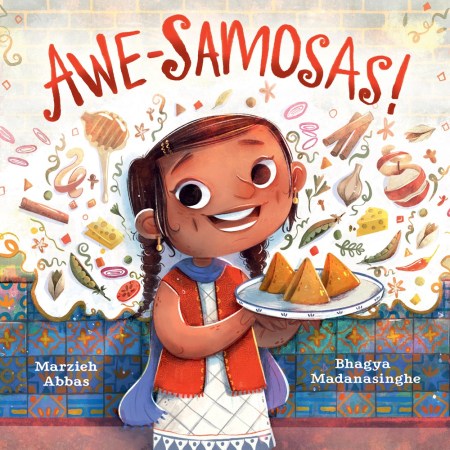
AWE-SAMOSAS! (March 26, 2024, illustrated by Bhagya Madanasinghe) was born out of me asking myself how I could share the joy of experimental cooking, and celebrate my favorite tea-time snack and culture all in one book. In this story, Noor, a Pakistani girl fond of cooking, has misplaced her grandma’s famous samosa recipe. As the story built to the climax, I asked myself, how else can Noor fail? How can her creativity save the day? My backmatter also includes: How else can you stuff a samosa?
Prompt: If you have a plot-based story, ask yourself ‘how’ you can keep your MC from achieving their goal by putting more obstacles in the story. Is there something your MC really wants? How can they fail repeatedly so you can raise the stakes and build to the climax?
Gabriele Davis
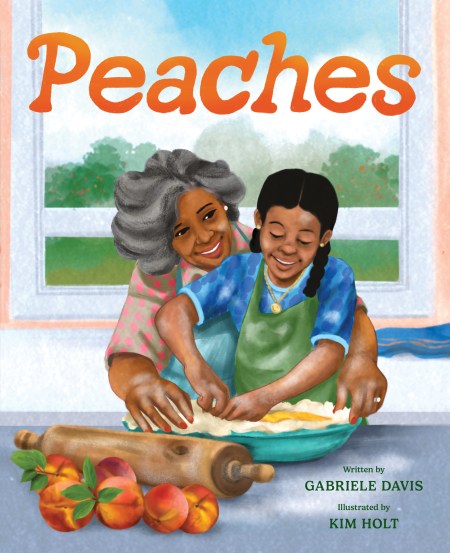
PEACHES (May 7, 2024, illustrated by Kim Holt) was inspired by a childhood memory of the joy my dad took in sharing peach cobbler with our family. For my dad, a kind, quiet man, sharing food was sharing love. This likely stemmed from his own childhood, growing up on his family’s large Virginia farm, which included apple, plum, pear and peach trees. When inspired to write about this memory, I asked myself: How can I capture the joy of those peach-cobbler moments? How can I create relationships in this story that convey how loved I felt? How did this tradition begin? How was it passed along? I later added additional layers (loss and healing) to the story, which prompted even more “how” questions. I didn’t adhere strictly (or at all) to the original details of my experience—or of my dad’s. My loyalty was to the emotional truth.
Prompt: Think about your childhood memories and choose one that resonates deeply for you. Ask: How can I capture the emotions that this memory evokes? How can I recreate the relationships associated with this memory? Once the bare bones of the story are down, ask: How can I weave in key details (sights, sounds, scents, history, etc.)? How can I add conflict or tension to keep readers engaged? Finally, once the story feels complete, ask: How can I add additional layers to give this story even more meaning?
Cheryl Kim
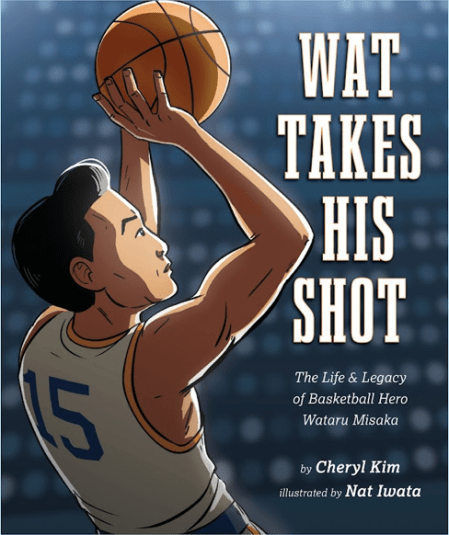
While watching basketball with my husband back in 2012, LINSANITY took over the NBA news. We loved how Jeremy Lin broke stereotypes and I assumed he was the first Asian American to play in the NBA since he was the first I’d heard about. I was shocked when I found out that there had been others and the very first was Wataru Misaka who broke the color barrier in the NBA the same year Jackie Robinson broke the color barrier in baseball. I wondered HOW I hadn’t heard of him before. That led to writing WAT TAKES HIS SHOT: THE LIFE AND LEGACY OF WATARU MISAKA to share his story with the next generation of readers.
Prompt: Is there an overlooked or little-known piece of history that you want the next generation to know about? This could be a who, a where, a what, or a combination of them. How do you want to bring that piece of history to life in a way that would make young readers want to know about it?
Carol Joy Munro
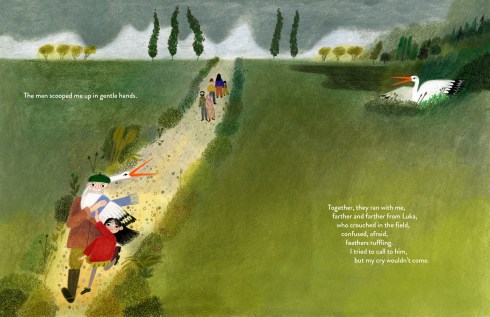
It was a double whammy of ideas that resulted in SPRINGTIME STORKS: A MIGRATION LOVE STORY (Chelsea O’Byrne, illustrator). While cleaning my office, I found a print out of text I had typed from a book by Jane Yolen. It was a free verse poem. I love free verse! How had I never tried it for a picture book? How could I not try now? Days later, I saw a video on Facebook about two Croatian storks. He migrates. She can’t fly. How must she feel to await his return each year? How is their story not perfect for a free verse PB? So I got to work!
Prompt: Find picture book mentor texts that read like free verse poetry. Type them out. Study them. Watch for intriguing stories on social media, in newspapers, magazines, wherever. How do they inspire you? Tell your story in free verse.
Christina Shawn
When my son was a baby he only wanted to be with me and as time went on he became more comfortable with other people too. I wondered how I could express that special bond and his reluctance toward change, but also how our hearts and relationships find room to grow. THERE’S ALWAYS ROOM FOR MORE (Chronicle Books, 2025 illustrator Shahrzad Maydani) features a reluctant child in a growing family who finds there’s always room for more love.
Prompt: Ask yourself, how do you feel about change? How do you react? Do you get excited, resistant, angry, uncomfortable? How can you express these emotions through word choice or character voice in your writing?
Stacy S. Jensen
While living in a new community, I saw new houses and construction around me. I wondered, “How did this land look before all of this?” The answer: BEFORE I LIVED HERE (Spring 2025, illustrator Victo Ngai) which focuses on a boy’s neighborhood in Colorado. The land was home to many people, dinosaurs, and an ocean.
Prompt: While my story is about how land changes, ask yourself how something changes or was before your character arrives on the scene — a family before a new baby, a class before the new student enters, or a party before you knock on the door.
Thanks for exploring HOW with Kidlit Works today! You can follow us on Instagram @kidlitworks and TikTok @kidlitworks.
Kidlit Works is offering the following prizes:
- 30-minute Ask Me Anything with Cheryl Kim
- 30-minute Ask Me Anything with Sylvia Chen
- One-hour Ask Me Anything with Zainab Khan
- 30-minute Ask Me Anything OR a MS critique (under 600-words non-rhyming Fiction/Nonfiction picture book/board book) with Marzieh Abbas
- One-hour Ask Me Anything about websites or Canva OR a live picture book critique on Zoom with Stacy S. Jensen
- MS critique (under 600-words non-rhyming fiction picture book/board book) with option for Zoom brainstorming chat with Christina Shawn
- Manuscript critique (picture book, fiction, poetry or prose, rhyming okay, under 700 words) from Carol Joy Munro
- Picture book manuscript critique (max 600 word, non-rhyming, fiction) OR a copy of Peaches from Gabriele Davis
- $20 gift card to your favorite indie bookstore from Sara Holly Ackerman
Nine separate winners will be randomly selected.
You’re eligible to win if you’re a registered Storystorm 2024 participant and you have commented only once on today’s blog post.
Prizes will be distributed at the conclusion of Storystorm.
by Dawn Babb Prochovnic
One of the things I appreciate most about Storystorm is that it nudges me to write a little something (even if it’s just a whisper of an idea) each and every day. Today’s post provides an opportunity to sustain this creative routine all year long.
When my kids were bitsy, our household amassed a daunting collection of party favors and piñata toys. Somewhere along the line, I started incorporating that clutter into my creative writing practice.
Maybe you have your own copious collection of clutter? Stuff displayed on your desktop or bookshelf? Treasures tucked into your handbag or backpack? If yes, take a moment to locate an object—any object—and put it in front of you. If you don’t have anything easily within reach, use the image below as a stand-in:
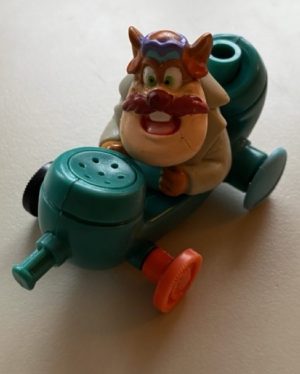
Take a long, close look at your object, and begin writing down any words that come to mind in the following categories:
- Nouns:
- Adjectives:
- Verbs:
- Miscellaneous words that you don’t want to bother categorizing:
Now go a little deeper…
- What memories does this object evoke for you? (Write this down.)
- What connections does this object elicit for you? (Write this down.)
- What assortment of seemingly random thoughts are coming to mind for you? (Write this down.)
Now let’s get the creative juices really flowing. Set a timer for a three-minute freewrite that incorporates…
- The object itself, or
- One or more of the nouns, adjectives, verbs, miscellaneous words, memories, connections, or assortment of seemingly random thoughts that you’ve written above, OR
- Anything else that’s clamoring to get onto the page.
GO!!!
Write for three solid minutes. Don’t self-edit. Don’t judge. And don’t feel any obligation to apply the structural guidelines I’ve suggested above. Just let your imagination run wild and see what pops out.
DING!!!
Time’s up. Stop writing. Seriously, STOP writing at the three-minute mark. Even if you’re in the middle of a word, or a sentence, or a thought. Stop. Wiggle your fingers. Shake out your wrists. Relax your shoulders. Read and ponder what just poured out of you and onto the page.
Where might the words or ideas fit into a story you are working on? A character you are developing? An idea you are exploring? A story problem you are trying to solve? What new story ideas come to mind? What are you clamoring to keep writing about? Add some notes to capture your musings. Whoo-hoo! You have words on the page. Your creative brain is awake. You’ve already accomplished a little something, and the writing day is still young!
I’ve used variations of this activity for my own writing projects and for book events, school/library author visits, and creative writing workshops. Some examples:
- For early literacy events featuring WHERE DOES A PIRATE GO POTTY?, I display a small treasure chest and a container of toys with signage that says, “Ask How This Jar of Toys Can Be a Literacy Tool.”

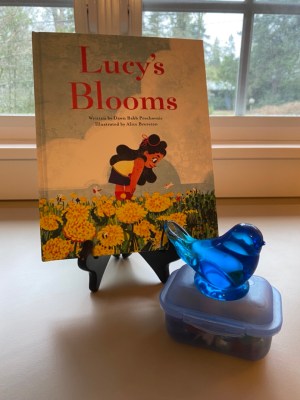
- For school/library author visits I share how a little glass bird that sits on my desk, a gift from my Gram, found its way into early drafts of LUCY’S BLOOMS. As the story blossomed, the bird eventually got cut from the text, but the love and warmth I felt when looking at this object helped me tap into the love and warmth I wanted to convey between my characters, Lucy and Gram.
- I bring a bag of treasures with me when I teach writing workshops, pulling an object from the bag as I lead the group in a warm-up exercise similar to what I’ve described in this post. Time allowing, after the exercise, participants break into small groups to share what they’ve written; this helps illustrate that we all have different memories and experiences to draw from, and even if the prompt (or prop) is the same, our writing reflects these differences. For longer workshops, I distribute a unique object to each participant, and repeat the exercise. Young writers enjoy discovering they can keep my clutter er, their object after the workshop ends.
- For more in-depth writing programs, I display a selection of objects on a table, and invite participants to select one or more to use at their desks to help them generate a new story idea or get unstuck on some aspect of their work-in-progress. I provide different object-related prompts depending upon the content of the workshop, for example, “Write about the day your character found (or lost) this object,” or “Describe how this object fits into the setting of your story.”
- Illustrators (and non-illustrators) can substitute timed drawing/sketching in place of writing. I’ve found it to be especially liberating for young writers to be given “permission” to draw/sketch instead of writing words during the three-minute “freewrite.”
- If you’re running short on time in the morning, you can still select an object to keep in the back of your mind throughout the day, then sit down and write about the object in the afternoon or evening.
- If this particular activity is a good fit for you, you might also appreciate Object Writing, a technique developed by song-writing guru Pat Pattison (discussed in his book Writing Better Lyrics) that focuses on deeply describing an object using all of your senses.
I hope today’s post helps you collect heaps of new ideas!
Dawn Babb Prochovnic is giving away THREE prizes:
- A copy of LUCY’S BLOOMS (US);
- A copy of WHERE DOES A PIRATE GO POTTY? or WHERE DOES A COWGIRL GO POTTY? (winner’s choice, US); and
- A 30-minute Ask-Me-Anything Zoom Session (for an individual, critique group, or classroom).
Three separate winners will be randomly selected.
You’re eligible to win if you’re a registered Storystorm 2024 participant and you have commented only once on today’s blog post.
Prizes will be distributed at the conclusion of Storystorm.
 Dawn Babb Prochovnic has devoted her life’s work to initiatives that support literacy and the literary arts including early literacy enrichment programs; creative writing workshops; author visits/virtual visits to schools, libraries and bookstores; programming for professional development conferences/e-conferences; and robust enrichment materials on her educational blog. Dawn received the 2023 Walt Morey Young Readers Literary Legacy Award in recognition of significant contributions that have enriched Oregon’s young readers and was named an Oregon Library Supporter of the Year in 2015 for her work advocating for strong school libraries. Her publication credits include 19 picture books and a contribution to the award-winning anthology, OREGON READS ALOUD. Dawn enjoys collaborating with music professionals to create original songs and videos for her books.
Find Dawn online at DawnProchovnic.com, YouTube @dprochovnic, Instagram: @dawnprochovnic, and BlueSky @dawnprochovnic.bsky.social.





 Writing for Kids (While Raising Them)