You are currently browsing the category archive for the ‘STORYSTORM 2023’ category.
by Karen Henry Clark
No one is more surprised than I am to be a second-time guest for this month of inspiration.
I appeared in 2014 for PiBoIdMo. When Tara scheduled me back then, my debut SWEET MOON BABY: An Adoption Tale was soaring. By the time my blog turn arrived, things had changed.

It was out of print.
My agent was gone.
I faced an avalanche of rejections.
Panicked, I asked writing friends about my PiBoIdMo assignment. “Be positive,” they urged. I wrote a peppy post about the power of SCBWI and critique groups. The easy boosterism made me feel guilty.
Then I remembered an education professor who explained inspiration was not magic dust to sprinkle around the classroom. He said, “Share what you know and show who you are. Some kids won’t care, but for some it will ignite the sparks to inspire themselves.”
I deleted my 2014 draft post and started over, referring to The Little Engine That Could, the story my mother read to me repeatedly. Having reached the mountaintop, I wrote:
My engine flew over the edge, crashed at the bottom of the canyon, and someone spray-painted LOSER on my caboose. But you can write down there, too. I am.
500+ followers commented. They appreciated my honesty and felt encouraged for themselves and for me.
Success. I inspired folks.
But I quit, instead of following my own advice.
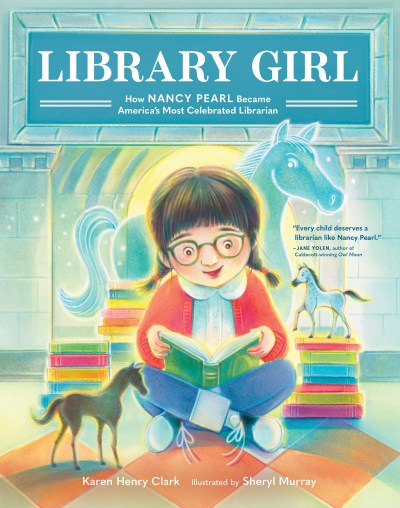
Eventually, though, I re-read those kind comments and decided they might be right. I started revising a manuscript about Nancy Pearl, respected as a librarian’s librarian. In the 1980s we’d worked in a Tulsa bookstore and become friends. After moving to Seattle, Nancy’s career blossomed as a library sensation, author, critic, and TV host.
Successful though she was, we both knew her childhood had been shaken by challenges. The story had universal appeal for any child who felt different.
On a self-imposed dare, I applied to Jane Yolen’s Picture Book Boot Camp, certain I wouldn’t be accepted.
Shoot; I was.
In 2015, our group gathered in Jane’s living room. I chatted with the day’s speaker, a librarian, and asked if she knew my friend Nancy Pearl. She did. “I’m writing a picture book about her,” I said.
Suddenly Jane, who had overheard me, asked, “Why don’t I know about this? That will sell.”
No one, absolutely no one, wants to disappoint Jane Yolen. I returned home and interviewed Nancy repeatedly. Years of drafts flew by like time-lapsed calendar pages. I could not make it work. I wasn’t writing a story; I was building a word wall and banging my head against it.
But I couldn’t quit this time.
Nancy was waiting.
Jane was waiting.
500+ followers were waiting.
Down in that canyon, instead of quitting, I realized I needed a sabbatical from words.
Because the 1950s are the setting for Nancy’s childhood, I went to a fabric store and pretended to design her bedroom and clothes.
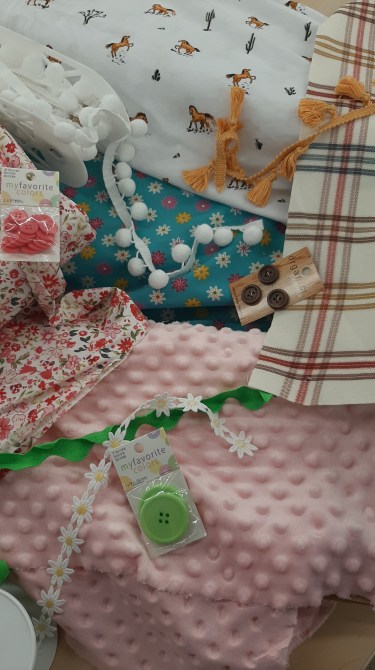
Horse-print throw pillow.
Chenille bedspread.
Plaid and floral shirtwaist dresses.
Trims and buttons.
The story unfolded in my heart like yards of gingham. I saw it. I felt it. I tried again.
LIBRARY GIRL sold.

Never quit. Go on sabbatical from feeling stuck in your manuscript. Maybe a fabric store won’t work, but discover a place to wander, without the frustration of words, beside your characters.
The story, seemingly out of nowhere, will unroll itself before your eyes.
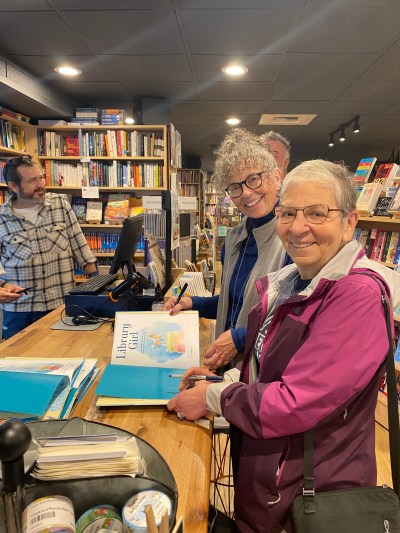
Karen Henry Clark decided to become a writer when she was aged four years, quickly learning the living room wall was not the best medium for an author. She worked as a bookstore clerk, teacher, college administrator, and copywriter but never forgot her childhood ambition. Her first book, Sweet Moon Baby, was about adopting her daughter from China. Library Girl, her second, was inspired by her friend and legendary librarian Nancy Pearl. In “Margin Notes,” Karen blogs about the magic in everyday life’s small moments at KarenHenryClark.com or Facebook.

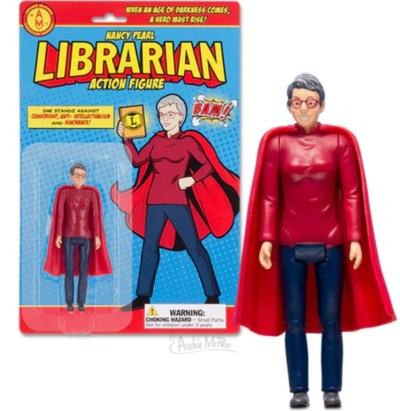
Karen is giving away a copy of LIBRARY GIRL plus a Nancy Pearl librarian action figure to one winner.
You’re eligible to win if you’re a registered Storystorm 2023 participant and you have commented only once on today’s blog post. ↓
Prizes will be distributed at the conclusion of Storystorm.
by Rebecca Gardyn Levington
When people ask what I do for a fun, I tend to be brutally honest:
“I have playdates with words!”
Sure, I get some strange looks (I get a lot of those anyway), but it’s the truth! Playing with words is my favorite way to spend the day.
I love the sound and rhythm of words and how they can come together in new ways to create a specific mood or emotion. I enjoy puns, idioms, lyrical language and trying on different points of view. I love writing in rhyme because, to me, a rhyming poem or picture book is one big puzzle. When, after hours of tinkering, I’m able to uncover the perfect word that exactly encapsulates the meaning and feeling I’m after AND perfectly slides into my meter, I get SUCH a high! (Anyone else?!)
And when I stop to think about it (as I did to write this blog post) I realize that most of my picture book manuscripts began as poems, and most of those poems were created during a playdate with a single word.
Take my debut picture book, BRAINSTORM! (illustrated by Kate Kronreif), for example…

There I was, Butt In Chair, waiting for my Muse to arrive (she is, like me, usually running late) when I began brainstorming about how weird the word “brainstorm” sounds. (You know how the more you think about a word, the weirder it sounds?)
And then it began raining outside and I thought: “So now, I’m brainstorming about ‘brainstorm’ in a rainstorm!” (It was very meta). And that led me to wonder what a “brain-storm” might look like? Brains falling from the sky?….um, eww… Or maybe…. IDEAS falling from the sky?!”
KER-PLINK!

Suddenly all these images of a child playing outside in a literal storm of ideas, pictures, story titles, themes, nouns, verbs, characters, beginnings, middles, endings, etc. completely flooded my mind (pun absolutely intended).
Before I could grab my umbrella, I had a picture book on my hands!
The idea for my upcoming picture book, WHATEVER COMES TOMORROW (illustrated by Mariona Cabassa), was similarly sparked during a word playdate.
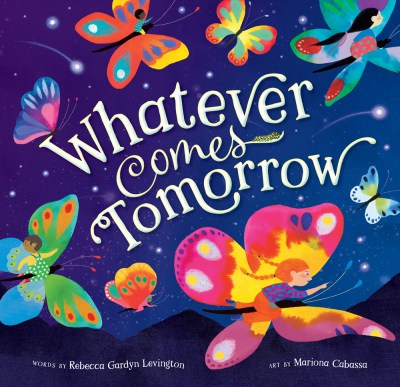
For the last three years, I’ve participated in a Poem-A-Week Challenge with three of my amazing critique partners. And in late November 2019, our weekly prompt word was: “Surprise!”
I began my playdate by thinking about all the unexpected surprises we experience in life and how we never know what tomorrow might bring.
I jotted down this stanza:
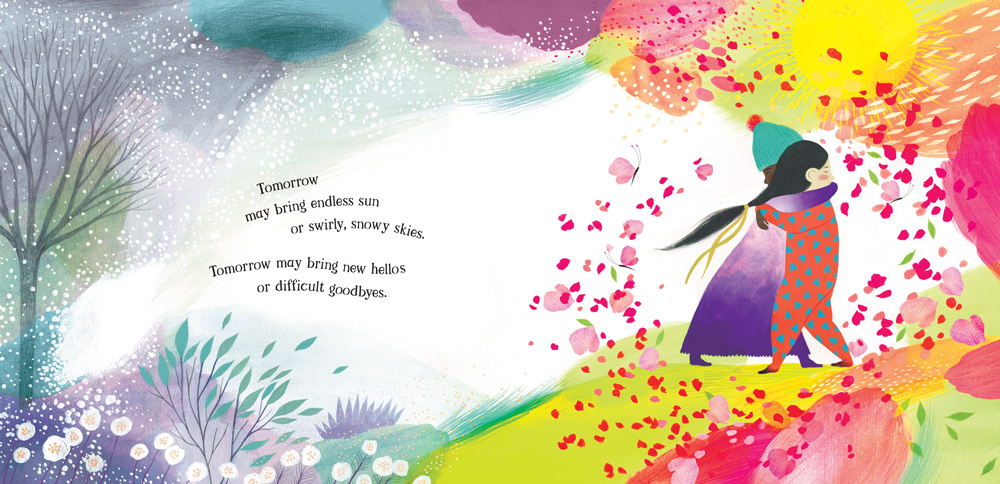
Tomorrow may bring thunderstorms,
or snow or sunny skies.
Tomorrow may bring visitors.
A gift. A big surprise!
The poem started out as a simple list of musings about all the random surprises life throws at us. But pretty quickly (by drafts two and three) I found my thoughts going much deeper.
I thought about how I personally dislike ANY surprises (and did so even as a child). And when I considered why, I realized that my dislike of surprises is very much connected to my struggles with anxiety and fears of the unknown.
And thus, WHATEVER COMES TOMORROW (after many, many drafts) turned into a poem picture book about managing all those worried feelings. It is essentially a mantra written to myself and to other kids (and adults) like me, a reminder that we have faced and overcome many hard things in the past, and we will continue to do so in the future. Whatever comes tomorrow, we will find a way through. We will journey on.
The word “surprise,” by the way, was cut in later drafts, but if it wasn’t for that initial word playdate, I would never have written what will soon be my second published book!
So, now it’s YOUR turn to plan a playdate with a word! Here’s your assignment:
Step 1: Pick a Word, ANY Word!
Don’t think too hard! If you have trouble, open a dictionary at random and point with your eyes closed, or use a word generator like this one: https://randomwordgenerator.com/.
Step 2: Try One of These Exercises…
- Set a timer for 2 minutes. Without lifting your pencil, write down everything your word reminds you of. After the timer goes off, search your list for any seeds of ideas!
- Plug your chosen word into Rhymezone.com and write down on a piece of paper all the words that rhyme with it. Often rhyme pairs spark associations that lead me to unusual or interesting stories.
- See if there is an idiom, pun, or saying that contains or is related to your chosen word. I get many ideas this way. I love this search tool for finding idioms: https://idioms.thefreedictionary.com/cheer
- Determine what part of speech your word is, then randomly pick two additional words from two other parts of speech. Ex: if your word is a noun, pick a verb and an adjective. (You can use the word generator above for this). Now, brainstorm a story around those three words.
Okay Storystormers, I’ve just one last word for you… THANKFUL! This is my 7th year participating and I am so thankful to be here on this journey with you all.
Wishing you a HUGE DOWNPOUR of ideas this month (and all year long!)
 Rebecca Gardyn Levington is a children’s book author, poet, and journalist with a particular penchant for penning both playful and poignant picture books and poems – primarily in rhyme. Her debut picture book BRAINSTORM! (Sleeping Bear Press, 2022) hit bookstores last summer. She has six more rhyming picture books being published in the next two years, including WHATEVER COMES TOMORROW (Barefoot Books, March 7, 2023), AFIKOMAN, WHERE’D YOU GO? A Passover Hide-and-Seek Adventure (Penguin Random House/Rocky Pond Books, 2024), and I WILL ALWAYS BE… (HarperCollins, 2024). Rebecca’s award-winning poems and articles have appeared in numerous anthologies, newspapers, and magazines. She lives in the suburban jungles of New Jersey with her husband and two boisterous boys. Find out more about Rebecca at RebeccaGardynLevington.com. Follow Rebecca on Twitter @WriterRebeccaGL and Instagram @RebeccaGardynLevington.
Rebecca is giving away THREE prizes: a copy of BRAINSTORM! (US), a copy of WHATEVER COMES TOMORROW (US, when it releases on March 7th), and a 30-minute Ask-Me-Anything Zoom Session!
You’re eligible to win if you’re a registered Storystorm 2023 participant and you have commented only once on today’s blog post. ↓
Prizes will be distributed at the conclusion of Storystorm.
by Hillary Homzie
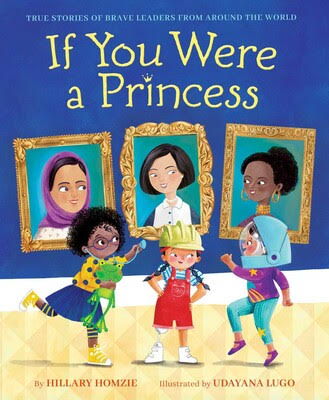
Hello, Storystormers. Can you believe we’re almost at the halfway mark? By now, you’ve accumulated dozens of ideas, possibilities, and nuggets of inspiration. I wanted to walk you through a germ of an idea and show you how it became my informational picture book, IF YOU WERE A PRINCESS: TRUE STORIES OF BRAVE LEADERS FROM AROUND THE WORLD, which came out October 18, 2022, from Simon & Schuster, Aladdin Books.
Let’s go back to Storystorm 2018 where I had a long list of glorious half-baked ideas.
I decided to pick one idea and start to develop it.
Usually, I like to begin with a title, often something high concept. That basically means from the title alone (or a quick one sentence pitch), you understand the premise. For example, the film Snakes on a Plane. You get it, right?
You probably wouldn’t be surprised to hear that my middle grade Queen of Likes is about a middle schooler who is too obsessed with the number of likes she gets on her social media account.

Or that Pumpkin Spice Secrets revolves around an incident in a coffee shop that leads to keeping a secret from a best friend.

However, nothing with a cool resonant title was materializing. Instead, when I gazed at my list of Storystorm ideas, I zeroed in on a general concept: princesses.
Ugh! Weren’t there already a million princess books out there? Did the world really need another one?
So then I started to ask myself why? Why do princesses interest you, Hillary?
Well, as a kid I loved fairy tales. According to Bruno Bettelheim in Uses of Enchantment, fairy tales help children symbolically navigate anxieties and dilemmas.

Okay. Dig deeper. Go back to your childhood. Kick up some memories.
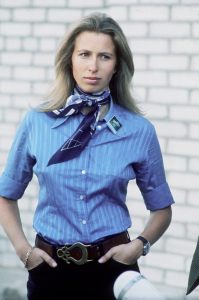 When I was six, we moved to Sussex, England where the ruins of the Lewes Castle loomed over our street. Princesses felt very real, and I became enamored with Princess Anne.
Now, ask again why. Why were you so fascinated by Princess Anne?
Because at my new school I was bullied for having a funny American accent and didn’t know how to stand up for myself. Princess Anne was a fearless Olympic-level athlete who notoriously stood up to a would-be-attacker.
Tip #1:
Ask yourself why a subject matter interests you and keep on digging. Continue asking why until you truly understand what motivates your interest in a subject.
In my case, I was attracted to a strong female role model to help me navigate a difficult and lonely time in my childhood.
Tip #2:
Write down a list of 5 or 6 role models (they can be famous or from your personal life). Next to the person’s name list three of their positive qualities. Now see if you can find some commonalities and circle them. For me, it would be bravery–someone who stands up for themselves and others.

If you’re writing nonfiction, try to find someone who embodies a dominant quality you are seeing in your role model. If you’re writing fiction, think about how you can create a primary character who embodies this quality.
My next step was to dig into some research to see if I could find other princesses who embodied qualities that I admired.
Oh my. Eureka! There are so many cool princesses.
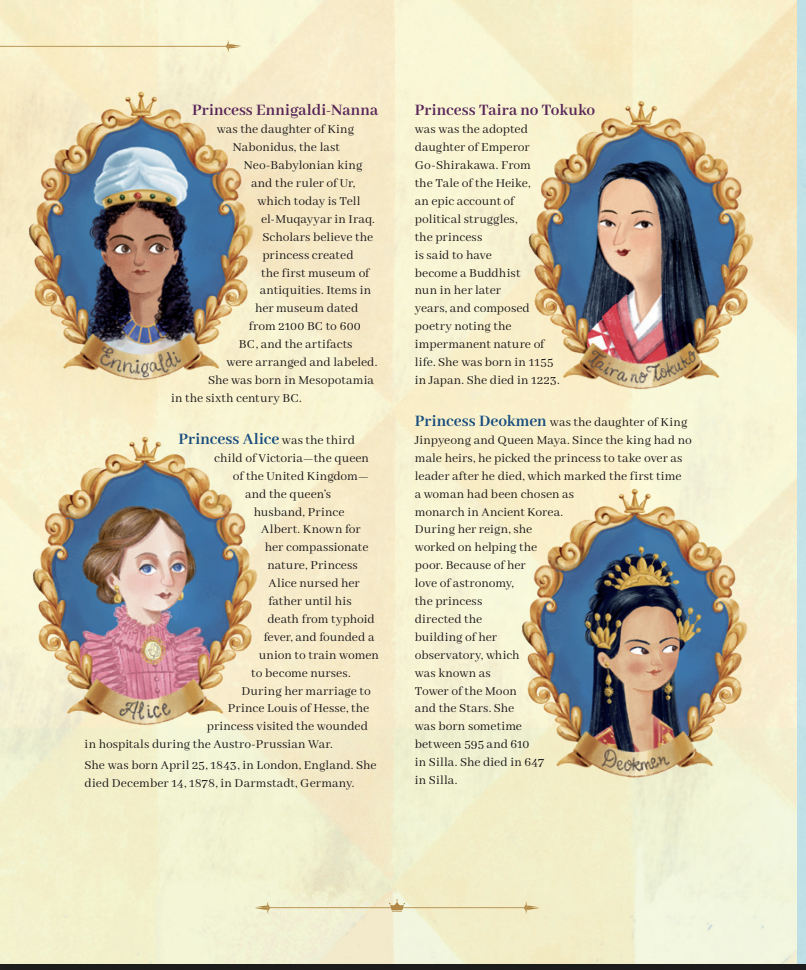
A princess from Iraq with an MD/PhD who did cancer research at Harvard and founded the United Nations International Day of Women and Girls in Science. A princess from Korea who loved astronomy and established one of the oldest astronomy towers in the world. A princess from Uganda who was the ambassador to the United States. The list went on and on. Honestly, I could easily write two more books on this same subject. The hardest thing was leaving women out. After all, so much of women’s history has been neglected. In fact, I discovered that no book existed documenting the accomplishments of real princesses, now and in the past, from diverse lands. (This gave me even more motivation to push forward.)
Now that I had so many treasures, I tried to stuff all my newly found facts into my draft. But the feedback I kept on getting from my critique partners—your manuscript needs to be trimmed.
At first, I balked.
And then I discovered a little trick.
I crafted a simple narrative that a child as young as 3 or 4 could follow and used those nifty facts as supplementary material for sidebars and a 5-page appendix. Not only was the researcher in me thrilled, but, suddenly, as a bonus, I had a book that was appropriate for preschoolers as well older elementary school students.

Tip #3:
Consider how you can write a book that might appeal to different age groups by writing side bars and appendices that younger kids might skip but might appeal to older children.
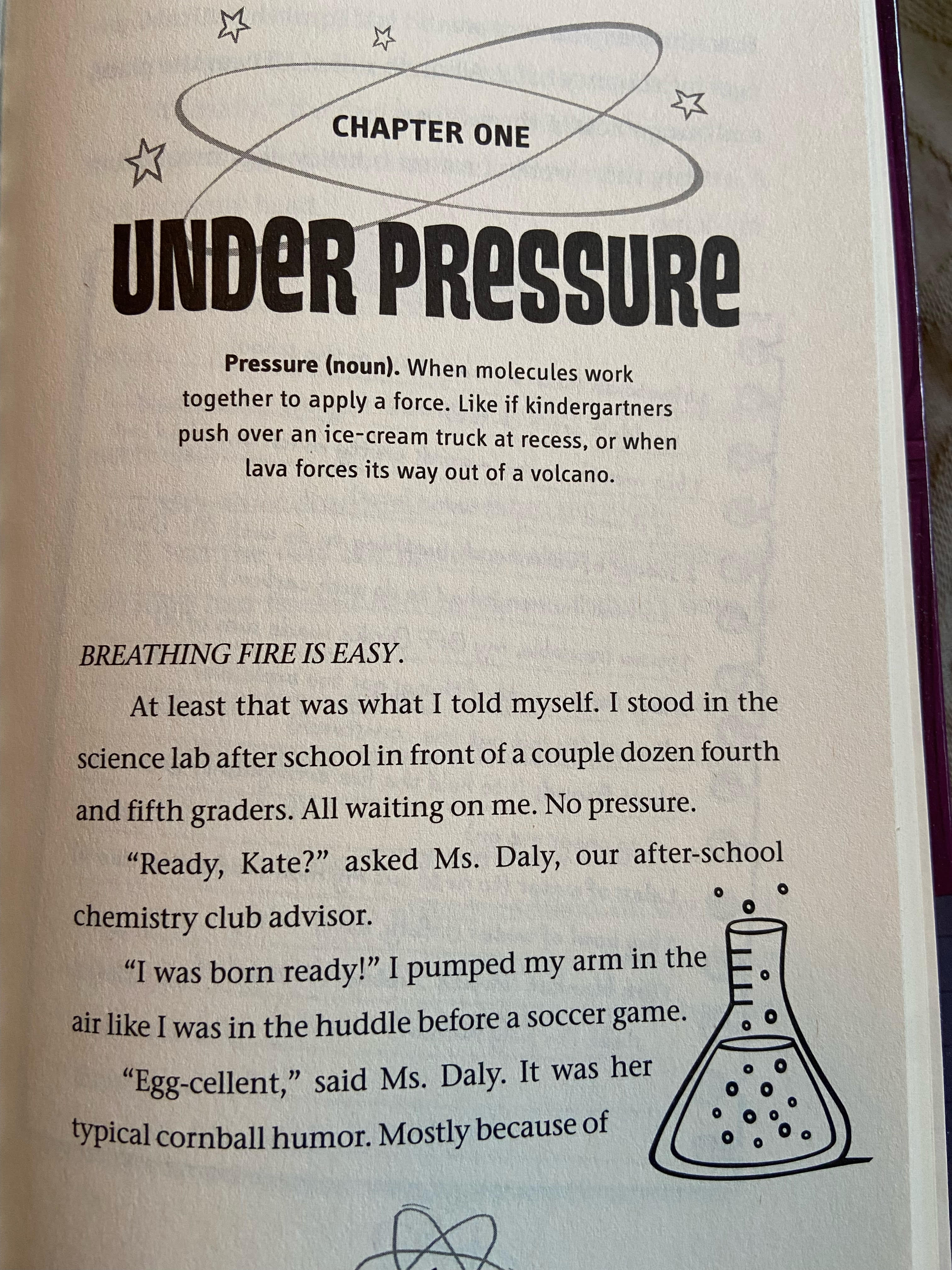
This isn’t something that you must reserve only for nonfiction. You can also use supplementary material in fiction as well. In the KATE THE CHEMIST middle grade series, Author Kate Biberdorf and I included a chemistry definition at the start of each chapter.
My final piece of advice is not to get mired in judgement at this point in the Storystorm process. Simply allow yourself to be delighted and have a royally good time!
 Hillary Homzie is the author of eighteen books, including the picture book, IF YOU WERE A PRINCESS: TRUE STORIES OF BRAVE LEADERS FROM AROUND THE WORLD and the ELLIE MAY as well as the ALIEN CLONES FROM OUTER SPACE chapter series, which was in development as an animated television show for ABC Australia. Her middle grade QUEEN OF LIKES was optioned by Priority Pictures and is a PJ Our Way selection. She teaches at Sonoma State University, the Summer Graduate Program in Children’s Writing, Literature and Illustration at Hollins University and for the Children’s Book Academy. Hillary especially loves coaching others to find their voice. The Los Angeles Times called her teaching: “very attentive and appreciative and encouraging.”
Visit Hillary online at HillaryHomzie.com and follower her on Twitter @HillaryHomzie and Instagram @hillary_homzie.
Hillary is happy to give away a free signed copy of her new book IF YOU WERE A PRINCESS: TRUE STORIES OF BRAVE LEADERS FROM AROUND THE WORLD, illustrated by Udayana (prize available to US).
She is also happy to give away a 30-minute Zoom critique of your picture book manuscript or the first five pages of your novel.
You’re eligible to win if you’re a registered Storystorm 2023 participant and you have commented only once on today’s blog post. ↓
Prizes will be distributed at the conclusion of Storystorm.
by Diana Murray
My 13-year-old daughter must be an imposter. That’s the only explanation for her neatness and love of cleaning. How could she possibly be my offspring?
I sure wish I had some of her tidying tendencies. But even though I’m very messy (GRIMELDA THE VERY MESSY WITCH is basically my autobiography), I do like to keep things in categories. Categories are important. Categories keep the chaos contained. My messy piles of papers are sorted by categories.
And my bookshelf is organized in categories like this:
- Humorous picture books
- Lyrical picture books
- Non-fiction picture books
- Early readers
- Chapter books
- Board books
- Novelty, game and joke books
- Signed books (can’t mix these treasures in with everything else!)
So you might imagine my horror, when my well-meaning, impressively talented and patient daughter began to rearrange my bookshelf…by color! *gasp*
Yes, it looked beautiful and Instagram-worthy. But I could not find anything! After all, I would never think to myself, Hmmm, I could really go for a “blue” book right about now.

Anyway, the point is, I like categories. One reason I like writing in rhyming metrical verse is that there is a lot of built-in structure. I find it comforting when compared to the cavernous open spaces of free verse and prose.
I sometimes feel the same way about inspiration. Although inspiration can come from many places, starting with something as simple as a title, at least for me, is a little less overwhelming than “sky’s the limit”. When I wrote SOMEDAY, MAYBE (illustrated by Jessica Gibson, Holt/Macmillan, March 2023), I began with the title. While stirring up ideas one day, I gave myself the task of coming up with a phrase that would begin a sentence. I imagined it would be a phrase that would repeat throughout the book. I mucked around with a list of different options and didn’t really love anything. But I kept coming back to that file anytime I was looking for inspiration for a new project. About a year or two later, something struck me about “Someday, maybe…”. I guess I just had to be in the right mood to be “feeling” it. I began to write “Someday, maybe cars will fly.” Finally, I liked the direction it was going in! I’ve always been a sci-fi fan so the rest of the manuscript sort of rolled out after that.
Back to categories. Have you ever noticed that there are different kinds of titles? I recently saw a fun post on Twitter called “Title Tryouts” (by Nancy Sanders, via @BrittanyPomales, via @jencowanwriter). I started thinking more about titles and decided to try to nail some down. You will notice that some of the categories overlap. Also, it’s important to remember that even though the title can be a starting point for inspiration, that doesn’t mean that you’re forcing it up. You just write down the title and then you see if it sparks something. The passion will come from a memory or an association. The title is just the jumping off point.
Remember how I mentioned the “novelty, jokes and games” section on my bookshelf? Well, sitting on that shelf is a small collection of Mad Libs. I used to love doing those as a kid and I continue to enjoy them. All you have to do is fill in the blanks, and voila! You can surprise yourself with your own unique story. The following exercise is a bit like a titles-only Mad Libs. For added inspiration, I’m also including examples of published books from me, Tara, and others.
Types of Titles
[fill in the blanks to make your own]
The Meta title:
a. The [_______] Book
b. This Book is [______]
Published Examples: I Thought This Was a Bear Book (by Tara); The Book of Rules; The Quiet Book; The Monster at the End of This Book; Don’t Push the Button; This Book Just Ate My Dog!; What Would You Do in a Book About You?; Snappsy the Alligator (Did Not Ask to Be in This Book)
The Negation Title:
a. Don’t [_____]!
b. Never [verb] a [noun]!
c. No More [plural noun]!
Published Examples: Nope!; No, David!; You Don’t Want a Unicorn; It’s Not Hansel and Gretel; If You Ever Want To Bring a Piano to the Beach, DON’T!; I Will Never Not Ever Eat a Tomato; I Don’t Want to Be a Frog!; I Dare You Not to Yawn; Hey, You’re Not Santa!; I Ain’t Gonna Paint No More!; No Nibbling!; Not a Box
The Celebratory Title:
a. “Hooray for [_____]!”
b. “[______] Party!”
c. “Let’s go [____]!”
Published Examples: Unicorn Day and Mermaid Day (by me); Rah, Rah, Radishes!; Hooray for Hat!; The Great Big Poop Party; Where’s the Party?; Go, Girls, Go!
The One Word Title (often with an exclamation point):
a. [plural noun]!
b. [action verb]!
c. [adjective]!
d. [quiet word]
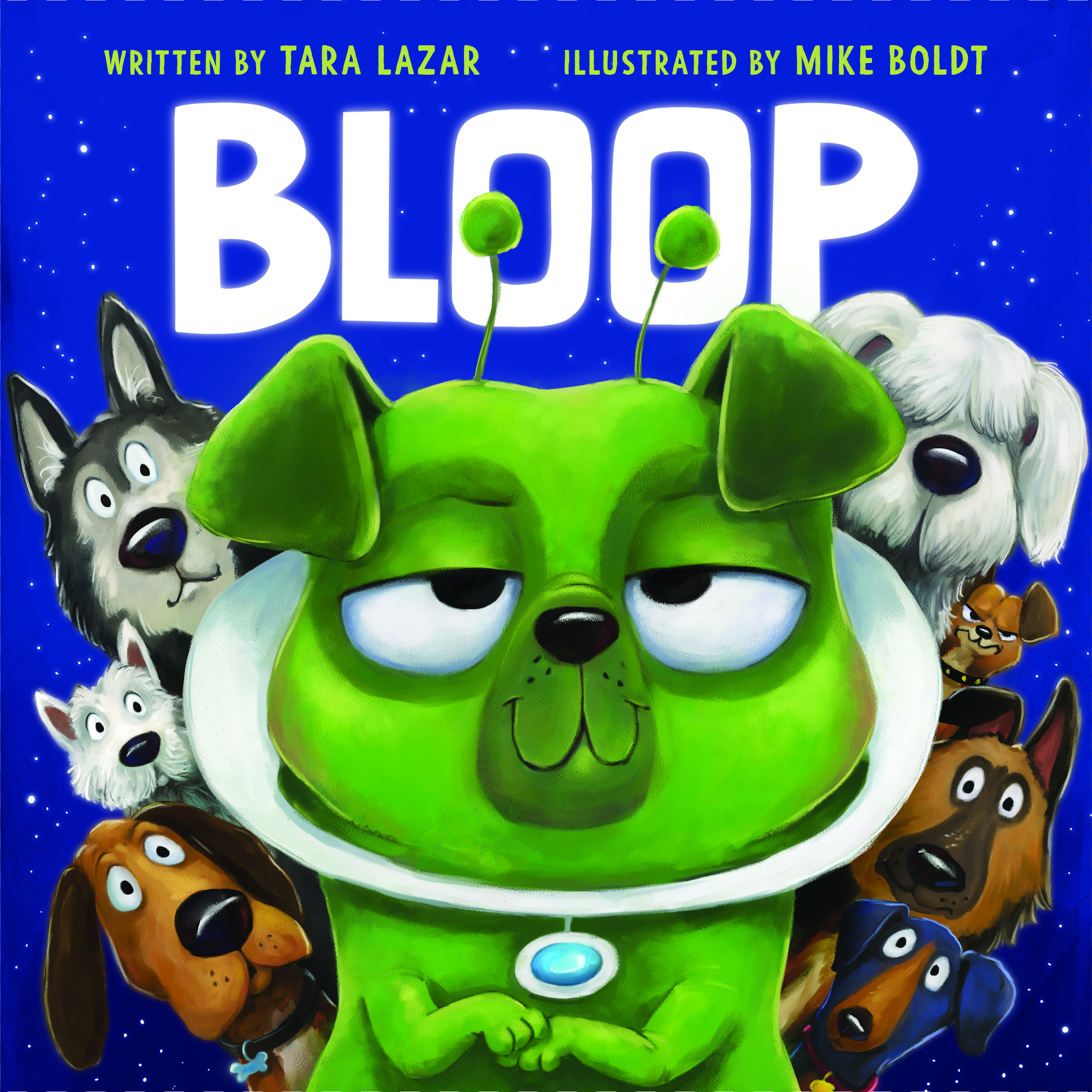
Published Examples: Bloop (by Tara); Nope!; Ducks!; Dude!; Square; Brave! Found; Stuck; Kaleidoscope
The Lyrical Musing Title (which often repeats throughout the book):
a. When You [verb]
b. Tomorrow is [____]
c. Once Upon a [____]
d. On a [adjective] Day
e. If I Had a [noun]
Published Examples: Someday, Maybe (by me); I Wish You More; This Could Be You!; Wherever You Go; The Wonderful Things You Will Be; On The Night You Were Born; Once Upon Another Time; My Love For You; Whatever Comes Tomorrow
The Question or Instruction Title
a. How to [verb] a [noun]
b. Where’s My [noun]?
c. Can You [verb] a [noun]?
d. Who Do You [verb]?
Published Examples: Help Mom Work From Home! (by me); What Do You Do With an Idea?; Field Guide to the Grumpasaurus; How to Catch a Unicorn; How to Meet a Mermaid; Where’s the Party? Where’s My Butt?; Where is My Balloon?; How to Babysit a Grandma
The Popular Song or Fairytale with a Twist Title
a. Twinkle, Twinkle, Little [noun]
b. Hush Little [noun]
c. Rock-a-bye [noun]
d. Old MacDonald had a [noun]
e. The Three Little [plural noun]
Published Examples: Little Red Gliding Hood (by Tara); Mary Had a Little Glam; Cock-a-doodle-OOPS!; There Was an Old Dragon Who Swallowed a Knight; Twinkle, Twinkle, Little Car; Moldylocks and the Three Scares; It’s Not the Three Little Pigs; The Three Ninja Pigs; Hush, Little Monster; It’s Raining Bats and Frogs
The Unexpected or Opposite Word Pairing Title
a. [adjective], [opposite adjective]!
b. I Love [unpleasant plural noun]!
Published Examples: Love Stinks! (by me); Yummy Yucky; Goodbye, Friend! Hello, Friend!; Duck, Duck, Moose; Z Is for Moose; P is for Pterodactyl; Digestion the Musical; Good Night Baddies; Creepy Carrots; Mushroom Rain; Bad Apple’s Perfect Day; The Obstinate Pen; The Crab Ballet; I Got a Chicken for my Birthday; Animals in Pants; Vegetables in Underwear; Goodnight, Veggies (by me)
The Rhyming Title
a. [noun] in a [noun]!
b. [adjective] [noun that rhymes]
Published Examples: Doris the Bookasaurus (by me); Don’t Be Silly Miss Millie!; Sheep in a Jeep; The Cat in the Hat; Fancy Nancy; Here’s What you Do When You Can’t Find Your Shoe; How To Train Your Pet Brain; Wordy Birdy; Green as a Bean
The Alliterative Title
a. [adjective] [noun beginning with same letter]
b. [any holiday][noun beginning with same letter]
Published Examples: Sleepy Snuggles (by me); Creepy Carrots; Horton Hears a Who; Bee-Bim Bop!; Penguin and Pinecone; Battle of the Butts; The Bold, Brave Bunny; Sam’s Super Seats; Jabari Jumps; Larry’s Latkes; Normal Norman (by Tara)
The Onomatopoeia Title
a. [sound], [sound], [sound]!
b. [sound]!
c. [sound]?
d. The [sound adjective] [noun]
Published Examples: Boo! Hiss!; Bump in the Night!; Click, Clack, Moo: Cows That Type; Eek, You Reek!; Splish, Splash, Splat!
The Silly, Nonsense or Made-up Word Title
a. [made up word]
b. [silly/unique proper name]
Published Examples: The Thingity-Jig; Hogwash!; Nerp!; Du Iz Tak? Best Frints in the Whole Universe; My Name is Wakawakaloch; The Red Ear Blows Its Nose
The Character Title
a. [character name] the [adjective] [noun]
b. [adjective][rhyming name]
Published Examples: Bloop (by Tara); Ned the Knitting Pirate (by me); Grimelda the Very Messy Witch (by me); Doris the Bookasaurus (by me); Lady Pancake and Sir French Toast; Tiny T-Rex and the Impossible Hug; Henny; Fancy Nancy; Crankenstein; Stellaluna; The Adventures of Beekle: The Unimaginary Friend; Oona; Warren and Dragon; A History of Underwear with Professor Chicken; Groggle’s Monster Valentine (by me)
The Counting or Quantifying Title
a. One [adjective] [noun]
b. Too Many [plural noun]!
c. Ten Little [plural noun]
d. Too [adjective]!
Published Examples: Double the Dinosaurs (by me); One Snowy Day (by me); Five Fuzzy Chicks (by me); Dozens of Doughnuts; Millions of Cats; Counting Kisses; One Hundred Shoes; One Big Pair of Underwear
The Clever Wordplay or Pun Title
a. [literally any pun]
Published Examples: 7 Ate 9 (by Tara); The Monstore (by Tara), Happy Llamakkah!: A Hanukkah Story; Wondering Around; Pirasaurs; Hey, Hey, Hay!; The Friend Ship; Nerdycorn; Not Yeti; Kung Pow Chicken; Un-BEE-lievables; Shampoodle; Mice Skating; Brainstorm!
This is far from an exhaustive list. And as I mentioned, there is A LOT of crossover between the groups. Why not a #6 (question) #8 (unexpected) and #9 (rhyming) combo, for example: “How Do You Hug a Bug?” Or perhaps you’re tempted to get in touch with your inner 8-year-old and fill in “butt” or “burp” for all the blanks. Well guess what? I didn’t add it here, but there could honestly be a whole category just for titles that feature butts, burps, poop, underwear and farts! So go right ahead.
Are there any other categories you would add? Have I missed any of your favorite books? I’m sure I’ve left out some of my own and I’ll be kicking myself later. But hopefully, filling in these blanks and perusing the other existing titles will give your inspiration a jolt! Have fun! And feel free to use this as an excuse to procrastinate on your cleaning chores. I know I will!
 Diana Murray is the author of over twenty books for children, including the bestselling UNICORN DAY series, an ILA/CBC Children’s Choice Book, a 2019 Goodreads Choice Finalist, and 2022 Amazon Best Book of the Year (UNICORN NIGHT board book edition). Some of her recent and forthcoming titles include LOVE STINKS! (Step-into-Reading/Random House), SOMEDAY, MAYBE (Holt/Macmillan), FIREHOUSE RAINBOW (Little Golden Books), and MERMAID DAY (Sourcebooks). She grew up in New York City and still lives nearby with her husband, two children, and a dancing dog. Visit her at DianaMurray.com and follow her on Twitter @DianaMWrites.
Diana is giving away a picture book critique.
You’re eligible to win if you’re a registered Storystorm 2023 participant and you have commented only once on today’s blog post. ↓
Prizes will be distributed at the conclusion of Storystorm.
Woo-hoo! The fab #JewishBoardBooks group is here to brainstorm some small but mighty ideas on Day 12 of Tara Lazar’s Storystorm Challenge!
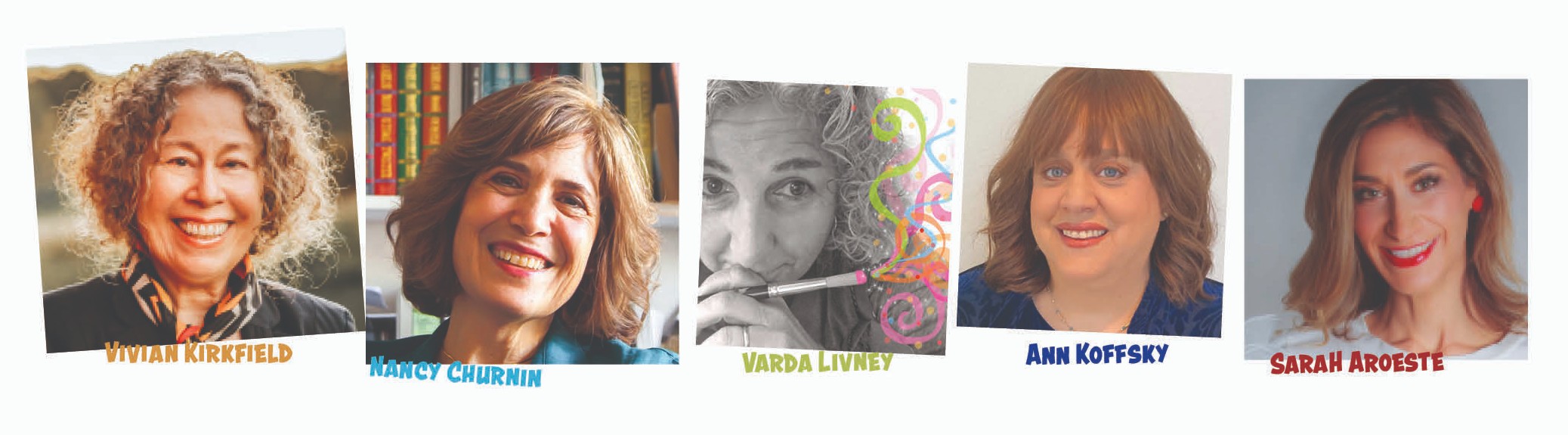
PIPPA’S PASSOVER PLATE by Vivian Kirkfield
Small but mighty—that’s a great way to describe board books. According to Webster’s Dictionary, a board book is a book for young children with pages made of heavy laminated paper or cardboard. But honestly, a board book is so much more than that. Studies show that the greatest amount of human learning takes place between ages 0-3 and that exposing children to books well before they are ready to read could have a huge impact on literacy.

Are you thinking of writing a board book? Most board books have very low word-counts and only a few images on each page—sometimes, just one.
Why then does PIPPA’S PASSOVER PLATE work as a board book even though it has over 300 words, plus multiple characters and many images on each page?
- The rollicking rhyme and repeating refrain create a fun read-aloud.
- The animals, like cat, mouse, fish and owl are familiar to very young children.
- The illustrations created by Jill Weber are joyful and vibrant.
- Each page provides opportunities to seek and find Pippa and her friends.
Most board books can be divided into three main categories:
- Concept Book: introduce ideas such as counting or ABCs.
- Picture Book: usually about one subject such as animals or trucks.
- Story Book: has a plot and several characters and often teaches a lesson.

PIPPA’S PASSOVER PLATE falls into the “story book” category, with a simple plot and a holiday layer woven throughout.
So, here’s your challenge, dear friends: Make a list of the holidays or other occasions you celebrated when you were a kid – and then create a board book manuscript! And if you keep it to 50 words or less, you can enter it my #50PreciousWords International Writing Contest in March. Who knows…it might become a real board book one day.
COUNTING ON SHABBAT by Nancy Churnin
Why did I write a board book? Because I wanted to thank and encourage little ones everywhere to realize the joy they bring with the simple gift of their presence.

COUNTING ON SHABBAT is inspired by seeing joy in my mother, a retired teacher, when little ones visit with kisses and chaos. Board books benefit from a simple structure. I built 10 spreads around counting from one to ten as we get ready for Shabbat, a weekly celebration where we light candles and prepare a feast to welcome a day of rest. My hope is that children who start by counting objects will sense that we are also counting on kindness as the arrival of a diverse family brings joy to an elderly man who might otherwise be alone.
In board books, it’s important to keep things simple. COUNTING ON SHABBAT clocks in at 48 words and features a gentle rhyme that helps kids anticipate what the ending word on each page might be. I included more illustration notes in this manuscript than I ever had because I knew that the book must be visually driven. Even so, it was a delight to see illustrator Petronela Dostalova take the concept and run with it in her own unique way.
I hope this book will give Jewish children pride in our weekly celebration of love and light, open a window to this happy holiday for non-Jewish children, and spark fresh ideas of how we can all build bridges of love among all ages, faiths, and communities.
SHEEP SAYS SHALOM by Ann D. Koffsky
Board Books are deceptively simple. As an author, they appear oh-so-achievable. 50 words? I can write 50 words, no problem!
But be wary, oh ye aspiring board book authors. Board books are, as I said, DECEPTIVELY simple. Every word has to be just so, and the concept has to be made of such sturdy stuff, that you can tell it with the fewest of words, and it will still connect to readers. For my book, Sheep Says Shalom, that concept was based on the three meanings of the word SHALOM: Hello, goodbye, and peace. So, I actually got extra meaning out of that one, singular word. ( It almost felt like cheating!)
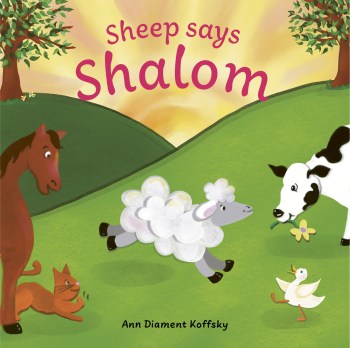
For me, coming up with that idea, that concept, is the most challenging part of writing any book, but especially for board books. And it’s at this part of the writing process that I most often can feel stuck.
I recently had the opportunity to spend time with Jewish legendary storyteller, Peninah Schram, along with my friend Chana Stiefel, and Chana asked Peninah: “How do you get past those moments, when you are stuck?” Peninah’s answer was also deceptively simple. She described how she has a practice of finding the time to daydream each day. She lies down in a comfortable space, puts on relaxing music, and lets her mind wander freely.
And you know what? I tried it and it works! So this is my challenge to Storystormers out there: try out Peninah’s Practice. Take 10 minutes and let you mind wander. And see what comes your way.
MAZAL BUENO by Sarah Aroeste
Board books have immense value besides simply being a baby’s first entry into the world of books. For many children—and their adults—board books can also serve as the first entry into unfamiliar cultures. It can be their very first glance into new worlds, customs, and languages.
As an activist promoting a minority culture, Sephardic Judaism, I believe board books are critical to creating understanding and empathy in families. I purposely chose this medium to convey simple, universal themes for wider audiences to learn about my culture.

MAZAL BUENO! celebrates the milestones in a child’s life—from first giggles, to first foods, first words and more. Every family can relate to these awe-filled moments! While it looks like Spanish, the refrain of mazal bueno (congratulations) is a combination of Hebrew and Spanish, also known as Ladino, which is the language of Sephardic Jews. Cheering with a mazal bueno to acknowledge wonderful occasions is a part of everyday life for Sephardic Jews, which is the point of the book. Mazal Bueno is about normalizing the Sephardic experience and exposing more families to the many ways Jews look, speak, and live!
I knew that I was writing a niche book, but I didn’t let it stop me. Providing windows into new cultures—at the earliest possible age—is vital to fostering caring kids and families. So my advice to all of you: don’t let fear get in your way. Write what you feel families need to read, keeping in mind the possibilities that a board book format offers. Even the most basic of concepts (a mazal bueno!) can open up minds and worlds.
CHALLAH! by Varda Livney
For me, writing a board book is trying to get a smile from (or get a simple idea across to) a little human who has no interest in complicated plot twists, wordy descriptions, or character development. Then it’s trying to relax as it dawns on me that that little human is probably at this moment chewing on the masterpiece that I sweated so much to create.
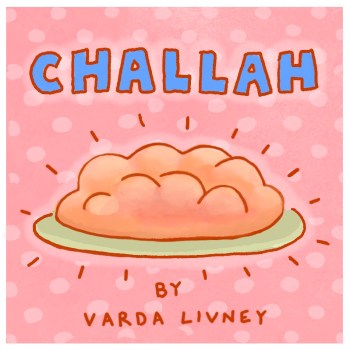
My board book, Challah! is coming out in October. I decided to make a book introducing Shabbat (Sabbath). I started by doodling wine, candles, a festive dinner table, challah, and a family of bunnies (of course). I drew a word bubble coming out of the baby bunny’s mouth, saying “Challah!” Turns out it was his first word, and, in the tradition of baby bunnies everywhere, this bunny did not stop saying “Challah!” all week long. Would he ever learn a second word? (Spoiler alert: yes.) Eventually all that doodling morphed into a book!
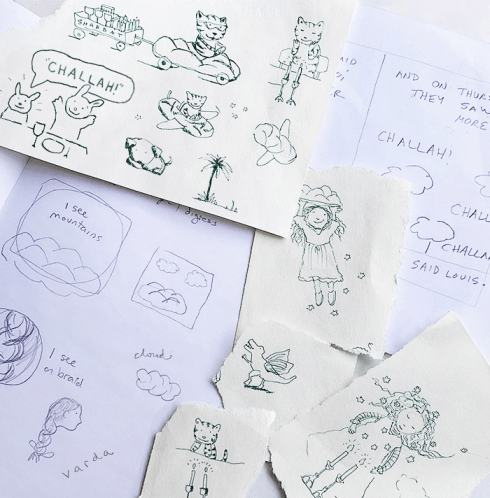
There are many ways to come up with ideas, but here’s what worked for me with CHALLAH!:
Big cup of coffee, quiet room, butt in chair, doodle, daydream, free-associate, write, trashcan, repeat.
BTW, this little blurb is longer than my book.
Writer for children—reader forever…that’s Vivian Kirkfield in five words. Her bucket list contains many more than five words, but she’s already checked off skydiving, walking along the ocean floor, and visiting critique buddies all around the world. When she isn’t looking for ways to fall from the sky or sink under the water, she can be found writing stories in the picturesque village of Bedford, NH. A retired kindergarten teacher with a masters in Early Childhood Education, Vivian inspires budding writers during classroom visits and shares insights with aspiring authors at conferences and on her blog, Picture Books Help Kids Soar, where she hosts the #50PreciousWords International Writing Contest and the #50PreciousWordsforKids Challenge. She is the author of many picture books that have garnered accolades such as Junior Library Guild Selection, Eureka Honor Award, Best Science STEM Book, and Social Studies Notable Trade Book. You can connect with her on her website VivianKirkfield.com, social media, or just about any place people with picture books are found.
Nancy Churnin is an award-winning children’s book author who writes about people that inspire children to be kind and make the world a better place. Her Dear Mr. Dickens won the 2021 National Jewish Book Award and 2022 Sydney Taylor Honor and is a Junior Library Guild Selection, a National Federation of Press Women 1stPlace winner and on the Bank Street College Best Children’s Books list. Nancy is that author of 10 picture book biographies and will welcome six more books, including her board book debut, Counting on Shabbat, in 2023. Additional honors include: Two Sydney Taylor Notables, Social Studies Notable Trade Books for Young People; the South Asia Book Award, Children and Teen’s Choice Book Awards finalists; starred reviews from School Library Journal, Kirkus Reviews and Publishers Weekly; and multiple state book lists. Nancy lives in North Texas. Her books come with free teacher guides, resources and projects on her website, NancyChurnin.com. Follow her on Twitter @nchurnin.
Determined to help preserve Sephardic culture, Sarah Aroeste draws upon her ancestral roots from N. Macedonia and Greece to present traditional and original Ladino (Judeo-Spanish) songs with her unique blend of Balkan sounds, pop, and jazz. Since 2001, Aroeste has performed and given musical talks across the globe and has recorded eight albums. She also pens Sephardic-themed books for children, including Buen Shabat, Shabbat Shalom (Kar-Ben 2020), the first PAL board book with Ladino words, and the upcoming Mazal Bueno (Kar-Ben 2023). Bringing Ladino books and music to young and old, Aroeste has garnered wide critical acclaim for her efforts to introduce Sephardic culture to new audiences. Visit her at SarahAroeste.com or on social media as @saraharoeste.
Ann D. Koffsky is the author and illustrator of more than forty books, including Under the Sea Seder, Visual Thinking (for Young Adults) with Temple Grandin, What’s In Tuli’s Box, and the Kayla & Kugel series. Several of her books have been PJ Library selections, and her book Noah’s Swimathon received a Sydney Taylor notable mention from the Association of Jewish Libraries. Sheep Says Shalom will be out August 1, 2023 from Green Bean Books. Find free coloring pages and see more about her work on her website Annkoffsky.com. You can find her on Twitter and Instagram as @JewishArtbyAnn.
Varda Livney lives (and doodles) on a kibbutz with her family and 1,000 other assorted people, dogs, cats, cows, and olive trees. Visit her at VardaArt.com and follow her on Instagram @vardaart.
**Most of these board books won’t be out until the fall, but if winners are patient, they will be sent as soon as they become available.***
- Vivian Kirkfield: PB Critique OR Copy of PIPPA’S PASSOVER PLATE
- Nancy Churnin: copy of COUNTING ON SHABBAT
- Sarah Aroeste: copy of MAZAL BUENO!
- Ann Koffsky: 15-minute Zoom Critique
- Varda Livney: Copy of CHALLAH!
You’re eligible to win if you’re a registered Storystorm 2023 participant and you have commented only once on today’s blog post. ↓
Prizes will be distributed at the conclusion of Storystorm.
by Lydia Lukidis
Greetings and salutations, fellow Storystormers! I’ve been following Tara’s blog for many years now so it’s an honor to be here today. Woot, woot!
No doubt, you’ve already been jotting down brilliant ideas and the Storystorm posts have been helping you unlock new brainstorming techniques. Today, my post will focus on nonfiction (though these strategies can also be applied to fiction) and HOW to develop your ideas.
We all have our strengths and weaknesses. For example, I’m an idea machine. I literally find everything fascinating and pretty much any topic can get my creative juices flowing. I’ve been keeping a document where I jot down all my ideas throughout the years.
So, what then? What do you do with all these ideas? I confess that my document is now over 100 pages long. Yikes.
Too. Many. Ideas.
My mind feels overwhelmed. Although I find a spark in every single one of these ideas, I also struggle with how to develop them. To ease this process and stop my over-active mind from going mad, I practice the art of discernment.
- Does the idea stand out?
- Does it have what it takes to form a narrative?
- Can an engaging hook be developed?
- Is there enough kid appeal?
Kid appeal is essential, especially with nonfiction. It’s possible to take complex scientific processes and break them down in a way that children can understand, but you have to find the right “in.” Take a look at these nonfiction mentor texts that do a great job at making STEM interesting and fun for young readers:
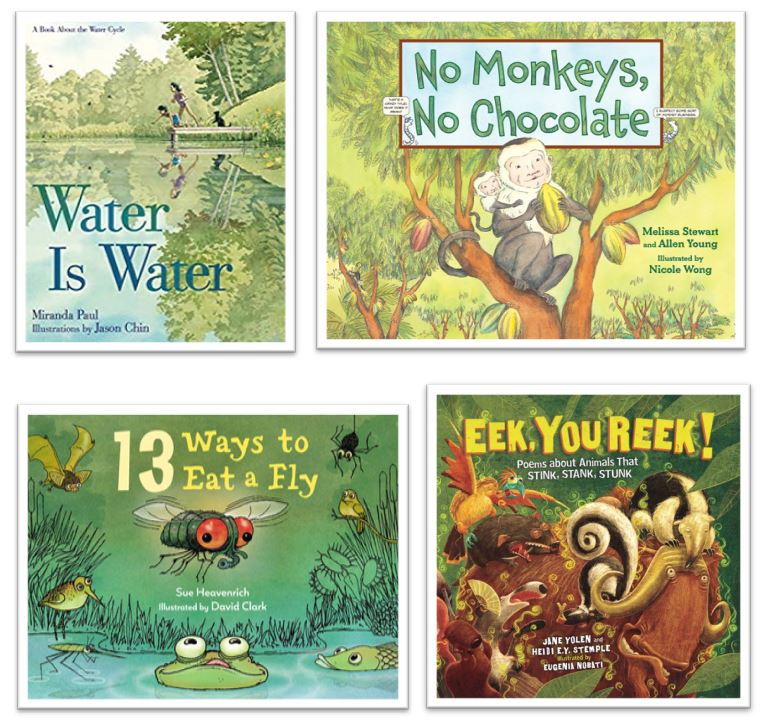
I admit that my stubborn mind sometimes chooses topics that I feel a deep passion for, but that don’t necessarily engage children. I forget to focus on what matters to a child. Or, I can’t seem to find the right way into the material. And yes, some ideas may ultimately not make the cut, and that’s okay.
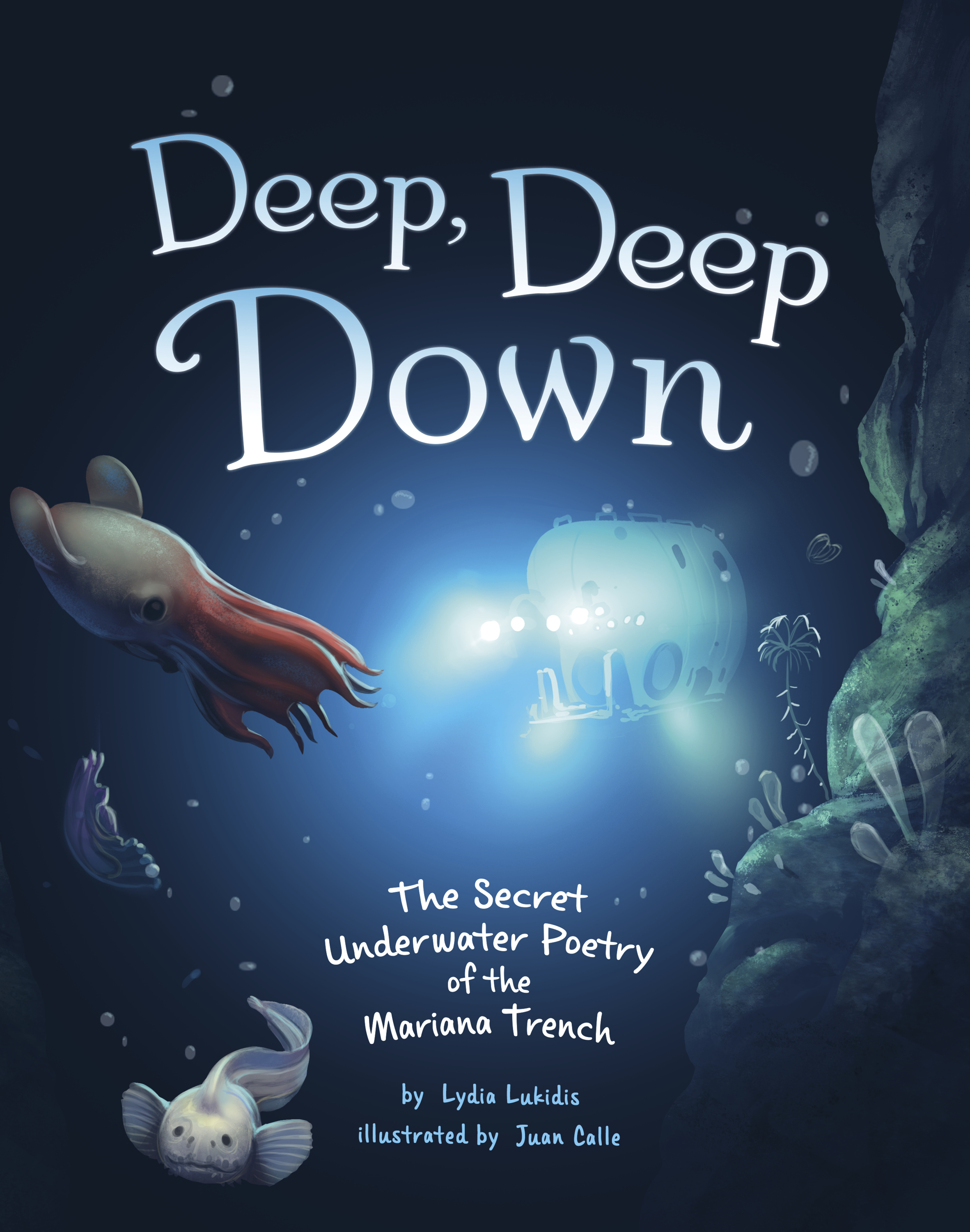
Another critical element is the hook. When I started writing my new book DEEP, DEEP DOWN: The Secret Underwater Poetry of the Mariana Trench, I had no hook. I just knew I wanted to write about the Mariana Trench so I metaphorically dove into the research. I wrote the first few drafts as a starting point, but they weren’t strong enough because there was no hook driving the narrative forward.
And then I had some enlightening conversations with two of my nonfiction mentors; Melissa Stewart and Kirsten W. Larson. They both passed on this GEM that I will share with you:
Interesting facts are not enough to sustain a nonfiction book!
Sure, children love fun facts but there has to be more. Especially when it comes to expository nonfiction, the text can’t read like a research paper or an encyclopedia just spewing out facts.
So…how does one craft a stellar hook? This is the only equation that worked for me so far:
HOOK = TIME + RESEARCH
I’ve never been able to find the hook right away. For some ideas, it took several months, and for others, several years. Don’t rush or force it, and respect the process. One day, it will reveal itself to you. And if it doesn’t, put it aside or let it go. Only a small portion of your ideas will blossom into published books. Let it be.
To help all you Storystormers out, I created this handy checklist you can download and use. Once you’ve jotted down all your ideas, you need to put them to the test. My checklist has six essential ingredients, and if your idea passes all of them, it has great potential!
This is what it looks like:
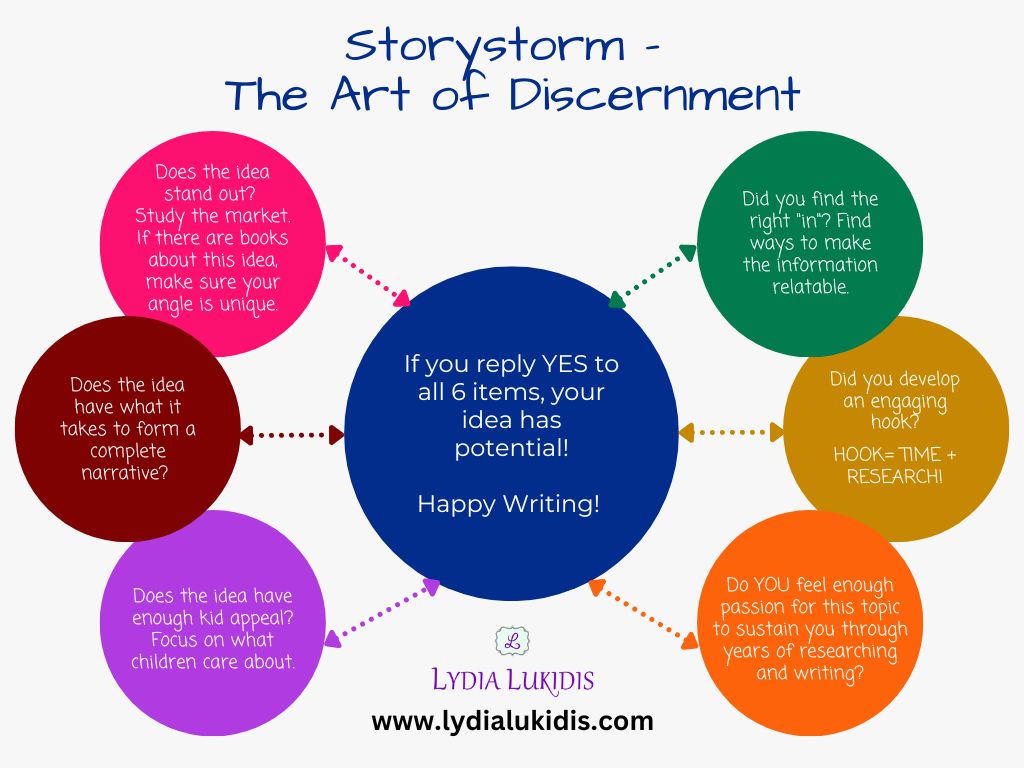
Click here to download the PDF.
I used this checklist for DEEP, DEEP, DOWN and it passed all 6 steps. A year later, Capstone acquired the manuscript. While there are no guarantees in this business, we can all agree that a stellar book begins with a stellar idea. I wish you all luck as you sift through your own ideas and mine the true gems!
 Lydia Lukidis is the author of 50+ trade and educational books for children. Her titles include DANCING THROUGH SPACE: Dr. Mae Jemison Soars to New Heights (Albert Whitman, 2024), DEEP, DEEP, DOWN: The Secret Underwater Poetry of the Mariana Trench (Capstone, 2023), THE BROKEN BEES’ NEST (Kane Press, 2019) which was nominated for a Cybils Award, and NO BEARS ALLOWED (Clear Fork Media, 2019). A science enthusiast from a young age, she now incorporates her studies in science and her everlasting curiosity into her books.
Lydia is an active member of SCBWI, CANSCAIP, 12 x 12, and The Authors Guild. She’s very involved in the kidlit community and also volunteers as a judge on Rate your Story. Another passion of hers is fostering love for children’s literacy through the writing workshops she regularly offers in elementary schools. Lydia is represented by literary agent Miranda Paul from the Erin Murphy Literary Agency.
Visit Lydia online at LydiaLukidis.com and follow her on Twitter @LydiaLukidis.
Lydia is happy to give away a free signed copy of her new book DEEP, DEEP DOWN: The Secret Underwater Poetry of the Mariana Trench, illustrated by Juan Calle (prize available to US & Canada).
You’re eligible to win if you’re a registered Storystorm 2023 participant and you have commented only once on today’s blog post. ↓
Prizes will be distributed at the conclusion of Storystorm.
by Justin Colón
Many of us look upon cartoons with a sense of childhood nostalgia, reminiscing upon the good ol’ days when we sat mesmerized in front of our television sets for hours while watching Sunday morning cartoons. I myself loved watching Nickelodeon’s “Hey Arnold!,” “The Wild Thornberrys”, “The Fairly Odd Parents” and “The Rugrats”; Disney’s “Gargoyles”; PBS’s “The Magic School Bus”; Cartoon Network’s “Dexter’s Laboratory”, and so many, many more that it hurts to leave them out. Yet, until recently, I had left cartoons behind. So why did I return to them?

Before Covid arrived, my acting career was gaining traction after nearly a decade of rigorous training, booking co-starring roles on television. But then the pandemic sidelined me. The idea of sitting at home watching television shows that I could no longer audition for stung. So, I leaned into something that didn’t sting . . . beekeeping. Seriously, I did. But the other thing I leaned into was cartoons.
In many ways, cartoons are like picture books. They’re often dismissed as being solely for children, and thus abandoned in adulthood, when in reality they can be enjoyed by all ages. They’re a highly-visual storytelling medium packed into a condensed format.
While the stakes may be high for the characters within them, cartoon shows are generally low stakes for viewers. These low stakes can help us unplug from reality and tap into our imagination, thus inspiring new ideas. In fact, sometimes I’ll watch an episode of a cartoon show and find that the tiniest moment or element within that show could be expanded into an entire picture book concept. The low stakes and high entertainment value combined with the color and music helps me slip into a childlike state that benefits my own storytelling as a writer. And it might do the same for you!
Watch a modern-day cartoon and you’ll likely find a substantial amount of heart, emotionally compelling stories and character arcs, and fresh takes on familiar concepts and layered themes with wonderful language (filled with fun repetition and sounds) that can inform your own craft. Interestingly, many cartoons often have a takeaway lesson, and yet it’s delivered in an entertaining, non-didactic way, very similar to effective picture books.
And for those of you interested in developing your humor skills, cartoons are excellent for this! Afterall, they’re exaggerated, eccentric, and over the top in comparison to reality, often making them ripe with humor. Keep a close eye on the pacing, structure, situations, and character relationships and interactions with each other and the world around them. You can take this exercise to the next level by observing cartoons intended for different age levels to see how the humor differs in approach and execution. How might you translate this into your own ideas, writing, and stories?
Go check out some picture books by Tara Lazar, Tammi Sauer, Josh Funk, Ryan T. Higgins, Adam Rex, and Julie Falatko, and others, and I bet you’ll find that they all share a cartoon-like quality (and I say that as high praise).
 When Tara Lazar mentored me, one of the first things she noted was that my stories had an ACME-like quality to them. This is evident in my books THE QUACKEN (Simon & Schuster) and IMPOSSIBLE POSSUMS (Disney-Hyperion), both written during my cartoon-filled pandemic lockdown and debuting fall of 2024. Here’s the pitch for the latter:
When a lonely possum with a flair for villainy attempts to create his very own henchman but ditches the instructions to his new possum-making machine, it leads to a series of mishaps as it pops out all the wrong creatures, each with a chaotic agenda of their own.
While writing it, I wasn’t yet watching cartoons, but I was thinking of this book playing out in a manner similar to the over-the-top mischief, mishaps, misunderstandings, and mayhem often found in cartoons. I knew I wanted to combine the over-the top voice of Plankton from Spongebob Squarepants with the loveable villainy of MINIONS. Thinking back to those “mentor texts” provided lots of new ideas to explore while drafting and revising. Something as simple as a character’s voice (the style of it, not necessarily the sound) or an image might inspire ideas for your own work.
Shortly after selling the manuscript, a fellow writer who wrote for the cartoon series Pinky and the Brain excitedly reached out to share that my story reminded him of the series (though it wasn’t a mentor text). Well, once the illustrator and humor extraordinaire James Rey Sanchez signed on, he mentioned that this book gave him Pinky and the Brain vibes, a show he watched as a kid. And, because it’s a sparse text manuscript with LOTS of action, our editor sent him all the art notes . . . all 16 of them! And the story is being brought to life with a style that matches the cartoon-like quality of it.
In short, cartoons are safe and comforting and can help us release tension while easing anxiety and depression and improving mental health. But they can also inspire new ideas and take our craft to new levels. Now go watch some cartoons!
But first, let me know in the comments below . . . What were/are some of your favorite cartoons?
 Justin Colón is a Latino author with several forthcoming picture books, including IMPOSSIBLE POSSUMS (Disney-Hyperion, 2024) and THE QUACKEN (Simon & Schuster, 2024). He is also the owner/director of The Kidlit Hive (kidlithive.com), a new program offering webinars, workshops, multi-week classes, and mentorships for picture book creators. In his other life, Justin is a professional, formally trained voice and on-camera actor and has co-starred in shows such as Unbreakable Kimmy Schmidt, Gotham, The First Wives Club, Sneaky Pete and Limitless. He is represented by Jennifer March Soloway of Andrea Brown Literary Agency. To learn more about Justin, you can visit JustinColonBooks.com and follow him on Twitter at @justinrcolon.
Justin is offering one lucky winner a webinar package consisting of passes to attend three webinars, free of charge, via The Kidlit Hive, as well as a 30-minute AMA session to discuss querying, submission, ideas, etc.
You’re eligible to win if you’re a registered Storystorm 2023 participant and you have commented only once on today’s blog post. ↓
Prizes will be distributed at the conclusion of Storystorm.
by Natalie Rompella
I adore Storystorm month. I have participated for seven years and have over 550 ideas written down. I’m always surprised which Storystorm posts end up sparking the best ideas for me. I am excited to share my own suggestion with you.
Consider brainstorming ideas for stories that deal with social, mental, or physical issues (often referred to as issue or tough-topic books). For examples of tough topics, here is a list from the Association for Library Service to Children.
My first issue picture book, MALIK’S NUMBER THOUGHTS: A STORY ABOUT OCD, came out with Albert Whitman & Co. in September 2022 (illustrated by Alessia Girasole).

 The topic of obsessive-compulsive disorder (OCD) is close to my heart as I have personally dealt with it since seventh grade. In 2009, I wrote a nonfiction book for teens on OCD. I then used my personal experience and the extensive research I had already done to write a novel with a main character who had OCD titled COOKIE CUTTERS & SLED RUNNERS (Sky Pony Press). I was able to really dig into the emotions the character felt, the treatment, and the protagonist’s path to improving her OCD episodes. As well, I got to add in high-interest topics: baking and sled-dog racing.
But recently I wanted to write a book on OCD for younger children. Writing a picture book on this subject matter was a different ball game:
- My storyline needed to be tighter.
- The wording/medical jargon had to be age-appropriate.
- The scope of what was discussed about the disorder had to be smaller.
- I wanted it to have a fun element that appealed to four- to seven-year olds.
- The story had to show different things happening on each page for engaging illustrations.
I knew from writing my novel that it is difficult to show a character with an undiagnosed problem see a professional, receive a diagnosis, begin treatment, and get to a point that they are temporarily symptom-free/improving. I hadn’t even attempted all of these stages in my novel, and I didn’t feel it would be possible in a picture book. (Note: I was not writing a nonfiction book about OCD where the scope of the disorder was the focus). Instead, I needed to begin the picture book with the character already receiving treatment.
My next thought was how might this disorder interfere with an early-elementary-aged child’s life? Although their schooling may be affected, what other aspects of their life would offer engaging illustrations and be something kids like to do?
I referred to Tara Lazar’s wonderful list of “500 Things That Kids Like.” My thoughts went right to something I loved as a child as do my own children: mini golf.
This topic worked well for my story because the character, Malik, feels the compulsion to do things in sets of four. In mini golf, you want as many hole-in-one scores as you can get. But would his “Number Thoughts” get in the way? And to amp up the tension, I created a friend who is having a party at a mini-golf course, which Malik really wants to attend.
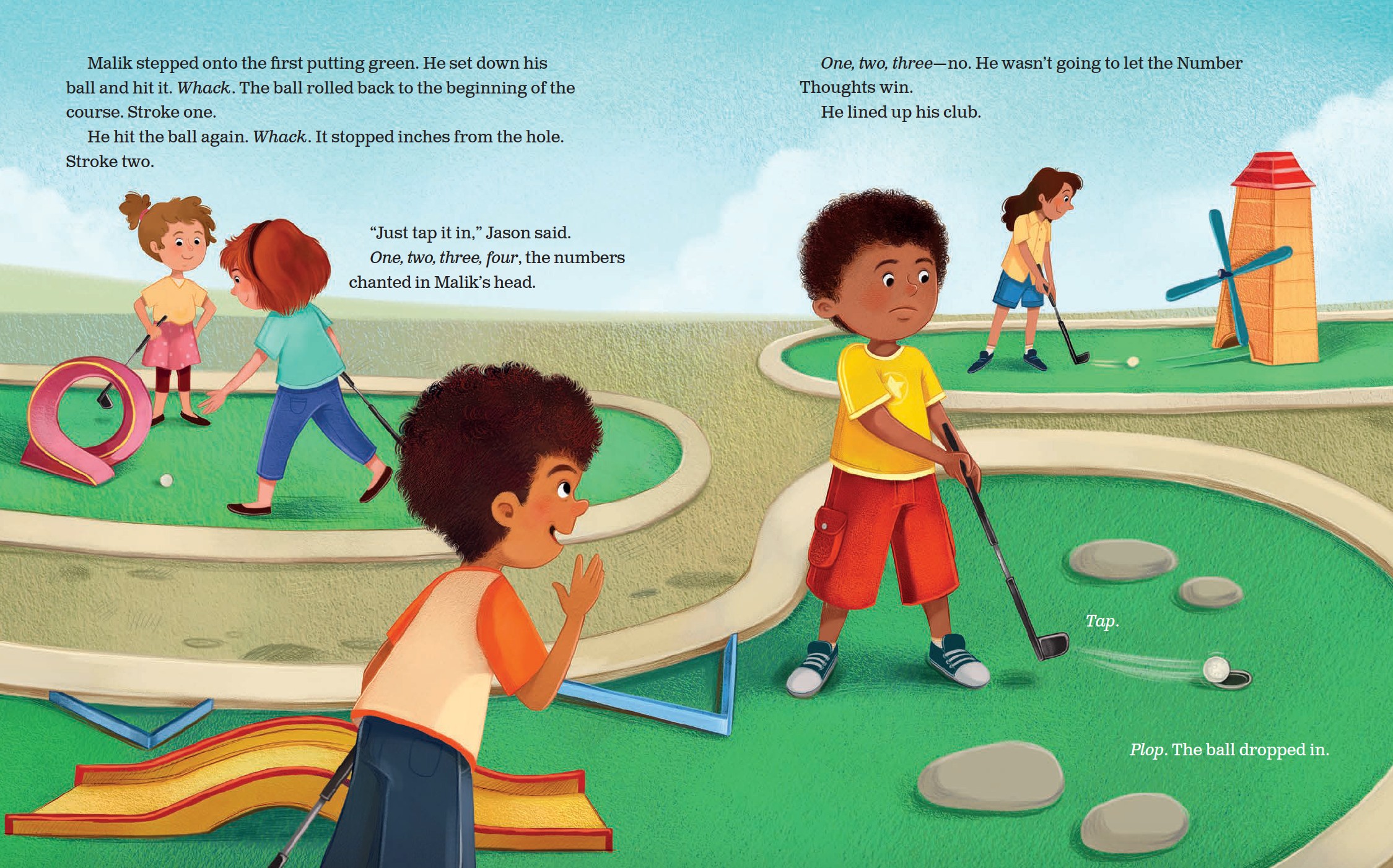
Here are a few tips I learned from writing my issue picture book:
- Brainstorm issue topics that you have encountered in your life: maybe you have personally experienced it, one of your family member or close friend has, or you have dealt with it as a teacher.
- Consider the timeline. Will you focus on a character discovering the issue? Going through treatment? Living with a change? Living with a disorder? Don’t try to do too much. Check out other issue books and study their timeline (it doesn’t have to be the same issue as the book you’re writing about).
- Think about the tone of the book. Play with it. What is your objective for the book? Is your goal to help a child feel less alone? To make the topic less scary? Is there a way to lighten the tone?
- Can you add an engaging setting or activity as part of the storyline? See Tara’s list above.
- Think about ways the issue impacts a child’s life. What are some different aspects that are affected? You may want to address only one. (For instance, I focus on how Malik’s OCD would affect playing mini golf.)
- Avoid overloading the story with facts and information. You can add them in the backmatter.
- Research publishers of issue books. Note the tone of these books and whether it matches the tone you’re using. (When I find a book with a style or topic similar to what I’m writing, I flip to the title or copyright page to find the publisher. The year is also important as approaches change with the times.)
I hope this gives you some ideas for writing a book that shows a character dealing with an issue or tough topic. I have had the pleasure of presenting to a camp for children with OCD. It was very rewarding to hear their reactions to a book that addressed an issue they faced. Hopefully, you can find a topic that you have a strong connection to and create an engaging and helpful picture book for children.
 Natalie Rompella is the author of more than sixty books and other resources for children, including MALIK’S NUMBER THOUGHTS: A STORY ABOUT OCD, a picture book addressing obsessive number thoughts and COOKIE CUTTERS & SLED RUNNERS, a middle grade novel about OCD. She is a former elementary school and middle school teacher. Natalie lives with her two kids, husband, and dog in the Chicago suburbs, where she enjoys playing pickleball, baking, and hanging out with her family. Find out more at NatalieRompella.com or follow her on Twitter @NatalieRompella.
Natalie is giving away a copy of MALIK’S NUMBER THOUGHTS: A STORY ABOUT OCD.
You’re eligible to win if you’re a registered Storystorm 2023 participant and you have commented only once on today’s blog post. ↓
Prizes will be distributed at the conclusion of Storystorm.
by Kathleen Doherty
Happy Eighth Day of Storystorm!
One of my favorite topics is INTERTEXTUALITY—a literary theory that whatever you create, is influenced by something you’ve heard, seen, or read before.
In other words, intertextuality is borrowing ideas from another piece of literature and using them to shape a new text. It’s not lifting another person’s work word-for-word. As you know, that’s called plagiarism.
Mark Twain said, “There is no such thing as a new idea. It is impossible. We simply take a lot of old ideas and put them into a sort of mental kaleidoscope. We give them a turn and they make new and curious combinations. We keep on turning and making new combinations indefinitely; but they are the same old pieces of colored glass that have been in use through all the ages.”
Some examples of intertextuality:
- The main plotline of Disney’s The Lion King is borrowed from Shakespeare’s Hamlet.
- Taylor Swift’s “Love Story” borrows from Romeo and Juliet.
- Tara Lazar borrows from Mother Goose and other fairy tales in her picture book, LITTLE RED GLIDING HOOD.

So how can you apply intertextuality to your writing? Well, I’m suggesting you look at your favorite pieces of children’s literature and think of the plots, themes, concepts, and ideas that resonate with you. How many of those can you rework to make them your own?
CHANGE THE SETTING AND SEASON
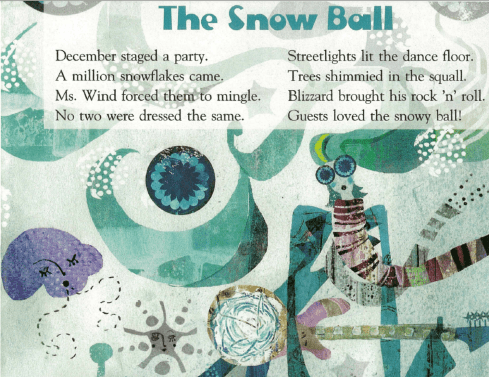
In 2012, I was impressed by George Cooper’s use of personification in his poem “October Party.” Cooper used characters like Miss Weather, Professor Wind, and Misses Maple. I borrowed the idea of personifying a month. I kept the idea of a party, but changed the season and activities. I kept the same rhythm and beat and wrote the following poem which was published in “Spider Magazine”:
REWORK A TV SHOW OR MOVIE
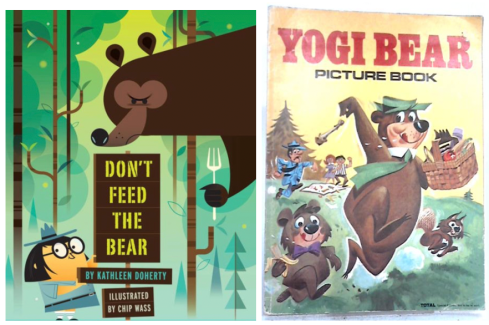
I used intertextuality in my three picture books. DON’T FEED THE BEAR is based on Yogi Bear always getting into trouble with Ranger Smith. (Yeah, I’m that old. I watched Yogi Bear.)
REWORK A PROBLEM, SOLUTION, AND ENDING
In my picture book, THE THINGITY-JIG, I reworked the story line from THE LITTLE RED HEN. In my book, none of Bear’s friends want to help him bring a couch back to the forest that he finds in people town. Bear figures out a way all by himself. But Bear lets his friends jump on the couch when he finally gets it home. My ending is a bit kinder than the one in THE LITTLE RED HEN.

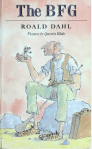 In THE THINGITY-JIG, I also borrowed the idea of making up words. I used to read THE BFG by Roahl Dahl to my fourth grade students. In his book, Dahl made up words like trogglehumper, snozzcumber and bellypopper. In my book, I made up rolly-rumpity, lifty-uppity, and pushy-poppity.
My forthcoming picture book, THE TWIST-A-ROO borrows from THE GRASSHOPPER AND THE ANT. In Aesop’s story, the grasshopper is so busy playing a fiddle, he doesn’t store up food for winter and goes hungry. In my book, Badger is so mesmerized by a kaleidoscope, he doesn’t prepare for winter. But my ending is not as harsh as Aesop’s.
FLIP-FLOP A STORY
In THE WOLF WHO CRIED BOY by Bob Hartman, Little Wolf is tired of his mom’s cooking. It’s the same old thing night after night, Lamburgers and Sloppy Does. How he wishes his mother would serve up a nice platter of his favorite dish—Boy! He dreams of boys-n-berry pie and a steaming plate of boy chops.
But Boy is hard to come by. As Little Wolf trudges home from school one day, he decides to postpone his boring dinner by shouting “Boy! Boy!” But when a real boy finally comes along, do his parents believe him? Of course not. Little Wolf learns the same lesson the boy who cried “Wolf!” did so many years ago.

 Kathleen Doherty is a former Educational Specialist/Reading Specialist. Her first picture book—DON’T FEED THE BEAR—is featured on Kirkus Reviews’ recommended list and is in its sixth printing. Her second picture book—THE THINGITY-JIG—received a starred review from Kirkus Reviews and is being published in nine languages. Her third picture book—THE TWIST-A-ROO—is forthcoming in November 2023. Her work has appeared in TIME Magazine, The Mailbox, Highlights for Children, Highlights High Five, Highlights HELLO, and Spider Magazine. She’s won the Highlights Pewter Plate Award, the Highlights Celebrate National Poetry Contest, and a Letter of Merit in poetry from the SCBWI Magazine Merit Awards.
You can learn more about Kathleen and her work at KathleenDohertyAuthor.com and follow her on Twitter @Doherty60 and Instagram @kathleendohertyauthor.
Kathleen is giving away a picture book critique, fiction, up to 650 words.
You’re eligible to win if you’re a registered Storystorm 2023 participant and you have commented only once on today’s blog post. ↓
Prizes will be distributed at the conclusion of Storystorm.
by Laura Zarrin
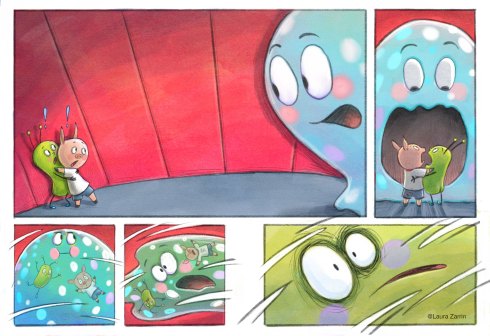
When I started participating in Storystorm in 2012, I was completely convinced that I was not a writer. I was an illustrator and storytelling was not in my wheelhouse. Color me surprised when I managed to come up with 30 ideas that year and every year since. Where had they come from?
Deciding that maybe I was a writer after all, I started writing. Just a bit here and there. I went on to write a few stories that went out on submission. One that made it to an acquisition meeting, but no sales so far. That’s OK. (It’s not really OK, it’s annoying, TBH, but I digress.) I wish I could say that I look forward to sitting down with a pad and pencil and some tea to happily write, but that would be a bald-faced lie! I have to be dragged kicking and screaming into it. Just ask my critique group. Currently looking for a better ritual, ahem.
When I started writing, I noticed that my art began telling more of a story than it had previously! What a wonderful surprise! A critique partner recently told me that my illustration ideas should come with a Powerpoint presentation to get through all the story I’m packing into my descriptions.

I have found that the only way I can get a story out of my head is to take a blank piece of very non-precious copy paper, start playing the story out in my mind like I’m watching a movie, and draw it out in scribbles. It’s been surprisingly helpful to do it this way. Words almost always come last for me. My drawings are doing all the heavy lifting. I seem to draw everything out like it’s a graphic novel without any boxes or lines. Any type of formatting or layout stops me in my tracks. I completely freeze up. Even though I don’t really read graphic novels (except for the early reader ones), and that I swore I would never make one, it turns out that that format is very conducive to my way of working. Even my picture book dummies have a bit of comic formatting. (Sadly, I still can’t binge while doing this.)

Next I cut up the scribbles and arrange them in order, adding or subtracting where needed. As I work on the story, I refine the sketches and start to add words and formatting. After a lot of trial and error, I have a completed dummy.

I’m becoming more and more of a storyteller every year and I owe it all to Storystorm and a very patient critique group who listens to my whining. I am currently working on three early reader graphic novels that started as Storystorm ideas!
 Laura Zarrin is the illustrator of the WALLACE AND GRACE series by Heather Alexander and the KATIE WOO’S NEIGHBORHOOD series by Fran Manushkin.She’s now writing her own sweetly subversive stories. Laura has illustrated over 30 books for children including board books, picture books, and chapter books. She’s happiest illustrating characters with subtle and not-so-subtle humor.
Visiit her at LauraZarrin.com, follow on Twitter and Instagram @LauraZarrin. You can find her art in her Etsy shop here.
Laura is giving away a hardcover copy of WALLACE AND GRACE TAKE THE CASE by Heather Alexander, Bloomsbury.
You’re eligible to win if you’re a registered Storystorm 2023 participant and you have commented only once on today’s blog post. ↓
Prizes will be distributed at the conclusion of Storystorm.





 Writing for Kids (While Raising Them)