You are currently browsing the category archive for the ‘STORYSTORM 2019’ category.
by Zachariah OHora (from 2013)
Writing is hard work. Coming up with good characters can be even harder. The market for picture books (at least this moment) is all about character-driven stories.
When I’m trying to come up with a fresh book idea and there isn’t one to steal from my kids, I start with a character.
I’ve developed a method that is very simple. Even if you don’t draw you can fake it.
It’s called “Pump Your Character” ™.
In a nutshell it works like this…
(Tara’s note: click each image to see it in its full-sized glory!)
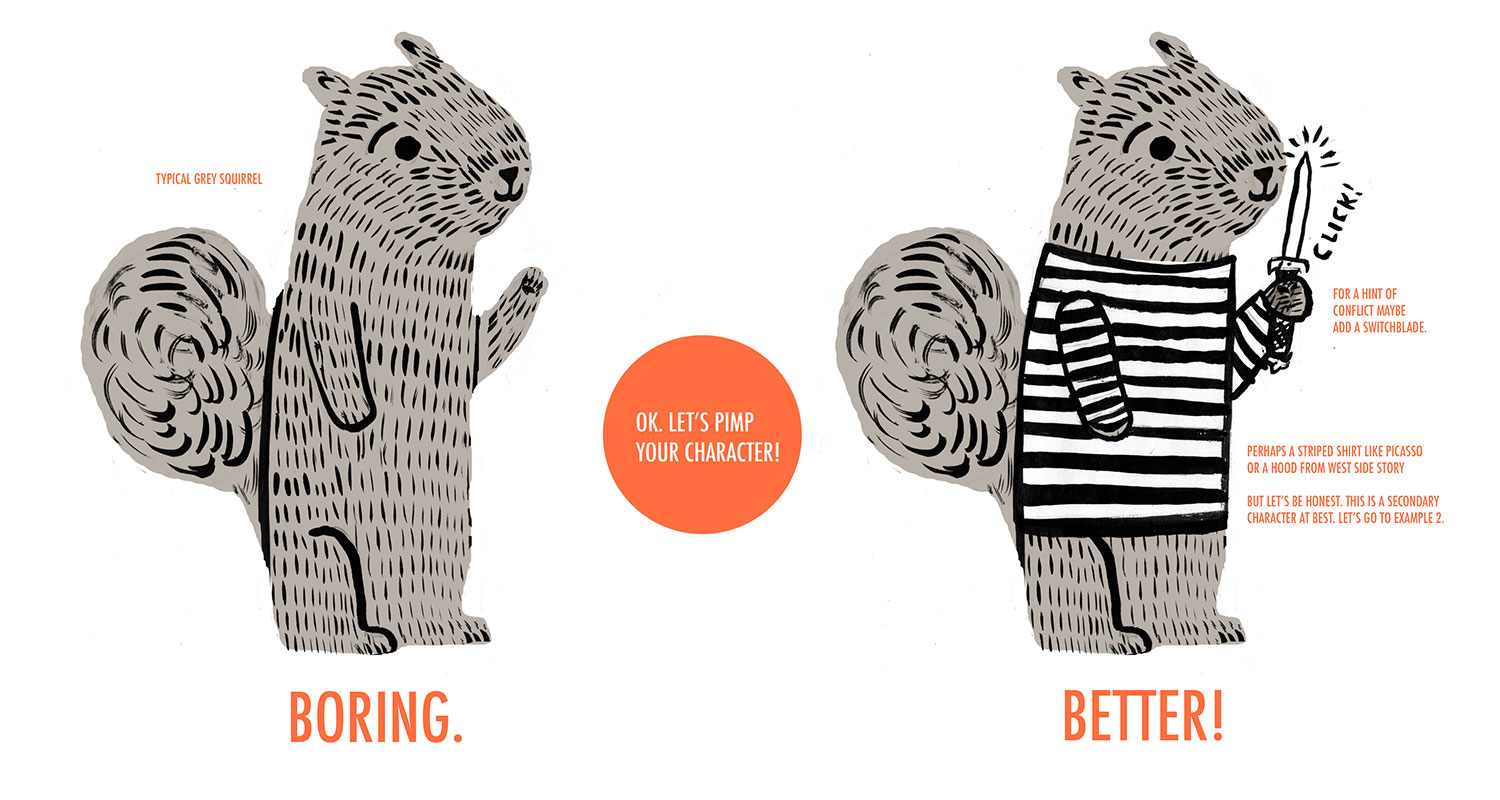
Good! You are on your way. If you are feeling confident about this simple version, move on to the advanced version.


Say you are having trouble picking an animal. Maybe you hate animals? If so, try writing dystopian YA.
If you love animals but just can’t decide go to CuteOverload.com or even better FYeahCuteAnimalss.tumblr.com.
Pick an animal and refer to the charts above to “Pump Your Character” ™.
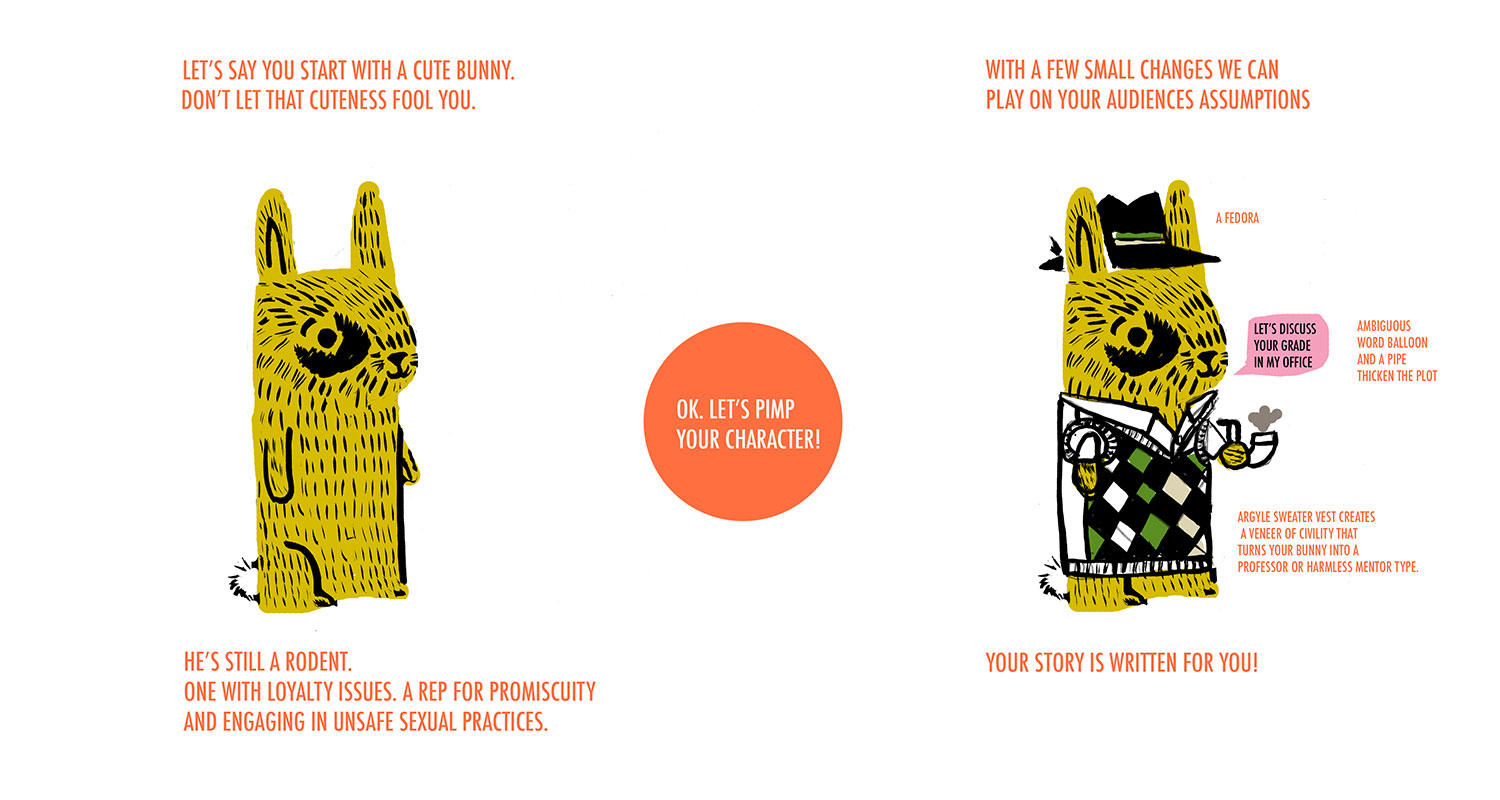
If done right your character will write or reveal it’s own story. All you have to do is be open to hearing it. Don’t be afraid to use peoples own prejudices and expectations.
You might be surprised. Here’s an example.
Sometimes I get lucky. Real life provides me with a story and character idea and they almost write themselves. NO FITS NILSON! was one of those.

Good luck Pumping Your Character!

 Zachariah OHora is the illustrator of the New York Times best seller Wolfie the Bunny. His debut as an author, Stop Snoring Bernard! won the 2011 Society of Illustrators Founders Award and was the 2012 State of PA Dept of Ed One book. His follow up, No Fits Nilson! was named the Huffington Post Best Children’s Book of 2013, a Kirkus Best Picture Book of 2013, a New York Public Library Book for Reading and Sharing and was given the PALA Carolyn W. Field Award. His book My Cousin Momo! was named by the Boston Globe a Best Picture Book of 2015 and was a Junior Library Guild Selection. His latest book The Not So Quiet Library hits shelves July 19th. He lives and works in Narberth, PA with his wife, two sons and two cats. Visit him at zohora.com.

At the conclusion of Storystorm, prize packs will be given away (books, swag, writing tools). Comment once on this blog post to enter into the prize pack drawing.
You’re eligible to win if you’re a registered Storystorm participant and you have commented once below.
Good luck!
If inspiration is all around us, why does it sometimes feel as if our muse is on vacation—basking in the sun and living the good life while we’re struggling to settle into our creative groove?
Without our muse to guide the way, we are destined to be adrift in a sea of uncertainty headed towards a creative abyss, right? Wrong!
I want to let you in on a little secret. Are you ready for it? Here it is: You don’t need a muse!
There won’t be an “aha moment” around every corner. There may not be an aura surrounding your next big idea. If you want access to a constant source of inspiration, look no further than yourself. All you need is your inspiration tool box.

My inspiration tool box helps me to generate ideas at any stage of the writing process. What’s great about it is that it only consists of three things: eyesight, insight, and hindsight.
- Eyesight
Take a look around. Your home, job, and favorite hangout spots are waiting to be mined for story ideas. Get your axe and get picking! - Insight
Take a long, hard look at something—anything. Take a closer look at it then you normally would. Involve your senses. Take note of how it looks, smells, feels, tastes, sounds. There’s more depth involved in insight than eyesight. Consider your emotional response to what you’re observing. Experience the object of your focus. - Hindsight
You can’t change the past, but you can sure draw some inspiration from it. What made your heart skip a beat when you were younger? What is the most cherished memory of your recent past? Who or what have been most important to you and why? Think about some of your first experiences and the way they made you feel.
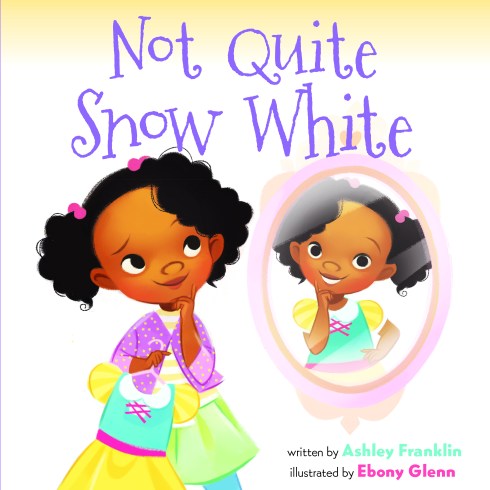
You can use all three tools at once, or you can pick and choose. For my picture book debut, NOT QUITE SNOW WHITE, I used a combination of the three to come up with the idea. Here’s how I used my inspiration tool box:
Eyesight:
Q: What do I see a lot of?
A: Princesses. They’re everywhere and on everything.
Insight:
Q: What’s common about the princesses?
A: Most of them are White. There’s not much variation. They’re all “perfect” according to today’s standards.
Q: What’s missing?
A: Princesses with quirks. Princesses who look like me.
Hindsight:
Q: What made me happy as a kid?
A: Barbies. Mom made a point to buy me POC Barbies. I had tons.
Q: How do I feel about that?
A: Back then, the dolls made me happy. They were my favorite. Now, I realize they helped me feel seen (which was especially important because I attended predominantly White schools).
As you can see, I always begin with questions. Personally, I find that beginning with questions helps me to focus my ideas.
Armed with the thoughts gifted to me by my tool box, I decided that I wanted to write an African-American princess story. Many wretched and promising drafts later (thanks, revision!), I came up with Tameika’s story.
I’m happy to introduce to you, my Storystorm family, the cover of NOT QUITE SNOW WHITE:
:
 Ashley Franklin is an African-American writer, mother, and adjunct college professor. Ashley received her M.A. from the University of Delaware in English Literature, where she reaffirmed her love of writing but realized she had NO IDEA what she wanted to do about it.
Ashley currently resides in Arkansas with her family. Her debut picture book, NOT QUITE SNOW WHITE, will be published July 9, 2019 by HarperCollins. The idea for the book originated from a former Storystorm (then PiBoIdMo) challenge. For more information on Ashley, you can visit her website: ashleyfranklinwrites.com.
Social media savvy? You can find Ashley on one of these platforms: Twitter @differentashley, Instagram: @ashleyfranklinwrites and Facebook.
Ashley is giving away two prizes to two winners. First, a signed copy of NOT QUITE SNOW WHITE when it releases. Second, a non-rhyming picture book critique.
Simply leave ONE COMMENT below to enter.
You’re eligible to win if you’re a registered Storystorm participant and you have commented once below. Prizes will be given away at the conclusion of the event.
Good luck!
by Tara Lazar (from 2014)
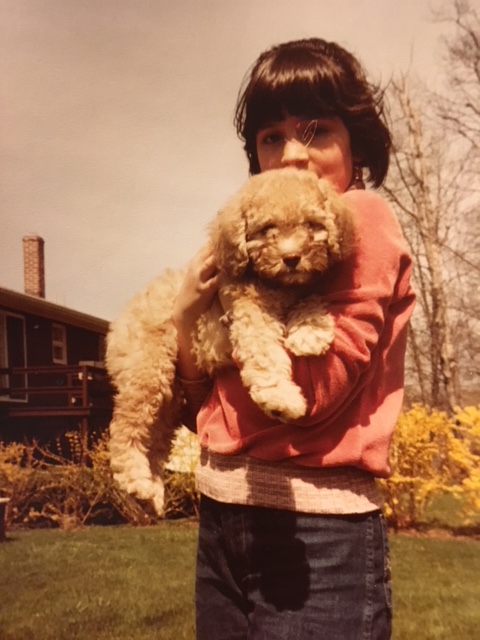
Me and Bo, a perfect 10 of a dog, circa 1980.
When I was growing up, there was an entire section of my home that was roped off. Like a nightclub, a velvet rope draped across the threshold to the living and dining area, off limits to my grubby little hands. A plush sectional beside the picture window always beckoned me, and I’d sneak there to read a book. Many times I’d crawl into the dining room and sit criss-cross-applesauce under the table, where no one could find me, and where I could get a glimpse of our house the way I rarely saw it. It was wondrous, under the table and dreaming (sorry for the borrow, Dave Matthews). I could pretend I was somewhere else because the perspective I had, under that glass and chrome 70’s behemoth, was unique, unusual. I was at home, but also somewhere else.
So now, every once in a while, I sit underneath my own dining room table. To me, it’s the perfect kid’s perspective. I see the world as a child might, peering only at legs and loafers. You know how you never see an adult’s face in Charlie Brown? How they’re just an unintelligible trumpet waah-wahhh-wah-waaaa? That’s the childlike mystique I’m seeking when I sit beneath the table. I see the world a little differently, but yet it’s still familiar, as it is my own home.
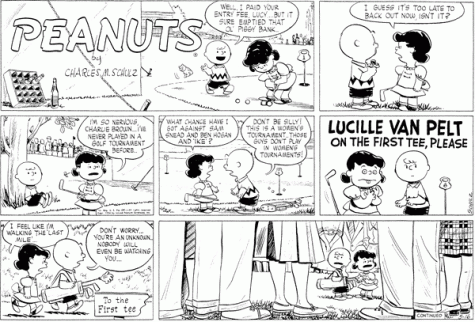
This is an early Peanuts strip. Schulz later said that showing adults, even just their legs, was a mistake.
Go ahead, take up a spot in your home where you rarely sit to rest: the closet, the corner, the stair landing. Make it your nook, your secret hideaway. Look at everything as if a child might, looming larger above you. Grab a blanket and pillows and make a fort. Steal away. Remember those fantastical childhood moments when you were somewhere else, but yet safe and protected at home. It’s a feeling you can recreate to help you delve deeper into the heart of your tale. You’ll be changing your perspective to that of a child—visually and emotionally.
And, if you’d like, sneak some cookies and milk with you. I won’t tell anyone where you are.
Image via threadless.com

At the conclusion of Storystorm, prize packs will be given away (books, swag, writing tools). Comment once on this blog post to enter into the prize pack drawing.
You’re eligible to win if you’re a registered Storystorm participant and you have commented once below.
Good luck!
by Shutta Crum
Let’s talk a minute about that list of story ideas you’re keeping for Storystorm month. You may be keeping that list in a journal—or simply on a piece of paper hung on your fridge. Either way, I know there will come a day when you will stare at it and think—I’ve shot my load. I’m all out of ideas! Of course, that isn’t true. Ideas just like to strike when you’re not expecting them—like that cousin you never got along with—sneaky gits! (Ideas & cousins!)
One place authors always look for inspiration is in their journals. I know! You’ve combed them already for this challenge. That’s fine. But the truth is you may not have been keeping exactly the right kind of journal that can help you out of a tight spot. On the 5th Mike Allegra talked about his Journal of Misfit Ideas. I like that! But I want to tell you about a type of journaling that has engendered numerous ideas for me. It’s a journal I keep by my side when I’m reading.
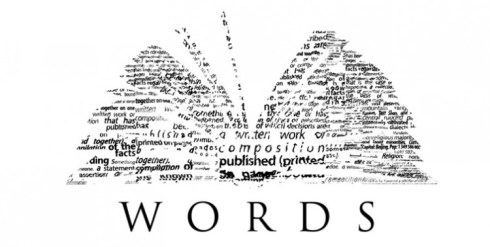
This is a “Good Words” journal in which I note word choices and phrases that stand out to me in the books and poems I am reading, or the lyrics I am listening to. It is a way to go back and suss out why it is that a certain author’s voice moves me. Almost always, it is word choice.
Whether we write picture books, novels, non-fiction, poetry, or beginning readers we are all word artisans, fabricators, roustabouts, and surgeons. So let’s talk about words.
It seems to me that words have personalities, and like any person there is always more than what meets the eye. Words have emotional baggage, a cultural upbringing, physical sensibilities and an historical demeanor. For example, take a look at these beautifully written lines.
- “I sound my barbaric yawp over the rooftops of the world.” (Walt Whitman, Song of Myself #52)
- “Life’s got to be lived, no matter how long or short. You got to take what comes.” (Natalie Babbitt, Tuck Everlasting)
- “I was within and without, simultaneously enchanted and repelled by the inexhaustible variety of life.” (F. Scott Fitzgerald, The Great Gatsby)
- “Have you ever heard a blindfolded octopus unwrap a cellophane-covered bathtub?” (Norton Juster, The Phantom Tollbooth)
- “During the whole of a dull, dark, and soundless day in the autumn of the year, when the clouds hung oppressively low…” (Edgar Allen Poe, The Fall of the House of Usher)
- “So the salesman jangled and clanged his huge leather kit in which oversized puzzles of ironmongery lay unseen but which his tongue conjured from door to door…” (Ray Bradbury, Something Wicked This Way Comes)
There is gut-deep emotional baggage in Whitman’s use of the word yawp, especially when it is paired with barbaric. The perfect word choice. Compare yawp to wail, or yell. Each carries a different emotional feel.
One can see the cultural differences in the language used by Babbitt and by Fitzgerald. Babbitt’s speaker is countrified, perhaps unschooled. This comes about through her use of the verb got. Fitzgerald’s character is highly educated, and perhaps a bit proud of his erudition.
Both the Juster and the Poe quotes arouse a physical (sensual) response on our part. That word cellophane paired with an octopus! And a blindfolded one at that. How perfect. Also listen to all the “d”s and the low vowel sounds (the “u”s and “ou”s) of Poe’s opener to his classic short story. The effect is one of dragging us down, just as the rider is emotionally dragged down upon his approach to Usher’s house. Or for a simpler example of the physical qualities of language: compare the word slide to scud. Which is heavier? Bet you said scud—though we never actually pick the letters up to weigh them. Vowel sounds can create emotions that can feel physical.
Finally, the Bradbury quote is a wonderful example of how language can be dressed in historical garb. The story takes place in the mid-1900s but words like ironmongery and conjure evoke an earlier, less-scientific time in which the rainmaker/salesman seems to be rooted.
When I read someone who obviously has a mastery of language I keep a list in a word journal of all the great words and phrases that writer uses. (It’s OK to learn through imitation! That’s how the masters did it, too.)
From Seamus Heaney I have listed: flood-slubs, whiff, sluicing, glarry, bogbanks, bestowals, etc. From Robinson Jeffers: enskyment. From Charles Wright: scrim & snow-scud, sealash. From M. T. Anderson: maw, starveling, suckings & buffetings. From Edith Wharton: indolent and purpling. From William Steig’s wonderful Shrek! (the original) I have; varlet, afoul, scything.
Often, just looking through this collection of scrumptious words can make ideas come to the table. Put words together from various author lists–and bingo! What if a starveling got lost amid the bogbanks on a purpling night? And then, a sucking sound rises… You get the picture.
Later, when I’m polishing my manuscript this journal helps when I’m searching for just the right descriptive word. Now, you might ask, why not just use a thesaurus? I do use thesauri. Love them! However, this is more personal. These are words that tickled my ear or made my jaw drop in awe, and were used in a masterful way. Also, when I scan them and see the word choices as groupings by author, I get a feel for how each writer created his/her own voice.
But, please! Don’t ask me about my personal daily journaling habits. I’m abysmally undisciplined. I’m much more interested in individual words than I am in words about me as an individual.
So here’s another challenge. Start a Good Words journal as you read this month. And before Storystorm ends, use it and see what happens. Here’s to jumping in and scaring up an idea before it jumps out at you like that crazy cousin of yours!
Cheers!
 Shutta Crum is the author of several middle-grade novels, more than a dozen picture books, and many poems and magazine articles. She adores speaking about children’s books and is an oft-requested presenter, guest lecturer, panel moderator, and keynote speaker. Her latest picture book is MOUSELING’S WORDS (Clarion). It’s her auto-mouse-biography—about a mouse who becomes a swashbuckler of words. The idea came from one of Tara’s Storystorm (PiBoIdMo) challenges. Thanks Tara for challenging us!
You can follow Shutta on her blog & website at shutta.com, on Twitter @Shutta
and on Facebook here.
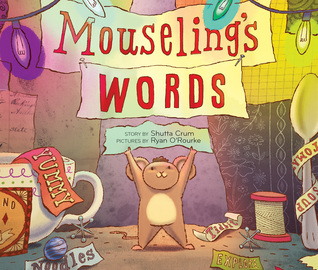
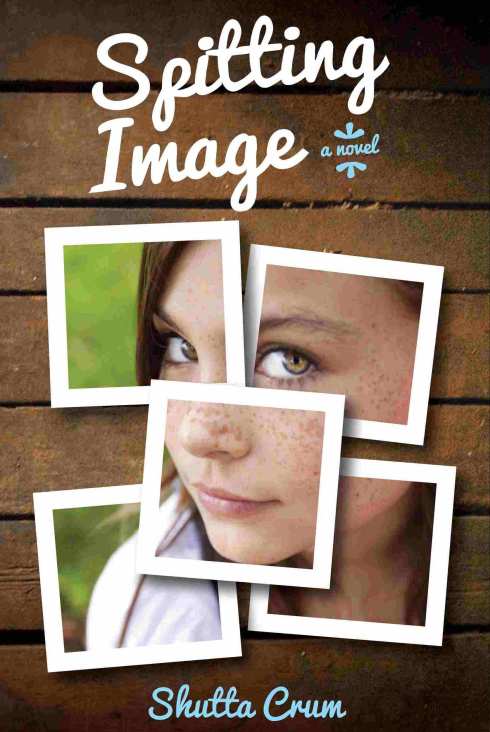
Shutta is giving away two prizes for two winners–a picture book critique to one winner and two of her books, MOUSELING’S WORDS and SPITTING IMAGE, to another winner.
Simply leave ONE COMMENT below to enter.
You’re eligible to win if you’re a registered Storystorm participant and you have commented once below. Prizes will be given away at the conclusion of the event.
Good luck!
We’ve all seen picture books come out on an important anniversary. These books take a lot of planning—given that a manuscript can take two or more years to be illustrated and who knows how many years before it’s acquired.
But if you can pull off a subject pegged to a key anniversary of an important date, that can provide illumination on the historic event. It may also help with inspiration, a sale and promotion of the book once it comes out.
That date can be the birth year of a famous person or event or of an invention, a law or a song—anything that you feel deserves to be remembered.
My book, IRVING BERLIN, THE IMMIGRANT BOY WHO MADE AMERICA SING came out in 2018, the 100th anniversary of when Irving Berlin wrote “God Bless America.” Of course the flip side of pegging your book to a date is that others may notice this date, too; mine was one of three Irving Berlin books to be released in 2018!
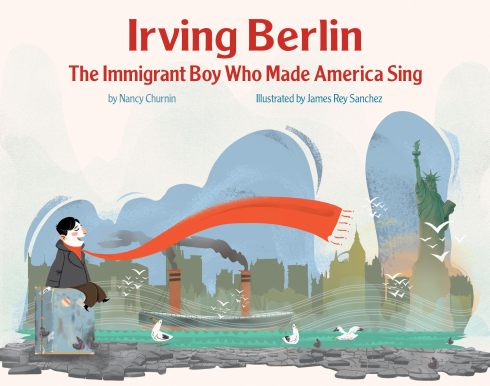
What surprised me about the three books was that I got to know and like the other authors. I even started to think that there could be a fascinating workshop or post about how three different authors could take the same facts and weave such different stories with different narrative styles and points of emphasis.
But we’ll save that post for another date and time! (Tara’s note: yes, please come back, Nancy!)
A good source for research about important dates is OnThisDay.com/history. Another is historylearningsite.co.uk.
One way to keep your manuscript unique is to find a different take on it. When I was searching for anniversaries that would resonate in 2019, I looked for important events and famous people who were born in 1919.
 The most obvious anniversary was the 100th anniversary of women winning the right to vote in 1919 and that right to vote being ratified in 1920. But it was too obvious. If I chose this subject, I’d be competing against a slew of authors writing about this.
I moved on to 1929. That was the year of the Great Depression, a time when people were desperate and fearful, when too many went in search of scapegoats to blame for their financial insecurity. I searched who was born that year. I found Dr. Martin Luther King, Jr. But there were so many books about Kr. King. What could I add to those? And then I found Anne Frank was born in 1929, too.
Most people don’t think of Dr. King and Anne Frank as contemporaries. But they were. They were of different genders, faiths, races and spoke different languages, yet both had so much in common! Both grew up during the Great Depression when African Americans faced racial discrimination in America and Jewish people faced anti-Semitism in Europe. Both met hate with love and left us with words that inspire us today.
Finding that connection impelled me to write MARTIN & ANNE, THE KINDRED SPIRITS OF DR. MARTIN LUTHER KING, JR. AND ANNE FRANK. It comes out March 5 of this year, in between Dr. King’s Jan. 15 birthday and Anne Frank’s June 12 birthday, in the year when both would have turned 90.
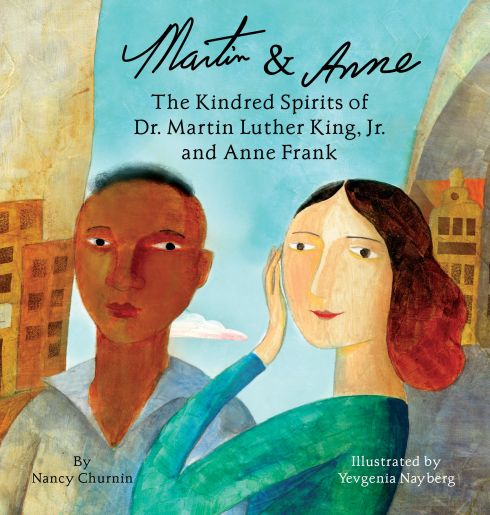
My agent, Karen Grencik of Red Fox Literary, sold the book in 2017, knowing it was a tight turnaround. I’m lucky I was able to pull off the project in two years, because I had an editor, Marissa Moss, who believed in it and found an illustrator, Yevgenia Nayberg, who could make it happen that quickly.
But you can be smarter and do a better job of planning ahead. It’s 2019. Try to think four, five or six years ahead or more—for people who were born or events that occurred in 1924 or 1925 or 1926 to give yourself time to research and write and for your publisher to find an illustrator.
Here are some inventions in those times:
- 1924: Frozen food
- 1925: Television
- 1926: Pop-up toaster
- 1927: Talkies at the movies
And here are some famous birthdays:
- 1924: George H.W. Bush, Jimmy Carter, Cicely Tyson, Lauren Bacall
- 1925: Dick Van Dyke, Malcolm X, Barbara Bush, Paul Newman
- 1926: Queen Elizabeth II, Marilyn Monroe, Fidel Castro, Andy Griffith
- 1927: Cesar Chavez, Eartha Kitt, Coretta Scott King
There’s no need to limit yourself. Go to the library or go online and look up timelines and newspapers for those years. See what and who made the news. You never know what’s going to grab your heart and impel you to write.
Make a date with history. And who knows — it may end up with the publication of your book being a history date that someone will look up some day!
 MARTIN & ANNE, THE KINDRED SPIRITS OF DR. MARTIN LUTHER KING, JR. AND ANNE FRANK, illustrated by Yevgenia Nayberg, published by Creston Books and distributed by Lerner Publishing Group, is Nancy Churnin’s sixth picture book biography. It’s the parallel journey of Dr. King and Anne Frank, two people of different genders, faiths, races and religions who faced hate with love and left us with words that inspire us today. Nancy’s previous books have won multiple awards and been on many state lists: THE WILLIAM HOY STORY, HOW A DEAF BASEBALL PLAYER CHANGED THE GAME; MANJHI MOVES A MOUNTAIN; CHARLIE TAKES HIS SHOT, HOW CHARLIE SIFFORD BROKE THE COLOR BARRIER IN GOLF, IRVING BERLIN, THE IMMIGRANT BOY WHO MADE AMERICA SING and THE QUEEN AND THE FIRST CHRISTMAS TREE, QUEEN CHARLOTTE’S GIFT TO ENGLAND.
You can follow Nancy on Twitter @nchurnin, on Facebook at https://www.facebook.com/NancyChurninBooks/, on Instagram @nchurnin and on nancychurnin.com.
Nancy is giving away two autographed copies of MARTIN & ANNE, THE KINDRED SPIRITS OF DR. MARTIN LUTHER KING, JR. AND ANNE FRANK. There will be one winner for each book.
Simply leave ONE COMMENT below to enter.
You’re eligible to win if you’re a registered Storystorm participant and you have commented once below. Prizes will be given away at the conclusion of the event.
Good luck!
by Susan Taylor Brown (from 2009)
I’m a collector. I can’t go on a walk without finding something I have to pick up and take home with me for my idea box. A stick. A rock. A broken toy. I also have a hard time throwing things away so an item headed for Goodwill might find its way into my idea box. It’s a great way to jumpstart my tired brain. Whenever I find something new or old or interesting, I toss it in the box.

Does something in my idea box jump out at you?
What kind of creature has a purple feather? What would a little kid be carrying around in that black jewelry box? Does that green silk scarf belong to a magician? What would those sunglasses be if they weren’t normal sunglasses? Who lost their yo-yo?
By asking myself questions about things in my prop box I can get my writing motor revved up again.
Whose black gloves are these?
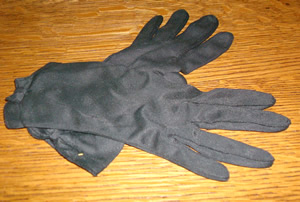
What kid is trying to solve the case of his grandmother’s missing brooch?

I know this is all about Storystorm 2009 and I know you haven’t had a chance to build an idea box of your own yet. But wait. You probably already DO have one. Or even two. If you have a junk drawer where you toss items that don’t have a home, you have a good start on an idea box. Here’s my junk drawer.

Your turn. Go open any drawer in your house right now, junk or otherwise, grab something out of it and then write about it as though it were something entirely different.
What if the box of matches was really a bed for teeny tiny fairies?
What if the string was a rope to help a princess escape from the castle.
What if the ribbon was a rare snake that had been stolen from the zoo?
That’s all it takes. An ordinary object and a question, “What if?”
You get the idea.
Susan Taylor Brown has authored poetry, fiction and non-fiction books for children and adults. She lives in San Jose, California with her husband Erik Giberson and their white German Shepherd, Zoey.
Susan is asked a lot about where she finds her ideas. She thinks this is a funny question because she never has to go looking for ideas, they find her. Sometimes she’ll read something and not even realize that an idea has burrowed into her brain. It might not pop up for weeks or months or even years. Then one day she can be eating breakfast and BOOM, the idea will jump out and say, “Write about ME!”
Learn more about Susan’s work at susantaylorbrown.com.
At the conclusion of Storystorm, prize packs will be given away (books, swag, writing tools). Comment once on this blog post to enter into the prize pack drawing.
You’re eligible to win if you’re a registered Storystorm participant and you have commented once below.
Good luck!
by Tammi Sauer (from 2012)
In past PiBoIdMo posts, I’ve encouraged you to…
This time around, I want to focus on structure.
Just like houses and dinosaurs, every story needs an underlying framework.


Most of my books follow the Classic Picture Book Structure:
- MC has a problem
- MC faces obstacles that escalate
- MC encounters a dark moment in which things can’t possibly get any worse
- MC figures out how to solve the problem
- MC grows/changes by the book’s end
My book PRINCESS IN TRAINING is an example of this.
Behold!
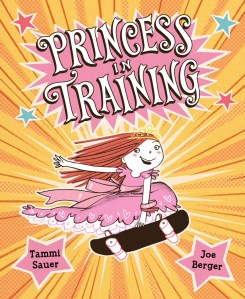
Princess Viola is great at skateboarding and karate-chopping, but she’s lousy at the royal wave, walk, and waltz. The king and queen are not pleased. What’s a princess to do? Attend the skill-polishing Camp Princess, of course. In the end, it’s a good thing Viola is made of tougher stuff. Who else will save the day when a hungry dragon shows up?
This is how the Classic Picture Book Structure works with PRINCESS IN TRAINING:
- Princess Viola Louise Hassenfeffer has a royal problem. She is not an ordinary princess and the kingdom is unhappy about it.
- Princess Viola faces three obstacles at Camp Princess (she is unable to properly master the royal wave, royal fashions, and royal dancing).
- A hungry dragon shows up at Camp Princess.
- Princess Viola uses her unique skill set to save the day.
- Princess Viola may not be an ordinary princess, but she is deemed the darling of her kingdom anyway.
Although the Classic Picture Book Structure is my super-favorite way to frame a story, there are a variety of other options. Below are many of them along with some examples.
Circular:
The story’s ending leads back to the beginning
If You Give a Mouse a Cookie; When a Dragon Moves In
Concept:
The story focuses on a single topic or category
All the World; Kindergarten Rocks; Hello Baby!; The Quiet Book
Cumulative:
Each time a new event occurs, the previous events in the story are repeated
My Little Sister Ate One Hare; I Know an Old Lady Who Swallowed a Fly
Mirror:
The second half of a story echoes what occurred in the first half of the story
Old Bear and His Cub; Boy + Bot; A Sick Day for Amos McGee
Parallel:
Two storylines are taking place at the same time
The Dog Who Belonged to No One; Meanwhile Back at the Ranch
Reversal:
Character and/or plot is portrayed in a way that is opposite from the norm
Bedtime for Mommy; Children Make Terrible Pets; Little Hoot
This month, I’m challenging myself to come up with at least one story idea for each of those frameworks. C’mon, groovy Storystorm people. Who’s with me?
Tammi Sauer has been a guest blogger for every year of Storystorm, even when it was called that thing no two people pronounced the same, PiBoIdMo. Learn more about Tammi at her super-snazzy new website tammisauer.com.
At the conclusion of Storystorm, prize packs will be given away (books, swag, writing tools). Comment once on this blog post to enter into the prize pack drawing.
You’re eligible to win if you’re a registered Storystorm participant and you have commented once below.
Good luck!
by Katie Davis (from 2013)
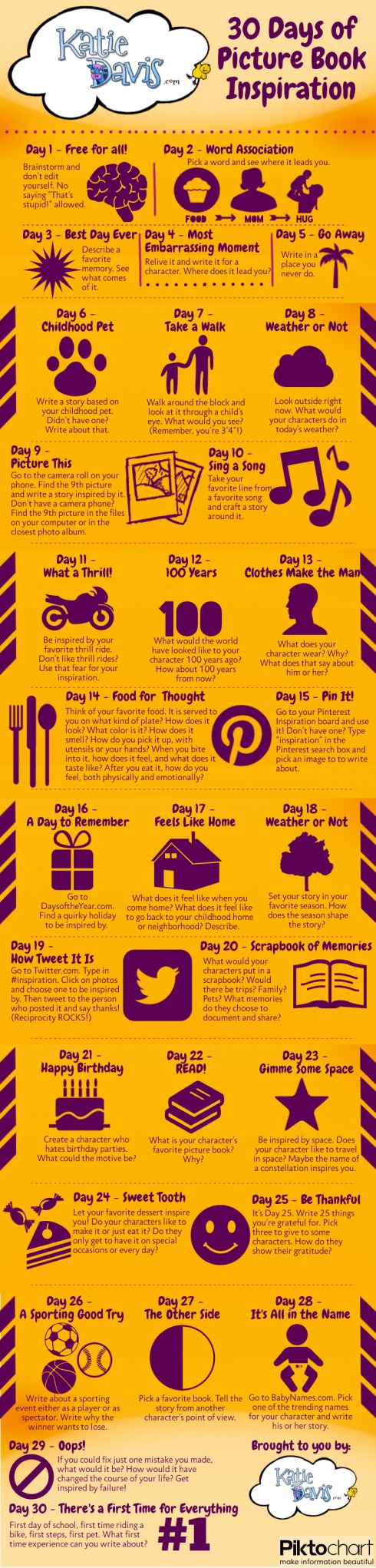
Parsons, Pratt, Rhode Island School of Design.
Katie Davis has walked by all these schools of fine art. She has attended none of them. Katie has always been creative but never thought she could earn a living as an artist. She could write though, so after graduating from college she went into PR and advertising. After getting fired six or seven times, she figured she should work for herself. Besides, she hated wearing panty hose. As an author/illustrator she’s had a stack of picture books published (like Kindergarten Rocks), a middle grade novel, The Curse of Addy McMahon, and a young adult novel, Dancing With the Devil.
Learn more about Katie at KatieDavis.com.
At the conclusion of Storystorm, prize packs will be given away (books, swag, writing tools). Comment once on this blog post to enter into the prize pack drawing.
You’re eligible to win if you’re a registered Storystorm participant and you have commented once below.
Good luck!
We’ve all heard the saying: “A picture is worth a thousand words.”
It’s true!

One picture can spark an idea that can lead to an entire picture book manuscript. Don’t believe me? Try it!
I often get ideas for stories by looking at pictures.
Pictures serve as inspiration. And lucky for picture book writers, pictures are everywhere. But there are some places I peruse regularly to get inspiration.
Have you heard of Storybird? Here you will find art samples from talented illustrators worldwide. In other words, there is a goldmine of art at this site. Anyone wanting to delve into storytelling can use the images for inspiration for a story. It’s a great writing tool for kids and adults.
Where else can you find images?
How about clipart? Free clipart sites are another treasure trove for writers. Just select a category. Science. School. People. Pets. Surely an image or two will spark a story idea in your brain.
Are you doing any shopping today? Make a pit stop in the greeting card aisle at the grocery store and look at the pictures on the covers of the cards. Do you see animals singing in the snow? A hedgehog holding a balloon? A crocodile on a skateboard? Any ideas jumping out at you?
While you’re at the store, take a glance at the magazines. Kid magazines and family-centered magazines are chock-full of kid-friendly images.

Maybe you’re driving or riding in a car. Pay extra attention to street signs. I once saw a street sign with a stick figure and a circle around its waist. Say what? Hula hoop crossing? Why? Is there a story nugget there? What if instead of a person, it was a bear? Or an armadillo? And why is it crossing the road with a hula hoop?
 There is a board game called Awkward Family Photos. For the game, players are presented with a picture and a thought-provoking question about the photo. For example, players may have to think of the last thing the person said before the picture was taken. Or, they may have to write a caption for the picture. This game is a perfect example of using pictures to dig a bit deeper and see what story lies beyond it.
Wherever you are right now—at home, at work, in your car, at a store—at least one of these sources of images is available at your fingertips. You can even use Google to search for images.
Pictures will speak to you, but you need to do three things for that to happen:
Stop, look, and listen.
- Stop:
Take a few minutes each day during this month-long challenge to find a source of pictures. Use the ones I listed above or find another source. The few minutes you spend will be worth it. - Look:
Take a close look at the picture. Take it all in: the character(s), the expressions, the details, the background, etc. - Listen:
Are there questions popping up in your brain? If not, you want to train your brain to ask questions, such as:
- What is the character in the picture doing?
- What does he/she want?
- Look at that mischievous grin. What is behind it?
- Why is the dragon sitting alone on a rock? Is he scared, embarrassed, sad, sleepy?
- Why is the dog wearing roller skates? Where is he going?
- What are those strange footprints in the sand? Who do they belong to? Where do they lead?
If you follow these three steps, I guarantee ideas will start flowing in no time at all.
So, a picture is worth a thousand words. Better yet, in the case of picture book writers, maybe a picture leads to a 500 word story, or even one that is only 250 words. Whatever the final word count, a picture can be the starting point. Just like what happened in 2014, when I saw a picture of a caveboy and a cavegirl on a clipart image during the Storystorm Challenge (which was then called PiBoIdMo). That ultimately led to CAVEKID BIRTHDAY, which launches in March 2019. And, my fingers are crossed that a picture you look at today will be the inspiration for a book that will be in kids’ hands in a few years.
Good luck!
 CAVEKID BIRTHDAY was Cathy Breisacher’s 2014 PiBoIdMo idea for Day 10 and it will be a book in March 2019! CAVEKID BIRTHDAY, illustrated by Roland Garrigue, is a prehistoric twist on the Gift of the Magi. Cathy’s second book, CHIP AND CURLY: THE GREAT POTATO RACE, illustrated by Joshua Heinsz, will hop into stores in May 2019. Cathy looked at loads of potato pictures for inspiration, and she whipped a ton of puns into this tale.
You can follow her on Twitter @CathyBreisacher, Facebook, YouTube or cathybreisacher.com.

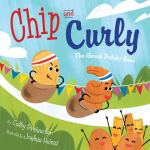
Cathy is giving away autographed copies of CAVEKID BIRTHDAY and CHIP AND CURLY: THE GREAT POTATO RACE when they are published. There will be one winner for each book.
Simply leave ONE COMMENT below to enter.
You’re eligible to win if you’re a registered Storystorm participant and you have commented once below. Prizes will be given away at the conclusion of the event.
Good luck!
Storystorm 2019 registration is now closed.
You may still participate in the challenge by reading the daily posts and jotting down an idea a day, but you will not be eligible for prizes. However, participants typically say 30+ ideas is a prize in itself!
It’s that time of year again!

It’s time to STORYSTORM!
Prepare to be BLOWN AWAY!
Two years ago I changed the name and month of my annual writing challenge, from Picture Book Idea Month (PiBoIdMo) to Storystorm. Why? Answer’s here.
Any writer interested in brainstorming new story ideas in January is invited to join the STORYSTORM challenge of 30 ideas in 31 days. Any genre, any style; student, amateur, hobbyist, aspiring author or professional.
How does STORYSTORM work? It’s simple…
- Register.
- Read daily posts.
- Write down story ideas.
That’s pretty much it.
At the end of January if you have at least 30 new ideas, you can sign the STORYSTORM PLEDGE and be eligible for PRIZES.
So are you ready? Follow these steps:
- Register ON THIS BLOG POST by signing your name ONCE in the comments below. Full name, nickname, whatever name you want.
- Teachers participating with a class can register under the teacher’s name.
Please leave ONE comment ONLY. Do not reply to say “hi” to a friend. Do not comment to fix a mistake. ONE COMMENT. Don’t worry if it isn’t perfect.
- Registering makes you eligible for prizes.
- Visit this blog daily (taralazar.com) in January for inspirational essays by guest bloggers—professional authors, illustrators and experts in creativity.
- Instead of visiting the blog directly, you can receive the daily posts via email by clicking the “Follow Tara’s Blog” button in the left column—look under my photo for it.
This year there is a special theme…
…THE GHOST OF STORYSTORM PAST!
Really, the POST OF STORYSTORM PAST.
I’ll be alternating between new posts and the best posts from 10 years of STORYSTORM!
- After you have read the daily inspiration, jot down a daily story idea in a journal, computer file, anywhere you like to write. Some days you might have no ideas, but some days you might have five or more.
At the end of January, if you have at least 30 ideas, sign the STORYSTORM PLEDGE (to be posted on January 31) and qualify for prizes.
Prizes include professional consults, signed books, original art, writerly gadgets and gizmos.
Remember, do not share your ideas publicly in January. They are YOURS. No need to prove that you have them at the end of the month. The pledge you will sign is on the honor system.
Are you in? Awesome. Pick up your Official Participant badge below and affix it to any social media account you wish. (Right click to save to your computer, then upload it anywhere.)
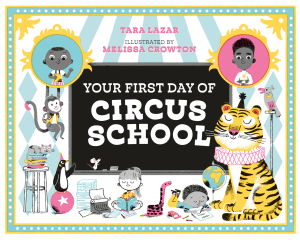
This adorable badge was designed by Melissa Crowton, the illustrator of my next book, YOUR FIRST DAY OF CIRCUS SCHOOL, which is available for pre-order. (Shameless plug.)
The final piece? Join the STORYSTORM Facebook discussion group. You might need friends to pick you up!

The group is completely optional, but it remains a year-round source of writing information and support, mostly focused on picture books, I admit, because that is where this all began.
Registration will remain open through JANUARY 7TH.
What are you waiting for? Register and go celebrate! I’ll see you back here on New Year’s Day.





 Writing for Kids (While Raising Them)