You are currently browsing the category archive for the ‘PiBoIdMo 2011’ category.
 Who can believe the month of November is half over already? Hopefully you’ve already got 15 ideas (or more) in your PiBoIdMo journal. And if you don’t, no worries! There’s plenty of time left to catch up and complete the 30-ideas-in-30-days challenge.
This is a place to check-in and let your fellow picture book writers know how you’re doing! What has been the most inspiring message for you during the guest posts?
You might be wondering how I’m doing. Well, I’m always a little behind with my own challenge…
Enough about me. What about you?
 by
by I have to be honest with you.
I think the word “idea” is a little grand.
And by grand, I mean daunting.
An idea is a huge thing, right?
It requires freshness and originality, it encompasses possibility, it is—not to get all god-like here, but—the beginning of everything!
Meanwhile, we’re always being told, “There are no new ideas!”
Poet Audre Lord said, “There are no new ideas. There are only new ways of making them felt.” And there are all those books and lectures that tell us there are only about seven plots available on the whole entire planet. And you guys. There is even a web site called “no new ideas” and it is just a blank page!
So. Phew. That’s out of the way.
No new ideas.
We can’t find what isn’t there.
But, this puts us PiBoIdMo folks in a bit of bind, doesn’t it?
What are we supposed to do for the rest of the month?
Well, personally, I think we should try for something smaller.
Not a whole new idea everyday—just a new perspective.
(And, guess what? The Greek origin of the word idea is idein, which means “to see”! Which means I’ve got support from ancient sages here, so let’s go with it.)
What if all we need is a new way of looking at things?
And what if that way is a child-like way?
A child, said author Olive Schreiner, “sees everything, looks straight at it, examines it, without any preconceived idea.”
Have you ever noticed what kids want to do when they’re riding a down escalator? They want to run up it!
Kids don’t look at things as if they’re static or rule-based or already defined. Surprise and experimentation are everyday affairs. Freshness and originality and possibility—all those things I found so daunting above? Ha. Child’s play.
And children, you’ll remember, are our audience.
So, what if we look straight at life today and examine it?
What if we let our preconceptions slip away and see things as children see things?
What if we imagine that socks are pockets (A Sock is a Pocket for Your Toes) or that the whole wide world could fit in a book (All the World) or that a worm and a bird could be best friends (Noodle & Lou)?
What if look around, each of us, at the animals in our houses and yards, the food on our tables, the books on our bedside tables, and we just plain see them in a new way? That’s all I’m going to do today, and you should join me. We’ll leave the grand and daunting to someone else…
(And now for the party favors!)
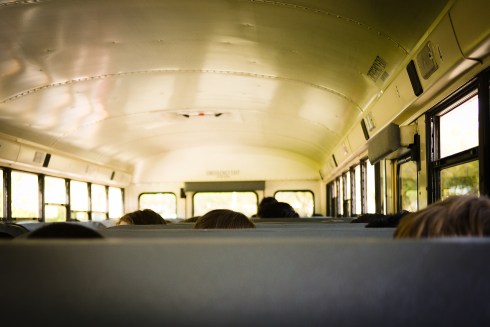
These really great photos that are all about accessing a child’s perspective.
And then this fine bit of musing by artist Austin Kleon:
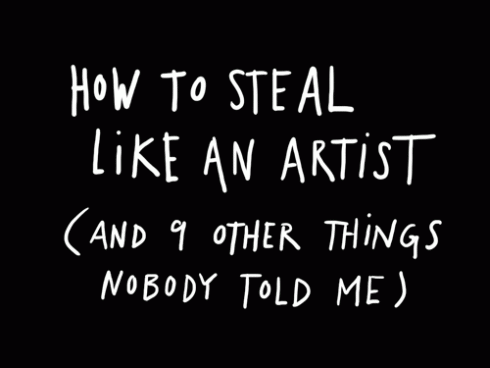
(Scroll and read all the way through it. It’s worth it. Especially that very last section. I think he might’ve stuck it in just for picture book authors, don’t you?)
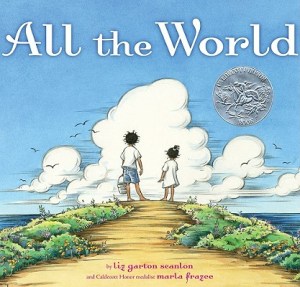 Liz Garton Scanlon is the author of the highly-acclaimed, Caldecott-honored picture book ALL THE WORLD, illustrated by Marla Frazee, as well as NOODLE & LOU, illustrated by Arthur Howard, and A SOCK IS A POCKET FOR YOUR TOES, illustrated by Robin Preiss Glasser. Forthcoming books include THINK BIG, illustrated by Vanessa Newton; HAPPY BIRTHDAY, BUNNY, illustrated by Stephanie Graegin; and others. Liz is an assistant professor of creative writing at Austin Community College and the mother of two daughters. To learn more, visit her web site at LizGartonScanlon.com.
Liz is giving away a signed copy of the award-winning ALL THE WORLD! Leave a comment to enter and a winner will be randomly selected one week from today.
 by
by Creatively, I’m very slow.
I like to be delicate with my ideas and usually spend three years developing a picture book.
Because of this, I have to look for ideas that hit my proverbial sweet spot and keep me enthused for the long haul.

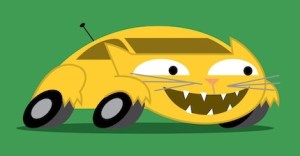
For the picture book that I’m working on now, titled THE TRICYCLE MOUSE, my initial idea was to combine two of my favorite things: vehicles and animals.
Thus the characters in the book are hybridized animal-vehicles.
I started working on this over a year and a half ago, it still has a long way to go, but my excitement for the project has only grown.
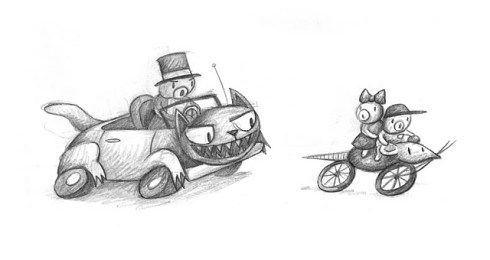

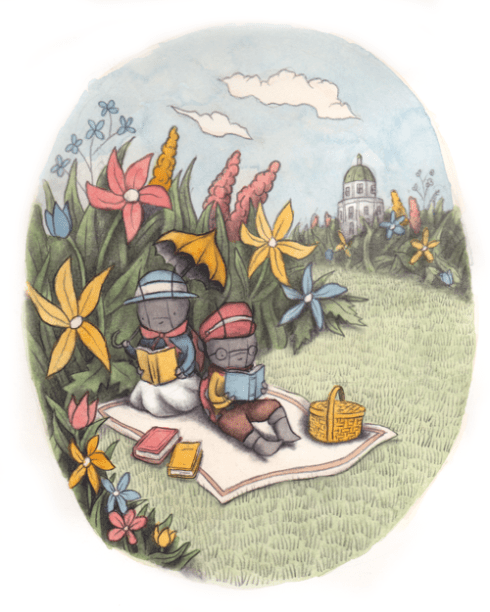
Julian Hector is generously giving away an original signed painting he made exlcusively for PiBoIdMo, with characters from his picture book THE GENTLEMAN BUG! It’s unbelievably adorable! Lucky you!
Leave a comment to enter and a winner will be randomly chosen one week from today.
Julian Hector is one of the youngest author/illustrators working in children’s publishing today. Five years ago, he was plucked out of college by an editor at Disney-Hyperion, and he’s been writing and illustrating children’s book ever since. His most recent book is MONDAY IS ONE DAY, written by Arthur A. Levine, and you can visit his website here: www.Julianhector.com.
 After my first picture book Poppy’s Pants was published, I received a call from my dad. He said, “I’ve discovered after years of writing that coming up with new ideas can get hard, so I’m going to help you out.”
I was anxious to receive this bit of collegial wisdom from my dad. Even though I am more than 40 years old, I relish a grown-up conversation, from one artist to another with my Dad. He said, “Here’s my idea, Poppy’s Car.” Imagine stepping outside of your air conditioned South Carolina home to drive your Buick LeSabre into town. Being a writer, you only need to use your car to run the occasional errand. It has been weeks since the last time you started the car up and an unusual amount of debris has collected between the windshield wipers. You turn the wipers on to clear the debris when to your surprise, an angry bird squawks at you. There, between your windshield wipers sits a bird’s nest complete with four eggs. This truly happened. Dad had no choice but to relinquish control of his car until the baby birds learned to fly. I worked on a story inspired by this phone conversation for a while. It remains one of many stories filed away in my Apple computer. At some point, it became too difficult to resolve and so it waits. Perhaps it will resurface some day.
 I’ve found that ideas can be easy to come by, but not always easy to turn into a working story. Once you start looking for them, you’ll find them in casual conversation, observations and sometimes they will appear while day dreaming. When an idea presents itself, I test it out by writing or sketching, If my brain becomes crowded with potential then that new idea just might work. A good solid idea should be roomy enough to house many more ideas. Ideas that are connected to the core of the original. Have you noticed that ideas tend to come with their own tiny spark to get you started? Coming up with 30 ideas in 30 days has the nice side benefit of giving the participant a little thrill each day, like a spoonful of mental fuel. Ideas are far better than the most delicious latte to get a person going. Although, I like to combine the two. Usually, that little thrill you get from a new idea is enough to label it as a “good” one, worthy of developing into a good picture book. But, the only way to find out if it will make a good picture book is by working through it.
I have a theory about good ideas. I think they need time, maybe even years to form. They start as shy notions that need time to swim around in the muddy soil of your unconscious before planting some roots. When those ideas surface, it’s like meeting an exciting stranger you swear you’ve met before. I hope to enjoy meeting someone new each day this month.
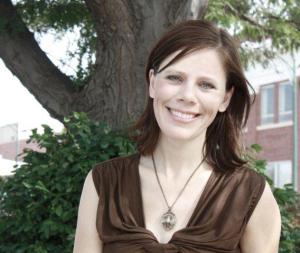
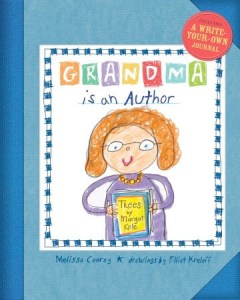 Melissa Conroy, Pat Conroy’s second daughter, never intended to follow in the family business, instead choosing a career as an artist and creator of the Wooberry Dolls, huggable hand-crafted dolls bearing her childhood nickname of Woo. It was a chance meeting with Blue Apple Books publisher Harriet Ziefert that began her new career as an author. Melissa Conroy’s latest book, Grandma is an Author, was released this week!
 by Tammi Sauer
Most of my pbs begin with character.
Occasionally, however, I go in a different direction and start with setting.
Some of the settings I have used in my books include the following:
- Cowboy Camp
- Barnyard
- Monster Academy
- Pond
- Prehistoric Times
- Royal Kingdom
- Zoo
- Concert Tour
- Oklahoma
- Sea
As much as I loved setting books in these places, I know I should come up with something fresh for the next manuscript. This calls for some brainstorming. I push myself to come up with at least ten new setting possibilities.
Examples:
- Outer Space
- Rodeo
- Petting Zoo
- Parade
- School Science Fair
- Family Reunion
- Fish Tank
- Library
- Road Trip
- County Fair
Once I have a list, I take each place into consideration. Then I ask myself the big question:
What can go wrong here?
If I come up with an answer that is irresistible, I know I am well on my way to developing that next manuscript.
Your turn:
Consider the settings I’ve already listed. Brainstorm a list of ten additional settings. Then ask yourself, “What can go wrong here?” for each one.
Extra credit:
Go to the library or bookstore and grab a stack of picture books. Jot down each book’s primary setting. Who knows? Maybe one of those settings is the perfect fit for your next manuscript.
 Tammi Sauer has sold 12 picture books to a number of major publishing houses: Bloomsbury, Houghton Mifflin Harcourt, Simon & Schuster, and Sterling. One of her latest books, Mostly Monsterly, illustrated by Scott Magoon, was named a Scholastic Parent & Child Best Book of 2010 and won the 2011 Oklahoma Book Award and the 2011 SCBWI Crystal Kite Award. To learn more about Tammi and her books, please visit her online at www.tammisauer.com.
Tammi’s next book, Me Want Pet!—illustrated by Bob Shea—hits shelves March 2012. OOGA! Leave a comment for a chance to win a first edition signed copy when it’s released!
by Elisa Kleven
 I find inspiration in all sorts of ways. Sometimes an image inspires me : the brush-like tail of a lion at the Oakland zoo sparked the idea for THE LION AND THE LITTLE RED BIRD; the sight of a picket fence reflected in a wet sidewalk gave me the idea for THE PUDDLE PAIL.
 Sometimes an experience gives birth to a story idea: my daughter’s reaction to her domineering, sloppy new brother inspired my book A MONSTER IN THE HOUSE; the comforting act of making bread on a gloomy winter day gave me the idea for SUN BREAD.
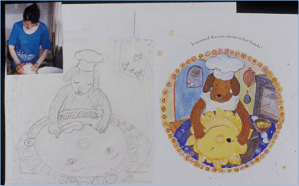 And sometimes stories well up mysteriously, from undercurrents in my life and amorphous but powerful feelings. After I finished THE PAPER PRINCESS, for example, I realized it summed up my feelings about being both a book creator—working away lovingly and privately on detailed pieces of paper (my illustrations and stories) that I later send out into the world to “finish themselves” (that is, be read and reacted to), as well as earlier, raw feelings about having lost my own “creator”, my mother, when I was still a child, and how I went out into the world feeling like it was up to me to complete myself.
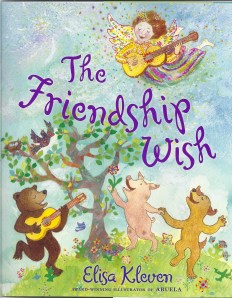
The inspiration for my newest book, THE FRIENDSHIP WISH, falls into this last (amorphous, powerful feelings) category. One of the sources of its inspiration is a quote from Caliban, the monster in THE TEMPEST, who describes a dream about “riches ready to drop upon him, ” and how upon waking, he “cried to dream again.” I love that description of the feeling of loss one feels when one awakens from a beautiful dream—and Farley, the lonely dog in my story, experiences the same intense sensation of longing and loss when he awakens from his dream of a friendly, guitar-playing, pancake-making angel. But other themes in my life welled up into this story as well: I have always been fascinated by angels, and frequently “meet” them in dreams and in art, as Farley does. I also feel that, like the characters in the book, we need to be each others’ angels, because, who knows if any other angels really exist.
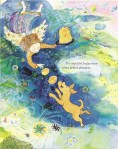
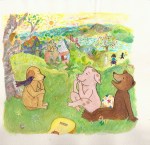
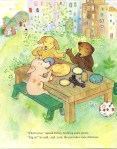
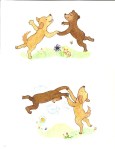
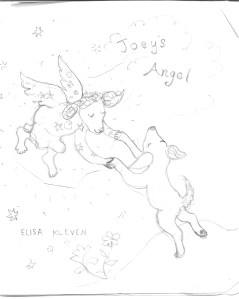
And speaking of angels, I have to add that the book was originally called JOEY’S ANGEL. My publisher wanted to avoid the word “angel” in the title, so I tried on many different titles (e.g.FRIENDS FOR FARLEY; WHAT PUP DREAMED UP) before the publisher settled on THE FRIENDSHIP WISH. At first I had trouble saying the title, because it wasn’t “mine”, but I’m getting to like the whispery, “sshhhh-y” sound of it.
Elisa Kleven has always loved to create imaginary worlds. Throughout her childhood Elisa made miniature people and animals using paper, paint, clay, scraps of cloth, yarn, nutshells , even dried apples. She would lose herself for hours making up stories about these characters, and building intricate settings around them.
Elisa’s childhood passions have now become her career, as she is still creating miniature worlds inside of her picture books. As she did in childhood, Elisa uses paint, collage, and imagination to create characters settings, and stories.
Elisa is the author and/or illustrator of over 30 children’s picture books, among them WELCOME HOME, MOUSE, THE PAPER PRINCESS, THE APPLE DOLL, THE LION AND THE LITTLE RED BIRD, SUN BREAD, A CAROUSEL TALE, THE PUDDLE PAIL, DE COLORES, by Jose-Luis Orozco, ABUELA AND ISLA, by Arthur Dorros, and THE WEAVER, by Thacher Hurd. Elisa lives near San Francisco with her husband, daughter, son, dogs and cats. To learn more about Elisa and her books, please visit her web site: www.elisakleven.com.
Elisa is generously giving away two signed pieces of her work—her San Francisco limited edition giclee print, as well as a print from ANGELS WATCHING OVER ME, by Julia Durango. Please leave a comment to enter and two winners will be randomly chosen one week from today!

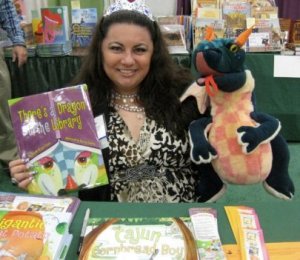 Shhhh.
Now what did you hear when you read that word? Whose voice was it? Was it your mom’s voice? Was it your grandmother’s voice? Was it your own voice hushing your children? So much of our world operates in onomatopoeic sounds: the chirping of the morning birds, the beeping of the garbage truck, the roaring of a car engine, the screeching of the school bus as it comes to a stop…
As a professional storyteller, I actually become better at telling my stories by listening. It is through this simple auditory observation that I find inspiration for my tales. As a picture book author, I become better at writing by thinking of my story in terms of sound. How will this tale reverberate when it is read out loud?
The sound of a baby’s “Wah! Wah!” became a turning point in a recent story I revised. The sing-songy refrains that I have become known for in my books work better when they are released from the page through the read-aloud. In Denise Fleming’s picture book, In the Tall Tall Grass, you hear, “Crunch, munch. Caterpillars lunch.” The sounds become actions. The actions become story.
Watch little boys as they play with trucks and cars. They zoom and they vroom. Listen to preschoolers and kindergarteners make sound effects. Go the playground and take note. You’ll hear the clap clap clap of the girls’ hand games and the thump thump thump of a boys’ basketball game. Even the swingset makes a whooshing sound as the swings take flight.
Today, listen to the noise around you. Write down the sounds, even making them up if there is no known word for what you hear. The kerchink kerchink kerchink of the dryer could lead to a new picture book idea (but don’t you hate it when your family leaves stuff in their pockets?! LOL).
Even if you like to write in the quiet, today is the day to make some noise. Perhaps you will hum, echo, thud, crash, jingle, swish, or clatter your way into a new story.
Listen up. What do you hear?

Dianne is generously giving away a signed copy of Blue Frog: The Legend of Chocolate to a lucky commenter. A winner will be randomly selected one week from today!
Dianne de Las Casas is an award-winning author of 18 books, a professonal storyteller, and founder of the international literacy initiative, Picture Book Month. She tours worldwide presenting revved-up author visit/storytelling programs, lively educator/librarian training, fun workshops, and inspiring artist residencies. Her children’s books include The Cajun Cornbread Boy, Madame Poulet & Monsieur Roach, Mama’s Bayou, The Gigantic Sweet Potato, There’s a Dragon in the Library, The House That Witchy Built, and Blue Frog: The Legend of Chocolate. She is a founding member of November’s Picture Book Month. Visit her at www.storyconnection.net and follow all the storytelling fun on Twitter @storyconnection.
 I have no new ideas.
None.
No plan. No flashes of inspiration. No idea where to find an idea.
This is not a new dilemma for me.
The longer I’ve been writing, the more successful I’ve gotten, the harder it becomes to find those ideas that get me excited. Sounds counterintuitive, doesn’t it? Shouldn’t it get easier with experience?
For me, it hasn’t. But that hasn’t stopped me from writing. (After all, this is the sweetest job on earth – not only do I get to create something from nothing, a lot of the time that I’m working, I’m in my jammies in my bed.) So, what’s a girl to do? How do you pull a good idea out of the air?
I don’t really know. But Tara invited me to blog so I thought I’d give y’all some possible places to start.
Look for Nuggets, not Multitudes
Everyone knows you can’t just sit down to write a picture book about a chicken and think that’s all the brainstorming you need to do to run with it. Just “chicken” is too generic, too common, too…uninspired. But what if that’s all you have? Don’t you need a complete plot, a big idea…a whole roaster, so to speak?
Let the chicken be your nugget, no pun intended, and build from there. (And who am I kidding? I totally intended the pun. See below. I don’t stop with the puns.)
I started with a chicken nugget once. I hadn’t written a chicken book. Chickens are adorable. Instant winner.
But I quickly realized that I needed more. For someone to give a cluck about my chicken book, I needed to add some garnish. So I started thinking about chickens and what they do. Eventually, I brainstormed about chicks – but there were so many chick books already. Baby chicks, fluffy chicks, chicks and salsa…the list went on and on. All these chicks in all these books, all running wild…
And then it hit me. CHICKS RUN WILD.
 I took my nugget and grew it to a title. And from there, I…well, ran wild with it. Now, let’s be honest, I took this title and then did what writers all over the world do every day: I wrote about what I knew. CHICKS RUN WILD grew into the story of little chicks at bedtime who don’t want to go to sleep quite yet—it could be an autobiography of bedtime with my own children. So, easily, I could advise you to take inspiration from your life—but you get that everywhere, don’t you? Besides, my point is I only got to writing about what I knew after starting with a small nugget of inspiration. I nurtured that nugget and kept it warm and safe until it grew into a fully formed…idea.
What’s in a Name?
OK, let’s shift gears. No more chicken puns. Let’s talk names instead.
Is there anything more immediately suggestive than a character’s name? Think Willy Wonka, or Shrek, or Fancy Nancy—just the names create an image in the reader’s mind. Characters can grow to be iconic – if developed correctly. But you certainly can’t know ahead of time which of your characters will become iconic.
That doesn’t mean you can’t start with character.
The truth is, I think the best place to start is character. When you have an idea for a great character, you need to let him run free (run wild, perhaps?) even before you figure out exactly what that character will do in the story. A strong character will find his story.
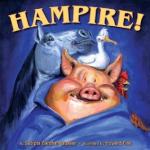 Years ago, I wanted to write a story about a vampire pig named HAMPIRE. A pig with fangs and a Dracula cape. Preferably a vegetarian. But that’s all I knew about him.
It took years—YEARS—to find his story. For a long time, I didn’t have a story for Hampire—but he lingered in my thoughts, waiting for me to figure him out. I had dreams about him, I had nightmares about him—and I wrote draft after draft about him. In the end, he still had fangs, still wore a cape, was still a vegetarian—but everything else about him changed many, many times. And that was OK.
Be Patient
I probably haven’t told you anything here that you didn’t already know, and there’s certainly not anything earth shattering in looking for inspiration as small as a title or a character. But what I want to leave you with is the most important idea about ideas of all:
Be patient.
You can’t force a good idea. You can’t coerce your brain into generating a good idea, nor can you keep working at a bad idea to turn it into a good idea. And, honestly, the more you try to force yourself, the harder it gets to tell the difference between the good ideas and the truly horribly awful ones.
So, be patient. Work on ideas you have, and don’t be afraid to heavily edit as you’re writing. In fact, don’t be afraid of crumpling up a lot of paper and tossing things into the trash—sometimes, the best way to find a great idea is to sort through and dispose of all the bad ideas around it.
I won’t lie to you and say that after dispensing all this advice, I was hit by inspiration and walked away with a great new idea to work on. I didn’t. I still don’t have any ideas for my next picture book. But I also know that when the idea does come, it like won’t be accompanied by a flash of lightning and a gospel choir. It will come from a word, or a phrase, or an image that strikes me and lingers. And that’s where the work begins.
Sudipta Bardhan-Quallen is the author of many, many books for children, ranging from fourteen picture books to over a dozen nonfiction books for young readers. Her picture book Quackenstein Hatches a Family was selected for the California Readers 2011 Book Collections for School Libraries. Ballots for Belva was named to the 2009 Amelia Bloomer List and received an Oppenheim Toy Portfolio Gold Award in 2008 and Tightrope Poppy, the High-Wire Pig was named one of the Best Children’s Books of the Year in 2007 by the Children’s Book Committee at Bank Street. Flying Eagle was a National Science Teachers Association Outstanding Science Trade Book selection for Students K–12 in 2010 and was named one of the Bank Street’s Best Children’s Books of the Year in 2010. Her science book, Nature Science Experiments, was named a finalist for the 2011 AAAS/Subaru Science Books & Films Prize for Excellence in Science Books. And her books Chicks Run Wild and Hampire! are her personal favorites, and just fabulous.
Sudipta speaks at conferences, educator events, and schools across the country, teaching the craft of writing to children and adults. She lives outside Philadelphia with her three children and an imaginary pony named Penny. Learn more about her and her books at www.sudipta.com.
by Kelly Light
 I had written a completely different post here for PiBoIdMo. I attempted to compare the PiBoIdMo experience to my old Zenith console radio. All about tuning in to our own stations. I may yet throw it up on my own blog. I was about to start a drawing for it…
Then I went to The Eric Carle Museum and listened to the epic cartoonist Jules Feiffer talk about creating. After this weekend, it seems unfair to not let others in on his brilliant analogy for his own long career as an author and illustrator.
At the risk of likening myself to his 82 years of creating amazing words and picture; He and I had a moment. He doesn’t know we had a moment. But we had a Fred Astaire moment.
I was watching two squirrels earlier this Fall, as they romped through my yard. The way their feet barely touch the ground. The circled each other, intertwining their tails as they glided from grass, to rock, to tree limb. Their movements so smooth and elegant and effortless. They made me think of Fred Astaire and Ginger Rodgers. So I sketched them.
Back to Jules;
Jules Feiffer grew up in the time when Fred and Ginger danced on the big screen. Just a young boy when the films were new in the cinema, the movies entered his consciousness in a very deep way. He relates those sublime sways and quick steps to his own career as a creative being.
“Fred Astaire made elegance look easy. He made it look easy because he worked at it constantly. He didn’t dance for the applause- he danced to dance. It was his work, it was what he did everyday, it was him. How long was he actually dancing for, four minutes? He put countless hours in for those four minutes on screen.” ~ Jules Feiffer
When Mr. Feiffer sits down to draw, He pours himself a scotch, puts on a Fred Astaire movie—and the music swells… and he dances. Both he and his pen. We look at his drawings and marvel at how effortless they look.
If you are unfamiliar with his work, you can check out Mr. Jules Feiffer’s work here: http://www.julesfeiffer.com/
So I am putting on my top hat, tyin’ up my white tie… brushin’ off my tails for PiBoIdMo with this notion in my head—If you put in the hard work, it will look easy. But it takes that hard work—the hours and hours of continually doing it, backstage, to make it seem effortless, on stage. You have to rehearse, mess up, trip and fall on your face, over and over before you can have your stories go stepping’ out. So revel in the work!
Dance to dance. Draw to draw. Write to write.
Dance like Astaire—on paper.
I am thrilled to give away a print of the dancing squirrels to a dancin’ PiBoIdMo participant! Just leave a comment to enter and we’ll randomly draw a winner one week from today. (Tara’s note: click on the bottom image to see the entire illustration in full size—trust me, you want to do this!!!)

 Thanks to Tara Lazar for the gift of PiBoIdMo. You’ve created the space for us to dance!
Kelly Light is a cartoonist, character artist and illustrator. Her clients include The Walt Disney Co.,Warner Bros., The Jim Henson Co. and many more. She ‘s bringing her own characters to life these days.You can find her online @ her blog http://prettygoodforagirl.blogspot.com/ and on Twitter @kellylight.
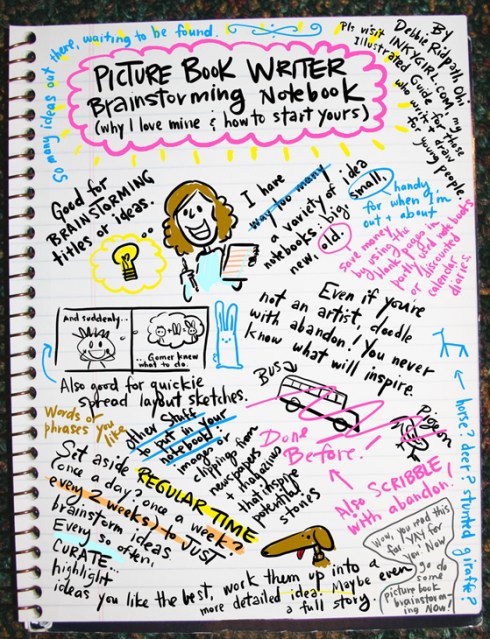
 Debbie Ridpath Ohi writes and draws for young people. She is illustrator of I’M BORED by Michael Ian Black (Simon & Schuster Books For Children, Fall/2012) and has a short story in the upcoming teen fiction anthology TOMO (Stone Bridge Press, 2012). Her blog for kidlit/YA writers & illustrators: Inkygirl.com. Twitter: @inkyelbows.





 Writing for Kids (While Raising Them)