You are currently browsing Tara Lazar’s articles.
 by
by This Thanksgiving, what are you thankful for?
Yes, I know. Your health. Your family. Food on the table. The upcoming football game. And, perhaps, some Black Friday shopping.
Those are all good and worthy things. I am thankful for them too.
But, it’s Picture Book Idea Month. And that means I am thankful for ideas. All kinds of them.
As I writer, I get asked, “Where do you get your ideas?”
A lot.
For a while, I didn’t know what to say.
But then, I figured it out. Or, I should say that Wendy Reid Crisp did. She wrote an essay in a book that is the perfect answer. I wish I could repost it for you here. But, you know, copyright issues.
The essay is on Page 26 of her 1997 book DO AS I SAY NOT AS I DID: PERFECT ADVICE FROM AN IMPERFECT MOTHER. It’s called, “There Are No Big Breaks.”
Anyway it’s about an aspiring actress in New York who is riding the subway and notices a lone grape rolling down the center aisle. She can’t figure out where it came from, but appreciates the absurdity of the moment enough to write a letter to the New York Times. Her letter is printed.
Then, the actress (who, remember, is unknown) goes to an audition. The director thinks her name sounds familiar and finally asks, “Are you the woman with the grape?” She acknowledges that she is. He praises her eye for detail and understanding of human behavior. She gets the part.
Reid Crisp concludes her essay by writing, “There are no big breaks. There are only rolling grapes. Some people see them, and some people don’t.”
To me, successful writers are people who notice the grapes in life. The weird, funny moments. The unexplainable occurrences. The odd socks the mail carrier is wearing. The squirrel that you can’t stop watching because it reminds you of your Uncle Esteban—except, you know, smaller. The snippet of conversation you overheard from the next checkout lane that made no sense but won’t get out of your head.
That’s where writers get their ideas.
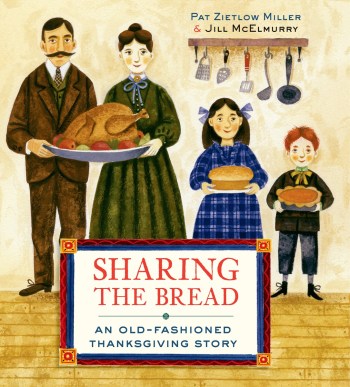
For my Thanksgiving picture book, SHARING THE BREAD: AN OLD-FASHIONED THANKSGIVING STORY (Schwartz & Wade, 2015) I got the idea from some weird words that popped into my brain during one of those boring meetings that make you question every career choice you’ve made to get to this point in your life.
The words were:
Mama, be a cooking pot, cooking pot.
Big and round and black and hot.
Mama, be a pot.
They came out of nowhere and raised logical questions: “Who was Mama?” “And why on earth should she be a pot?”
The words made no sense. I hadn’t been thinking about mothers or pots or cooking. But I liked their very weirdness. I emailed them to myself at home and played around with them that night.
In other words, I noticed the grape and decided to do something with it.
Not that it was easy. First, I thought I might create some kind of play or game where kids could pretend to be different items.
Then, I thought the family might find the items instead of being them. Soon everyone was cooking a meal.
But, the rhyme scheme seemed off. So I revamped, using Dori Chaconas’ ON A WINTRY MORNING as a mentor text. When I told her this at a recent Society of Children’s Book Writers and Illustrators conference, she told me she used a different mentor test to write her book, so I guess we’re all sharing the love.
Then, an editor declined the manuscript but suggested the family make a holiday meal. Enter turkey and cranberries and lots of hair-pulling. (What rhymes with turkey anyway? “Murky?” “Jerky?” “Perky?”)
But, I eventually made the story work, and another editor was interested. Anne Schwartz had me revise again. And again. And then suggested I add a rhyming refrain. Which was incredibly hard to do, but unquestionably added a lot to the book.
Some writers carry notebooks to jot down rolling grapes when they see or hear them. Others keep the grapes corralled in their heads. Do whatever works for you, but notice those grapes. They just might end up in the best fruit salad you ever created.
Oh, and because I do get asked this a lot, here’s what the first stanza of the book eventually became after all the revision:
Mama, fetch the cooking pot.
Fetch our turkey-cooking pot.
Big and old and black and squat.
Mama, fetch the pot.
Have an amazing Thanksgiving!
Pat Zietlow Miller has three picture books in print and seven more on the way. Her debut, SOPHIE’ S SQUASH, won the Golden Kite Award for best picture book text, an Ezra Jack Keats New Writer Honor and a Charlotte Zolotow Honor. It also won the Midwest Region Crystal Kite Award and was a Cybils’ finalist. WHEREVER YOU GO briefly made the Midwest Booksellers bestseller list, and SHARING THE BREAD was, at one point, the No. 1 Amazon.com release for new Thanksgiving books. Pat blogs about the craft of writing picture books at http://www.picturebookbuilders.com. She lives in Madison, Wisconsin, with one wonderful husband, two delightful daughters and two particular cats. Find her on Twitter at @PatZMiller.

Pat is giving away a signed copy of SHARING THE BREAD: AN OLD-FASHIONED THANKSGIVING STORY.
Leave a comment below to enter. One comment per person, please.
This prize will be given away at the conclusion of PiBoIdMo. You will be eligible for this prize if:
- You have registered for PiBoIdMo.
- You have commented ONCE ONLY on today’s post.
- You have completed the PiBoIdMo challenge.
Good luck, everyone!
 by AJ Smith
I have a new idea. Well, it’s a start, anyway, and that’s something important; Something special. Something INSPIRED!
Some writers are intimidated by the notion of idea generation. What is the inspiration for your ideas? Where do ideas come from? How can I create stories and characters that aren’t already told and tired? (How can I write a guest blog for PiBoIdMo that’s not already told and tired?)
Idea generation is my favorite step of the writing process—everything is fresh out of the egg with limitless potential. And it’s one of my favorite topics to delve into with my Children’s Book Illustration students at the college level and also with high school art students (yes, even artists have ideas… twisted, caffeine-induced ideas). Actually, for illustrators, there’s often the related fear of the “blank canvas.” I enjoy talking and teaching about ideas and where they come from because there are so many ways to approach it, and there’s not really a wrong way… but just maybe, I can provide a few new ways to help shore up the chin straps of your thinking caps.
1. I’ll start with (but won’t spend too much time on) the tried and true traditional brainstorming methods: free form lists, mind maps, and word webs. They all have their place and I admit to using them all the time.
But you also probably know and use similar methods—if you don’t, google told me you should start here: https://www.google.com/search?q=brainstorming+ideas+word+webs+lists&ie=utf-8&oe=utf-8 and now, there are also apps to help you brainstorm like Mindscope and Random Word Generator. My kids and I even use Rory’s Story Cubes around the dinner table. All of the above are great places to start but let’s try some techniques specific to storytelling aimed at children…
2. First lines! Let’s reference some of the classic first lines that hook editor and reader… That means the prerequisite:
There was a boy called Eustace Clarence Scrubb, and he almost deserved it.
If you are interested in stories with happy endings, you would be better off reading some other book.
And of course,
Where’s Papa going with that ax?
First lines are great hooks to pull in editors, agents, and young readers. The best first lines simultaneously evoke emotion and interest while causing the reader to ask questions. And they often do so with great immediacy. As such, they make for the perfect idea springboard. Here are a couple off the top of my medulla:
With the amount of gum I put in Henry Beauregard’s hair, I really believed I’d finally get him to ask me on a date.
or
Mrs. Nussbaum scraped the few remaining crumbs of her lunch off her tray into the grate under her desk and hissed, “You hush down there.”
or maybe
The whole car rumbled from the impact.
3. This last one leads me to what I like to call the ping-pong method. Sometimes one idea will spur another and then I lob it back to the original idea and around and around we go. Many times, for me, this means something I write will inspire a new drawing and that drawing will in turn alter the original idea or spawn a completely new one. Here’s an example of doing that with the line above:
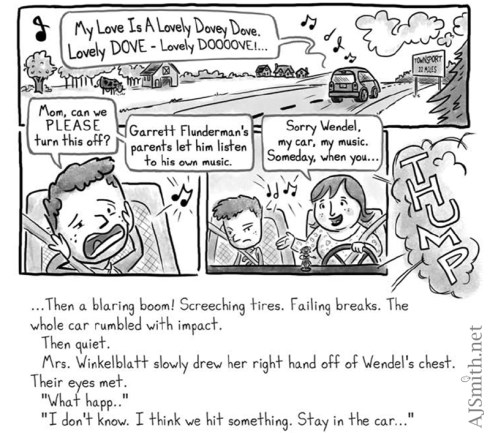
And that ping-pong method of writing-to-drawing-to-writing is one I recommend for non-illustrators (maybe especially for them) as well.
4. Give them what they (need and) want and then take it all away! Every character has a goal and every good story has something standing in the way of that goal. But underneath all that, kids have very basic emotional needs:
- a. The need to feel empowered or be in control,
- b. the need to succeed/win or master a skill,
- c. the need to nurture and help,
- d. the need to love and be loved and/or receive attention/acclaim.
Obviously you must supply the specific goal on top of these desires, but these fundamental emotional needs can help supply the ideas for more specific wants (to tour the world earning kazillions in a kazoo band, to win the heart of Henry Beauregard, to graduate from Spider Spy Academy with top honors, etc). Now what would stand in the way of those needs and wants?
5. Don’t just make obstacles. Make seemingly insurmountable ones. And building obstacles around fears is a great idea generator! And just what are kids afraid of? The most common (by age – and that’s an important distinction) are: Ages 1-5: divorce, loss of parent, monsters, separation, and unfamiliar experiences (animals, environments, noises, strangers, etc). Ages 6-9: loss of parent, burglars, criticism, the dark, divorce, injury, monsters, new situations, personal danger, and war (think of how culture, time period, and geographic location can impact that last one). Tweens: loss of loved one, loneliness, kidnapping, divorce, personal danger, war. YA: loss of loved one, divorce, romance/relationships, drugs, kidnapping, large crowds, gossip, personal danger, terrorism/war. Getting specific with these fears is a lot of fun. It’s even more fun figuring out how they conquer those fears and achieve their goal…
6. How do they fulfill their wishes?
- a. Achievement by the main character: (this is the method we’re told is preferred by editors). The protagonist has to go out and make it happen by their own doing!
- b. Magic/Supernatural: (Harry Potter, anyone?) – this ties back into the need to be empowered and the need to master a skill.
- c. Science/Technology: Think Iron Man for using technology to their advantage… or The Incredible Hulk, for having been effected by it.
- d. Plain old Dumb Luck: This can provide for lots of laughs, but can make it harder to root for a character who seemingly achieves their goals through random series or happenstance.
7. Along the road to achieving their goal, your character NEEDS to have transformed. This is the basis of “character arc” and it’s another quick means to fruitful idea generation. Some of the classic arcs/transformations are:
- a. angry to happy
- b. boring to exciting
- c. creature to human
- d. loser to winner
- e. novice to master, klutz to athletic
- f. rags to riches
- g. scared to brave
- h. selfish to selfless
- i. shy to confident
- j. small to big
- k. unloved to loved, nerd/geek/invisible to popular
- l. ugly to beautiful
- m. weak to strong
8. Opposites Attacked! I love when characters are created with traits opposite to what might be prototypical for their job, background, or character “type”. It’s a nice way to help keep characters relatable and flawed. And you can employ the above classic transformations to help generate ideas: The tortoise who wanted to fly, the eagle who COULDN’T fly, the gumshoe groundhog afraid of shadows, etc. Along the same lines, try creating characters with purposefully contradicting, conflicting, and/or ironic traits: the veterinarian who is allergic to pets, the vegan butcher, the pilot with acrophobia, etc. The same goes for objects and setting: Camouflage high heels or how about the world’s most boring amusement park?
9. Use word play as a vehicle to drum up ideas. This can be through alliteration (a bit overused in character names, IMHO), anagrams, rhyming, palindromes, and even onomatopoeia. The best is you can apply these to book titles, character names, gadgets, and places/settings. “OW-L” is my latest idea cooked up through wordplay.

10. Stuff… Everybody loves stuff. Kids REALLY love stuff. Thinking up your own breakfast cereal, fast food restaurants, gadgets, rusty skeleton keys, maps, sneakers, thing that came in the mail, old baseball card, vial full of fairy tears, or unexpected gift from a secret admirer are great fun! But how and why your characters utilize their stuff – that’s where small ideas can lead into tangible story pieces. Could you use an object as a motif, emblematic of something greater? Is it just a tiny detail or can you use their stuff to help build character and drive the story? Check out how other authors use their stuff by perusing the study guides at http://www.BookRags.com
11. Oh, the places you’ll go (write about): Ideas can be hatched through setting and the characters and situations you choose to put in those settings… some of my favorite, particularly kid-centric places that can help jumpstart the old noodle: playgrounds, movie theaters, bedrooms, attics, under rocks, between couch cushions, inside wishing wells, sewers, zoos, under couch cushions, backyards, alley-ways, sports stadiums, the mall, atop tree forts, toy stores, ice cream stands, the beach, undersea anything, caves, volcanoes, mountains, other planets, school, the library, the woods… How would your character act when taken out of their element and dropped into unfamiliar territory? What places can harbor a secret something?
12. New twists on an old classic… This is a tricky one, as the market is flooded with these types of books every year, and unless you’re doing it in a really strong, wholly original way (see: Lazar, Tara. “I Thought This Was A Bear Book” or Lazar, Tara. “Little Red Gliding Hood”), you are swimming against the current.
13. Endings! Some writers HAVE to know the ending of their story before they dig too deeply into the rest of it… as an exercise, try starting with a hypothetical last line as a fun means to generate story ideas. It at least provides a target (even if you don’t really know what to aim at that target yet) — I’ll give you a few and you cook up some simple stories for whatever the heck might have come before it…
No more tears or tantrums, not for now.
Gertie is a good girl (until she’s not again, anyhow).
or how ‘bout:
With Saturn’s rings back up in the sky and the stars all put away one by one, Martin P. Teabuckle, Cosmic Cowboy closed his eyes and hoped to dream; The moon could wait until morning.
or maybe a shameless plug from “Even Monsters”:
Sometimes even monsters need a kiss goodnight.
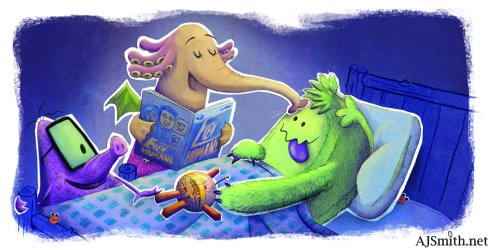
13. But maybe inspired ideas are your forte’ – so then, WHAT DO WE DO WITH THEM? I’m certainly open to suggestion. I’ll defer to a very non-kidlit author… Stephen King turned me on to the simple power of asking, “what if?” in his must-own book, On Writing. Take some of the above items you’ve toyed with and try asking what if?… Take a simple, commonplace situation and take it somewhere off the wall, take the implausible and make it possible. Ask questions!
What if Tara Lazar asked you to write a 400-800 word blog post and you gave her 1800?
AJ Smith teaches Children’s Book Illustration at Montserrat College of Art in addition to high school art in his hometown of Newburyport, MA. He also enjoys giving writing and illustration workshops at SCBWI. AJ’s first trade picture book, Even Monsters came out in 2014. His next book, “Tyra & Tops” hits stores in 2016.
Before writing and illustrating children’s books, AJ worked as an animator/designer on fun shows like Courage the Cowardly Dog, Sheep in the Big City, and Word Girl. He continues to work with exciting clients like Cartoon Network, Fablevision, PBS Kids, Ranger Rick, Scholastic, Sesame Street, Sourcebooks, and Weston Woods. See more of his work at AJSmith.net.
 AJ is giving away a copy of EVEN MONSTERS.
Leave a comment below to enter. One comment per person, please.
This prize will be given away at the conclusion of PiBoIdMo. You are eligible for this prize if:
- You have registered for PiBoIdMo.
- You have commented ONCE ONLY on today’s post.
- You have completed the PiBoIdMo challenge. (You will have to sign the PiBoIdMo Pledge at the end of the event.)
Good luck, everyone!
 by
by It’s Day 24 and I don’t know about you, but at this point, I’m thinking I’ll never have a good idea again. How can there still be a whole week left?
Before you start looking for inspiration at the bottom of that can of pumpkin pie filling (not that I ever do this), take heart! I have a solution for these moments of doubt, exhaustion and brain-fog. What is this magical cure of which I speak?
Notecards!
That’s right, notecards to the rescue!
I’ve loved notecards ever since elementary school. Making them feels productive and like I’m accomplishing something. Our notecards will cover the four essential ingredients for a story:
- Character
- Setting
- Goal
- Obstacle
Make at least five notecards for each ingredient, and give yourself a range within each category, from general to specific.
The character category can include a generic boy, or something super specific like, the world’s loudest burper.
Setting can be a precise place, like Beth’s Toy Shop, or it can be an entire season, like winter.
The goal cards are what our characters want to achieve, and the obstacles are what stand in their way. A goal could be putting the star on top of the Christmas tree, or something universal, like acceptance. Obstacles could be grand, like fear, or explicit, like Uncle Frank.
Here are some examples for each category:
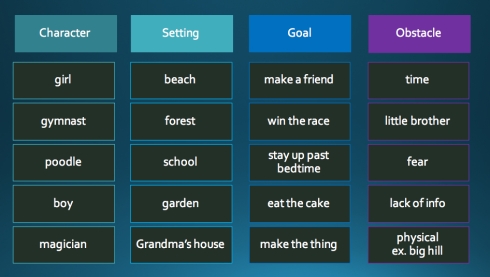
Making these notecards is a fantastic exercise in and of itself, and will get your creative juices flowing. Keep your notebook handy while you’re making them so you can jot down the story ideas that come to you throughout.
Once you have your four piles of notecards, pick a card (any card) from each. This is your story recipe.
CHARACTER + SETTING + GOAL + OBSTACLE = STORY
For example, girl + beach + make a friend + time.
Let the ingredients simmer in your imagination until a story sizzles to the surface. One story that could come from these ingredients is about a girl and the friend she makes on vacation in San Diego. Though their time together is fleeting, it is no less special.
The beautiful thing about this exercise is that you don’t have to stick with the cards you choose. If your cards spark an entirely different premise, go with that one! If they bring up a memory, explore it!
There are many variations to this exercise, like only choosing two cards. If you choose a character and goal card, tailor the obstacle and setting to fit. The obstacle you make up should create as much tension as possible, and the setting should enhance the story.
For example, if you chose magician + eat the cake, an obstacle could be that the magician doesn’t have enough information, and doesn’t know the spell. Or the obstacle could be that his/her rabbit keeps eating every cake the magician whips up. The setting of the story could be a castle or talent show.
The more notecards you make for each category, the more story possibilities you’ll have.
So write on, dear PiBoIdMo-ers! Make those notecards and behold the tasty smorgasbord of stories you cook up!
Cheers!
Jesse
Jesse Klausmeier’s acclaimed debut picture book, OPEN THIS LITTLE BOOK, won a 2013 Boston Globe-Horn Book Honor for Excellence in Children’s Literature. She has worked at Nickelodeon Animation Studios and Penguin’s Dial Books for Young Readers, where she was an assistant editor. Jesse lives in Madison, WI where she writes and edits children’s books, cheers for the Packers, and eats way, way, WAY too many cheese curds. Visit her online at JesseKlausmeier.com and on Twitter @JesseKlausmeier.
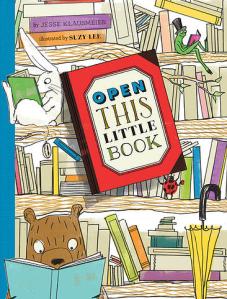 Jesse is giving away a copy of OPEN THIS LITTLE BOOK.
Leave a comment below to enter. One comment per person, please.
This prize will be given away at the conclusion of PiBoIdMo. You are eligible for this prize if:
- You have registered for PiBoIdMo.
- You have commented ONCE ONLY on today’s post.
- You have completed the PiBoIdMo challenge. (You will have to sign the PiBoIdMo Pledge at the end of the event.)
Good luck, everyone!
 by
by I’ve always loved picture books. I love those oh-so-perfect opening lines, the breathtaking art, and those endings that you don’t expect, but that make you say “Of course!” I also love the giggle-worthy characters, the “ahhhhh…” of the perfectly plotted story, and of course, the “I can’t wait to read that again,” feeling.
I knew without a doubt that I wanted to write picture books, but when I first began writing for children, my first publications came in children’s magazines. I thought magazine writing would be a way to help me learn and explore and gain confidence. And it was. I had a nice amount of success writing for magazines. But my heart was still with picture books—that’s where I always wanted to end up. So even as I wrote rebus stories for Highlights and inspirational middle-grade short stories for Clubhouse, Jr., I always had a few picture book manuscripts in the works.
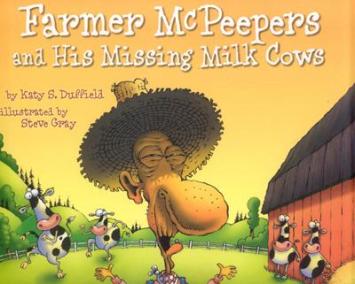
That effort eventually led to the publication of my first picture book, FARMER MCPEEPERS AND HIS MISSING MILK COWS (illus. Steve Gray) in 2003.
After Farmer McP sold, I thought I’d done it. I thought I had it figured out. I thought I had an ‘in’ to the picture book publishing world. But it wasn’t… quite… that… easy. I kept writing and submitting picture books, but had no luck regarding acceptances. I received some personal replies from editors. I got invitations to submit more work—but no sales.
During that time, I also kept hearing all these negatives about the picture book market—“the market is soft.” “the economy is awful.” “No one’s buying picture books.” “It’s harder than ever to get a picture book published.” All of these “no’s” kept bombarding me. All of these negatives kept running over and over again in my mind. I really began to internalize these things. And that made me begin telling myself that I would be lucky if I ever got another picture book published. So, even with my overwhelming desire to write picture books, I decided if I wanted to write for publication, I would need to move in a different direction.
I’ve always loved research, and I’ve always loved reading about weird, quirky topics so it made sense that I’d begin exploring nonfiction writing. Nonfiction wasn’t, of course, fictional picture book writing, the thing I most wanted to write, but it did involve something I enjoyed, and it would be a new adventure for me.
Over several years, I ended up writing a BUNCH of nonfiction books. I absolutely enjoyed writing nonfiction (and I still do!), but my love for writing picture books never strayed too far from my consciousness. Actually, my love for picture books felt almost like an obsession. I just could not shake it. It felt as if there was a hole inside of me that could only be filled with picture book writing. So, I began to think: Wait a minute. I want to write picture books more than ANYTHING. Am I going to give up on writing picture books without truly trying? Am I going to allow other people to tell me I can’t, without even giving it a shot? Shouldn’t I trust myself? Shouldn’t I believe in myself?
So I decided to rededicate myself to my true writing love—picture books. I couldn’t NOT let myself go for something that meant so much to me.
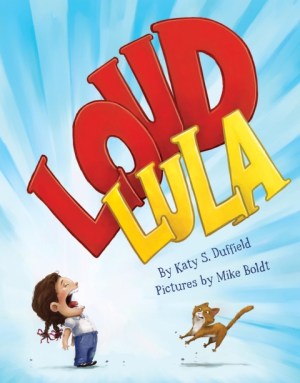
And I’m happy to say that dedication has yielded results. My second picture book LOUD LULA (illus Mike Boldt) was released in late October. And another picture book, ALIENS GET THE SNIFFLES, TOO (illus K.G. Campbell) is forthcoming from Candlewick Press.
Soooo, you had to endure that entire story, simply so I could tell you—
“Don’t give up!”
“Believe in yourselves!”
“If picture books are your passion—write them!”
And NEVER let anyone tell you: “You can’t.”
Katy Duffield LOVES picture books—reading them and writing them. And she has a newfound reason (as if she needs another reason) to overstuff her picture book shelves—her first grandbaby!
Katy is the award winning author of more than twenty children’s books including the picture books Farmer McPeepers and His Missing Milk Cows, illustrated by Steve Gray (Rising Moon Children’s Books), Loud Lula, illustrated by Mike Boldt (Two Lions, 2015), and the forthcoming Aliens Get the Sniffles, Too, illustrated by K.G. Campbell (Candlewick Press, tba).
Katy has also written many nonfiction books for older readers, both fiction and nonfiction for many children’s magazines, and for several educational publishers.
You can connect with her at KatyDuffield.com or on Twitter @KatyDuffield.
Katy is giving away a copy of LOUD LULA!
Leave a comment below to enter. One comment per person, please.
This prize will be given away at the conclusion of PiBoIdMo. You are eligible for this prize if:
- You have registered for PiBoIdMo.
- You have commented ONCE ONLY on today’s post.
- You have completed the PiBoIdMo challenge. (You will have to sign the PiBoIdMo Pledge at the end of the event.)
Good luck, everyone!
 by
by I’m sure you don’t have this problem, but I’m not exactly smooth in social situations. Not too long ago, for example, I complimented a friend by telling her that her hair looked like a tornado. For some reason she wasn’t terribly flattered. I’m certainly better on paper than I am in person–that might be the definition of being a writer, right?–but sometimes my tendency to say strange things is actually useful. In fact, two of my picture books came about that way.
Way back in 2010, Tara was nice enough to let me share the story of how I got the inspiration for my first picture book. The short version: I was getting ready to take the dog for our morning jaunt. (The word “walk” can no longer be uttered in our house.) As she whimpered in impatience, I told her, “Hold on, Dogosaurus Rex! We’re going!” During our stroll, my brain started churning. What would a Dogosaurus Rex be? A dino/dog hybrid? A dog that acts like a dinosaur? A dinosaur that acts like a dog? Whatever it was, I knew I had to write about it. And thus Dogosaurus Rex, my forthcoming picture book with Henry Holt, illustrated by Kevin Hawkes, was born.
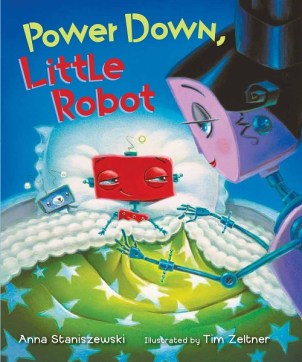
Fast forward a couple years. This time, as I was going to sleep, I turned to my husband and said in my best robot voice, “Dream sequence initiated.” My husband, who’s used to the oddities of being married to a writer, gave me a “yes, dear” look and started snoring. But my brain was churning again. Was there a Goodnight Moon about robots? When I looked it up, the type of story I was imagining didn’t exist. I knew I had to write it, and this past March, Power Down, Little Robot, illustrated by Tim Zeltner, was published by Henry Holt.
I have a theory about those moments when we do/say things that other people think are odd. I suspect our imaginations are to blame. While we’re trying to go along in our everyday lives, pretending that we’re just like everyone else, our imaginations don’t shut off. And sometimes the things that our imaginations concoct can’t help but burst out of our mouths. When this happens, you might wind up offending a friend when you’re trying to pay her a compliment, but it might also mean stumbling upon the kernel of a story idea.
So don’t be embarrassed next time you do or say something that makes others scratch their heads. Grab a pencil and write it down! You never know where that bit of strangeness will lead you. Now, if you’ll excuse me, I’m off to brainstorm a story about a girl whose hair turns into a tornado. And if it ever gets published, I know exactly which friend I’ll dedicate it to.
Anna Staniszewski is the author of the My Very UnFairy Tale Life series, the Dirt Diary series, and the Switched at First Kiss series, as well as the picture books Power Down, Little Robot and the forthcoming Dogosaurus Rex. When she’s not writing, Anna spends her time teaching, reading, and eating far too much chocolate. Visit her at AnnaStan.com.
Anna is giving away a copy of Power Down, Little Robot.
Leave a comment below to enter. One comment per person, please.
This prize will be given away at the conclusion of PiBoIdMo. You are eligible for this prize if:
- You have registered for PiBoIdMo.
- You have commented ONCE ONLY on today’s post.
- You have completed the PiBoIdMo challenge. (You will have to sign the PiBoIdMo Pledge at the end of the event.)
Good luck, everyone!

Photo: Stacy Murphy Photography
Inspiration. Oh inspiration. Wherefore art thou?
It is Day 21, for goodness’ sake. Are we all here? Have we lost anyone? I hope your well hasn’t run dry. Not yet, at least. If you’re like me, you have visions of cranberry sauce and pumpkin pie dancing around in the back of your head. Still, Thanksgiving must wait for now. We’re busy serving up some PiBoIdMo on our festive plates.
I cannot tell you how grateful I was for my notebook of ideas from last year’s PiBoIdMo adventure. In my household, there’s no such thing as a long stretch of time to write (maybe this is why I’m a poet). If I’ve stocked up on the “Idea Shelf” however, I’m golden. It’s like finding a collection of chocolate bars hidden inside the piano bench (hey, it’s possible) long after Halloween has flickered away. This way when the opportunity to write arrives at my doorstep, I can go for it, even if it’s for a half hour at a time.
Ah, but I digress. Onto inspiration!
I often mention the art of observation to students when I visit schools. I love what Mary Oliver has to say on this topic. “To Pay Attention, this is Our Endless and Proper Work.” My inspiration for my first picture book, My Sister, Alicia May, happened through observation.

During the summer of 2006, I visited a childhood friend and her family. As we walked down a long country road, Cheri and I began to talk about her middle child, Alicia, who has Down syndrome. Ideas began to percolate and I jotted them down, but the heart of the story came from my observations of the two older sisters, Rachel and Alicia, and their everyday interactions with one another.
My second book, Double Happiness, began as a poem.

Ironically, that poem never made it into the book so I’m going to share now. That way it will see the light of day (ha!).
Rain
All day,
rain.
Yesterday, too.
It’s glassy and light,
like bean thread
noodles, sloshing
the window panes.
We’ve done everything,
Jake and I.
We rolled our bodies
inside rugs, tight
like spring rolls.
We ate Mr. Lee’s cherries;
our lips and fingers
turned purpley-red.
We colored napkins
with the pits—see,
my cherry tree?
See, Jake’s scribble?
When we were done,
we watched more rain.
Really, we knew,
there was nothing left to do.

After much revision, the story came to have a dragon, a move, and lots of snow. There’s no rain or cherries or Mr. Lee, but the initial poem got my imagination going. When people ask me for advice on writing, I always say “write anything and everything.” Don’t limit yourself to one genre. Becoming a better poet helped me to become a better children’s author (note, still a Work In Progress).
Oddly enough, my fresh-off-the-press book, The Story I’ll Tell, was inspired by a day dream.
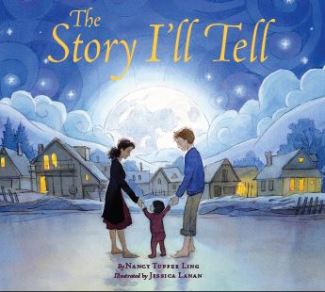
As I was driving down the highway one day, an image came to me—a baby on the doorstep of a home in the mountains. I began to ask myself questions. Who will open the door to the child? And how did this child end up there? And what kind of stories would the parent tell her child about that journey to their doorstep? I found these questions to be helpful for inspiration, as I thought of more and more fantastical ways that the baby came to his new home.
Still, there was one line that pivoted the story, and that’s my favorite line in the book today: “. . . there are times when I think I will tell you the truth, for the truth is a beautiful story too.” With that line I came to a realization. There would be a nugget of truth in each of the fantastical stories that the parent would tell her child, and this patchwork of truths would be stitched together to reveal the most beautiful story in the end—a story of adoption.
So here’s to your 21 ideas, and to this observation-making, poem-tackling, dream-weaving journey. Looks like you’re on the way to your next story!
Nancy Tupper Ling is the winner of the prestigious Writer’s Digest Grand Prize and the Pat Parnell Poetry Award. She draws her inspiration from the multicultural background of her family and the interwoven fabric of familial culture which is, on the surface, seemingly every day. She is the author of My Sister, Alicia May (Pleasant Street Press), Double Happiness (Chronicle Books), The Story I’ll Tell (Lee & Low Books) and the founder of Fine Line Poets. Currently she resides in Walpole, Massachusetts with her husband, Vincent, their two girls, two fish and a parakeet named Nimbus.
You can learn more about Nancy at NancyTupperLing.com, Facebook and Twitter @BlushingFawn.
Nancy is giving away a copy of Double Happiness.
Leave a comment below to enter. One comment per person, please.
This prize will be given away at the conclusion of PiBoIdMo. You are eligible for this prize if:
- You have registered for PiBoIdMo.
- You have commented ONCE ONLY on today’s post.
- You have completed the PiBoIdMo challenge. (You will have to sign the PiBoIdMo Pledge at the end of the event.)
Good luck, everyone!
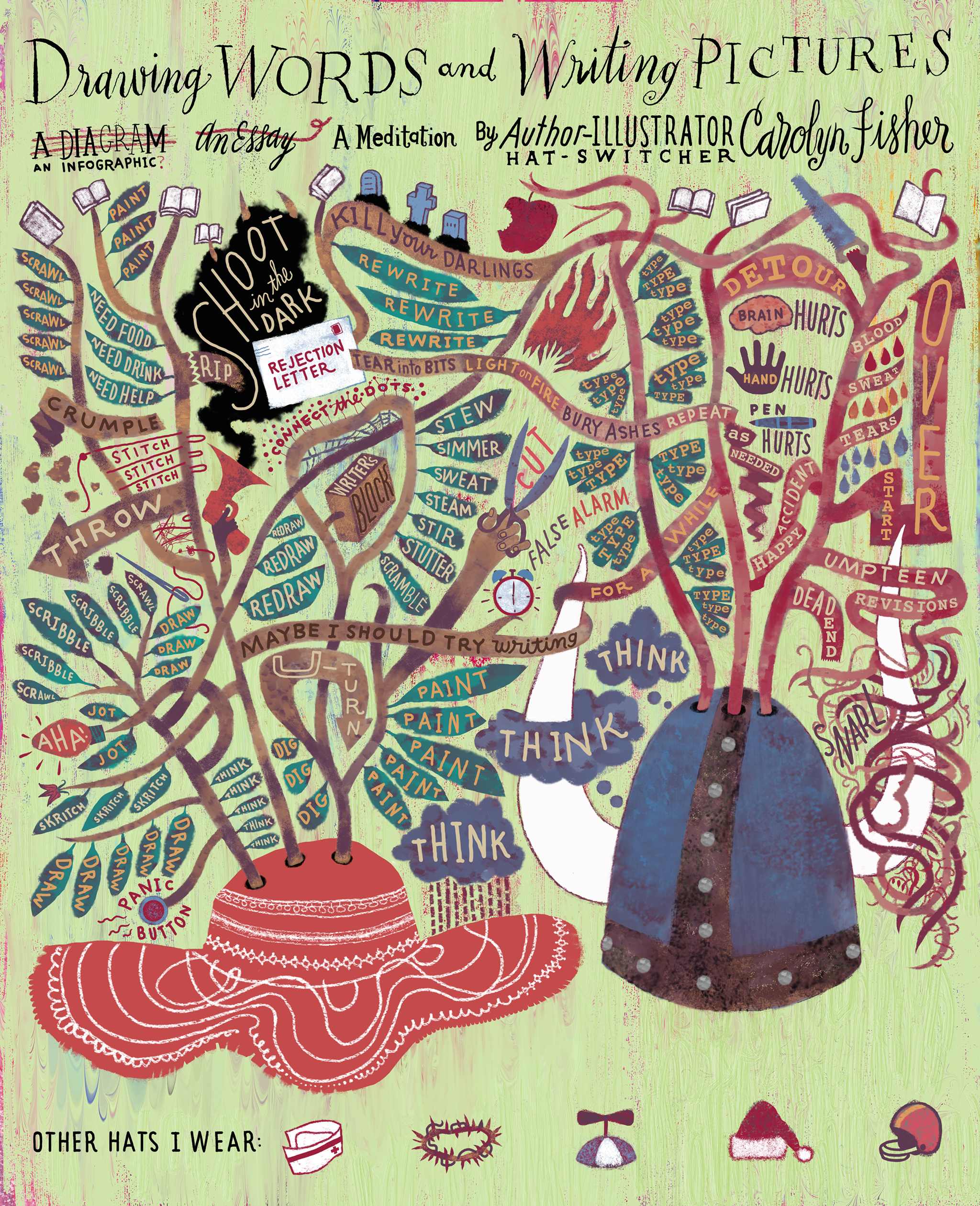
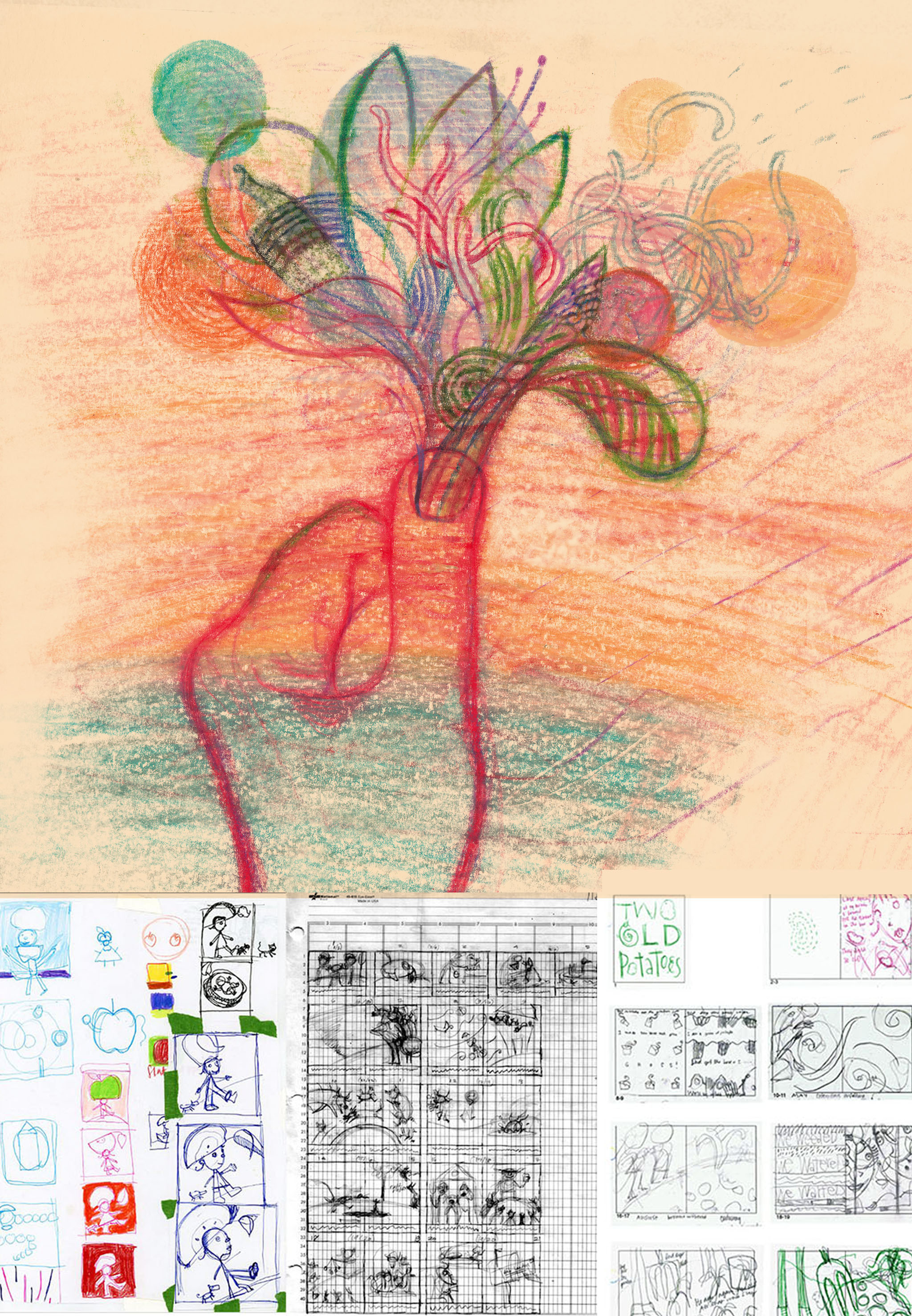
As you can see from the above, making a book is simple. I NEVER get stuck, beat-up or depressed!
But if I DID happen to get off track, I would switch hats. Draw for a while instead of writing. Write for a while instead of drawing. Change locations from my studio to a coffeeshop.
Just in case you’re having an off day, I have 3.5 suggestions:
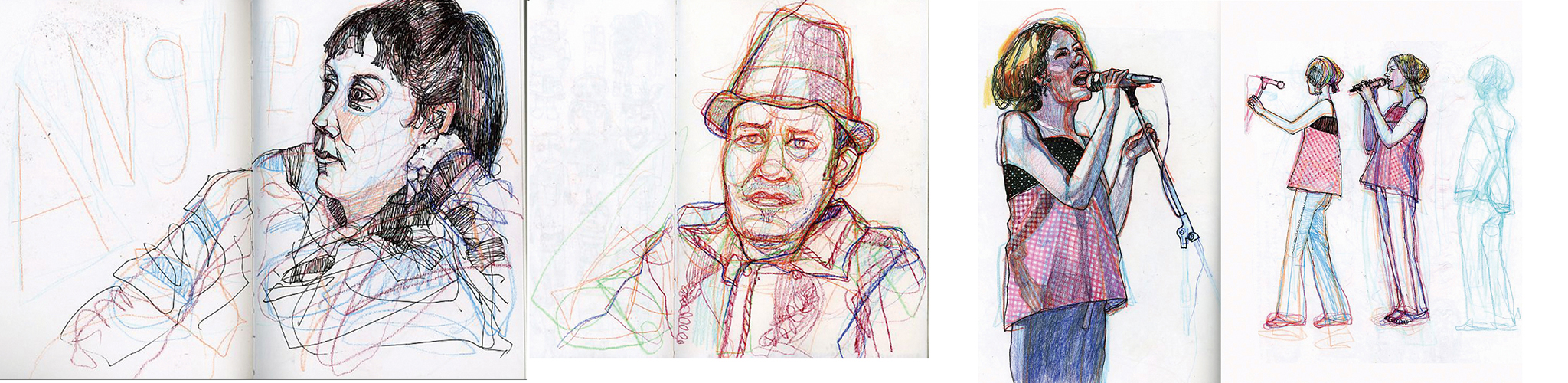
1. Keep a sketchbook or notebook stuffed with people, places, or things.
Just for fun, pick a page at random to use as a story starter. Or pick two pages.
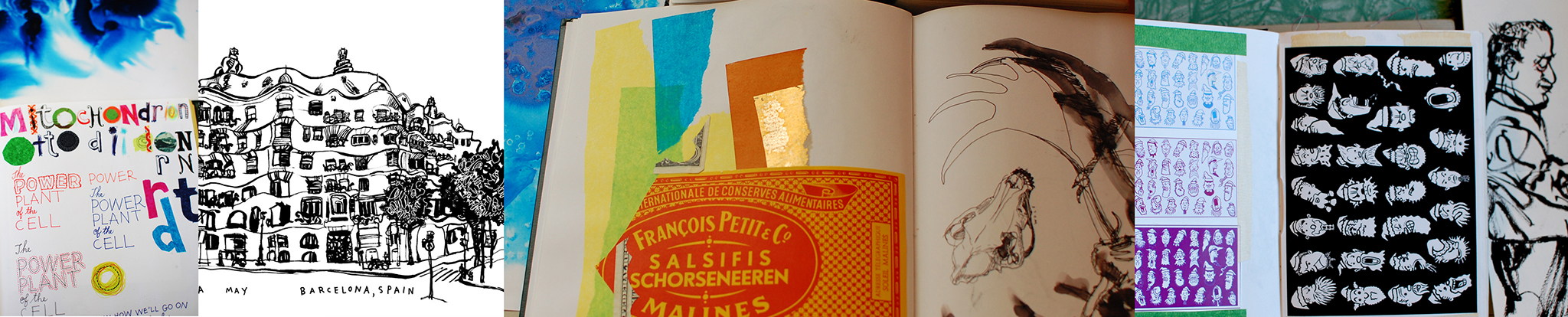
2. Use thumbnail sketches
Draw quick, small sketches to generate ideas when you’re brainstorming. Test variations of your ideas. Ask: what if?
3.0 Throw away your eraser.
The eraser makes you uptight. You don’t need the negative energy emanating from its pink pearly heart.
3.5 Draw or write in drafts.
Often I will start a drawing with a light color for a first draft. For the second draft, I draw in a darker color right on top, fixing problems and testing variations along the way. I’ll repeat this with successively darker pencils or pens…and I won’t erase any of the mess. I like the story that my quavery searching lines tell about how my idea took shape.
My writing heroes are relentless revisers…they will rework their stories fifty seven times, just to try them out in different ways! No exaggeration. So don’t be afraid to draw or write something twice. Or more!
 ]
]
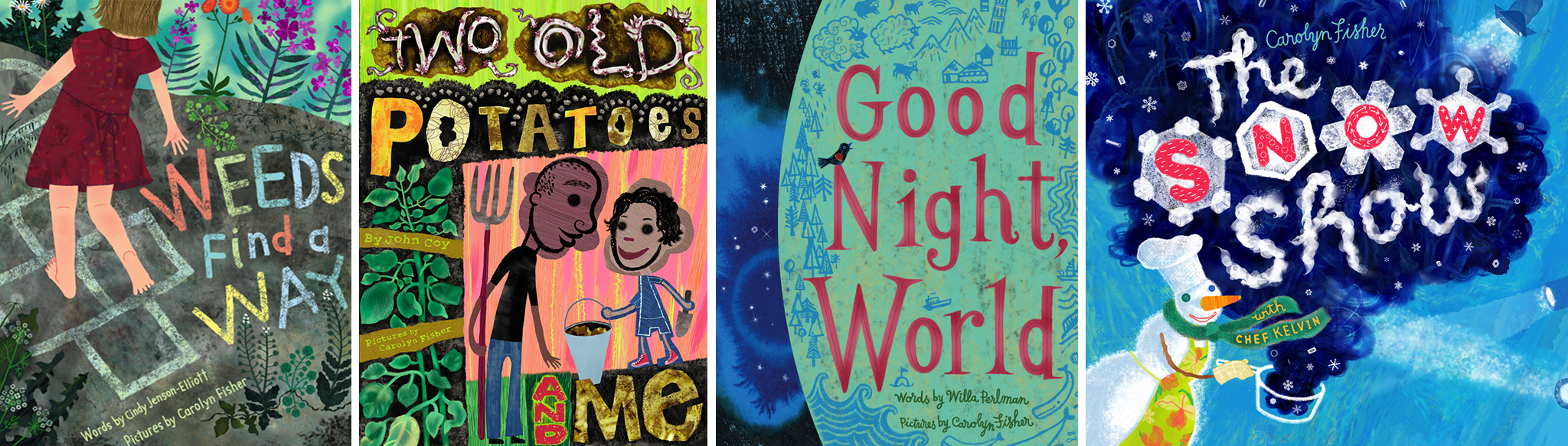
 Artist-author Carolyn Fisher switches hats in Calgary, Canada, where she lives with her husband and son. She has illustrated six books, two of which she also wrote. Her most recent book, Weeds Find a Way, earned a Notable title from the American Library Association, as well as garnering notice from the Society of Illustrators LA, Bank Street College, the California Reading Association, the National Council of Teachers for English and more. In addition to teaching at the Alberta College of Art and Design for seven years, Carolyn has talked to thousands of kids in scores of libraries and schools about writing and art.
Visit Carolyn Fisher online:
Blog at CarolynFisher.com or follow her on Twitter: @carolynnfisher.
Carolyn is giving away a free 15-minute Skype session for a classroom or group. She is happy to talk to adults or kids. The prize can be regifted to your favorite school, library or class.
Leave a comment below to enter. One comment per person, please.
This prize will be given away at the conclusion of PiBoIdMo. You are eligible for this prize if:
- You have registered for PiBoIdMo.
- You have commented ONCE ONLY on today’s post.
- You have completed the PiBoIdMo challenge. (You will have to sign the PiBoIdMo Pledge at the end of the event.)
Good luck, everyone!
by Adam Lehrhaupt & Ame Dyckman

Remember snarfing Cookie Crisp with your favorite stuffie and watching this guy—um, THESE guys on Sesame Street?
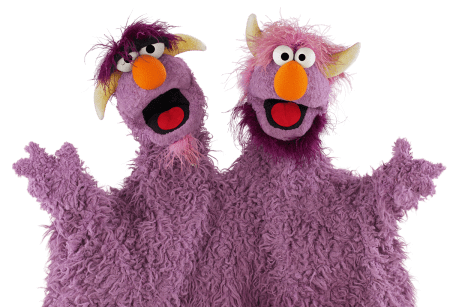
Yeah, our Moms wouldn’t let us have Cookie Crisp either—STILL bummed! But back to our point! These guys—
ADAM: “We have a point?”
AME: “’Course we have a point, Fuzzy! Now, pipe down! We’re in Narrative Mode!”
THESE GUYS were able to tackle ANY challenge!
Driving a car!
Spelling “CHEESE.”
Even PiBoIdMo.
ADAM: “The 2-Headed Monster did PiBoIdMo?”
AME: “TOTALLY! Under a PSEUDONYM.”
ADAM: “What pseudonym?”
AME: *whispers*
ADAM: “NO WAY!”
AME: “WAY!”
So now, on PiBoIdMo Day 19, when your lone little head’s probably feeling pretty crunchy—
AME (wistfully): “Like Cookie Crisp!”
ADAM: “AME! Who’s interrupting now?”
AME: “Um, wasn’t me! That was a typo.”
SO NOW, ON DAY 19, how do you make like our co-cranium Henson hero?
You just need an extra head!
Luckily, heads are everywhere! That friend you made at the SCBWI event has a head. Your kidlit pal on social media?
ADAM: “They MIGHT have a head.”
AME: “Yeah. Avatars can be confusing like that.”
And if your writer buddy’s a fellow PiBoIdMo-er, it’s quite likely their lone little head could use a bit of help by now, too.
So why not put your heads TOGETHER? Approach—
ADAM: “I’ll get the pointy scissors and the sewing kit!”
AME: “IDIOM! And you’re not allowed to use the pointy scissors! And you still owe my cat an apology.”
ADAM: “Who you callin’ an idiom?!”
APPROACH your prospective extra head carefully. We suggest this unique technique:
Ask them.
AME: “Just… ‘Wanna be my extra head?’”
ADAM: “Worked on you.”
AME: “So THAT’s how we happened! Always thought it was voodoo…”
ADAM (hides pins): “Don’t be silly.”
Once you’ve obtained your extra head—
ADAM: “Play Pok-A-Tok! Like the Mayans!”
AME: “Pok-A-Wha?”
ADAM: “Ancient Mesoamerican ball game. Occasionally played with heads.”
AME: “Surrender the keyboard. NOW!”
DO NOT remove your extra head from the body where it lives.
DO NOT bounce your extra head through a small stone hoop as ceremonial sport.
ADAM: “AW!”
DO use BOTH your heads to come up with new picture book ideas. How does a 2-Headed Monster do this? You can:
- hang out.
- call or Skype to chat.
- text. (We do this every 17 minutes.)
- use Google Docs. (This, too.)
- e-mail.
- practice your awesome psychic ability.
AME: “OW! Turn your psychic ability down! You’re LOUD!”
ADAM: “Sorry! I was excited. This is the good stuff.”
And what do you DO during these social interactions? Besides share festive beverages? You can:
- brainstorm ideas together. (They ARE your Brainstorm Buddy.)
- bounce those ideas off each other. (Gently.)
- laugh at the funny stuff.
- amp up the not-funny-yet stuff.
- layer ideas to strengthen them.
- share festive beverages.
ADAM: “We already said that.”
AME: “So nice, we said it twice. Like Duran Duran!”
Then, you simply write the idea into a story, edit a thousand times, get agent approval, survive Acquisitions and Contracts, edit another thousand times, get published, and promote like HECK! EASY PEASY!
And if you’re lucky, like we are, your extra head is right there for all of it, shouting in your ear (and to the masses): “Hey, YOU! Check out how RAD my extra head’s story is! And… STUFF!”
AME: “You’re THE BEST, Fuzzy!”
ADAM: “I know. Look! I even got you a present.”
AME: “COOKIE CRISP!” *NOM NOM NOM*
ADAM: “Uh, the cereal. NOT the fingers, please.”
AME: “Sorry. The SUGAR! It’s WORKING!”
ADAM: “QUICK! To the Writing Cave!”
AME: “And then, maybe a game of Pok-A-Tok. For you.”
BYE, EVERYBODY! HAPPY WRITING! And please let us know how your extra head search goes in the Comments below!
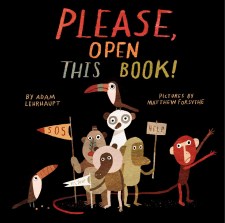
Adam Lehrhaupt (TOTALLY the right head!) is the award-winning author of WARNING: DO NOT OPEN THIS BOOK! and PLEASE, OPEN THIS BOOK! His next book, CHICKEN IN SPACE (illustrated by Shahar Kober; HarperCollins), blasts off May 17, 2016. Follow Adam: @Lehrhaupt.

Ame Dyckman (TOTALLY the left head!) is the award-winning author of BOY + BOT, TEA PARTY RULES, and WOLFIE THE BUNNY. Her next book, HORRIBLE BEAR! (illustrated by Zachariah OHora; Little, Brown), wakes from hibernation April 5, 2016. Follow Ame: @AmeDyckman.
PRIZES! Adam and Ame are donating a signed copy of PLEASE, OPEN THIS BOOK!, a signed copy of WOLFIE THE BUNNY… AND a picture book manuscript co-critique! Lunch and festive beverages—if you’re so inclined—included if you live near ’em! (They said they’ll even TRY not to squabble and throw lunch—THIS time.)
Leave a comment below to enter. One comment per person, please.
These prizes will be given away at the conclusion of PiBoIdMo. You are eligible for these prizes if:
- You have registered for PiBoIdMo.
- You have commented ONCE ONLY on today’s post.
- You have completed the PiBoIdMo challenge. (You will have to sign the PiBoIdMo Pledge at the end of the event.)
Good luck, everyone!
I am currently waiting for the final printing of my first author-illustrator project, EMERSON BARKS, which is due out in August of 2016. What sparked the idea for my story? PiBoIdMo.
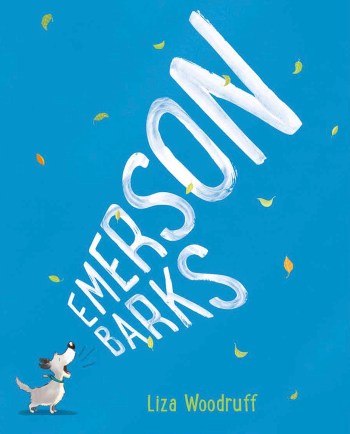
I am always looking for fun story ideas and ideas for new illustration samples. So, when I first heard of PiBoIdMo in 2011, I signed right up. Until that point, I had considered myself an illustrator only. I had been working for years making art for stories written by other people, and had only dreamed of writing something myself. I do love bringing other people’s ideas to life visually, and would wait eagerly for stories that I connected with. The stronger that connection, the more enjoyable and effortless the process was and the more successful the final art. What better way, I thought, to connect with a story than to write it myself?
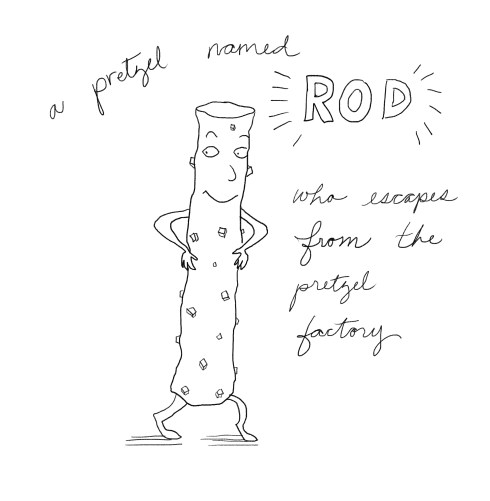
So, I embarked on a month of writing down picture book ideas to get my creative juices flowing. Looking back through old notebooks I see the same thing has happened each year. My ideas are all over the map. Some are boring, tired and overused, some are ridiculous, and some are terrible. Here is one of my “stinkers” as Denise Fleming calls them:
One other thing happens when I start writing down all of my ideas—I start thinking about picture books ALL THE TIME.
When this happens, I see potential everywhere and my brain starts to reframe everything as a story.
I see my kids and their friends do something interesting, or hear a funny snippet of their conversation. . . .
I watch my dogs’ reactions to one another. What are they thinking? . . .
I watch the newts that cross my walking path in the rain. Where are they going? . . .
I listen to the radio and hear a story or snippet of news that gets me thinking “What if?”. . .
Because my brain has been primed to look for ideas, each of these things can inspire a story, and occasionally one of these ideas shows some promise.
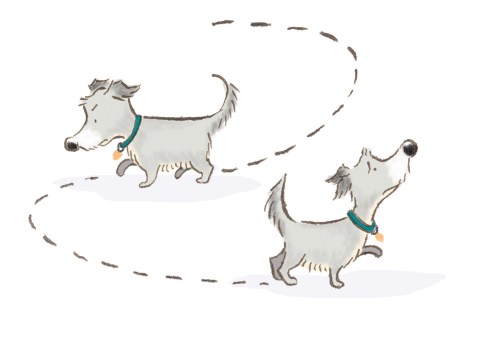
One November PiBoIdMo night (November 12th, 2012, to be exact) I was lying in bed getting ready to sleep when our dog Emerson started to bark. He barked and barked and barked, like he always does. As I lay there, hoping he’d stop a question entered my mind. What would happen if Emerson held in his barks? Was there a funny reason that he was barking? Would the barks fill him up like a balloon that would eventually burst?
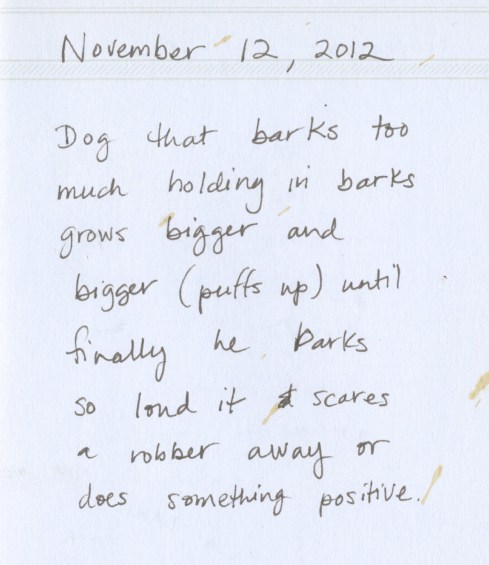
I started to wonder, and I wrote all of my questions down. Because I kept thinking about Emerson and his barks, I knew this idea would be a good one to pursue when I sat down to write.
Of course, the journey didn’t end there. There were many drafts and sketches, much help from my critique partners and from my agent, several conferences attended and craft-of-writing books read, and the infinite patience of everyone in my family.
When a dummy was finally ready to share, it went out to multiple editors. Luckily, I found an editor who saw the same promise in the story that I did. Several years and many revisions later, here I am, waiting for the first copies of EMERSON BARKS to come off the press. Thank you, PiBoIdMo, for opening my eyes to inspiration. It was there all along but I just had to learn how to look for it.


 Liza Woodruff is the illustrator of over twenty books for young readers, including If It’s Snowy and You Know It, Clap Your Paws by Kim Norman and The Biggest Pumpkin Ever by Elizabeth Bennett. She lives in an old farmhouse in Vermont with her family and their two dogs. Emerson Barks is the first book that she has both written and illustrated and will be available in bookstores in August of 2016. To see more of her work, please visit: LizaWoodruff.com.
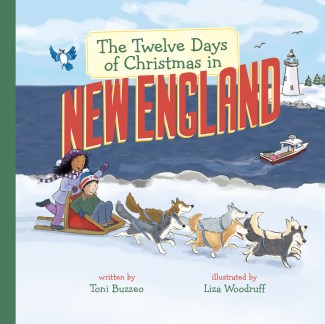
Liza is giving away a copy of THE TWELVE DAYS OF CHRISTMAS IN NEW ENGLAND, written by Toni Buzzeo, Sterling Publishers, October, 2015.
Leave a comment below to enter. One comment per person, please.
This prize will be given away at the conclusion of PiBoIdMo. You are eligible for this prize if:
- You have registered for PiBoIdMo.
- You have commented ONCE ONLY on today’s post.
- You have completed the PiBoIdMo challenge. (You will have to sign the PiBoIdMo Pledge at the end of the event.)
Good luck, everyone!
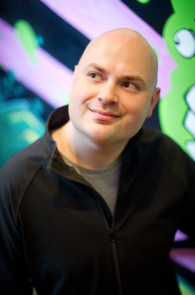 by Ryan Hipp
When I was very young, I fell in love with the Smurfs—it was when the English-translated European film The Smurfs and the Magic Flute debuted on a weeknight and then heralded in the new Smurfs cartoon on ABC Saturday Morning Cartoons every week thereafter.
Around the same time, I discovered Richard Scarry’s books, and the Mr. Men/Little Miss series by Roger Hargreaves. As long as I can remember, I have found that my passion to write and draw came from the things that I loved.
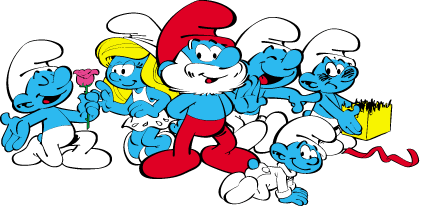
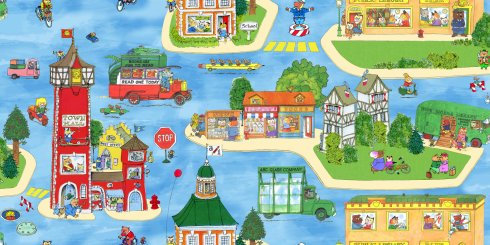
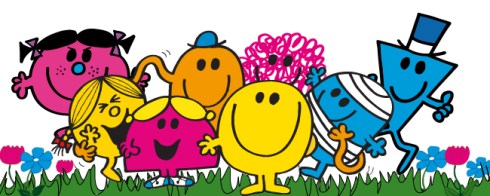
I have always gravitated towards creating work that will homage the things I love. I will either hide little nods to my past in my writing or art, or in some cases I am completely literal. I refer to the work I do as Nerdcore artwork. Nerdcore is a term derived by a movement in hiphop to use dorky subjects like comic books and video games as references and subject matter in the lyrics or as samples – I apply that same concept to the artwork I do to stay fresh and relevant.
I find inspiration in everything I love, and naturally, as an artist I want to honor and showcase what I love to tell the world more about me. Once a week, I try to illustrate a new piece. Something either current or nostalgic. Its my way of showing my fanbase topics they may not even be aware of and giving these genres a new voice.

As writers and artists, it is important to take what we love—to take what inspires us—and let it reflect back to our audiences.
 Ryan Hipp is a published author-illustrator of books for kids from Grand Rapids, MI., honored by the MRA as recipient of the Gwen Frostic Award for work greatly impacting literacy. Ryan is the leading expert in Michigan on fostering visual literacy and creative thought; with 10 years experience and research in the field. He actively gives presentations to aid educators to inspire and motivate young people. Ryan is dedicated to helping kids achieve their goals and overcome life’s obstacles as depicted in his newest book LITTLE STEPS. Visit him at RyanHipp.com.
Ryan is giving away an original sketch on bristol board.
Leave a comment below to enter. One comment per person, please.
This prize will be given away at the conclusion of PiBoIdMo. You are eligible for this prize if:
- You have registered for PiBoIdMo.
- You have commented ONCE ONLY on today’s post.
- You have completed the PiBoIdMo challenge. (You will have to sign the PiBoIdMo Pledge at the end of the event.)
Good luck, everyone!









