You are currently browsing Tara Lazar’s articles.
by PB25 Vibes
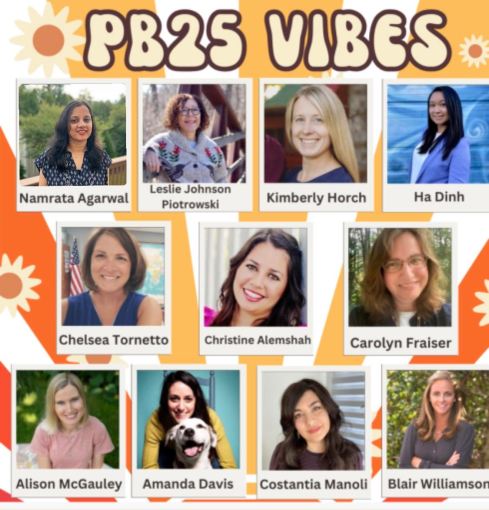
In PB25 Vibes, a group of creators with books launching in 2025, we are all about vibes! Finding that feeling you want to leave with the reader is at the heart of writing a picture book. Our stories are ones that are meant to evoke emotions, and as we drafted our stories, we kept a feeling—a vibe—in mind. As you read through our personal processes below, think about a vibe that you want to share in your next manuscript!
Alison McGauley, author of KENZIE’S LITTLE TREE (illustrated by Emilie Leduc, Orca Book Publishers, March 11, 2025)

The inspiration for KENZIE’S LITTLE TREE came from my daughters who have always lived with a chronically ill mom. Wanting to write a story that represents children like my own, and to empower readers to recognize their inner strength, I began with the vibe of resilience. KENZIE’S LITTLE TREE reminds us that though the world is constantly changing and oftentimes difficult, we can be bold and strong, just like the little tree. I hope that children and families feel the vibe of resilience as they read about Kenzie and her little tree.
Ha Dinh, author of THE JADE BRACELET (illustrated by Yong Ling Kang, Random House Studio, April 15, 2025)

While finishing up my debut picture book, I got the inspiration for THE JADE BRACELET as I reminisced about the jade bracelet that my late mother had gifted me as a child. The vibe for this story has always been about love and how love can manifest itself in a family tradition, memory, or even a family heirloom in the shape of a piece of jewelry as in this book, which can hold so much sentimental value and can be passed down down one generation to the next. How does love manifest in your writing?
Chelsea Tornetto, author of CHALK THE WALK (illustrated by Laurel Aylesworth, Familius, April 2025)

I’m a rhyming writer, and the meter of a story can impact the “vibe” in a big way! For CHALK THE WALK, I used a playful, upbeat rhythm, as well as the amazing art from Laurel Aylesworth, to tell the story of two kids who change the whole VIBE of their previously dull, gray city street with just a bucket of sidewalk chalk…and spread joy and color to their neighbors. The result is a story that leaves the reader with a sense of hope and a desire to use their own imaginations to change the world…just like the main characters!
Christine Alemshah, author of BEA’S BALIKBAYAN BOX OF TREASURES (illustrated by Dream Chen, Free Spirit Publishing, June 17, 2025)

Embracing Bea’s story vibe felt like falling in love with a new song and listening to it on repeat. Not every track on my storystorm playlist becomes a full-fledged picture book! I scroll my list often, and bold ideas that tug at my heartstrings. BEA’S BALIKBAYAN BOX OF TREASURES topped the chart because it aligned with my big why — to nurture a lifelong love of reading, cultivate connections, and help children see themselves represented in the stories they read. I challenge you to scroll through your idea list often and listen with your heart to help identify which ideas to pursue!
Costantia Manoli, author of THE FIG TREE (illustrated by Leah Giles, Roaring Brook Press/Macmillan USA, June 2025)

My aim when writing a picture book is to leave the reader with a hug-the-book-at-the-end kind of vibe. I want my readers, big and small, to see themselves reflected back in the pages. I want my readers to close the book at the end and feel connected. I want my readers to feel all the feelings. THE FIG TREE is about connecting with others – no matter what stories you’ve been told about them. How can you layer resonance, connection and emotion in your own writing to create that hug-the-book-at-the-end vibe?
Namrata Agarwal, author of THE MITHAI BOX IS NOT EMPTY (illustrated by Parvati Pillai, Holiday House, summer 2025)
Often, we face dilemmas in our lives and so does Ria in the story ‘THE MITHAI BOX IS NOT EMPTY.’ A dilemma tends to evoke a vibe of inner conflict. These inner conflicts can be a natural part of a child’s development. Wise advice can be incredibly helpful in resolving inner conflicts. Like in THE MITHAI BOX IS NOT EMPTY, thoughtful advice changed Ria’s vibe. Imagine a feeling of yours becoming a strong “vibe.”
Can you think of a story around that vibe?
Carolyn Bennett Fraiser, author of M IS FOR MASON JARS (illustrated by Sally Garland, Familius Publishing, August 2025)
I wrote M IS FOR MASON JARS on a dare. Could I think of an activity for kids on a modern-day homestead for every letter of the alphabet? Yes! I initially focused on activities that were “fun” for kids. But as I was writing (and rewriting), another vibe bubbled to the surface–“togetherness.” Everyone must work together to make a homestead successful–including the youngest. THAT was the heart of my story.
As you explore your topic, what other vibes do you feel? They might just take you in an interesting direction!
Blair Williamson, author of BIRTHDAY BASH (The Little Press, September 16, 2025)

The idea for BIRTHDAY BASH came from a moment of pure, unfiltered chaos while living on a boat. One day, as I stood in the galley, a bug scurried across the floor. What started as a simple sighting turned into a wild spiral of what-ifs in my mind, and it became a story waiting to be told. Birthday Bash captures that vibe of crazy, unpredictable fun, filled with mishaps, laughter, and, of course, a tiny bug causing a big mess. I hope this inspires anyone who’s ever found themselves swept up in a whirlwind of “what-ifs?” to write their story!
Kimberly Horch, author of SAWYER’S BIG IDEA (illustrated by Sayani Mukherjee, Magination Press, Fall 2025)
Sawyer has a million amazing ideas, but gets hyperfocused, distracted, and discouraged. As I approached his story, I knew it couldn’t end with him finishing everything. Anyone Sawyer-like knows that simply isn’t reality. But I wanted readers to leave feeling celebratory of the superpower of idea-generation. Recognizing this vibe allowed me to focus my thoughts on what moments (other than finishing) could leave him feeling “celebratory.” Thanks to an SCBWI event, I had two opportunities to pitch to Magination. Nailing the end feeling changed their feedback from “It’s a cute idea…” to “Yes!”
Amanda Davis, author-illustrator of SOMETIMES STORMY: A STORY ABOUT FINDING CALM AND STAYING SAFE WHEN SOMEONE YOU LOVE DRINKS TOO MUCH (Free Spirit Publishing/Teacher Created Materials, Fall 2025)

*sneak peek of near-final cover
When writing and illustrating SOMETIMES STORMY, I channeled my childhood and the memories of living with a parent who had alcohol use disorder. This wasn’t an easy ‘vibe’ to sit with but it’s an important and common one. According to the National Institute on Alcohol Abuse and Alcoholism, in 2023, 28.9 million people ages 12 and older had alcohol use disorder (AUD) in the past year. Despite these heavy ‘vibes’, I always kept my positive message to readers in mind: “You’re not alone and it’s not your fault.” Are you digging into difficult vibes with your current work? If so, remember your why. What’s the positive message you want to send readers? I hope this inspires you to keep going!
Leslie Johnson Piotrowski, author of THE NORTHBOUND TRAIN (illustrated by Tonya Engel, Abrams Books for Young Readers, Spring 2026)
Leaving behind your home and community can be daunting. In writing THE NORTHBOUND TRAIN, I thought of what my father went through when he moved with his family from Birmingham, Alabama to Chicago, Illinois in the 1930s, a time when millions of African Americans left the South to escape Jim Crow laws. In writing the story, I also connected with my own inner feelings of anxiety around moving to new places. I wanted children to know that they are not alone in feeling nervous about leaving home and that journeys can bring about unexpected gifts.
Now it’s your turn. Think about a vibe that affected you. Was it a moment you realized that you were stronger than you thought? Was it a time when you felt completely unified and connected with others, or when you suddenly realized the answer to a problem was standing right in front of you? Mine your memories for instances in your life that stood out for you. Notice your emotions, as these play a strong role in children’s literature. Those feelings or vibes could possibly provide the inspiration for your next story.

Alison McGauley is a special education teacher and the author of KENZIE’S LITTLE TREE (March 2025, Orca Book Publishers), illustrated by Emilie Leduc. As a chronic illness warrior, Alison is passionate about writing books that speak to children and caregivers who are impacted by illness or disability. She also loves creating stories that feature humor, SEL, and the natural world. Alison resides in Ontario, Canada with her family. Connect with Alison on her website alisonmcgauley.com, Instagram @alisonmcgauley, or Bluesky @alisonmcgauley.bsky.social.
Ha Dihn is a mom of two, an elementary teacher, and the founder of the Happy Days in First Grade Teaching Blog. She is the author of WHERE WILDFLOWERS GROW and three books that are being published in 2025, THE JADE BRACELET (April), LY-LAN FINDS A WAY SERIES: LY-LAN AND THE NEW CLASS MIX-UP (June), and THE MOON LANTERN (September). You can follow her @HelloMrsDinh on IG.
Chelsea Tornetto is a former world geography teacher, who has loved writing ever since she was a kid. Her first book, Conquering Content Vocabulary, was published by Scholastic in 2018, but now her passion is picture books. She is the author of Gardens Are For Growing, God Made You Too, Seasons on the Farm, Chalk the Walk, and The World’s Best Christmas Light with more titles on the way. When she isn’t working on her own stories, she helps others follow their dreams of writing for children as a freelance editor and author coach for At Home Author.
Christine Alemshah (she/her) is a mom, children’s author, classically trained vocalist, and host of the Grow Your Writing Challenge. Christine writes stories championing innovation, celebrating multiculturalism, and often having a musical vibe. Her picture book BEA’S BALIKBAYAN BOX OF TREASURES releases June 17, 2025 from Free Spirit Publishing. You can follow Christine on X, Instagram, and Bluesky: @C_Alemshah and on her website. She is represented by Vicky Weber of Creative Media Agency.
Costantia Manoli is the award winning author of TOMATOES IN MY LUNCHBOX (illustrated by Magdalena Mora, Roaring Brook Press, June 2022) and THE FIG TREE (illustrated by Leah Giles, Roaring Brook Press, June 2025). Born in the UK to Cypriot parents, Costantia spent the picture book period of her life in London, her middle grade and young adult years in Cyprus and then the USA and then back round again. Learn more about Costantia on her website, Instagram, Facebook and BlueSky.
Namrata Agarwal is a children’s book writer. She has written picture books – Misha series and The Grasshopper and the Owl. She has also written for children’s magazines like Faces and IntellyJelly. She is a member of SCBWI, RateYourStory and Writing Barn. Currently she lives in New Jersey with her two kids and husband. In her spare time, she enjoys reading and crafting. You can follow Namrata on Twitter @namrataagarwal, Instagram @namrata.writer.
Carolyn Bennett Fraiser manages a small homestead in western North Carolina and is the author of M IS FOR MASON JAR (Familius, 2025), MOON TREE (Reycraft Books, 2022), and several other nonfiction books for the educational market. She hosts the KidLit Events Calendar on her website. Connect with her @carolynbfraiser on Facebook, BlueSky, Instagram, and X.
Blair Northen Williamson is a Book Excellence Awards Winner and Amazon #1 new release author of ISLAND GIRLS: Free the Sea of Plastic (Williamson/Holovchenko, 2022) who loves writing stories that make children laugh, stories that will spark important conversations and stories that will ignite change to protect our oceans. She is a mother and wife, a retired boat captain, and a scuba diving instructor who also loves sunrises and coffee. Williamson has two traditional books releasing this year: BIRTHDAY BASH (Williamson/Woolley, Little Press, 2025) & THE OCEAN PROTECTORS (Williamson/Holovchenko, Genius Cat Books, 2025). She is represented by Karen Kilpatrick of East West Literary Agency. You can connect with Blair on X @theislandwriter or IG @theislandwriter8 as well as follow her website for updates www.theislandwriter.com.
Kimberly Horch is an author, mom of five, and a self-proclaimed agent of joy. Like Sawyer in SAWYER’S BIG IDEA, she always has a dozen projects up in the air and twice as many on the floor. Kimberly writes lyrical picture books and middle grade novels in verse. Her instagram inspires kindness through books and action @thedaybrighteningcommittee; she is also on X.
Amanda Davis is a teacher, artist, writer, and innovator who uses her words and pictures to light up the world with kindness. Amanda is the author of the award-winning picture books, 30,000 Stitches: The Inspiring Story of the National 9/11 Flag (illustrated by Sally Wern Comport), and Moonlight Memories (illustrated by Michelle Jing Chan). SOMETIMES STORMY is her author-illustrator debut, and she has three more unannounced picture books on the way. Learn more about Amanda on her website and on Instagram, Twitter (X) and BlueSky.
Leslie Johnson Piotrowski is a biracial (Black/White) author with a passion for representation and sharing her own heritage through children’s literature. A native of Chicago, she worked for many years in the public relations/communications field before she pursued fiction writing. Her debut picture book, THE NORTHBOUND TRAIN, releases Spring 2026 (Abram’s Books for Young Readers). You can follow Leslie on her website and on X @lpiotrowski80.

The following prizes are being given away by the PB25 Vibes Group:
- Alison is offering a PB critique.
- Ha is offering a PB critique.
- Chelsea is offering a PB critique (under 1000 words).
- Christine is offering a PB or chapter book critique (first 1000 words.)
- Costantia is offering a PB critique.
- Blair is offering a 30-minute virtual Ask Me Anything.
- Namrata is offering a 30-minute virtual Ask Me Anything.
- Carolyn is offering a 30-minute virtual Ask Me Anything.
- Kimberly is offering a PB critique or MG first 1,000 words.
- Amanda is offering a 30-minute virtual Ask Me Anything.
- Leslie is offering a PB book critique (first 1000 words)
You’re eligible to win if you’re a registered Storystorm 2025 participant and you have commented only once below.
Prizes will be distributed at the conclusion of Storystorm.
by Jolene Gutiérrez
It’s 2025. We’ve been through dark times, and there could be more coming. How do we brave the darkness? How do we find a creative spark when we’re also sad, worried, or busy? And how do we craft stories that will shine a light for others
Twenty-five years ago, I was pregnant with our first child, our daughter Shaian. As a school librarian and book lover, I began searching for books that honored my unborn baby’s Mexican heritage. Slowly, I gathered a small collection, but our family struggled to find well-written, joyful stories with characters of Mexican heritage.

Fast-forward to the pandemic. Shaian, then 19, was taking college classes from home. I was teaching from home. Shaian’s uncle José and my dad/Shaian’s grandpa had both recently passed away. Our ofrenda, an altar with offerings for Día de Muertos, had always been important, but now, it was even more so. Shaian loves decorating our ofrenda with papel picado, alebrijes, and sugar skulls, and as I thought about the layers we add when building our ofrenda, it reminded me of the old nursery rhyme, “The House that Jack Built.” So Shaian and I wrote a cumulative story about a family working together to create their ofrenda and honor lost loved ones. That story, The Ofrenda That We Built, was illustrated by Gabby Zapata and published by Chronicle in 2024. Creating a book about remembrance and celebration felt so powerful. It gave us joy and hope.

And then, my husband was telling me about an all-female mariachi group he’d heard about on NPR. I misheard him and thought he said, “Mamiachi group.” Mami is a Spanish word for mommy, so that made me wonder: had that name ever been used in a book? Because if it hadn’t, it was the perfect name for a little girl to call her mami. This made me think of my son, Dakota, who was 17 at that point and also learning from home. He had been active in choir, musical theater, and orchestra and was planning to join the mariachi band during his senior year, but all performing arts were put on hold at his school that year. Instead, we wrote Mamiachi & Me: My Mami’s Mariachi Band. It was illustrated by Mirelle Ortega and Abrams just published it on January 7. This story allowed us to focus on family connections, music, and strength as we created something beautiful.

Working together to create the books that we needed to see in the world gave us hope during dark times. And I was able to lean on my kids—I didn’t have to do it all on my own.
A couple of guiding questions:
- What stories have you always wanted to see in the world?
- Who might you partner with so you can lift each other up through story and/or art?
And then. . .the question of the hour:
- How do we create a spark during times we have almost lost our sparkle?
 My friend Annie Lynn (amazing musician and longtime Storystorm and kidlit supporter) and I were recently chatting about challenging times in our lives and how difficult it is to write when we’re carrying painful burdens. So in the hopes that our discussion and my experiences writing with my kids during the pandemic will be helpful to others, here are a few tips:
- Don’t wait until you feel better to start creating. The act of creating may help improve your mood. Waiting for the perfect day is kind of like waiting until you’re in shape to start exercising.
- Smile and laugh as much as possible. Trick your brain into happiness!
- Celebrate often, reframe situations, and find gratitude whenever possible. From my Yogi tea bag: “Gratitude is not about what is received; it’s about how you receive what is there.”
Read and review great picture books! Surround yourself with mentor texts and give the gift of leaving reviews on places like GoodReads and Amazon.
View the world with a childlike gaze. Find wonder, joy, and beauty everywhere!

Be gentle with yourself. You are precious. Treat yourself as you’d treat your child or your best friend.
And, Annie’s best advice: “Eat a cookie or two in the sunshine with your eyes closed.”
The joy you find as you put these things into practice will surely infuse your writing. I can’t wait to see the light you bring to our world!
Jolene Gutiérrez is an award-winning neurodivergent teacher librarian who has been working with neurodivergent learners at Denver Academy since 1995. Jolene writes for young readers and hopes her books will help some readers feel seen and will help others learn and grow in compassion. Her books have been printed in 10 countries and 9 languages. Jolene is the author of Unbreakable: A Japanese American Family in an American Incarceration Camp (Abrams Childrens, 2026, co-authored with Minoru Tonai), Mamiachi and Me: My Mami’s Mariachi Band, The Ofrenda That We Built (a 2024 Golden Poppy Book Awards finalist), Too Much! An Overwhelming Day (Bookstagang’s Best Book of 2023), Bionic Beasts: Saving Animal Lives with Artificial Flippers, Legs, and Beaks (a Junior Library Guild Gold Standard book), and Mac and Cheese and the Personal Space Invader. Find her online a JoleneGutierrez.com or on Facebook, Bluesky, Instagram, or Threads @writerjolene.
Jolene Gutiérrez is giving away 1 copy of Mamiachi & Me: My Mami’s Mariachi Band and 1 copy of The Ofrenda That We Built (U.S. street addresses only, please) to two separate winners.
You’re eligible to win if you’re a registered Storystorm 2025 participant and you have commented only once below.
Prizes will be distributed at the conclusion of Storystorm.
by Katie Mazeika
Howdy Storystormers! I’m going to tell you a little about my childhood and hopefully it’ll help you come up with an idea for a story for the kid you used to be.
I had cancer and lost my eye when I was three. I was in and out of hospitals for years. At one point, when I was five, I spent five months in Cleveland Clinic and had several different surgeries. That summer was when I discovered “Madeline” by Ludwig Bemelmans.
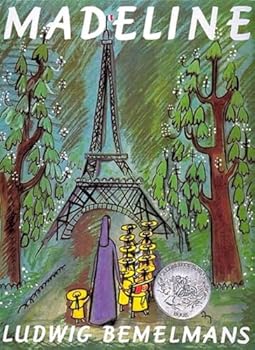
I adored the titular character and wanted to be just like her. Not just because she was brave enough to “Pooh-Pooh” the tiger in the zoo. The scene that made Madeline my literary hero was right after she had her appendix removed. The next morning Miss Clavel brings the girls to see her and Madeline isn’t embarrassed by her new scar, she doesn’t hide it under her pajamas. No, Madeline stands up on the bed and shows it off!

This was the first time I’d seen a hospital stay in a picture book. Madeline had surgery, like I had, she had scar too. For the first time I felt seen!
I wish I could say I walk out of that hospital with the confidence Madeline had when she on that bed and showed off her scar. But I was kid that hid behind sunglasses. Disfigurement has always been a common villain trope (from Bond villains to Disney characters). And disabled characters are often used as comic relief. I internalized this and wished I could just be “normal.” I was ashamed of my disability as a kid.

Fast forward to couple of years ago. I was at a weekend kidlit retreat. A handful of authors and illustrators were sitting around sharing personal stories. I talked about an issue I’d dealt with since childhood. Strangers stare at me, but especially kids. Inevitably a parent steps in, whispers to stop, don’t stare, look somewhere else. And on some level, I had just accepted it. I understood that at some point, we were all taught not to acknowledge someone’s disability—“Pretend you don’t notice”, “Look away”. But that day something clicked. I thought back to my little kid self and realized that she experienced this every day. She heard the adults say to look away. And she assumed there must be something wrong with having one eye, with being different. And my heart broke.

That’s when I got the idea that became MAYBE JUST ASK ME!

By the the car to ride to the airport that Sunday afternoon I had the first draft of MAYBE JUST ASK ME! In my head. I knew the story arc, I had a beginning, middle and end. Before I boarded the plane home I had shared it with my agent. She was as passionate about it as I was. She agreed that this was a story I needed to tell, a picture book that needed to be made.
MAYBE JUST ASK ME! is the book I needed as a kid. The main character, Mazie, does what I wished I could do. She bulldozes through the discomfort and speaks up. She doesn’t feel ashamed and try to hide her disability. She doesn’t stay quiet when strangers look away, pretend not to see her. She speaks up and tells her classmates “Maybe just ask me!” She has some of Madeline’s moxie.

MAYBE JUST ASK ME! is the book I wish I had as a kid. It’s the book I needed as a kid. I think we all have those stories in use-it’s a matter of digging deep and finding them. So, here’s my how-to.
- Make a list of the books did you loved as a child. The ones you came back to again and again and still hold a special place in your heart.
- Go through the list one by one and ask yourself why that book was so special to you? What piece of you did each book on your list speak to?
- Ask what they missed? What did you need to hear when you were a child that wasn’t in any picture book?
Use this to create a story for your child self. Write the picture book you wish you’d had and create the main character you wished you could be. Maybe it’ll be some child’s Madeline!

 Katie Mazeika is an award-winning author and illustrator who can’t imagine a better job than making books. She loves creating stories based on real people and events. Katie strongly believes all children should see themselves in books and is passionate about highlighting disabled voices in her work. She hopes her work as a creator and advocate creates a space to openly discuss disability and neurodiversity. Katie does this through presentations, panels, consultations, and workshops for educators, kidlit creators, publishers, and young readers through Highlights, SCBWI, and NCTE.
Katie is the author and illustrator of the nonfiction picture books BEULAH HAS A HUNCH! (Simon & Schuster) and ANNETTE FEELS FREE (Simon & Schuster). Her fiction debut, MAYBE JUST ASK ME! (Simon & Schuster), comes out April 22, 2025. Katie illustrated three board books in the Chicken Soup for the Soul: Babies series (Charlesbridge) and Is That the Bus? by Libby Koppanen (Charlesbridge), among other books.
When she’s not drawing, writing, or visiting schools and libraries, Katie likes to spend her time gardening and reading other people’s books. Katie currently lives in Cleveland, Ohio. You can see more of Katie’s work at KatieMazeika.com or follow her on Instagram @kdmazart or Blusesky @kdmaz.
Katie Mazeika is giving away a signed copy of MAYBE JUST ASK ME! with SWAG and an AMA to one lucky winner.
You’re eligible to win if you’re a registered Storystorm 2025 participant and you have commented only once below.
Prizes will be distributed at the conclusion of Storystorm.
by Matt Forrest Esenwine
The great thing about Storystorm is that it spurs so many ideas! It also encourages one to simply brainstorm, without worrying about whether those ideas are any good or not. And it’s a very low-pressure sort of thing, as the honor system is pretty much the only rule we need to follow. It’s also free!
(OK, so apparently there are LOTS of great things about Storystorm.)
Ironically, even though Tara shares daily inspirational posts on her blog during Storystorm, it’s still sometimes difficult to nail down just where an idea came from. Take, for example, this particular success story:
My first poetry anthology!

During the last few days of Storystorm 2019, I was kicking around some possible concepts for a poetry collection. As someone who writes a lot of children’s poetry and whose picture books like “Flashlight Night” and “Once Upon Another Time” are very lyrical and poetic, I’m always on the lookout for new themes and angles around which I can develop a collection.


I have no idea if it was Lindsay Bonilla’s post about wild animals or my friend Diana Murray’s post about actively creating your own inspiration rather than waiting for it (something I wholeheartedly endorse), but the concept of rainbows and all the myriad forms they take suddenly came to me.
When I say “forms,” I don’t just mean normal rainbows, refraction, etc. I began thinking about creatures like the rainbowfish and rainbow lorikeet as well as natural wonders like Yellowstone’s Grand Prismatic Spring and the Rainbow Nebula in Orion. So I immediately jotted down “rainbow poetry collection” onto my Storystorm list as #30 out of an eventual 32 ideas.
A couple of weeks later, I was researching rainbows and discovered things I never knew existed like the Rainbow Mountain of Vinicunca, Peru and the amazingly-colored and bad-tempered peacock mantis shrimp.

It occurred to me that since rainbows are symbols of inclusion, hope, and pride…I should try to be as “inclusive” with these poems as possible! So rather than a collection of my own poems, I began my quest to develop my very first poetry anthology. Over the years, I’ve had nearly 40 poems published in numerous anthologies but never created one of my own! Who did I need to talk to first?
Lee Bennett Hopkins.
The late award-winning, Guinness record-holding anthologist had compiled more than 126 poetry anthologies over the course of his career, and having had the honor of working with him on several of them, I wanted to seek out some professional guidance.

So I called him up and we chatted on the phone at length about the rainbow poetry anthology, other projects we were working on, and life in general…and when we hung up, he had provided me with a great deal of advice and support, and had agreed to even contribute a poem.
Little did I realize it would be our last phone conversation.
Six months later, Lee’s friends received the news he had passed away. He never knew that a mere eight months later, in April 2020, I would receive an offer from Eerdmans Books for Young Readers to publish my proposed anthology. But I had done the legwork, research, and organization he had suggested and had a long list of poets and subjects ready to put this book together!
I couldn’t be more grateful to Lee for his guidance or to Tara for the environment she’s fostered that allows for the birth of ideas like this in the first place. I firmly believe that every idea opens the door for every idea that follows – so even if you think one of your Storystorm ideas isn’t worth writing down, WRITE IT DOWN, ANYWAY. That winning concept you’ve been struggling to find could be just another idea or two away!

It’s taken more than six years of contemplation, inspiration, and perspiration, but “A Universe of Rainbows: Multicolored Poems for a Multicolored World” finally arrives April 1! And because creativity begets creativity, I have a second anthology with Eerdmans, as well – and several others that are out on submissions.
Who knows where this new chapter of my career will lead?
Dunno.
But I do know it started with Storystorm!
 A voiceover talent and commercial copy writer, Matt can be heard on commercials, animation, and corporate videos from Maine to Florida, from California to New Jersey, from the U.K. to Dubai. Over the years, Matt has had several adult poems published in independent collections, including the Tall Grass Writers Guild’s “Seasons of Change,” “The Licking River Review,” and the Donald Hall tribute anthology, “Except for Love” (Encircle, 2019), among others. In 2012, his poem, “Apple-Stealing,” was nominated by the Young Adult Review Network (YARN) for a Pushcart Prize.
His debut picture book, “Flashlight Night” (Boyds Mills Press, 2017), received a starred review from Kirkus and was selected by the New York Public Library as one of the Best Picture Books for Kids of 2017. You can find his children’s poetry in numerous anthologies including Lee Bennett Hopkins’ “School People” (Wordsong, 2018) and J. Patrick Lewis’ “The National Geographic Book of Nature Poetry” (National Geographic Children’s Books, 2015), as well as “Highlights for Children” magazine. Matt lives in New Hampshire with his wife and children. Visit him at MattForrest.com.
Matt Forrest Esenwine is giving away a signed copy of “A Universe of Rainbows” to one lucky winner.
You’re eligible to win if you’re a registered Storystorm 2025 participant and you have commented only once below.
Prizes will be distributed at the conclusion of Storystorm.
by Lori Keating
Brainstorming ideas for stories can be an exhilarating journey into the depths of creativity. It often begins with a spark—an intriguing character, a peculiar setting, or a what-if scenario that refuses to leave your mind. As you explore these initial ideas, they start to intertwine, forming the threads of a narrative that beckons to be told.
 My inspiration frequently arises from the world around me. The concept of The Memory Quilt emerged during a dinner at a friend’s house, where they presented a memory quilt made by a quilter for the parents of their deceased son. Butterfly Ink was inspired by my daughter’s fascination with temporary tattoos. One day, an idea struck me: what if the tattoo possessed magical qualities? As for Angels in the Sand, it initially began as a picture book, but after receiving a request for a complete manuscript from an agent, I saw its immense potential and chose to transform it into a Middle-Grade novel. I discover magic in the everyday—where a brief, simple moment can evolve into an extraordinary story.
These snippets of life are the rocket fuel for my creativity, reminding me that stories are lurking everywhere, just waiting to burst forth. They nudge me to look closer, listen harder, and bask in the world’s beautiful details.
 One effective method for brainstorming and developing those ideas is by creating a vision board. If you don’t already know, a vision board is a collage of images, words, and other materials that visually represent your goals, aspirations, and the themes you wish to explore in your stories. This creative process not only helps to clarify your thoughts but also serves as a source of inspiration and motivation.
To create a vision board, start by gathering materials such as photographs, fabric swatches, and any other items that resonate with your story’s themes or characters. As you sift through these materials, allow your intuition to guide you, selecting images and words that spark joy or curiosity.
Once you have a collection of items, arrange them on a board or large piece of paper. Consider the relationships between the elements, and how they might represent different aspects of your story. Play with the layout until it feels cohesive and evocative of the narrative you wish to create.
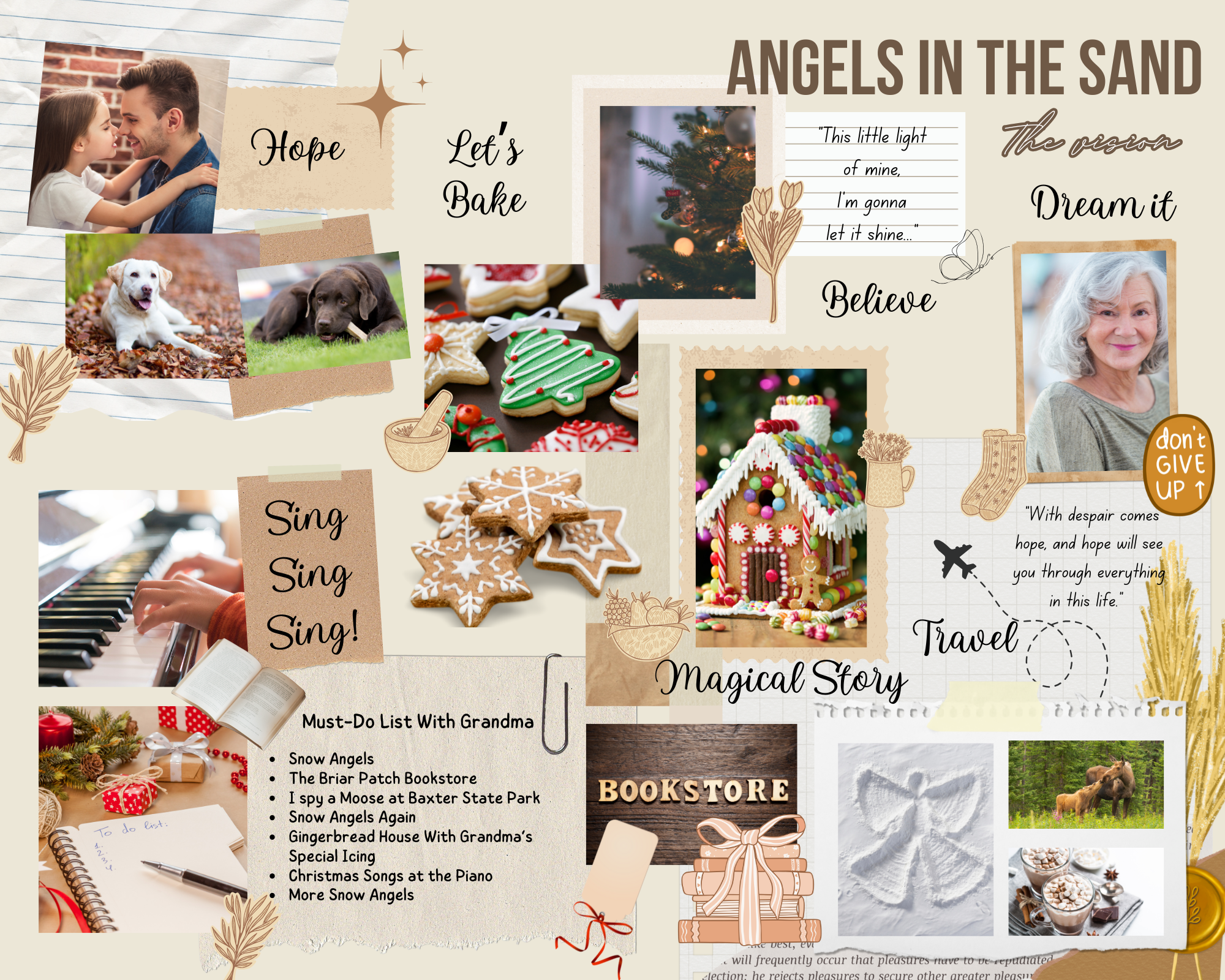
The beauty of a vision board lies in its flexibility; it can evolve as your story develops. Keep it in a place where you can see it regularly, allowing it to continuously inspire and remind you of the essence of your tale. This visual reminder can help you stay focused and motivated as you bring your story to life, guiding you through the twists and turns of the creative process.
Turning a story of around 500 words into a 30,000-word narrative may appear daunting, but it becomes manageable with a solid plan in place. Start by expanding on the details that make up your story’s world. Dive deeper into the backgrounds and motivations of your characters, allowing them to grow and evolve in unexpected ways. Consider adding subplots that complement the main narrative, enriching the tapestry of your tale and providing additional layers for readers to explore.
Develop your settings with vivid descriptions that transport readers to the heart of your story. Whether it’s a bustling cityscape or a serene countryside, immerse them in the sights, sounds, and sensations of each scene. This not only enhances their reading experience but also creates a more immersive world where your characters can thrive.
Dialogue is another powerful tool to elongate your story while adding depth to character interactions. Use conversations to reveal hidden emotions, secrets, and desires, allowing relationships to unfold naturally and authentically.
Don’t forget to weave in themes and messages that resonate with you and your audience. These can serve as the backbone of your story, providing a cohesive thread that ties everything together. As you expand your narrative, ensure that each element aligns with these core ideas, creating a harmonious and impactful tale.
Finally, embrace the revision process. As your story grows, be open to revisiting and refining each part, ensuring that every scene and character contributes meaningfully to the overall narrative. With patience and dedication, a once-short story can blossom into a rich, multi-layered novel that captivates and inspires readers.
Remember, the journey from a brief concept to a full-fledged novel is a creative adventure in itself. Enjoy each step of the process, and trust in your ability to craft a story that will resonate with readers and leave a lasting impression.
 Lori Keating is a versatile author who weaves tales across a multitude of genres. She is the proud winner of awards for her young adult novel Butterfly Ink and the picture book The Memory Quilt. Her latest middle-grade novel, titled Angels in the Sand, was released on January 7, 2025. Additionally, Lori hosts the podcast Kid Lit Meet N Greet on YouTube, where she interviews authors from various children’s literature genres.
She lives amidst the stunning landscapes of South Florida with her husband, her wonderful daughter, two dogs, and two cats. Visit her at LoriKeating.com and follow her on Instagram @LoriMKeating and BlueSky @lorikeating.bsky.social.
Lori Keating is giving away a signed copy of Angels in the Sand.
You’re eligible to win if you’re a registered Storystorm 2025 participant and you have commented only once below.
Prizes will be distributed at the conclusion of Storystorm.
by Namita Moolani Mehra
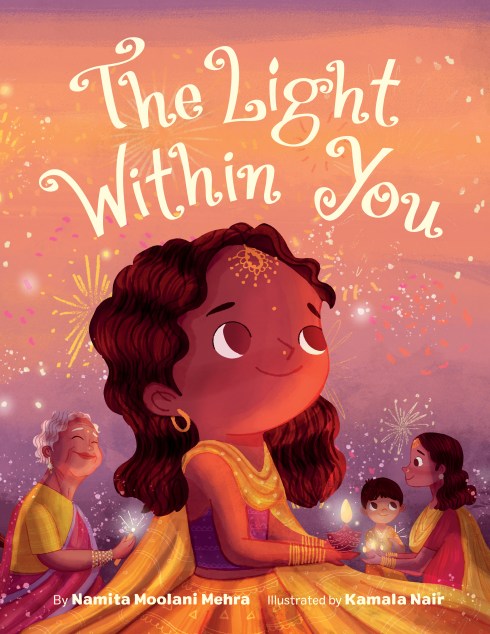
The ad agency girl in me tends to come up with titles before developed story ideas. My Storystorm output for the last five years are essentially long lists of potential picture book titles. I’ve gone ahead and developed about 10% of these title ideas into full manuscripts, and about four of those manuscripts have gone out on sub with my lovely agent. Two subs turned into contracts, and I’m happy to report that one of those contracts, a humble Storystorm title idea, is now a published, award-winning picture book—THE LIGHT WITHIN YOU, illustrated by Kamala Nair and published by Two Lions.
Over a decade of working in advertising and another decade building my own brand has made me a lifelong student of branding and creative strategy.
If I say Nike, you will immediately think, “Just Do It”.
If I say McDonalds, your brain will go, “da, da, da, da, da, I’m lovin’ it!”
If I say Dove, you might even recall women of all shapes and sizes posing in nothing but their underwear in the “Campaign for Real Beauty”.
These iconic advertising campaigns have built memorable brands with high recall taglines.
I was fortunate to work on Dove and saw first-hand, the power of an idea to inspire a global movement (even Oprah got on board!)
To see a soap brand boldly engage in a conversation around the definitions of beauty and self-confidence was incredible. Dove’s “Campaign for Real Beauty” was the outcome of a global study that revealed a prevalence of low self-esteem in young women and girls around the world. I like to call this key insight, this data-point or truth . . . a ‘golden nugget.’
It was literally my job to find golden nuggets for brands through research, consumer and competitive analysis. Golden nuggets are often creative currency.
THE LIGHT WITHIN YOU is a story about the Indian Festival of Lights, but more importantly, it’s a story about believing in your ability to shine bright even through the darkest times. Holidays and festivals are usually portrayed full of joy, but they can often be a hard time for people living abroad, part of a diaspora, or immigrant families. For children celebrating cultural holidays that are lesser known for example, in their classroom, it can be an emotional roller-coaster not feeling seen.
As an Indian living outside of India most of my life, I often found myself in situations where other children didn’t understand my traditions or culture and it would dim my light. I would fade to fit in, instead of shining bright to stand out. Struggling with a sense of belonging and overcoming self-doubt was my golden nugget for The Light Within You. The title popped into my head even before I had written the manuscript. The heart of the story lies in the many moment the grandma (Nani) and her grandchild Diya shares. Nani tells us that “Diwali is more than a festival, it’s the light within you.”
As a published author, I think of book titles as taglines and the story premise, promise or heart, as a golden nugget.
Interestingly, book titles are also like an ad for your story!
Like taglines, titles present us with an opportunity to grab the reader or buyer’s attention in a few words. Iconic advertising campaigns tend to have powerful taglines driving them and I would encourage you to try starting with a strong title too!
Don’t forget—the primary purpose of advertising is to sell. Taglines sell and I bet good titles do too! Write down a few of your favorite picture book titles and analyze why you love them.
- Is the title easy to remember and memorable?
- Is it short and sweet?
- Is it kid-friendly?
- Does it have universal appeal?
- Is it punny or funny?
- Does it reveal the story’s heart?
- Is it believable?
- Does it spark curiosity?
 Sales and marketing teams at publishing houses have a lot of experience with titles and may challenge your proposed title. My upcoming book, THE GREATEST RIVER, illustrated by Khoa Le and published by Harper Collins was originally titled ‘The Greatest Mother”. I loved my title because the story is about the Holy River of India that millions refer to as ‘Ma’ Ganga—Ma meaning mother. I was attached to the original title because of the spiritual significance, so when the sales team suggested a change, I was resistant. As I sat with their feedback, I realized that readers might not understand the mother reference and could be confused or misled. The publisher suggested we change the title to The Greatest RIVER and it occurred to me that this new title has more universal appeal. It creates a sense of curiosity while still fulfilling on the wider promise of the story—the power of nature to heal AKA my golden nugget.
Have you found your golden nugget? Once you do, it might lead you right to an amazing title!
As a POC author writing culturally specific stories, titles play an important role for me to reach and connect with wider audiences.
Don’ t be afraid to have multiple title options to run by your critique partners or editor. People are passionate about titles and love weighing in on them!
 Namita Moolani Mehra is an award-winning, agented children’s book author and the founder of social-impact business, Indian Spicebox, a company that has helped fund almost one million hot meals for underprivileged children in India. Namita’s published books include Veena And The Red Roti, The Light Within You, and Anni Dreams of Biryani. She has also authored children’s cookbooks, including The Magic Spicebox and Superfoods for Superheroes. Namita crafts delightful culinary experiences like cooking classes and street food pop-ups. She currently lives in Singapore with her husband, two children, and a dramatic doodle. Visit her online at NamitaMehra.com. Namita is active on Instagram @indianspicebox.
Namita Moolani Mehra is giving away a copy of her new book THE GREATEST RIVER.
You’re eligible to win if you’re a registered Storystorm 2025 participant and you have commented only once below.
Prizes will be distributed at the conclusion of Storystorm.
by Mary Boone
Story ideas are exciting packages of potential, and by the end of this month-long brainstorming exercise, you’ll have a pile of them. That’s worth celebrating. In fact, when January comes to a close, I challenge you to write each idea on a small strip of paper and toss them into the air so you can have your own little Storystorm confetti party. Yay you!
But don’t stop there—those flashes of inspiration are worth little unless you act on them.
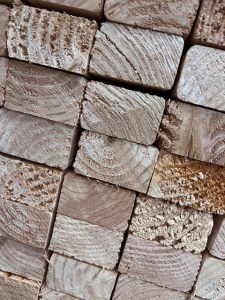
Think of a story idea like a fallen tree in your yard. It’s rough and unrefined. To make that wood into something remarkable, you’d have to invest a lot of time and effort into measuring, planning, milling, planning, sawing, hammering, and more. Every piece of wood is unique, full of hidden patterns and possibilities. Some pieces might become furniture, others sculptures, and some may simply get tossed into the firepit. Raw story ideas are much the same.
You may have landed on a compelling character or an intriguing “what if.” But at this stage, it’s impossible to know what your idea can truly become. Its beauty, depth, and power only reveal themselves as you work on it.
The first step in woodworking—and writing—is cutting your raw material into workable pieces. Starting a draft is like shaping your story’s foundation—defining your protagonist’s goal, outlining the plot, or deciding on tone and style. It’s messy, but that’s normal.

Once the pieces are cut, it’s time to assemble them into something solid. For writers, this is the first draft. Hammering a story into shape is hard work. Your sentences feel clunky, your dialogue is awkward, and your pacing uneven. But just like nailing those first boards together, the goal isn’t perfection—it’s creating a framework you can later refine.
Sanding is where the real magic happens. Nail holes are filled, rough edges are smoothed, and, over time, the beauty of the woodgrain is revealed. For us, as writers, this happens during revision. During this stage, you focus on refining your story. You write and work with critique partners to deepen your characters, smooth out plot holes, ascertain whether language could be more lyrical, or jokes could be funnier. What once seemed rough and unfinished begins to shine.
During my very first writing job, I had an editor whose frequent advice was to “polish the wood.” As a 22-year-old, especially one working on a daily newspaper’s tight deadlines, I’m not sure I fully grasped what she was saying. But now it’s clear to me there are many parallels between crafting a story and a piece of furniture. And as you write, I hope you’ll remember:
- Get your hands dirty. Embrace the mess of a first draft—it’s part of the process.
- Not every project is a success. The table with the wonky leg. The cabinet with the doors that don’t close. The picture book with an overly complicated plot. Rebuilding/rewriting may help. Or it may be time to move on to another promising idea.
- Over time, you’ll refine your ability to discern which ideas have the most potential. Just like a veteran carpenter knows to avoid warped or knotty lumber, you’ll learn to identify ideas that may not yield the best stories. Does every idea hit for an experienced writer? Absolutely not. But your success ratio will undoubtedly improve.
It’s easy to fall in love with a story idea and imagine its brilliance. But until you put in the effort to craft it—writing, revising, and polishing—it’s just raw material.
So, keep dreaming, imagining, and capturing those raw ideas. Because, when February rolls around, it’s going to be time to start building. Your masterpiece is waiting.
 Mary Boone has done just enough woodworking—and writing—to know that “polishing the wood” really does work. Her books include SCHOOL OF FISH (Albert Whitman & Co.), BUGS FOR BREAKFAST (Chicago Review Press) and PEDAL PUSHER (Henry Holt & Co.). FLYING FEMINIST (Andersen Press) and UNFATHOMABLE (Bright Matter) are set to release in 2026. An Iowa native, Mary now lives in Washington state’s Puget Sound region. To learn more about Mary and her books, you can subscribe to her newsletter, follow her on Instagram @boonewrites, Blue Sky, or visit her website BooneWrites.com.

Mary Boone is giving away three signed copies of her new picture book, PEDAL PUSHER, illustrated by Lisa Anchin, to three separate winners.
You’re eligible to win if you’re a registered Storystorm 2025 participant and you have commented only once below.
Prizes will be distributed at the conclusion of Storystorm.
by Jennifer Swanson
One of the many things that makes a great story is the scene. Setting the scene for your book is so important because your reader needs to know where they are. After all, a book is two-dimensional. It’s not a video which has the ability provide multiple images in a flash of a minute and interact with you. Books need the author to provide rich, descriptive details that makes the reader feel the sensations and emotions of being in a particular place.
It might be the cool, dark forest, surrounded by high, full trees swaying in the wind. It might be the warm pebbles of sand slipping through your toes while gentle waves lap against your feet.
OR it might be the inside of a tiny shoot of a flower as it emerges from the earth and stretches its new bud towards the sky. Wait. Did you just put your reader inside the stem of a flower? Yep. That’s the lovely thing about STEM writing. It can take you ANYWHERE.
When you are writing science books, just like a fiction book, you can immerse your reader in your scene. That scene might be in the ISS (International Space Station) high up in the sky where you have your reader marvel as the view of the tiny Earth fills up your observation window and feel the weightlessness of microgravity. Or maybe your reader is taken on journey across the limbs and tree branches over a stream, into freezing cold mounds of snow, and through a short, quick thunderstorm to show you how the water cycle works.
What I’m trying to say is that just because you are writing about science/STEM/STEAM you don’t have to be boring. Be Creative! When you are getting ready to write your topic, many people think that because this is a book about science, it has to be done “head-on”.
In other words, if you are writing a book about seeds, you need to talk about how a seed, grows roots, its shoot grows, and it undergoes photosynthesis…. (are you bored yet). What you can do, is to set that same scene in an exciting way. Melissa Stewart does a great job of that with her book A Seed Is the Start by NGKids.
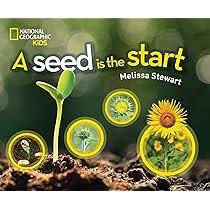 Melissa does tell the story of how a seed grows, but she uses images of an actual seed in the soil. She explains what is happening in short, active words so that the young reader can really see what is happening as well as read it. Pretty cool idea. She is showing science in action in a BOOK!
In my book, Astronaut-Aquanaut: How Space Science and Sea Science Interact, I take my reader on a journey to space and under the ocean. It is not so obvious a progression as Melissa’s, but it accomplishes a similar idea. Readers will see the inside of the ISS and real astronauts answer questions about what it’s like to be in space. They will understand and hopefully even imagine the floating around the ISS and doing their job. To make this more real, I spoke with NASA engineers who helped to build the rockets and space suits that the astronauts wear, asking them what it felt like and how they created this amazing technology.

Then the reader is introduced to aquanauts that dive deep in the ocean and live in Aquarius, the only underwater lab in the world. They will feel the pull of pressure on their bodies, and “hear” their voices reach different pitches as they live in the specialized air combination sixty feet below the ocean. Comparing and contrasting these two extreme environments is a great way to help the reader to understand the e forces that push in on them or lift them up as they also learn about what it would take to become either of these two explorers.
Now I could have just given the information “head-on” but setting the scene of what is happening makes your reader feel like a part of the book. Other books that do this well are:
Sarah Albee’s Poison: Deadly Deeds, Perilous Professions, and Murderous Medicines:

How They Croaked: The Awful Ends of the Awfully Famous by Georgia Bragg:

Water is Water by Miranda Paul:

So, the next time you get ready to write about a science topic, think about ways you can use setting to help your reader feel like they are going on an adventure in your book–when actually, they are learning about science. (Shhh…don’t tell them.)
After all, SCIENCE ROCKS!
 Jennifer Swanson is the award-winning author of over 50 books for kids, mostly about science and technology. She is the creator and co-host of the Solve It! for Kids Science Podcast, the creator of STEAMTeamBooks, and STEM Tuesday, and a curious kid at heart.
Visit her online at JenniferSwansonBooks.com. She is also the President and Founder of Kid Literacy, Inc.
Jennifer Swanson is giving away a 20-minute Zoom Ask me Anything session to one lucky winner.
You’re eligible to win if you’re a registered Storystorm 2025 participant and you have commented only once below.
Prizes will be distributed at the conclusion of Storystorm.
by Audrey Perrott

If you’ve ever been on my Instagram feed, you already know I cry easily, just like Milton in my debut picture book MOO HOO. But I also love to laugh, just like Babette in the upcoming companion book BAA HAA. And House, well, his snarky anxious self in A HAT FOR HOUSE is me in all the ways.
What I’m trying to say is…
I’m an author shamelessly plugging my books.
I kid, I kid. (Not really, not really.)
Actually, what I’m trying to say is my anxiety makes me a deeply feeling person, which is mostly great when it comes to writing books for kids.
My husband uses the word “intense.” I prefer the word “passionate.”
Tomato, tomato sauce.
This passion usually translates to books with humor and heart, but I’m not always feeling particularly jovial especially when the world feels dark. That’s when I need a little help finding the light—inspiration that brings me joy, makes me laugh, and validates all of my feelings. So where do I turn?
Stand-up comedy.
Seriously.
Hear me out: While the content of most stand-up comedians is NSFPBs (Not Safe For Picture Books), there is a huge bucket of inspiration and knowledge you can gleam.
Stand-up comedy is so much more than jokes. It’s carefully crafted storytelling with perfected word choice, pacing, tone, voice, themes, and a pay-off in punchlines. Sound familiar?
Comedians tell a story that connects with their audience that makes them laugh, hopefully over and over and over again. That’s what we want for the readers of our funny picture books. We are writing to surprise our readers with joy, preferably in the form of a belly-aching snort-laugh so they read our books over and over and over again.
Study the way comedians weave together everyday situations in unique ways. Watch how they lean into the awkward, the embarrassing, the obvious, and the preposterous. Take notes on their timing. Think of their dramatic pauses as page turns. Pay attention to the running gags and where they’re placed in the set.
Laugh—and then analyze why you’re laughing.
I’m not joking.
Humor is a serious business. So is writing funny picture books.
This is why a few years ago, I made a writing challenge I called Eat Your Words to brainstorm silly picture book ideas. You can find all of the posts on my blog, starting here. I printed out lots and lots—and LOTS—of teeny tiny bits of paper with words. Every week I challenged myself to pick three and use them to come up with story ideas. I encouraged people to join me!
They did not.
It’s okay. It was fun! It also helped me get out of my rut and led to some funny story ideas.
You could easily use an online random word generator, such as, Random Word Generator, or you can download the ones I made.
One last idea for ideas: I’ve been a huge Tara Lazar and Storystorm fan for years, even fangirling big time at the SCBWI Florida Regional Conference in 2020 before the world (almost) ended.

But this is my first time as a guest blogger! It’s a very surreal and exciting checkmark on my proverbial author BINGO card. So, I thought it would be fun to make a real 2025 Book-Maker BINGO card for you to download as a way to keep your sights on your dreams beyond January.
After all, one of my main mantras is to dream big, work hard, and be grateful.
On that note, I hope you dream up dozens of big story ideas this January.
I hope you work hard to turn some of the into full drafts.
And I am oh so grateful to Tara and all of you for inviting me into your inbox today.
Now go forth, be the light and find the funny!
 Audrey’s sense of humor has helped her get through some really icky seasons in life. It’s also helped her write and publish a few books, including her debut picture book MOO HOO, illustrated by Ross Burach, A HAT FOR HOUSE, illustrated by Druscilla Santiago, and the upcoming companion to MOO HOO titled BAA HAA, launching on March 4, 2025. Audrey believes funny books are just as important as serious books and writes both in her North Carolina home. You can find more about her at AudreyPerrott.com, on Instagram at @audreysbooksandbakes or BlueSky at audreysbooks.bsky.social.
Audrey Perrott is offering a picture book critique [non-rhyming, up to 600 words] OR one copy of one of her books [MOO HOO, A HAT FOR HOUSE, or BAA HAA (March 2025)], to one lucky winner, their pick.
You’re eligible to win if you’re a registered Storystorm 2025 participant and you have commented only once below.
Prizes will be distributed at the conclusion of Storystorm.
by Alan Silberberg


 Alan is a cartoonist and writer who loves making funny food books for kids. P is for PASTRAMI – The ABCs of JEWISH FOOD keeps company with MEET THE LATKES, MEET THE MATZAH and MEET THE HAMANTASHEN (Viking/ Penguin Random House). His new book, THE BAGEL WHO WANTED EVERYTHING will be published Summer 2025 followed by THE FALAFEL WHO FELT AWFUL in 2026.
His illustrated middle-grade novel, MILO; STICKY NOTES & BRAIN FREEZE won the SCBWI Sid Fleischman Humor Award.
Alan is from Boston but happily lives in Montreal.
He likes chocolate chip cookies.
Learn more at SilberBooks.com and follow him on Instagram @alan_silberberg.
Alan Silberberg is giving away a signed copy of one of his books, one lucky winner’s choice.
You’re eligible to win if you’re a registered Storystorm 2025 participant and you have commented only once below.
Prizes will be distributed at the conclusion of Storystorm.





 Writing for Kids (While Raising Them)