You are currently browsing the tag archive for the ‘Teresa Robeson’ tag.
by Teresa Ho Robeson
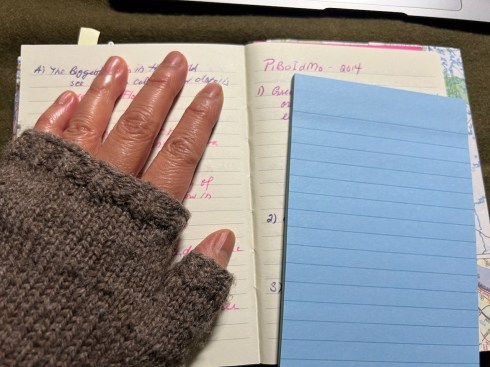
According to my “Ideas” notebook, I’ve been participating in Storystorm since 2014 (back in its PiBoIdMo days), though I swear I’ve been doing it for longer.
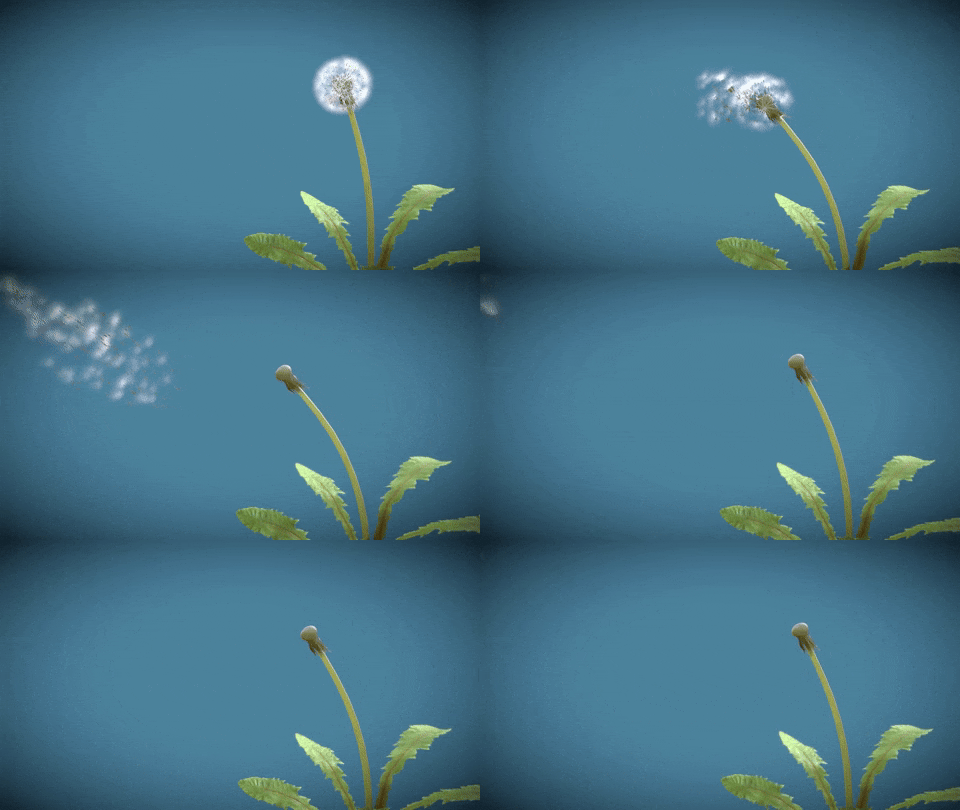
In those nine years, I’ve written down about 270 ideas from the random ones floating in the universe like dandelion fluff (according to Elizabeth Gilbert in her BIG MAGIC book).
Of those 270 I managed to capture in my notebook, I have drafted eight, thanks to 12×12, the other challenge besides Storystorm that help me keep my ducks writing life in a row.

Even though I haven’t sold any of those eight manuscripts, and nine other ideas have already appeared as books by others (Elizabeth was right!), I still find myself with an abundance of ideas on my list and not enough time to write them all. After all, even if I only took a month to write and polish one picture book from an idea, it would take me over twenty-two years to write all 270+ of them. And I keep accumulating more from doing Storystorm year after year.
But there is a solution of sorts! And I stumbled upon it unexpectedly.
I was recently approached by a publisher to write a nonfiction middle grade book for a fun concept an illustrator thought of. While drafting the book, seven story ideas from various years of brainstorming managed to show up at the party and became a part of that book. Also, two more ideas ended up in another nonfiction middle grade book (my own concept this time) I’m writing for a different editor! And I didn’t even realize I had included those ideas until I flipped through my notebook and noticed them after drafting both books.
That’s when I smacked my forehead and had a eureka moment.
Who said that each Storystorm idea had to lead to a single story? Surely not Chief Lazar of the Storystorm Police Department. Instead, why not consolidate two or more ideas into a single manuscript?
I had already done this, by accident, but now I plan to do it on and with purpose. When I’m wanting something new to write, I will read through my entire notebook of ideas and try to smash things together like an author cyclotron.

Sometimes I might put similar ideas with each other to create a thesis for a longer work (as in the NF MGs I mentioned above). But other times, I can randomly pair wildly disparate ideas to create really cool and unique plots or situations for fiction, too.
So, by the power vested in me by the State of (Writerly) Affairs, I hereby grant you permission to do the same! At the end of the year’s challenge, when you look back on all your wild and wonderful ideas, if single ones aren’t leading to worthwhile stories, smash a bunch of them together to create BIGGER MAGIC, and possibly better stories.

Teresa Ho Robeson is giving the winner the choice of either a signed copy of WHO IS TIBET’S EXILED LEADER? THE 14TH DALAI LAMA (Penguin Workshop) or a critique of a nonfiction picture book manuscript under 1,000 words.
You’re eligible to win if you’re a registered Storystorm 2024 participant and you have commented only once on today’s blog post.
Prizes will be distributed at the conclusion of Storystorm.

 Teresa Ho Robeson is an Asian Pacific American Librarians Association Picture Book Award-winning author of fiction and nonfiction books on science, nature, and her own culture, from her debut QUEEN OF PHYSICS: HOW WU CHIEN SHIUNG HELPED UNLOCK THE SECRETS OF THE ATOM (Union Square, illus. Rebecca Huang) to the upcoming CLOUDS IN SPACE: NEBULAE, STARDUST, AND US (MIT Kids/Candlewick; illus. Diana Renzina).
When not writing or teaching at The Highlights Foundation, SCBWI, and other conferences, she keeps busy with her family growing, and canning, much of their own food on 27 acres, as well as knitting, sewing, drawing, and sometimes making soap.
Visit her at TeresaRobeson.com or follow her on Bluesky @teresarobeson or Instagram @tmrobeson.
When my debut THE MONSTORE arrived in 2013, there was one kidlit debut group, but it was primarily for YA and MG releases. But I asked if I could be involved because there was no “debut PB” blog. There were a few of us brave PB authors who charmed our way in. But now a debut picture book group is an ACTUAL THING! Hot-diggity-dachshund!
So today I would like to introduce you to THE NOTABLE19s! All these delicious titles will be releasing this year from new talents…
The Notable19s is a baker’s dozen of authors and illustrators who are debuting with their first-ever book, first author-illustrator book, or first book with a medium-to-large publisher in 2019. They want to share some writing or illustrating wisdom that they’ve learned on their journey to being published.
(Click on an author’s name to be transported to their website.)

When Stephanie V.W. Lucianovic wrote THE END OF SOMETHING WONDERFUL (Sterling), she thought she had an idea of what the illustrations would look like on every page, particularly the last one. But then George Ermos brought his amazing vision to the story and captured all that was darkly funny and sweet about the book. The last page of the book is both so perfect and something Stephanie never would have thought up herself. When you’re a text-only author, remember that the book is not just yours anymore and be open to the magic that comes from collaboration.
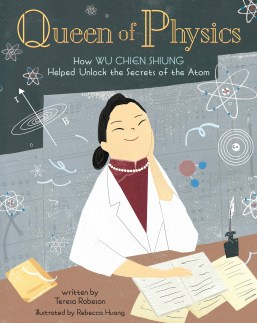
Teresa Robeson feels that being part of a larger creative community is integral to her publishing success. She recommends: joining SCBWI and attending events both regionally and in other chapters; participating in challenges like 12×12 (where she connected with her first agent), Storystorm, and NaPiBoWriWee; applying for opportunities like We Need Diverse Books; and being in one or more critique groups. Winning the WNDB mentorship with Jane Yolen led to a polished manuscript that became her debut picture book, QUEEN OF PHYSICS (illustrated by Rebecca Huang; Sterling).

Marcie Flinchum Atkins, author of WAIT, REST, PAUSE: DORMANCY IN NATURE (Millbrook Press, 2019), thinks you shouldn’t let your busy life hold you back from writing. Since her kids were toddlers, she’s been carrying a “writing bag” around stuffed with manuscripts in different stages, craft books, and research articles. This enables her to work on the go–in the pick up line at her kids’ sports practices, in the orthodontist’s waiting room, or in the ten-minute break between conference sessions.

Cathy Ballou Mealey, author of WHEN A TREE GROWS (illustrated by Kasia Nowowiejska; Sterling) suggests pasting your PB draft into a word cloud generator like WordItOut or Wordle to visually gauge the frequency of words in your text. A word cloud can help you find terms to cut or replace with stronger choices.
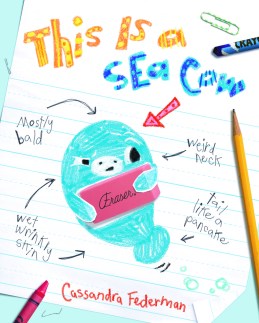
Cassandra Federman is the author-illustrator of THIS IS A SEA COW (Albert Whitman, 2019), in which a child writes a school report about sea cows and the subject is not happy with her portrayal. Sea Cow—or Manatee, as she prefers to be called—comes to life on the pages of the report and decides to defend herself with her own fascinating facts about manatees. Cassandra’s advice is to have honest, respectful conversations with your editors and art directors. Don’t be afraid! Discussing intentions, what works, what doesn’t, and why, will always lead to improvement.
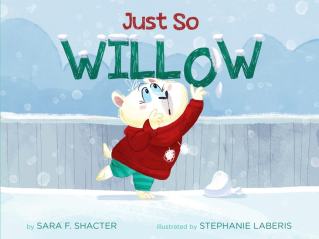
In Sara F. Shacter’s picture book, JUST SO WILLOW, a type-A polar bear learns to let go. “Ironically, Willow helped me do the same! Early versions of my manuscript received the same comment from multiple editors: the end fell flat. I tweaked to no avail. Then editor Brett Duquette had the insight that led to my ‘ah-ha’ moment: the first three lines were bigger and funnier than the rest of the story. So I deleted everything but those compelling first lines and began anew. Success! Moral: experimentation is freeing. You can always go back to the original version.”
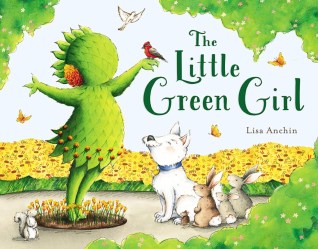
Lisa Anchin’s debut author-illustrated picture book, THE LITTLE GREEN GIRL (Dial), is about a persistent and curious little plant. Lisa, like the Little Green Girl, has learned that persistence is key in publishing. Her book took three years and thirteen drafts before it found a home at Dial, and it will be almost exactly five years from the very first sketch to publication. Don’t get discouraged if a project feels like it’s taking too long. Stick with it, and keep revising until it’s the best it can possibly be.
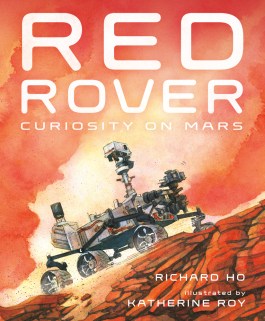
Richard Ho is the author of RED ROVER: CURIOSITY ON MARS, illustrated by Katherine Roy and published by Roaring Brook Press/Macmillan (October 29). In choosing a planet (take a bow, Mars!) as the narrator of a story about the Curiosity rover, Richard wanted to explore how far outside-the-box he could venture when it comes to matters of POV and story structure. As it turns out, Mars’ voice perfectly mirrored the wide-eyed innocence and wonder of a child observing Curiosity’s epic journey across a vast red landscape.

BRAVE MOLLY (Chronicle), by Brooke Boynton-Hughes, is a nearly wordless picture book that tells the story of a girl who has to overcome her fears in order to find her own voice and make a new friend. Molly’s story was born of Brooke’s frustration with her own shyness, social anxiety, and self-doubt. Telling our personal stories can feel vulnerable, but there is strength in sharing our own experiences. Be brave, like Molly, and tell the story that only you can tell.
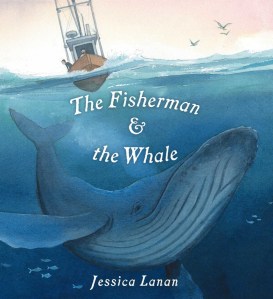
Jessica Lanan is the author and illustrator of THE FISHERMAN AND THE WHALE and illustrator of over five other books. She finds it important to develop a habit of artistic exercise, regularly attending figure drawing groups, drawing and painting from life as often as possible, and keeping a sketchbook on hand at all times. Technical ability opens doors; the more artistic skill you can develop, the more options you will have to visually tell your story.
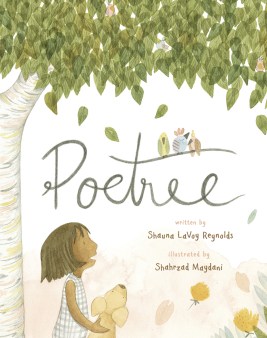
Shauna LaVoy Reynolds, author of POETREE (illustrated by Shahrzad Maydani; Dial), tells kids that passionate readers make the best writers. It’s true for adults, too! If you write picture books, take the time every week or so to raid your local library’s new releases. Bring home and read a stack of books, taking note of what works (and what doesn’t.) This will help get your brain into picture book voice mode, keep you aware of market trends, and of course satisfy your story-loving inner child.
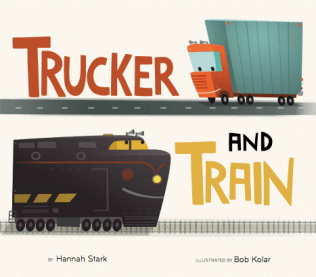
Hannah Stark, author of TRUCKER AND TRAIN (illustrated by Bob Kolar; Clarion/HMH), considers herself a student of picture books more than a writer of them. Ann Whitford Paul’s book WRITING PICTURE BOOKS recommends typing up the text of recent picture books you love and those you thought were dreadful. With illustrations removed you can better study what works and what does not in the text. As a writer this has helped me learn so much about pacing, page turns, word count
and craft.
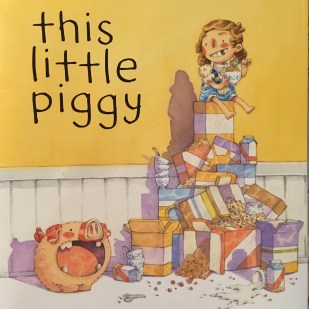
James Serafino, author-illustrator of THIS LITTLE PIGGY (Philomel) says, “The best advice I can think of for any writer is to work on your whole story. Don’t just focus on the beginning or your favorite part. I’ve spent days on writing the perfect opening line only to get to the end of the story and realize it wasn’t where the story should begin at all. Whenever you sit down to write go through the whole story arc from start to finish, every time. Don’t get stuck on small details until later when you can enjoy writing them into a story that works.”
To visit ALL of these fabulous authors and illustrators, visit Notable19.weebly.com and subscribe to be alerted when each title is available! Also follow along on Twitter @notable19s.





 Writing for Kids (While Raising Them)