You are currently browsing the tag archive for the ‘Jennifer Swanson’ tag.
by Jennifer Swanson
One of the many things that makes a great story is the scene. Setting the scene for your book is so important because your reader needs to know where they are. After all, a book is two-dimensional. It’s not a video which has the ability provide multiple images in a flash of a minute and interact with you. Books need the author to provide rich, descriptive details that makes the reader feel the sensations and emotions of being in a particular place.
It might be the cool, dark forest, surrounded by high, full trees swaying in the wind. It might be the warm pebbles of sand slipping through your toes while gentle waves lap against your feet.
OR it might be the inside of a tiny shoot of a flower as it emerges from the earth and stretches its new bud towards the sky. Wait. Did you just put your reader inside the stem of a flower? Yep. That’s the lovely thing about STEM writing. It can take you ANYWHERE.
When you are writing science books, just like a fiction book, you can immerse your reader in your scene. That scene might be in the ISS (International Space Station) high up in the sky where you have your reader marvel as the view of the tiny Earth fills up your observation window and feel the weightlessness of microgravity. Or maybe your reader is taken on journey across the limbs and tree branches over a stream, into freezing cold mounds of snow, and through a short, quick thunderstorm to show you how the water cycle works.
What I’m trying to say is that just because you are writing about science/STEM/STEAM you don’t have to be boring. Be Creative! When you are getting ready to write your topic, many people think that because this is a book about science, it has to be done “head-on”.
In other words, if you are writing a book about seeds, you need to talk about how a seed, grows roots, its shoot grows, and it undergoes photosynthesis…. (are you bored yet). What you can do, is to set that same scene in an exciting way. Melissa Stewart does a great job of that with her book A Seed Is the Start by NGKids.
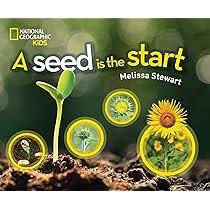 Melissa does tell the story of how a seed grows, but she uses images of an actual seed in the soil. She explains what is happening in short, active words so that the young reader can really see what is happening as well as read it. Pretty cool idea. She is showing science in action in a BOOK!
In my book, Astronaut-Aquanaut: How Space Science and Sea Science Interact, I take my reader on a journey to space and under the ocean. It is not so obvious a progression as Melissa’s, but it accomplishes a similar idea. Readers will see the inside of the ISS and real astronauts answer questions about what it’s like to be in space. They will understand and hopefully even imagine the floating around the ISS and doing their job. To make this more real, I spoke with NASA engineers who helped to build the rockets and space suits that the astronauts wear, asking them what it felt like and how they created this amazing technology.

Then the reader is introduced to aquanauts that dive deep in the ocean and live in Aquarius, the only underwater lab in the world. They will feel the pull of pressure on their bodies, and “hear” their voices reach different pitches as they live in the specialized air combination sixty feet below the ocean. Comparing and contrasting these two extreme environments is a great way to help the reader to understand the e forces that push in on them or lift them up as they also learn about what it would take to become either of these two explorers.
Now I could have just given the information “head-on” but setting the scene of what is happening makes your reader feel like a part of the book. Other books that do this well are:
Sarah Albee’s Poison: Deadly Deeds, Perilous Professions, and Murderous Medicines:

How They Croaked: The Awful Ends of the Awfully Famous by Georgia Bragg:

Water is Water by Miranda Paul:

So, the next time you get ready to write about a science topic, think about ways you can use setting to help your reader feel like they are going on an adventure in your book–when actually, they are learning about science. (Shhh…don’t tell them.)
After all, SCIENCE ROCKS!

 Jennifer Swanson is the award-winning author of over 50 books for kids, mostly about science and technology. She is the creator and co-host of the Solve It! for Kids Science Podcast, the creator of STEAMTeamBooks, and STEM Tuesday, and a curious kid at heart.
Visit her online at JenniferSwansonBooks.com. She is also the President and Founder of Kid Literacy, Inc.

Jennifer Swanson is giving away a 20-minute Zoom Ask me Anything session to one lucky winner.
You’re eligible to win if you’re a registered Storystorm 2025 participant and you have commented only once below.
Prizes will be distributed at the conclusion of Storystorm.
Putting Your Best Paw Forward
by Jennifer Swanson
Who’s an animal lover? Come on raise your hand. Do you own a pet now? Did you once? Besides being empathetic friends to us when we are down or energetic reasons to exercise, pets can also be great inspiration to aspiring picture book authors. What child doesn’t love to read about the crazy antics of the myriad of dogs in Go, Dog, Go by P.D. Eastman. And of course, who can forget the hours of enjoyment from The Cat in the Hat by Dr. Suess or even the best known hippopotamus friends, George and Martha by James Marshall. Animals or pets in general are found in abundance in children’s picture books.
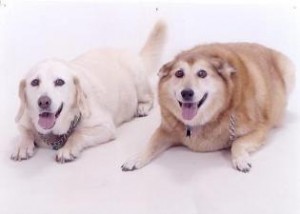 So, why not use your own pets for inspiration? That’s what I did when I created my dynamic canine detective duo, Penny and Rio. My two real dogs (who are also named Penny and Rio) served as the creative map for my characters.
Luckily my real dogs had very distinctive personalities and were always doing crazy things. That’s what caught my imagination.
 In this picture, Penny had just dug out our flower planter at the end of the deck. She used to lie in this for hours, just staring at the yard.
Naturally, this meant to me that she was a pet detective determined to solve a mysterious case. This is how I got my plot for my first book, Penny and Rio: The Mysterious Backyard Meeting.
For me a mystery was the logical choice as I have been a die-hard Nancy Drew fan since I first began to read, but you could have your pets do anything.
Perhaps your cat will become an astronaut and fly through space to land on a planet inhabited only by mice. Or your pet fish possesses super powers so that at night it flies out of the tank to save the lives of the Palmetto bugs living in your garage. Maybe the fireflies you catch at night are really beings from another planet and wish to take over the world.
Your imagination is limitless. So next time you are stumped for a picture book idea, take your notebook and observe some animals. Go to the zoo if you can. See how they interact. Then give them human characteristics and situations. Make the elephant set out on a quest for magic peanuts. Have the lion be a bus driver. Whatever you want? The more outrageous the better.
If you are still stumped, read the newspaper or the internet for articles on humans or animals. I’ve actually written several stories from the ideas I’ve seen in the newspaper.
Whatever you do, have fun and don’t forget to always, put your best paw forward.
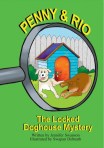 Jennifer Swanson is the award-winning author of the Penny and Rio early reader series.
Jennifer is generously giving away a signed copy of Penny and Rio: The Locked Doghouse Mystery.
Just leave a comment to be entered. You do not have to be a PiBoIdMo participant to enter.
Winner will be chosen randomly at the conclusion of PiBoIdMo!





 Writing for Kids (While Raising Them)