Bio photo 2012by Dorina Lazo Gilmore

I grew up in the kitchen with my mama and grandmas and aunties. When I was a little girl my mama sprinkled flour across the counter and let me draw pictures in it while she baked. As I got older, I got to do more grown-up jobs. She taught me how to read recipes, measure ingredients and decipher spices.

I loved being in the kitchen because that’s where I found the greatest samples of food and the best stories cooking.

When I sat at the table with my grandma rolling lumpia, she would tell me about her childhood growing up in the Philippines and Hawaii. Grandma would giggle about the days when my grandpa would dedicate songs to her on the radio. She would share techniques for Filipino cooking, which is as much about the process as it is about the ingredients.

When I would pull up a stool to the counter, my mama would tell me about her adventures in the kitchen with her dad. I learned about our Italian-American heritage. I discovered the secret pasta sauce recipe. My mama unraveled the stories of her dreams, failures and the roots of her faith.

We bonded right there in the kitchen.
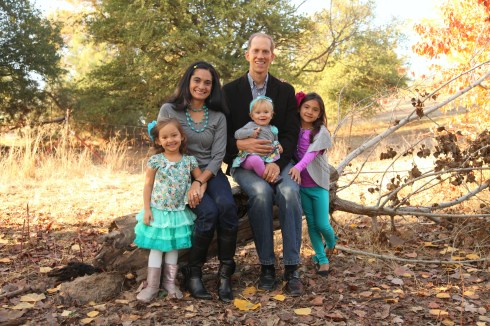
Christmas family photo 2012

gilmoregirl
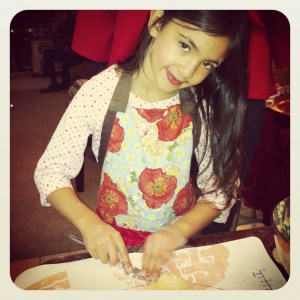
As a mama of three girls, I spend a lot of time in the kitchen today. We create, we taste, we dream up stories. One day I heard that familiar scrape of the stool across the kitchen tile. My middle daughter, who is named after an Italian chef, wanted to help mama. I happened to be making a Flourless Chocolate Truffle Torte. When she saw the chocolate swirling in the mixing bowl, she looked up at me very earnestly and said, “When does the licking begin?”

A classic line that will go down in history in our family. I am sure it’s also a line that will climb into one of my manuscripts one day.

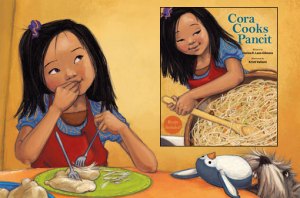
And that’s just what happens in the kitchen: stories are born. My latest book, CORA COOKS PANCIT, details the story of a Filipino girl who learns to cook her family’s favorite noodle dish with her mama and uncovers some family history in the process. The story came out of my own experience cooking with my grandma Cora.

I happen to have a hand-scrawled copy of my grandma’s pancit recipe. I believe recipes are also a kind of story, a narrative of ingredients and traditions. That’s why we decided to include the recipe for the dish in the back of my book. When I do school visits, I talk about the ingredients with the kids and we cook pancit together.

I also included some details in the book from a Filipino friend who grew up in California’s Central San Joaquin Valley. One day when we were cooking together she told me about her dad who cooked for the hundreds of farmworkers who picked strawberries and grapes in the fields. This added another layer to my original manuscript because I could share a piece of California history as well.
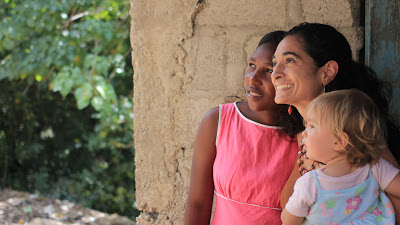
Moise & Dorina gaze at roof

The kitchen can also be a place to test out a lot more than just recipes. If your writer’s brain is blocked, droopy, stuck or uninspired, go feed it. Throw open the cupboards, dig in the refrigerator, turn up the burner and make something. I call it cooking therapy. Sometimes just the act of making myself a snack or cooking up a meal gets my creative juices flowing. While I’m cooking, I’m working out the kinks in my plot or adding nuances to my characters – sometimes consciously, sometimes subconsciously.

Julia Child said, “This is my invariable advice to people: Learn how to cook. Try new recipes. Learn from your mistakes. Be fearless, and above all, have fun.”

Sounds like great advice for writers too.

Bon appétit!

A SPOONFUL OF WRITING PROMPTS TO HELP YOU COOK UP YOUR NEXT MANUSCRIPT:

  1. Describe the most delicious meal you can imagine. What are the smells, the colors, the tastes that inspire you there?
  2. Sketch a scene in words or pictures from your childhood that involved food. Was there a traditional dish or meal you often made with your family?
  3. If you were inviting a famous chef to dinner, what you would you serve? Invite your own children or perhaps your inner child to be a part of that story.
  4. What food makes your stomach turn or your nose turn up? Write a story about a child avoiding or facing that food.
  5. Go in the kitchen. Make yourself a snack. Dig in. Then imagine what would happen if that tantalizing snack came alive.

guestbio

CoraCooksPancitCoverDorina is the author of three books for children, including CORA COOKS PANCIT which won the Asian Pacific American Librarian Association’s “Picture Book of the Year.” Her poetry has also been published in Cricket magazine.

Dorina loves creating healthy recipes for her family and friends. To balance all that eating, she runs half marathons with her hubby and knits. When Dorina is not writing or stirring up stories in the kitchen, she is the director of The Haitian Bead Project. The project features upcycled jewelry made by Haitian artisans who are rising out of poverty. Dorina loves working with the Haitian women and sharing their stories in the U.S.

Visit Dorina online at DorinaGilmore.com, Twitter @DorinaGilmore or check out some of her recipes on the Health-full blog at MissionFitness.co.

prizeinfo

Dorina is giving away a signed copy of CORA COOKS PANCIT!

This prize  will be given away at the conclusion of PiBoIdMo. You are eligible for this prize if:

  1. You have registered for PiBoIdMo.
  2. You have commented ONCE ONLY on today’s post.
  3. You have completed the PiBoIdMo challenge. (You will have to sign the PiBoIdMo Pledge at the end of the event.)

Good luck, everyone!
DJLA for Chickby Lenore Appelhans Jennewein

Daniel and I started developing picture books as a team back in 2004. Our earliest picture books were practice vehicles, helping us learn how to create a picture book as well as how best to work together. Our third collaboration landed us an agent and our fourth got us a book deal. Along the way, Daniel and I have discovered a few best practices for successful creative partnerships.

1. Give each other space.

When we started out, we thought we had to muddle through every detail of the development process together—from idea to execution. Soon enough, we felt suffocated by the project, and frustrated with each other. So we changed it up. We’d ruminate on our current task independently and then come to each discussion meeting with solid recommendations on hand.

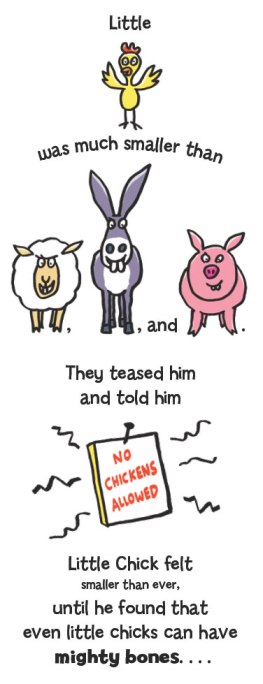
chick summary rebus2. Check your ego at the door.

Even giving each other ample space, our discussions can become quite heated. Naturally, each of us is convinced our approach is the right one. We’ve learned that we can’t hash things out immediately. It’s most harmonious if we present our recommendations with minimal commentary, and then each go back in our respective caves to consider all angles. After some reflection, I often realize that Daniel’s proposed solutions for the story are better than mine, or something he brought up leads me to rethink and rewrite for the better.


3. Try to have fun!

Sometimes we make the mistake of approaching our sessions with too much seriousness. Yes, publishing is a business, but the ideas flow best when we relax and let our creative sides go off on tangents. One of those tangents could be exactly what we need.

guestbio

Lenore and Daniel Jennewein live and work together in Frankfurt, Germany. CHICK-O-SAURUS REX is their debut picture book as a team. Daniel is also the illustrator of IS YOUR BUFFALO READY FOR KINDERGARTEN? and TEACH YOUR BUFFALO TO PLAY TO DRUMS, both by Audrey Vernick. Lenore also writes novels for teens under the name Lenore Appelhans, including THE MEMORY OF AFTER and CHASING BEFORE.

Visit them at LenoreAppelhans.com and DanielJennewein.com.

prizeinfo

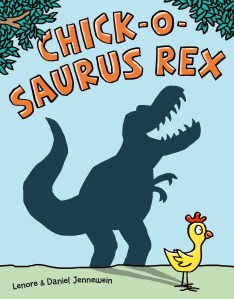
chick coverThe Jenneweins are giving away a signed copy of CHICK-O-SAURUS REX plus a personalized illustration by Daniel.

This prize bundle will be given away at the conclusion of PiBoIdMo. You are eligible for this prize if:

  1. You have registered for PiBoIdMo.
  2. You have commented ONCE ONLY on today’s post.
  3. You have completed the PiBoIdMo challenge. (You will have to sign the PiBoIdMo Pledge at the end of the event.)

Good luck, everyone!


annemariepaceby Anne Marie Pace

Bad news for me: Tara asked me to write about inspiration. I’m not sure if it’s the dreary November weather or my travel-fried brain, but I feel neither inspired nor inspiring.

Good news for you: You don’t need me, not when you’ve got the collective human experience at your fingertips. When I type the word “inspiration” into Google, I get over 130,000,000 hits. Everything you could possibly want is there: dictionary definitions, memorable quotations from Eleanor Roosevelt and the Dalai Lama, Scripture verses, YouTube videos of TED talks, and, last but certainly not least, Kid President.

Lest you think I’m making excuses to avoid writing about inspiration, I’m not. I am going to write. It’s just that I’ve decided to tell you that it’s okay not to feel inspired.

I’ve learned that for me, writing has little to do with inspiration and everything to do with hard work. Don’t get me wrong–there IS inspiration, if you define inspiration as the source of those ideas that seem to come out of nowhere, and I’m happy when those moments come. But that kind of inspiration comes in fits and snatches, and flits away as quickly as it comes.

That word Inspiration is a tricky one. Define it too narrowly, in the sense that Inspiration conjures up Muses and magic and sparkly things, and you might be setting yourself up to wait far too long between productive writing times.

Of course, there’s another way to see inspiration other than as the occasional blessing from a capricious Muse. Let’s define “inspiration” as “something that makes you put your butt in the chair.” (Butt In Chair, or BIC, as you probably know, is from Jane Yolen.)

Here are some things that make me sit my writerly butt down:

Hope
When I started writing, almost all submissions and responses were handled via the U.S. Postal Service. More days than not, nothing came in the mail. Nevertheless, that moment of reaching for the mailbox door every day and pulling it open always felt happy and hopeful. And sometimes there was something lovely in there! I like that hopeful feeling (even though these days I get it when I check CallerID to see if it’s my agent) and I don’t get to have it if I don’t do the work first.

Deadlines
My 18-year-old daughter, faced with a looming deadline the other night for one of her college applications, whipped out an essay in about forty-five minutes, and it was actually quite good. Deadlines mean you don’t have the luxury of feeling inspired; you just have to do the work.

tickclock

The Ticking Clock
I’m not old-old; I’m not even sure I’m quite in the middle-aged category. But I probably have fewer days ahead of me than I have behind me. As Rabbi Hillel said, “If not now, when?” I’m pretty sure he wasn’t referring to me finishing my hippo manuscript, but it works for me.

My Kids
My four teenagers may think they’re too old for picture books (though they respectfully read mine when I ask them) but they definitely are not too old to see me setting and reaching new goals. When I feel like quitting (generally because I’m depending on a visit from a Muse who has taken off on a one-way trip to Tahiti) I remember I don’t want my kids to see me quit. They can see me struggle, and they can see me change my direction, but I don’t want them to see me quit.

Kid Readers
This. Yes. More addictive—and more important—than chocolate to my writerly soul.

kid11457639_10201424571070840_1456182698_n

This list is incomplete, of course. I didn’t list the embarrassing ones or the ones I should probably save for a therapist. (I own those; I just don’t think you need or want to read about them.) I’m curious—what’s on your list? What inspires you to sit down and write when your Muse is on Mars?

guestbio

vampirinaDespite the oft-quoted adage to write what you know, Anne Marie Pace has never been a bear, a vampire, or a ballerina. She is the author of NEVER EVER TALK TO STRANGERS and A TEACHER FOR BEAR, both published by Scholastic Book Clubs; and the VAMPIRINA BALLERINA series, illustrated by LeUyen Pham, published by Disney-Hyperion. Someday, she hopes to write books about what she does know: whistling, baking blue-ribbon-winning chocolate chip cookies, and schlepping teenagers around in a minivan, if she can find a way to make any of that interesting. She lives with her family in Virginia. Visit Anne Marie online at AnneMariePace.com or the Vampirina Ballerina Facebook page at Facebook.com/VampirinaBallerina.

roalddahlfear

And that’s why we have PiBoIdMo!

You’re halfway through the month. How are you doing with the challenge? Check in by commenting below!

adamlehrhauptby Adam Lehrhaupt

Recently, I had a bout of writer’s block. It didn’t last horribly long, but as any writer who has been through it will tell you, any amount of time spent struggling to write can be extremely frustrating. Yeah, yeah. I know. What does this have to do with inspiration? I’m glad you asked. Or, more to the point, I’m glad I pretended that you asked. I thought I would talk a little about the lack of inspiration.

Why? Because I like to do things differently, but also because it is something that we all deal with at some point in our writing career. Every writer has a day when they sit down at their desk and stare at the blank page, the computer screen, the tablet and think, “Oh, god! What am I going to write?” Well, I’ll tell you. Anything.

writersblock

There can be a lot of reasons that inspiration goes missing for a while. It is important in times like these not to lose sight of the smaller goal as we strive for the larger. In this case, we aren’t trying to complete the project. We are looking for inspiration, so that we can get writing again.

How do we do this? We get back to the basics. An artist may spend 5-10 minutes drawing quick sketches to get their creative juices going. We, as writers, can do the same. They don’t have to be good, or interesting. We don’t need to keep them around, or show them to anyone. We need to write them.

calvinhobbeswritersblock

So, to that end, here are my 10 ideas for jump-starting your brain.

  1. Describe a photo. What happened just before it? Just after?
  2. Draw a picture. It doesn’t matter if you are an artist or not. Draw something you see. Remember we don’t need to show this to anyone.
  3. Describe yourself without using the pronoun I.
  4. Write down 10 questions about your project.
  5. Describe your writing area using only adjectives.
  6. Look up the lyrics to a favorite song. Try to write the story it tells.
  7. Describe what you ate for your last meal.
  8. Take a favorite story and change the ending. Happily ever after? Not any more. (Insert maniacal laugh here)
  9. Create a list of your favorite heroes from film, TV, or literature and describe them. If you’re not into the hero thing, make a list of villains.
  10. Change your perspective. If you write at home, go to a coffee shop or library. If you write inside, go outside. If you write via computer, try writing on a notepad, or vice-versa. Try writing while in a closet or under a bed. Remember: you never know when inspiration will strike.

Most importantly, keep writing. Don’t worry about what comes out. Ten minutes of writing today could lead to that brilliant story tomorrow. Happy writing!

guestbio

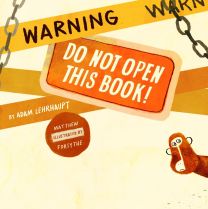
warningAdam has traveled to six continents, performed on Broadway, and lived on a communal farm. He firmly believes that opening a book is a good thing, even if there are monkeys in it. Adam currently lives in the suburbs of Philadelphia, PA, with his wife and two sons. In his spare time, Adam does a bit of writing. His writing spans multiple styles, from poetry to fiction to nonfiction, and is primarily geared towards children. Adam’s first book, Warning: Do Not Open This Book!, is available now anywhere books are sold. View the book trailer here.

Visit him online at AdamLehrhaupt.com, like him on Facebook and follow him on Twitter @Lehrhaupt.

IMAGE 6by Zachariah OHora

Writing is hard work. Coming up with good characters can be even harder. The market for picture books (at least this moment) is all about character-driven stories.

When I’m trying to come up with a fresh book idea and there isn’t one to steal from my kids, I start with a character.

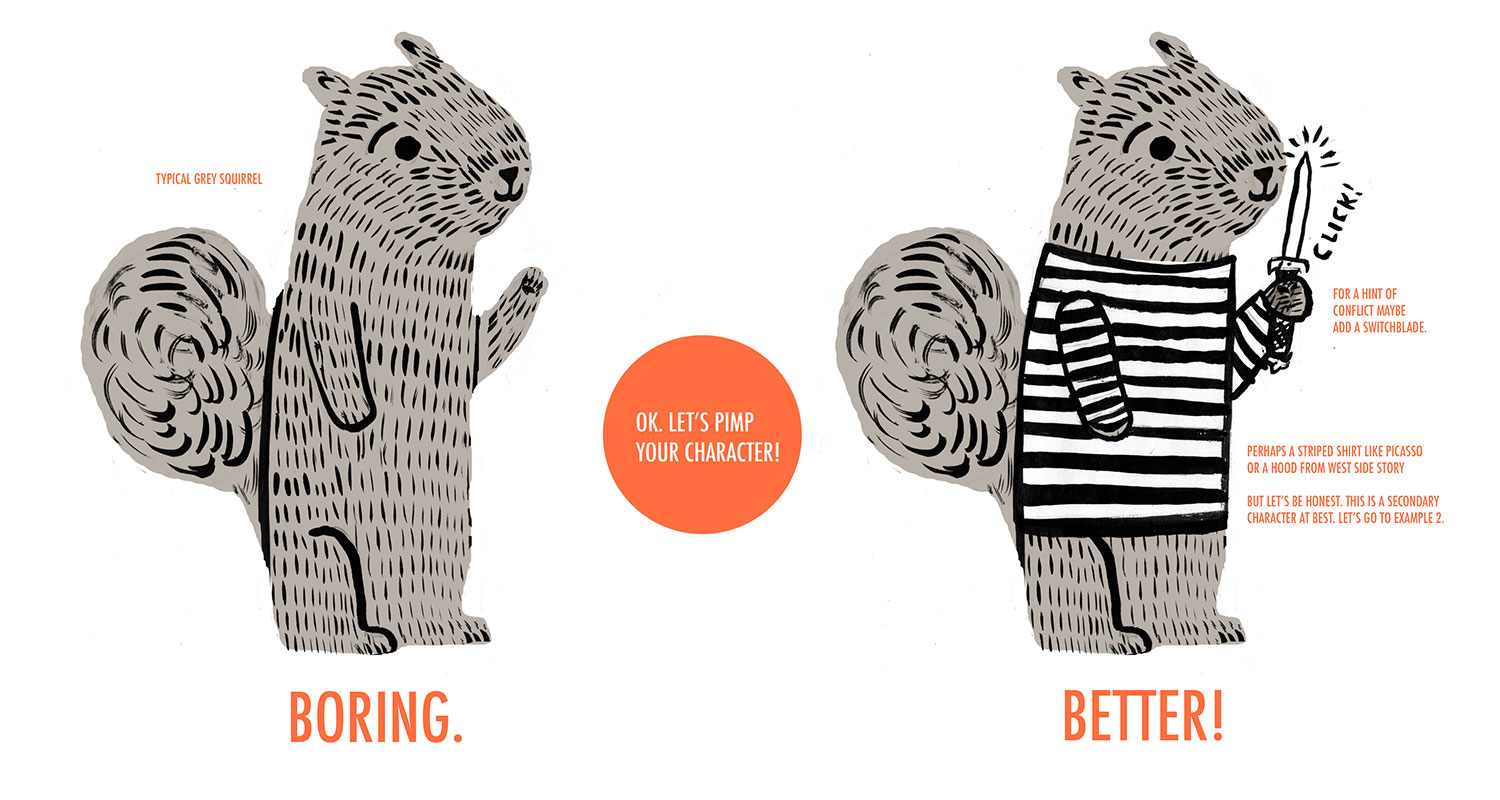
I’ve developed a method that is very simple. Even if you don’t draw you can fake it.

It’s called “Pimp Your Character” ™.

In a nutshell it works like this…

(Tara’s note: click each image to see it in its full-sized glory!)

IMAGE1

Good! You are on your way. If you are feeling confident about this simple version, move on to the advanced version.

IMAGE2
IMAGE3

Say you are having trouble picking an animal. Maybe you hate animals? If so, try writing dystopian YA.

If you love animals but just can’t decide go to CuteOverload.com or even better FYeahCuteAnimalss.tumblr.com.

Pick an animal and refer to the charts above to “Pimp Your Character” ™.

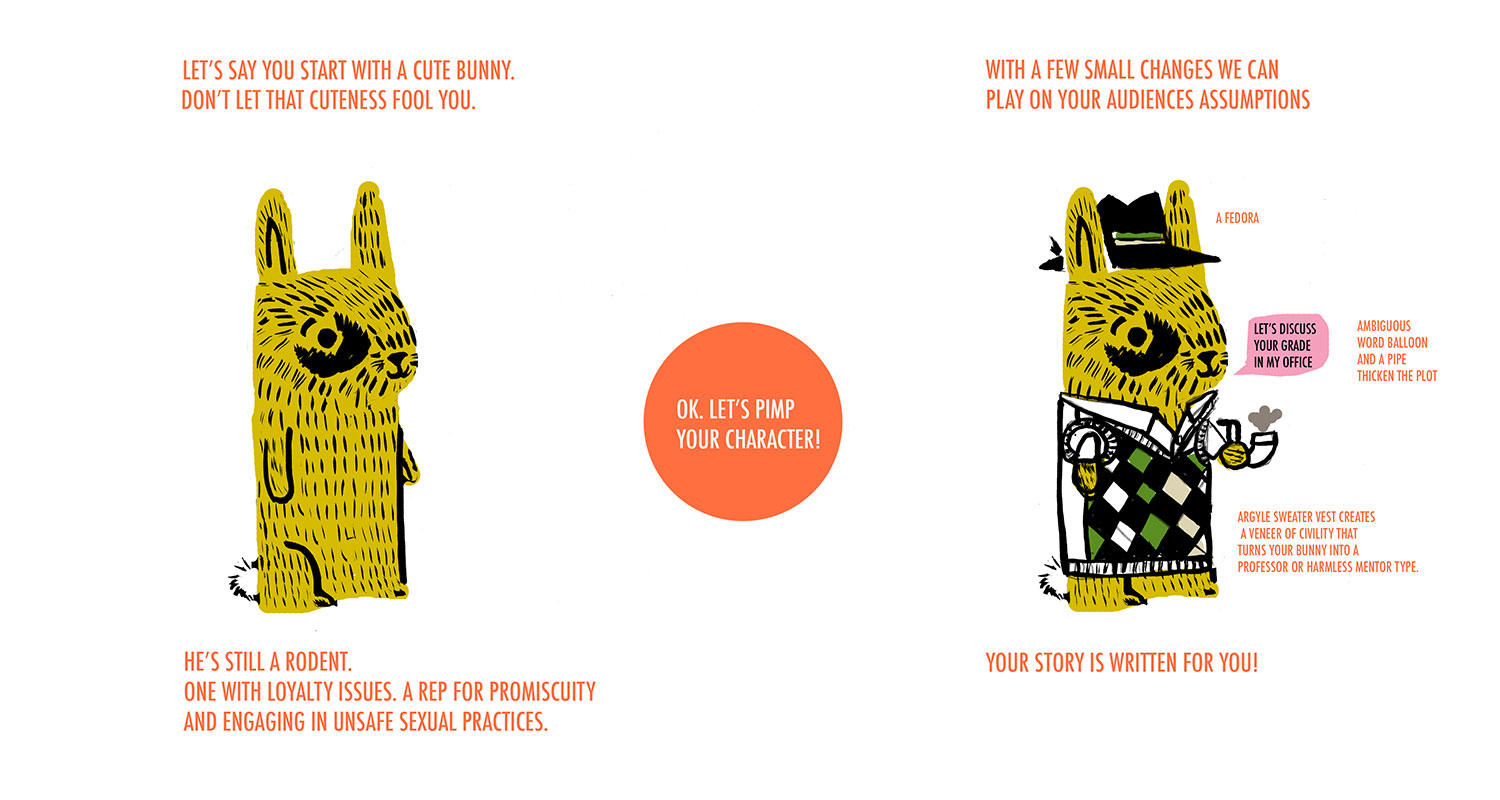
If done right your character will write or reveal it’s own story. All you have to do is be open to hearing it. Don’t be afraid to use peoples own prejudices and expectations.

You might be surprised. Here’s an example.

IMAGE4

Sometimes I get lucky. Real life provides me with a story and character idea and they almost write themselves. NO FITS NILSON! was one of those.

IMAGE 5

Good luck Pimping Your Character!

guestbio

nofitsnilsonZachariah OHora is the author and illustrator of Stop Snoring Bernard! (Henry Holt 2011) which won the Society of Illustrators Founders Award for 2011 and was chosen as the PA One Book for 2012.

His latest book No Fits Nilson! was awarded a Kirkus Star and featured in The New York Times Book Review. He is currently working on My Cousin Momo (Dial Books, Winter 2015) and Wolfie the Bunny written by Ame Dyckman (Little Brown, Spring 2015).

He is repped by Sean McCarthy of the Sean McCarthy Literary Agency. His website is Zohora.com. Check out his blog and follow him on Twitter @ZachariahOHora.

janeyolen© 2013 by Jane Yolen

I have a Muse who works overtime, or at least that’s how it looks from the outside. But I think about something my late husband once said. An ardent birder and, in his retirement, a bird recordist whose tapes now reside in both the Cornell Library of Natural Sounds and the British Natural History Museum, he was known in the birding community as “a lucky birder.” That meant he seemed to find more rarities and more hard-to-see birds than anyone else. But his response was, “I show up.” And that’s what I think the Muse actually is: the writer showing up every day and doing the hard work of writing.

If you write FOR a particular market or FOR a particular editor you will often miss the mark. But if you write because your fingers have danced across the keyboard, because a character has tapped you on the shoulder, because a story has settled in your heart, then even if you never sell it you have done the work you were meant to do. And sometime, dear readers, real magic happens.

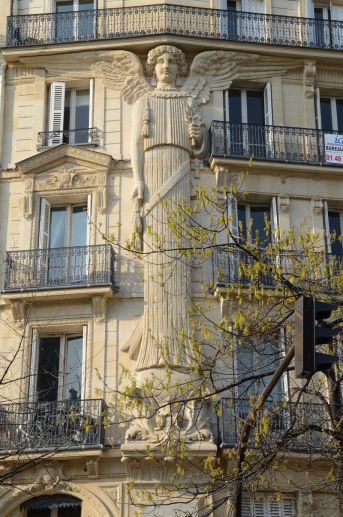
Let me tell you about a picture book I recently wrote because of a haunting photograph I saw on line. If I had stopped to think about its saleability, I wouldn’t have started it. But I plunged in.

parisangelThe photograph was of an apartment house in Paris on which a three story, three-dimensional angel with widespread wings had been carved on the facade. There was a newspaper story about how the angel had been built and survived World War II.
I knew there was a story there, and three things leaped out at me: angel, Paris, World War II.

Before I knew it, I was beginning to write a picture book (40 page picture book at first which I eventually got down to the more ordinary 32 page format), called “The Stone Angel.” It was about a Jewish family and the daughter about six or seven narrates. The Nazis come in, the yellow stars, escape to the forest where they live with Partisans, and then their escape across the mountains to Spain and then to Britain where they stay in the country till war’s end. And on their return, the father’s job is reinstated and he finds an apartment in, yes, the angel building.

A picture book? Really? Not a novel? It sounds like the plot of a novel. Yeah, I kept hearing that in my head and I kept dismissing the idea. I finished the picture book, sent it editor Jill Santopolo who was doing my fairy tale novels. It was not her kind of thing at all.

And in two weeks, she’d bought the book, found an illustrator, helped me shrink the text to a 32 pager (saying, “I love this as a 40 page book and if we can’t make it work at 32 pages with the same power, I can make the case for the longer picture book.”).

But sometimes the magic works.

© 2013 by Jane Yolen, all rights reserved

guestbio

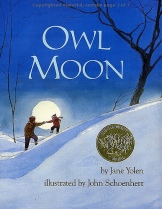
owlmoonJane Yolen is an author of children’s books, fantasy, and science fiction, including Owl MoonThe Devil’s Arithmetic, and How Do Dinosaurs Say Goodnight?
She is also a poet, a teacher of writing and literature, and a reviewer of children’s literature. She has been called the Hans Christian Andersen of America and the Aesop of the twentieth century.

Jane Yolen’s books and stories have won the Caldecott Medal, two Nebula Awards, two Christopher Medals, the World Fantasy Award, three Mythopoeic Fantasy Awards, the Golden Kite Award, the Jewish Book Award, the World Fantasy Association’s Lifetime Achievement Award, and the Association of Jewish Libraries Award among many others.

Her website JaneYolen.com presents information about her over three hundred books for children. It also contains essays, poems, answers to frequently asked questions, a brief biography, her travel schedule, and links to resources for teachers and writers. It is intended for children, teachers, writers, storytellers, and lovers of children’s literature.

by Elizabeth Rose Stanton

The best part of the whole picture book making process, for me, is that moment when the idea comes—that SPARK happens—and there’s ignition!

EPSON scanner image

It’s mystical, it’s mysterious, it’s magical, it’s COSMIC!

But how do we get to that point where this happens—where “channel D” opens and the idea pops?

For me, it’s just one of those things that can’t be forced. I’m guaranteed not to think up any ideas when I tell myself I have to come up with an idea.

So how do I get primed for the muses to start singing? If I knew a sure-fire secret formula, I would certainly share it with you. But I do know two powerful “tools” that seem to work for me: procrastination and doodling. . . and the beauty of it is, you don’t have to be an artist or illustrator to do either one!

Each one works in it’s own way. There’s research showing that procrastination can lead to creativity, and that doodling can help us think. Combine the two and you set yourself up for some creative thinking!

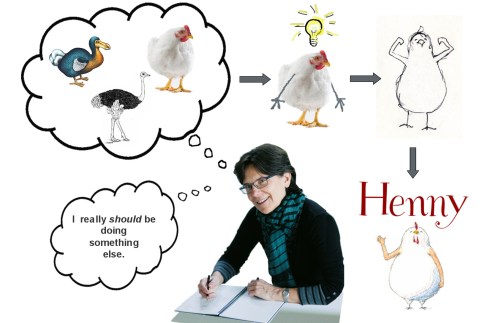
Certainly, there are merits to doing both independently, but I’ve found when I combine the two, my ideas—always in the form of characters—begin to appear. I call it procrastidoodling, and it’s what I was doing when I came up with the star of my picture book, HENNY.

HennyCover_Stanton

A few years ago, I was assiduously avoiding an assignment for a class I was taking by drawing all sorts of birds. As I doodled along, I found myself thinking about how silly it is that some birds have wings that are relatively useless—birds like dodos and ostritches and chickens. . .

Henny_Ideas_Stanton

. . .when out popped a doodle of a chicken with arms! Much more useful, I thought. So I started thinking about all the things a chicken with arms could do…and Henny was born!

EPSON scanner image

Since then, all sorts of characters have popped into my life—and all of them started out as procrastidoodles.

EPSON scanner image

So try this: First, do something you think is frivilous. Waste some time watching a funny video, go for a walk, get relaxed. Then start doodling. Maybe listen to some favorite music while you do it. The trick is not to have any expectations about what you doodle. Trust me, it will free you up to get those ideas flowing. See how many Piboidmo ideas you get.

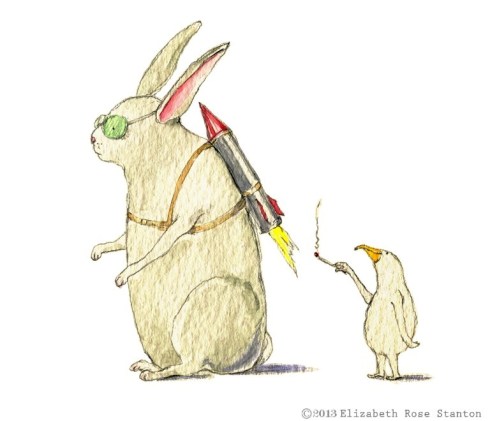
Who knows, maybe one of them will lead you, like the White Rabbit did Alice, down the rabbit hole to a whole new world—where your picture book will come alive!

Oh—and here’s a great TED talk on doodling. Why not procrastinate for a bit and watch it?

Thank you ! And thank you, Tara, for this opportunity to participate in PiBoIdMo. Have fun everyone!
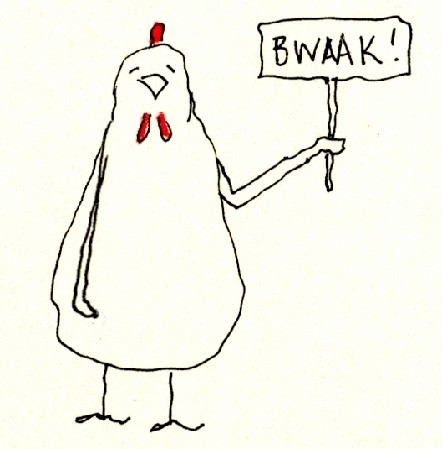
Bwwak_Stanton

guestbio

ElizabethRoseStanton_Bio_PicElizabeth grew up in Western New York State, studied art history in college, and went on to graduate school to earn a professional degree in architecture. While raising her kids, she kept herself sane by drawing portraits—mostly of other people’s kids—and did some fine art and scientific illustration. Upon completion of her maternal duties, she discovered that all of her architect- brain-cells had died, so she turned to drawing and painting full-time—FOR other people’s kids—and hasn’t looked back since.
Her debut picture book, HENNY (Simon & Schuster/Paula Wiseman Books), will be released in early January. She recently signed a contract for a new picture book, due out in 2015, about a little pig named Peddles, also with Simon & Schuster.

Elizabeth is represented by Joanna Volpe of New Leaf Literary & Media in New York, and is a member of SCBWI International, and SCBWI Western Washington.

Visit her at PensPaperStudio.com, her blog, or follow her on Twitter @penspaperstudio.

prizeinfo

Elizabeth is giving away a signed copy of HENNY once it’s released!

This prize will be given away at the conclusion of PiBoIdMo. You are eligible for this prize if:

  1. You have registered for PiBoIdMo.
  2. You have commented ONCE ONLY on today’s post.
  3. You have completed the PiBoIdMo challenge. (You will have to sign the PiBoIdMo Pledge at the end of the event.)

Good luck, everyone!


ToddMcQueen_headshotby Todd McQueen

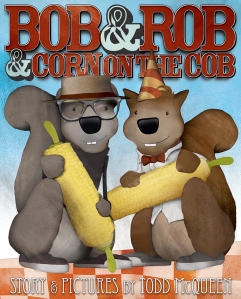
Two weeks ago, I delivered the final art and text of my first picture book, BOB AND ROB AND CORN ON THE COB, to my publisher. What a great feeling that is; years and years of hard work—and a lot of frustration—finally coming that much closer to fruition. Looking back, I see that the trouble comes not from where to find inspiration, or how to get inspired, or even whether an idea is good or bad—but from knowing whether an idea is ready yet, and if I get into it, will it float?

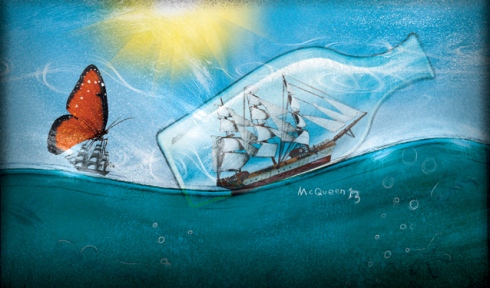
After all, an idea is like a boat we intend to take to sea on a long journey. That boat should be sturdy, because the conditions can get rough, and sometimes the progress won’t be easy, and we’ll have to fight just to stay upright. There’s a lot riding in that boat, and we have to know (or at least believe) it won’t fall apart in the middle of the ocean at the first sign of adversity.

Ships

Now, I wish I could tell you that I had this image in mind all along, and my journey to publication was smooth and quick because I had spent the time developing that idea to its fullest potential. But no, I learn lessons the hard way, and equipped with only a title, I started swimming, figuring that the boat would get built as we went along. But it’s hard to build a boat while you try to sail it, so I had lots of problems, and things would fall apart, and I’d have to stop and rebuild, then sail a little further until things fell apart again… and again and again.

But because of these setbacks, I have a better perspective now. I see the creative mind as a shipyard and a harbor, and both should be a busy place. There should always be ships being built, (and built well, regardless of how long it takes), and the harbor should be full of them, ready for assignment, worthy of the challenge that lies ahead. And maybe, if I can get into the mindset that it is always picture book idea month, that today is the day for ideas, if I can learn from the mistakes I made during the journey of this first project, then I just might get to make a few more books before I die. And that, dear friends, would make for a very happy ending.

guestbio

LR_BobandRob_cvr1Todd McQueen is a graphic designer and illustrator living in Phoenix, Arizona… which is strange if you consider the maritime theme of this article. His first picture book, BOB AND ROB AND CORN ON THE COB, will be released in May 2014 with Sky Pony Press. You can visit Todd, and meet some of his friends on his Facebook page, or on his website McQueenBros.com.

mb_sig

prizeinfo

Todd will give away one copy of the collaborative schedule planner book he had a hand in creating, BE IN CHARGE see BeInChargeofYou.com). For every 50 comments after the first 50, he’ll add another book. Todd will give away up to 5 books, if he gets at least 250 comments.

These prizes will be given away at the conclusion of PiBoIdMo. You are eligible for these prizes if:

  1. You have registered for PiBoIdMo.
  2. You have commented ONCE ONLY on today’s post.
  3. You have completed the PiBoIdMo challenge. (You will have to sign the PiBoIdMo Pledge at the end of the event.)

Good luck, everyone!

by Drew Daywaltdrewdaywalt

My muse can be a capricious, nasty little thing. A strangely seductive homunculus, she will appear one day for no reason at all, like a rush of air. She’ll fill my head with a zoo-full of creative thoughts, sometimes stay for another day or two so that I can express the idea into the acorn of a manuscript or an outline, and then disappear before I wake the next morning without so much as a note on my pillow.

It’s okay that she does this, because like all forms of inspiration, she’s fleeting. And once the inspiration is gone, then begins the hard work of building, letter by letter, sentence by sentence, a creative construct that, when done, hopefully recreates the same rush of excitement that I originally felt at the moment of inspiration.

It’s a hard dragon to chase, this moment of inspiration. I’ve given up to the fact that I can’t control it any more than I can control the wind. It comes, it breezes through, and it’s gone again. To continue the metaphor, the only thing I can do is put myself in a place where I know the wind blows.

That’s why, years ago, I created a sort of man-cave-writing room, almost Victorian in it’s styling, but with a fantasy twist, because I love fantasy and horror and really any form of escapist delights. I blame this love on Friday night monster movies from my childhood and all those Dr. Seuss and Sendak and Dahl books I read as a kid. Those other worlds were always so much more interesting than mine. I wanted to be a world builder.

And this writer’s cave has all manner of masks, talismans, tokens and souvenirs from my travels. I love travel. Travel inspires me, and little reminders of travel inspire me just as much. These things I would collect were items that I’d picked up around the world that inspired me at the moment I found them – a goddess idol in Bolivia, a handmade wooden toy from Tuscany, a tribal mask from the Pacific Islands, even a beer stein from Cologne. Worldly trophies and artifacts, representing other peoples’ moments of creative inspiration. I would find these things in some market or stall in some faraway land, I’d pick them up and hold them, and I’d feel the inspiration from the creator, and I’d take it home. I’d store that inspiration in this room, this writer’s cave. As years went by, I even began adding fascinating props and creatures from my films to this bizarre menagerie. I’d fill the room with amazing, strange little curios that would give me the same rush that I felt when I’d first encountered them.

And more often than not, sitting in my cave, waiting for the muse to strike, staring at these strange little items, I would feel the rush of an idea. Like a small breeze. A wind through my mind.

And I would close my eyes and know that my muse had arrived.

guestbio

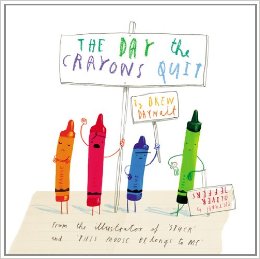
daycrayonsquitDrew Daywalt is the author of THE DAY THE CRAYONS QUIT, illustrated by Oliver Jeffers and named an Amazon Best Children’s Book of 2013. Find him on Twitter @DrewDaywalt.

Like this site? Please order one of my books! It supports me & my work.

FLAT CAT is the winner of multiple state book awards, selected by kids!

Enter your address to receive this blog via email.

Join 14.3K other subscribers

My Books

Blog Topics

Archives