by Jennifer Swanson
One of the many things that makes a great story is the scene. Setting the scene for your book is so important because your reader needs to know where they are. After all, a book is two-dimensional. It’s not a video which has the ability provide multiple images in a flash of a minute and interact with you. Books need the author to provide rich, descriptive details that makes the reader feel the sensations and emotions of being in a particular place.
It might be the cool, dark forest, surrounded by high, full trees swaying in the wind. It might be the warm pebbles of sand slipping through your toes while gentle waves lap against your feet.
OR it might be the inside of a tiny shoot of a flower as it emerges from the earth and stretches its new bud towards the sky. Wait. Did you just put your reader inside the stem of a flower? Yep. That’s the lovely thing about STEM writing. It can take you ANYWHERE.
When you are writing science books, just like a fiction book, you can immerse your reader in your scene. That scene might be in the ISS (International Space Station) high up in the sky where you have your reader marvel as the view of the tiny Earth fills up your observation window and feel the weightlessness of microgravity. Or maybe your reader is taken on journey across the limbs and tree branches over a stream, into freezing cold mounds of snow, and through a short, quick thunderstorm to show you how the water cycle works.
What I’m trying to say is that just because you are writing about science/STEM/STEAM you don’t have to be boring. Be Creative! When you are getting ready to write your topic, many people think that because this is a book about science, it has to be done “head-on”.
In other words, if you are writing a book about seeds, you need to talk about how a seed, grows roots, its shoot grows, and it undergoes photosynthesis…. (are you bored yet). What you can do, is to set that same scene in an exciting way. Melissa Stewart does a great job of that with her book A Seed Is the Start by NGKids.
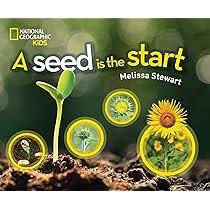 Melissa does tell the story of how a seed grows, but she uses images of an actual seed in the soil. She explains what is happening in short, active words so that the young reader can really see what is happening as well as read it. Pretty cool idea. She is showing science in action in a BOOK!
In my book, Astronaut-Aquanaut: How Space Science and Sea Science Interact, I take my reader on a journey to space and under the ocean. It is not so obvious a progression as Melissa’s, but it accomplishes a similar idea. Readers will see the inside of the ISS and real astronauts answer questions about what it’s like to be in space. They will understand and hopefully even imagine the floating around the ISS and doing their job. To make this more real, I spoke with NASA engineers who helped to build the rockets and space suits that the astronauts wear, asking them what it felt like and how they created this amazing technology.

Then the reader is introduced to aquanauts that dive deep in the ocean and live in Aquarius, the only underwater lab in the world. They will feel the pull of pressure on their bodies, and “hear” their voices reach different pitches as they live in the specialized air combination sixty feet below the ocean. Comparing and contrasting these two extreme environments is a great way to help the reader to understand the e forces that push in on them or lift them up as they also learn about what it would take to become either of these two explorers.
Now I could have just given the information “head-on” but setting the scene of what is happening makes your reader feel like a part of the book. Other books that do this well are:
Sarah Albee’s Poison: Deadly Deeds, Perilous Professions, and Murderous Medicines:

How They Croaked: The Awful Ends of the Awfully Famous by Georgia Bragg:

Water is Water by Miranda Paul:

So, the next time you get ready to write about a science topic, think about ways you can use setting to help your reader feel like they are going on an adventure in your book–when actually, they are learning about science. (Shhh…don’t tell them.)
After all, SCIENCE ROCKS!

 Jennifer Swanson is the award-winning author of over 50 books for kids, mostly about science and technology. She is the creator and co-host of the Solve It! for Kids Science Podcast, the creator of STEAMTeamBooks, and STEM Tuesday, and a curious kid at heart.
Visit her online at JenniferSwansonBooks.com. She is also the President and Founder of Kid Literacy, Inc.

Jennifer Swanson is giving away a 20-minute Zoom Ask me Anything session to one lucky winner.
You’re eligible to win if you’re a registered Storystorm 2025 participant and you have commented only once below.
Prizes will be distributed at the conclusion of Storystorm.


 Audrey’s sense of humor has helped her get through some really icky seasons in life. It’s also helped her write and publish a few books, including her debut picture book MOO HOO, illustrated by Ross Burach, A HAT FOR HOUSE, illustrated by Druscilla Santiago, and the upcoming companion to MOO HOO titled BAA HAA, launching on March 4, 2025. Audrey believes funny books are just as important as serious books and writes both in her North Carolina home. You can find more about her at


 Alan is a cartoonist and writer who loves making funny food books for kids. P is for PASTRAMI – The ABCs of JEWISH FOOD keeps company with MEET THE LATKES, MEET THE MATZAH and MEET THE HAMANTASHEN (Viking/ Penguin Random House). His new book, THE BAGEL WHO WANTED EVERYTHING will be published Summer 2025 followed by THE FALAFEL WHO FELT AWFUL in 2026.






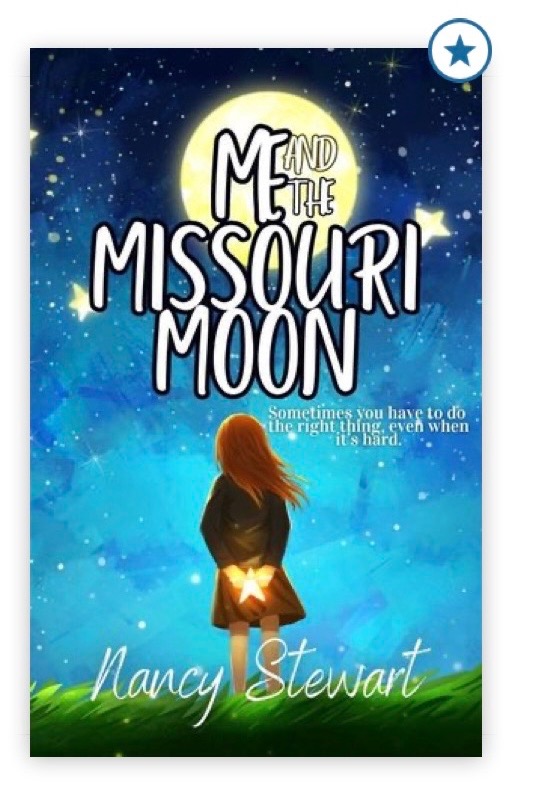
 A graduate of Washington University in St. Louis, Missouri, Nancy Stewart taught grade school and was a university professor, specializing in Children’s and Young Adult Literature. She was fortunate to have lived in London with her family for a number of years and, while there, traveled the world, particularly Africa. Nancy’s debut Young Adult novel, Beulah Land, was a finalist in the Forward Indies Book of the Year Awards. It was also one of the most anticipated books at Barnes & Nobel in 2017. Her new Middle Grade novel, Me and the Missouri Moon, won a Starred Kirkus Award in October 2024, a star from The Children’s Book Review, and a gold medal from Literary Titan. Visit her at
  Tanya Konerman is a children’s author, writing fiction and nonfiction in both prose and verse for kids ages 0-12. Her debut picture book, Mud to the Rescue! How Animals Use Mud to Thrive and Survive, is a lyrical nonfiction look at the ingenious ways animals around the world use mud. It is forthcoming May 20, 2025, from Web of Life Children’s Books. Tanya’s ghost story for 9-12 year-olds, “Danger in the Dunes,” was chosen to represent Indiana in the anthology for middle graders, The Haunted States of America, published by Macmillan’s Laura Godwin Books in July of 2024. Visit her at