by PB25 Vibes
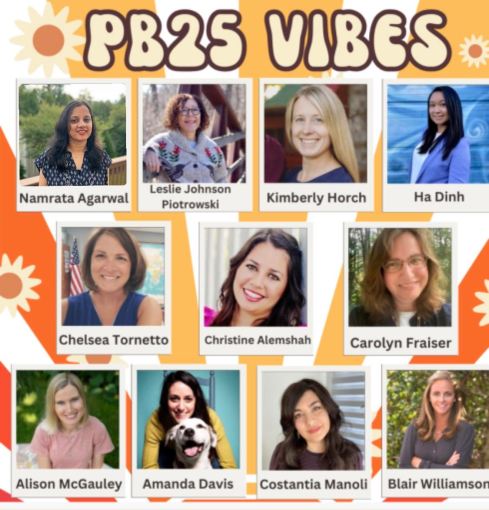
In PB25 Vibes, a group of creators with books launching in 2025, we are all about vibes! Finding that feeling you want to leave with the reader is at the heart of writing a picture book. Our stories are ones that are meant to evoke emotions, and as we drafted our stories, we kept a feeling—a vibe—in mind. As you read through our personal processes below, think about a vibe that you want to share in your next manuscript!
Alison McGauley, author of KENZIE’S LITTLE TREE (illustrated by Emilie Leduc, Orca Book Publishers, March 11, 2025)

The inspiration for KENZIE’S LITTLE TREE came from my daughters who have always lived with a chronically ill mom. Wanting to write a story that represents children like my own, and to empower readers to recognize their inner strength, I began with the vibe of resilience. KENZIE’S LITTLE TREE reminds us that though the world is constantly changing and oftentimes difficult, we can be bold and strong, just like the little tree. I hope that children and families feel the vibe of resilience as they read about Kenzie and her little tree.
Ha Dinh, author of THE JADE BRACELET (illustrated by Yong Ling Kang, Random House Studio, April 15, 2025)

While finishing up my debut picture book, I got the inspiration for THE JADE BRACELET as I reminisced about the jade bracelet that my late mother had gifted me as a child. The vibe for this story has always been about love and how love can manifest itself in a family tradition, memory, or even a family heirloom in the shape of a piece of jewelry as in this book, which can hold so much sentimental value and can be passed down down one generation to the next. How does love manifest in your writing?
Chelsea Tornetto, author of CHALK THE WALK (illustrated by Laurel Aylesworth, Familius, April 2025)

I’m a rhyming writer, and the meter of a story can impact the “vibe” in a big way! For CHALK THE WALK, I used a playful, upbeat rhythm, as well as the amazing art from Laurel Aylesworth, to tell the story of two kids who change the whole VIBE of their previously dull, gray city street with just a bucket of sidewalk chalk…and spread joy and color to their neighbors. The result is a story that leaves the reader with a sense of hope and a desire to use their own imaginations to change the world…just like the main characters!
Christine Alemshah, author of BEA’S BALIKBAYAN BOX OF TREASURES (illustrated by Dream Chen, Free Spirit Publishing, June 17, 2025)

Embracing Bea’s story vibe felt like falling in love with a new song and listening to it on repeat. Not every track on my storystorm playlist becomes a full-fledged picture book! I scroll my list often, and bold ideas that tug at my heartstrings. BEA’S BALIKBAYAN BOX OF TREASURES topped the chart because it aligned with my big why — to nurture a lifelong love of reading, cultivate connections, and help children see themselves represented in the stories they read. I challenge you to scroll through your idea list often and listen with your heart to help identify which ideas to pursue!
Costantia Manoli, author of THE FIG TREE (illustrated by Leah Giles, Roaring Brook Press/Macmillan USA, June 2025)

My aim when writing a picture book is to leave the reader with a hug-the-book-at-the-end kind of vibe. I want my readers, big and small, to see themselves reflected back in the pages. I want my readers to close the book at the end and feel connected. I want my readers to feel all the feelings. THE FIG TREE is about connecting with others – no matter what stories you’ve been told about them. How can you layer resonance, connection and emotion in your own writing to create that hug-the-book-at-the-end vibe?
Namrata Agarwal, author of THE MITHAI BOX IS NOT EMPTY (illustrated by Parvati Pillai, Holiday House, summer 2025)
Often, we face dilemmas in our lives and so does Ria in the story ‘THE MITHAI BOX IS NOT EMPTY.’ A dilemma tends to evoke a vibe of inner conflict. These inner conflicts can be a natural part of a child’s development. Wise advice can be incredibly helpful in resolving inner conflicts. Like in THE MITHAI BOX IS NOT EMPTY, thoughtful advice changed Ria’s vibe. Imagine a feeling of yours becoming a strong “vibe.”
Can you think of a story around that vibe?
Carolyn Bennett Fraiser, author of M IS FOR MASON JARS (illustrated by Sally Garland, Familius Publishing, August 2025)
I wrote M IS FOR MASON JARS on a dare. Could I think of an activity for kids on a modern-day homestead for every letter of the alphabet? Yes! I initially focused on activities that were “fun” for kids. But as I was writing (and rewriting), another vibe bubbled to the surface–“togetherness.” Everyone must work together to make a homestead successful–including the youngest. THAT was the heart of my story.
As you explore your topic, what other vibes do you feel? They might just take you in an interesting direction!
Blair Williamson, author of BIRTHDAY BASH (The Little Press, September 16, 2025)

The idea for BIRTHDAY BASH came from a moment of pure, unfiltered chaos while living on a boat. One day, as I stood in the galley, a bug scurried across the floor. What started as a simple sighting turned into a wild spiral of what-ifs in my mind, and it became a story waiting to be told. Birthday Bash captures that vibe of crazy, unpredictable fun, filled with mishaps, laughter, and, of course, a tiny bug causing a big mess. I hope this inspires anyone who’s ever found themselves swept up in a whirlwind of “what-ifs?” to write their story!
Kimberly Horch, author of SAWYER’S BIG IDEA (illustrated by Sayani Mukherjee, Magination Press, Fall 2025)
Sawyer has a million amazing ideas, but gets hyperfocused, distracted, and discouraged. As I approached his story, I knew it couldn’t end with him finishing everything. Anyone Sawyer-like knows that simply isn’t reality. But I wanted readers to leave feeling celebratory of the superpower of idea-generation. Recognizing this vibe allowed me to focus my thoughts on what moments (other than finishing) could leave him feeling “celebratory.” Thanks to an SCBWI event, I had two opportunities to pitch to Magination. Nailing the end feeling changed their feedback from “It’s a cute idea…” to “Yes!”
Amanda Davis, author-illustrator of SOMETIMES STORMY: A STORY ABOUT FINDING CALM AND STAYING SAFE WHEN SOMEONE YOU LOVE DRINKS TOO MUCH (Free Spirit Publishing/Teacher Created Materials, Fall 2025)

*sneak peek of near-final cover
When writing and illustrating SOMETIMES STORMY, I channeled my childhood and the memories of living with a parent who had alcohol use disorder. This wasn’t an easy ‘vibe’ to sit with but it’s an important and common one. According to the National Institute on Alcohol Abuse and Alcoholism, in 2023, 28.9 million people ages 12 and older had alcohol use disorder (AUD) in the past year. Despite these heavy ‘vibes’, I always kept my positive message to readers in mind: “You’re not alone and it’s not your fault.” Are you digging into difficult vibes with your current work? If so, remember your why. What’s the positive message you want to send readers? I hope this inspires you to keep going!
Leslie Johnson Piotrowski, author of THE NORTHBOUND TRAIN (illustrated by Tonya Engel, Abrams Books for Young Readers, Spring 2026)
Leaving behind your home and community can be daunting. In writing THE NORTHBOUND TRAIN, I thought of what my father went through when he moved with his family from Birmingham, Alabama to Chicago, Illinois in the 1930s, a time when millions of African Americans left the South to escape Jim Crow laws. In writing the story, I also connected with my own inner feelings of anxiety around moving to new places. I wanted children to know that they are not alone in feeling nervous about leaving home and that journeys can bring about unexpected gifts.
Now it’s your turn. Think about a vibe that affected you. Was it a moment you realized that you were stronger than you thought? Was it a time when you felt completely unified and connected with others, or when you suddenly realized the answer to a problem was standing right in front of you? Mine your memories for instances in your life that stood out for you. Notice your emotions, as these play a strong role in children’s literature. Those feelings or vibes could possibly provide the inspiration for your next story.

Alison McGauley is a special education teacher and the author of KENZIE’S LITTLE TREE (March 2025, Orca Book Publishers), illustrated by Emilie Leduc. As a chronic illness warrior, Alison is passionate about writing books that speak to children and caregivers who are impacted by illness or disability. She also loves creating stories that feature humor, SEL, and the natural world. Alison resides in Ontario, Canada with her family. Connect with Alison on her website alisonmcgauley.com, Instagram @alisonmcgauley, or Bluesky @alisonmcgauley.bsky.social.
Ha Dihn is a mom of two, an elementary teacher, and the founder of the Happy Days in First Grade Teaching Blog. She is the author of WHERE WILDFLOWERS GROW and three books that are being published in 2025, THE JADE BRACELET (April), LY-LAN FINDS A WAY SERIES: LY-LAN AND THE NEW CLASS MIX-UP (June), and THE MOON LANTERN (September). You can follow her @HelloMrsDinh on IG.
Chelsea Tornetto is a former world geography teacher, who has loved writing ever since she was a kid. Her first book, Conquering Content Vocabulary, was published by Scholastic in 2018, but now her passion is picture books. She is the author of Gardens Are For Growing, God Made You Too, Seasons on the Farm, Chalk the Walk, and The World’s Best Christmas Light with more titles on the way. When she isn’t working on her own stories, she helps others follow their dreams of writing for children as a freelance editor and author coach for At Home Author.
Christine Alemshah (she/her) is a mom, children’s author, classically trained vocalist, and host of the Grow Your Writing Challenge. Christine writes stories championing innovation, celebrating multiculturalism, and often having a musical vibe. Her picture book BEA’S BALIKBAYAN BOX OF TREASURES releases June 17, 2025 from Free Spirit Publishing. You can follow Christine on X, Instagram, and Bluesky: @C_Alemshah and on her website. She is represented by Vicky Weber of Creative Media Agency.
Costantia Manoli is the award winning author of TOMATOES IN MY LUNCHBOX (illustrated by Magdalena Mora, Roaring Brook Press, June 2022) and THE FIG TREE (illustrated by Leah Giles, Roaring Brook Press, June 2025). Born in the UK to Cypriot parents, Costantia spent the picture book period of her life in London, her middle grade and young adult years in Cyprus and then the USA and then back round again. Learn more about Costantia on her website, Instagram, Facebook and BlueSky.
Namrata Agarwal is a children’s book writer. She has written picture books – Misha series and The Grasshopper and the Owl. She has also written for children’s magazines like Faces and IntellyJelly. She is a member of SCBWI, RateYourStory and Writing Barn. Currently she lives in New Jersey with her two kids and husband. In her spare time, she enjoys reading and crafting. You can follow Namrata on Twitter @namrataagarwal, Instagram @namrata.writer.
Carolyn Bennett Fraiser manages a small homestead in western North Carolina and is the author of M IS FOR MASON JAR (Familius, 2025), MOON TREE (Reycraft Books, 2022), and several other nonfiction books for the educational market. She hosts the KidLit Events Calendar on her website. Connect with her @carolynbfraiser on Facebook, BlueSky, Instagram, and X.
Blair Northen Williamson is a Book Excellence Awards Winner and Amazon #1 new release author of ISLAND GIRLS: Free the Sea of Plastic (Williamson/Holovchenko, 2022) who loves writing stories that make children laugh, stories that will spark important conversations and stories that will ignite change to protect our oceans. She is a mother and wife, a retired boat captain, and a scuba diving instructor who also loves sunrises and coffee. Williamson has two traditional books releasing this year: BIRTHDAY BASH (Williamson/Woolley, Little Press, 2025) & THE OCEAN PROTECTORS (Williamson/Holovchenko, Genius Cat Books, 2025). She is represented by Karen Kilpatrick of East West Literary Agency. You can connect with Blair on X @theislandwriter or IG @theislandwriter8 as well as follow her website for updates www.theislandwriter.com.
Kimberly Horch is an author, mom of five, and a self-proclaimed agent of joy. Like Sawyer in SAWYER’S BIG IDEA, she always has a dozen projects up in the air and twice as many on the floor. Kimberly writes lyrical picture books and middle grade novels in verse. Her instagram inspires kindness through books and action @thedaybrighteningcommittee; she is also on X.
Amanda Davis is a teacher, artist, writer, and innovator who uses her words and pictures to light up the world with kindness. Amanda is the author of the award-winning picture books, 30,000 Stitches: The Inspiring Story of the National 9/11 Flag (illustrated by Sally Wern Comport), and Moonlight Memories (illustrated by Michelle Jing Chan). SOMETIMES STORMY is her author-illustrator debut, and she has three more unannounced picture books on the way. Learn more about Amanda on her website and on Instagram, Twitter (X) and BlueSky.
Leslie Johnson Piotrowski is a biracial (Black/White) author with a passion for representation and sharing her own heritage through children’s literature. A native of Chicago, she worked for many years in the public relations/communications field before she pursued fiction writing. Her debut picture book, THE NORTHBOUND TRAIN, releases Spring 2026 (Abram’s Books for Young Readers). You can follow Leslie on her website and on X @lpiotrowski80.

The following prizes are being given away by the PB25 Vibes Group:
- Alison is offering a PB critique.
- Ha is offering a PB critique.
- Chelsea is offering a PB critique (under 1000 words).
- Christine is offering a PB or chapter book critique (first 1000 words.)
- Costantia is offering a PB critique.
- Blair is offering a 30-minute virtual Ask Me Anything.
- Namrata is offering a 30-minute virtual Ask Me Anything.
- Carolyn is offering a 30-minute virtual Ask Me Anything.
- Kimberly is offering a PB critique or MG first 1,000 words.
- Amanda is offering a 30-minute virtual Ask Me Anything.
- Leslie is offering a PB book critique (first 1000 words)
You’re eligible to win if you’re a registered Storystorm 2025 participant and you have commented only once below.
Prizes will be distributed at the conclusion of Storystorm.
 As my manuscript sat sadly on the shelf—known as the hard drive—just as Little Cup sat sadly on his cupboard shelf—I had to admit to myself that LITTLE CUP was probably too generic—oh, sure, it had “hilarious” puns, (“You need to chill out,” the refrigerator said, frostily.), but it was too “oatmeal,” as I used to tell my students, and not enough “jalapeño.” Because our family had lived in Hawai’i for ten years (note my Hawai’ian name, Leipua’ala, gifted to me in ancient Hawai’ian tradition), I thought it might be a different idea to switch the setting to Hawai’i, and pitch it to some local Hawai’i publishers. (Now you get the ukulele part.)
 It was so much fun changing everything to local Hawai’ian references—Little Cup became Little Calabash—we have a calabash of our own, of course—Ethan turned into Keoki, and Keoki’s mom stirs guava frosting (not just boring buttercream), pours haupia pudding (no tepid tapioca), mixes mango cupcakes (definitely not plain vanilla), and chopsticks appear, too.


 If you’re struggling with a manuscript—either because you just can’t seem to finish it—or because it’s been rejected multiple times (I’m talking weight in pounds not just counting rejections 😉), you can rethink and repurpose it by: changing the setting—instead of a home, what about a factory? Or a library? Or a schoolyard? Or a garage? A forest? The ocean deep? Outer space? Instead of a regular meal, how about a birthday dinner? A picnic? Or from day to night, afternoon to morning, summer to winter…You can also consider changing the importance of your characters by switching one of your secondary characters to becoming the main character. What would happen if you changed them all into animals? Or even into inanimate objects—think what fun an illustrator could have! Maybe your narrator is not the main character—as in my picture book CALVIN GETS THE LAST WORD, in which Calvin’s dictionary is telling the story. Once we repurpose and rethink, we can bring all sorts of new angles and ideas to mind, and our story could appeal to a different reading audience or fit into a different market. When we set our imaginations free, we never know what will happen!
 Children’s and Young Adult author Margo Sorenson is the author of thirty traditionally-published books, infamous for her hapless puns (just ask her long-suffering family). To learn more about her books, including CALVIN, featured in the NY Times, please visit: MargoSorenson.com. You can also find her on Instagram @margosorensonwriter and BlueSky @margosorenson.bsky.social.


 My friend Annie Lynn (amazing musician and longtime Storystorm and kidlit supporter) and I were recently chatting about challenging times in our lives and how difficult it is to write when we’re carrying painful burdens. So in the hopes that our discussion and my experiences writing with my kids during the pandemic will be helpful to others, here are a few tips:


 Katie Mazeika is an award-winning author and illustrator who can’t imagine a better job than making books. She loves creating stories based on real people and events. Katie strongly believes all children should see themselves in books and is passionate about highlighting disabled voices in her work. She hopes her work as a creator and advocate creates a space to openly discuss disability and neurodiversity. Katie does this through presentations, panels, consultations, and workshops for educators, kidlit creators, publishers, and young readers through Highlights, SCBWI, and NCTE.


 A voiceover talent and commercial copy writer, Matt can be heard on commercials, animation, and corporate videos from Maine to Florida, from California to New Jersey, from the U.K. to Dubai. Over the years, Matt has had several adult poems published in independent collections, including the Tall Grass Writers Guild’s “Seasons of Change,” “The Licking River Review,” and the Donald Hall tribute anthology, “Except for Love” (Encircle, 2019), among others. In 2012, his poem, “Apple-Stealing,” was nominated by the Young Adult Review Network (YARN) for a Pushcart Prize.
 My inspiration frequently arises from the world around me. The concept of The Memory Quilt emerged during a dinner at a friend’s house, where they presented a memory quilt made by a quilter for the parents of their deceased son. Butterfly Ink was inspired by my daughter’s fascination with temporary tattoos. One day, an idea struck me: what if the tattoo possessed magical qualities? As for Angels in the Sand, it initially began as a picture book, but after receiving a request for a complete manuscript from an agent, I saw its immense potential and chose to transform it into a Middle-Grade novel. I discover magic in the everyday—where a brief, simple moment can evolve into an extraordinary story.
 One effective method for brainstorming and developing those ideas is by creating a vision board. If you don’t already know, a vision board is a collage of images, words, and other materials that visually represent your goals, aspirations, and the themes you wish to explore in your stories. This creative process not only helps to clarify your thoughts but also serves as a source of inspiration and motivation.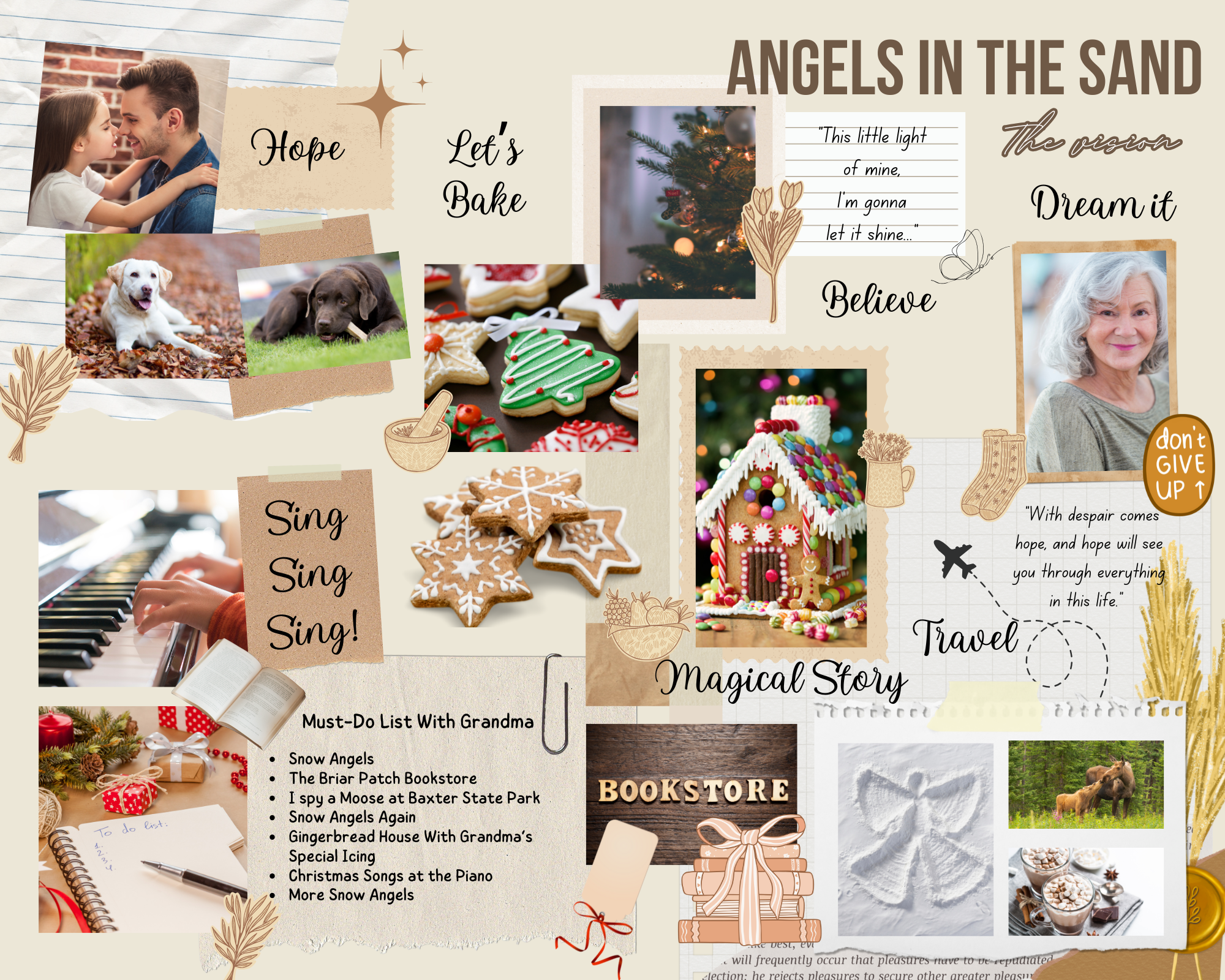
 Lori Keating is a versatile author who weaves tales across a multitude of genres. She is the proud winner of awards for her young adult novel Butterfly Ink and the picture book The Memory Quilt. Her latest middle-grade novel, titled Angels in the Sand, was released on January 7, 2025. Additionally, Lori hosts the podcast Kid Lit Meet N Greet on YouTube, where she interviews authors from various children’s literature genres.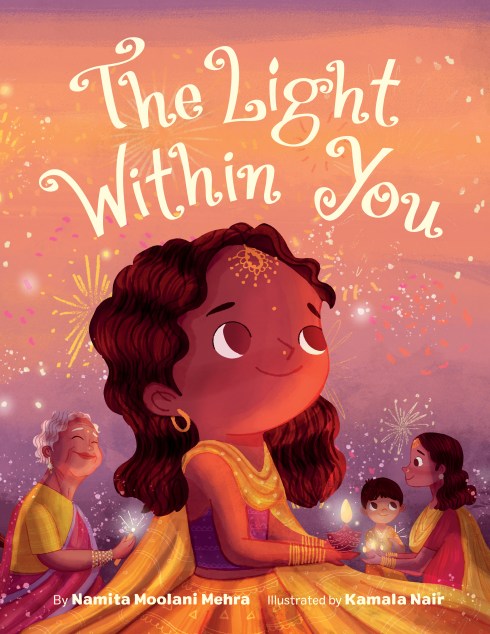
 Sales and marketing teams at publishing houses have a lot of experience with titles and may challenge your proposed title. My upcoming book, THE GREATEST RIVER, illustrated by Khoa Le and published by Harper Collins was originally titled ‘The Greatest Mother”. I loved my title because the story is about the Holy River of India that millions refer to as ‘Ma’ Ganga—Ma meaning mother. I was attached to the original title because of the spiritual significance, so when the sales team suggested a change, I was resistant. As I sat with their feedback, I realized that readers might not understand the mother reference and could be confused or misled. The publisher suggested we change the title to The Greatest RIVER and it occurred to me that this new title has more universal appeal. It creates a sense of curiosity while still fulfilling on the wider promise of the story—the power of nature to heal AKA my golden nugget.
 Namita Moolani Mehra is an award-winning, agented children’s book author and the founder of social-impact business, Indian Spicebox, a company that has helped fund almost one million hot meals for underprivileged children in India. Namita’s published books include Veena And The Red Roti, The Light Within You, and Anni Dreams of Biryani. She has also authored children’s cookbooks, including The Magic Spicebox and Superfoods for Superheroes. Namita crafts delightful culinary experiences like cooking classes and street food pop-ups. She currently lives in Singapore with her husband, two children, and a dramatic doodle. Visit her online at

 Mary Boone has done just enough woodworking—and writing—to know that “polishing the wood” really does work. Her books include SCHOOL OF FISH (Albert Whitman & Co.), BUGS FOR BREAKFAST (Chicago Review Press) and PEDAL PUSHER (Henry Holt & Co.). FLYING FEMINIST (Andersen Press) and UNFATHOMABLE (Bright Matter) are set to release in 2026. An Iowa native, Mary now lives in Washington state’s Puget Sound region. To learn more about Mary and her books, you can
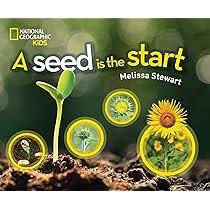 Melissa does tell the story of how a seed grows, but she uses images of an actual seed in the soil. She explains what is happening in short, active words so that the young reader can really see what is happening as well as read it. Pretty cool idea. She is showing science in action in a BOOK!


 Jennifer Swanson is the award-winning author of over 50 books for kids, mostly about science and technology. She is the creator and co-host of the

 Audrey’s sense of humor has helped her get through some really icky seasons in life. It’s also helped her write and publish a few books, including her debut picture book MOO HOO, illustrated by Ross Burach, A HAT FOR HOUSE, illustrated by Druscilla Santiago, and the upcoming companion to MOO HOO titled BAA HAA, launching on March 4, 2025. Audrey believes funny books are just as important as serious books and writes both in her North Carolina home. You can find more about her at


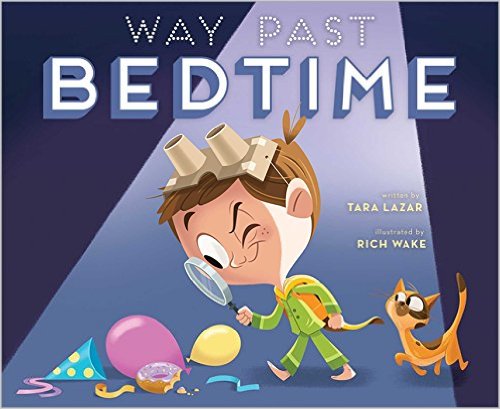



 Writing for Kids (While Raising Them)