This past November, the world shifted. For some, that feels like a good thing—they see things in our world that frighten or disgust them and believe that huge changes are needed to set us back on the right course. For others, it feels just the opposite—this new world looks like a dark, dangerous place that threatens to undo much of the progress that has been made. Whichever side of the political divide you find yourself on, one thing is certain: the times, they are a changin’.
Children are feeling those changes, too. Even prior to the election, Time magazine reported that “anxiety and depression in high school kids have been on the rise since 2012 after several years of stability.” And shortly after the election, the Southern Poverty Law Center’s Teaching Tolerance project conducted an online survey of K-12 educators from across the United States. Of the more than 10,000 respondents, “A full 80 percent describe heightened anxiety and concern on the part of students worried about the impact of the election on themselves and their families.”
As artists, we tend to be even more sensitive to what’s going on around us, and these unsettling times are impacting us as well. I’ve heard many of my colleagues say they don’t know what to write about anymore—that their old ideas feel irrelevant in today’s view. Or they’re worried about how the changing publishing market will value the work they are creating now. Or they wish there was something more important they could contribute to push things in the direction they wish them to go.
via quotesjunk.com
Fortunately, as writers, we have a superpower: the ability to make our readers feel, and it is through the experience of those feelings that hearts and minds—particularly those of young readers—are forever changed. Story can serve as a mirror, after all, helping the reader validate and make sense of their own experiences. Or it can function as a window, allowing readers, in the words of Joyce Carol Oates, to “slip, involuntarily, often helplessly, into another’s skin.” Both can be invaluable in shaping who those readers ultimately become.
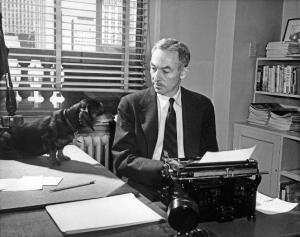 They say, however, that with great power comes great responsibility. Does that mean we all need to start writing about heavy, serious topics, to make kids understand? No, absolutely not! In 1968, E.B. White told The Paris Review, “A writer should concern himself with whatever absorbs his fancy, stirs his heart, and unlimbers his typewriter. I feel no obligation to deal with politics. I do feel a responsibility to society because of going into print: a writer has the duty to be good, not lousy; true, not false; lively, not dull; accurate, not full of error. He should tend to lift people up, not lower them down. Writers do not merely reflect and interpret life, they inform and shape life.”
 Does it mean we have to write happy books with no undue stresses or negativity? Again, no! As Maurice Sendak said, “You must tell the truth about a subject to a child as well as you are able, without any mitigating of that truth. You must allow that children are small, courageous people who deal every day with a multitude of problems, just as adults do, and that they are unprepared for most things. What they yearn for most is a bit of truth somewhere.” (from The Art of Maurice Sendak, by Selma G. Lanes)
What is your role as author, then? To connect with your own deepest emotions and find a way to share them with your readers. You can start by choosing any emotion—happy, sad, scared, angry, excited… you name it (you can even pick a random one from the list here)—then make a list of everything that makes you feel that way and why. Or, simply notice whenever you’re struck by an emotion as you’re going about your day. In either case, ask yourself: Is there a story here?
Once you’ve collected those story ideas, be fearless. Do the work. Grapple with the feeling until you begin to understand it. Write unabashedly from your heart. Be as honest as possible with whatever you are writing, honor the universal humanness of your stories, and make your readers feel the emotions that you feel, whether that’s silly or serious, confident or broken, skeptical or curious, hopeless or optimistic… or the messy reality of experiencing all of those emotions mixed together at the same time. Then leave room for readers to meet you halfway and take whatever they may need from you at the time.
This makes your writing stronger, too. You may be writing about fuzzy bunnies, but your story will only work when you add real human emotion to it. You may be retelling a fairy tale, but readers will only care if they can relate it to their real lives. You may be writing narrative nonfiction, but pieces of why it matters to you–and your reader–must still shine through. The best stories give us something to think about long after we close the book because they gave us something to feel.
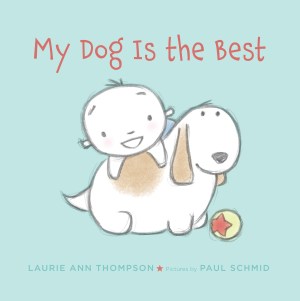 My first two books, EMMANUEL’S DREAM and BE A CHANGEMAKER, are quite serious and earnest. My third book, MY DOG IS THE BEST, is a lighthearted, funny picture book about a boy and a dog with mismatched energy levels. I wrote all of them, and I think they work because they reveal some of my deepest feelings, which happen to be feelings most of us can relate to on some level. It can be terrifying to put ourselves out there in that way, but I’ve come to believe it’s worth it. We write, after all, because we have something to say, whether we realize it or not.
So create boldly, share generously, and connect fearlessly. I think having a child connect with and remember our work is ultimately why we do what we do, and that connection might be just what a young reader needs to see the world in a different light. As Jeanette Winterson said in an interview on CBC Radio, “Art can make a difference because it pulls people up short. It says, don’t accept things for their face value; you don’t have to go along with any of this; you can think for yourself.”
And isn’t that the most important gift you could ever give to anyone?

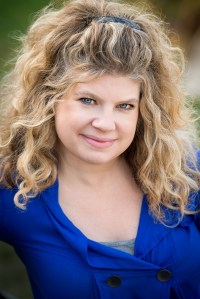
Photo credit: Mary Balmaceda
Laurie Ann Thompson writes for children and young adults to help her readers–and herself–make better sense of the world we all live in, so we can contribute to making it a better place for all of us. She strives to write nonfiction that gives wings to active imaginations and fiction that taps into our universal human truths, as seen in her books BE A CHANGEMAKER: HOW TO START SOMETHING THAT MATTERS, a teen how-to guide filled with practical advice and inspiration for young social entrepreneurs; EMMANUEL’S DREAM: THE TRUE STORY OF EMMANUEL OFOSU YEBOAH, a picture book biography of a young man who changed Ghana’s perception of people with disabilities; MY DOG IS THE BEST, a fiction picture book about the bond that exists between a child and a beloved family pet; and the upcoming TWO TRUTHS & A LIE: IT’S ALIVE! (co-authored with Ammi-Joan Paquette), which seeks to help readers learn to recognize the difference between hard-to-believe truths and outright lies. Learn more at lauriethompson.com and on Twitter @lauriethompson.
Laurie is giving away two copies of BE A CHANGEMAKER.

Leave ONE COMMENT below to enter. You are eligible to win if you are a registered Storystorm participant and you have commented once on this blog post. Prizes will be given away at the conclusion of the event.
Good luck!

 Karen and I received immediate responses (within a day or two) regarding this manuscript. And within 6-weeks, STILL A FAMILY was sold to Albert Whitman & Co, this is record speed in the land of publishing. The manuscript changed a LOT, it was revised and revised, rewritten and tweaked, it went from rhyme, to prose. I had never written in prose before and it was a scary process for me, but I listened intently to my editor, Andrea Hall, and I was able to write the story (which took just about a year of revision) and is now being released on January 31st.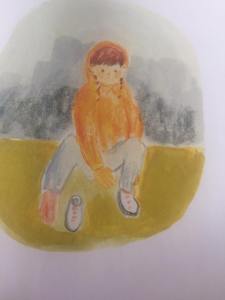

 Brenda Reeves Sturgis is the author of 10 TURKEYS IN THE ROAD, illustrated by David Slonim, THE LAKE WHERE LOON LIVES, a cumulative rhyming book, illustrated by Brooke Carlton, and TOUCHDOWN, illustrated by Trey Chavez.
 Sense of humor is one answer. I think I’m irrevocably scarred … sorry skewed—(either works actually) from years of designing weird sets and goofy props. Late night humor and the way the writers craft their comedy has had a big influence on me.
 I think the biggest takeaway has to do with pace. I’ve got one book out on the shelves (go get yourself a copy) and more to come but I still can’t get over the difference in pace between writing/illustrating a picture book and making a daily television show. It really messes with me.
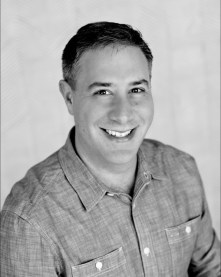 Here’s the bio I told you about at the beginning. I knew you’d make it.
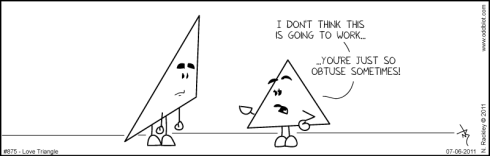
 Marcie Colleen has been a teacher, an actress, and a nanny, but now she spends her days writing children’s books. Her debut picture book, LOVE TRIANGLE, illustrated by Bob Shea (Balzer + Bray/HarperCollins, Fall 2017) sold in a five-house auction. It is about best friends Circle and Square, and Triangle who comes between them. Other upcoming picture books include THE ADVENTURE OF THE PENGUINAUT (Scholastic, Fall 2018) which will be illustrated by Emma Yarlett. Marcie is also the author of the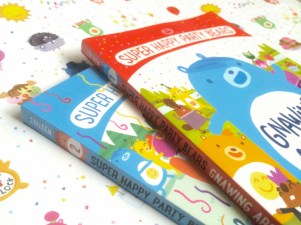

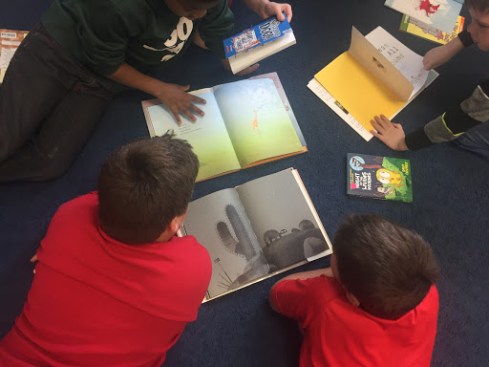
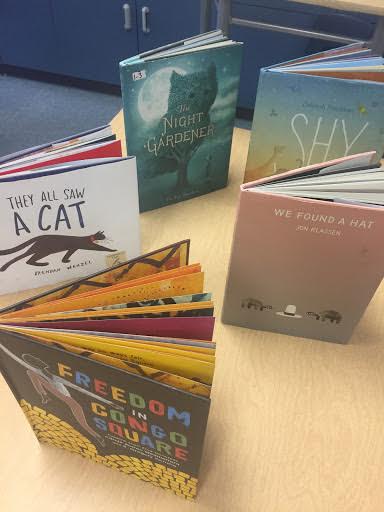


 Colby Sharp is a third grade teacher in Parma, Michigan. He is the co-founder of
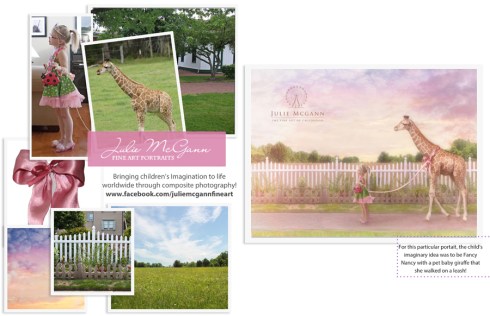
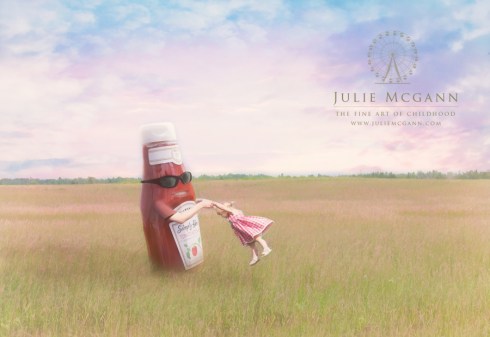


 Julie McGann is an internationally award-winning creative photographer and digital artist who brings children’s imagination to life through Illustrative Portraiture. Part painting, part photograph, her whimsical dream portraits have captivated families across the globe. Julie is well-known for her ability to turn ordinary personal photos into extraordinary imaginary masterpieces.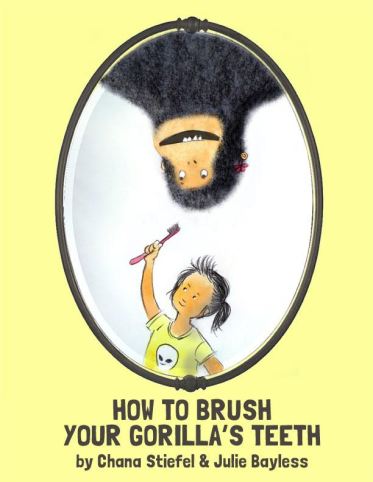
 When she’s not shredding her family’s New York Times, Chana Stiefel is writing books for kids. Her debut picture book, DADDY DEPOT (Feiwel & Friends), hits bookshelves on May 16, 2017. Chana’s book about creepy critters will be coming out from NatGeoKids in 2018, and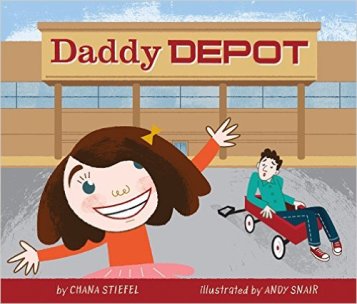
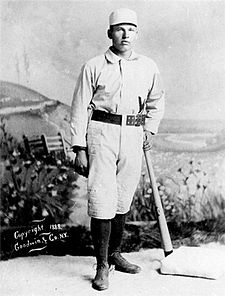 Now I didn’t realize I had come up with a picture book idea when I decided to write an article about a fascinating play, “The Signal Season of Dummy Hoy,” that was being produced at a local high school in Garland. I was intrigued with the subject of a baseball player who was deaf and taught signals to major league umpires so he could play the game he loved. But once the article was written and published, I moved on to other articles. After all, I write several articles a week and I’ve learned to go go go, so I don’t fall behind.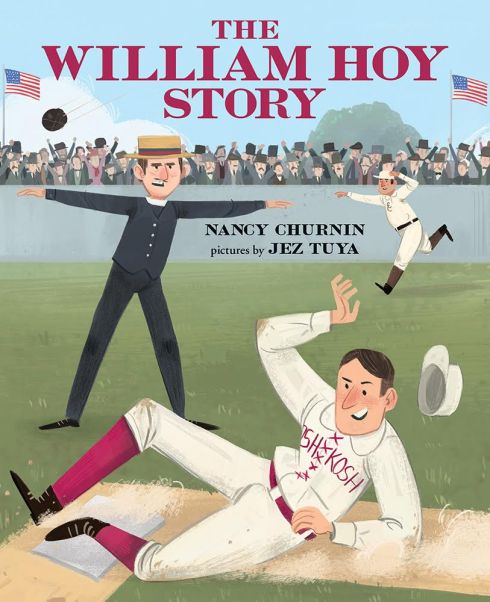
 John Lennon once wrote, “Life is what happens to you while you’re busy making other plans.” Yes, you’re busy, but don’t forget that life and ideas are waiting like treasures in plain sight to be discovered and savored while you’re shushing the distractions that, in the end, may turn out to be the best part of your day. Slow down and think twice—or thrice!—about all the off topic observations, off track remarks and the many moments between the boxes you check off on your to-do list. Consider that the busy job you have that steals your writing time may also be a repository of ideas!
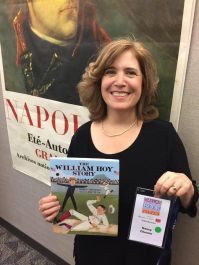 Nancy Churnin is the theater critic for The Dallas Morning News and the author of THE WILLIAM HOY STORY, How a Deaf Baseball Player Changed the Game (Albert Whitman & Company, March 1, 2016).
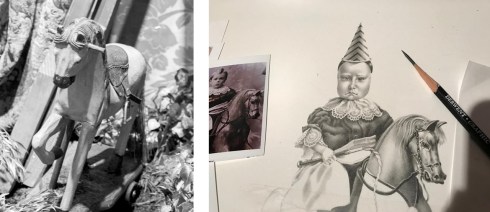
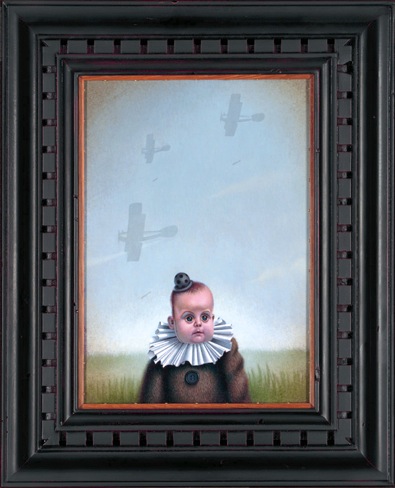
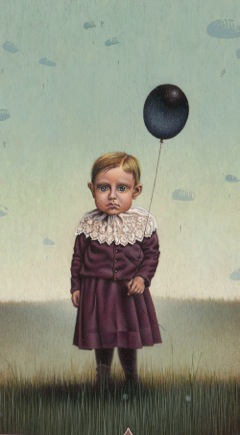
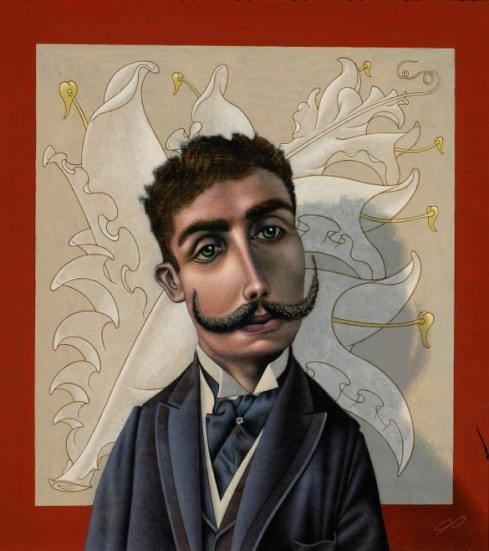
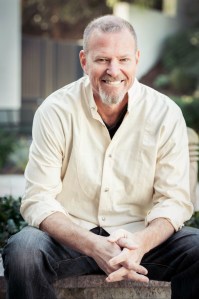 Christopher Polentz graduated with honors from Art Center College of Design in 1985 earning his BFA degree. After a long career as a freelance artist working with clients such as; Atlantic Records, MGM/UA Entertainment, Mattel Toys and Reebok, Chris returned to college earning his MA degree from Syracuse University in 2001. Chris now pursues gallery work and has exhibited with galleries including; CoproNason Gallery-Santa Monica, La Luz de Jesus Gallery-Culver City, Sparks Gallery- San Diego and Cannon Gallery-Carlsbad. He continues to teach, and likes to think of himself as more technician than artist, working traditionally in his preferred medium of graphite and acrylic. Chris has been teaching art for over thirty years, including twenty years at both Art Center College of Design and Palomar Community College.
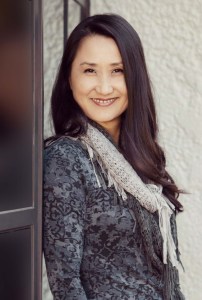 Salina Yoon is an award winning author and illustrator of over 160 books for young children, including the popular Penguin picture book series and the new Duck Duck Porcupine beginning reader series. She was the featured author for the 2016 Kohl’s Cares Summer Campaign, and her awards include the 2015 Award for Excellence in a Picture Book for FOUND, by the Children’s Literature Council of Southern California, the 2015 International Literacy Association’s Children’s Choice Reading List for FOUND, and much more.
 Tara Lazar is a picture book author and founder of Storystorm. She has two books releasing in 2017—WAY PAST BEDTIME from Aladdin/S&S and 7 ATE 9: THE UNTOLD STORY from Disney*Hyperion. Tara is a council member of the Rutgers University Council on Children’s Literature and a picture book mentor for We Need Diverse Books. She lives in New Jersey with her husband, two daughters, and far too many stuffed animals.








 Writing for Kids (While Raising Them)