by Ruth Spiro
Two weeks ago, I posted the following question on the Storystorm Facebook group:
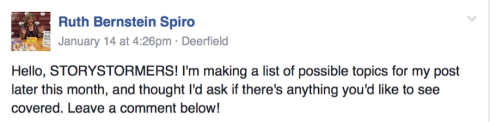
I had been brainstorming my own list of ideas to write about, but I think it’s important to do some market research, too. Would my ideas be interesting and helpful to Storystorm readers? I figured that posing this question was a good way of taking their pulse.
Within a day, several members had replied with questions on topics they wanted to read about. Each of these questions also had “Likes,” indicating that others were interested in them, as well. As a result, in addition to my own list I now had nine more possible topics, fresh for the picking.
Looking for inspiration?
Ask for it!
Sometimes we see, hear or read something and BAM, inspiration lands right in our lap. The perfect topic, character or story we can’t wait to explore and write about. Other times, we have to take a more active role in seeking it out. One way I’ve discovered, as I demonstrated above, is to engage with my potential audience and ask them what they want. It’s as simple as that.
Here are a few to try:
Kids (Of course!)
When my daughters were young, it felt like I had idea-machines living in my home providing a never-ending stream of inspiration. If you speak with kids, you can’t help but be amazed by the funny, creative and often surprisingly perceptive things they say. If you’re lucky enough to spend all or part of your day with kids (whether they’re your own or someone else’s!), here’s my advice: Write. Everything. Down.
Librarians
Get to know the youth services librarians at your public library and the media specialists at your local schools. Sign up to volunteer if the opportunity exists. Ask if there are any requested topics they wish they could find more books about.
Booksellers
When is the best time to get to know your local booksellers? If you’re pre-published, that time is NOW. Pay attention to the books they’re hand-selling, attend author events, and support the store by purchasing a book or two when you visit. As with librarians, ask about the books their customers are requesting. Or, would they like to see companion titles for books they currently stock? Develop (an authentic) relationship now, well before it’s time to ask them to stock your book or host a launch event.
This is only the tip of the iceberg, but I think I’ve made my point. Sometimes, the best way to find new ideas is simply to ask for them.
BONUS!
Now, back to my Facebook query. While I posted the call for topics to demonstrate my point, I also know that group members left their questions in earnest and I don’t want this to feel like a bait-and-switch. So, here are those questions with what I hope are brief, but helpful answers.

“Sometimes I think of a cool character, but then have trouble turning it into a premise. Any tricks on sort of taking an idea and expanding on it?” –Kerrie T. & Angie I.
If you love your character, set her free! Story is what happens when something changes. A door opens. She meets someone new. She loses something. Wants something. Gets into trouble. Give your character a new experience or problem to navigate and capture her unique, but inevitable, reaction.
“Tips for self-editing”–Michele S.
Here’s a technique I share in my school visits and writing workshops: Don’t try to do it all at once. Much like the job of cleaning your room, if you focus on one specific task at a time it won’t seem so overwhelming. Some items to consider for your editing checklist: Does your story have a natural arc, with a beginning, middle and end? Does your main character also have an arc, growing or changing in some way? Is your language as fun, rhythmic and specific as it can be? If you’ve written a picture book, have you provided varied illustration opportunities? Once you’ve taken your story as far as you can on your own, it’s time for a critique group or writing partner to have a look with fresh eyes.
“I feel like many of my great ideas are more of a short story and less of a picture book – can you help writers identify some differences?” –Melanie K. & Nadine P.
There are a few main differences, but I think the best test is to imagine your story with page turns. Do the scenes change? Is there movement? Are there a variety of scenes to illustrate? If so, you probably have a picture book. On the other hand, if your story is longer and contains more description within the text (that would otherwise be illustrated in a picture book) it may be a better fit as a magazine story. There are other differences between the two, but I think the “page turn test” is an excellent indicator.
“Any thoughts to share on endings?”–Jennifer V.
Rob Sanders gives an overview on his blog that’s head and shoulders above anything I could come up with on my own. He describes different kids of endings and gives a few examples of each here.
“Self pub or traditional?”–Matt R.
Matt, I’m just not the right person to answer this for you because I’ve only worked with traditional publishers. I’ve been pleased with this process and have never considered self-publishing. However, I know there are many authors who feel the same way about self-publishing, so I encourage you to fully research both sides.
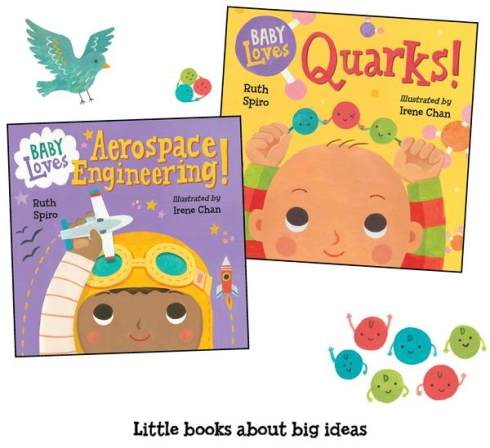
“How did you get the ideas for your Baby Loves books? (I love them!)–Claire N.
Lovely of you to ask, Claire! Some may recall an article that appeared in the New York Times back in 2010. Picture Books No Longer a Staple for Children was a controversial article about parents who were bypassing picture books for their very young children in favor of more sophisticated reading material, such as chapter books. While discussing this with some writer friends I commented, “What do these parents want, quantum physics for babies?” As soon as I said it, I knew I had an idea with potential.
“Suggestions for judging which ideas have most merit.”–Marty B.
An idea on it’s own is just that – an idea. It’s what you do with it that determines its merit. I’m not sure you can adequately judge an idea until you develop it into something and see where it goes. If I had thought too long about the idea of writing science books for babies, I probably would have eventually talked myself out of it! But once I started playing around with the idea, researching and writing and revising, I realized it did have merit and was worth pursuing. I’m glad I did!
 Ruth Spiro is the author of Baby Loves Aerospace Engineering and Baby Loves Quarks, published by Charlesbridge. Baby Loves Thermodynamics and Baby Loves Quantum Physics are forthcoming this fall. These adorably illustrated books contain expert-reviewed science, yet are simple enough for little ones! Ruth is also pleased to share that another new picture book series, Made by Maxine, will be published by Dial beginning in 2018. Inspired by her trusty companion and muse, a pet goldfish, Maxine is determined to make the world a better place, one crazy contraption at a time. Visit her online at ruthspiro.com and Twitter @RuthSpiro. (Ruth wrote this blog while recovering from pneumonia, and apologizes for the grammar and punctuation mistakes she’s sure she missed!)
Ruth is giving away two BABY LOVES SCIENCE books.
Leave ONE COMMENT below to enter. You are eligible to win if you are a registered Storystorm participant and you have commented once on this blog post. Prizes will be given away at the conclusion of the event.
Good luck!
 Rebecca Hirsch grew up climbing trees and splashing in streams in western Pennsylvania. She worked as a plant biologist before becoming a writer. Her many nonfiction books for children include BIRDS VS. BLADES?—Offshore Wind Power and the Race to Save Seabirds, a Junior Library Guild selection, and PLANTS CAN’T SIT STILL, a Kirkus best picture book of 2016. Her newest book is DE-EXTINCTION: The Science of Bringing Lost Species Back to Life. When she’s not writing, you might find her baking bread, playing backyard badminton (badly) with her family, hiking with her dog, or growing plants in her garden.
 I still remember, back in 2008, stumbling onto Mary Amato’s quirky CHICKEN OF THE FAMILY. I was instantly smitten. Boy, did she nail the sibling dynamic. If you don’t know the story, it’s about a little girl whose two older sisters put into motion a fiendish plot to convince her she’s a chicken. It made me laugh out loud then, and it makes me laugh out loud now. Because those sisters—their actions, their dialogue, their emotions—feel REAL to me. Nobody knows how to push a kid’s buttons like a sibling.
 Jill Esbaum’s recent titles include IF A T.REX CRASHES YOUR BIRTHDAY PARTY, TEENY TINY TOADY (starred review, Kirkus), and ELWOOD BIGFOOT—Wanted: Birdie Friends. Several of her books have been nominated for state awards, and her I AM COW, HEAR ME MOO! won SCBWI’s Crystal Kite award.

 Debbie Ridpath Ohi is the author and illustrator of

 TL: Every writer in children’s publishing is trying to be the next J.K. Rowling, Jeff Kinney or Mo Willems. We all want to create a book that captivates millions of readers. That’s one reason why I run the annual STORYSTORM challenge, for writers to develop one story idea daily for a month. For every thirty ideas, five might be good, but ONE might be the next big thing—NY Times bestseller, movie deal, merchandise galore. So we’ve got the idea generation part covered; we churn out many ideas to get to the good ones. According to your research, what can we do to identify that one GREAT idea and nurture it to fruition?
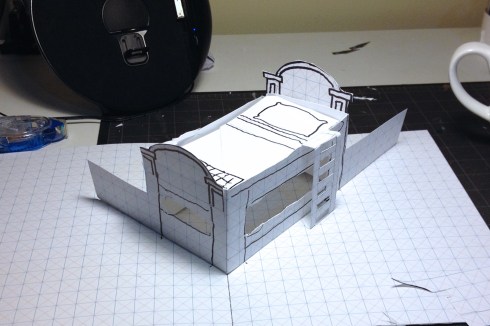
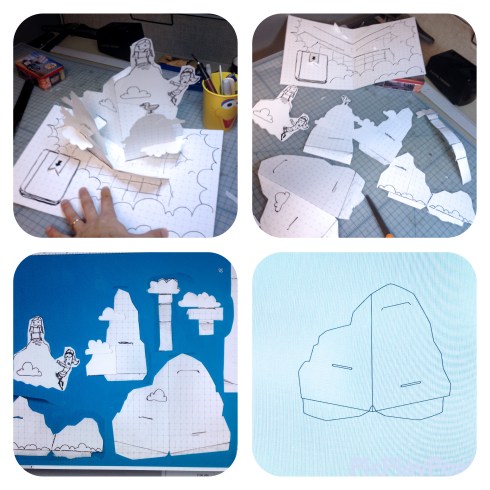
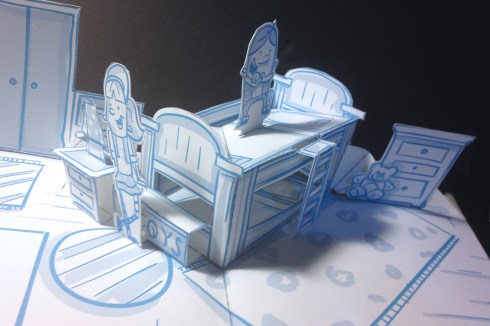

 Keith Allen is a Senior Product Designer for American Greetings in Cleveland Ohio. He is the co-founder of By the Bay Books and owner of the independent publishing company, 5am Press, LLC.

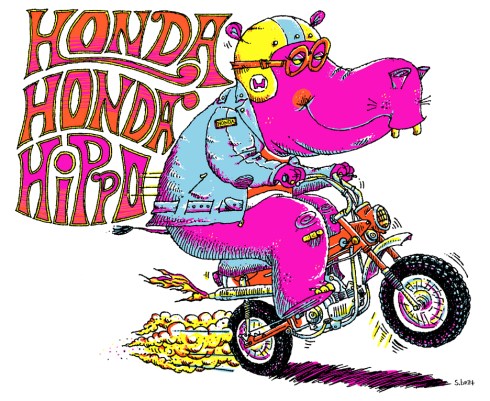
 View S.Britt’s art and find out more about his work at


 Corey Rosen Schwartz is the author of several rhyming picture books and fractured fairy tales., HENSEL & GRETEL: NINJA CHICKS, in which two chicken sisters defeat a fox and rescue their parents, is the latest of her punny titles. Corey has no formal ninja training, but she sure can kick-butt in Scrabble. She lives with three Knuckleheads in Warren, NJ.
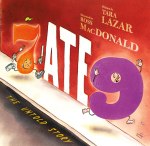
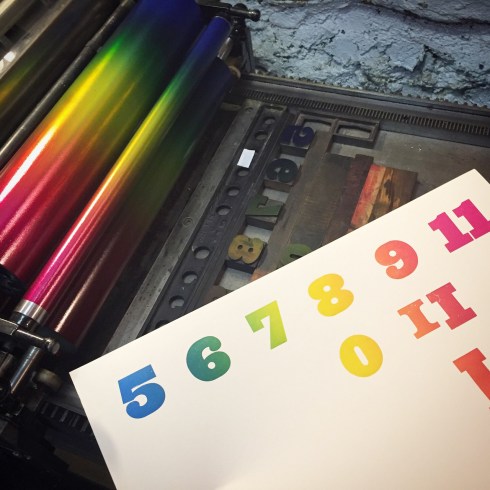
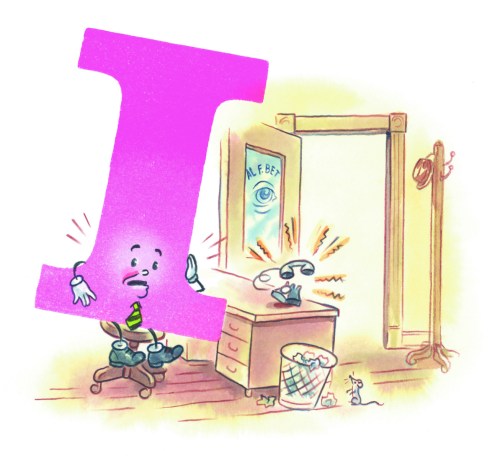
 A good example of this cross-pollination is 7 ATE 9—a picture book written by Tara Lazar that I was lucky enough to illustrate. It’s a hilarious story of a private ‘I’ who is baffled by the age-old mystery of why 6 is afraid of 7 (spoiler alert—it’s because 7 ate 9!!!). When I was reading Tara’s manuscript, a vision popped into my head of 19th century wood type letters and numbers coming alive and sprouting little arms and legs and fedoras and bow ties. Luckily I have a letterpress shop full of 19th century wood type, so I was able to play around with the idea. And whaddaya know—it was just crazy enough to work!
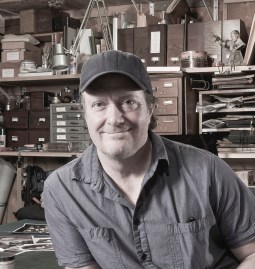 Ross MacDonald’s illustrations have appeared in the New York Times, the New Yorker, Rolling Stone, Harper’s, and Atlantic Monthly, and he is a contributing artist for Vanity Fair. He has written and illustrated several children’s and adult humor books.
 When I want a new cookie flavor, I first find a familiar, tried and tested recipe, like this original recipe for

 Veronica Bartles, author of THE PRINCESS AND THE FROGS (PB), and TWELVE STEPS (YA), has spent most of her life wondering “What If?” She believes there are many sides to every story, and she’s determined to discover every single one of them. Veronica believes every princess deserves a frog, because princes aren’t pets. And she’s an incurable optimist who loves gray, drizzly days because that’s when rainbows come out to play. Visit her online at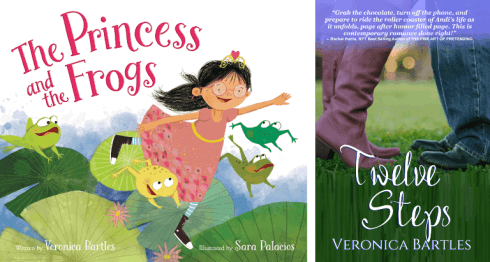





 Writing for Kids (While Raising Them)