Over 800 of you have signed the Storystorm Pledge affirming you have at least 30 new ideas to write into stories! Congratulations! Download your Winner’s Badge and proudly display it anywhere fine badges are displayed!
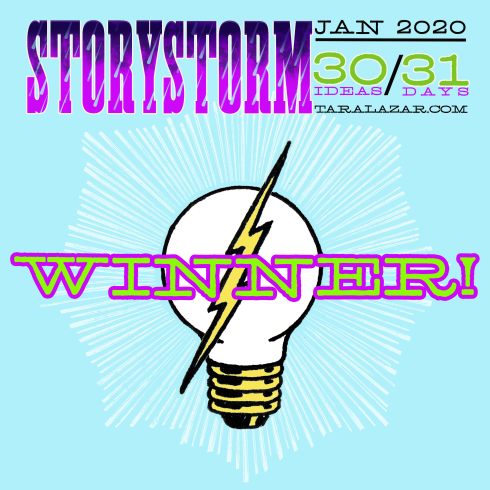
If you’re a Storystorm WINNER, begin fleshing out your best 5 ideas into elevator pitches…because if you’re randomly selected as one of 10 GRAND PRIZE WINNERS, you’ll be paired with a kidlit agent for feedback on your ideas.
I will be selecting Grand Prize Winners randomly over the weekend. Then those folks will have a few more days to hone their ideas. (But it doesn’t hurt to get started now!)
Here are the Storystorm 2020 Agents!
Erin Murphy, President & Founder, Erin Murphy Literary Agency
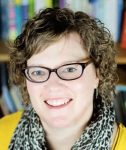 Erin was born and raised in Arizona, and founded EMLA in Flagstaff in 1999. She cut her teeth in regional publishing at Northland Publishing/Rising Moon Books for Young Readers, a beloved decades-old Flagstaff company that was bought out in 2007, where she was editor-in-chief. As founder of EMLA she has focused not just on publishing books, but on building careers—and creating a sense of community, as well. In 2016, she relocated the agency headquarters to southern Maine.
Erin represents writers and writer-illustrators of picture books, novels for middle-graders and young adults, and strong nonfiction. Her favorite reads feel timeless, have strong voices, and express unique creative visions. Because of her full client list, she rarely signs new writers or illustrators, but she is particularly interested in adding cultural diversity to her client list. In addition to reading, her interests include traveling, knitting, walking, kayaking, watching movies, and figuring out How People Work.
Ammi-Joan Paquette, Senior Agent, Erin Murphy Literary Agency
 Joan is a Senior Agent with EMLA, working from her home office in Massachusetts. She represents all forms of children’s and young adult literature, but is most excited by a strong lyrical voice, tight plotting with surprising twists and turns, and stories told with heart and resonance that will stand the test of time.
An EMLA client herself, Joan is also the author of numerous books for children, most recently he magical adventure The Train of Lost Things, the Princess Juniper series, the picture books Ghost in the House, Elf in the House, Bunny Bus, and The Tiptoe Guide to Tracking Fairies, and the “non-fiction with a twist” series Two Truths and a Lie. When she is not on the phone, answering email, or writing, you will most likely find Joan curled up with a book. Or baking something delicious. Or talking about something delicious she’s baked. Really, after books and food, what else is there worth saying?
Holly McGhee, Founder and Creative Director, Pippin Properties, Inc.
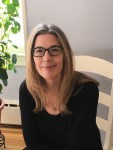 Holly McGhee still carried MADELINE around in 3rd grade—until Mrs. Carrier, her school librarian, tricked her into reading longer books by giving her one with her name on it, HOLLY IN THE SNOW. After college, Holly headed straight into the book world of New York City, where she has enjoyed being a secretary, an advertising manager, a sales rep (for one month), and in the six years prior to opening the doors at Pippin, an executive editor at HarperCollins.
Now, as the President and Creative Director of Pippin she is dedicated to shepherding books that make a difference into the world. Someone once told her, “If you love what you do, you never work a day in your life,” and that has proven true for her.
Lori Kilkelly, Founder, LK Literary Agency
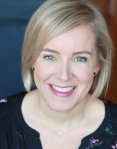
Credit: Maia Rosenfeld
In 2008, after a number of successful years in advertising and sales, Lori aspired to combine her talents in these areas with her personal passion for children’s literature. Ultimately, this led to her decision to pursue a career change, and she attended the post graduate program, ‘The Denver Publishing Institute’ at The University of Denver. Subsequently, she spent nearly a decade at boutique children’s literary agency Rodeen Literary Management, headed by Paul Rodeen—a George Nicholson protégé.
During her tenure at RLM, Lori rose through the ranks, eventually representing her own clients, and assembled a list of talented, best-selling, and award-winning authors and illustrators. Having worked independently for much of her career, she also began to lay the foundation to eventually open her own shop. Then, with the full support of Rodeen Literary, she formally announced LK Literary Agency in the fall of 2018 and was joined by all of her clients in the new endeavor.
Now, with more than 100 books under contract and titles with every major trade publisher, she is dedicated to continue bringing meaningful, funny, informative, and moving children’s and young adult literature to market, created by an incredibly talented group of authors and illustrators.
Liza Fliessig & Ginger Harris-Dontzin, Partners, Liza Royce Agency
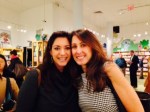 Liza Fleissig, with her partner Ginger Harris-Dontzin, opened the Liza Royce Agency (LRA) in early 2011. A cross-platform company providing development, representation, and strategic career management for clients in all media, their goal is to represent clients in all stages of their careers, from the most established to those developing their craft, as well as debuts. Both former partners in NYC based litigation law firms, Liza and Ginger bring a combined 40 years of negotiating experience to the field. This background, along with connections rooted in publishing, movies and television, allowed them to focus and build on a referral based clientele.
From picture books through adult projects, fiction and non-fiction, screenplays to stage works, LRA welcomes strong voices and plot driven works. Their inaugural books became available in stores January 2013. Their first was an Edgar nominee, another was an Indie Next Pick, and two others were optioned for film. LRA’s success began right out of the gate.
John Cusick, Vice President and Agent, Folio Jr.
 John graduated Wesleyan University in 2007 with a double major in English and Russian Literature—a degree one professor called “fun but useless.” After working as a freelance writer, bookseller, dog walker, cashier, and radio host, he became a literary agent’s assistant and quickly began building my own list. Around the same time I also became an author; my young adult novels, Girl Parts and Cherry Money Baby, were published by Candlewick Press. His middle-grade, Dimension Why, is coming from Harper Collins in 2020.
As a writer himself, John brings both a creative and commercial sensibility to his agenting style. He’s an editorial agent who works closely with my clients, whether it’s developing a debut project or helping a seasoned author take that next step. His goal is to match writers with their dream editor, secure the best deals possible, facilitate the exploitation of dramatic (film and TV) rights in my clients’ work, and grow authors’ readership over long careers.
He is passionate about helping clients achieve their full potential, and I’m looking for dedicated, original, fervent, visionary creators.
Alyssa Eisner Henkin, Executive Vice President, Trident Media Group
 After earning her Bachelors from the University of Pennsylvania, Alyssa fulfilled a childhood dream that she professed on a home video at the age of six: move to New York and work with books. In 1999, Alyssa began her career in editorial at Simon & Schuster Books for Young Readers. Here she found “kindred spirits” who loved Anne of Green Gables as much as she did and a kids book space that was rapidly growing. In late 2006 Alyssa headed to Trident to expand the firm’s children’s book business. She works hard to ensure each book’s longevity from brainstorming the perfect editor, title and jacket to overseeing successful foreign, merchandising, audio, film and theatrical partnerships.
Alyssa is seeking emerging authors and illustrators in all genres. Feisty picture book protagonists, whether real or imagined, tend to intrigue. Alyssa looks to spice up the canon with projects that break new ground.
Read my interview with Alyssa here.
Stephen Fraser, Senior Agent, The Jennifer De Chiara Literary Agency
 Stephen joined The Jennifer De Chiara Literary Agency as an agent in January 2005. He worked most recently at HarperCollins Children’s Books, where he edited such creative talents as Mary Engelbreit, Gregory Maguire, Michael Hague, Ann Rinaldi, Kathryn Lasky, Brent Hartinger, Stephen Mitchell, and Dan Gutman. He began his career at Highlights for Children and later worked at Scholastic and Simon & Schuster. A graduate of Middlebury College in Vermont, he has a Master’s degree in Children’s Literature from Simmons College in Boston. He represents both children’s and adult books in a wide range of genres. He’s always looking for good, original writing, like picture books with delicious words.
Kat Rushall, Agent, Andrea Brown Literary Agency
 Kathleen joined the Andrea Brown Literary Agency in 2016 after agenting for five years with the Marsal Lyon Literary Agency. She represents writers and illustrators for picture books (both fiction and nonfiction), middle grade, and YA.
When it comes to picture books, Kathleen loves to laugh, have her heartstrings pulled, and enjoys quirky, character-driven stories with heart. She would be happy to find more biographies and what some call “ficinformational” picture books (books with a fictional story that ties into the Common Core). She’s always interested in picture books that inspire emotional intelligence, self awareness, and empathy.
Jennifer March Soloway, Associate Agent, Andrea Brown Literary Agency
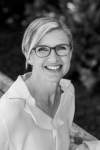 Jennifer represents authors and illustrators of picture book, middle grade, and YA stories, and is actively building her list. Although she specializes in children’s literature, she also represents adult fiction, both literary and commercial, particularly crime and psychological suspense projects.
For picture books, she is drawn to a wide range of stories from silly to sweet, but she always appreciates a strong dose of humor and some kind of surprise at the end. When it comes to middle grade, she likes all kinds of genres, including adventures, mysteries, spooky-but-not-too-scary ghost stories, humor, realistic contemporary, and fantasy.
GOOD LUCK, EVERYONE!
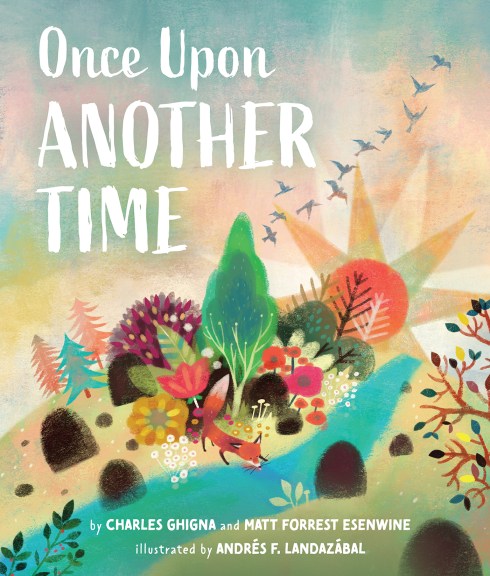
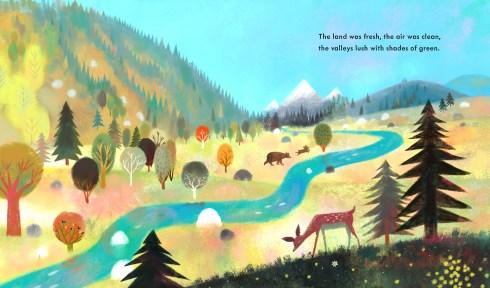
 Charles Ghigna – Father Goose® lives in a tree house in the middle of Alabama. He is the author of more than 100 award-winning books from Random House, Disney, Hyperion, Scholastic, Simon & Schuster, Abrams, Charlesbridge, Capstone and Orca. His poems appear in magazines from The New Yorker and Harper’s to Cricket and Highlights for Children. For more information, please visit: FatherGoose.com.
 Matt Forrest Esenwine has published nearly 30 children’s poems in anthologies like The National Geographic Book of Nature Poetry (N.G. Children’s Books, 2015) and Construction People (Wordsong, 2020), as well as Highlights for Children magazine. His nationally-acclaimed picture book, Flashlight Night (Boyds Mills Press, 2017) was selected by the New York Public Library as one of the Best Picture Books of 2017. More information is at MattForrest.com.








 Tannie M. Smith is an illustrator and author by day, and a Jedi by Knight. Her mission is to defeat the dark side by creating stories and art that are a force of light in the galaxy. She loves to collaborate on picture books, middle grade projects, and editorial illustrations. Tannie has a BFA from Texas State University in Communication Design. She currently lives in Lago Vista, Texas, where she fervently fosters her love for Star Wars, Korean dramas, yoga and tacos. But the thing she loves most is spending time with her ultra-running husband, 2 entrepreneurial teenage boys, 1 energetic pupper, and 2 cats that fiercely work to support whatever stereotype you may have about cats.
 Becky Porter is an illustrator living in Round Rock, TX. She’s been drawing, painting, and writing for as long as she can remember. It’s the only ambition she’s ever had besides being a mom–and singing and dancing on broadway (a dream unrealized due to an inability to sing or dance.) When she’s not drawing or writing, Becky spends her time running, reading, book-clubbing, and retiring early to the Nerdery with her husband and three nerdlings for games or movie night. She loves anything that makes her laugh hard, think hard, or both. Anything else puts her to sleep, which is something else she loves to do and is, therefore, a net gain.
  Julia Mann’s favorite thing about being an illustrator is getting to inspire others with her art. She loves colored pencils, and the challenge to keep improving as an artist. Since moving to Austin in 2014, she spends most nights drawing after her kids go to bed. When not drawing, she is either homeschooling her two boys, going to the gym, hiking, listening to an art podcast, or exploring the Texas hill country with her family. Julia has a B.A. in studio art with a biology minor from Virginia Tech.
 Kristin Wauson is a children’s book author/illustrator from Austin, Texas. She has a degree in Advertising from The University of Texas at Austin and for 10 years worked as a graphic designer and yoga instructor. Today she is a stay at home mom and a proud member of several amazing kidlit groups, including the Puddle Jump Collective, and The Big Dillustrators. When she’s not drawing, painting, dreaming up story ideas, or taking an online class, you’ll find her perfecting her handstand, helping with her family’s home building business, trying new recipes, and spending time with her husband, their boys and their big brown ‘Hank the Cowdog.’ She is represented by Adria Goetz of Martin Literary Management.

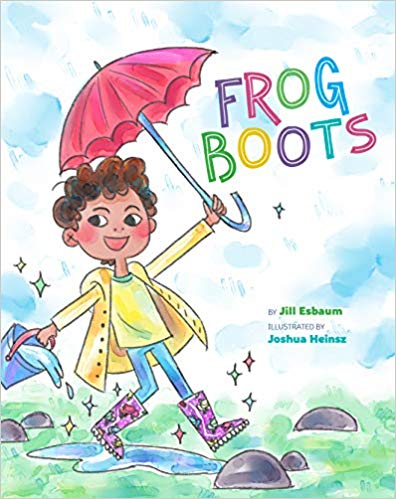
 Jill Esbaum lives on a family farm in eastern Iowa, where she writes picture books and nonfiction. Her latest picture book is WE LOVE BABIES (National Geographic). Several of her books have been nominated for state awards, and her I AM COW, HEAR ME MOO! won a SCBWI Crystal Kite.
  Josh Funk is a software engineer and the author of books like the Lady Pancake & Sir French Toast series, the It’s Not a Fairy Tale series, the How to Code with Pearl and Pascal series, the A Story of Patience & Fortitude series, Dear Dragon, Pirasaurs!, Albie Newton, and more.




 Cherokee Nation citizen and award-winning author Traci Sorell writes fiction and nonfiction books as well as poems for children. A former federal Indian law attorney and advocate, Traci lives with her family in northeastern Oklahoma where her tribe is located.

 Award-winning author Laurie Wallmark’s most recent book, NUMBERS IN MOTION: SOPHIE KOWALEVSKI, QUEEN OF MATHEMATICS, releases March 3, 2020. Her previous picture book biographies of women in STEM (ADA BYRON LOVELACE AND THE THINKING MACHINE, GRACE HOPPER: QUEEN OF COMPUTER CODE, and HEDY LAMARR’S DOUBLE LIFE) have earned multiple starred trade reviews and national awards. She has an MFA from VCFA in Writing for Children and Young Adults.