You are currently browsing the category archive for the ‘STORYSTORM 2023’ category.
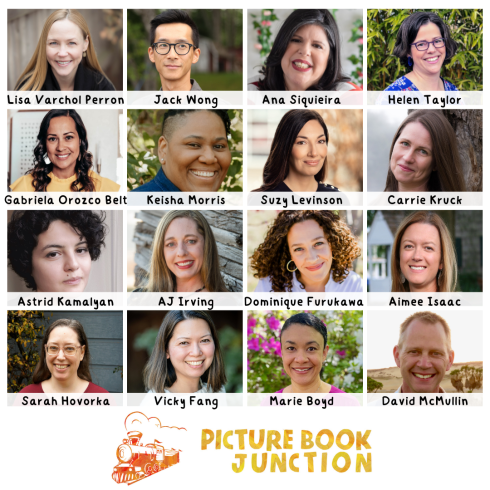
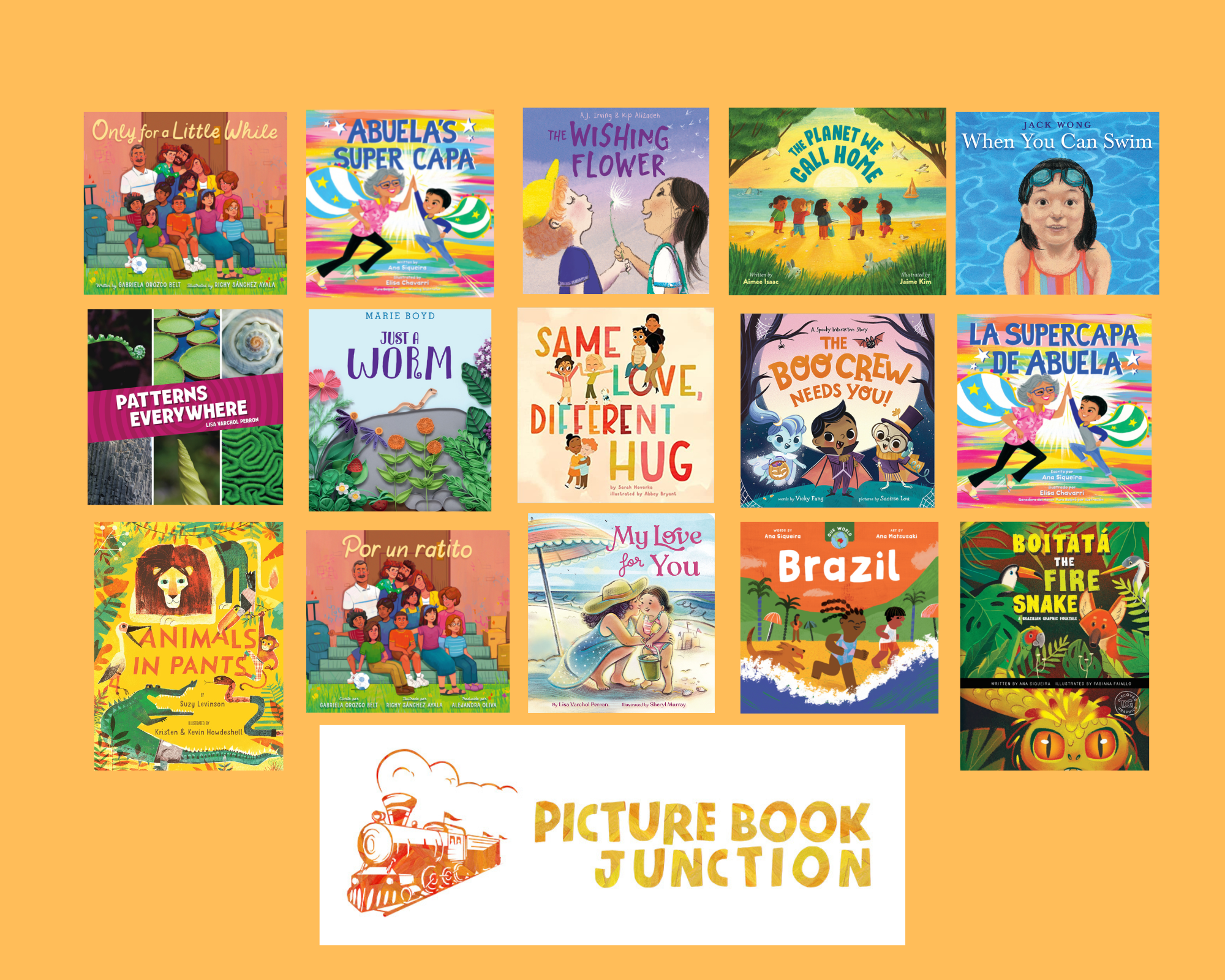
Today we have a steam train packed with Storystorm advice rolling your way, from the authors of the Picture Book Junction group!
Ana Siqueira:
I list all important memories of my life as a child or as a parent or grandparent. For each one, I list all the problems and write all the feelings. Then I decide on one to be the inspiration for my new story—and remember, your story will be based on this memory and feeling, but it doesn’t need to repeat all that happened. To make it more kid-friendly and fun, I read at least twenty books with topics related to it. Then, I go for walks, while recording ideas on my phone. Finally, I mix some fun, humor, and fantasy to create a book with heart but also kid friendly. My book Abuela’s Super Capa is based on my mom’s and son’s relationship and my mom’s death. Still, I added a little intruder (sister) and cupcake criminales (pets) to make it less heavy, more illustratable, and relatable. And in this story, my mom didn’t die. I wish we could rewrite our real-life stories, right?
Check my bio at our website and my books and more at AnaFiction.com and follow me on Twitter @SraSiqueira1307.
Marie Boyd:
When my son was little, I frequently told him “It’s just a worm” when he saw worms on the sidewalk. I imagined how a worm might respond if it could understand my words. This led to my debut book, JUST A WORM, which I illustrated with quilling, a cut-paper technique. I’d never seen a quilled picture book, but when I imagined Worm’s Garden it was quilled. The plants in my and my parents’ gardens inspired many plants in Worm’s world.
For craft ideas and more, follow Marie at MarieBoyd.com and on Instagram @artistscholar.
Vicky Fang:
My book ideas are often two ideas mashed together. THE BOO CREW NEEDS YOU! started as a little phrase that snuck into my brain without a story to go with it: “There’s a hitch! There’s a glitch! Something’s screwy with this switch!” It sat there for two years. Then one day, I was writing a story about Halloween monsters working together and I remembered that line. Mashing these two ideas together, my rhyming, interactive picture book was born!
Visit Vicky at VickyFang.com.
David McMullin:
I often take a more mechanical approach to finding ideas than most. Yes, some ideas appear to me like little sparkling balls of light from time to time, but usually, I simply sit down and brainstorm. I go for volume and then the special ideas rise to the top. My book, Free to be Fabulous, combines a million different experiences from my growing up as a dance-loving LGBTQ+ kid.
Visit David online at DavidMcMullinBooks.com and follow him on Twitter @davidmcmullinpb.
Suzy Levinson:
One of my favorite ways to spark ideas is to take two things that don’t belong together, smoosh them together anyway, and then make it all make sense. I once did this and wound up writing a poem about a cat wearing pants, which was so fun that I wrote another poem about a spider wearing pants, and so on and so on until voilà, Animals in Pants (Cameron Kids) was a book!
To find out more about Suzy, check out her website at SuzyLevinson.com and follow her on Twitter and IG @SuzyLevinson.
Sarah Hovorka:
The inspiration for Same Love, Different Hug was like a wildfire spark. I was reflecting on how carefully my young, enthusiastic kids had to show me physical affection after three months in the hospital and an ostomy bag on my torso… a lyrical phrase popped into my head and a couple of hours later I had a sweet book about conscientiously sharing affection with others in all kinds of situations. Inspiration doesn’t usually strike so easily as with this book, but when it does, run with it!
You can read more about Sarah’s works and connect with her at SarahHovorka.com and follow at Twitter @HovorkaSarah & @authorsarahhovorka and on Instagram @authorsarahhovorka.
Aimee Isaac:
Some story ideas spill onto the page. Others simmer in my head for years. The idea for my debut began as a cumulative story about litter but it lacked heart. Over time, I stirred in childhood memories, inspiration from a letter my father wrote, tree-planting with my kids, and a theme that drives my writing: interconnectedness. These ingredients plus time were just right for creating THE PLANET WE CALL HOME.
Connect with Aimee at AimeeIsaac.com and @IsaacAimee on Twitter.
A.J. Irving:
I will always remember the day I started writing THE WISHING FLOWER. I’d just had a call with my agent and was inspired to go on a hike. The first lines came to me in the Wyoming wilderness. I rushed home and wrote a draft about my first crush in my notebook. Sometimes you get this electrifying feeling when you know you’ve written something special. This was one of those moments.
Connect with A.J. at AJIrving.com or @aj_irving on Twitter and Instagram.
Carrie Kruck:
I’m always looking for magic and possibility in everyday objects. My upcoming book WHAT FRANCINE FOUND was inspired by an ordinary fishing rod and the question: “What magic might it hold?” (Spoiler: it’s attached to the drain plug of a lake that holds the town’s secrets!) Try it yourself! Look around you now and choose an ordinary object. Pay extra attention to it. What magic might it hold? Could it be used in an unexpected way? Does it have a little-known history? Surprise yourself!
Find Carrie on Twitter @KruckCarrie, Instagram @Carrie.Kruck or CLKruck.com.
Helen Taylor:
I find that I’m drawn to unusual combinations. They have inherent tension, and you never know where they’ll lead you. The spark of inspiration for my debut picture book was an article I read about growing lettuce on the International Space Station. I started by researching that super-specific topic, then broadened my search and found tons of great info so I decided to expand the scope and that’s what became HOW TO EAT IN SPACE.
Connect with Helen at HelenSTaylor.com or @heyhelentaylor on Twitter and Instagram.
Lisa Varchol Perron:
I feel most creative when I step away from the computer and spend time outside. Patterns Everywhere was inspired by a family hike. My husband (who studies the formation of landscapes) was teaching our daughters about the even spacing of ridges and valleys, and I had so many questions! If I find something intriguing and want to learn more, I know I’ll enjoy writing about it and can do my best to share that sense of wonder and joy with readers.
Connect with Lisa at LisaPerronBooks.com or @LisaVPerron on Twitter and Instagram.
Jack Wong:
Each person’s strategies for inspiration will be different—from rummaging through memory to spending time in nature to reflecting on life events at the moment (hint: mine includes a bit of all the above). Once you have your go-to strategies, though, a second challenge arises: deciding which ideas are worth your time to pursue. I try not to think about this too much at the beginning, when the birth of ideas should be acts of free play, but as I get further along the process, I try to only invest in a story if I really, really, really care about it. It’s hard to stay inspired if I don’t!
You can find Jack at JackWong.ca and connect with him on Twitter and Instagram @jacquillo_.
Dominique Furukawa:
I have probably five different book ideas swirling around all the time! What tends to happen is that one idea will start to write itself in my head. Whole sentences will come together and then I’ll know that’s the book I need to sit and focus on! Sometimes those initial sentences don’t even make the final cut, but it gets me excited and gets me started.
You can connect with Dominique at DominiqueFurukawa.com and on Twitter @domfurukawa and Instagram @dom.furukawa.
Gabriela Orozco Belt:
My greatest inspiration comes from the experiences that I’ve had growing up. I love the feeling of reading a story and being able to connect to it on a personal level, it’s extremely validating to my experiences and feelings. I think if stories can make me, an adult, feel that way how awesome it is for kids to feel the same thing.
You can learn more about Gabriela at GabrielaBelt.com and follow her on Twitter and Instagram @thegreatgabsie.
Astrid Kamalyan:
My happy childhood spent in Armenia is a constant source of inspiration for me. It’s a part of me that never grew up and stayed eyes wide open, heart full. I tune into my emotions. They don’t always have to be happy, but when they are strong, I know a story is to be born. It might turn into a book or an essay, but regardless of form, it must get written down or it will keep my head noisy, writing itself. My debut BABO: A TALE OF ARMENIAN RUG-WASHING DAY is based on one of those happy memories of washing rugs with my siblings and grandmother. There’s a sense of joy, community, and childhood whimsy woven into so many of these memories, and all revolve around our traditions. And with this book, I wanted to share just that, the little beam of light, shining straight from childhood.
Learn more about Astrid at AstridKamalyan.com, get in touch through Twitter @astridkamalyan and IG @astridkamalyan.

There are also many prizes Picture Book Junction is giving away! A dozen, in fact!
You’re eligible to win one of these 12 prizes if you’re a registered Storystorm 2023 participant and you have commented only once on today’s blog post. ↓
Prizes will be distributed at the conclusion of Storystorm.
- David McMullin – PB critique
- Lisa Varchol Perron – Poetry bundle (3 children’s poetry anthologies: Things We Eat, Things We Feel, Imperfect II: Poems About Perspective)
- Ana Siqueira – PB critique (fiction and non-rhyming) or Zoom “Ask Me Anything”
- Suzy Levinson – Children’s Poem critique (rhyming)
- Aimee Isaac – picture book critique
- Marie Boyd – PB critique
- A.J. Irving – Fiction PB critique in prose
- Carrie Kruck – “Ask Me Anything” Storystorm edition! 30-minute Zoom/phone call to review your favorite StoryStorm ideas, discuss marketability, brainstorm hooks & pitches, prioritize & plan manuscript development…anything and everything Storystorm related!
- Gabriela Orozco Belt- PB critique
- Astrid Kamalyan – 30-minute Zoom “Ask Me Anything” focusing on the process of creating PBs, from idea generation to getting published
- Sarah Hovorka – “Anything Goes!” 30-minute Zoom talk and/or critique of PB, query, first five pages of CB or MG, or outlines/prep work.
- Jack Wong – Publisher/agent query critique (claimable March 5th onwards)
by Megan Litwin
Whenever I think about writing, or how to teach writing, or how to give advice to people looking to start writing, I think of some favorite lines from Mary Oliver. In her poem Sometimes, Mary Oliver gives the very best instructions—meant for living, but equally inspiring for writing.
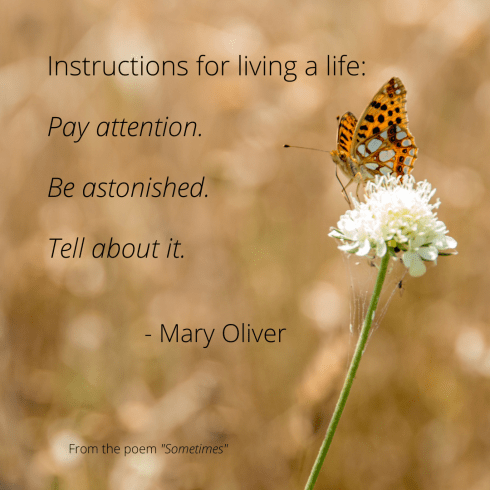
Pretty good advice, isn’t it?
Direct. Succinct. True.
If you’re looking for something to write about…pay attention. In your own tiny corner of the universe, what beautiful, curious, astonishing things are happening? No doubt there are many. Another thing about reading Mary Oliver is that she reminds you of the countless fascinating things happening right under your nose.
So, pay attention!
Be astonished!
And tell your idea notebook all about it.
I try to live these words. Like Mary Oliver, I pay attention to this wonderful world we live in—finding inspiration on trails and beaches and in magical moments of outdoor solitude. But I also pay attention during the everyday moments of life, too. In the car. Listening to music. Watching my kids play. Cleaning out closets. What surprises me? What delights me? What sticks with me?
I love starting off January with Storystorm because it is a concrete reminder to pay attention, or as Tara so aptly puts it, a time to “heighten your idea-generating senses.” I create little thought bubbles in my notebook at the start of each Storystorm year, filling them in with all kinds of things I notice. Words, phrases, sights, sounds. And when those bubbles are all filled, I make some more.
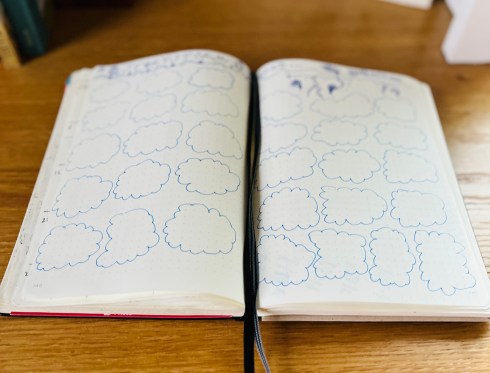
I don’t worry about what I’m going to do with these thoughts right away. It is the habit of noticing that is important. And sometimes, the act of noticing even weaves itself into a story.
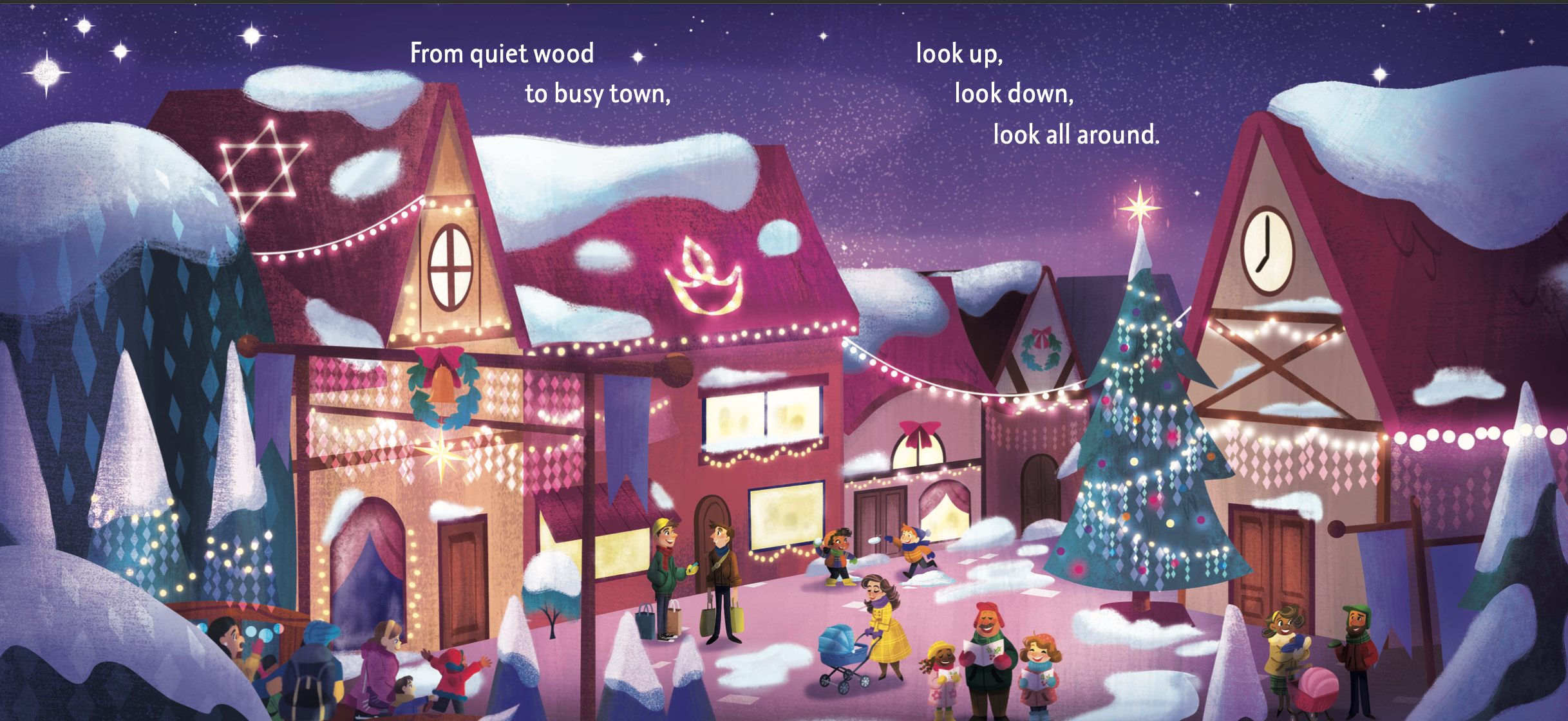
My first picture book, TWINKLE, TWINKLE, WINTER NIGHT (illustrated by Nneka Myers), was inspired by a car ride where my young son was captivated by the many kinds of bright light filling the December darkness. As I worked and reworked drafts, trying to capture the magic and wonder we both were feeling at that moment, I wanted to also capture the importance of his noticing to begin with. Here we were, on a simple car ride, but to him it was as if we had front row seats to a magic show. He was mesmerized by the world. “Look up, look down, look all around” is a line in the final text that was there pretty much from the start. Yes, this is a book that celebrates winter as a bright and beautiful time of year, but it is also a book celebrating the idea that there are astonishing and amazing things all around…if you take the time to look for them.

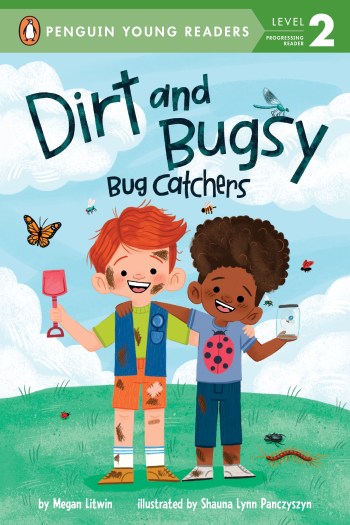
This February and June, I have two early readers coming out that feature a pair of best buds who love to catch bugs. DIRT & BUGSY: BUG CATCHERS and DIRT & BUGSY: BEETLE MANIA (both illustrated by Shauna Lynn Panczyszyn) are directly inspired by happenings in my own corner of the universe—my two boys and their friends and endless hours spent investigating insects. Children, as it turns out, are inherently good at noticing things. The adventures Dirt and Bugsy have in each book are both simple and complex. They don’t go very far. They don’t use high-tech tools or toys. They just dig into what is right in front of them. And that is enough! If you pay attention, a backyard is a fascinating place to be.
And so, fellow Storystormers, let’s take inspiration from Mary Oliver and Tara Lazar and children everywhere…
As we begin a fresh new year and open fresh new notebooks, let’s all get in the habit of paying attention. Let’s aim to slow down, to look up and down and all around, to check our own backyards, and to dig into the here and now and wonderful. You just might be astonished at how many things you want to tell that notebook.
 Megan Litwin is the author of the picture book TWINKLE, TWINKLE, WINTER NIGHT (Clarion/HarperCollins, 2022) and the forthcoming early reader series DIRT & BUGSY (Penguin Workshop, 2023). Megan holds a Master of Arts in Children’s Literature from Simmons University, and is a former classroom teacher who loves visiting schools to work with young readers and writers. She lives in Massachusetts with her family. Visit her at MeganLitwinBooks.com or connect with her on Twitter at @Meg_Litwin or Instagram at @meganlitwinbooks.
Megan is giving away a signed copy of TWINKLE, TWINKLE, WINTER NIGHT or a half-hour virtual visit for a K-3 classroom—whichever the winner prefers!
You’re eligible to win if you’re a registered Storystorm 2023 participant and you have commented only once on today’s blog post. ↓
Prizes will be distributed at the conclusion of Storystorm.
by Abi Cushman
Are you stuck? Don’t have a single good idea today for Storystorm? Well, worry no longer. All you have to do is ask yourself, “What am I obsessed with right now?” And that’s your answer.
Think about that thing that’s been on your mind lately. You know… that thing you can’t stop thinking about. The one where your spouse/friends/cat just nod along absent-mindedly and/or scratch the furniture when you start talking about it again.
“Oh, but Abi, I’ve been thinking about 13th-century button fashion a LOT lately. Is that a good story idea?” you are most likely wondering. And the answer is, YES! Probably! Maybe!
See, this is where it gets fun. What do you do with the topic you’re obsessed with? If you’re writing for kids, then the first thing you need to figure out is if the topic is kid-relatable or if you can find a way to make it relatable to kids. Can you make medieval buttonry (yes, I’m going to make that a word) fascinating for kids? Maybe! You just have to think of a creative way to tell that story. And if you really do find the subject so compelling, chances are other people/your cat will too.

Is it a Book Idea?
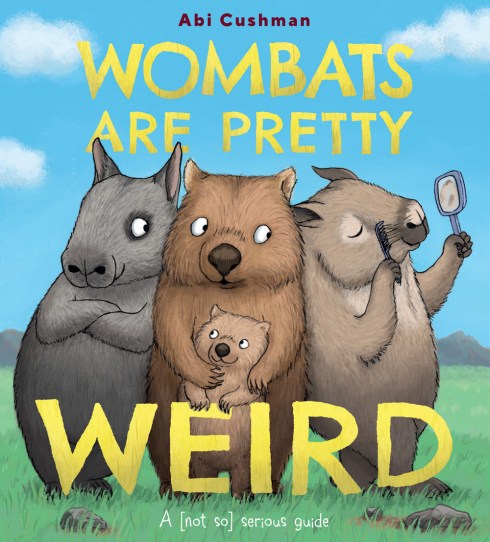
My upcoming book, WOMBATS ARE PRETTY WEIRD, due out on May 23, 2023 from Greenwillow Books, came about because I’ve been obsessed with wombats ever since I studied abroad in Australia in 2001.
When I first arrived in Australia, I went on a guided hike where we happened upon a pile of cube-shaped poop. The guide told us that they were left there by a wombat, and that wombats were the only animals in the world that had cube-shaped poop. That was just the weirdest thing I’d ever heard. How do they even make it that shape? Do they have square-shaped butts?
I ended up thinking about this cube poop fact a lot, and in 2018, I made this graphic and posted in on social media:
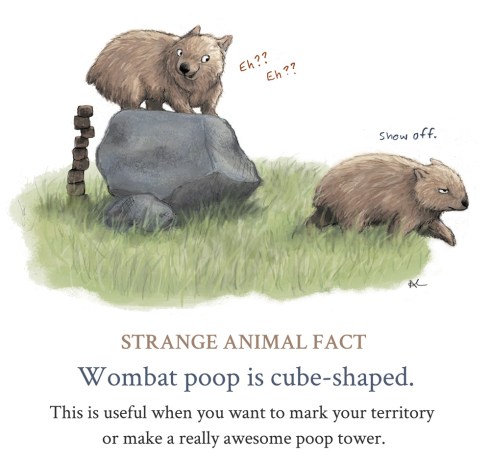
I wasn’t sure if there was enough there for a book. Or if a book was really the right format. I considered making a website devoted to wombat facts or strange animal facts in general.
But I thought I’d try it as a picture book just to see. I researched and organized more weird wombat facts and put them together in a book dummy where the wombats talked and made jokes about each factoid. I added in a snake character as a stand-in for the audience also learning these bizarre facts for the first time. I thought it was great! It was funny! It was wombatty! There were poop jokes!
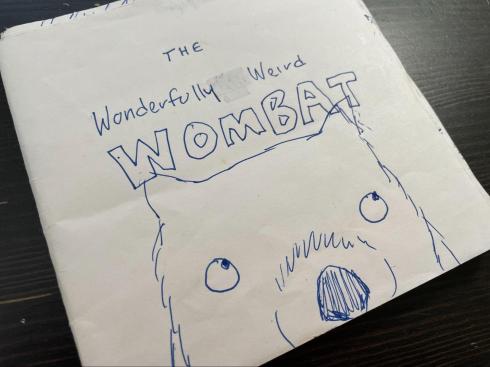
I decided it was time to get feedback, even though I was pretty sure I’d nailed it. The reaction I got was…
“Hmm… well it is funny, BUT…”
“Are wombats a strong enough hook? People don’t really know what they are.”
“I don’t know where this would go in a bookstore. Is this fiction or nonfiction?”
“What age group is this for? Is the audience too old for picture books?”
“Can you make this just a story with a wombat in it?”
Is it a DIFFERENT Kind of Book?
After that feedback, I tried rethinking how it might work as a book. I tried it out as a fictional picture book with some facts loosely peppered throughout. I tried it as a young fictional graphic novel as well. There was a lot that I liked about these versions, but I couldn’t quite make them work.
My agent ended up submitting the original informational picture book version to Greenwillow. And I had a phone call with an editor there who asked if I’d mind turning it into a young graphic novel. I asked if it was okay if it was still informational and if I still kept the same voice of the narrator, and she said yes! So I went to work and provided a 20-page sample that had the information and jokes paneled out. It meant adding more jokes and reformatting how I set some of the jokes up visually, but I liked it!
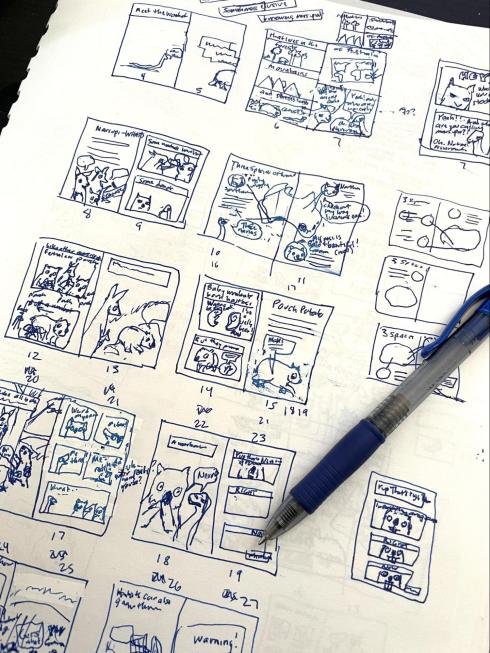
Thumbnailing before making a new dummy.
She ended up taking the sample to Acquisitions, aaaand… I got an offer! For the original picture book version! Yes, in the end, after trying it out as a fiction picture book, a fiction graphic novel, and an informational graphic novel, it was the original informational picture book that won out.
So the moral of the story is that if you’re obsessed with something, and you can make kids love it too, then this IS a good book idea. And, in fact, this idea may actually turn into several different possibilities. Play with the age group. Play with the format and the voice of the book. Perhaps you write it as a funny, informational picture book. Perhaps you write it as a heartfelt graphic novel story. Perhaps it’s a whole chapter book series! You don’t have to give up on an idea just because it might not work in one way or in one format.
So go ahead and brood about that thing you’re obsessed with. You just might end up with more than one Storystorm idea with potential.
 Abi Cushman is the author-illustrator of SOAKED!, ANIMALS GO VROOM! and WOMBATS ARE PRETTY WEIRD. She has also worked as a web designer for over 15 years, and runs two popular websites of her own: MyHouseRabbit.com, a pet rabbit care resource, and AnimalFactGuide.com, which was named a Great Website for Kids by the American Library Association. In her spare time, Abi enjoys running, playing tennis, and eating nachos. (Yes, at the same time.) She lives on the Connecticut shoreline with her family.
To learn more about Abi and her books, visit her website at AbiCushman.com. If you like secrets, exclusive sneak peeks, wombats, and special giveaways, subscribe to her newsletter.
Abi is giving away a signed copy of her book, WOMBATS ARE PRETTY WEIRD, upon its release (pub date scheduled for May 23, 2023).
You’re eligible to win if you’re a registered Storystorm 2023 participant and you have commented only once below.
Prizes will be distributed at the conclusion of Storystorm.
by Monica Acker
Sometimes lightning strikes. An idea hits fully-formed. Beginning, middle, and end flow on the page.
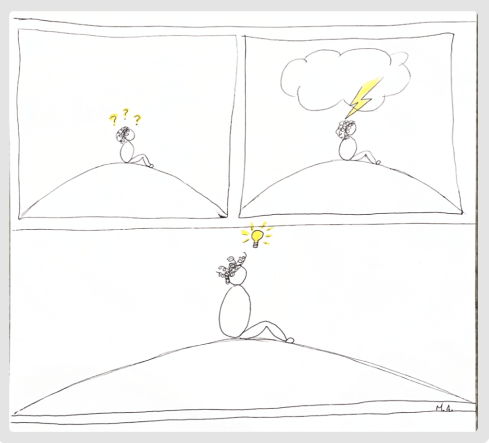
That is what happened for BRAVE LIKE MOM. A family member was sick and the emotion overflowed into a story.
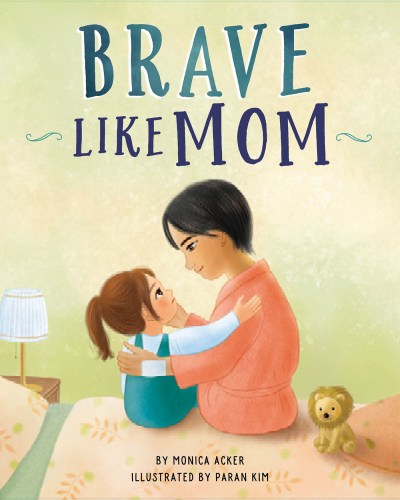
But what do you do when lightning hasn’t struck for a while? You could wait for a storm to roll in, but weather can be very unpredictable.
Or you could go shopping.
Hear me out.
A trip to Target, the mall, or an online retailer could yield you a new sweater, that throw blanket you didn’t know you needed but totally completes the room, and a few story ideas.
The trick is to check out the children’s section. The images on the graphic T’s, dresses, sweatshirts, and bathing suits are rife for the imagination. Bonus: someone has already done the market research so the images will likely appeal to children.
Let’s do some online story shopping.

A painting polar bear creating the aurora borealis. This gets my imagination stirring with questions. I want to know more about this polar bear. Are there other things the polar bear paints on the sky? Is this their masterpiece? Does the polar bear like playing with color because their fur is devoid of color? I think there’s a story here.
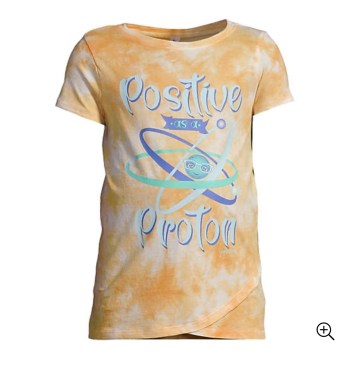
This “Positive as a Proton” t-shirt has my neurons buzzing. What has this proton feeling so optimistic? What happens when it comes across an electron with its negative charge? What obstacle might a proton come across? Is it looking to bond with another? I’m positive a story or two might spark from this shirt.
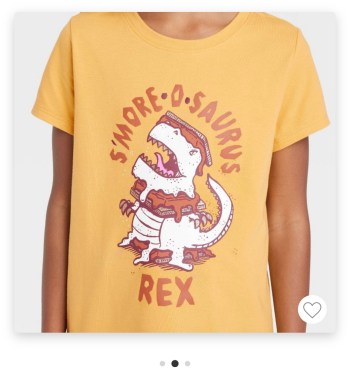
Two childhood favorites combine in this one. What happens when you mix a popular camping treat and a dinosaur? Apparently, the result is a S’more-o-saurus Rex. This king of the dinosaurs has to figure out how to be fierce and sweet. Will they cover the land in gooey footprints? Is this creature the result of a preschooler who just wants to play s’more with their dinosaurs? Are there other s’more creatures out there? I know I want to know s’more. What’s your story?
So, when it feels like lightning hasn’t struck in a while, go shopping. Grab a warm beverage, the to-do list, and your idea notebook. You never know what idea is lurking on a shelf waiting to spur something inside you. You might find a two-for-one deal; something cute for the littles in your life and a shiny new story idea.
The best thing about this post-holiday shopping is that shopping for ideas is 100% free.
 Monica Acker is the author of BRAVE LIKE MOM, an educator, and mother of three. She loves writing, reading, baking and scoring a good deal. When not writing, she can be found strolling the aisles at Target turning a trip for paper towels into an hour-long adventure. Visit her at MonicaAcker.com, follow her on Twitter @MonicaAcker1 and Instagram @MonicaAcker1.
Monica Acker is giving away a non-rhyming picture book critique under 600 words.
You’re eligible to win if you’re a registered Storystorm 2023 participant and you have commented only once below.
Prizes will be distributed at the conclusion of Storystorm.
by Mirka Hokkanen
Now that the holiday season is over, it is time to get off the couch, stretch and get those idea-generating muscles warmed up again. Let’s get ready to rumble with Storystorm 2023!

Today I’m sharing about how Storystorm helped me on my journey to becoming a published author, and my recipe for generating irresistible tetris-pizza-supreme books. I hope that my story inspires you to show up every day for the next month, flex your idea-generating muscles, and write down those ideas, no matter how good or bad, because you never know where the next idea might lead you.
Roughly seven years ago I started on a journey to become a picture book illustrator. I spent my time soaking up everything I could about picture books and the publishing industry; reading, going to classes/webinars/conferences, joining SCBWI, meeting with peers and critique group(s), and even getting agent representation. Things were going great by all measures, but it still felt like actual illustration work was impossible to come by. My work was good, but never the best in the room, so I felt like someone else was always going to get picked over me.
As I learned more about the industry, I figured that if I could write stories, it would be a shorter path to publication. But that was a major roadblock for someone who never understood creative writing or book reports in school, and always teetered on the brink of failing assignments. Rather than write, I drew as a teenager, and my mom kept telling me that I should create comics and make that into a career. Great idea, if I could only come up with a viable plot! I tried a few times, but never got past the middle. Eventually my little sister cut pages I’d started into confetti and I gave up. By the end of middle school, I had lost my will to read and write all together, and just wanted to make art and ride horses.

Fast forward about 20 years, and 2 young kids later, I knew if I wanted to make it in publishing, I should probably figure out how to write. So I took some more classes and wrote and illustrated several stories… and let me tell you, they turned out fantastic!
Just kidding—my stories were terrible, because I didn’t have good ideas. But I kept trying because I had a burning desire to publish work that would bring joy to readers like I’d felt reading with my own kids. Then I heard of something called PiBoIdMo, and thought it couldn’t hurt (even if I couldn’t pronounce it). I made it through the month and had 30 ideas. They weren’t the greatest, I was a skeptic, but that was still 30 more ideas than I had the month before. Done is better than perfection!
I showed up for PiBoIdMo, now Storystorm, every year and packed those ideas in. I read the posts and some resonated with me more than others. As time went on, I noticed that ideas started trickling in on their own. What started out flowing like dry oatmeal, started to ooze like syrup from the cracks of my life, until the dams broke open. Ideas jumped at me from all over the place, from things I saw online, in my life, in books, etc.

And now we get to the juicy part: What I didn’t realize at first, when doing the prompts, was that I was starting to use my idea generating muscles. And like with all muscles, when you use them, they get bigger and more developed, and easier to use.

Mechanical became organic, and I figured out how my brain likes to generate ideas and what makes it tick. So if trying to generate ideas gives you a cold sweat, I want to encourage you to stick with it. Exercise and nurture those muscles, because when you get them built and warmed up, they are a gift that keeps on giving.
As a second half to generating ideas, I encourage you to read prolifically in the genre for which you are writing. It’s kind of like the protein drink that helps those muscles grow stronger.
This year is special for me, as I am not only debuting one, but three books that I have written (and illustrated) and I wanted to share how the idea for the first book came to be. It came on a Storystorm month, during which I am always really busy turning things around in my head and more sensitive than usual to prompts bubbling up in life. We were living in Hawaii, where coconuts grow on every street corner. For me as a girl who grew up in Finland, that was pretty exotic, and I would often hum a tune from my childhood that told the story of a guy wrecking his house trying to crack a coconut.
I thought that it would be a pretty funny idea for a picture book, and then used my skills learned in Storystorm, to develop the idea further.

I would describe the way I develop ideas as “pizza tetris”. I start with the main theme or frame for the book, like “impossible-to-crack coconut,” which is like the frame for different-shaped pieces. Then I start fitting pieces in and out of the frame to see which ones fit the best. I often first think about how to turn an idea upside down, and if I can’t think of anything good, then I toss that idea and start shuffling unexpected locations and characters in and out of the frame to see what looks interesting. Once those are figured, and you have a frame of pieces that fit, that’s like having a pizza base and tomato sauce, but then we need toppings.
For toppings, I jot down anything that can add extra layers and depth into the story: possible plot points, scenes or lines that I want to add in, additional themes or concepts, target audience, class curriculum tie-ins, etc. At the end, my goal is to have a delicious, well balanced, tetris-pizza-supreme, that is irresistible to editors, educators, parents and most importantly, we all know who loves pizza the most, kids!

So to illustrate: My completed coconut-tetris-pizza supreme consists of two bickering gnomes and an impossible-to-crack coconut as the base, and then a forest backdrop, a surprise character reveal, friendship, trying again after failure, creativity, early readers as target audience, rising graphic novel format, a heap of humor to top it off, and a side order of sequel ideas.
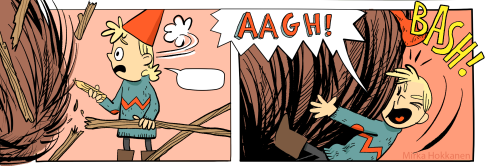
And it worked! MOSSY AND TWEED: CRAZY FOR COCONUTS was sold in a two-book deal, with the first book releasing on January 10th, and the sequel coming out later this year! I am so excited to bring these books out into the world, and hope they will inspire kids to pick up a book and learn to read.

Thank you so much for going on this journey with me. I hope that you keep showing up and working those muscles!
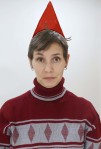 Mirka Hokkanen is an author and illustrator who cannot think of 7 impossible things before breakfast. She generates ideas much better after a pitcher of tea. Her best ideas wait for her in the worst times of the day; usually when driving or right as she is falling asleep. When not writing or illustrating, Mirka likes to relax at home with her three young kids. Mirka is also a teacher on Skillshare, a licensing illustrator and a printmaker. Find her online at Mirkah.com.
Mirka is giving away a copy of MOSSY AND TWEED plus a picture book critique to one lucky winner.
You’re eligible to win if you’re a registered Storystorm 2023 participant and you have commented only once below.
Prizes will be distributed at the conclusion of Storystorm.
by Tara Lazar
December 2022 will forever be known to me as “The Month of YouTube.”

In the afternoons, I’d settle into my comfy blue couch and flip on the Smart TV, which now lives and looms above my fireplace mantle. You can’t escape its Black Mirror pull.
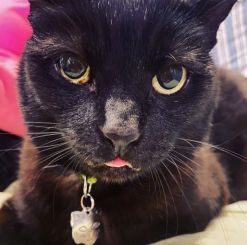 At first, I watched videos of dog and cat rescues, my own adopted kitty Phoebe purring upon my lap. But then, the algorithm would serve up other items of interest, like tours of available New York City apartments, reviving the search from when our daughter moved this summer.
Cue the artsy stuff. Maybe NYC brought it forth.
I found videos on pottery throwing and watercolor painting, convinced I could do both with aplomb, but I resisted the urge to purchase a wheel and expensive sable brushes, knowing the experts just make it look easy.
Then I discovered a talented man who sculpts curvaceous, realistic animal figures out of wood and epoxy resin while wielding a chainsaw. He even conjured a majestic eagle out of Styrofoam and old bicycle tires (free from any repair shop, as the shop has to pay to recycle them).
Turning wood on a lathe also became a favorite watched pastime. (Relaxing in time-lapse!) Creators even epoxy colored pencils together to turn the whole kit and caboodle into kaleidoscopic jars and bowls that have leaped onto my wish list.
I’m a fan of mid-century modern design, so furniture restoration videos surfaced. I got a thrill when a battered Lane Acclaim coffee table was purchased at a thrift store for a few dollars, then repaired and refinished into the iconic 1960’s masterpiece it once was.
Thrifting finds is what perhaps led to the treasure-hunting videos. I located a rock hound who filmed the “green sand beach” in Hawaii. The sand is actually tiny gemstones, green peridot, that have eroded from the lava rock and compressed ash surrounding the beach in horizontal striations. Perfect geological conditions formed this fascinating phenomenon.

Photo via @viespinoza Instagram
All the way across the globe, in Scotland, a British mother-daughter team of mudlarks visited a similar beach where red garnets dot the black lava granules. The beach, however, isn’t red sand, for the gemstones are less plentiful and much more evasive. You slide your hand along the top layer of dark stones to spot a tiny crimson glint.
I know what you’re thinking—“what’s a mudlark?” I thought the same, so I visited their channel, Northern Mudlarks, to find out.
Back in the 18th, 19th and early 20th centuries, mudlarks scavenged for items of value to resell. These items were embedded along the muddy banks of the River Thames, detritus buried from garbage dumped into the water. Mudlarking was an occupation for the poor and destitute, often orphans who lived in the streets and scrambled into the water whenever a passerby tossed a coin to tease them.
If your face is all screwed up in disgust, I beg you to reconsider. In modern times, mudlarks are amateur historians. The foreshore holds onto a plethora of secrets mudlarks unearth.
In Scotland, not only do mudlarks ramble along river banks, but they roam former bottle dumps that have grown decades of forests atop them, covering pressed glass and spongeware pottery with verdant landscape. With a few scoops of a shovel and a scrape of trowel, cobalt blue poison bottles featuring molded bands and the warning “not to be taken” reveal themselves. Heavy ceramic marmalade jars roll into view along with embossed bottles disclosing names of defunct Victorian companies who peddled strange elixirs and medicinal tinctures lost to time (and scientific sensibility). Metal jewelry like Albert chains, watch bezels, dress clips, brass rings and sterling silver Chatelaines mix within the mud and glass.
But my favorite mudlark find? No, not the gold sovereign. Frozen Charlottes!
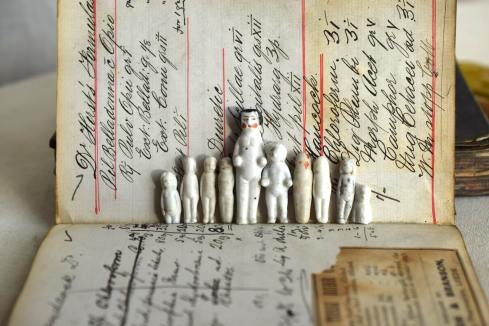
Photo via Northern Mudlarks
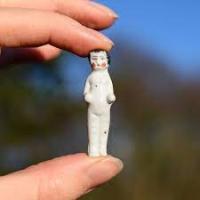
Photo via Northern Mudlarks
Frozen Charlottes were small, inexpensive bisque porcelain dolls, molded in one piece, without articulated, movable limbs—sometimes referred to as “penny dolls” or “pudding dolls”. (“Penny dolls” because of their modest cost; “pudding dolls” because they were baked into the Christmas pudding as a holiday treat to “unwrap”.)
They are truly the “needle in the haystack” discovery, some no bigger than a pinky finger. Occasionally a Frozen Charlotte still displays glazed pink cheeks, ruby lips, and raven hair—a glossed beauty starkly contrasting the dirt and rubble in which she was found.
But why is she named “Frozen Charlotte”? The 1843 poem A Corpse Going to a Ball by Seba Smith reveals the morbid (and yet slightly humorous?) answer.
And thus, “Frozen Charlotte” became my final picture book idea of 2022.
I completed a podcast interview with author Mel Rosenberg a few days ago where he mentioned that he doesn’t believe our conscious minds can fully understand from where we get ideas. I try to explain it like the 1980’s pop hit by The Fixx, “One Thing Leads to Another”.
Or, perhaps, one YouTube leads to another.
Some people are rattled by browsing privacy and online algorithms; I, instead, embrace them. They pique my curiosity, which in turn, leads to surprising discoveries and new story ideas. Instead of digging through decades of dirt, I’m digging through dozens of videos.
Today, idea hunters, press play—and play around.
Tara Lazar is giving away a fiction picture book critique to one lucky Storystorm winner.
You’re eligible to win if you’re a registered Storystorm 2023 participant and you have commented only once below.
Prizes will be distributed at the conclusion of Storystorm.
Storystorm 2023 registration is now closed.
You can still participate by reading the daily blog posts and jotting down your ideas, but you will not be eligible for prizes.
Welcome to STORYSTORM 2023 Registration!
Six years ago I changed the name and month of my annual writing challenge, from Picture Book Idea Month (PiBoIdMo) to STORYSTORM. Why? Answer’s here.
Although this challenge begun as a picture book writer’s event, any writer interested in brainstorming new story ideas in January is invited to join the STORYSTORM challenge of 30 ideas in 31 days. Any genre, any style; student, amateur, hobbyist, aspiring author or seasoned professional.
How does STORYSTORM work? It’s simple…
- Register.
- Read the daily posts on this blog, beginning January 1st.
- Write down one (or more) story idea daily. (Do not share that idea with anyone.)
- At the end of January if you have at least 30 new ideas, you can sign the STORYSTORM PLEDGE and be eligible for PRIZES.
So are you ready? Follow these steps:
- Register ON THIS BLOG POST by signing your name ONCE in the comments below. Full name, nickname, whatever name you’ll use for the entire event.
Please leave ONE comment ONLY. Do not reply to say “hi” to a friend. Do not comment to fix a mistake. ONE COMMENT. Don’t worry if it isn’t perfect. Registering makes you eligible for prizes.Teachers participating with a class can register under the teacher’s name. - Visit this blog daily (taralazar.com) in January for inspirational essays by guest bloggers—authors, illustrators and publishing industry professionals.
Instead of visiting the blog directly, you can receive the daily posts via email by entering your address and clicking the “Follow Tara’s Blog” button in the left column—look under my photo for it. (You must do this if you want to receive emails. Emails do not come by signing your name in the comments.)
At the end of January, if you have at least 30 ideas, sign the STORYSTORM PLEDGE (to be posted on January 31) and qualify for prizes.
Prizes include agent feedback, signed books, original art, writerly gadgets and gizmos.
Remember, do not share your ideas publicly in January. They are YOURS. No need to prove that you have them at the end of the month. The pledge you will sign is on the honor system.
Are you in? Awesome!
Other OPTIONAL activities:
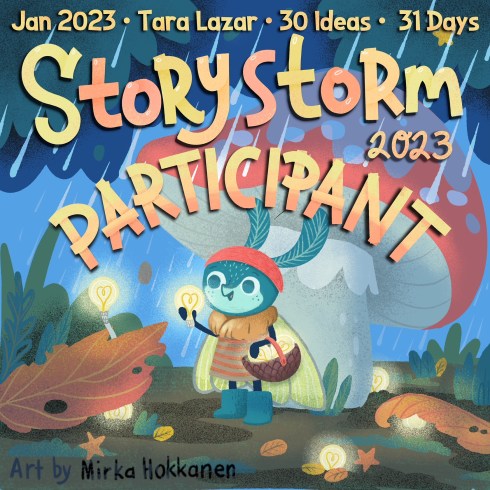
You can pick up an “Official Participant” badge (with art by Mirka Hokkanen) below and affix it to any social media account you wish. (Right click to save to your computer, then upload it anywhere.)
You can also opt to join the STORYSTORM Facebook discussion group. Everyone needs writing friends!
The Facebook group remains a year-round source of writing information and support, mostly focused on picture books, I admit, because that is where this all began.
STORYSTORM registration will remain open through JANUARY 7th.
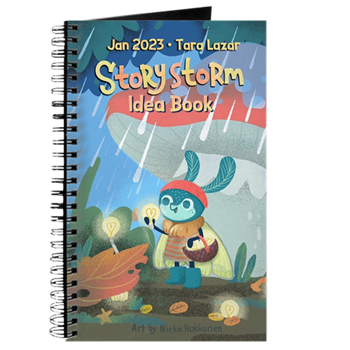
In the meantime, head over to the STORYSTORM CAFEPRESS SHOP to pick up your official journal. All proceeds from sales ($4 per item, if you use the link above) will be donated to Save the Children Ukraine Relief. I’ll be adding more items—mugs, t-shirts—throughout the month.
Thank you for joining!
I wish you a creative and prolific month ahead!





 Writing for Kids (While Raising Them)