You are currently browsing the category archive for the ‘STORYSTORM 2018’ category.
by Tami Charles
Repeat after me: I might fail, and that’s okay!
Now that the pleasantries are out of the way, allow me to introduce myself. My name is Tami Charles and I am a Storystorm failure.
Why?
Because effective today, on this sixteenth day of January, whereupon I should have a minimum of sixteen story ideas, my grand total is. . .wait for it. . .a whopping three. THREE!!!
Hold on, guys. Be right back.

Storystorm, Day 16, self-portrait.
Well, that was cathartic!
Moving along. . .
I’ve been a member of PiBoIdMo (now Storystorm) so many times, I’ve lost count. In the beginning, I outdid myself. Thirty ideas, in thirty days? Ha! How about sixty-two?
Truth be told, my “idea” count decreased with each year and honestly, I’m okay with that. As I reflect on where I am today, versus where I was then, I realize that 98% of my ideas were really, REALLY bad! I didn’t land an agent or any book deals with those ideas! (Thank the good Lord, himself!)
 In fact, the first year I “failed” Tara’s challenge, I drafted the idea for my debut picture book, FREEDOM SOUP. That next year, I “failed” again because I thought I was Superwoman. I had also joined Nanowrimo, where I wrote my debut novel, LIKE VANESSA, and brainstormed seventeen picture book ideas.
But for me, it was all about quality versus quantity.
Thanks to Storystorm, I’ve learned how and where to find nuggets of inspiration. Jogging in the park. Waiting in line at Home Depot. Sitting in the doctor’s office while my son barfed in a bag. (Good times!) On a conference call with an editor who personally requested a “Cheerios” type of picture book. (True story. Also: thank you Carter Hasegawa!)
Inspiration is literally everywhere. Sometimes you find it yourself, but other times it finds you. And here’s the BEST part: all it takes is a word, a doodle, a sentence, to mark the moment.
Plot, characters, setting, bleh! Who cares? It’s the IDEA that counts and it’s that IDEA that will turn into a STORY later.
Now if you’re one of the Storystormers who’s up to 74 ideas already, this blog post is probably not for you. (Show offs!) I want to specifically address those who might be feeling “less than” at this point.
Are you behind in your story idea count?
It’s okay.
Do you feel like every.single.idea stinks worse than Limburger cheese?
It’s okay.
Are you worried that other Storystormers are sailing ahead of you and somehow that makes you less qualified?
That’s not okay.
One of my favorite quotes is, “The race isn’t given to the swift, nor to the strong, but to the one who endures until the end.”
Right here, right now, let’s make a proclamation together.
Repeat after me:
I, ___________, do hereby proclaim that my time is not up yet. I still have 14 more days to meet my goal. And no matter the count, I know that I will still win the million dollars that Tara Lazar has promised every participant.

So what are you waiting for? Grab your journal or PC, and Storystorm with abandon.
 Former teacher. Wannabe chef. Debut author. Tami Charles writes picture books, middle grade, young adult, and nonfiction. Her middle grade novel, LIKE VANESSA, debuts with Charlesbridge on March 13, 2018. Thus far, the novel has earned starred reviews from Kirkus and Foreword, has been selected by the Jr. Library Guild for Spring, 2018, earned a spot in the Top Ten for ABA’s Indies Introduce List, and won the SCBWI Book Launch Award. Tami’s picture book, FREEDOM SOUP, debuts with Candlewick Press in fall, 2019. She had the opportunity to be featured in a cooking segment with Michael Strahan on Good Morning America, where she demonstrated a Thanksgiving version of the popular Haitian soup. Tami has more books forthcoming with Candlewick and Charlesbridge. She is represented by Lara Perkins of the Andrea Brown Literary Agency.
Visit her online at tamiwrites.com and on Twitter @TamiWritesStuff.

Tami is giving away a copy of her debut MG novel LIKE VANESSA.
Leave ONE COMMENT on this blog post to enter. You are eligible to win if you are a registered Storystorm participant and you have commented once below. Prizes will be given away at the conclusion of the event.
Good luck!
 by Melissa Iwai
Yay! We’re halfway through this year’s Storystorm! How is it going for everyone? The ideas for inspiration of the previous guest bloggers have been great. I just love being part of our KidLit family! As my husband, Denis Markell, has told me numerous times, the people in the Kidit are so much more supportive, open, and welcoming than those in the cutthroat world of theatre and television! And comparing it to my (very) brief life in academia, I agree whole-heartedly.
Though I am surrounded by positive, encouraging, like-minded people, I am my own worst critic. And sometimes that critical voice can stop me and hold me back before I’ve even started putting ideas to paper.
I have always loved writing stories and illustrating them from the time I was a little kid, and I don’t remember having this “judge-y” voice in my head back then.

I just remember how much fun it was to create. So how do I turn off that critical voice when I’m brainstorming new story ideas?
I raid my brain when that judge is asleep. Or at least not fully awake.
OK, here’s where this post might get too “woo-woo” to you, but hear me out. If you have this issue—and even if you don’t!—I encourage everyone to start keeping a dream journal if you don’t already. It doesn’t have to be anything fancy—just a notebook or scraps of paper will do (though try to keep them together for easy referencing later!)
Scientists have said that keeping a dream journal can enhance one’s creativity. In the Journal of Creative Behavior, a study concludes that “Enhanced dream recall through daily dream logging fosters aspects of creativity….[and] that increased awareness to dreams increases creativity through a ‘loosening’ of stereo-typed thinking pattern.”
 From my own personal experience, I have found this to be entirely true. I have been dream journaling on and off since I was a teenager. When I was younger, my motivation was to learn how to lucid dream (dreaming in a semi-conscious state and directing the dream). Later I became fascinated by how powerful dreams are as a window into our interior lives and how they can be used to understand ourselves better. Then, relatively recently, I have realized that my dreams are actually a huge potential source of creative ideas. The seed idea for my first authored book, SOUP DAY, came from a dream I had. In it, a mom chopped onions with her little girl in a warm colorful kitchen. And they were making soup!

Did you know that the discovery of the Periodic table, the mechanism of the lock-stitch sewing machine, and the song “Yesterday” were all inspired by dreams? “Yesterday” was so fully realized in Paul McCartney’s dream, he thought it was possibly someone else’s song that he had heard before. Luckily for pop culture, he recorded it while he still remembered it.
I’m not implying that if you record your dreams, you’ll come up with a complete piece of work, but I would wager that you will definitely connect with another part of yourself you might not even know was there. You may also figure out a twist or a solution to an existing story idea you are already working on.
At the very least, you will amuse yourself.
And the exercise of writing upon waking is sure to get your creative juices flowing, uncensored, sans critical voice.
Can’t remember your dreams, you say? You CAN train yourself to do it. And the more you practice this daily habit, the more you will remember—and in more detail.
Tips for Mining Your Dreams for Material:
- Keep a notebook or paper and pen by your bed, Jot down anything you remember when you wake up to go to the bathroom or upon waking up in the morning.
- Make an intention to remember your dream right before you go to sleep.
Say out loud to yourself, “I will remember my dreams”. You may also make an intention to solve a problem in your dream. - Don’t stress if you can’t remember anything in the morning. Relax and try to give yourself time to just lie in bed before leaping out of it (the snooze button is helpful). Sometimes I have the best ideas in this twilight state before being fully conscious – I’m not entirely dreaming, but I’m not entirely awake either. This is a great time to focus on a specific problem you might have. You’ll be surprised at what kinds of connections your brain will make. For example, what a character in a story might be, what their day might look like.
- After you are more conscious, go over your notes and rewrite them more clearly — chances are they look a bit like chicken scratches. If you do this in the morning, you’ll have a better chance of remembering what you were referring to. And then later, in the future, you will be able to actually read your notes.
- Every now and then review your dream notes. Maybe something that you dreamed in the past leaps out at you, and you see a kernel of a story idea in it.
So if you’re like me and sometimes have that voice in your head filling you with negativity…just wait until it goes to sleep! And who knows? Maybe a fantastic new book idea might come to you…and that really would be a dream come true!
Melissa Iwai is the author of Soup Day and Pizza Day and the illustrator of many other books, including Let’s Go to the Hardware Store and Truck Stop, by Anne Rockwell. She lives in Brooklyn, NY with her son, Jamie and her husband, author Denis Markell. Visit her online at melissaiwai.com and on Facebook, Twitter @meliwai & Instagram @melissaiwai1.
Melissa is giving away a copy of SOUP DAY.
Leave ONE COMMENT on this blog post to enter. You are eligible to win if you are a registered Storystorm participant and you have commented once below. Prizes will be given away at the conclusion of the event.
Good luck!
So here we are, nearly halfway through Storystorm month. Although you’ve broken most of your other New Year’s resolutions already, you are still on track with your writing goals due to the support and inspiration you’ve gotten from Tara and all the Storystorm guest bloggers. You’re thrilled with how your manuscripts are coming along.
Oh, you’re not? You like your ideas but think your rhyme sort of stinks? Your dialogue sounds unnatural and your characters feel flat? Do you need another pair of eyes (or two or three), but haven’t a clue how to find a critique group?
I feel your frustration, and I’m here for you.
In 2009 I taught a workshop at my local library called “How to Write a Children’s Book and Get It Published.” Perhaps the title promised a bit too much for a two hour workshop, so as a follow-up for the participants I created a simple website with about a dozen links to helpful articles and resources.
That is how ResourcesForChildrensWriters.com was born. Today it contains hundreds of links in over 30 categories, and has been included in seven consecutive years of Writer’s Digest Magazine’s annual list “101 Best Websites for Writers.”
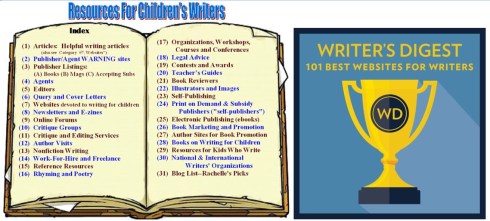
No matter where you are in your writing—a novice or published—you will find useful resources. If you need help creating strong scenes or flashback scenes, developing your character or naming your character, understanding the rule of “Show-Don’t-Tell” or the “Rule of Threes,” Category #1: Helpful Writing Articles is where to start.
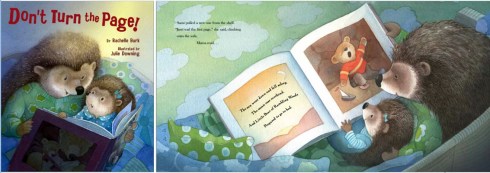
Does your rhyming story make you feel like pulling your hair out a strand at a time? Yeah, mine too. So when I wrote DON’T TURN THE PAGE!, (a rhyming story within a prose story), I relied heavily on Rhymezone, one of two rhyming dictionaries you can find in Category #16: Rhyming and Poetry. I also love Dori Chaconas’ incredible lesson, “Icing the Cake: Writing Stories in Rhythm and Rhyme,” one of many poetry help links.
Writing can be a lonely business. When Storystorm 2018 is officially over, where will you find support? Category #10: Critique Groups can lead you to your perfect writing partners. Category #9: Online Forums will help you connect with other writers on the SCBWI Blue Board, Absolute Write Water Cooler, Yahoo groups, and more. You will never be lonely again.
With the help of your new critique partners and ever-growing group of supportive online writing friends, you finally have a manuscript ready for submission. Should you send it to an agent or directly to a publisher? How do you choose among them? What are the pros and cons of self publishing, and how would you go about it? Your head swirls with confusion and anxiety! But then you remember ResourcesForChildrensWriters.com and a sense of calm washes over you, because, like that trusted friend who’s just a phone call away, those helpful links are just a click away. You soon learn how to write a Query Letter: Category #6, then browse through several Publisher Lists: Category #3.
Within the Publishers category you’ll find such valuable links as the SCBWI Market Survey Guide and Nancy Allen’s list of Small and Midsize Publishers. When I was ready to submit my middle-grade science-adventure novel THE WALKING FISH, I consulted Evelyn Christensen’s list of Educational Markets, which led me to Tumblehome Learning Inc, a specialty publisher dedicated to producing science-themed children’s books. Two years later Tumblehome published my picture book biography PAINTING IN THE DARK: ESREF ARMAGAN, BLIND ARTIST. I also have Evelyn to thank for her Writing for Children’s Magazines ezine for leading me to publishers for some of my magazine stories. Maybe you’ll find your next publisher among one of these lists.

Oh, you already found a publisher? Congratulations! What happens now? Category #26: Book Marketing and Promotion is dedicated to helping you get the word out. Make a book trailer. Master social media. Write a press release. Do a radio show interview. Be sure to also create a free author profile page on Amazon, Goodreads, and other major book sites (Category #27: Author Sites), get others to plug your book (Category #21: Book Reviewers), and prove to all how remarkable your story really is (Category #19: Contests and Awards).
Now that you’ve got a few books out there, let your journey inspire children! I have been accused of writing books only because I have so much fun visiting schools. (That’s not all together untrue). If the idea of doing school visits terrifies you, it shouldn’t, now that you can consult Category #12: Author Visit Resources to help you develop and market your program.
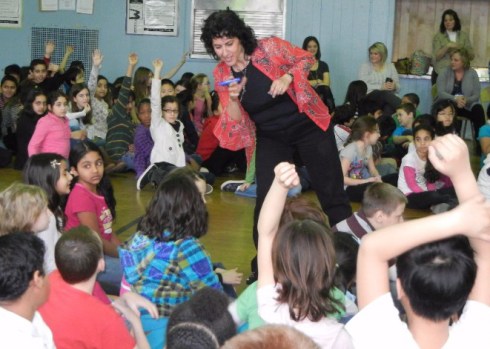
Once you have excited the kiddies, where can the budding writers go to remain inspired? Category #29: Resources For Kids Who Write links to a massive list of resources exclusively for children, including online writing communities, publishing opportunities, contests, and more.
I have tried to leave no subject uncovered when creating ResourcesForChildrensWriters.com. Do you need to find famous quotes or onomatopoeia words for your story? Create a proper bibliography? Determine your story’s readability level? Construct a book dummy? Seek out work-for-hire opportunities? Do you have a legal question regarding publishing? Are you an illustrator who wants to showcase your work, or an author who is seeking one? I’ve got you covered. There is nothing to stop you now.
 Rachelle Burk is a scatterbrain with a scattered life; a recently retired social worker, she continues to work as a professional clown, storyteller, and rescue squad volunteer. She added “writer” to her resume later in life (she was 50 when her first book was published). Rachelle writes both fiction and nonfiction, including picture books, chapter books, a middle-grade novel, and magazine stories. More than anything (except maybe scuba diving), she loves to do author visit programs at schools around the country. She lives with her husband/adventure partner in New Jersey. Visit her at Rachelleburk.com, and follow her on Twitter @Rachelleburk where she highlights favorite resources and announces new links.
Rachelle is giving away a picture book critique. (As one of Tara’s critique group members, Tara urges you to enter for this prize–Rachelle is one of the best at critiques.)
Leave ONE COMMENT on this blog post to enter. You are eligible to win if you are a registered Storystorm participant and you have commented once below. Prizes will be given away at the conclusion of the event.
Good luck!
 by
by Inspiration.
The Muse.
The first crumb of an idea.
That’s where all writing begins, right? But what if you’re sitting there and you have no idea where to begin? When I first began writing, I heard the phrase, “Ideas are everywhere.” Although this was supposed to be encouraging, it made me feel even worse. Oh, oh! I thought. I’m surrounded by ideas and I still don’t know what to write about.
Initially, not knowing where to begin shook my confidence and made me wonder if I had anything to say after all. However, as I persisted and kept trying, I discovered the main ingredient.
Me.
Including myself might seem obvious, but at the time it wasn’t. I was a beginner. What did I know? Ideas were somewhere “out there.” However, as I made a conscious effort to notice what stirred my imagination, what to write seemed to grab me by the lapels and say write about this!
Cowabunga!
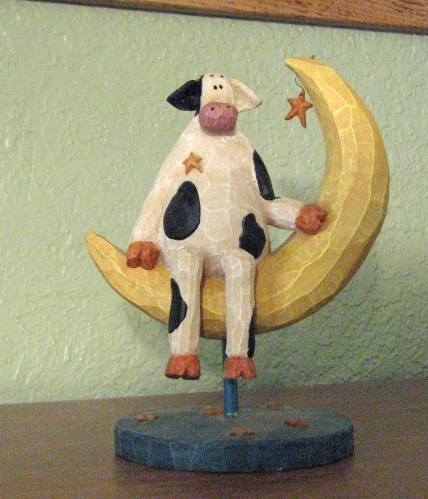
One of the biggest moments occurred several years ago when I was roaming around my local thrift store and noticed a figurine of a cow happily sitting on a crescent moon. It was one of many used knickknacks clustered on a shelf. Ordinarily, I would have strolled right on by. But this time as I stared at the accomplished cow, I was intrigued. How did she get there? I wondered. In a heartbeat, I knew I wanted to write the story. I bought the figurine and went home. As I wrote, it was exciting to figure it all out. How would she try to jump to the moon? Would she really make it? I loved coming up with the unexpected twist at the end.
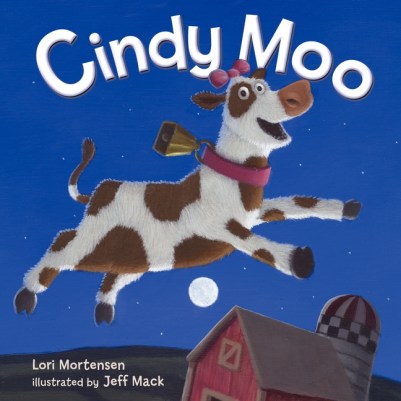
Nobody else cared about the cow sitting on the moon. But it stirred my imagination. The story about a spunky cow trying to jump the moon became my rhyming picture book CINDY MOO. I was thrilled when HarperCollins snapped it up.
Houdini Hounds
Then, there were my neighbor’s dogs. Houdini hounds, really, that regularly broke out of their backyard and raced down the street. Moments later, my neighbors sprinted after them. “Come back, Rollie and Wendy!” they yelled.
Although the dogs’ antics certainly annoyed my neighbors, the dogs stirred my imagination. I thought, Wouldn’t it be fun to write a story about somebody chasing a dog? After a few false starts, my story took off–just like the dogs. As I wrote each verse, I couldn’t wait to see what would happen next. How would the determined main character try to catch the dog? Would the main character really catch the dog in the end?
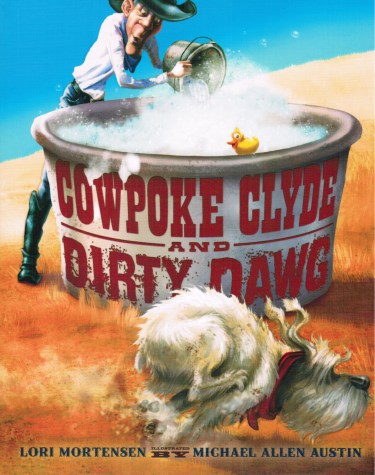
My rhyming picture book, COWPOKE CLYDE AND DIRTY DAWG, became one of Amazon’s best picture books of 2013.
It was the “me” factor once again–the main ingredient—and how I reacted to what I saw.
Imagine
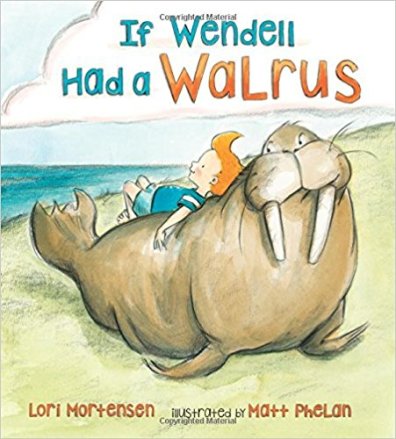
In April, my picture book IF WENDELL HAD A WALRUS will hit the bookshelves. This story began a bit differently. At the time, I’d been reading a variety of quiet picture books where the main character had an inner longing of some kind. I loved the idea of an inner longing and wondered where an inner longing might lead. As I thought about it, I imagined looking up into the clouds and seeing something that pulled at my heart. When “walrus” popped into my head, I was hooked.
A walrus?
The fun, quirky idea captured my imagination. Why would someone want a walrus? What would they do if they got one? Would they really get one in the end? When I came up with the unexpected twist, I was delighted. An editor at Henry Holt fell in love with it too.
So the next time you’re scouting around for an idea, keep an eye out for forgotten figurines, Houdini dogs, and the like. Then, add the all-important main ingredient.
YOU.
Lori Mortensen is an award-winning children’s book author of more than 70 books and over 350 stories and articles. Recent releases include Chicken Lily, (Henry Holt), Mousequerade Ball (Bloomsbury) illustrated by New York Times bestselling illustrator Betsy Lewin, and Cowpoke Clyde Rides the Range (Clarion) a sequel to Cowpoke Clyde & Dirty Dawg, one of Amazon’s best picture books of 2013. When she’s not letting her cat in, or out, or in, she’s tapping away at her computer, conjuring, coaxing, and prodding her latest stories to life. For more information about her books, teacher activities, book trailers, critique service, events, and upcoming releases, visit her website at LoriMortensen.com.
Lori is giving away a copy of COWPOKE CLYDE RIDES THE RANGE, the sequel to DIRTY DAWG.
Leave ONE COMMENT on this blog post to enter. You are eligible to win if you are a registered Storystorm participant and you have commented once below. Prizes will be given away at the conclusion of the event.
Good luck!
Inspiration is wonderful but can be a scary word, don’t you think? If you are in the creative field you know very well what I am talking about.
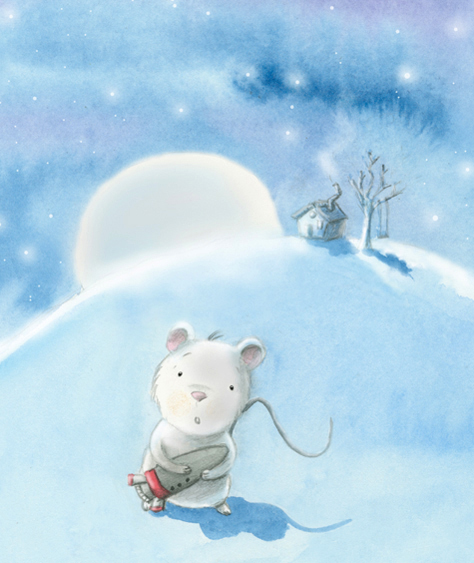
I am incredibly lucky to be able to do what I love for a living, which is illustrating children’s books. Even though I am not a writer, I believe writing and illustrating are very much alike; one deals with words and the other with images, but both tell a story and more importantly both are governed by our creative side.
As I am sure most of you know tapping into that creative side is no easy task. I wish I had a general step-by-step guide to help others find their ideas but the truth is I don’t. I am sure there are many ways people can approach this but all I can do is share what I’ve found works for me, and hope this can help you as well.
So, what do I do to find inspiration? How do I get my ideas? The answer is simple.
I do NOTHING.
Yes, nothing and I’ll tell you why.
When I first get a manuscript for a book, I read it and I am excited and eager to start working on it but I don’t. I don’t enter my studio, I don’t sit on my work table, I don’t do research on libraries or bookstores, I don’t even pick up a pencil. I do nothing work related.
I allow myself a good amount of time, from 2 to 3 weeks, and I make sure I have that nothing time when looking at the deadlines and agreeing on taking on a new book project. I need it for two reasons, one is to let the pressure of coming up with something amazing right away slowly fade, but more importantly to allow me to find and tap on my creative side.
I believe inspiration and creative ideas live in our subconscious, which is usually hidden and quiet because our consciousness is out and about controlling our everyday activities and dealing with all the stress of deadlines, paying bills, and general worries in life. We will not be able to feel inspired or come up with ideas unless we manage to shut that consciousness off.
In order to do this I find the best way is to engage in a lot of mechanical activities, those that require manual labor, so to speak, but don’t require actual thinking to accomplish them, like going out for walks, talking a shower, driving, sewing, washing the dishes, knitting, pottery, etc.. Any activity you feel you can do on “auto pilot” mode will work, they allow the consciousness to go sleep and for us to open communications with the creative side.
In my case it is walking 5 miles every day, taking long showers, listening to music and driving, those are the moments I find I am at my creative best, and I take advantage of this.
I think about the characters in my book, will they be an animal or a kid? How can I make them special? What do they look like? Do they have any special likes or dislikes? How can I make them relatable to the kid reading the book? I think about the setting, how can I make it engaging and visually interesting? I want to grab the little one’s attention with my illustrations, perhaps tell a visual story that only they can pick up or add a small detail they can find from page to page? I think about the general look of the book, what can I do to make this book special and stand out from others out there? Is it a bedtime book? How can I make it feel peaceful and calming? Is it a scary story aimed for very little ones? How can I make it not so scary but still let the message come across to them? I think and think for weeks until I feel my head is going to explode with so many wonderful ideas and images that I can’t hold them any longer and that’s when I enter my studio, sit down at my desk, grab that pencil and start working! It’s a wonderful feeling.
Some of those ideas I keep, others I might change a little, but the important thing is I am able to tap deep down when I needed to and by the moment I sit down to work I am no longer worried about a blank page staring back at me, instead I am filled with excitement and feeling productive.
You have to be brave and trust that even though it might feel risky to do noting for those weeks, it’s actually one of the most important stages you should go through. Allow yourself that time; it will pay off in the end. Use it to think hard, let that love for writing grow inside you, until your head is filled with wonderful ideas and your heart is filled with such excitement that you can’t take it any more. Then, and only then, you will know that is time. Inspiration will no longer be scary but a wonderful thing.
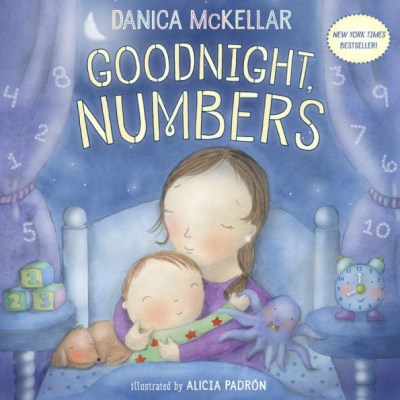
 Alicia Padrón has illustrated 24 books for children, including the New York Times best seller GOODNIGHT, NUMBERS (Crown), LITTLE FOX, LOST (Pajama Press), ABC, BABY ME! (Random House), UN BESO ANTES DE DORMIR (Ediciones SM) and BRUSH, BRUSH, BRUSH! (Scholastic). She is known for creating heartwarming characters, especially babies and animals, in a sweet and sensitive style. All of her artwork is rendered in watercolor and finished digitally. Alicia and her family are originally from Venezuela and now she spends her days illustrating in her home studio in Florida, with her dog Lucy always by her side.
Visit her online at aliciapadron.com and on Twitter and Instagram @AliciaPadronArt.
Alicia is giving away a signed copy of her book GOODNIGHT NUMBERS, written by Danica McKellar.
Leave ONE COMMENT on this blog post to enter. You are eligible to win if you are a registered Storystorm participant and you have commented once below. Prizes will be given away at the conclusion of the event.
Good luck!
 by Sue Fliess
When I do school visits, the number one question I get is Where do you get your ideas from? And that is probably the toughest question of all to answer! What I really want to say is, Pass…next question please?
Alas, since I get asked this question so often (from adults as well), I’ve thought about it plenty. Inspiration is such a wacky thing to me. My answer is usually not what people expect or want to hear, and requires immediate explanation. I say: I get ideas from the things, people and places around me. I know, so vague, right?! But what I’ve come to realize is that, over time, I have trained my brain to always be looking for a story.
For example, I was in an airport once and saw a poster advertising some travel product. There was a goat on it. Bam! I got an idea for a story from seeing this goat. I cannot tell you why, but this goat spoke to me. I’ve also gotten ideas from hearing portions of conversations, even from kids mispronouncing words.
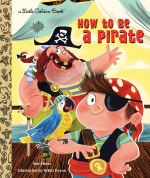
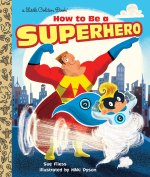
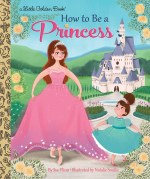
Another time, I was discussing a title change of one of my books with Tammi Sauer, between sessions at a conference. I told her my pirate book, which I’d titled A Pirate’s Life, was going to be changed to HOW TO BE A PIRATE, per the editor, and that I was trying to warm up to the idea. Tammi said, Oh, but then you could do more ‘How to Be a’ books. Of course…genius! That evening, I scrawled out what would become HOW TO BE A SUPERHERO. I sold it, and then went on to sell HOW TO BE A PRINCESS, which pubs this May!
Just this fall, I hired a handyman to hang numerous photos in my house. One of them was of my kids in front of the Hatteras lighthouse. He made a comment about how much he loved lighthouses. It prompted me to think about why I love them. And just like that I got an idea for a picture book from listening to my handyman. Will let you know if it finds a home…
Finally, I am writing or thinking about writing so much, that, yes, I sometimes dream about it at night. Usually the ideas I get in my dreams are complete garbage, but occasionally they’ll at least spark an idea. This time, however, was different. In my dream, a friend asked, ‘What are you working on?’ and I answered with confidence, ‘I’m writing a fractured nursery rhyme called Mary Had a Little Lab.’ Of course, in real life, I was writing no such thing. I have a Labrador retriever, so I figured that is why I had that answer. My first reaction was, boy, that’s a dumb idea. But then I thought, What if lab is short for laboratory? So I wrote MARY HAD A LITTLE LAB about a girl inventor who makes her own pet sheep, and it publishes this March with Albert Whitman & Co.
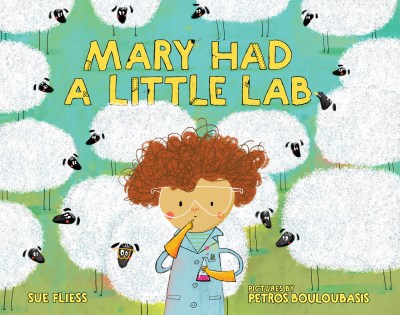
Watch the trailer here:
I once got an idea for a story because I tried to remember a book that someone else had written. When I blurted out a title, I knew I had the title wrong as soon as I said it. But then I thought, gee, that’s a pretty great title. Surely, it was already a book. But it wasn’t. So I wrote it. My agent is shopping it now. Maybe it will be a book, after all.
So, Storystormers, start training your brain now to see the story in everything. Take a walk without your phone. Ask What if? Make things talk to you, read, observe your surroundings—as in, really look at things. Listen and hang out with creative people. There are lots of great ways to get inspired, and while these are just a few, I hope they’ve jolted your creative veins.
Sue Fliess has published over 20 children’s books including We Wish For a Monster Christmas, How to Trap a Leprechaun, From Here to There, A Fairy Friend, Tons of Trucks, and many Little Golden Books. She’s written for O Magazine, Writer’s Digest, Huffington Post, Walt Disney, and more. Sue lives with her family in Virginia. Visit her website at SueFliess.com.
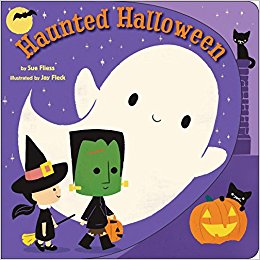
Sue also has a counting board book coming out this June with Scholastic called HAUNTED HALLOWEEN.
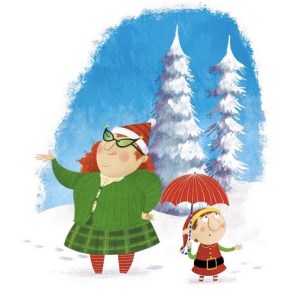
And though she doesn’t have a cover yet, this fall, look for Amazon/Two Lions to publish the hilarious adventure, MRS. CLAUS TAKES THE REINS, which follows Mrs. Claus as she takes over Christmas because Santa wakes up too sick for the gig. Here’s an illustration from the book:
Sue is giving away a picture book critique.
Leave ONE COMMENT on this blog post to enter. You are eligible to win if you are a registered Storystorm participant and you have commented once below. Prizes will be given away at the conclusion of the event.
Good luck!
 Dear Readers,
Because we’re weird like that, we did an interview with ourselves for this post. And because we are technically two individuals, it is twice as long. (Either you’re welcome or we’re sorry, whichever applies.) Enjoy the post.
Love,
The Pauls
Baptiste: Where do we get our inspiration? Real life. Every single book we have written can be traced back to real life.
Miranda: ONE PLASTIC BAG is about a woman from the Gambia, whom I actually know. WATER IS WATER stems from my love of science and poetry. 10 LITTLE NINJAS was based on the premise of parents having 10 children—Baptiste is the youngest of ten. BLOBFISH THROWS A PARTY is based on the telephone game that I played as a kid.
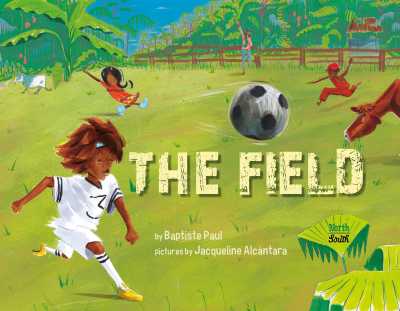
Baptiste: The idea for THE FIELD came from playing outside in the rain with my kids. Immediately, I was transported back in time to my childhood days. My experiences as a child were very similar to children everywhere. Although I grew up in poverty, I still enjoyed playing outside in the dirt and mud. I love kicking a ball, whether it was a homemade one or a regular soccer ball.
Miranda: TRAINBOTS came about because my toddler son was obsessed another train book. It was his suggestion to add robots to my story. Inspiration for ARE WE PEARS YET? came from my son’s arsenal of “Are we there yet?”
Baptiste: Not every memory is a simple inspiration, though. Some are complex. It can be difficult to talk about my childhood challenges, because people start feeling sorry. Not every child who grows up in poverty is sad! When I reflect on our new book ADVENTURES TO SCHOOL, which is inspired by more than a dozen extraordinary stories from around the world, I am inspired by my own journey. I was that child who walked barefoot or with hot rubber shoes to get to school. And now I write books for children; I’m the first from my village to publish a book. My story is their story and it needs to be told.
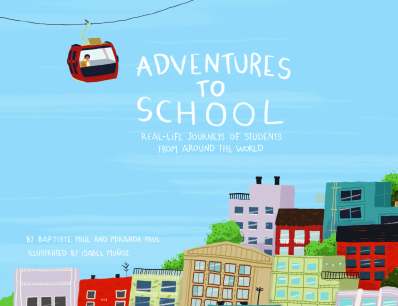
Miranda: For ADVENTURES TO SCHOOL (releases May 1) we tapped into our global network of friends and family who hail from or are living abroad. Sometimes, inspiration is easier to grab on to if you’ve built up resources to wield that far-flung idea into what you envision.
Baptiste: People ask us why we, personally, seem to be showered with so many ideas. Like every parent, those precious moments of raising children are filled with countless inspiring opportunities. We find ourselves laughing and joking at some of the silliness that randomly comes out of the kids’ mouths. We are open to possibility seven days a week.
Miranda: I use good, old fashioned spiral notebooks for ideas and drafts. I also use my Notes App on the iPhone to record things. If you’re not a person who journals, you probably still have a pretty accurate record of your daily comings and goings—scroll through the emails or the photos on your phone! They’re all dated. Take 15 minutes and find what you were doing at this moment, last year. These “throwbacks” are designed stir up old feelings—which often spark fresh ideas.
Baptiste: I walk around with a pencil tucked behind my ear and a memo book in my pocket. Whether it’s inside or outside, at work or at play, observing that moment when an idea comes to mind and recording it is important.
Miranda: Caveat here: With so many ideas, I treat them with little value until they earn their worth. If I tried to create something from each inspirational thing individually, I’d be overwhelmed. Try to group some into similar or related categories if possible.
Baptiste: I have a caveat too. Sometimes, you must get out of your comfortable chair and plan the event or make the memory that will inspire your work on a deeper level. Over Christmas break, I went back to the island (St. Lucia) to visit family. While there, I climbed Gros Piton with my kids, because I’m working on a manuscript about a kid climbing a mountain.
Miranda: People associate inspiration with a lightning strike. But my best work comes from ideas that diffuse slowly over time. Nine years ago, my daughter kept asking about Truckie, the name she’d picked out for the baby growing in my womb. How big was Truckie today? Could Truckie hear us? What about next week? The science of fetal development kept a place in my brain for six or seven years before I found the format for that idea. NINE MONTHS will finally be born next year, illustrated by the fabulous Jason Chin. (Thank goodness real babies develop faster than picture books—“Truckie” is now eight years old.)
Baptiste: Slow and steady is right. Eight years ago, we met a very inspirational person named Farmer Tantoh. We were very interested in the work he was doing and stayed in touch. Miranda even joked back then that maybe one day there’d be a book about him. Instead of saying more about how we found inspiration for I AM FARMER (Millbrook, 2019), we’ll let you be inspired for yourself in this video.
Miranda: There’s a lot of Internet advice warning picture book writers against taking real life or their own memories and turning them into books. Most of that advice is very solid. But I do think that many writers interpret that by staying away entirely from letting real life inspire them. Go live life deliberately and ideas will find you.
Baptiste: And don’t forget to record snippets for later use!
Baptiste Paul is a man of many talents—from woodworking to gardening to entertaining children for hours on end. Born and raised in the West Indies (St. Lucia), Baptiste is a native Creole/Patois speaker and enjoys roasting his own coffee and chocolate. Baptiste holds degrees in environmental studies and political science from Bucknell University and currently resides with his family near a wildlife sanctuary in Green Bay, Wisconsin. Follow him on Twitter @baptistepaul.
Miranda Paul is an award-winning picture book author whose titles include One Plastic Bag, Water is Water and The Great Pasta Escape. Her work has received recognition from the Junior Library Guild, and has appeared on lists curated by the American Library Association, School Library Journal, Charlotte Zolotow Award Committee, the International Literacy Association, and several state reading associations. Her family enjoys her sense of humor—which, she claims, only comes out on days that end in y. Learn more at MirandaPaul.com and follow her on Twitter @Miranda_Paul.
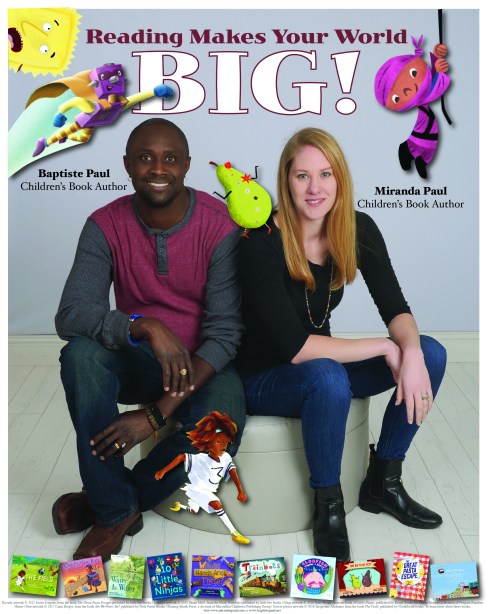
The Pauls are giving away five 15-minute Skype sessions, with each winner to also receive a “Reading Makes Your World Big” poster.
Leave ONE COMMENT on this blog post to enter. You are eligible to win if you are a registered Storystorm participant and you have commented once below. Prizes will be given away at the conclusion of the event.
Good luck!
 by
by I really need an idea… for the first sentence of this blog post. Help me, Storystorm!
Just kidding! Storystorm isn’t about first-sentence-of-blog-post ideas, it’s about Picture Book ideas. Hopefully 30 sparkling new ones, ready to be made into stories. It’s about taking the time to let your mind wander, reflect, and yes, about having the discipline to write down any sparks that may come to mind during that time. Because let’s face it, those sparks often disappear as soon as they arrive.

But how to get those elusive ideas? I find that, being a serial multi-tasker, it’s very hard for me to just sit and think. I’m too fidgety. I’m checking my phone or Twitter or email. My brain can’t relax because I’m always worrying about other things I could or should be doing. So sometimes I have to trick my own brain—or compartmentalize it—so I can let its creative side shine.
My creative brain often flourishes when my functional brain is engaged in something mindless. I think this is why, like many, I get good ideas when I’m in the shower.
What are some other good ways to be mindlessly creative?
One of my favorite ways to generate ideas is when I’m baking. My functional brain can follow a recipe and measure ingredients, while my creative brain can really let loose. The sounds and scents of baking enhance the process, too. And when I’m done, I hopefully not only have some ideas sorted out, I also have something more tangible and tasty to show for my time.

Another useful way to let the creative brain drift is by taking a nice long hike. I live near a number of forest trails and the critters that inevitably scurry past as I walk have inspired more than one story idea.
I also enjoy letting ideas percolate over a good puzzle. Having the time to do jigsaw puzzles is a rare treat, but if I look at it as a time to be creative, I don’t feel so guilty having fun. I see Picture Books as puzzles, too, with elements that all need to fit together seamlessly—character, conflict, tension, humor, heart, language, a satisfying ending—to name a few.
You can get ideas while folding laundry, driving your kids to school, emptying the dishwasher, or just by sitting in a chair with a hot cup of tea, if that works for you. It doesn’t matter how. What does matter, and why Storystorm is so important, is that you get into the habit of coming up with ideas.
Once the brain is in the habit, the ideas tend to keep on coming. Sure, they might not all be great, or even good (PorcupOctopus, anyone?), and they won’t all be made into stories. Heck, I’ll be lucky if this year even one of my Storystorm ideas turns into a manuscript. But that habit, that discipline, builds the idea muscle in your brain. It’s an author’s most important tool.
So get in the habit. Flex that muscle. Storystorm the heck out of January and beyond. You’ll be so happy you did.
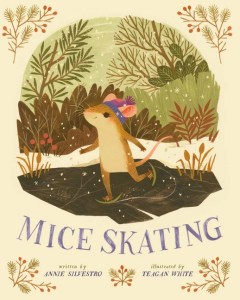
Annie Silvestro is a lover of books who reads and writes as much as possible and can often be found shuffling piles of them around so she has a place to sit or someplace to put her teacup. She is the author of Bunny’s Book Club, illustrated by Tatjana Mai-Wyss (Doubleday), and Mice Skating, illustrated by Teagan White (Sterling). Forthcoming books include The Christmas Tree Who Loved Trains, illustrated by Paola Zakimi (HarperCollins Fall 2018) and Bunny’s Book Club Goes to School, illustrated by Tatjana Mai-Wyss (Doubleday, Summer 2019). Annie lives with her family by the beach in New Jersey. Visit Annie online at AnnieSilvestro.com or on Twitter and Instagram @anniesilvestro.
Annie is giving away a copy of BUNNY’S BOOK CLUB and MICE SKATING.
Leave ONE COMMENT on this blog post to enter. You are eligible to win if you are a registered Storystorm participant and you have commented once below. Prizes will be given away at the conclusion of the event.
Good luck!
by Tim McCanna
On my way to the grocery store in my neighborhood, I pass a martial arts academy. The building’s facade is all windows so you can see the students kicking and punching each other inside. Looks fun. Running across the back wall of the studio in huge capital letters reads:
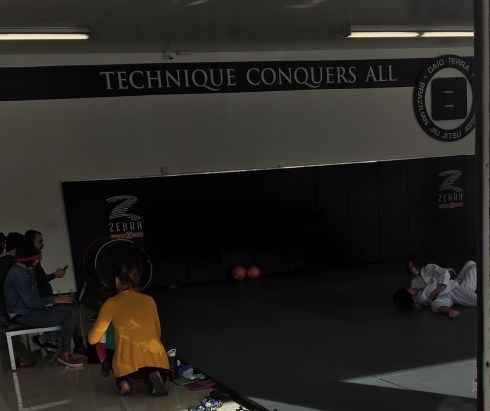
Whenever I drive by that academy, I imagine the trainers pounding this mantra into their pupils’ heads. Forget size. Forget strength. Forget speed. Only focus on technique. TECHNIQUE CONQUERS ALL.
I’m a believer! Technique applies to everything. Sports, cooking, acting, illustrating, Pac-Man, and of course, writing. Even if you’re just starting out, it’s essential to approach the work with a plan. With purpose. With something that at least resembles professionalism.
Technique is all about how you execute your art. It especially applies to that crucial first stage of writing… the brainstorming! You know, coming up with all those story ideas?
- Maybe you sit in a special chair or use a favorite pen and a notepad.
- Maybe you stare blankly into space until something pops into your head.
- Maybe you pick a topic—say, goldfish—and only focus on goldfish ideas that day.
- Maybe you research ideas online, or you wander through the library, or you scan the dictionary for interesting words.
- Maybe you concentrate on character-driven stories with interesting conflicts.
- Maybe you take inspiration from music or colors or nature or childhood memories.
- Maybe you challenge yourself to write down not 1, but 10 ideas each day no matter how terrible they might be.
The exciting part is, while you are focusing on your technique, the ideas you conjure up may take on a life of their own. During Storystorm 2014, I scratched down this idea…
Trickle: the story of a little stream
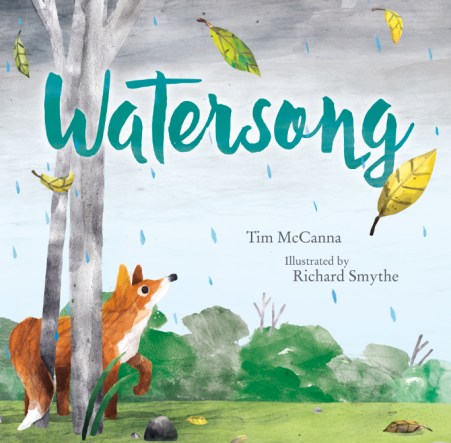
A month later, I wrote the tale of a water trickle that becomes a river using only 56 words, mostly onomatopoeia. I changed the title from Trickle to WATERSONG, and added art notes about little fairies shepherding the water droplets along their way. The manuscript sold quickly! Then I patiently waited for my story of water fairies to be illustrated. But the illustrator, Richard Smythe, had other ideas, and I’m so glad he did. Rich threaded the story of a fox seeking shelter in the woods through my words, and the end result is so beautiful and heartwarming. Because of his more naturalistic take, my editor asked me to add some non-fiction back matter. And thanks to the success of WATERSONG, a sequel is in the works! In fact, it has opened up a whole new avenue of rhyming creative non-fiction to my writing that I’d never anticipated. It all began with the single seed of a Storystorm idea.
I love Storystorm for the structure it provides. I love that it gives us a goal to shoot for. It makes writing fun—as it should be. So, don’t overly concern yourself with how many ideas you generate. Don’t sweat what percentage of your ideas stink or seem like winners. Whether you come up with 3, 30, or 300 ideas this month, just get ‘em down on paper. That’s the task at hand. How are you going to execute it? Your approach to Storystorming just might inform your process for transforming one of those ideas into a real live book.
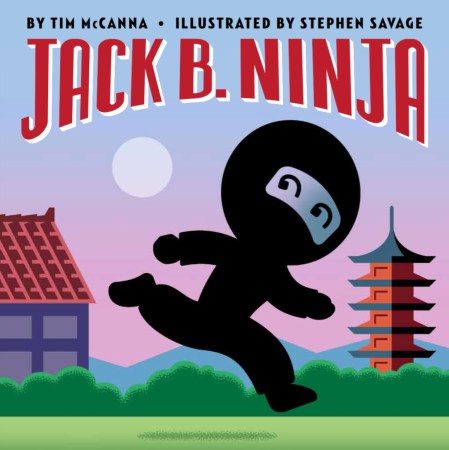
JACK B. NINJA, a 2013 Storystorm idea. Coming June 26, 2018
The publishing world is tough indeed. Do not go willy-nilly into writing for kids. They’re small, but they’ll eat you up. Technique is a choice, a state of mind. It takes practice and persistence. You must train. Study. Learn. Concentrate. Wax on, wax off. In every phase of your writing career, ignore the score and focus on your technique.
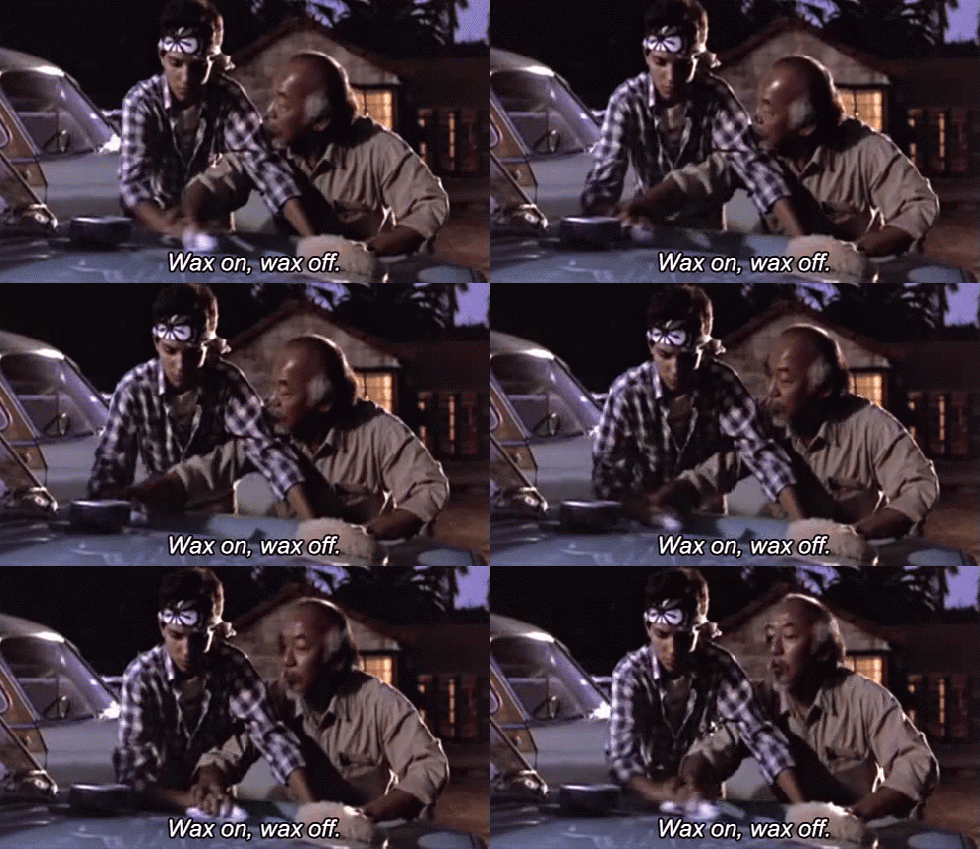
TECHNIQUE CONQUERS ALL.
 Tim McCanna is the author of Bitty Bot, Barnyard Boogie, Teeny Tiny Trucks, and Watersong, which is a New York Public Library Best Book for Kids and a National Council of Teachers of English (NCTE) Notable Poetry Book. His upcoming 2018 picture books include Jack B. Ninja, Bitty Bot’s Big Beach Getaway, So Many Sounds, and BOING! A Very Noisy ABC. Tim serves as Assistant Regional Advisor for SCBWI’s San Francisco/South chapter, and he holds an MFA in Dramatic Writing for Musical Theatre from NYU’s Tisch School of the Arts. Find Tim online at TimMcCanna.com and on Twitter @timmccanna.
Tim is giving away a copy of his picture book, WATERSONG.
Leave ONE COMMENT on this blog post to enter. You are eligible to win if you are a registered Storystorm participant and you have commented once below. Prizes will be given away at the conclusion of the event.
Good luck!
 by Jess Keating
When I first started writing about how to get inspired, I realized the truth: I don’t believe getting inspired is the answer. Instead, we need to be inspired. All the time. Don’t roll your eyes! I know it’s a lofty goal. But you’re a writer: you’re built to do this.
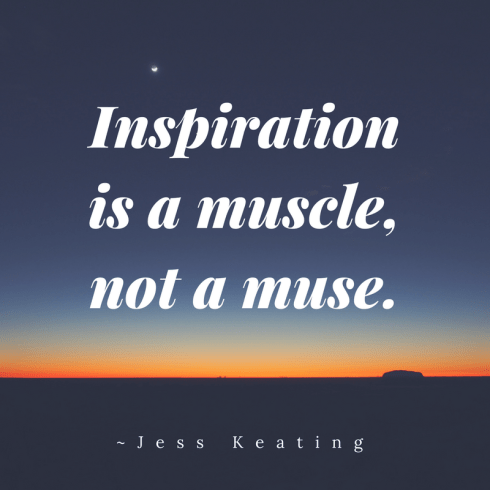
I find everything inspiring. But it takes work. Inspiration is a muscle, not a muse. The more you actively develop an attitude to suit your creative needs, the more it will come naturally. When your whole world is interesting to you, you don’t need to hunt for ideas. They grow around you organically and wait for you to pluck them out of your life.
So how do you become inspired all the time? You cultivate an attitude of inspiration. We’re talking about growing new eyes, new ears—a whole new set of senses here. Or rather, really turning on the ones you’ve got. No more autopilot.
What does this mean? Here are a few exercises that work for me.
1) Every day, learn something new.
This one sounds pretty obvious, but my rule is: if you haven’t written it down, it doesn’t count. Gone are the days of “oh, I’ll definitely remember this!” (You won’t.) You’re a writer, after all. Act like it, and write it down! The goal here isn’t just to get smarter (though that’s always a benefit), rather to go deeper into your own world.
That coffee in front of you? Do you know what part of the world it came from? What other uses could humans have for something like coffee? What’s the Swahili word for coffee? Take something that you enjoy that’s right in front of you, and challenge yourself to learn something new about it. Google it, ask someone smart, anything you need to do to grow a new connection in your mind. And when you’re done, write it down.

Creativity is born from two seemingly unrelated things suddenly making a new kind of sense together. This exercise will build your repertoire of “seemingly unrelated things”. Think of it like an encyclopedia of your life.
2) Never, ever censor or judge your own interests. This kiss of death for any project is when you think it’s something you should do. Leave the shoulds in your life to your bills, your taxes, and getting food on the table. Let your creative side tackle the things you want to do. Don’t box it in. Don’t expect it to be something it’s not. Do not compare your interests to those of anyone else. (That’s a biggie.) Their version of what matters most won’t match yours. That’s a good thing.
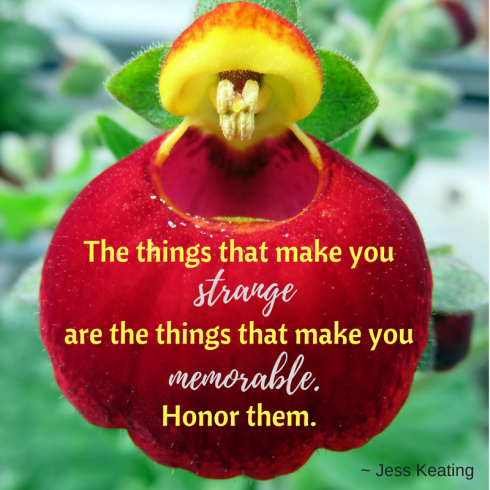
Let your true passions and interests breathe, no matter how quiet, untraditional, un-trendy, unsellable, or downright bizarre they are. Reminder: the things that make you strange are the things that make you memorable. Honor them.
You know how, when you’re house training a dog, you’re told to make a big, hairy deal every time they get it right and go to the door when nature calls? That is how you need to respond to your creative self here. Every time you feel that familiar buzz of energy that comes from learning, discovering, or contemplating a thing that excites you, make a gigantic fuss about it. Get excited. Praise yourself (“Ooh, I love this! Go, me!”), and again, write it down. This tells your brain and subconscious one very simple yet crucial fact: I will pay attention and I won’t judge you—send me more of this!
The sooner you get your brain on board, the better.
The way to be inspired all the time is to surround yourself, and your mind, with sources that feed it. Don’t discount a single thing that lights you up. Give it the time of day. Treat it like a special guest. Invite it in for a scone, and pay special attention. It has something to tell you.
3) One final tip? Open a dialogue with the world around you.
Too often, we bookish folks live in our heads. But the downside to existing only in your own head is you miss out on, oh…pretty much everything outside of it.
Something magical happens when you go about your day looking to have a dialogue with the world.
Meaningful, inspiring things have a tendency to find you. Why? Because you’ve made some space for them. The best way I’ve found to do this is by playing a little game with the world. Set yourself up to succeed here.
In your notebook, before you start your day, draw an empty box or a circle on your page. Write the words, “one amazing thing” above it and leave it blank. Then, walk away.
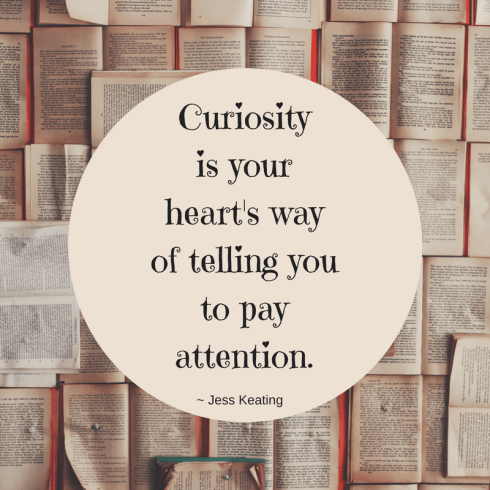
Challenge yourself to be on the lookout for one amazing thing that sparks your curiosity. Curiosity is your heart’s way of telling you to pay attention. The minute you give yourself this exercise, your awareness will go on overdrive. The forced “limit” of that little box is also incredibly freeing. You’re not asking yourself to solve world hunger. You’re just looking for one amazing thing to fill that little box.
Suddenly, your day takes on a different meaning. Maybe you notice the snow piling up in funny angles on the railing outside. Or the way the squirrels’ tails seem to floop around as they run. Or that tiny, shy grin the cashier at the grocery store gives the teen boy buying gum. (Is a new romance afoot?!)
Don’t look now, you’re actively looking at the world with that attitude of inspiration we were talking about! Go, you! You’ll know when you come across the thing that belongs in your notebook.
Do this for a week and you’ll notice some fun insights about what finds its way to your awareness. Do this for a year and you’ll need ten notebooks a day for all the amazing things you’ll notice.
Why are these three exercises so helpful to grow that inspiration muscle? Quite simply: what inspires you is what matters to you. By approaching what matters to you from several perspectives like this, you’ll begin to uncover some truths about what makes you tick creatively. Your viewpoint suddenly becomes amplified.
And, lucky you, you’ve written it down!

Everybody has themes to their lives, and they operate like hidden train tracks beneath our stories. These exercises will shine a spotlight on those emotional tracks so you can build stories that truly resonate with you. And that’s the first step behind creating something that will resonate with others.
This month, (and every month) don’t tell yourself you’re generating ideas. Instead, you’re waking up to the ideas that want your attention. They’re already there, waiting for you. Your job is to pay attention and create space for them.
So…what amazing thing have you noticed today?
As a zoologist and author, Jess Keating has been sprayed by skunks, bitten by crocodiles, and victim to the dreaded papercut. Her books blend science, humor, and creativity, and include the acclaimed My Life is a Zoo middle-grade trilogy, the picture book biography, Shark Lady, and the award-winning World of Weird Animals nonfiction series, launching with Pink is for Blobfish. You can find her on Twitter @Jess_Keating and on her website, JessKeating.com.
Jess is giving away a picture book critique, available to redeem anytime, now or later.
Leave ONE COMMENT on this blog post to enter. You are eligible to win if you are a registered Storystorm participant and you have commented once below. Prizes will be given away at the conclusion of the event.
Good luck!
Bonus: quotes for sharing!





 Writing for Kids (While Raising Them)