You are currently browsing Tara Lazar’s articles.
 by Paul Schmid
I think, therefore I am stuck.
Or, how I tell my brain to shut up so I can be creative.
Joseph Conrad once asserted that thinking is “…a destructive process, a reckoning of the cost. It is not the clear-sighted who lead the world. Great achievements are accomplished in a blessed, warm mental fog.”
In my 30 years experience as a conceptual artist, I too have observed that more ideas come to me seemingly as a gift from my intuition rather than directly from mental effort.
In fact, I often think thinking to be a hindrance to creating.
I am fond of my brain, and it serves me well for most things, but it does have the habit of quickly pointing out the problems and inconsistencies in my ideas. It also asks annoying questions, and is quick to doubt. It often unfairly compares my efforts to others, sometimes telling me rather bluntly that I am stupid and have no business doing what I am doing.
When I am beginning to search for fresh ideas, the last thing I need to hear are problems and limits (however correct my brain may be). Problems can be solved creatively, but first you must allow yourself to create the problem.
Creating is yearning, hoping, dreaming. Thinking is grounded, practical. When I am using my intuition, I am not listening to my rational head, but it’s more clever brother, the impulsive gut.
While the head doubts, the gut is eager to believe.
Brains like rules and order. Rules are dull. Obeying rules will not cause my manuscript to leap off the slush pile. As Susan Sontag remarked: “The only interesting ideas are heresies.”
My brain also tends to grasp at solutions, with a lazy preference for the first solution that shows up. But as a reader myself, I find surprises more deeply satisfying than solutions.
While creating stories I am often confronted with the power struggle between my gut and my brain. Since I use my brain most of the time, and am rational much of the day, it jumps first in line to help. It likes to be helpful. So, over the years I’ve acquired some tricks to lull my rational brain to passivity whilst inspiring my intuition to flow.
Have some pie and take a nap.
Thomas Edison was said to have sat in an armchair with two pie tins placed directly below the arms. In his hand he held two ball bearings. While keeping whatever project he was working on in his mind, he endeavored to nap. As he drifted into a relaxed state, his mind would begin to wander and flow in non-linear directions. Then as he became drowsy enough, his hands would relax their grip on the ball bearings, which dropped, clattering on the pie tins and rousing Edison. He would then immediately write down whatever thoughts he had at that time. It was his sneaky way of accessing his subconscious. It actually has a name: Hypnagogia.
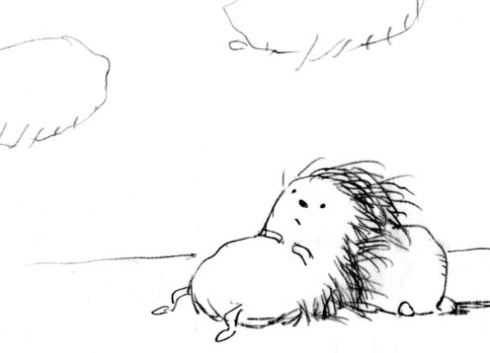
I will sometimes set a timer for 20 minutes, lay on my couch and drift off thinking of any current project’s roadblocks. My thoughts will gradually begin to get wacky and unrestrained. Sometimes quite unexpected solutions will just flow by.
Deny you have a problem.
When ideas aren’t flowing like… umm… whatever flows really well… the frustration can cause flow to stop. The mind gets involved because I am having problems and the mind loves to solve problems.
I then persuade myself that what I am really doing is simply waiting for an idea to show up. I find my intuition is rather demure. It does not flow smoothly, but resists order and regularity. I must have patience, then pounce when it ventures out. The following are some ways I do that.
Sneak up on it.
When I’m feeling stuck, I will put a project aside and move on to another. After a while, and when I am mentally involved in this new set of problems, I will suddenly go back to thinking of my original problem. A fresh idea will often present itself, as if it was really there all the time, but wearing an invisibility cloak.
Take a hike.
I am certain that physical activity confounds linear thinking. My own train of thought will get befuddled while I am moving about, apparently unable to walk and chew ideas at the same time.
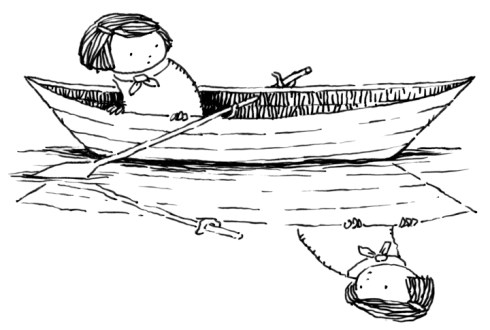
So when stuck, I get away from my desk and take a walk. Or make tea. Or fold laundry. And while my poor logical brain is overburdened and struggling, my intuition begins to frolic. Archimedes may have gotten his eureka’s in his bath, but most of mine arrive during a stroll in the neighborhood.
Loosen up.
John Cleese declares: “The main evolutionary significance of humor is that it gets us from the closed mode to the open mode (of thinking) quicker than anything else.” Just don’t spend too much time watching YouTube videos.
Try to fail.
Perhaps the most radical approach I use to thwart my logical mind set is to deliberately do something reckless so I can sit back smugly and see how bad it is. But many times I find myself putting down the bold solution I somehow knew it needed, but had been too afraid to attempt.
Let it be.
Similar to a flower, ideas can take time to blossom. Be a good gardener: get the dirt on the subject, lightly fertilize with inspirational work by others, firmly plant the seed, and then let things happen in their own sweet time.
I have become convinced that creative thinking is very like a muscle, the more you use it, the stronger it will be. Which allows me to end with Picasso’s words of caution: “Inspiration exists, but must find you working.”

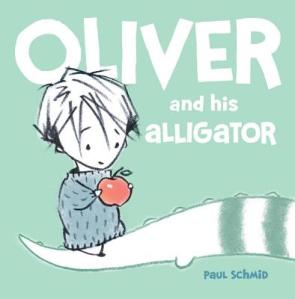 Paul Schmid is an author and award winning illustrator of children’s books, including OLIVER AND HIS ALLIGATOR, A PET FOR PETUNIA, HUGS FROM PEARL and PERFECTLY PERCY.
In the fall of 2010 Paul was awarded a month-long fellowship with Maurice Sendak.
He lives in Seattle with his wife, Linda, and their daughter Anna.
You can visit him online at PaulSchmidBooks.com.
 by Mike Allegra
My mom has a habit of mixing bad news in with the good.
“Happy anniversary,” she joyously sang into the phone. “Ten years! Congratulations!”
Before I could thank her, Mom followed up her salutation with words that were far less joyous:
“I think it’s high time you got your crap out of my house.”
Ugh. In an instant, my plan to use my parents’ home as a storage locker for the rest of my life was dashed to bits.
It was under these circumstances I found myself alone in my old room facing my childhood closet, mustering up the strength to take a reluctant trip down memory lane.
Inside were stacks of sketch pads filled with primitive drawings; old machines I, once upon a time, had a penchant for hoarding; and lousy souvenirs from equally lousy vacations. Then there were the toys—lots of them.
There was so much stuff to sift through, I was confident the job was gonna be a complete nightmare.
But it wasn’t. Quite the opposite, really.
I both smiled and winced at my homemade comic books. After reading a few, I decided that, with a little bit of tweaking (OK, maybe quite a lot to tweaking), the storylines weren’t a bad jumping off point for a new story.
I marveled at the bigger-than-a-bread-basket adding machine I got from my Great Uncle Bill. By force of habit, I removed the machine’s olive green Bakelite cover to reveal its steampunky guts. It was almost comical just how many moving parts it had. I punched a few numbers and watched the thing spring to life. In that moment, my mind filled with ideas about a kid inventor.
Then I spied my Erector set.
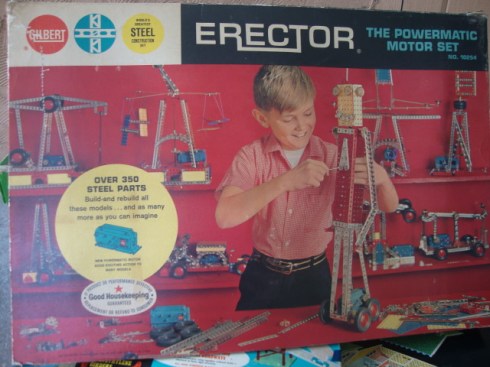
Shortly after this discovery, Mom strolled into the room to check on my progress. What she found was her 30-something-year-old son lying on the floor constructing a racecar of his own design.
She didn’t even blink.
“Good,” Mom said with a sharp nod. “You’re taking that home.”
Indeed I was. The Erector set, the other toys, the machines, and my primitive doodles. I was taking all of it. I had barely begun working on my closet and my brain was already swimming with new ideas.
Toys facilitate play. Play is an essential component of the creative process. There is a reason why social scientists say that The Creative Spirit flourishes in kindergarteners and begins to sputter once those same children head off to middle school. As we grow up, we voluntarily—eagerly—purge the fun stuff from our lives.
That was certainly the case with me. I still remember being a 12-year-old who desperately wanted to be an adult. I gave away most of the stuff that had once given me pleasure and shoved the rest into the far corner of my closet. I thought these actions would speed the growing up process; instead, they just made me a sullen teen with an un-fun room.
With age comes a sort of wisdom, however. Almost in tandem with the launch of my professional writing career, I began to rekindle my interest in toys. I soon noticed that my best ideas occurred when I was horsing around with a hand puppet or had a box of 64 Crayolas within arm’s reach.
Unrestrained, unselfconscious play moves my mind in new directions; moving my mind in new directions helps me to discover new ideas.
I am well aware that a lot of grownups don’t feel comfortable playing with an erector set without a grownup reason for doing so. Fortunately, many of us have children—or if we don’t, we can easily borrow some. Kids need Quality Time, and Quality Times gives us the justification we need to build with Legos, squish Play-Doh, and color Snoopy green.
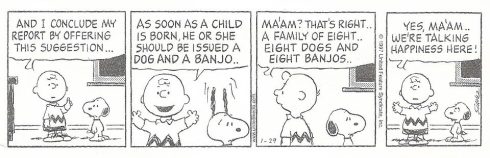
You couldn’t ask for a better situation. You’re being a good parent and you’re mining for inspiration. You’re multitasking! Well done.
That kind of multitasking was exactly what I had in mind when I loaded up the trunk of my car outside of Mom’s house. I’ll bring this stuff home to my young son, I thought. We’ll play with it together. We’ll pretend together. And, in so doing, my little guy will become my unwitting picture book collaborator.
It doesn’t get more inspiring—or wonderful—than that.
 Mike Allegra has earned his living as a writer and editor for the past 17 years. His first picture book, SARAH GIVES THANKS, was released in September 2012 by Albert Whitman & Company. The book has earned a starred review from Kirkus Reviews, is an Amelia Bloomer List selection, and is now in its second printing.
As a playwright, Mike has had his work read and performed around the U.S. and was the recipient of a New Jersey State Council on the Arts Individual Artist Fellowship. He is also the editor of The Lawrentian, the alumni magazine of The Lawrenceville School (Lawrenceville, NJ). During his tenure, The Lawrentian has won a dozen regional and national awards, including Gold and Silver honors from the Council for the Advancement and Support of Education (CASE). Mike also likes waffles.
Visit him at MikeAllegra.com.
 by
by I’ve heard some authors talk about how they are inspired to write their stories.
They say their characters talk to them. They have whole conversations with those characters, interviewing them about their name, background, problems and motives.
They also share stories of times these characters high-jacked the story, taking it in an entirely different direction than the author planned. Sometimes that works out, and other times the authors have had to cut uncooperative characters to get their story back on track.
I think that all sounds awesome.
But it’s never happened to me.
I’ve also talked to authors who see pictures in their heads. Their stories unfold in their brains like a movie on the screen.
That’s also very cool.
But it’s never happened to me either.
So where do I get my inspiration?
Ideas for my picture books usually come one of two ways:
1. Snippets of words.
My two upcoming rhyming picture books started when I was busy at my day job and some words popped into my head.
For SHARING THE BREAD: AN OLD-FASHIONED THANKSGIVING STORY (coming in 2015 from Schwartz & Wade), the words I heard were “Mama be a cooking pot, cooking pot.” That was it. I think my initial reaction was “What?”
For WHEREVER YOU GO (coming in 2015 from Little, Brown) I heard “Over a hill, under a bridge, deep in a dale, high on a ridge.” And I had a very similar reaction. “What am I supposed to do with this?”
In both cases, I wrote the words down and emailed them to myself at home where they sat for quite a while. Then, I started playing with them. And working. Because the rest of the books did NOT just pop into my head.
I had no idea SHARING THE BREAD was going to end up as a Thanksgiving story—and it didn’t become that until a late revision. And, I had no idea WHEREVER YOU GO would end up being a story about how the choices we make determine our destination.
But those lines got me writing, which was inspiration enough. And I’ll always be grateful for whatever made them dance through my head.
2. Admiration.
 Sometimes, I read a picture book I just adore. One that makes me stare in awe and wish I could produce something even remotely close to its perfection.
And often, I’ll try to do just that. I’m not trying to copy the book I love. But I am trying to capture some part of its essence in another form. THE QUICKEST KID IN CLARKSVILLE (coming from Chronicle) came about after I read Jacqui Robbins’ and Matt Phelan’s THE NEW GIRL… AND ME.
The final books are nothing alike. Jacqui and Matt’s is a modern-day story about a new girl at school who owns an iguana. Mine is set in 1960 and features two girls who idolize Olympic sprinter Wilma Rudolph. But I was inspired by the way Jacqui captured friendship in her book and wanted to see if I could do something similar.
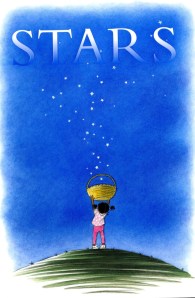 And WHEREVER YOU GO’s style was inspired by the lyricism of Mary Lyn Ray’s and Marla Frazee’s so-wonderful-I-can’t-even-stand-it picture book, STARS.
When I fall in love with a picture book, I’ll spend a lot of time reading and re-reading it. First for fun, then for structure, then for language and plot and pacing and page turns. I may even buy an extra copy to write on. All this soaks into my head and helps my future picture books be better.
It’s kind of like golfers studying a professional’s swing by playing the video in freeze frames and slow motion so they can see every last movement.
I also have to mention my current picture book SOPHIE’S SQUASH (Schwartz & Wade, 2013). It was inspired by a few extremely cute things my daughter did. Then, I added a bunch of stuff that never happened to turn a cute moment into a fully realized story.
Both my methods of inspiration have one thing in common. There’s something that I hear or see that captivates me enough where I want to put in the work to come up with something wonderful of my own.
But I’m going to keep listening for my characters, just in case they decide to get chatty.

Pat started out as a newspaper reporter and wrote about everything from dartball and deer-hunting to diets and decoupage. Then, she joined an insurance company and edited its newsletter and magazine.
Now, she writes insurance information by day and children’s books by night. Her newest release is SOPHIE’S SQUASH, illustrated by Anne Wilsdorf.
Pat has one wonderful husband, two delightful daughters and two pampered cats. She doesn’t watch much TV, but she does love “Glee” and “Chopped.”
You can learn more about Pat by visiting her website at PatZietlowMiller.com or following her on Twitter at @PatZMiller.
*Background image credit: Leo Reynolds.
 by
by Thank you Tara, for inviting me to participate in PiBoldMo.
Picture book ideas…I never seem to have a problem coming up with ideas for picture books. The problem is finding a home for even some of them, in an ever-contracting marketplace. I don’t really expect to find a place for everything I write. I have folders upon folders stuffed with picture book concepts in varying forms of completion, from a title only, to a brief outline, to complete texts, to fully sketched out dummies.
When it comes to developing a concept, I always go with my heart instead of my head. By that I mean, I rarely try and calculate what the marketplace is looking for at the moment, I just begin by developing a concept for a book that I would love to illustrate and love to read if I were a child.

My mind is flooded with ideas for stories. However, I know not all of them are worthy of further consideration. Real creativity comes from keeping an open mind. Perhaps I should, but I never say “Oh no, they won’t like that.” After the first spark of inspiration, I write down in a brief outline of my new story concept. Sometimes, that’s as far as that idea ever gets. Other times the story just flows out in a rough first draft, beginning, middle and end in thirty-two pages. More often than not, the first concept is like a seed that gets planted and slowly grows. I use this metaphor in my school author visits and lectures to aspiring professionals when I’m asked, ”Where do get your ideas?”
Disappointment is part of the publishing game. I’m fortunate to have written thirty published picture books, but for every one that makes it to the bookstore, there are more than a few others imprisoned in those reject folders forever. I try and analyze my rejection letters for clues to my proposal’s shortcomings. I listen carefully to the advice, but in the end I still believe most of them would have made good books. I never take one editor’s rejection as the final word. A number of my books were published after being previously rejected. Editors and publishers are guided by their own experience. If they were all-knowing, every one of their books would be a best seller. In today’s world of publishing, a committee made up of the publisher, sales people, editors, art directors and even interns manages the proposal acceptance process. This “don’t rock the boat” climate makes an offbeat, more creative concept, harder to sell; it’s easier to publish sequels than a new idea. Yes, I’m guilty as charged.
Back to where my ideas come from. They come from anywhere and everywhere. I try not to have a severe critical filter initially, but a good idea will reoccur to me until I feel compelled to write it down.
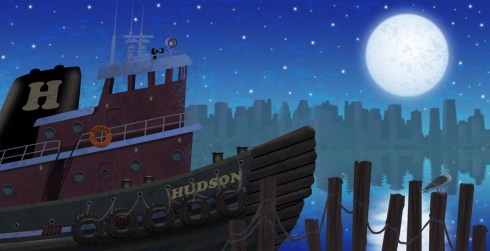
I have two new picture books coming out next year: TUGBOAT from Holiday House and WHERE’S MY HOMEWORK? from Scholastic. The idea for TUGBOAT struck me like a thunderbolt while I was driving north along Manhattan’s FDR drive. It was late in the afternoon and a tugboat was chugging south. I felt like I could reach out of the car touch the bright red vessel as it sailed south, bathed in the warm glow of the setting sun. I realized how much I had loved tugboats since the days of my childhood growing up in Manhattan and Staten Island. The story became a reality-based book about all the different jobs a tugboat can do around New York Harbor. It should fit the “Core Curriculum”, but best of all, the pictures are illustrations that I loved creating.

The other new book came about in a different way. Two years ago I was invited by two local colleges (Marist and Mount Saint Mary) to teach graphic design. I enjoy teaching, but not every student is as dedicated as I was in art school. I give pretty easy homework assignments, but there are always a number of students who contrive inventive reasons why they were unable to complete their given tasks. I started mentally filing their lame excuses in the “The Dog Ate My Homework” draw. The title continued to rattle around in my head until I came up with a story where the dog really does eat a little boy’s homework. The pressure builds because he has to leave for school. He begins to speculate in a series of outlandish fantasies about what really happened to his homework. He never suspects the dog that is present in every illustration, until the very end, when he discovers his beloved pet gobbling up the last bit of his homework. There’s more to the story, but when I had a coherent beginning, middle and end plot in a sketch dummy, I sent it off to my editor at Scholastic. He loved it, but suggested we think of a new title “The Dog Ate My Homework” gives away the surprise ending. He was right, of course, so I came up with “Where’s My Homework?”
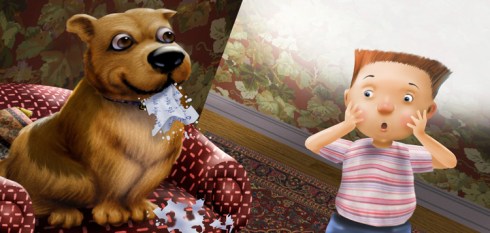
A bizarre postscript to this story: my students are supposed to archive their assignments on flash-drives. At the mid-term, one student handed me a dysfunctional flash drive covered in dog teeth marks, explaining that her work on the drive was lost, because the dog ate her homework (I’m paraphrasing).
After so many picture books, a new challenge has inspired me. I am currently writing my first YA novel. I’m about three quarters done and happily enjoying the process.
Open your mind to inspiration and it will come.
Award-winning author and illustrator Michael Garland has been out on the New York Times Best Seller list four times.
Michael Garland’s greatest success has been for writing and illustrating children’s picture books. Garland’s Miss Smith’s Incredible Storybook recently won the California and Delaware State Reading Awards. He is currently working on his thirtieth book as author and illustrator.
Michael Garland has illustrated for celebrity authors like James Patterson and Gloria Estefan. His illustrations for Patterson’s SantaKid were the inspiration for Sak’s Fifth’s Avenue’s Christmas holiday window display in New York City. Garland’s Christmas Magic has become a season classic and is currently being developed for a for a TV special.
His work has won many honors and is frequently included in the Society of Illustrators and the Original Art of Children’s book show as well annuals from Print, Graphis and Communications Arts magazines. Recently, Michael Garland was included on the list of the top one hundred Irish Americans by Irish American Magazine.
Michael Garland is frequently asked to speak at schools, literary conferences and festivals across the country.
Visit him at GarlandPictureBooks.com.

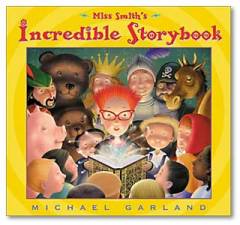 Michael is generously giving away signed copies of his MISS SMITH books.
These prizes will be given away at the conclusion of PiBoIdMo. You are eligible for these prizes if:
- You have registered for PiBoIdMo.
- You have commented ONCE ONLY on today’s post.
- You have completed the PiBoIdMo challenge. (You will have to sign the PiBoIdMo Pledge at the end of the event.)
Good luck, everyone!
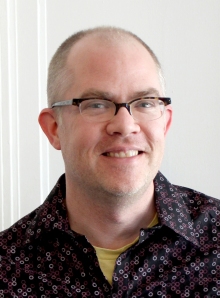 by Ryan Sias
Tara asked me to talk about inspiration for the writer/illustrator.
As a writer/illustrator I need double inspiration. One inspiration for a great story and another inspiration for an exciting art style. I’m going to give you my tips for finding inspiration.
The number one trick for both is “LOOK.”
You need to look and observe everything, art, books, TV, movies, nature and family. Inspirational ideas are everywhere.
My favorite places to LOOK for writing ideas are:
1. Kids
They are full of original ideas, just hang out with a kid for a few hours and you’ll have like 20 story ideas. A few nights ago it was Halloween, and I saw millions of stories in the costumes. Each costume had a story, plus then the costumed character runs into other costumed characters for more stories.
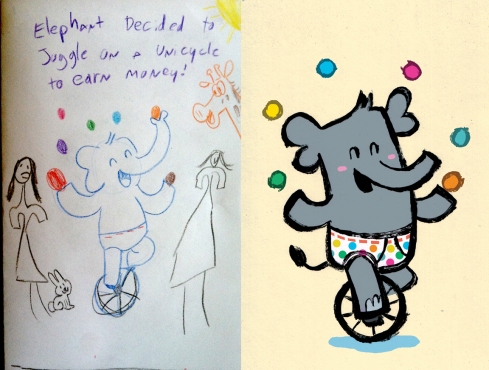
2. Kids again!
They come up with the craziest ideas. Sit down and create a story with a child. It will be crazy, but the trick is to mold their ideas into things that are logical.
3. Go to the library or book store, sit down and read 20-30 books.
If you don’t have ideas at the end of that then you should look for another career. My trick for that is to take a character you invent and put them in the story you read. How would it be different? That will generate ideas instantly.
My favorite places to LOOK for art ideas:
1. Galleries/museums.
Fine art is about pushing boundaries of medium and ideas. Which is different than illustration, where it’s about legibility. So I go to galleries and LOOK at their ideas then try to add some of those qualities to my work.
2. Book store or library.
Just like my writing tip, sit down and go through 20-30 books, then take the visual ideas you like and put it into your art.
3. Internet.
Image searches or illustration web sited are FULL of ideas.
You can find inspiration anywhere—you just have to LOOK!
BONUS: Need more places to look? Sign up for my weekly creative projects email. It’s called Sias Studios (see Tara’s post about it here) and every week I email a free PDF that includes drawing lessons, writing prompts, and doodle pages. Use it as a springboard and have tons of new ideas!
Have fun!
Ryan has been making kids laugh and learn for over two decades. A 20-year animation, film and television veteran, he has directed videos for Barney and Chuck E. Cheese and his storyboarding credits include “Robots”, “Bowling for Columbine”, “Pinky Dinky Doo”, “Maya & Miguel” and “Sesame Street.”
As a successful children’s book creator and cartoonist, Ryan wrote and illustrated the picture book Zoe and Robot—Let’s Pretend and a board book focused on healthy eating habits for kids entitled Are You Eating Something Red?. His comics have appeared in Nickelodeon magazine and Mad magazine.
He is currently working on more books, developing animation projects and trying to figure out the perfect pancake recipe.
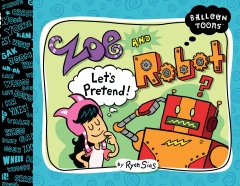 Ryan is giving away an original ZOE and ROBOT drawing!
This prize will be given away at the conclusion of PiBoIdMo. You are eligible for this prize if:
- You have registered for PiBoIdMo.
- You have commented ONCE ONLY on today’s post.
- You have completed the PiBoIdMo challenge. (You will have to sign the PiBoIdMo Pledge at the end of the event.)
Good luck, everyone!
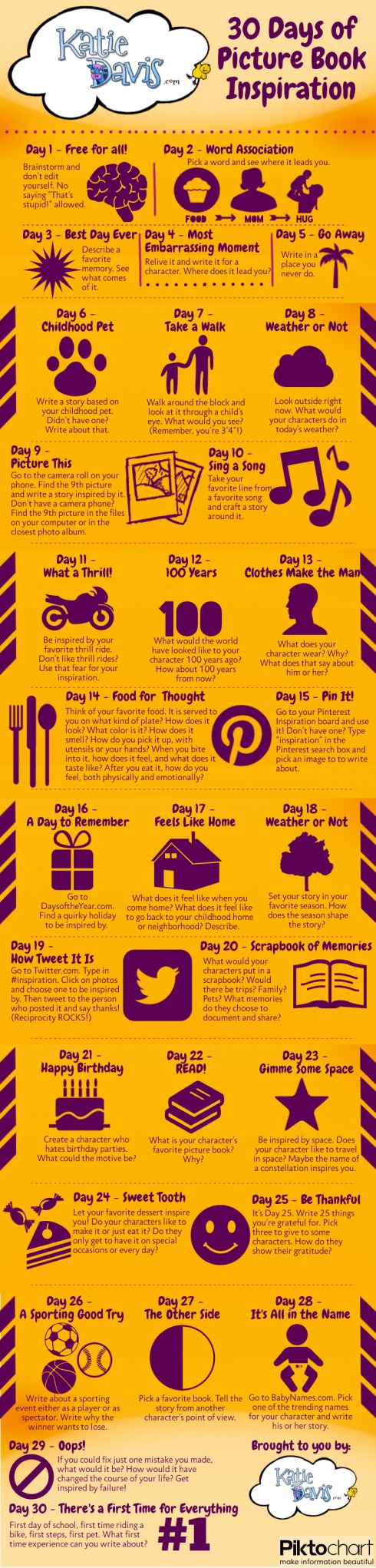
by Katie Davis
 Katie Davis has written and/or illustrated 10 books for children, and two marketing guides for writers.
Katie’s a “writerpreneur,” a writer in business helping other writers. She does this through her newsletter, products, and #1 podcast, Brain Burps About Books.
After winning the School Library Journal Trailee Award, Katie launched Video Idiot Boot Camp: For People Who Think Videos Are Hard To Create. She’s passionate about the power of video to connect writers to their communities.
Katie has been honored to speak everywhere from a maximum security prison, to schools around the world, to keynotes at conferences and fundraising galas.
Learn more about Katie at KatieDavis.com.
 by Greg Pizzoli
Last year I was super busy illustrating a book with a pretty quick turnaround. I think I got the offer in September, and the book was due January 1. So after sketches were approved and everything, I had a little less than three months to do the final artwork for a forty page book (plus covers). It was doable, but just. I wasn’t going have time for anything else. No screenprinting. No writing. Nothing.
Except . . . I had this opportunity. There was an offset printing class with an opening at the university where I teach part-time, and my department head offered me a chance to audit the class and make a book. The whole idea of the class is that you spend half a semester designing a single-sheet book to be printed on an offset press. The second half of the semester you make films, mix inks, and (under the guidance of the Master Printer) assist in printing the book.

I love offset printing and I love making books. I had worked on this press before so the learning curve wasn’t too bad. And the opportunity to make something on my own was just too appealing to pass up. So I signed up for the course and got to work on a project that had been brewing in my sketchbooks for a few years. It was pretty weird, and kind of dark, and I felt certain no publisher would ever be interested in it, so I decided to make a zine. Just an exercise in putting text and images together, simply made for the sake of making it.

Several times I almost dropped the class because of my other commitments. I was too busy to make the art for the zine the way I normally would, and I was nervous about it looking terrible when we went to print. My teacher encouraged me to stick with the class, but to simplify the art so I could produce it faster. She reminded me that I was making this just for me, not for anyone else. The idea that I wasn’t making this zine for publication freed me up considerably, and working on it was really refreshing—it was influenced much more by my design and comics interests, and it just felt different than my other work.
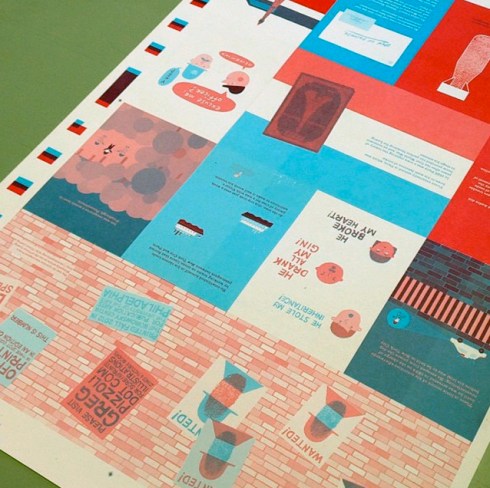
I printed the zine and mailed some out to some people I had worked with or hoped to work with someday. Not pitching the idea—but really just saying—“I love making this stuff! Here’s this weird thing I know you’d never publish that I made!”—excited to share it, but no expectations.

You might guess where this is going—within a month of sending it out, I had a two-book deal with Viking Children’s Books—both dream projects for me. I’ve been researching, writing, and drawing, and a greatly expanded version of that little pamphlet-stitch zine will be an actual picture book in stores next winter! It’s totally different than anything else I have done—and that’s exactly what made it so appealing to my new publisher.
So, looking back on that time last year I guess two things are apparent:
1) Sometimes limitations (meaning your time, or maybe the number of colors/words/pages you can use) will force you to be creative in unexpected ways and 2) Doing the work that you feel driven to do (as opposed to guessing what publishers will want) can produce work you might not expect—and even if you think no one could ever publish it—you might be wrong.
Good luck this month!
Greg Pizzoli is an author, illustrator and screen printer from Philadelphia.
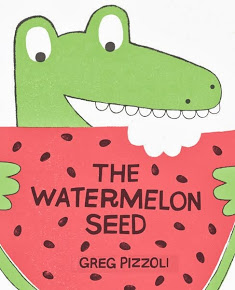 His first picture book, The Watermelon Seed, was published by Disney*Hyperion Books in 2013 and Publisher’s Weekly called it “an expert debut” in their starred review. Greg has more books in the works with Disney*Hyperion, Viking, Candlewick, and FSG.
Greg’s work has been featured in Communication Arts, 3×3 Illustration Annuals and he’s won two Portfolio Honor Awards from the Society of Children’s Book Writers and Illustrators.
After college, Greg spent two years as a full-time volunteer in AmeriCORPS from 2005-2006. In 2009, he received his MFA from the University of the Arts in Philadelphia, where he now teaches.
He recently gave up drinking (as much) coffee.
His screenprinted works have been exhibited in the United States, Canada, Spain and The Netherlands. His hand-printed artist books are in various collections throughout the country, including The Rare Book Department of the Free Library of Philadelphia.
See more of his work at GregPizzoli.com and GregPizzoli.blogspot.com. Follow him @GregPizzoli on Twitter.
Greg will send a random commenter a pair of hand screenprinted blank cards!
This prize will be given away at the conclusion of PiBoIdMo. You are eligible for this prize if:
- You have registered for PiBoIdMo.
- You have commented ONCE ONLY on today’s post.
- You have completed the PiBoIdMo challenge. (You will have to sign the PiBoIdMo Pledge at the end of the event.)
Good luck, everyone!
 by
by It’s Picture Book Idea Month, and I’m going to give you a math lesson.
Who remembers high school math? A long time ago, we may have learned about combinations of variables. As we go through PiBoIdMo, we need to explore different combinations to discern the optimal result.
Now, you’re thinking, well, no kidding. How does that help me?
Aren’t you lucky? I’m going to tell you.
- Step One: Finding the Variables
If you are like me, you try to come up with picture book ideas as complete entities: a character with a specific problem/resolution. But just like in your manuscript drafts, your first idea isn’t necessarily your best idea, and it definitely doesn’t need to be your last idea. If you allow yourself the freedom to separate your idea into it’s entities, you might end up with something better.
Think of it this way: if you come up with 30 characters over the next month (let’s call this variable C) with 30 definite story outcomes (this variable will be O), all you have is 30 ideas to work with. On the other hand, if you have 30 characters, each of whom has 30 story outcomes, you have many more possible ideas to develop. Mathematically, the total number of combinations is represented by this formula:
Number of combinations = C x O
In this case, you end up with 30 x 30 = 900 story ideas at the end of PiBoIdMo. That’s accomplishing a lot, isn’t it?
Basically, separating your ideas into building blocks—into variables—allows you to have useful partial ideas. How many times have you realized that there really needs to be a book about a certain topic? Or come up with an adorable character for whom you can’t think up a story?
Write these down. Add them to your C and O lists. Every once in a while, look over the lists and see if there is a combination you see that resonates with you that was different than what you originally imagined. Allowing these partial ideas to have value takes a lot of pressure off you as a writer and creator. It is very hard to have a good idea every day! But just because something isn’t the perfect idea doesn’t mean you can’t make it work for you.
- Step Two: Expanding the Combinations
A good book has a main character and a primary plot. Many books, however, have secondary characters. Some books have secondary plots.
What if some of your PiBoIdMo ideas don’t work as stories because you came up with a secondary character or a plot?
Some books even have a pair of main characters (mash-up, anyone?) What if one of your character ideas would be four times as strong if you combine it with another character?
If you combine even more variables, you make your work go even further:
Number of story ideas with 2 characters = C x (C-1) x O = 30 x 29 x 30 = 26,100 ideas!
(and a secondary plot on top of this…you get the idea…)
Again, allowing yourself to have incomplete ideas gives you the freedom to pursue many more possibilities.
Obviously, some of the combinations that come out of this process are not going to work. So you really won’t have tens of thousands of ideas to sort through. But hopefully, you’ve picked up on the fact that I’m trying to encourage you to look at your work over this month in a different way.
Whenever you can have a complete story idea, that’s fabulous. Run with it. But don’t get frustrated if inspiration comes in drips and drops instead of a flowing stream. It’s all going to be valuable in the end.
- Step Three: The Idea Wheels
I want to leave you with something fun. I’ve asked you to take your building block story variables and consider them in various combinations. You could create a spreadsheet and be very orderly about it, but what I really want you do to is have fun with it and let the random ideas percolate through your brains. So I’m inviting you to create your own Idea Wheels.
There’s a great site called WheelDecide.com, where you can create your own wheels of fortune, if you will. You can create one wheel for your character ideas and another for your story outcomes. Then, spin away until the wheels hit upon something that really works for you. It’s visual and fun, and if nothing else, there’s a winner every time!

You are all just beginning your PiBoIdMo journey, and it will be a long month ahead. But I hope you stick with it—I bet you’ll come out on the other side with valuable starting points for writing. Good luck!
BONUS!
Last week, this blog hosted a double cover reveal for two of my upcoming picture books. In honor of the reveals, I held a book cover caption contest. It was not easy to pick the winner because there were so many captions that were great! But after careful consideration, on the basis that this caption works so well for BOTH covers, here is the winner:
“Is this as awkward for you as it is for me?”
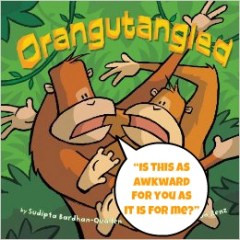
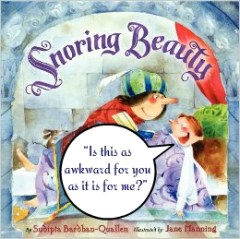
Everyone, please put your hands together for Dawn Young! Dawn wins her choice of a signed copy of ORANGUTANGLED or SNORING BEAUTY! Yay!
And one more bonus…
BONUS: If you’d like more PiBoIdMo tips, pop over to my blog at NerdyChicksRule.com for a great post about knowing what your character wants.
Sudipta Bardhan-Quallen is an award-winning children’s book author whose books include Chicks Run Wild, Pirate Princess, Hampire!, and Quackenstein Hatches a Family. She visits schools around the country to talk about the craft of writing to children of all ages. “Every book is an autobiography” is a favorite saying of hers, and a big part of her message is that everyone, grownup or child, has a story that is interesting and compelling—if you can find the right words to tell it. Sudipta lives outside Philadelphia with her children and an imaginary pony named Penny. You can learn more about her and her books on her website www.sudipta.com or at her blog www.NerdyChicksRule.com.





 Writing for Kids (While Raising Them)