by Linda Ravin Lodding
Some days, the world feels like it’s shouting in ALL CAPS.
You open the news and there it is again: another story that makes your shoulders creep toward your ears like they’re trying to become earrings. Another big, complicated grown-up problem. Another reason to refresh your coffee.
And if you write for children, there’s an extra layer—because while adults read the news, kids absorb it.
- Through snippets of conversation.
- Through the temperature of a room.
- Through the way we say, “It’s fine,” while our eyebrows disagree.
Children don’t need us to hand them the whole scary world, fully assembled, with all the sharp corners sticking out.
But they do deserve stories that help them name what they sense—stories that don’t slam the door on hard topics, but crack a window open just enough to let in air.
And maybe… a little laughter.
Because picture books—small as they are—are mighty.
- They are portable courage.
- They are a hand to hold.
- They are a way of saying: Yes, the world can be a lot. But you are not alone inside it.
Over the years, I’ve found myself drawn to stories that matter—stories that let children practice compassion, curiosity, and courage.
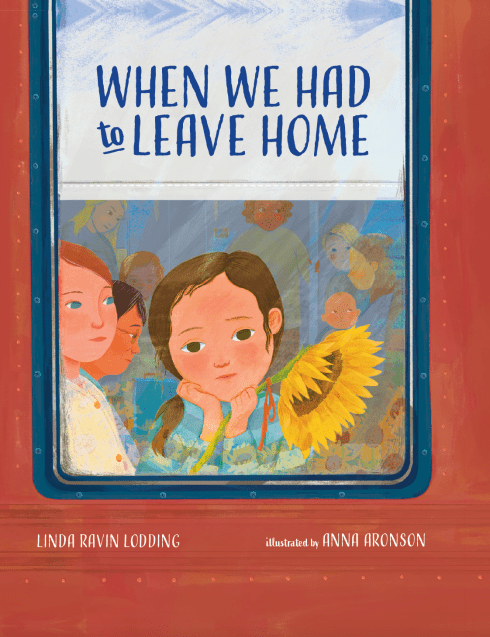
Stories like WHEN WE HAD TO LEAVE HOME, about the refugee experience of leaving a place you love and trying to carry “home” inside you when everything has changed.
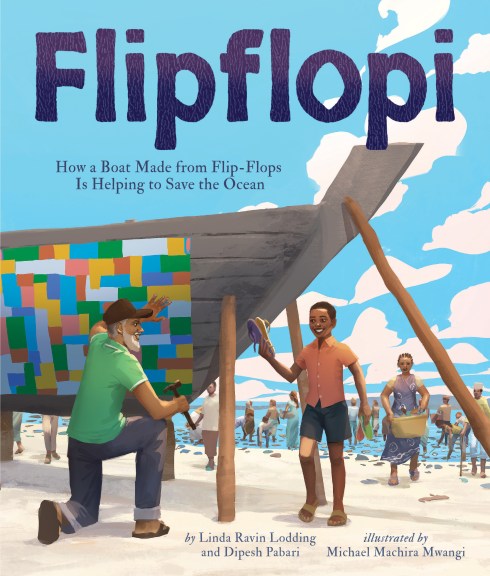
Or FLIPFLOPI: How a Boat Made from Plastic Is Helping to Save the World’s Oceans, which takes a huge issue (plastic waste, the ocean, the future!) and turns it into something tangible: a real-life boat made from flip-flops, a problem turned into possibility.
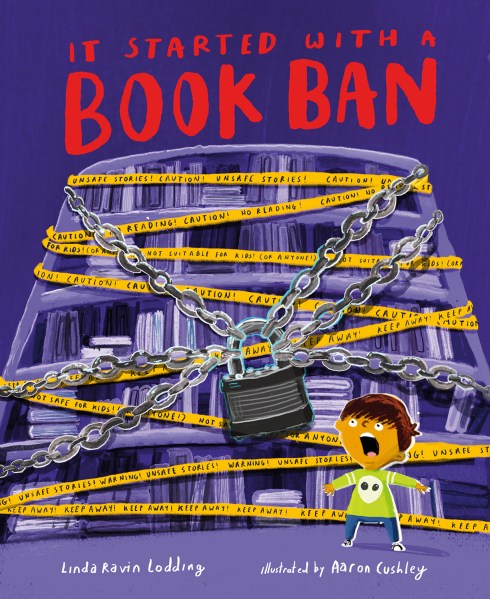
And now, with my upcoming picture book IT STARTED WITH A BOOK BAN (Albert Whitman, April 9, 2026), I’m stepping into another headline-sized topic—book banning—through a very kid-sized door.
So how do you take something huge…and make it holdable?
When I look back over my shoulder, I realize I return to the same technique again and again when I’m trying to transform a headline into a hopeful story idea. This is my headline-to-heart structure:
Step 1: The World Problem (a.k.a. the grown-up thundercloud)
Start with the big issue—the “headline.” Not the whole tangled mess of it. Just the core.
- Books are being challenged.
- Families have to move.
- The ocean is filling with plastic.
- A new kid arrives and no one knows what to do with different.
At this stage, it’s too big. Too abstract. Too… adults yelling on the internet.
So we shrink it.
Step 2: The Kid Goal (a.k.a. one small mission with a big heartbeat)
Now translate the world problem into one child’s clear mission.
- Not a message. Not a lesson.
- A mission.
- Because stories don’t begin with themes.
- They begin with a character who wants something.
And for picture books, I love giving kids one simple action word:
save / find / fix / keep / share
In IT STARTED WITH A BOOK BAN, the world problem might be “banned books,” but the story lives at kid-level: a child trying to protect stories the way kids protect treasures. The tone I aimed for wasn’t “lecture in disguise.” It was humor and absurdity as the flashlight—the kind that makes a difficult topic feel safe enough to explore.
- Because kids understand unfair.
- They understand someone took my thing
- They understand why does that grown-up get to decide?
And they also understand the delightfully ridiculous “logic” of bans that spiral until the town is banning the color green, birdsong, and even the satisfying pop of bubble wrap.
In WHEN WE HAD TO LEAVE HOME, the headline is displacement—but the kid-goal becomes intimate and specific: hold on to one familiar thing… a sunflower. That’s how kids survive big change: one small anchor at a time.
And in FLIPFLOPI, the world problem is enormous (the ocean!), but the kid mission is wonderfully concrete: make something new from what was thrown away. It’s a story of action, ingenuity, and that thrilling moment when kids realize:
Wait… we can DO something?
(And the joy here is that it’s based on the real-life Flipflopi Project in Lamu, Kenya. In virtual school visits, children from around the world get to “visit” the boatyard and watch flip-flops transform into a boat—trash into treasure, problem into possibility.)
- When you give a child character a clear mission, the story shifts from doom to motion.
- And motion is hope.
Step 3: The Warm Twist Ending (a.k.a. hope with muddy shoes)
Finally, look for an ending that offers a warm turn—one that feels earned.
- Not a tidy bow.
- A real shift.
Maybe the twist is:
- Community (someone joins in)
- Laughter (a misunderstanding turns sweet)
- Imagination (the kid re-frames the problem)
- A small win (that matters because it’s theirs)
The child doesn’t fix the whole world.
But the child proves something essential:
I am not powerless inside it.
And that—quietly—is what we’re doing as children’s writers. We’re offering young readers practice in empathy. In courage. In the ability to look at a complicated world and still say:
- I can be kind.
- I can be curious.
- I can do something small.
And that small thing counts.
Try It Today: Your StorySpark
Pick a headline theme:
- books
- moving
- ocean plastic
- new kid
Give your character ONE mission:
- save
- find
- fix
- share
Add one emotional obstacle (the real engine of story!):
- fear
- embarrassment
- jealousy
- loneliness
- the desperate wish to be “normal”
Because the best picture books aren’t actually about the issue.
They’re about the heart inside the issue.
Linda Ravin Lodding is  an award-winning children’s author who believes picture books can be a warm hug, a bright flashlight, and a good giggle—especially when the world feels a little too loud. She’s has eleven published picture books, including The Busy Life of Ernestine Buckmeister, A Gift for Mama, Painting Pepette, and Babies Are Not Bears. Originally from New York and now based in Stockholm, Sweden, Linda is also a writing coach who has helped over 100 picture book writers find their storytelling voice, and she founded the Stockholm Children’s Writers and Illustrators Network (a Facebook community open to all!). By day, she serves as Head of Communications at Global Child Forum, championing children’s rights worldwide. Her newest picture book, IT STARTED WITH A BOOK BAN (Albert Whitman & Co.), releases April 9, 2026. Follow her on Instagram @lindaravinlodding_author.





 Writing for Kids (While Raising Them)
206 comments
Comments feed for this article
January 25, 2026 at 8:41 am
melissajmiles1
Oh my goodness, what a perfect post for this morning! I read it twice because it’s just so beautiful, hopeful, and empowering. I’ve worked with kids in different roles my whole career, and giving them the spark to see they have agency in the world is such a priceless gift. Thank you so much! I can’t wait to try this method and see what it creates!
January 25, 2026 at 11:15 am
Linda Ravin Lodding
Thank you so much for this—your words truly made my day. I love how you put it: helping kids discover their agency really is a priceless gift. I’s love to to hear what you create with the method!
January 27, 2026 at 9:00 am
melissajmiles1
Would it be okay to share this prompt/idea generator with my SCBWI region at a retreat or Shop Talk, giving you and this post credit, of course! 🙂
January 28, 2026 at 6:33 pm
Linda Ravin Lodding
Of course! It would be my pleasure and I hope it’s helpful!
January 25, 2026 at 8:42 am
Jany Campana
Thanks Linda for inspiring me to take my mc on a mission and give them an emotional obstacle.
January 25, 2026 at 11:16 am
Linda Ravin Lodding
Thanks so much! I’m thrilled it sparked something for you—sending your MC on a mission + adding an emotional obstacle can really bring the story to life. Would love to know what you create!
January 25, 2026 at 8:43 am
Annette Birdsall
Love love love books that make a difference but with a mission not a message!
January 25, 2026 at 11:17 am
Linda Ravin Lodding
Yes!! A mission pulls kids in—and the meaning sneaks in right behind it.
January 25, 2026 at 9:03 am
Andrea Mack
What an inspiring post!
January 25, 2026 at 9:35 am
pathaap
I love your post, especially the last two lines – ” the best picture books aren’t actually about the issue. They’re about the heart inside the issue.” Something to keep in mind when we’re writing for children. Thank you for such an inspiring post, Linda!
January 25, 2026 at 11:18 am
Linda Ravin Lodding
Thank you so much—I’m really glad those lines resonated with you. ❤️ Here’s to writing stories that lead with heart first (and let the “issue” follow).
January 25, 2026 at 9:41 am
Susan Burdorf
thank you
Susan Burdorf
January 25, 2026 at 9:48 am
Matt Forrest Esenwine
It’s often hard to find hope in the headlines today, but I love the way you go about it, methodically. Some great tips here!
January 25, 2026 at 11:20 am
Linda Ravin Lodding
Oh, Matt — so true! Thank you so much for your comment —I’m really glad the method feels helpful. Hope can be hard to spot in the headlines, but I love the idea that story can help us build it.
January 25, 2026 at 10:00 am
kathalsey
Ty, Linda, this is a perfect formula for a story I have been reworking on a big topic. This Storystorm idea came at the perfect time. I can’t wait to read all of your work.
January 25, 2026 at 11:21 am
Linda Ravin Lodding
Thank YOU for your comment —I’m thrilled the timing was just right. I’d love to hear how your rework goes, and I’m so glad the Storystorm idea helped. 💛📚
January 26, 2026 at 12:08 am
seschipper
Thanks so much for sharing your “words of wisdom” regarding PB topics! Looking forward to reading your PB’s!
January 25, 2026 at 10:14 am
Robin Brett Wechsler
I appreciate learning about your process for finding the heart of a big topic and making it kid friendly, Linda. Thanks, too, for sharing your StorySpark tips. And congrats on all your books!
January 25, 2026 at 11:22 am
Linda Ravin Lodding
Thanks, Robin! I’m so glad the process and StorySpark tips were helpful.
January 25, 2026 at 10:17 am
Joy Wieder
Such a great message to transform headlines into hope – and not just for kiddos but for us grown ups too! Thanks for your inspiring post!
January 25, 2026 at 11:23 am
Linda Ravin Lodding
Aw thank you, Joy! I love that—turning headlines into hope is something we all need right now. So glad the post resonated with you. 💛📚✨
January 25, 2026 at 10:18 am
Rebecca Colby
Most of us feel ineffective and powerless in the face of life’s issues. I love your post because it makes children, and the readers of your books, realize they can make a difference. Excited to explore ideas around your post! Thanks!
January 25, 2026 at 12:55 pm
Linda Ravin Lodding
Thank you so much for this thoughtful note, Rebecca 💛 I completely agree—when the world feels too big, even small steps can feel meaningful. That’s one of the things I love most about writing for children: stories can offer agency, connection, and a little light—without pretending everything is easy.
January 25, 2026 at 10:24 am
thecrowsmap
This is why I love picture books. They give us all a little hope. Thank you. Gail Hartman
January 25, 2026 at 12:56 pm
Linda Ravin Lodding
Thanks so much, Gail — I couldn’t agree more. 💛 Picture books really are tiny vessels of hope (for kids and grown-ups). Thanks for reading!
January 25, 2026 at 10:36 am
literacylizlazar
This post is exactly wh
January 25, 2026 at 10:43 am
Sallye O'Rourke
I love, love, love your definition of pbs, i.e. warm hugs, bright flashlight, good giggle, portable courage, a hand to hold, a way of saying you are not alone. Terrific post.
January 25, 2026 at 12:46 pm
Linda Ravin Lodding
I’m so happy those lines resonated, Sallye! Picture books really are warm hugs + bright flashlights… and occasionally a much-needed giggle. Thanks for reading and for taking the time to comment!
January 25, 2026 at 10:58 am
bookclubhbhs
Thank you for this hopeful and inspiring post!
January 25, 2026 at 11:03 am
roundswrite
Thank you for the inspiration! Your post is so specific and clear. Much appreciated.
January 25, 2026 at 11:06 am
tinamcho
Thanks, Linda, for your numbered steps. I love your statement that pbs are “portable courage.” Congratulations on your newest book!
January 25, 2026 at 12:48 pm
Linda Ravin Lodding
Hi Tina! How nice to hear from you! “Portable courage” is one of my favorite ways to describe picture books—so glad it landed. And I really appreciate the congratulations! Happy writing!
January 25, 2026 at 11:08 am
kathleengauer
I love that picture books can empower children by turning world problems into hope. Thank you for sharing your helpful writing prompts. I have added your books to my ever growing TBR list.
January 25, 2026 at 12:50 pm
Linda Ravin Lodding
Thank you, Kathleen! I love that idea too: turning big world worries into something kids can hold, understand, and feel hopeful about. And I’m honored you added my books to your TBR list—happy reading! 💛📚
January 25, 2026 at 11:09 am
gregoryfulgione
Very interesting post! Thanks for sharing!
January 25, 2026 at 11:22 am
angkunkel
This post was so needed today of all the days. Thank you.
January 25, 2026 at 11:22 am
Joyce Frank
I can’t wait to try your formula. You make it look easy, though, of course, it’s not. Thank you for the motivation.
Congratulations and much success on your latest book. It sounds wonderful.
January 25, 2026 at 12:51 pm
Linda Ravin Lodding
You’re so welcome, Joyce! And you’re absolutely right—if it were truly easy, we’d all be done before breakfast. 😉 But you’ve got this. I’m thrilled you’re going to give the formula a try. Thanks, too, for the lovely congratulations—so appreciated! 📚✨
January 25, 2026 at 11:22 am
Joyce Frank
I can’t wait to try your formula. You make it look easy, though, of course, it’s not. Thank you for the motivation.
Congratulations and much success on your latest book. It sounds wonderful.
January 25, 2026 at 11:29 am
Tracey Kiff-Judson
Linda, thank you for this clear, easy to follow guide. I also want to add that I loved the phrase: while our eyebrows disagree. : )
January 25, 2026 at 12:53 pm
Linda Ravin Lodding
Thank you so much, Tracey! I’m so glad the guide felt clear and easy to follow. And hahaha—yes, sometimes our eyebrows tell the truth before we do! 😄 Thanks for reading and for taking the time to comment!
January 25, 2026 at 11:34 am
jcherney3
This is all very good and true, but today it really hit home.
January 25, 2026 at 12:57 pm
Linda Ravin Lodding
Thanks for commenting! This really does hit home for all of us, doesn’t it?
January 25, 2026 at 11:54 am
bgonsar
Timely post Linda. Thanks for sharing these great thought starters.
January 25, 2026 at 11:55 am
Jud Ward
I’ve had problems with discovering the engine of my story ideas. Focusing on an emotional obstacle makes it more understandable. Thanks!
January 25, 2026 at 2:02 pm
Linda Ravin Lodding
Ahh I love this! 😊 And yes—when you name the emotional obstacle, the story suddenly has momentum. Thanks, Jud!
January 25, 2026 at 12:01 pm
amybeth349
This is such a clever structure. Studied arr the hearbeat with a hug fit children and adults. As a former Sustainability Coordinator this resonates with me and is great for ESL students. FlipFllopi will really be relatable for them. Thank you for this tip.,
January 25, 2026 at 2:04 pm
Linda Ravin Lodding
Thank you, AmyBeth! 💛 “A heartbeat with a hug” — I LOVE that. And I’m thrilled it resonates with your sustainability background and feels like a great match for ESL students. Flip-Flopi will be so happy in your classroom! You can also check out the Flipflopi project online – a lot of great classroom resources.
January 25, 2026 at 12:06 pm
Karin Larson
Love, love this post, thank you. Picture books being about the heart inside the issue is beautiful.
January 25, 2026 at 2:06 pm
Linda Ravin Lodding
This made me smile — thank you, Karin! 😊 Picture books really can hold big issues so gently, as long as we lead with the heart. I’m so happy you connected with it. (PS: Are you Swedish?)
January 25, 2026 at 4:31 pm
Karin Larson
Not to my knowledge though I do get asked that fairly frequently:)
January 25, 2026 at 12:17 pm
Cynthia Leavitt
Love this post and cannot wait to read your upcoming book IT STARTED WITH A BOOK BAN.
January 25, 2026 at 2:07 pm
Linda Ravin Lodding
Ahhh thank you!! 😄📚 That makes me so happy. I’m counting down to launch day!
January 25, 2026 at 12:20 pm
robineditorial
Helpful steps in how to approach big issues in PBs. Thanks 🙂
January 25, 2026 at 12:37 pm
rosecappelli
Thank you, Linda. I love the mission vs. message mind shift.
January 25, 2026 at 12:41 pm
sullyweston
Powerful post, Linda. You said it best…it’s all about the heart. Thanks so much for sharing.
January 25, 2026 at 12:44 pm
Janice Woods
Thank you for sharing these steps! ☺️
January 25, 2026 at 12:52 pm
Pam Barton
Love this post, great steps and ideas. Looking forward to reading It Started with a Book Ban. Thank you!!
January 25, 2026 at 2:12 pm
Linda Ravin Lodding
Thanks, Pam! 💛 I’m so glad the steps and ideas were helpful. And yay—I can’t wait for you to read It Started with a Book Ban! 😊📚
January 25, 2026 at 12:56 pm
Rona Shirdan
Thanks for providing the tools for writing about tough topics while looking for “the heart inside the issue”. Great post!
January 25, 2026 at 2:14 pm
Linda Ravin Lodding
Aw thank you, Rona!! 😊 I’m really happy the post resonated with you.
January 25, 2026 at 12:57 pm
Danna Smith
Hi Linda! It’s great to see all the lovely books you’ve been creating. Thank you for this post. What a great exercise!
January 25, 2026 at 2:18 pm
Linda Ravin Lodding
Danna!!!! It’s so wonderful to hear from you 😊 And thank you so much! I love seeing your books too — such a joy to be on this adventure together.
January 25, 2026 at 12:58 pm
Michelle Dragalin
January 26, 2026 at 5:08 pm
Linda Ravin Lodding
Thank you, Michelle! That means a lot — thank you. I truly think children are capable of understanding far more than we sometimes give them credit for. They don’t want the world sugar-coated, but they do need it translated into language that feels clear, respectful, and manageable — with solutions that give them a sense of agency.
January 25, 2026 at 1:08 pm
Jennifer
Thank you for sharing! At a time when many of us adults feel powerless in myriad ways, it’s so important to realize how powerless kids can feel all the time and how we can flip that switch for them (and ourselves).
January 26, 2026 at 5:10 pm
Linda Ravin Lodding
Thanks, Jennifer — Oh, how I agree! That sense of powerlessness is heavy for adults right now… and kids experience it on a whole different level, every single day. I really love the framing of flipping the switch—toward agency, understanding, and hope—for them and for us too.
January 25, 2026 at 1:19 pm
Colleen Owen Murphy
Linda, I wish you lived near me so we could brainstorm together because I feel like we have the same goals when it comes to the why of writing picture books. You are brave to tackle the tough subjects and kudos to you for finding a way to help the readers to feel capable. I love the heart you incorporate into your stories. And, you do such a great job of breaking down the steps to help us create our own stories.
Thank you for this great post!
January 26, 2026 at 5:12 pm
Linda Ravin Lodding
Colleen, thank you — this truly made my day. ❤️ I so wish we lived near each other too because brainstorming picture books with you sounds like the best kind of fun. And thank you for seeing the “why” behind my stories — that means a lot. I’m so grateful you read the post and took the time to share this! 😊
January 28, 2026 at 8:27 am
Colleen Owen Murphy
Thanks for your lovely response as well, Linda. Someday, maybe, there will be two people, like us, who are fortunate to live one another so that those weekly brainstorming sessions are possible. It has always been a dream of mine.Looking forward to seeing what headline inspires you next.
January 25, 2026 at 1:22 pm
Sherry Dubis
LOVE this! Thank you for your wonderful insight and time!
January 25, 2026 at 1:22 pm
lucystaugler
Linda,
This post was exactly what I needed today! Salve for my soul! So beautifully written giving us HOPE.
Thank you!
Keep spreading your magic wand with words of hope!
Lucy
January 26, 2026 at 5:13 pm
Linda Ravin Lodding
Lucy, this just warmed my heart — thank you. ❤️ I’m so glad the post found you at the right moment. We all need a dose of hope some days (me too!). Thanks for your beautiful words — I’ll keep waving that magic wand. ✨
January 25, 2026 at 1:30 pm
horsewriterlady
Thank you for your stories behind the stories. Your StorySparks are so helpful and will generate a lot of great ideas!
January 25, 2026 at 1:31 pm
eleanorannpeterson
Linda, you’re so inspiring! ‘And for picture books, I love giving kids one simple action word:
Save / find / fix / keep / share.’
With a BS in Environmental Science, I find myself in agreement with your ideas. Thanks.
January 26, 2026 at 5:15 pm
Linda Ravin Lodding
Thank you so much, Eleanora — that really means a lot. ❤️ And with your Environmental Science background, your support feels like a huge compliment. Thanks for reading and for taking the time to comment!
January 27, 2026 at 3:48 pm
eleanorannpeterson
My pleasure. 🙂
January 25, 2026 at 1:44 pm
marshaelyn
Oh, my gosh, Linda! After spotting our one returning cardinal in a feeding frenzy, I knew the day would hold good surprises. Your post is one of them! I wrote four pages of notes and quotes and will be trying out your STRUCTURE outline to guide me as I flush out my first nonfiction PB. I’ll definitely search for your books in our local library and if not found, I’ll request them. Bravo on your latest book! Your students must be thrilled to learn from you, Linda. Sending your energy for your way ahead…
January 26, 2026 at 5:17 pm
Linda Ravin Lodding
Marsha, this absolutely made me smile — thank you! ❤️ And I love your cardinal “good surprises” omen… what a perfect way to start the day. I’m thrilled you took so much from the post (four pages of notes!!), and hope the structure outline works for your nonfiction PB as you flesh it out.
Thank you too for looking for my books at your library (and requesting them if needed — that means more than you know!). Sending that good-cardinal energy right back to you as you move forward!
January 25, 2026 at 1:49 pm
marywarth
Thank you, Linda! I love this exercise.
January 25, 2026 at 2:00 pm
L. Hofke
great post. I especially like these lines:
“But they do deserve stories that help them name what they sense—stories that don’t slam the door on hard topics, but crack a window open just enough to let in air.
And maybe… a little laughter.”
January 26, 2026 at 5:19 pm
Linda Ravin Lodding
Thank you so much — I’m really glad those lines stood out to you. ❤️ That “crack a window open” image is exactly what I’m always hoping picture books can do: make space to breathe, name what kids already feel, and let a little light (and laughter) in too. Thanks for reading and commenting.
January 25, 2026 at 2:02 pm
Helen M. Waters
This is SO apt for me right now! This technique is just what I need for a story I’m working on right now. Thank you so much!
January 26, 2026 at 5:20 pm
Linda Ravin Lodding
Thanks, Helen! So glad it was helpful!
January 25, 2026 at 2:15 pm
serendipityinstars
Love the imagery of shoulders creeping up as if they’re trying to become earrings, and disagreeing eyebrows. I was just telling my husband last night while we watched a game show that I could never go on TV because my face can’t behave.
Thank you for sharing these tips. Your Storysparks are useful and inspiring!
January 26, 2026 at 5:22 pm
Linda Ravin Lodding
Ha! I love that — “my face can’t behave” is perfect 😂 (and honestly… same). Thank you for reading and for such a fun comment. I’m so glad the tips felt useful and inspiring! ❤️
January 25, 2026 at 2:16 pm
rindabeach
I copied and saved your advice. It fits what I once did as a teacher…we did a penny drive after 9/11 to help kids feel empowered. It’s why I write for kids today.
January 26, 2026 at 5:23 pm
Linda Ravin Lodding
Oh, I love this — thank you for sharing it. ❤️ That penny drive after 9/11 is such a beautiful example of exactly what kids need: a real, doable way to help when the world feels too big. And I love that it’s part of why you write for children today. That kind of purpose shows up on the page.
January 25, 2026 at 2:44 pm
heatherstigall
Great advice, Linda! I’ll brainstorm using these tips for today’s idea.
January 25, 2026 at 2:53 pm
Sheri Delgado Preston
Thank you, Linda for these thought provoking, hopeful, and heartfelt words.
January 25, 2026 at 2:58 pm
lizziemaxwell42
what an amazing post. Im going to priny ot, cut it, and hang it up where i can clearly see it.
January 25, 2026 at 2:59 pm
Claire A. B. Freeland
Thank you, Linda, for a structure that leads to meaning and heart for kiddos. Brilliant post!
January 25, 2026 at 3:30 pm
dlapmandi
Thanks for the post. Great StorySpark idea. We never realize how the world effects our littles.
January 25, 2026 at 3:47 pm
Cathy Stefanec Ogren
Great post! I especially liked “Your StorySpark” suggestions.
January 25, 2026 at 3:54 pm
sheriradovich0384
I enjoyed the post and the action steps, and the list of books she wrote to find and read. I have new ideas to jump into, thank you.
January 25, 2026 at 3:55 pm
marty
Thank you. Linda, for writing books that turn headlines to hope for picture book readers and listeners.
Thank you, Tara, for inviting Linda to post for all of us.
January 26, 2026 at 5:25 pm
Linda Ravin Lodding
Thank you so much — that truly means a lot. ❤️ I’m so glad the post resonated and felt hopeful. And yes, huge thanks to Tara for creating such a wonderful space and for allowing me to be part of it!
January 25, 2026 at 4:00 pm
Julia Wilder Banta
WOW! this is one of the best creative, jumpstarts for generating new stories I’ve read! I needed this! Thanks for your sharing your ideas and experiences in story telling! Thanks Tara and Linda!!
January 26, 2026 at 5:26 pm
Linda Ravin Lodding
Oh wow — thank you so much, Julia!! ❤️ I’m so happy it hit at the right moment and felt like the creative jumpstart you needed. And yes, huge thanks to Tara for hosting and bringing us all together. Happy writing — I can’t wait for the stories that come out of this!
January 25, 2026 at 4:03 pm
Christine Van Zandt HOT DOG! 2026 JLG gold-standard selection
I appreciate this remind to focus on our stories on things kids can understand yet also not shy away from hard topics. Showing possibilities and hopefulness–how we can all help–is so important.
January 26, 2026 at 5:28 pm
Linda Ravin Lodding
Thanks, Christine ❤️ Kids can handle big topics when we meet them with clarity, care, and language that makes sense to them. And I love what you said about showing possibilities and hopefulness — that “we can help” feeling matters so much. Thanks for commenting!
January 25, 2026 at 4:15 pm
bevbaird
Thank you so much for this amazing format to create books with issues and heart.
January 25, 2026 at 4:41 pm
Melissa Stoller
HI Linda – thanks for this heartfelt post with excellent tips for writing books about challenging topics – with meaning and hope.
January 28, 2026 at 7:38 am
Linda Ravin Lodding
Thanks, Melissa! I’m really glad the post resonated with you—writing about tough topics can feel tricky, and I love the challenge of finding a way in that leaves room for both meaning and hope.
January 25, 2026 at 4:44 pm
Becky Ross Michael
You’re tackling some very tricky topics! I enjoy reading about your thought process while you do so. Thank you, Linda!
January 28, 2026 at 7:38 am
Linda Ravin Lodding
Thanks for your comment, Becky!
January 25, 2026 at 5:05 pm
Gabi Snyder
Thank you for this inspiring post, Linda! Working through your process helped me see a possible way forward in a WIP I’ve been struggling with.
January 28, 2026 at 7:39 am
Linda Ravin Lodding
So glad my post was helpful, Gabi! Cheering you on ❤
January 25, 2026 at 5:17 pm
staceygustafson
Great reminder! Because stories don’t begin with themes.
They begin with a character who wants something.
January 25, 2026 at 5:59 pm
Robin Currie
Wise words on the heart of writing
January 25, 2026 at 6:23 pm
Meagan Dekker
This is so well said! These gems are speaking to me on every level—thank you for this carefully organized treasure trove of inspiration. Meagan Dekker
Sent from AT&T Yahoo Mail for iPhone
January 26, 2026 at 5:30 pm
Linda Ravin Lodding
Meagan, thank you so much ❤️ I’m so glad the post spoke to you, and I love how you put it: a carefully organized treasure trove! Wow! Thanks for reading and for taking the time to share such a generous note.
January 25, 2026 at 6:34 pm
Marie Prins
Great story spark! Finding the heart of hope in the big challenges of our day.
January 25, 2026 at 6:43 pm
karenleewyoming
Wow! This is great! I love this process–empowering! Thank you! (Sorry for all the exclamation points, but I feel intensely about your post)
January 25, 2026 at 8:10 pm
Farida Zaman
I can’t thank you enough for sharing such useful, amazing tips and ideas! Your post is just brilliant!!
January 25, 2026 at 8:51 pm
bkidd8
Thanks, Linda! You’ve given me much to think about. Great way to present hard topics to kids.
January 25, 2026 at 9:06 pm
writeremmcbride
Linda! I totally agree with talking about the big issues with kids! If they observe us avoiding important topics then they do not have models for dealing with such topics themselves. Your prioritizing of the child’s perspective is key. Thank you for this precise and much needed advice for addressing the topics adults might otherwise avoid in literature for children. They deserve our honesty and assistance.
January 28, 2026 at 7:41 am
Linda Ravin Lodding
Thanks for your comment! I agree—kids notice when we avoid big topics, and stories can give them language and tools to navigate what they’re already sensing.
January 25, 2026 at 11:39 pm
Artelle Lenthall
Wow Linda! So, so good!😍
January 26, 2026 at 12:37 am
brightwishbooks
thank you so much for this post! It is a powerful reminder that kids need to see and feel the heart.
I am looking forward to using your story spark too with an idea that was just beginning to grow. Thanks again!
January 28, 2026 at 7:42 am
Linda Ravin Lodding
Ohhh…I love that you have an idea already starting to grow, and I’m thrilled you’ll try the StorySpark with it. Cheering you on!
January 26, 2026 at 2:47 am
Maria Marshall
Wonderful post. Thank you so much for the specific examples of how you did this for your books!
January 26, 2026 at 8:56 am
Elizabeth Volkmann
Wow! That post is FULL of wonderful ideas and inspiration! Thank you!
January 26, 2026 at 9:35 am
Bhandi
The news has been terrible. I have three kids under six and just wondering how much they’re taking in. Books are necessary! They help narrow those emotions and problems into something more manageable.
January 28, 2026 at 7:43 am
Linda Ravin Lodding
I hear you, Bhandi! Kids absorb so much more than we realize—especially when things feel heavy. Books really can help translate big, scary news into something manageable and comforting. Sending you a little extra steadiness for these days.
January 26, 2026 at 9:53 am
anchance
Thank you! Great tips and advice.
January 26, 2026 at 10:13 am
Laura Wippell
During a time where I feel many of us feel fear with the current headlines, this is a beautiful and empowering way for us to reframe things for ourselves and future readers. Thank you Linda.
January 28, 2026 at 7:44 am
Linda Ravin Lodding
Thank you so much for your comment, Laura! I’m really glad it felt empowering—turning those scary headlines into something a little more holdable is exactly the goal.
January 26, 2026 at 12:28 pm
Darcee A Freier
Thank you, Linda, for giving us writers a flashlight to see our way through the dark and scary headlines!
January 28, 2026 at 7:45 am
Linda Ravin Lodding
Thanks for your comment, Darcee! Cheering you on – with flashlight in hand.
January 26, 2026 at 12:47 pm
brintonculp
This is a great process that brings a touch of hope–thank you!
January 26, 2026 at 12:57 pm
nrompella
Wow, what a powerful post. I love this idea. And also the suggestions of how to make it more on a child’s level. Thanks!
January 26, 2026 at 12:58 pm
Carol Porter
Thank you for this. I really needed to hear this right now reminding all of us we can always do something to help. I just wrote your wonderful “MISSION WORDS” across the top of my journal to remember and act on.
January 28, 2026 at 11:00 am
Linda Ravin Lodding
Aw, thank you for telling me. That means so much. 💛
I love the image of “MISSION WORDS” right there at the top of your journal—like a little lighthouse you can return to on the days when everything feels too heavy. And yes: we can always do something. Even the smallest, most human thing counts. Cheering you on, Carol!
January 26, 2026 at 1:40 pm
greengirlblueplanet1
What a timely post. We could really use hope to make the stories that kids need to navigate this world. Thanks for the writing tips.
January 26, 2026 at 2:01 pm
Poupette
Thank you for this important, well-explained post; I’m inspired to re-think my story about pollution.
January 28, 2026 at 11:01 am
Linda Ravin Lodding
Thank you so much for reading—and I’m really glad it landed with you. 💛 Pollution can feel huge, but stories have this amazing way of making big issues feel human and possible. Cheering you on, Poupette!
January 26, 2026 at 4:21 pm
Alicia Shawn Gagnon
Your blog ideas helped me find a warmer and can-do concept for a very tough subject. Thank YOU!!! Alicia
January 28, 2026 at 11:02 am
Linda Ravin Lodding
Alicia, this just made my day. 💛 I’m so glad the ideas helped you find a warmer, can-do way in—those tough subjects need that kind of light. Cheering you on as you write it!
January 26, 2026 at 4:30 pm
Jessica Iwanski
This is both lovely and practical, Linda! I’m going to try and distill a current WIP that feels really big, using your strategies to find the real heart. Thank you!
January 26, 2026 at 5:34 pm
dgottier
Thanks, Linda, for inspiring us to write books that matter.
January 26, 2026 at 5:36 pm
suejeanko
“I can be kind.
I can be curious.
I can do something small.
And that small thing counts.”
Sounds like a good recipe for us all. Thanks, Linda.
January 28, 2026 at 11:03 am
Linda Ravin Lodding
Aw, thanks Sue! Maybe I should add in there… “I try” 🙂 Cheering you on!
January 26, 2026 at 6:42 pm
Diane McBee
A great way of explaining how to write about everyday problems for kids. Thank you for sharing.
January 26, 2026 at 10:29 pm
marty bellis
“They are portable courage.” What a great quote! Thanks for sharing how to empower kids with our words.
January 27, 2026 at 1:18 am
rachelcritchleya061056d76
Love the three steps you described. Thanks.
January 27, 2026 at 9:56 am
Jenn “Ferna” Hall Writes
First of all, I can’t wait for your book. Secondly, thank you for this wonderful post. I write mostly humor and never considered how I could incorporate a serious and meaningful topic in my stories. Having felt so helpless lately as it feels like our world is crumbling, this is such an inspiring and motivating blog post, with terrific instructions. Thank you!
January 28, 2026 at 11:05 am
Linda Ravin Lodding
Thank you so much, Ferna —this really means a lot. 💛 And I love that you write humor, because humor is powerful: it helps kids (and us) breathe while we face hard truths.
I hear you on feeling helpless lately. When the world feels wobbly, writing can be a way to steady it—one small story at a time. Keep your funny voice, tuck the serious topic underneath, and give your character one doable moment of courage. Humor + heart is magic. Cheering you on!
January 27, 2026 at 10:10 am
Linda B
Thanks for the inspiration. I love save, find, fix, share. Great tools you’ve shared.
January 28, 2026 at 11:06 am
Linda Ravin Lodding
Thank you! From one Linda to another ❤
January 27, 2026 at 11:36 am
syorkeviney
Linda your work is inspiring. It shows the power of ideas and the power of books to give children the inspiration and understanding to respond to important issues. Thank you for all the work you do for others in Sweden!
January 28, 2026 at 11:07 am
Linda Ravin Lodding
Thank you —this truly means a lot to me. 💛 I really believe books can give kids both understanding andcourage. And thank you for the kind words about what I’m doing in Sweden—it’s an honor to be part of it.
January 27, 2026 at 11:46 am
lodobocreates
wow!! There’s so much power and inspiration in your post. It’s one to be re-read for sure. Thanks!
January 27, 2026 at 12:21 pm
Catherine Friess
Thank you for the Storyspark exercise. I’ve had fun expanding the lists 🙂
January 27, 2026 at 1:57 pm
Mona Pease
Boy, you did take some huge issues and make them kid curious and friendly. Thank you for all your ideas of getting there!
January 27, 2026 at 3:12 pm
Sue Heavenrich
This is the perfect antidote to reading the news! And a wonderful way to help kids see how they can be heroes in their own story. I am sure that when you wrote this, you had NO idea just how timely your post would be!
January 28, 2026 at 11:08 am
Linda Ravin Lodding
Thank you,Sue —what a lovely way to put it. 💛 I’m so glad it felt like an antidote, and yes: helping kids see they can be heroes in their own stories is exactly the hope. And you’re right—I had no idea it would feel this timely, but I’m grateful it’s reaching people when it’s needed.
January 27, 2026 at 3:20 pm
Stephanie Alter Jones
I want “hope with muddy shoes”! I want to write that hope too! Thanks for the perfect inspiration!
January 28, 2026 at 11:10 am
Linda Ravin Lodding
Stephanie – go write that scrappy, sleeves-rolled-up, “I brought snacks and a shovel” hope. I’m cheering you on—now go splash in a few puddles! ❤
January 27, 2026 at 3:29 pm
Cheryl A. Johnson
Thanks so much for this! I printed it out because it’s a keeper. I also put in a library request for It Started With A Book Ban. I’m looking forward to reading it.
January 28, 2026 at 11:11 am
Linda Ravin Lodding
Oh wow—thank you! 💛 I’m so glad it felt like a keeper (printing it out is the highest compliment!). And I reallyappreciate you putting in a library request for It Started With A Book Ban—that means a lot. I hope you enjoy it when it lands, and I’d love to hear what you think!
January 27, 2026 at 5:01 pm
Erik Ammon
Oh, this is good! Thanks, Linda. Now to come up with an idea…
January 27, 2026 at 6:27 pm
tinefg
Congratulations Linda, on your upcoming release, and thank you for sharing. Such great ways to pare down big complicated issues, great advice on breaking down those story telling stumbling blocks.
January 28, 2026 at 11:12 am
Linda Ravin Lodding
Thank you so much! 💛 I’m really glad the post felt useful—those big, complicated issues can be tough to wrangle, and I love the idea of turning “stumbling blocks” into story steps. Thanks again for reading and for the kind congrats!
January 27, 2026 at 8:17 pm
ABMitch
I feel so inspired by your ideas, Linda. It takes true talent to address real-life issues in ways that gently inform children, while simultaneously inspiring them to be valiant problem solvers! These are great tips in helping develop that talent! Thank you for sharing!
January 28, 2026 at 11:13 am
Linda Ravin Lodding
Thank you so much! 💛 I love the phrase “valiant problem solvers” (yes!). If these tips help writers create stories that gently inform and empower kids, then I’m thrilled. Thanks for reading and for your generous words!
January 27, 2026 at 9:23 pm
bookfish1
GREAT Template. Thanks so much for sharing. I have written these types on manuscripts before but not with your ideas. I look forward to trying them with a new twist.
January 28, 2026 at 11:15 am
Linda Ravin Lodding
Aw thanks! 💛 I’m so glad the template was helpful. And since you’ve already written manuscripts like this, you’re totally going to have fun trying it with a little new twist. Cheering you on!
January 28, 2026 at 5:48 pm
bookfish1
Much Appreciated
January 28, 2026 at 1:41 am
Adriana Gutierrez
Such wonderful advice. I’m excited to try this.
January 28, 2026 at 8:10 am
Lauri Meyers
So much great advice packed in here!
January 28, 2026 at 8:26 am
Freda L.
This post is soooooooo helpful. I’ll be rereading it many, MANY times. This is a real gift and so thank you.
January 28, 2026 at 11:16 am
Linda Ravin Lodding
Oh wow—thank you. 💛 I’m so glad it felt helpful (and worth a re-read!). That truly means a lot. Happy writing—and I’m cheering you on!
January 28, 2026 at 12:41 pm
Abby Wooldridge
I loved this post so much! Exactly what I needed to read. I forwarded it on to several friends and family members (people who write, and people who don’t) because it’s so full of hope. And I’m printing it out to read and reflect on again and again. Thank you so much for sharing your encouraging inspiration!
Abby Wooldridge
January 28, 2026 at 2:51 pm
Linda Ravin Lodding
Aw, Abby, thank you so much for this — it seriously made my day. I’m so happy the post landed at the right time, and I love that you forwarded it to friends and family (writers and non-writers!).
And printing it out to reread? That’s honestly the sweetest compliment. I’m really glad it felt hopeful and encouraging — that’s exactly what I was hoping for. We all need that these days. Thank you again for reading and sharing.
January 28, 2026 at 3:26 pm
brigitus6620
I’ll be reading this post a few times. Thank you.
And Thank you for this: “Because picture books—small as they are—are mighty.
They are a way of saying: Yes, the world can be a lot. But you are not alone inside it.
They are portable courage.
They are a hand to hold.”
Brilliant and very needed.
January 30, 2026 at 8:58 am
Linda Ravin Lodding
I’m so glad those lines hit for you! That’s exactly what I was trying to get at: picture books are small, but they can feel like a steady hand when the world is… a lot. Thanks for your comment.
January 28, 2026 at 4:56 pm
joanswanson58
I love the heart inside the issue. It’s really scary out there right now. Kids hear, but can’t understand the “why”. Really, I can’t either. But love, kindness, and patience in my book will always win.
January 30, 2026 at 8:59 am
Linda Ravin Lodding
Thank you for this. ❤️ You’re so right—kids pick up on everything, even when they can’t untangle the “why.” And honestly, neither can I some days. I’m with you: love, kindness, and patience always win.
January 28, 2026 at 5:03 pm
Goodreadswithronna.com
Linda, this is perfect time for a WIP that I am struggling with.
You’ve offered such concrete advice that clearly has worked for you and I’m so happy you’ve shared it with us.
January 30, 2026 at 9:01 am
Linda Ravin Lodding
Aww thank you — I’m really glad it hit at the right moment. 💛 And I so relate to the WIP struggle. I’m happy anything I shared feels concrete/helpful. I’m cheering you on, Ronna!
January 28, 2026 at 11:05 pm
ralucasirbu
You are undertaking such great topics, Linda! Congratulations for marking this moment in children’s memories so we don’t repeat the history.
January 30, 2026 at 9:02 am
Linda Ravin Lodding
Thank you so much! And thank you for reaching out to me! ❤️ I’m hoping my stories can help kids (and grown-ups!) hold onto what matters—curiosity, empathy, and the freedom to read—so we stay awake to history instead of repeating it.
January 29, 2026 at 10:03 am
ptnozell
I love your focus on things a child can do to make this world better! Thank you for your inspiring post!
January 30, 2026 at 9:03 am
Linda Ravin Lodding
Thank you! ❤️ I really believe kids can make a difference—and even the small stuff counts: asking questions, being kind, speaking up, including someone, sharing a story. I’m so glad the post felt inspiring.
January 29, 2026 at 1:20 pm
Carmen Swick-Author
Linda, I have a whole page of notes thanks to your share!
January 30, 2026 at 9:04 am
Linda Ravin Lodding
Oh wow — that makes me so happy to hear, Carmen! 🥹 Thank you for telling me.
February 24, 2026 at 7:37 pm
Carmen Swick-Author
❤
January 29, 2026 at 2:44 pm
helenedebelak
I read this and got a “bingo” for a story I want to write but the issue is too big. I e an object like a sunflower. Thanks!
January 30, 2026 at 9:05 am
Linda Ravin Lodding
Oh I love that “bingo” moment, Helen — yes!! And you’re so right: when the issue feels too big, an object like a sunflower can be the perfect way in. It gives you something concrete to hold onto while the bigger theme hums underneath.
January 29, 2026 at 5:07 pm
Donna Cangelosi
Fantastic post! Yes, picture books portable courage, a hand to hold, and a way of saying: Yes, the world can be a lot. But you are not alone inside it.
January 30, 2026 at 9:06 am
Linda Ravin Lodding
I’m so happy those lines landed, Donna. That’s exactly what I hope picture books can be—portable courage, a hand to hold, and a little reminder that even when the world feels like a lot, you’re not alone in it. Thanks for your comment. Means a lot.
January 31, 2026 at 6:17 am
chrisynthia
Loved this exercise! Thank you for sharing with us.
January 31, 2026 at 11:38 am
Prairie Garden Girl
Thank you, Linda, for sharing your thoughts on how to write a meaningful and powerful book about tough topics.
Suzy Leopold
January 31, 2026 at 4:44 pm
Dawn Prochovnic
So much actionable advise here, Linda. Thank you so much for this post. I will be putting your framework to use again, and again.
January 31, 2026 at 5:05 pm
Keeping the Me in Mommy
Making space for all stories is so important. Great approach and prompts for how to break and approach big issues.
January 31, 2026 at 5:05 pm
Keeping the Me in Mommy
Making space for all stories is so important. Great approach and prompts for how to break and approach big issues.
January 31, 2026 at 8:13 pm
8catpaws
“I can do something small–and it can make a difference…” What an empowering idea for a child!
January 31, 2026 at 9:58 pm
Megan McNamara
I love this exercise. I haven’t really tried to translate a hard, world topic. But with this map, I just might.
February 1, 2026 at 12:55 am
jilltatara
Thank you for this beautiful post!
February 1, 2026 at 3:02 pm
marcihersel
Thank you for such an inspirational post! There are so many gems here ❤
February 1, 2026 at 6:09 pm
annelouise mahoney
This is such a beautiful post, Linda. Thank you for sharing with us.
February 1, 2026 at 7:35 pm
Debbie Moeller
This was so helpful. You have great insight on how to tackle touchy topics with kids. You gave tips with concrete examples so I can get right to work on an idea I’ve had for a while but didn’t know how to frame. Thanks for a wonderful post!
February 2, 2026 at 8:57 pm
carmen2750
Thank you for the wonderful ideas and suggestions necessary to tackle big issues with little readers! Congrats on all of your publications.
February 3, 2026 at 7:03 pm
Angela De Groot
Fantastic post, Linda.
February 6, 2026 at 10:33 am
writerdi2020
Thanks for this fabulous post! Your words of wisdom and your three steps to move from headline to PB are in my writing journal, with many notes about how I can apply them to ideas I’ve had but not known how to tackle.
Many thanks; much appreciated!