by Kirsten Pendreigh
For today’s nonfiction authors, there’s an ocean of fascinating topics at our fingertips—in magazines, documentaries, nonfiction books and social media. But which ones are picture book worthy? Which ones merit long months of research with no guarantee of publication? Which ones will sustain your interest—for years!—as you prepare and later share the book with kids?
When I’m drawn to a potential nonfiction topic, I ask myself two quick questions:
- Would this appeal to kids? and
- Has it been done before?
Then I do some cursory research, let it percolate for a week, and if I’m still excited, run the idea through a more rigorous checklist before diving in.
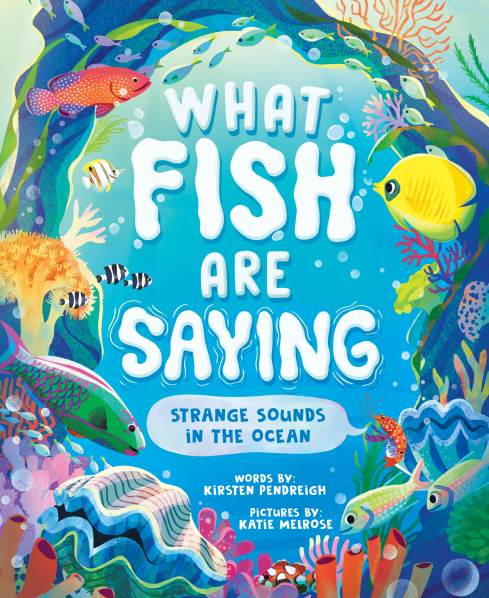
I’ll take you through how that worked for my recent nonfiction book WHAT FISH ARE SAYING: Strange Sounds in the Ocean, beautifully illustrated by Katie Melrose and published by Sourcebooks Explore.
One morning, my local radio station interviewed a marine scientist about a new library of fish sounds. A library of what now? I put down my coffee and listened closer. When he played some of the bizarre fish recordings, I was hooked. (Pun intended!) Fish can talk? Each species makes its own unique sound? We can study those sounds and use them to protect marine life?
I broke my own rule of letting the idea percolate and began my checklist while my coffee was still hot!
- Would this topic interest kids?
My gut told me yes. Like me, I imagined kids would be delighted to learn that fish “talk” and in such bizarre and funny ways. (I later surveyed kids at school visits and got a resounding thumbs up.) An especially kid-friendly aspect is that one of the loudest—and most important—sound makers in the sea is also one of the smallest: the snapping shrimp. It sounds are like popcorn popping, and noisy shrimp are a key indicator of reef health. (Also, there are fish that make sound by farting and burping. Crowd-pleaser!) - Has this topic already been done?
Nope! There was no other fish-sound specific kids book published. And the science of marine acoustics is so cutting-edge, new discoveries and recordings are being made daily.
*If a topic has been done before, can you approach it in a new way or add significant new insights?
I moved on to more questions:
- Does this topic have curriculum connections?
Yes. Elementary students typically do units on ocean ecosystems and organizations like Blue Schools run ocean education programs in many US and Canadian schools. I knew I could link sound libraries and lots of kid-friendly research sites for educators to further explore. - Do you have a unique approach in mind?
Yes! I could have taken a straightforward “here are some fish and these are the sounds they make and why they make them” approach. But in today’s competitive commercial nonfiction market I needed something more engaging. The fact that the story is about sounds dictated my direction. Onomatopoeia and rhyme swam into the mix! Right off the bat, I jotted down simple rhymes based on sound descriptions assigned by scientists: Boop! Whoop! Moan! Groan! So fun! I realized this could become an amazing read-aloud. (Later, I added a refrain, (It’s Noisy Down Below!), some direct questions to engage young readers, and recurring cameos by the amazing snapping shrimp—a little “Easter Egg” on each spread. Lots to explore visually and lyrically and encourage re-reads!)
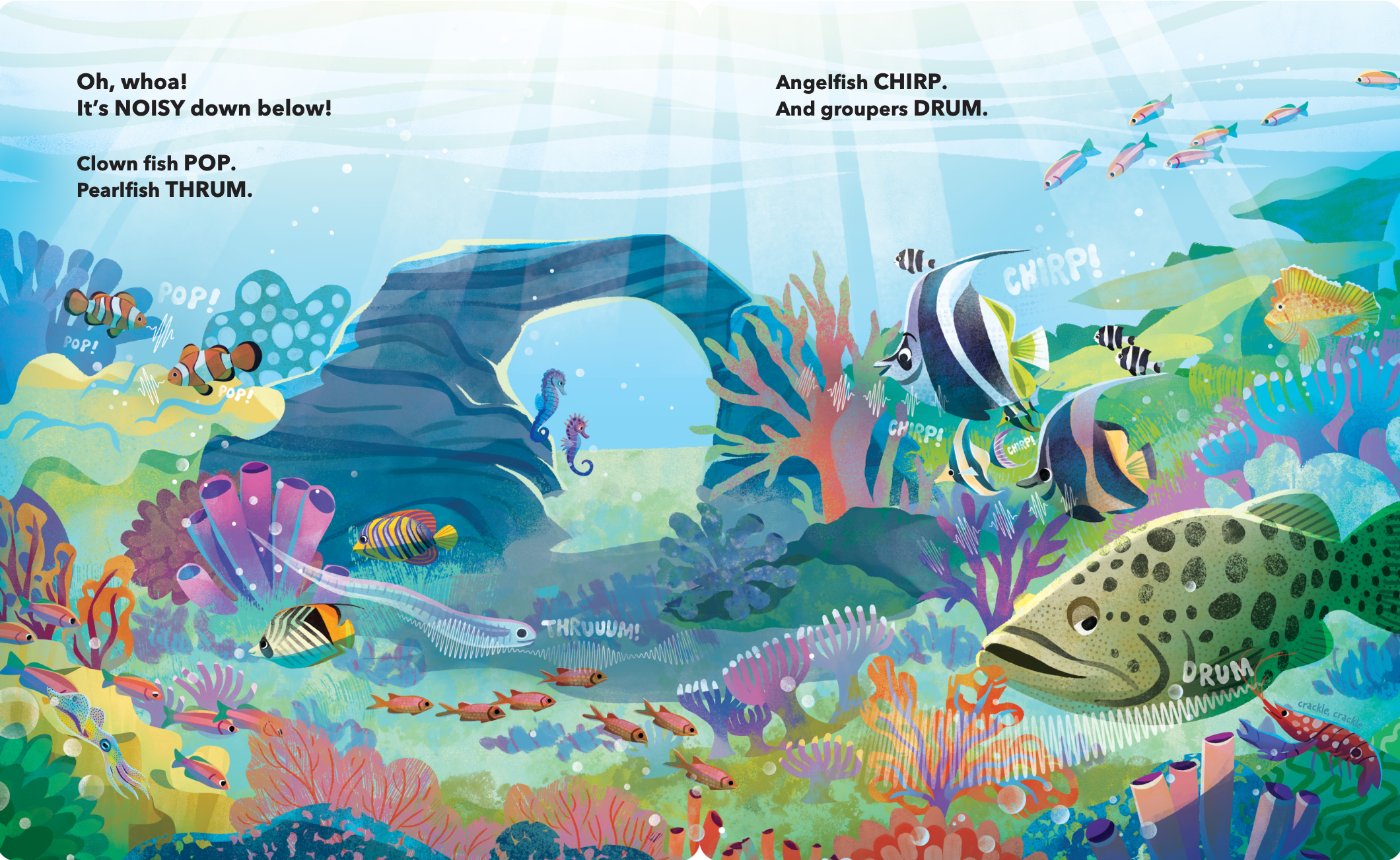
Can you spot the snapping shrimp?
- Are there layers?
Yes. To me, the best nonfiction books have many layers, and different entry points for different ages. The simple, fun, rhyming text was plenty for little ones. But for older readers the text and backmatter are a launching pad to discuss reef restoration, the impact of human noise, symbiotic relationships and so much more. (From the start I knew I’d be able to provide links to recordings and more amazing fish sound resources—feel free to check them out on my website). There’s also a literacy layer—teachers report that reluctant readers love sounding out the fish noises and become excited to read further. Finally, there’s a layer of scientific discovery and hope as sound mitigation is proving an affordable and practical way to help protect marine life. - Will my book inspire curiosity and further learning?
I think this is a great guiding question for any nonfiction author. Are you only interested in teaching kids about a specific topic or do you want them to enjoy engaging in your book so much that they seek out more information about the topic and more nonfiction books to read? As I was preparing this post, WHAT FISH ARE SAYING made a Best of the Year list in the category of Books that Build Curiosity. The reviewer said: “These are the stories that make kids ask questions, wonder about the world, and see things in a whole new way.” What nonfiction author could ask for more?
I encourage you to dive into topics you really love and find your unique way to engage kids. But first, protect your precious research and writing time by running a checklist!
I’ve abandoned many nonfiction picture ideas when they don’t make it through my checklist. That’s part of the process. Each time, I still learn amazing things and become better at figuring out what topics and treatments will sell. WHAT FISH ARE SAYING hit all the marks for me, and I’m delighted it received starred and glowing reviews. But the best reward is when I read it aloud, hear kids yell the refrain, and see them stretching their hands up high to ask me all their fishy questions!

Conducting the refrain at the Vancouver Writers Fest. Chopsticks double as sound makers and batons!
 Kirsten Pendreigh is a poet, journalist and children’s author from Vancouver. Her books celebrate our early instincts to care for the creatures that share our planet. Kirsten’s nonfiction titles, WHEN A TREE FALLS and WHAT FISH ARE SAYING use lyrical language, onomatopoeia, rhyme, and other poetic devices to engage children in the cutting-edge science of underwater species communication and the crucial role fallen trees play in regenerating the forest.
Kirsten’s fiction picture books include MAYBE A WHALE, LUNA’S GREEN PET and the forthcoming CAMPING IS A TERRIBLE IDEA. Find out more (and listen to the fish!) at kirstenpendreigh.com and follow Kirsten on Instagram @kirstenpendreigh.





 Writing for Kids (While Raising Them)
191 comments
Comments feed for this article
January 9, 2026 at 8:40 am
thecrowsmap
Kirsten, what a fascinating topic. Congratulations on What Fish Are Saying! Thanks for a great post.
Gail Hartman
January 9, 2026 at 8:42 am
Jany Campana
Thanks Kirsten for inspiring me to dive in!
January 9, 2026 at 8:49 am
tinamcho
I love the concept of this book, Kirsten! And I’ll have to look for it for my students. Thanks for your checklist!
January 9, 2026 at 2:07 pm
Kirsten Pendreigh
Thank you, Tina!
January 9, 2026 at 8:51 am
Manju Howard
Kirsten, I recently borrowed a copy of WHAT FISH ARE SAYING from my library. I love how you approached the topic and the back matter layout/info. Very appealing to all reading levels!
January 9, 2026 at 8:58 am
anchance
So many great things to think about. Thank you!
January 9, 2026 at 9:03 am
christinashawnbooks
Kristen, I really love your books and so enjoy this back stage view of your process. Thank you!
January 9, 2026 at 9:06 am
Elizabeth Volkmann
SO GOOD!!! What an energizing and inspiring post! Thank you, Kirsten!
January 9, 2026 at 9:07 am
widgetgeneral588d3baf5c
I love this so much
January 9, 2026 at 9:13 am
eleanorannpeterson
Great checklist, Kirsten. Thanks for sharing.
January 9, 2026 at 9:15 am
roundswrite
That was an amazing and helpful post! I love nonfiction and your post was very motivating for me to keep at it!
I can’t wait to read “What Fish are Saying” to my class. They’ll love it!
January 9, 2026 at 2:08 pm
Kirsten Pendreigh
Yay! I hope they enjoy it. Look for the crafts and activities and educator guide on my site 🙂
January 9, 2026 at 9:16 am
Tara Cerven
I love this checklist of questions to answer (before, during, and after writing) and think it ‘s quite useful for both fiction and non-fiction works!
January 9, 2026 at 9:17 am
writerdi2020
Love, love, love this checklist! Thanks for sharing!
Your excitement and enthusiasm for cool science shine through. Thanks for sharing that too!😊
January 9, 2026 at 9:18 am
Karin Larson
Thank you for sharing your process and terrific suggestions. WHAT FISH ARE SAYING sounds wonderful. I look forward to reading it.
January 9, 2026 at 9:21 am
Robin Brett Wechsler
What a fantastic checklist for nonfiction writers! Thank you, Kirsten. I’m excited to check out WHAT FISH ARE SAYING.
January 9, 2026 at 9:24 am
gattodesign
This is wonderful and very helpful. The checklist is very helpful. There are so many stories out there and you may not even know there is something similar. Thank You!
January 9, 2026 at 9:24 am
Robynn Hyde
Your book sounds amazing! And thank you for sharing the questions to ask – I have a few NF ideas I am playing around with and will definitely be putting them through these questions!
January 9, 2026 at 9:47 am
sburdorf
Thank you for sharing your helpful process. Have a wonderful day.
Susan Burdorf
January 9, 2026 at 9:51 am
Andy Wowor
Thank you so much for the peek into your creative process, Kirsten! This checklist is such a practical tool for nonfiction writers.
January 9, 2026 at 9:56 am
L. Hofke
thanks for sharing your process, Kirsten, and for the helpful tips
Your fish book sounds amazing. I look forward to reading it
January 9, 2026 at 9:59 am
kathalsey
A great breakdown of how to audition an idea for if it’s really worthy of being an NF picture book. This book idea has me “hok, line, and sinker”!
January 9, 2026 at 10:01 am
syorkeviney
I love the unexpected in non-fiction. It draws the child into inquiry and allows them to feel that they are unearthing something amazing and unknown to those around them! Great checklist for writers!
January 9, 2026 at 10:06 am
Laura Perdew
Great questions to ask when brainstorming nonfiction topics – thank you!
January 9, 2026 at 10:14 am
Tracey Kiff-Judson
I have only tinkered with nonfiction, but these are some great guiding principles to revisit those ideas. Thank you, Kirsten!
January 9, 2026 at 10:14 am
Rachelle Burk
As a scuba diver, and a non-fiction writer, I must have this book!
January 9, 2026 at 2:10 pm
Kirsten Pendreigh
Thank you! I may have to learn to scuba dive now!
January 9, 2026 at 4:27 pm
Rachelle Burk
I didn’t get certified till I was 52. Best thing I ever did! Over 300 dives now! I’ll be “listening to fish” in Indonesia in April 🙂
January 9, 2026 at 10:18 am
Andree Santini
Thanks for the great questions and inspiration, Kirsten.
January 9, 2026 at 10:19 am
Teddie
Wow! That was such a helpful post and just what I needed today. There’s a running joke in my family because I’ve always said fish have feelings. My husband has laughed about it for years. Well, now we know fish speak ( okay they make sounds). So, who knows. 🙂
Thanks so much for this amazing post!
January 9, 2026 at 10:22 am
Prairie Garden Girl
Thank you, , Kirsten, for sharing your thoughts on writing nonfiction stories that encourage curiosity.
Suzy Leopold
January 9, 2026 at 10:24 am
gregoryfulgione
OMG! I loved this post! I shy away from writing non fiction but the way you approach your topics really intrigued me. I’m also a fish, (guppy), owner and I take care of 24 guppies. Oops! There are now 30 guppies. Thanks for sharing!
January 9, 2026 at 10:25 am
Rona Shirdan
Wonderful post and great topic. Thanks for sharing!
January 9, 2026 at 10:25 am
Cynthia Leavitt
Thank you for sharing – great points.
January 9, 2026 at 10:48 am
Hélène Sabourin
Both of your books sound amazing. I will be looking for them.Thank you for sharing your checklist, it’s very inspiring.
January 9, 2026 at 11:05 am
rosecappelli
I just put this book on my library reserve, Kirsten! Thanks for the great ideas.
January 9, 2026 at 2:10 pm
Kirsten Pendreigh
Thanks, Rose!
January 9, 2026 at 11:06 am
Pam Barton
I have been thinking of trying to write a nonfiction book, this post was very helpful. I live on Cape Cod and have so many things I could write about, I need to research and make sure the topic isn’t already saturated. I have been playing with this idea for awhile. Thank you for sharing your process!
January 9, 2026 at 11:08 am
Lucretia Schafroth
What are great way for science to come alive for kids, Kirsten! WHAT FISH ARE SAYING sounds wonderful. I look forward to reading it. Thank you for sharing your process and useful checklist of things to consider when evaluating potential topics.
January 9, 2026 at 11:09 am
Joyce Frank
Awesome checklist to keep us from wandering too far down that dead end nonfiction road (not that I’ve done that, oh no, not me!).
I’m off to order your wonderful book.
January 9, 2026 at 11:14 am
Claire A. B. Freeland
Thanks for sharing your checklist! WHAT FISH ARE SAYING sounds amazing.
January 9, 2026 at 11:16 am
dgottier
Your book looks great! I must admit to having gotten ideas from NPR before.
January 9, 2026 at 11:24 am
bookclubhbhs
My daughter and I will have to check out your book! We became fascinated by underwater sounds a couple years back when her science fair project was about the sounds like popping bacon that they use to attract animals back to bleached coral reefs to restore them. Thank you for today’s post, I’m excited to go through these questions to build some new ideas today and to help with development of an idea I’m super excited about that I came up with thanks to yesterday’s Storystorm post!
January 9, 2026 at 2:11 pm
Kirsten Pendreigh
Oh wow! Yes, this reef restoration aspect is so hopeful and amazing. I love hearing about young scientists!
January 9, 2026 at 11:28 am
Annette Birdsall
Love your checklist! This is such a smart approach to mapping which ideas to follow…
Thanks for the inspiration! Can’t wait to read this to my grands.
January 9, 2026 at 11:33 am
Janice Woods
Great things to think about! Thanks for sharing!
January 9, 2026 at 11:38 am
reluctantspy
Thanks for sharing your fun!
January 9, 2026 at 11:42 am
Julia Wilder Banta
WOOHOO! Kirsten, I love your nonfiction PB inspiration and checklist. I’m an author of fictional PB and never even thought about searching for and researching nonfiction writing. You may have helped me create a new challenge. Thank you!!!
January 9, 2026 at 11:46 am
Stephanie Wildman
Biggest congrats Kirsten! Great post and great book!
January 9, 2026 at 12:05 pm
Laura Purdie Salas
This sounds (hehe) awesome. Congrats, and thanks for sharing your checklist!
January 9, 2026 at 12:22 pm
nrompella
Great criteria. I’ve had many ideas that won’t make it through! But that helps to focus on the ones that may.
January 9, 2026 at 12:25 pm
cindyjohnson2013
This is wonderful, Kirsten! I’m bookmarking it so I can get back to it easily. I have trouble narrowing (or broadening) nonfiction topics so they will appeal to kids and you’ve shown how to do this in a nutshell! Thank you!
January 9, 2026 at 5:01 pm
Kirsten Pendreigh
I’m really glad it was helpful!
January 9, 2026 at 12:26 pm
writeremmcbride
Kirsten, your checklist is very helpful, and your many examples are as well! As I ‘floated’ around your AMAZING website, I was astounded by your incredible resource inclusions! You have thoroughly identified your target audiences of readers and facilitators and addressed their needs in formats that make the information readily usable for them. Congratulations on your book and your wonderful work!
January 9, 2026 at 2:12 pm
Kirsten Pendreigh
Thank you so much!
January 9, 2026 at 12:28 pm
Sally Matheny
Great reminders. I look forward to reading this book to the little ones.
January 9, 2026 at 12:31 pm
margaretsmn
I need a copy of What Fish are Saying for my grandkids. They would be so curious about all the sounds. I have a board book coming out about the sounds that the birds make, “What’s That Sound? Birds of the Bayou”. Onomatopoeia is one of my favorite writing elements. Thanks for inspiring me to write about what I love.
January 9, 2026 at 12:33 pm
Lisa Riddiough
Such a great post, Kirsten! It makes this non-non-fiction PB writer want to write non-fiction!!
January 9, 2026 at 12:42 pm
nigel8it
Excellent post with great ideas to approach a non-fiction PB. Thanks, Kristin and congrats on What Fish are Saying!
January 9, 2026 at 12:45 pm
Colleen Owen Murphy
Thanks for sharing your insights, Kirsten. And congratulations on your book, WHAT FISH ARE SAYING. It sounds intriguing.
Your list of questions is quite helpful. I do love writing rhyming info-fiction and have several manuscripts in that genre. I do think I can answer yes to many of the questions you posed. However, I was not as fortunate to find a topic that had not been covered before, so kudos to you for your discovery!
January 9, 2026 at 2:13 pm
Kirsten Pendreigh
I got lucky! But you will too 🙂 SO many amazing discoveries out there.
January 10, 2026 at 7:28 am
Colleen Owen Murphy
I know!! Here is hoping!
January 9, 2026 at 12:47 pm
kathleen moore
This post is so inspiring! I’ve already started compiling a fresh list of topics to explore. And all of Kristen’s books look amazing – can’t wait to read and share them all!
January 9, 2026 at 12:48 pm
pathaap
Congratulations! Your book sounds amazing and fun, Kirsten!
Thanks, too for the helpful checklist!
January 9, 2026 at 12:48 pm
Cheryl A. Johnson
Loved reading this! Thanks.
January 9, 2026 at 12:53 pm
bethsbiblio
Congratulations. Thanks for the logical, sequential steps to consider the viability of an idea.
January 9, 2026 at 12:57 pm
susaninez0905
I am drawn to writing non-fiction stories, and this has been a great post. I love your checklist and will definitely use it as I continue to write! Thanks for sharing.
January 9, 2026 at 1:04 pm
sue macartney
Kirsten, thanks for this wonderful post and great NF checklist. Really looking forward to reading What Fish Are Saying!
January 9, 2026 at 5:01 pm
Kirsten Pendreigh
Thanks, Sue!
January 9, 2026 at 1:08 pm
SamanthaFarr
Love it! I feel like I have a mind for NF work, but feel like I don’t know where to start. Thank you for sharing the questions you work through. That will definitely help me develop some NF ideas that excite me and work through their viability.
January 9, 2026 at 1:18 pm
leahmoserwrites
Thank you!
January 9, 2026 at 1:27 pm
Becky Ross Michael
Loved learning your thought process on this. Thanks, Kirsten!
January 9, 2026 at 1:28 pm
Sue Heavenrich
Great post! I especially love your short checklist – that helps us determine whether it’s an idea we want to pursue for the long haul
January 9, 2026 at 2:25 pm
Kirsten Pendreigh
I wanted to include a list of NF books that inspired me but ran out of room. 13 ways was on the list!
January 9, 2026 at 1:36 pm
universallysecretlyb09ae3ff11
I can see why this topic immediately grabbed your interest!
January 9, 2026 at 1:47 pm
Gabi Snyder
This is so helpful, Kirsten! I’m typing up your checklist for future use!
January 9, 2026 at 1:47 pm
Catherine
This sounds like such a fun book :o)
January 9, 2026 at 2:28 pm
mommamoocow
So interesting!
Sharon Nix Jones
January 9, 2026 at 2:31 pm
Carmen Swick-Author
Kristen, I absolutely love this! I Have book idea that I started a few years ago about a brookie in a stream. It’s still in a file and when I’m ready for that book, I’ll have more insight.
Thank you!
Carmen
January 9, 2026 at 2:31 pm
rindabeach
I love when a topic calls and asks me to write about it. Thank you for giving me a few questions to ask before I answer.
January 9, 2026 at 2:32 pm
Joyce P. Uglow
I’m heading to the library to check it out (or request it). Thanks for your checklist, Kirsten. Much appreciated.
January 9, 2026 at 2:36 pm
lodobocreates
I can’t wait to read about what fish are saying. I’m curious! Thanks for the checklist.
January 9, 2026 at 4:58 pm
Kirsten Pendreigh
Thank you ! Hope you enjoy it!
January 9, 2026 at 2:37 pm
debbuschman
I love writing fiction and non-fiction. Thank you so much for the great checklist. Layers are so important.
January 9, 2026 at 2:49 pm
bkidd8
Oh my goodness, Kirsten! My brain is teeming with ideas swirling around. Thank you for the thorough list of questions to ask.
January 9, 2026 at 3:26 pm
Christine Van Zandt, up next: HOT DOG!
Love your book!
January 9, 2026 at 3:45 pm
leslieevatayloe
Great writeup! I printed it out so I can reread it over and over. Thanks so much.
January 9, 2026 at 3:47 pm
leslieevatayloe
Great writeup! I printed it out so I can read it over and over again. Thanks!
January 9, 2026 at 4:58 pm
Kirsten Pendreigh
Thank you so much!
January 9, 2026 at 3:59 pm
staceygustafson
What a creative idea! Fabulous title. Thanks for sharing.
January 9, 2026 at 4:35 pm
Dawn Mitchell
A checklist is a great idea! Thanks so much for sharing.
January 9, 2026 at 5:04 pm
Angela De Groot
Thanks for sharing this list of questions to ask ourselves about our NF projects before we dive in and lose ourselves in oceans of research. Very helpful. I’m excited to read you book – sounds fascinating and it’ll make a good mentor text, too.
January 9, 2026 at 5:14 pm
Poupette
I can’t wait to get this book, I’ve been listening to fish through our sailboat hull for years! Thanks for your helpful nonfiction checklist, too.
January 10, 2026 at 1:36 pm
Kirsten Pendreigh
Oh wow! lucky you! It was all new to me. Long ago, Jacques Cousteau called it the Silent Ocean. Not so much!
January 9, 2026 at 5:29 pm
Farida Zaman
Love the theme of your book, sounds and looks so interesting and so much fun! Thanks so much for sharing the checklist too!
January 9, 2026 at 5:32 pm
marty bellis
I’ve just been considering a new NF topic, so your checklist comes at the exact right moment. Thank you! Can’t wait to read WHAT FISH ARE SAYING. I can see why kids, and adults, would love it! Congrats!
January 9, 2026 at 5:48 pm
maramarakay
Excited to review my NF pieces with this checklist
January 9, 2026 at 5:48 pm
maramarakay
So excited to review my NF pieces with this checklist
January 9, 2026 at 5:56 pm
Marie Prins
I loved hearing you read WHAT FISH ARE SAYING at the PB, Eh! Party last month. Such an original and interesting story! And the rhymes are perfect! Thank-you for sharing your check-list that helps you decide what stories to write. One could use it for choosing both fiction and non-fiction projects. I’m definitely including it in my writing tool box!
January 10, 2026 at 1:34 pm
Kirsten Pendreigh
Thank you, Marie. Absolutely the checklist could work for fiction as well. Especially thinking about layers.
January 9, 2026 at 6:13 pm
Linda B
Love this and your book looks like so much fun for a nonfiction topic!
January 9, 2026 at 6:15 pm
marty
As I sit here your WHEN A TREE FALLS book is on the shelf behind me! I can’t wait to read WHAT FISH ARE SAYING next. It’s helpful to think about putting a nonfiction idea through a checklist to see if it is viable. Thank you for posting today. Thanks, Tara, for having Kirsten join us.
January 10, 2026 at 1:33 pm
Kirsten Pendreigh
Oh wow! Thanks so much, Marty!
January 9, 2026 at 6:20 pm
lucystaugler
Kirsten,
What a fabulous post about writing nonfiction! So many great thought nuggets!
Keep spreading your magic for kids!
Lucy
January 9, 2026 at 6:21 pm
heatherstigall
Thanks for the checklist!
January 9, 2026 at 6:21 pm
Sallye O'Rourke
Love this: Ask two simple questions first!
January 9, 2026 at 6:33 pm
Goodreadswithronna.com
Kirsten, I absolutely LOVED WHEN A TREE FALLS! Now I cannot wait to read WHAT FISH ARE SAYING, especially knowing all that went into it. Your checklist is fantastic. I intend to use it for a nonfiction idea I have been thinking about. TYVM. 🙂
January 10, 2026 at 1:33 pm
Kirsten Pendreigh
Thanks so much, Ronna!
January 9, 2026 at 7:52 pm
kathleengauer
These lively books sound like fun resources for children to explore our amazing world! Thanks for sharing your ideas for writing non-fiction.
January 9, 2026 at 8:19 pm
rachelcritchleya061056d76
Love the questions to determine if the topic is worthy enough to continue research. Logical way to approach which topics to continue with.
January 9, 2026 at 8:27 pm
Artelle Lenthall
Brilliant thanks Kirsten! I’ve only written one non-fiction ms (which I’ll now rewrite) because I didn’t really have a plan/ checklist to put me on the right track. I do now 🙂
January 9, 2026 at 8:32 pm
marshaelyn
Kirsten, You’ve inspired me. I’ve been researching a nonfiction topic for months and keep wondering if it’s kid-friendly. Your specific, on-target questions will help guide my way forward. Thank you! Sending you energy and positive vibes for your next book. (Can’t wait to read what fish are saying! I’ll request that our library order it.)
January 10, 2026 at 1:32 pm
Kirsten Pendreigh
Thank you!
January 9, 2026 at 9:49 pm
Rose
I love the idea of protecting your research! I loved how you created a survey for children to ensure your idea would be loved! I agree it does make for an awesome read aloud and it is something I think about when coming up with ideas. I love reading books aloud there’s definitely a different feel to it when you do. Thank you for sharing!
January 9, 2026 at 9:50 pm
JF Hall Writes
What a fun and empowering post, Kirsten! Thank you for the checklist idea and for walking us through your process. This is great! Congrats on your books. I’m looking forward to checking them out.
January 9, 2026 at 10:10 pm
Carol Gordon Ekster
I love a refrain. Makes for the best read aloud! Congrats on writing such an engaging picture book!
January 9, 2026 at 10:58 pm
Diane McBee
Congratulations on your book. Thanks for sharing the steps you do in writing non-fiction. They were helpful and your message is inspiring.
January 9, 2026 at 11:11 pm
Celeste
I really needed this post. I have a non-fiction topic to write and the checklist is a wonderful way to help me shape the writing. It’s when I need to take the research and make things appealing to kids that I was nervous about and the checklist offered is a good guide. Thanks
January 9, 2026 at 11:39 pm
Jennifer
Thank you for sharing your checklist. Very helpful!
January 10, 2026 at 12:17 am
bevbaird
This is such a helpful post Kirsten. Thank you.
January 10, 2026 at 12:31 am
Deena Lipomi Viviani
I get nf ideas all the time—I like your checklist to see if it is worth pursuing.
January 10, 2026 at 12:57 am
brightwishbooks
I’ve always done fiction writing but I loved these questions! Thanks for sharing!
January 10, 2026 at 1:27 am
Carol Peszko
What a great story! I know kids will love this book and want to read more.
January 10, 2026 at 2:04 am
serendipityinstars
Thank you for sharing your checklist! Such an inspiring post!
January 10, 2026 at 8:54 am
Robin Currie
This is a really excellent article on criteria for NF picture books. Well done.
January 10, 2026 at 9:44 am
Sonja McGiboney
Thank you, Kristin. I appreciate you sharing those questions. I’ve not ventured far into the world of non fiction because so much has been done already, but these questions inspire me to think differently about a topic.
January 10, 2026 at 10:19 am
melissajmiles1
These are GREAT questions! Thank you so much for coming up with this list.
January 10, 2026 at 10:39 am
Carrie Logsdon McCullough
Love the checklist. I’m so surprised that many of my ideas haven’t been done before. I’ll search for a book for my granddaughter only to find there are no books about the subject out there, thinking, “Why hasn’t anyone written about this?”
January 10, 2026 at 11:29 am
Melissa Stoller
Hi Kirsten – You know I love your books! Thanks for an excellent post and fantastic checklist I will use when thinking though NF ideas! I look forward to reading this book and will check out the fish sounds on your website! Congratulations!
January 10, 2026 at 11:37 am
Lynne Marie
What a Stellar Post! Thank you for sharing — such great takeaway for all!
January 10, 2026 at 12:52 pm
brennajeanneret
Oh my gosh! This was a lightbulb read for me. The checklist in particular is something I plan to use going forward! Thank you, Kristen!
January 13, 2026 at 2:21 pm
Kirsten Pendreigh
Yay!
January 10, 2026 at 1:09 pm
Alison McGauley
I love your initial quick checklist and then the second round as well. Thanks, Kirsten!
January 10, 2026 at 1:47 pm
8catpaws
Snap, crackle, pop! Rice Krispies in my dish… Is the crispy, puffed cereal really talking fish? Oh how droll! It’s NOISY in my bowl!
January 10, 2026 at 2:33 pm
Matt Forrest Esenwine
Kid interest? Heck, this has ADULT interest! Very cool concept. Thanks for sharing, Kirsten.
January 10, 2026 at 2:40 pm
Stephen S. Martin
I am Hooked and ready to Dive In!
January 10, 2026 at 3:29 pm
Bhandi
Thank you for the inspiration!
January 10, 2026 at 3:32 pm
ABMitch
I love the idea of using a checklist before embarking fully on a particular topic. Thank you for sharing, Kristen! These check points are very helpful!
January 10, 2026 at 4:27 pm
Mary A Zychowicz
Kirsten, this is a great checklist for nonfiction. Thank you. Your book looks so interesting and includes so many layers. I can certainly see how children and adults alike would be fascinated by it. I’m looking forward to reading it.
January 10, 2026 at 6:25 pm
bgonsar
now that’s how you take something from your everyday life and turn it into a story. Well done.
January 10, 2026 at 6:40 pm
bookfish1
Thanks for pulling back the curtain and letting us see your approach. I felt like I was in an online course. Great stuff. Can’t wait to get your book.
January 10, 2026 at 7:08 pm
dlapmandi
Thank you for the post. Wonderful questions for nonfiction ideas.
January 10, 2026 at 8:11 pm
anakellyinla
I have no doubt kids and adults alike are going to thoroughly enjoy WHAT FISH ARE SAYING. Congratulations and thanks for the checklist.
January 10, 2026 at 10:24 pm
Donna Cangelosi
What a fantastic post, Kristin! I love your checklist and will be using it a lot. Thank you!
January 10, 2026 at 10:26 pm
Stine Writing and Miniatures
My biggest obstacle is the “has this been done before”. I mean isn’t that where ideas come from? I wrote a story once about a hermit crab that meets inanimate objects but thinks they are creatures. The twist was that there was a crow that kept telling the hermit crab the problem. I was told this story was too much like “Are you my mother?”
January 10, 2026 at 11:46 pm
suejeanko
Useful shares! Love your range. MAYBE A WHALE and WHEN A TREE FALLS (wow how moving and skillfully done) are two books I think of often. So looking to forward this fun new release!
January 13, 2026 at 2:20 pm
Kirsten Pendreigh
Thank you so much! This one isn’t a tear-jerker 😉
January 13, 2026 at 2:53 pm
suejeanko
Ha! How much even a Comment reveals! — it’s true I love a tear-jerker!
January 11, 2026 at 12:18 am
Adriana Gutierrez
What a fun book! Thank you for the checklist question idea.
January 11, 2026 at 3:37 am
Annelouise Mahoney
Such a great post, Kirsten! It’s so smart to think of the layers of a story and how you go about making sure yours hits the marks you are going for. Thank you for sharing!
January 11, 2026 at 12:17 pm
Jan Milusich
Kristen, I loved your questions and I can’t wait to hear what fish say!
January 11, 2026 at 12:27 pm
Ellie Langford
WHAT FISH ARE SAYING sounds absolutely fascinating. Thank you, Kirsten, for the questions to ask about our story ideas or rough drafts. Keep writing!
January 11, 2026 at 1:51 pm
schellijo
Wonderful and exciting ideas. Thanks for sharing!
January 11, 2026 at 1:58 pm
Rebecca Colby
Great checklist. Thank you!
January 11, 2026 at 4:40 pm
Judy Wilkins Sobanski
Thank you for the checklist, Kirsten. Congrats on What Fish are Saying. I’m sure your idea for this book checked every box!
January 11, 2026 at 5:42 pm
carolynleillustrations
Thank you for the checklist. This is very helpful.
January 12, 2026 at 2:18 am
Maria Marshall
What a great book idea & congrats on a gorgeous book baby! Thank you so much for the wonderfully helpful checklist.
January 12, 2026 at 10:57 am
Helen Waters
I can’t wait to read What Fish Are Saying! Thanks so much for sharing your experience.
January 12, 2026 at 11:08 am
bsenenman
What a fun concept and I’ll definitely use this checklist with some of my NF ideas. Thank you.
January 12, 2026 at 1:56 pm
Stephanie Alter Jones
This looks like a beautiful (and fun + informative) book!! Thanks for the helpful checklist.
January 12, 2026 at 2:17 pm
elise304
Thanks for sharing your thoughts and stories in this Storystorm entry! I’m inspired by looking at your website and look forward to reading your up and coming books!
January 13, 2026 at 2:19 pm
Kirsten Pendreigh
Thank you so much!
January 12, 2026 at 2:30 pm
Megan McNamara
This is an amazing topic. *I* would learn a lot reading this book!
January 12, 2026 at 4:56 pm
joanswanson58
Great concept for a picture book! Love you went for sounds 🙂
January 13, 2026 at 12:08 am
Jess
It’s so cool to see your process on this. My son and I read an ARC copy and he loved it. He was laughing and having a good time. He’s a self proclaimed fish expert so he of course knew all the sounds.
January 13, 2026 at 2:19 pm
Kirsten Pendreigh
Ha! Yes there are many young fish experts out there. LOVE IT! Tell him Boop, Whoop! from me 🙂
January 13, 2026 at 7:47 am
Freda L.
I need some awesome refrains..
I think I can. think I can@
January 13, 2026 at 12:43 pm
Dana Nahas Dillaman
I can’t wait to read your book! Thank you for this approachable and inspiring list–I saved it for when my brain wants to work on a NF project.
January 13, 2026 at 2:41 pm
Alicia Shawn Gagnon
A very helpful checklist!!! I am applying to an NF idea that has been brewing…will be brainstorming…after I let it percolate. Great, great ideas and obviously worked well for your award- winning book! Congrats!!!
January 13, 2026 at 7:57 pm
Teresa Speranza Vargas
I don’t write nonfiction (yet…), but I can see where this checklist could work for fiction ideas as well! Very helpful, thank you!
January 13, 2026 at 8:43 pm
helenedebelak
Cool book!
January 14, 2026 at 11:39 am
amybeth349
I like using a checklist and this is so helpful. I like will it inspire children to read more and perhaps take action in a small way. Thank you.
January 14, 2026 at 3:11 pm
bentleycc650
You’ve inspired me to write non-fiction. I see interesting topics and people and the list of questions would enable me to save time and not go down a rabbit hole of research.
January 14, 2026 at 4:57 pm
Jessica Iwanski
I need to read “What Fish are Saying” right now! It sounds like so much fun, for kids and adults alike! I love your checklist and took lots of notes so that I can put it into action for my own nonfiction (and even historical fiction) ideas. Thank you, Kirsten!
January 15, 2026 at 12:24 pm
Mona Pease
I love non fiction and research but…I need to make the important checklist. I love some topics but will they appeal to kids? This is such a great post. Thank you Kirsten.
January 15, 2026 at 12:30 pm
ptnozell
Thank you for sharing your checklist, Kirsten, and for your many tips on determining when, whether & how to pursue non-fiction topics. I can’t wait to read WHAT FISH ARE SAYING to my young fish-obsessed granddaughter.
January 17, 2026 at 11:11 am
brintonculp
Love the fish sounds! Can’t wait to check out the book! And thanks for the checklist.
January 17, 2026 at 4:58 pm
carmen2750
I love the steps that Kristen follows in the early stages of writing a new book. Appreciate her walking us through that process and providing so many tips and great advice. Congrats on all of your publications and those coming in the future!!
January 17, 2026 at 6:13 pm
Jenn
What a very cool topic! My (now 19yo) aspiring marine biologist would have gobbled up this book.
January 19, 2026 at 4:54 pm
Danya Vasquez David
How very cool, fun, and wonder-some! Years ago a (university) student of mine did a presentation on dolphins and ‘ecolocation’- which was a wild new concept for me- so fascinating! I love that there’ll be a picture book about fish sounds and I know it will be beautiful! Congrats!!
January 20, 2026 at 3:19 pm
marcihersel
This is so exciting and interesting!! I’m excited, thank you!
January 20, 2026 at 4:57 pm
Dawn Prochovnic
I learned so much from this post! I just put your fish sounds book on hold at the library and can’t wait to read it!
January 20, 2026 at 8:09 pm
Laura Wippell
This is a great checklist, thanks Kirsten!
January 20, 2026 at 9:22 pm
Anne LeBlanc
Thank you for the amazing post! I have so many questions (especially about nature). Now I have a guideline to help me. I loved your books: When A Tree Falls and Luna’s Green Pet! I just picked What Fish are Saying up from the library today and can’t wait to read it. I put Maybe a Whale on hold. We have 18 copies spread among these four books at my public library!
January 21, 2026 at 3:26 am
Debbie Moeller
What a fun and fascinating topic for kids! I’m sure they were “caught” up in the story and you had a boatload of questions afterward. I think your checklist is very helpful. I’ll run through some of my NF ideas to see if they are viable. Thanks for sharing.
January 23, 2026 at 11:26 am
naturewalkwithgod
Wow, Kirsten, what a terrific book idea, and you developed it so well! So many layers to appeal to readers. Thank you for sharing with us. –Kim Peterson
January 25, 2026 at 3:28 pm
Nadine Poper
A fascinating topic.
January 28, 2026 at 2:05 pm
brigitus6620
Lots of interesting things here. Thank you for your post!
January 28, 2026 at 9:12 pm
S. K. Wenger
thank you for sharing your check list! I’ll be using it to test my ideas.
January 30, 2026 at 1:23 pm
jilltatara
This post is incredibly helpful! I’m working on a couple NF manuscripts right now and that checklist has so many important points. Thank you so much!
January 31, 2026 at 11:11 pm
Keeping the Me in Mommy
Thanks for your checklist to help pick the gems in our Storystorm. Great conditions to consider!