by Rob Sanders
Have you ever been told, “Just wait and inspiration will strike”? The adage gives the impression that inspiration is out of our control, and we have to wait on its arrival, no different than waiting for lightning to strike. Then there’s the opposite side of the coin when we’re told, “Inspiration is everywhere. If you can’t find it then you’re not looking.” That saying makes me feel as if there’s something lacking in my creative spirit if I’m searching for ideas, writing solutions, or inspiration and they’re elusive. Perhaps the root of inspiration lies within the creative spirit itself, or as I like to call it—the creative muse.
You may have met your creative muse without even realizing it. Have you ever had a serendipitous moment when the perfect word or phrase came to mind? Ever been on a walk and quite literally could see the tree rather than the forest for a new project? Ever visited a museum and found the impact of the work gave you creative energy for days? That, my friend, is your creative muse at work.
Your creative muse is not some magical being that waves a wand indiscriminately or something that you conjure up by dancing around a fire with your critique partners. Your creative muse is an ever-present part of you—sometimes active, sometimes silent, always waiting to be fed and nourished.
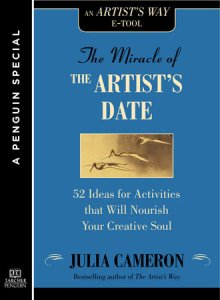 In The Miracle of the Artist’s Date Julia Cameron explores what I think is the key to feeding your creative muse—the artist’s date. Long before I read Cameron’s book, I went on what I called creative encounters. My encounters included museums, musicals, one-day trips, hikes, and more. Those creative encounters did exactly what Cameron says an artist’s date does, they nourished my creative spirit, my creative muse.
I recommend treating your muse to a creative encounter at least once a month. What ignites your creative energy and inspires your writing muse will be unique to you. For some it may be live theater, a concert, or another kind of performance. For others it may be touring an art installation, gallery, or museum. Others may benefit from a trip to the beach or time to think during a walk through the woods. Scouring cookbooks, trying out a new recipe, or recreating a family meal from years gone by may inspire someone else. Whatever you choose, I recommend that you let your creative encounter be something out of your normal routine, something special for you, and not something related to research for an upcoming project. I have found that creative encounters are most effective for me when I experience them alone—but that may vary from person to person.
The teacher in me also thinks there’s a need to reflect after a creative encounter to help your logical self realize what has impacted your creative self. Whether it be the day after, the next week, or a month later, think back on the creative encounter, what you enjoyed about the experience, and what changes you noticed in your creativity following the experience. Don’t get hung up on results since your muse may be inspired by an encounter months later, but do reflect so you can determine which creative encounters are most meaningful and helpful to you.
Here’s a goal for you—how about planning one creative encounter each month in 2026? Feed your creative muse and see what results come from it. Don’t wait for inspiration to strike—though it might. If inspiration is everywhere, grab it and hold on to it. But feed your creative muse, too. Now, go enjoy a creative encounter!

Rob Sanders, from Brandon, Florida, is a teacher who writes and a writer who teaches. He is known for his funny and fierce fiction and nonfiction picture books and is recognized as one of the pioneers in the arena of LGBTQ+ literary nonfiction picture books. Rob’s nonfiction books continue to break new ground, including the first picture books about the Pride Flag, the Stonewall Uprising, a transgender Civil War soldier, a gay presidential candidate, and the first gay marriage in America. His work also continues to introduce readers to heroes of the LGBTQ+ community—from Harvey Milk to Gilbert Baker, from Cleve Jones to Bayard Rustin, and more. His fiction explores friendship, relationships, standing up for others, and being allies. Blood Brothers, his first middle grade novel, written in powerful, raw verse released in July 2022 and was named an NCTE 2023 Notable Novel in Verse. 2025 releases included the warm-hearted story, Book Comes Home: A Banned Book’s Journey and André: André Leon Talley—A Fabulously Fashionable Fairy Tale, co-authored with Carol Boston Weatherford. 2025 will see the release of A Family of Readers (Charlesbridge) and Play Proud: Fiercely Fabulous Queer Athletes (Beaming Books). Rob believes in paying it forward. He serves on the SCBWI Impact and Legacy Fund Steering Committee and is a frequent speaker, teacher, mentor, coach, and critiquer. Rob is represented by Rubin Pfeffer and Amy Flynn of Aevitas Creative Management. Visit him at robsanderswrites.com and on Instagram @RobSandersWrites.





 Writing for Kids (While Raising Them)
133 comments
Comments feed for this article
January 8, 2026 at 8:46 am
gregoryfulgione
I love your suggestion to stimulate our creative muses by visiting museums, seeing live entertainment, taking day trips to experience nature & ect. Thanks for sharing!
January 8, 2026 at 8:52 am
Jany Campana
Thanks Rob for the creative encounter idea!!!
January 8, 2026 at 8:56 am
thecrowsmap
Great advice, Rob. Thanks!
January 8, 2026 at 9:14 am
Rona Shirdan
Great idea to intentionally set an artist’s date each month!
January 8, 2026 at 9:25 am
bookclubhbhs
Thanks for today’s Storystorm inspiration!
January 8, 2026 at 9:29 am
pathaap
Fantastic post, Rob! I love the idea of treating my muse “to creative encounters” each month!
January 8, 2026 at 9:30 am
anchance
Thank you for this!
January 8, 2026 at 9:31 am
Hannah Roy LaGrone
Well I love the idea of treating recipes as creative encounters instead of chores 🙃 My kids are young and I don’t have as much time as I would like for concerts and museums, but creative encounters are everywhere. Thanks for the reminder! Hannah Roy LaGrone
January 8, 2026 at 9:32 am
ellenramsey
Love the idea of an artist’s date–a creative encounter! Thanks, Rob.
January 8, 2026 at 9:36 am
sburdorf
I am no good at waiting, that is why I love this article! Thank you for sharing your process.
Susan Burdorf
January 8, 2026 at 9:37 am
Susan Wroble
Love this idea! Making it my 2026 goal.
January 8, 2026 at 9:42 am
sullyweston
What an inspiring post, Rob! Great tips to keep those creative juices running all year…thanks so much for sharing!
January 8, 2026 at 9:45 am
Teddie
Such helpful advice, as always, Rob. I intend to give that artist’s date a try. Thanks for your post.
January 8, 2026 at 9:47 am
JF Hall Writes
You gave us homework…with deadlines! This is just what I needed. Thank you! And your blog reminded me to reflect on those moments over the last few years when I’ve had out-of-the-ordinary experiences that really stayed with me. I never thought about whether that flowed through to my writing. I really like this. Also, we own — and love — your Stonewall PB. It helped us talk with our son about the struggles the LGBTQIA community has faced and continues to face.
January 8, 2026 at 9:53 am
eleanorannpeterson
Thank you, Mr. Sanders. I’ve been too sedentary these past few years, and I should plan on at least two creative encounters per month. I enjoy the outdoors; that might be a good start. Perhaps more since I take care of my ten-year-old grandchild, who keeps me fit by playing soccer and basketball. He is a significant influence on my writing. Wishing you the best in 2026.
January 8, 2026 at 10:01 am
Robin Brett Wechsler
I appreciate your suggestions for inspiration and reflection. Thank you, Rob! Love your books too.
January 8, 2026 at 10:10 am
Janice Woods
Fantastic advice, Rob! Thanks so much for sharing!
January 8, 2026 at 10:15 am
rosecappelli
Thanks, Rob! I’m trying to get back to that artist’s date idea so your post was just what I needed to hear today.
January 8, 2026 at 10:18 am
lodobocreates
Reflecting on the creative encounters… I like that addition. Thanks.
January 8, 2026 at 10:23 am
authorlaurablog
Great post! The teacher in ME agrees with you about reflection! I also plan one creative encounter each week because I have the time and why not?!
January 8, 2026 at 10:24 am
Laurel Ranveig Abell
I LOVE this!!! I call it “filling my well” and only do it sporadically. But I’m committed to getting a “date” with my muse every month this year! What fun!!
January 8, 2026 at 10:25 am
melissajmiles1
Thanks for the post! I need to slow down and take a minute with my muse!
January 8, 2026 at 10:26 am
Robin Currie
Excellent idea! Thanks.
January 8, 2026 at 10:34 am
Carol Gordon Ekster
I’ll have to check in with my muse to see what she might like to do! Thanks for the inspiration! May 2026 be a creative year for us all.
January 8, 2026 at 10:35 am
Karin Larson
Excellent advice, thank you. I plan to do just this sitting on a beach next week!
January 8, 2026 at 10:37 am
Elizabeth Volkmann
Thanks, Rob!! Such an inspirational
post. 🙂
January 8, 2026 at 10:44 am
Becky Ross Michael
Sounds like a worthy goal for this new year! Thank you, Rob, for the motivation.
January 8, 2026 at 10:47 am
Julia Wilder Banta
Thank you, Rob for introducing us to ways for meeting our creative muses. We know they’re out there! New goals for 2026.
January 8, 2026 at 10:51 am
kathleengauer
Love your idea of immersing yourself in new experiences to spark inspiration and find fresh perspectives! Now, I’m off to discover my creative muse…
January 8, 2026 at 11:06 am
Tracey Kiff-Judson
Thanks, Rob! Great advice!
January 8, 2026 at 11:10 am
heatherstigall
I like your homework assignment!
January 8, 2026 at 11:10 am
leslieevatayloe
Great advice and I’m going to read the book The Miracle of the Artist’s Date. Thank you!
January 8, 2026 at 11:13 am
bevbaird
What great advice. I’ve let that practice go the past year or so. Need to get out and nurture my creative muse. Thanks
January 8, 2026 at 11:30 am
Matt Forrest Esenwine
Sometimes that “date” can be as simple as staying at home and taking a few minutes on the sofa – my muse loves to daydream!
January 8, 2026 at 11:40 am
Claire A. B. Freeland
You’re sending me to museums and shows and day trips and hikes? I’m in!!
January 8, 2026 at 11:47 am
Bhandi
My first thought reading this was “oh good, something else for me to have to do” and I realize that’s a poor response. I have a 5 yo, 3yo, and 2yo. I’m tired. I’m a SAHM so I see the same things everyday. One of my sons elopes sometimes and has issues going anywhere other than familiar places at times. I need to be extra prepared for going to creative places and just thinking about that zaps any energy I may have had for inspiration. BUT this is a poor attitude! There are plenty of creative people out there with life challenges and not going to new places or having new experiences doesn’t help my children either. They also need a creative environment sometimes! So this sounds like a challenging but good goal to have this year.
January 8, 2026 at 11:53 am
Cynthia Leavitt
I can connect to this so much. Sometime I get a title flash out of no where and quickly right it down; then feel like I’m suffering a drought for weeks or months thinking I’m not creative at all…Good to know I am not alone!
January 8, 2026 at 12:32 pm
Marie Prins
Treating my muse to creative encounters may be the same as feeding my soul when I’m outdoors. Winter sometimes puts these encounters on ice, but your post is a push out the door.
January 8, 2026 at 12:33 pm
Mariana Ríos
I loved this post and the recommendation of having scheduled creative encounters. Thank you! It’s actually something I’d considered in my New Year resolutions and this reaffirmed my thoughts. 💕
January 8, 2026 at 12:36 pm
Farida Zaman
Just what I needed to read today, perfect timing too, the beginning of the year to! Shall make a promise to myself to do just this at least once a month! Thank you Rob!
January 8, 2026 at 12:42 pm
Sallye O'Rourke
I love this: permission for creative encounters!
January 8, 2026 at 12:48 pm
serendipityinstars
Thank you for this advice! Adding it to my writing goals.
January 8, 2026 at 1:22 pm
Diane McBee
Creative encounters is such a great name for these moments in time. Thanks for sharing.
January 8, 2026 at 1:23 pm
Helen Waters
Yay! Thanks so much for the inspiration for creative dates! I’ll make that a goal for this year for sure.
January 8, 2026 at 1:32 pm
leahmoserwrites
Great advice!
January 8, 2026 at 2:16 pm
LaurenKerstein
I think this post might have just helped me inch closer to ironing out a problem in an oldie-but-goodie manuscript. Thank you!
January 8, 2026 at 2:34 pm
Cindy Leopold-Ritsko
Thanks, Rob.
With current have-to do lists and commitments, I nearly forgot to go play this month… which is hard for “an otter” to forget, LOL.
Hope we all take time to go be inspired through creativity, observation, and quiet moments.
January 8, 2026 at 2:40 pm
nrompella
Yes! I did a creative encounter in the fall–going to the Milwaukee Art Museum BY. MYSELF. It was amazing to be re-inspired. Going solo (first time ever!) was also nice at a museum to be able to move at whatever pace I wanted to. Highly recommended. And now I have a fun and important-sounding name for it: Creative Encounter.
January 8, 2026 at 2:40 pm
Gabi Snyder
I love going on artist’s dates. Thanks for the reminder to get back to them! And I think you’re right that they work best when the activity is something outside of your normal routine.
January 8, 2026 at 2:43 pm
Megan McNamara
I didn’t know Julia Cameron had a book about this topic! I started The Artist’s Way, but only made it through three weeks. The creative dates were my favorite part though, and I do want to start again.
January 8, 2026 at 3:05 pm
sheriradovich0384
I don’t know where some ideas come from when out wandering the neighborhood but walking usually helps stimulate my brain into story ideas and endings for stories. Walking through the parks and mountain ranges nearby help clear my mind and find stories about nature. Thanks for your insight to writing ideas and weekly library hunts for new books.
January 8, 2026 at 3:46 pm
joanswanson58
My muse is triggered just by being observant. Mostly observing nature, but kids also say and do the darndest things!
January 8, 2026 at 4:05 pm
Linda B
I tend to choose to have creative encounters when I’m stuck in my writing with the hope that a different activity will help. Now I’m wondering, what if I schedule these on a regular basis and maybe I can avoid being stuck! Thanks, Rob.
January 8, 2026 at 4:44 pm
debbuschman
I truly agree with you on creative encounters. Many of my ideas come when I am out in nature and out of my element. Thanks Rob for the reminder. I am booking a date. Although I do love dancing around a fire with my critique partners. LOL
January 8, 2026 at 4:59 pm
lucystaugler
Rob,
I am a huge fan of Julia Cameron, too! Thanks for reminding me of the creative encounters! I let those go by the wayside lately. Time to start strolling and dreaming!
Thanks for being an advocate for the LBGTQ community!
Lucy
January 8, 2026 at 6:07 pm
karenleewyoming
Oh, to live where I could go to a museum/zoo/gallery once/month! That always was a way to feed my creativity, years ago. I’m blessed with wild, wide-open spaces….but I walk in them every single day, which can be inspiring, but not the sort of “date” you are talking about. Hmmmm. I’ll have to find something…..Thanks for sharing!
January 8, 2026 at 6:16 pm
Angela De Groot
Rob, thank you for reminding us to take our muses on a date and fill our creative wells so that we’ll have inspiration on tap.
January 8, 2026 at 6:32 pm
reluctantspy
i agree. So something out of the ordinary at least once a month. Yay!
January 8, 2026 at 6:38 pm
Adriana Gutierrez
My creative muse doesn’t let me sleep some time. LOL Thanks for the inspiration.
January 8, 2026 at 6:40 pm
rindabeach
Here’s to making a creative date with myself in January!
January 8, 2026 at 7:12 pm
Maria Marshall
Thanks for the creativity date challenge. I’m excited to see how this works.
January 8, 2026 at 7:24 pm
roundswrite
Just when you think there can’t possibly be another stray idea out there–
What a great way to trick your brain into thinking that your enjoying something else! I suppose it gets jealous and slips in some creativity when you forget you were looking for it. Maybe that’s why I’ve always kept a notebook nearby!
Can’t wait to provide that creative encounter for my Muse!
Thank you!
January 8, 2026 at 8:43 pm
bookfish1
Thanks for the post. I like the idea of a creative date, for me it will be hiking and being out in nature alone with my thoughts and hopefully my muse, whatever that might be. I also like the notion that the benefit may not come when you are on the date. Somewhat analogous to praying. The benefits of prayer do not come when we pray.
I’s also like to thank you for the time and effort you put into your website. What a great resource.
January 8, 2026 at 8:55 pm
sallymcclure
I’m off on a nature hike to feed my creative muse!
January 8, 2026 at 8:59 pm
Erik Ammon
I love the idea of taking myself on an Artist Date! Once a month? and to new places? Both would be very beneficial. Thanks for the idea!
January 8, 2026 at 9:27 pm
vijikc
I completely agree with you! Thank you for reminding us!Sent from my iPad
January 8, 2026 at 9:41 pm
seschipper
Day 8 and another great post! Thanks, Rob!
January 8, 2026 at 9:44 pm
Sue Heavenrich
Doing Artists “dates” or field trips is actually something I wrote into my goals for this year – at least one a month. Today was a perfect day to go to the zoo! I don’t know if my encounter with owls and wolves will generate ideas, but I got some walking in, and got away from the news for a few hours.
January 8, 2026 at 10:08 pm
DrZatHome
I love going to museums for inspiration! Love these suggestions!
January 8, 2026 at 10:25 pm
bentleycc650
Thank you for the inspiration. I heard Julia had a new book. Now I’ll check it out. I loved her first one.
January 8, 2026 at 10:50 pm
Rose
I love the idea of creative encounters! I always actively look for things to spark my imagination or add to an idea I already have. Thank you so much for sharing!
January 8, 2026 at 10:53 pm
Cindy Greene
Love this! Brings me back to my creative encounters in Courage to Create. I am going to schedule some with myself now. Thanks!
January 8, 2026 at 10:55 pm
8catpaws
My creative muse read your post and suggested we go to a play.
January 8, 2026 at 11:25 pm
schellijo
Some great ideas. Thank you for sharing!
January 9, 2026 at 12:10 am
Jennifer
Yes! I call this creative crossing training. I am often inspired by art and love visiting galleries and museums and sitting, reflecting, and writing. My muse enjoys walking through forests too.
January 9, 2026 at 12:11 am
brightwishbooks
i love this post! As someone who loves exploring I’m great at those creative encounters but I think I need to work on reflecting afterwords!
January 9, 2026 at 12:12 am
bgonsar
Very inspiring Rob. And thanks for the book reference.
January 9, 2026 at 12:12 am
bgonsar
Very inspiring Rob. And thanks for the book reference.
January 9, 2026 at 1:12 am
Ellie Langford
Rob, I think my creative encounter is most likely to happen while collecting shells at the beach, near a lighthouse, with the gentle waves washing over my bare feet. Thanks for the inspiration.
January 9, 2026 at 9:56 am
syorkeviney
Rob, what a great reminder to observe deeply, to be refreshed by being totally present, to consider and then to write! Thank you.
January 9, 2026 at 10:01 am
L. Hofke
great idea. Thanks!
January 9, 2026 at 10:33 am
Prairie Garden Girl
Rob! Thank you for the reminder of the importance to experience creative encounters to nourish creative souls.
Suzy Leopold
January 9, 2026 at 11:54 am
writeremmcbride
Rob! Your post reminded me of a practice I used to include in my life regularly, that I have let go of in the past six or seven years! THANK YOU! I would add as well, that how we frame our writing time (as Artist’s Date or grueling duty!) would also contribute to the development and recognition of creative thoughts/ideas.
January 9, 2026 at 12:30 pm
Cheryl A. Johnson
Thanks, Rob! I have a quote page in my writing planner and yours is the first for 2026 ~Your creative muse is an ever-present part of you—sometimes active, sometimes silent, always waiting to be fed and nourished.
January 9, 2026 at 12:35 pm
Colleen Owen Murphy
I have read that advice before and ignored it! I will try to heed it this time. Thanks Rob!
January 9, 2026 at 12:51 pm
susaninez0905
Wonderful advice! I think that I will add a special note to my monthly calendar to do exactly that.
January 9, 2026 at 12:56 pm
bethsbiblio
Thanks for all the creative muse suggestions.
January 9, 2026 at 2:12 pm
Carmen Swick-Author
Rob, I do get great ideas on walks, camping, traveling and so on. Thanks for the reminder to write some of these experiences down each month.
Carmen
January 9, 2026 at 3:56 pm
rachelcritchleya061056d76
Love the creative encounter idea but scheduling a years worth was what I think was perfect. Time to plan what to do. I’ll put them on my calendar and hold myself accountable. Thanks
January 9, 2026 at 4:31 pm
nsgarnett
Creative encounters- I like this idea. Thank you, Rob.
January 9, 2026 at 6:06 pm
gigimatlack
While I have long appreciated Julia Cameron’s work, I don’t do “morning work.” My muse sleeps in and my dog does not.
That said, I participate in creative enclunters with gusto! Thanks for the reminder to make them regular and schedule them!
January 9, 2026 at 6:20 pm
Goodreadswithronna.com
Wow, Rob, I’m so glad you shared this info. I cracked up picturing my cps in fairy attire when you wrote: “Your creative muse is not some magical being that waves a wand indiscriminately or something you conjure up by dancing around a fire with your critique partners.”
I am part of a Fun Fridays group and the activities are so varied and fulfilling. I recommend these kind of encounters wholeheartedly! Also, outings to a second hand bookstore never fails to spark ideas.
January 9, 2026 at 7:29 pm
Lisa Riddiough
Wonderful post! Thanks, Rob!!
January 9, 2026 at 8:00 pm
suejeanko
Love this article on wooing the muse. A wise alternative to both “just wait” and “inspiration is everywhere” — so true the problem with each of those. Thank you for your sharing, as always!
January 9, 2026 at 8:52 pm
marshaelyn
Rob,
You’re spot on about our Creative Muse. Most mornings, mine wakes me up at 3:00 with ideas, solutions to plot twists and more. I really like your idea of “dating” our Muse. Your suggestions will serve as inspiration for us as well. Thank you for encouraging us.
January 9, 2026 at 11:05 pm
Celeste
I’m always getting what I think will be great titles. Those titles have the possibility for making a good story. Thanks for your suggestions Rob. Also, the book recommendation.
January 9, 2026 at 11:47 pm
Artelle Lenthall
Thanks Rob, most ideas to date (no pun intended) from this inspiring (pun intended😁) post.
January 10, 2026 at 9:38 am
Sonja McGiboney
Thank you for sharing your insights into the creative muse. New experiences always fill my creative meter.
January 10, 2026 at 11:30 am
Melissa Stoller
Thanks for a great post, Rob! I love finding inspiration from nature, museums, travel, and more. I look forward to many artist dates in 2026! And I look forward to reading your new books!
January 10, 2026 at 5:44 pm
Jennifer
Love this idea, this is a great new year resolution to aim for! I have always found inspo from walks in new neighborhoods, will bring this into the new year too.
January 10, 2026 at 7:00 pm
dlapmandi
Thank you for the post. Meet your creative muse then feed it and fill it with as much information as you can.
January 10, 2026 at 9:10 pm
mrbellasgmailcom
Thanks for the fun way to find inspiration!
Best, Mari
January 10, 2026 at 10:26 pm
Donna Cangelosi
I love going on artist dates. Thanks so much for the reminder!
January 11, 2026 at 12:37 am
Annelouise Mahoney
Thank you for your post, Rob. I love the idea of committing to a creative encounter at least once a month. It’s important and fun too! : )
January 11, 2026 at 1:55 pm
Rebecca Colby
Great inspiration. I used to take artist’s dates but have gotten out of the habit. Time to address that! Thanks, Rob!
January 12, 2026 at 7:27 am
Freda L.
Thank you for the ideas
January 12, 2026 at 1:07 pm
Sherry Edgeberg
This is awesome. I’m sure I’ve noticed such encounters with my creative spirit in random situations, but I love the idea of making a date. Thank you for sharing.
January 12, 2026 at 1:50 pm
Stephanie Alter Jones
I know I’ll see/do creative things, but I’m going to try to be intentional about reflection this year – thanks for the reminder!
January 12, 2026 at 1:57 pm
elise304
Thanks for this entry and for all the books you have written and continue to write. Great books, wonderful titles and super important books.
January 12, 2026 at 5:34 pm
Teresa Speranza Vargas
Three of my four children are queer…in addition to making a date to nourish my muse, I’ll make a date to check out your books! Your works sounds fabulous!
January 13, 2026 at 2:24 pm
anaarchistories
Simply walking through an art supply store gets my creative juices flowing. -anaarchistories
January 13, 2026 at 2:27 pm
Alicia Shawn Gagnon
Being near moving water kick starts it for me…I need to plan a date with a river, creek, lake or ocean…very soon. 🙂 Yay!!
January 13, 2026 at 8:39 pm
helenedebelak
I enjoyed your session at the Picture Book Summit a few years ago. I still value the ways you presented on ways to get ideas.
January 14, 2026 at 10:59 am
Jane Dippold
Thanks for the inspiring nudge to get outside, look and listen!
January 14, 2026 at 11:29 am
Jan Milusich
Thank, Rob, I will try to get out of my way and feed my creativity through an artist’s date. I’ve read the Artist’s way and though I’ve tried the journaling idea she suggested I’ve never taken myself on an artist’s date.
January 14, 2026 at 11:44 am
amybeth349
Finding a creative or writer’s muse, love it. I am taking a collage class and I am reflecting on my artwork, I think there might be a story idea somewhere. I usually go to an interesting museum or listen to a talk virtually and this brings joy and ideas. I will have to reflect, that’s new for me. Thanks for the tip.
January 14, 2026 at 4:43 pm
Jessica Iwanski
It’s so important to prioritize this! I really appreciate the idea of pre-planning these creative encounters to avoid leaving it all up to chance. The logical self sets the parameters, which allows the creative self to enjoy freely!
January 15, 2026 at 3:45 am
staceygustafson
Time to relax and let the muse in! Thanks for the reminder. Ever visited a museum and found the impact of the work gave you creative energy for days? That, my friend, is your creative muse at work.
January 15, 2026 at 12:23 pm
ptnozell
Thank you Rob for the reminder to “go on a date” with the creative muse by scheduling time each month this year to visit nature, a museum and more! This is just the nudge I needed!
January 15, 2026 at 7:14 pm
Danya Vasquez David
You’re so right- a day at the museum can fill the creative well for weeks and months. Thank you for the reminder to seek and schedule!
January 16, 2026 at 10:32 pm
brintonculp
Putting some creative encounters on my calendar now! Thanks!
January 17, 2026 at 4:46 pm
carmen2750
I think that my creative muse has something to do with meeting up with my critique partners because after our meetings I feel very inspired to work on my manuscripts. Thanks for all the tips and advice.
January 19, 2026 at 4:27 pm
marcihersel
Thank you for this inspirational post! I’m excited to take myself someplace new!
January 20, 2026 at 3:23 pm
Anne LeBlanc
I am often inspired by nature, history and museums but never thought of it, and other experiences, as closely related to creativity. I taught upper elementary for 34 years and would often say that I was taking pictures and noting experiences to share with my class. Now I realize there is more to it!
Our municipal library in Nova Scotia has many of your books. I really enjoyed Book Comes Home: A Banned Book’s Journey. I am waiting on hold for André: André Leon Talley—A Fabulously Fashionable Fairy Tale. The library has ordered 4 copies of A Family of Readers. I also recognize you as one of the donors for #SunWriteFun. Thank you for that too!
January 20, 2026 at 4:49 pm
Dawn Prochovnic
I love going to local live music on the regular for this very reason (and because I love supporting indie musicians). Thanks for the reminder that putting yourself in art’s way is part of the work!
January 21, 2026 at 2:17 am
Debbie Moeller
Hi Rob,
You are so right about taking time to explore other creative outlets that take us out of the sameness of daily life, fill us up and inspire us. Years ago, I started staying a night or two every few months at a hotel at least an hour and half away-by myself-just to write. It was wonderful! And so productive! These days my best writing is done on the Gulf coast of Florida. I write until my computer battery dies, then go enjoy the sun, the sand and the sound of the waves. I may even reward myself with a colorful little umbrella drink.
Thanks for sharing.
Best to you in 2026!
January 21, 2026 at 6:53 pm
jantsuhr
I love inspiring my creative muse and I love theater, musicals, museums, etc. We recently went to the Musuem of Nature and Science in Denver, CO and visited an exhibit on elephants, another on lego builds and then watched an IMAX movie on sea otters. My creative muse was overflowing with input and joy and now I’m revisiting the day and expecting several ideas for stories.
There’s just no better way to spend a day than to get out and experience new things.
January 25, 2026 at 3:20 pm
Nadine Poper
I frequently go on creative trips…two upcoming NYC Broadway trips March and April. It feeds the soul.
January 26, 2026 at 4:48 pm
jnlcave
Thank you for this great and FUN advice!
January 28, 2026 at 2:04 pm
brigitus6620
Yes, a trip to the beach might be in order. Good post. Thank you.
January 28, 2026 at 11:19 pm
ralucasirbu
Love Rob’s classes and a good thoughtful post
January 30, 2026 at 1:02 pm
jilltatara
Such a great post! Thank you! I think I’ve been going on creative encounters without realizing it. Yesterday. I went to take pictures of the ice in the Hudson River and came back so happy and inspired. A very chilly artist’s date.
February 1, 2026 at 12:12 am
Keeping the Me in Mommy
I really related to your comment, “That saying makes me feel as if there’s something lacking in my creative spirit”. I’ve forgotten about artists dates-it’s been a while since I read The Artist’s Way. Thank you for the reminder to full the inspiration well.