by Jennifer Swanson
One of the many things that makes a great story is the scene. Setting the scene for your book is so important because your reader needs to know where they are. After all, a book is two-dimensional. It’s not a video which has the ability provide multiple images in a flash of a minute and interact with you. Books need the author to provide rich, descriptive details that makes the reader feel the sensations and emotions of being in a particular place.
It might be the cool, dark forest, surrounded by high, full trees swaying in the wind. It might be the warm pebbles of sand slipping through your toes while gentle waves lap against your feet.
OR it might be the inside of a tiny shoot of a flower as it emerges from the earth and stretches its new bud towards the sky. Wait. Did you just put your reader inside the stem of a flower? Yep. That’s the lovely thing about STEM writing. It can take you ANYWHERE.
When you are writing science books, just like a fiction book, you can immerse your reader in your scene. That scene might be in the ISS (International Space Station) high up in the sky where you have your reader marvel as the view of the tiny Earth fills up your observation window and feel the weightlessness of microgravity. Or maybe your reader is taken on journey across the limbs and tree branches over a stream, into freezing cold mounds of snow, and through a short, quick thunderstorm to show you how the water cycle works.
What I’m trying to say is that just because you are writing about science/STEM/STEAM you don’t have to be boring. Be Creative! When you are getting ready to write your topic, many people think that because this is a book about science, it has to be done “head-on”.
In other words, if you are writing a book about seeds, you need to talk about how a seed, grows roots, its shoot grows, and it undergoes photosynthesis…. (are you bored yet). What you can do, is to set that same scene in an exciting way. Melissa Stewart does a great job of that with her book A Seed Is the Start by NGKids.
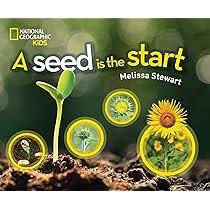 Melissa does tell the story of how a seed grows, but she uses images of an actual seed in the soil. She explains what is happening in short, active words so that the young reader can really see what is happening as well as read it. Pretty cool idea. She is showing science in action in a BOOK!
In my book, Astronaut-Aquanaut: How Space Science and Sea Science Interact, I take my reader on a journey to space and under the ocean. It is not so obvious a progression as Melissa’s, but it accomplishes a similar idea. Readers will see the inside of the ISS and real astronauts answer questions about what it’s like to be in space. They will understand and hopefully even imagine the floating around the ISS and doing their job. To make this more real, I spoke with NASA engineers who helped to build the rockets and space suits that the astronauts wear, asking them what it felt like and how they created this amazing technology.

Then the reader is introduced to aquanauts that dive deep in the ocean and live in Aquarius, the only underwater lab in the world. They will feel the pull of pressure on their bodies, and “hear” their voices reach different pitches as they live in the specialized air combination sixty feet below the ocean. Comparing and contrasting these two extreme environments is a great way to help the reader to understand the e forces that push in on them or lift them up as they also learn about what it would take to become either of these two explorers.
Now I could have just given the information “head-on” but setting the scene of what is happening makes your reader feel like a part of the book. Other books that do this well are:
Sarah Albee’s Poison: Deadly Deeds, Perilous Professions, and Murderous Medicines:

How They Croaked: The Awful Ends of the Awfully Famous by Georgia Bragg:

Water is Water by Miranda Paul:

So, the next time you get ready to write about a science topic, think about ways you can use setting to help your reader feel like they are going on an adventure in your book–when actually, they are learning about science. (Shhh…don’t tell them.)
After all, SCIENCE ROCKS!

 Jennifer Swanson is the award-winning author of over 50 books for kids, mostly about science and technology. She is the creator and co-host of the Solve It! for Kids Science Podcast, the creator of STEAMTeamBooks, and STEM Tuesday, and a curious kid at heart.
Visit her online at JenniferSwansonBooks.com. She is also the President and Founder of Kid Literacy, Inc.

Jennifer Swanson is giving away a 20-minute Zoom Ask me Anything session to one lucky winner.
You’re eligible to win if you’re a registered Storystorm 2025 participant and you have commented only once below.
Prizes will be distributed at the conclusion of Storystorm.





 Writing for Kids (While Raising Them)
400 comments
Comments feed for this article
January 15, 2025 at 8:02 am
sburdorf
I have always wanted to do a non-fiction picture book. Maybe I will now. I have so many ideas for one. Thank you. Lovely article. Susan Burdorf
January 15, 2025 at 8:06 am
thecrowsmap
Jennifer, thanks for reminding us—scenes are magic!
Gail Hartman
January 15, 2025 at 8:09 am
kiwijenny
Thank you for the reminder. It makes me want to rewrite scenes in my story. Science is wonderful . I’m so impressed with what you do.
January 15, 2025 at 8:11 am
Andrea Mack
My mind is already excited about the idea of using a place as a way to create adventure! Thanks!
January 15, 2025 at 8:15 am
Becca McMurdie
this was a great morning read! I was inside the stem of a flower, in an underwater lab, and on the beach feeling the sand and waves hitting my feet….and it’s not even 7:30am yet! Thanks for that! #inspired
January 15, 2025 at 8:19 am
ccspizzirri
Thanks, Jennifer! I agree, Science Rocks!
January 15, 2025 at 8:19 am
melissajmiles1
Great advice. Thanks for sharing it!
January 15, 2025 at 8:19 am
gregoryfulgione
Thanks for your great STEM examples! Can’t wait to read them! They all look like they make learning about science a fun & fascinating experience.
January 15, 2025 at 8:26 am
marty
Thank you, Jennifer! A great sampling of wonder-full NF picture books. Describing the scene is a helpful reminder that the picture books we write take place in a particular, and very specific, setting.
Thank you, Tara, for inviting Jennifer to post in StoryStorm 2025.
January 15, 2025 at 8:28 am
almosttenacious288198703d
Appreciate your explanation and examples! I have been intimidated by STEM projects – but this actually gave me a few ideas! Not as frightening as I thought! 🙂
January 15, 2025 at 8:29 am
Lauri Meyers
Instead of feeling limited by the scientific facts, you make STEM writing sound like a place to be creative and bloom:)
January 15, 2025 at 8:30 am
Midge Ballou Smith
Thank you, Jennifer! Great post!
January 15, 2025 at 8:31 am
writerdi2020
I appreciated the book titles you offered as mentors. Thanks!
January 15, 2025 at 8:32 am
Marianna Kassai
Yes, Science Rocks! Thank You Jennifer. I believe the scene can be set similarly when writing about a historical site, or taking a journey with a significant ancient figure.
January 15, 2025 at 8:33 am
Deborah Agranat Sullivan
Great reminder, Jennifer! Love the story behind Astronaut-Aquanaut – certainly makes the point that scene setting is key. Thanks for sharing!
January 15, 2025 at 8:37 am
sblotevogel
great advice and examples. Thank you for sharing!
January 15, 2025 at 8:40 am
BirdinaCage
don’t be boring, hell of advice.
January 15, 2025 at 8:40 am
Robin Brett Wechsler
Super explanation of scene–what it is and how to use it. Awesome examples, too. NF books can be amazing! Thank you, Jennifer!
January 15, 2025 at 8:42 am
rachelcritchleya061056d76
Science is awesome! Love the reminder that we need to make it exciting for kids. Setting is a great way to grab and keep their interest so they learn without realizing it.
January 15, 2025 at 8:44 am
Jany Campana
Thanks Jennifer for inspiring me to entertain my reader!!!
January 15, 2025 at 8:45 am
Lindsey Aduskevich
I wrote a science nonfiction a few years ago and haven’t done one since. Thank you so much for the inspiration to get back into it. And all these recs looks fantastic! I can’t wait to read them. 🙂
January 15, 2025 at 8:49 am
eleanorannpeterson
Great tip. ‘Think about ways you can use setting to help your reader feel like they are going on an adventure in your book–when actually, they are learning about science.’
January 15, 2025 at 8:49 am
tinamcho
I love reading nonfiction, studying the author’s structure for the story. Thank you, Jennifer.
January 15, 2025 at 8:55 am
Susan Glick
Yes, this is great advice about setting!
January 15, 2025 at 9:04 am
Rebecca Colby
Yes, going on an adventure with science. That’s where my head is at the moment with ideas. Thanks for the inspiration!
January 15, 2025 at 9:05 am
andreesantini
This sounds like a great way to encourage STEM writing that is engaging. I think back to how much my kids enjoyed the Magic School Bus books, vs purely factual books. Thanks!
January 15, 2025 at 9:08 am
bgonsar
Great ideas to start the day. Thanks Jennifer!
January 15, 2025 at 9:10 am
Kathryn LeRoy
You are so right, science doesn’t need to be dull because it is exciting, curious, alive with possibility! Thanks.
January 15, 2025 at 9:13 am
bethsbiblio
Thank you for the explanations about scene, Jennifer. Thank you Tara.
January 15, 2025 at 9:14 am
Susan Halko
I just finished PLAYGROUND by Richard Powers—now I’m super excited to check out your book. What a cool cover! Thanks for the inspiring post, Jennifer!
January 15, 2025 at 9:16 am
kathalsey
Hi Jen, science sure does rock! Setting is important and all these engaging books show that! Thanks!
January 15, 2025 at 9:17 am
Jennifer
Thank you for this post! It’s so great to see STEM books with a playful and engaging approach. We definitely could use more of those.
January 15, 2025 at 9:20 am
1marth1
Science can be a big adventure. History can be lived instead of memorized. Math can be a game or puzzle to be solved. We just need to be creative in our approach to non-fiction. Thanks for sharing your ideas about how to make “boring” or “intimidating” subjects interesting.
January 15, 2025 at 9:22 am
steveheron
Love it. Science = adventure🔭🔬⚗️⚗️📡
Steve Heron Cheeky Magpie
January 15, 2025 at 9:22 am
joanlongstaff
Science does indeed rock! Great ideas to spice up a book that is full of facts! Thank you for sharing.
January 15, 2025 at 9:24 am
Aileen Stewart
Science and history can both be fun. Thanks for sharing Jen!
January 15, 2025 at 9:24 am
Teresa 何 Robeson
So true about scene setting! 💯
January 15, 2025 at 9:25 am
Laurel Ranveig Abell
Creating scene is such a fun part of writing. This post gave me unique ideas for new perspectives! Thank you!!
January 15, 2025 at 9:30 am
Cathy Ballou Mealey
Great tips Jennifer – thanks!
January 15, 2025 at 9:34 am
Carrie Logsdon McCullough
I love seeing how much nonfiction, especially STEM topics have changed since we were kids and my kids were kids. The more fun and interesting it is to learn, the more our young readers will gobble up information!
January 15, 2025 at 9:39 am
Mona Pease
I’m working on setting the scene while revisiting an older manuscript. Thanks for helping me “see” what’s there.
January 15, 2025 at 9:40 am
geigerlin
Science Rocks! Thanks for sharing, Jennifer!
January 15, 2025 at 9:51 am
Melissa Rafson Friedman
ok I had no idea there’s an under water science lab?! So cool!
January 15, 2025 at 9:53 am
michelleleewritesmagic
I haven’t considered writing non-fiction yet – maybe because it seemed too intimidating? Or that I needed to be an expert in that field? But this post certainly highlighted the creativity and fun required in writing books in that genre!
January 15, 2025 at 9:59 am
sunfishrule
Morning! My former ETech students loved STE(A)M projects and made the most creative prototypes! Yet, having to align with the state standards and the engineering design process, I didn’t see their insight or stories unless we did one together-actually it was their vivid descriptions, and it was a great experience! Your post is SO important for showing and not telling a story, it allows the reader of any age to “see” the image.
Many thanks, Jennifer!
January 15, 2025 at 10:00 am
schumerthc
Good reminder. Thanks
January 15, 2025 at 10:00 am
pathaap
Setting the scene to go on an adventure for STEM books. Love it. Thanks, Jennifer
January 15, 2025 at 10:05 am
meganewhitaker21
Great post! Anything by Melissa Stewart and Miranda Paul are sure to be gold and have a great approach to teaching science in a fun way. Thank you!
January 15, 2025 at 10:09 am
Yashika Mody
Thanks for the STEM examples/mentor texts!
January 15, 2025 at 10:10 am
lbsimaginarium
Children are definitely more engaged with nonfiction when they can feel like they’re there. Thank you for sharing!
January 15, 2025 at 10:10 am
jbbower
Thank you Jennifer! Learning is indeed an adventure, and I love your emphasis on scene and placing our readers in a certain place or time. Non-fiction writing can indeed get bogged down with straight-forward (boring) facts fast! Thanks again!
January 15, 2025 at 10:11 am
bookclubhbhs
Thank you for this helpful post and for the list of so many exciting books to check out as references! My daughter and I are looking forward to checking out your podcast!
January 15, 2025 at 10:11 am
Patti Ranson
Attempting my first NF – short and active words will be in my writing:)
January 15, 2025 at 10:11 am
robincurrie1
Oh I needed this for the project I am working on now! Thanks.
January 15, 2025 at 10:11 am
christym1234
This is amazing! I know about ISS but not Aquarius, so I went to the website and wow! What an interesting subject. Thank you Jennifer.
January 15, 2025 at 10:14 am
natashaffdfd87f06
I have a format in mind and have been struggling to find the start on which to base it. You just gave me an idea… perhaps I need to veer away from fiction and into non-fiction! Cheers!
January 15, 2025 at 10:20 am
Joyce P. Uglow
Jennifer, I love how engaging scenes in nonfiction picture books add intrigue and interest. Thanks for sharing your ideas and mentor texts.
January 15, 2025 at 10:21 am
Tracey Kiff-Judson
Jennifer, I love the idea of taking the reader on an adventure! Thank you!
January 15, 2025 at 10:23 am
Susan Wroble
Thank you, Jennifer! I needed that reminder to dive into a scene for a WIP right now, and I so appreciate the recommendation of those fabulous mentor texts for this!
January 15, 2025 at 10:24 am
anchance
This is so inspiring. Thank you!
January 15, 2025 at 10:24 am
Barbara Schlosser Hill
Thank you. Taking the reader on an adventure is a wonderful way to introduce science and ‘the world’ – I am intrigued in exploring this idea. Thank you.
January 15, 2025 at 10:25 am
reedandwritekids
love some of these creative ways of telling the “story” of science “facts”
January 15, 2025 at 10:28 am
ConstanceL
Thanks for this very informative and interesting post, Jennifer! Astronaut/Aquanaut sounds awesome!
January 15, 2025 at 10:30 am
Lynn Baldwin
Thanks for a helpful post.
January 15, 2025 at 10:30 am
Svapna Sabnis
I’m very interested in writing nonfiction as o have a background in science
January 15, 2025 at 10:33 am
Reni Macarelli
Thanks for your great advice!
January 15, 2025 at 10:35 am
Helen Waters
Great reminder about setting the scene, no matter what type of book you are writing. And very informative about science-based subjects. Thanks!
January 15, 2025 at 10:44 am
Ellie Langford
I love the fascinating world of STEM and how you pull the reader in immersing them in its wonder. Astronaut/Aquanaut sounds like a great read.
January 15, 2025 at 10:48 am
Brenna Jeanneret
Great article and some really cool ideas and titles! Thanks so much!
January 15, 2025 at 10:48 am
Colleen Owen Murphy
Thank you Jennifer for the inspiration. I actually thought of a fun way into a STEM story I wanted to write because of this post.
January 15, 2025 at 10:50 am
jhall2018
Brilliant—I loved Astronaut-Aquanaut!
January 15, 2025 at 10:53 am
amybeth349
Wow! Listening to your tips brought the “science setting” to life. Combining discs and ocean exploration, what a great Stem concept. Thanks for the scientific tip,
January 15, 2025 at 10:58 am
Laurie Elmquist
Hey, I just got an idea for a picture book! Thank you Jennifer for today’s inspirational post.
January 15, 2025 at 11:00 am
Lucretia Schafroth
Thanks for sharing your insights and advice about setting the scene for a story. While especially important to engage young readers with information-intense, STEM NF stories, it’s a good reminder for any story to strive to make one “feel like they’re there” watching the events unfold.
January 15, 2025 at 11:04 am
bevbaird
Science does rock! Thanks for the fascinating post and the host of books to investigate. Can’t wait to read yours.
January 15, 2025 at 11:04 am
Dayne Sislen, Children's Book Illustrator
What great ideas. Thank you
January 15, 2025 at 11:07 am
kwillette13
Two of my son’s (7) favorite things are space and the ocean! I didn’t even know there was an underwater lab! I will definitely have to tell him about that. Thanks for the insight and guidance!
January 15, 2025 at 11:26 am
supermario6
wow! 50 books. Congratulations!
January 15, 2025 at 11:26 am
Debbie Moeller
Great post, Jennifer! You’ve listed some wonderful mentor texts to use to frame my newest NF WIP-I’ve been struggling with how to structure it. Setting the scene may be just what I need to do! Thanks for the inspiration!
January 15, 2025 at 11:30 am
joanwaites
Great ideas to think about STEM differently!
January 15, 2025 at 11:30 am
mphollinsheadyahoocom
I’ve written a stem book that needs livening, and your comments are right on.
January 15, 2025 at 11:36 am
mariautumn7c81b37a0a
I love this! Your book looks amazing! I can’t wait to read it.
January 15, 2025 at 11:36 am
aubreyalliethewriter
Working on a nonfiction picture book now! Thanks for this blog post!
January 15, 2025 at 11:42 am
Laura Renauld
I have a STEM manuscript that needs some reimagining. I’ll take a closer look at setting. Thanks!
January 15, 2025 at 11:42 am
vijikc
Thank you so much! I will use this to revise my science manuscript.Sent from my iPad
January 15, 2025 at 11:42 am
elisederstine
A great reminder, thank you!
January 15, 2025 at 11:44 am
shubamohan
love your topics!
January 15, 2025 at 11:46 am
Linda KulpTrout
Thank you for the reminder to write in scenes!
January 15, 2025 at 11:47 am
sue macartney
Science does rock! Jennifer, thank you for these great creative tips and mentor texts to help make NF stories so engaging for young audiences!
January 15, 2025 at 11:49 am
Elizabeth Volkmann
Great post.
Takeaway for me – tell a story, tell a story, tell a story.
🙂
January 15, 2025 at 11:50 am
Karen Gebbia
Thanks for this! It succinctly reinforces the concept that all story is, at heart, about evoking emotions in the reader – and the way you are able to do so by thinking about setting is a great example of that!
January 15, 2025 at 11:52 am
heatherstigall
Great tips – thanks, Jennifer!
January 15, 2025 at 12:04 pm
judyrubin13
Thank you, Jennifer, for sharing your perspective on setting and its integral part in story development.
January 15, 2025 at 12:04 pm
judyrubin13
Thank you, Jennifer, for sharing your perspective on setting and its integral part in story development.
January 15, 2025 at 12:11 pm
stefsenn77yahoocom
Thank you, Jennifer, for the inspiration!
January 15, 2025 at 12:16 pm
Dawn Prochovnic
Thanks for the important reminder of the importance of setting for setting the stage for a compelling story!
January 15, 2025 at 12:18 pm
Karin Larson
Thank you for the amazing post, Jennifer. So very true and something I am striving to do on more than one ms.
January 15, 2025 at 12:21 pm
storyfairy
As someone who writes both fiction and nonfiction about wildlife (mostly endangered species), it makes sense to me that setting descriptive scenes is important in nonfiction.
January 15, 2025 at 12:25 pm
erozmus
As a school librarian, I see how kids gravitate toward books like these! Thanks for sharing!
January 15, 2025 at 12:28 pm
Katie Marie
These are all wonderful mentor texts. Thank you for sharing!
—Katie Marie
January 15, 2025 at 12:32 pm
roundswrite
What a fun way to teach/learn about things in the science field! I’d love to teach my science curriculum with picture books that are like you describe as opposed to the difficult to read and understand text books and information books we have to use.
Maybe that’s my idea here–to write books for my own curriculum that will help the kids learn the topics in a more fun and interesting way!
Thank you for your post. SOOOO interesting!!
January 15, 2025 at 12:37 pm
Kimberly Marcus
I love science too! I can’t wait to read your books!
January 15, 2025 at 12:39 pm
kamalani3
I love these mentor texts. They have scenes and story at their core. Thank goodness today’s kids have more exciting science books than the encyclopedia type we had when I was a kid back in the 1960s. Thanks for an excellent post, Jennifer!
January 15, 2025 at 12:40 pm
Gabi Snyder
Thanks for the reminder to set the scene for your reader to fully immerse them in your story!
January 15, 2025 at 12:58 pm
thehugbooks
I love this. Imagine NF that kids want to reread! This would get it done. Thank you.
January 15, 2025 at 1:05 pm
Trine Grillo
I am partial to Creative Non-fiction!
January 15, 2025 at 1:11 pm
Caro Luzzatto
I agree- science rocks!! Your excitement about the subject comes through in your writing, and I know that makes it come alive for your readers. Thanks for an inspiring column!
January 15, 2025 at 1:11 pm
Poupette
Very interesting post and examples –thank you!
January 15, 2025 at 1:13 pm
rosecappelli
Thanks for your insight, suggestions, and the great books you write.
January 15, 2025 at 1:14 pm
E.H. Perry
love the idea of playing with setting to make non fiction fun!
January 15, 2025 at 1:14 pm
8catpaws
Yes, creating vivid imagery helps the reader become immersed in the story–whether fiction or non-fiction.
January 15, 2025 at 1:19 pm
Angie
Great advice! Thank you, Jennifer!
January 15, 2025 at 1:24 pm
marshaelyn
Jennifer,
I connect with your comment: “…STEM writing. It can take you ANYWHERE.” I’m grateful that STEM-themed picture books are alive and well. There’s so much for children (and us) to learn about the workings of our world. Toss in the creativity of an author and a STEM story becomes magical. Thank you for inspiring me today!
January 15, 2025 at 1:31 pm
rindabeach
Thank you for ‘showing’ how to set the stage. That’s what I do when I’m writing my informational fiction MS. Thanks for making me feel like I’m on the right track!
January 15, 2025 at 1:32 pm
abby mumford
Science does rock and all these books make it seem even cooler and I can’t decide if I should race to the library and a laboratory and start experimenting! Thanks for the tips on how to make any scene infinitely more interesting!
January 15, 2025 at 1:41 pm
writersideup
Jennifer, you are SO right 😀 I realize we’re talking about books for kids, but for whatever reason, the movie “Martian” (w/Matt Damon) came to mind. Yes, it’s fiction and the scenarios are “out there” as far as probability, but think of all the science we learn as we go, all due to setting! Great post 😀 Thanks!
January 15, 2025 at 1:43 pm
kirstenbockblog
Thanks so much for your insightful post! I don’t spend enough time thinking about setting and it’s so important.
January 15, 2025 at 1:44 pm
Kimberly. Storyteller
My favorite nonfiction picture books are almost always slightly out of the box, especially science and nature.❤
Astronaut-Aquanaut–so very clever!
January 15, 2025 at 1:46 pm
Cathy Stefanec Ogren
I like your statement: Be creative! Imagine what you can do when you think of a way to be creative with your nonfiction scene setting. Thank you for sharing, Jennifer.
January 15, 2025 at 1:50 pm
sheriradovich0384
I loved looking for Stem related books for read-alouds in my classroom and now they are everywhere and great for teaching science to children. Thanks for pushing this kind of non-fiction picture book.
January 15, 2025 at 1:58 pm
Sue Heavenrich
Great post, Jen! And a good selection of books to use as mentor texts for seeing how folks set the scene for science to happen. I’ll be going back to look at my copies now, and thinking how I can be more scene-mindful in my own writing.
January 15, 2025 at 2:07 pm
Diane O'Neill
Your books sound amazing, and thanks for the other book recommendations! Thanks for the inspiration and tips!!
January 15, 2025 at 2:13 pm
Adriana Gutierrez
I love this angle, science and point of view. It’s also interesting to think about setting. I need to think more about that while I write. Your book sounds amazing! I’ll be looking for it.
January 15, 2025 at 2:14 pm
laurelneme
Great post, Jen! And great job on SciFri!!
January 15, 2025 at 2:14 pm
Sheri Delgado Preston
Thank you for the ideas and inspiration!
January 15, 2025 at 2:28 pm
Sharon Korzelius
I love researching STEM and STEAM ideas. I really like your advice of putting scene first. I’m putting your book on my TBR pile! Thanks!
January 15, 2025 at 2:33 pm
lwbendor
I love this topic! And the various vivid examples th
January 15, 2025 at 2:37 pm
kelliannedy
Awesome insight! I have a STEM manuscript, and now want to go back and see if I can use your advice to make it better! Thanks
January 15, 2025 at 2:38 pm
nrompella
Hi Jen! Great reminder on how a topic isn’t boring–it’s more in the way it’s presented. I def need to revisit some of my not-yet-exciting works-in-progress.
January 15, 2025 at 2:39 pm
carochamberlain
Thank you for this inspiration, and a new angle to see STEM books!
January 15, 2025 at 2:40 pm
Melissa Stoller
Thanks for a great post, Jen! I love your books and the sense of wonder in them all! Look forward to reading more!
January 15, 2025 at 2:40 pm
Leslie Santamaria
I love the POVs of a seed in the ground, an astronaut in the ISS, and an aquanaut in Aquarius. These have me thinking of other cool scenes in STEM stories. Thanks, Jennifer!
January 15, 2025 at 2:43 pm
Leah Moser
Great tips! Thank you.
January 15, 2025 at 2:46 pm
cassiazaven
Thank you for the post. I enjoyed reading it.
January 15, 2025 at 2:52 pm
Mary A Zychowicz
Great perspective for NF stories. I’m looking forward to reading yours and the others you listed. Wish we would have books like this when I was a kid. I probably would have been more interested and learned so much more from these. Thank you for your post.
January 15, 2025 at 2:53 pm
Janet Halfmann
This inspires me to think more about setting in my own nonfiction and sciency fiction. Thanks for sharing your expertise.
January 15, 2025 at 3:02 pm
Jenn Gaulding
I’m off to think more deeply about how I’ve set the scene in my current STEAM story. Thank you!
January 15, 2025 at 3:07 pm
Natalie Lynn Tanner
JENNIFER: THANK YOU for INSPIRING us to bring STEM/STEAM ALIVE by making our “. . . reader feel like a part of the book . . . on an adventure”—even in the stem of a flower. Your words have brought A LOT of possible story ideas TO LIFE for me today. I’m EXCITED for my own ADVENTURES in writing them. THANK YOU!!!
January 15, 2025 at 3:16 pm
kellietheridgeauthor
You’ve opened up my mind to how I can approach scientific topics in a picture book.
January 15, 2025 at 3:16 pm
LaurenKerstein
I love this concept of zooming in and zooming out to really set the scene and help readers feel part of the experience!
January 15, 2025 at 3:20 pm
Michelle S Kennedy
Thank you for the inspiration and for highlighting books that use imaginative ways to set a scene for STEM related books!
January 15, 2025 at 3:27 pm
Sarah Hetu-Radny
very nice, thank you Jenifer! Nice way to contrast two extreme environments.
January 15, 2025 at 3:34 pm
theliah1
Congratulations, Jennifer on your success. Thank you for sharing your insight. I’m looking to dabble in in nonfiction writing. I have a couple ideas.
January 15, 2025 at 3:41 pm
Lisa Billa
Great examples of creative ways to bring readers into these fascinating stories! Thanks for sharing!
January 15, 2025 at 3:44 pm
Amy Fellner Dominy
Thanks for the great advice, examples, and the mentor texts!
January 15, 2025 at 3:44 pm
Christine Letizia
Your book sounds so neat! Thank you for sharing these suggestions for immersing our readers in our worlds.
January 15, 2025 at 3:59 pm
mrbellasgmailcom
I think I have a new mantra now: “setting the scene of what is happening makes your reader like a part of the book.” Thank you, Jennifer! Best, Mari
January 15, 2025 at 4:08 pm
migratingmoosegmailcom
Great advice!! Thank you!!
January 15, 2025 at 4:14 pm
mlflannigan
Thank you for sharing!
January 15, 2025 at 4:15 pm
Fiona Bannatyne
What an interesting perspective, and great advice. Thank you.
January 15, 2025 at 4:16 pm
serendipityinstars
Thank you for the examples on scene setting. All of these books sound fascinating.
January 15, 2025 at 4:20 pm
emmelineforrestal
What a great reminder to be bold with how we stage our STEM books! Thank you!
January 15, 2025 at 4:23 pm
Cindy Montoya
What an inspiring post! It makes me want to write about science.
January 15, 2025 at 4:24 pm
okonke28a8a229c9
Any way to bring science into a childs life is wonderful…thanks for the great advice!
January 15, 2025 at 4:28 pm
Kaye Baillie
You’ve just reignited my interest in writing science themes- thank you, Jennifer!
January 15, 2025 at 4:29 pm
Writer on the run
Thanks Jennifer! I love writing nonfiction and this is a great reminder to always find a way to bring the reader into the scene!
January 15, 2025 at 4:38 pm
heidikyates
Thank you for the great advice and mentor texts on setting the scene, Jennifer!
January 15, 2025 at 4:39 pm
Angela De Groot
Jennifer, thank you for the reminder to get creative while writing NF, and to use the setting as a way to draw the reader into the book. Thanks for the mentor text titles, too. Miranda Paul’s WATER IS WATER is one of my favorites.
January 15, 2025 at 4:41 pm
wheresthedinnerlady
Some fantastic mentor texts!
January 15, 2025 at 4:51 pm
Teresa Fales
Setting and science are two of my worst things lol. What a challenge to combine them!
January 15, 2025 at 4:52 pm
Stefan Karlsson
Wow, your example of placing the reader “inside the stem of a flower” felt liberating! What an imaginative way to frame a subject that people might consider “boring.” Thank you for this encouraging and inspiring post, Jennifer!
January 15, 2025 at 4:54 pm
brigitus6620
What a great post and fun reading suggestions. Thank you!
January 15, 2025 at 5:02 pm
sjmcc2
Thank you Jennifer for those great tips! I have a STEAM manuscript that I have shelved, but you have inspired me to add some adventure to it!
January 15, 2025 at 5:06 pm
Tonnye Fletcher
Thanks for the lovely recommendations and the reminders that science doesn’t have to be boring if we dig deep and set the scene!
January 15, 2025 at 5:08 pm
michelerietz
Thanks for your advice and the great mentor text suggestions.
January 15, 2025 at 5:08 pm
kathleengauer
Immersing readers into the scene is a great way to peak their interest! Thanks for this great writing tip!
January 15, 2025 at 5:12 pm
stephaniealterjones
This feels like a way into NF for those of us not accustomed to writing it because of head-on expectations. Scene is immersive and fun, both to read and to write!
January 15, 2025 at 5:31 pm
jennaejo
very fun! thanks!
January 15, 2025 at 5:32 pm
tracyschuldthelixon
I love the way that this post highlights the poetic characteristics of the natural world. What fun to explore how to capture those elements for young readers! Thank you!
January 15, 2025 at 5:40 pm
paulajbecker
Thank you for sharing your thoughts on writing for STEM books, Jennifer!
January 15, 2025 at 5:45 pm
KrisTarantino
Great advice about setting and how it helps readers become emersed into the story!
January 15, 2025 at 5:46 pm
Judith Snyder
Love this idea. It could be a great warm up writing activity as I dive into a new NF idea, plus it could even find a place in the story.
January 15, 2025 at 6:01 pm
fleischmana6
We live in amazing world and I love when non-fiction helps us to slow down and marvel at it. Thanks for your thought provoking post!
January 15, 2025 at 6:02 pm
craftysong4024946a88
Love the idea of setting the scene by taking on the persona of/setting the perspective of the item/thing/person you’re describing to better immerse rather than just describing from the outside.
January 15, 2025 at 6:04 pm
laurakbower
Thanks Jennifer! I love your creative approach to writing non-fiction STEM stories. The idea behind Astro-naut, Aqua-naut is so clever – congratulations on all of your books.
January 15, 2025 at 6:16 pm
Teresa Rodrigues
Thanks for the tips, Jennifer, and thanks for the reading suggestions. With a title like HOW THEY CROAKED, I *had* to check it out, lol. Thankfully, my library had the audio version.
January 15, 2025 at 6:16 pm
Claire A. B. Freeland
Thanks for sharing how authors can create a love of science by taking the reader into the setting.
January 15, 2025 at 6:16 pm
maramarakay
Lyrical science is so much fun!
January 15, 2025 at 6:34 pm
coachrochelle
Love this post!
January 15, 2025 at 6:37 pm
marywarth
Thank you Jennifer, for help us set the scene!
January 15, 2025 at 6:38 pm
susanzonca
Great tips for conveying facts in a way that connects to the senses of the reader.
January 15, 2025 at 6:42 pm
Janice Woods
Thanks for sharing the great post! 😊
January 15, 2025 at 6:46 pm
Jessica Iwanski
My favorite science books are the ones that come to life for kids! Thanks for the tips on how to write them, Jennifer! 🙂
January 15, 2025 at 6:51 pm
Rachelle Burk
This is a fabuloulsly helpful post! You really nailed it in terms of how to make nonfiction/science books exciting
January 15, 2025 at 6:56 pm
Danna Smith
Thank you for sharing. It definitely takes finesse to make nonfiction work! I love your examples.
January 15, 2025 at 7:14 pm
Farida Zaman
great tip thank you so much!
January 15, 2025 at 7:14 pm
Farida Zaman
great tip thank you so much!
January 15, 2025 at 7:22 pm
Teddie
Good reminder that science books can and should be fun to read. Until this post I didn’t really think of setting in connection with science books. I will now. Thank you.
January 15, 2025 at 7:25 pm
Ali V. (they/them)
So smart – thank you!
January 15, 2025 at 7:28 pm
Sallye O'Rourke
set the scene!
January 15, 2025 at 7:28 pm
nancykkkkk
What a great way into a STEM story. Thanks for setting this up! 🙂
January 15, 2025 at 7:49 pm
Shirley fadden
Thank you for all the interesting mentor texts. I’ll be getting Melissa Stewarts seed book for my daughters 2nd grade classroom!
January 15, 2025 at 7:53 pm
Charles Trevino
Fiction / Nonfiction, STEM / STEAM must be surrounded / grounded with setting.
Thanks for giving me homework.
January 15, 2025 at 7:55 pm
Bridgitte Rodguez
Thanks! This was fascinating!
January 15, 2025 at 8:04 pm
Peggy Dobbs
This is a wonderful approach to make science topics more enjoyable and memorable. Thank you!
January 15, 2025 at 8:05 pm
Patricia Tiffany Morris
Love the reminder to make a story and setting for STEM STEAM books. Nice.
January 15, 2025 at 8:11 pm
TonyaAnn Pember
Jennifer Swanson never disappoints! Always great tips and instruction. Thank you for taking the time!
January 15, 2025 at 8:12 pm
shiny694294aa4c
Thank you for getting me interested in trying STEM writing.
January 15, 2025 at 8:19 pm
lisakdaviswriting
Thanks for the reminder that non-fiction can be fun too!
January 15, 2025 at 8:42 pm
Gail Aherne
Jennifer, thank you for piquing my curiosity on STEM books for kids and giving great tips on how to engage your reader in the scene!
January 15, 2025 at 9:02 pm
fortress11art
Thank you for being a part of the Storm Story line-up, Jennifer. Great info on setting the stage & it’s importance. Enjoyed your share!!
January 15, 2025 at 9:02 pm
rosihollinbeck
This is a really helpful post. Setting is critical to a successful book. Thanks for the post.
January 15, 2025 at 9:10 pm
Carol Gordon Ekster
Writing nonfiction in an interesting way is awesome! Good luck with your new title.
January 15, 2025 at 9:22 pm
Karen
Thanks Jennifer! I love your creative approach to writing non-fiction STEM stories. The idea behind Astro-naut, Aqua-naut is so clever – congratulations on all of your books.
Science Rocks!
January 15, 2025 at 9:43 pm
ponder2write
Immerse your reader! I love the feeling of those 3 words I can apply to my WIP. Thank you.
January 15, 2025 at 9:46 pm
ralucasirbu
Yay! Jen is in the house. So great to read your post. Always good advice, always the teacher, always enjoying interacting with you
January 15, 2025 at 9:55 pm
rekrall@yahoo.com
I love writing STEM stories! Thank you for some fantastic ideas to make it more exciting and engaging for young readers.
January 15, 2025 at 9:57 pm
Alicia Shawn Gagnon
LOVE seeing kids (and adults) excited about science. Setting the scene is a superb way to do this. Excellent!
January 15, 2025 at 10:00 pm
emmiewerner
THANK YOU! Good information…makes me think🤔!Sent from my iPad
January 15, 2025 at 10:10 pm
helenedebelak
Already passed your podcast along to the teachers at my school!
January 15, 2025 at 10:26 pm
Monica Acker
I love how you invite the reader in.
January 15, 2025 at 10:45 pm
Jud Ward
Cool! After reading this I’m going to create a science adventure!
January 15, 2025 at 10:45 pm
writeremmcbride
50 Books, Jennifer! That is incredible! And helping your reader imagine themselves in the setting, event, or experience is GREAT advice! It helps kids dream big and imagine themselves doing more than what they might see immediately around them. Thank you!
January 15, 2025 at 11:04 pm
carolynscombs
Part of what I love so much about many new STEAM books is how they take a reader along on a real-life adventure, making science exciting and real. Your post helped me better appreciate how setting the scene helps accomplish this. Thank you!
January 15, 2025 at 11:11 pm
Carla Gullett
Thank you for your time and talent! Your post is a great reminder that setting the scene is just as important for non-fiction as it is for fiction. I wish you the best with your future writing projects!
January 15, 2025 at 11:24 pm
schellijo
Thank you for the information. Love science! Great ideas.
January 15, 2025 at 11:39 pm
kanessamiller
I love STEAM. Thanks for sharing.
January 15, 2025 at 11:56 pm
syorkeviney
Wow thank you for sharing all the STEM mentor texts. I love writing nonfiction and you’ve given me so many ways to set the scene and take us on wonderful adventures!
January 15, 2025 at 11:58 pm
seschipper
Great post! Thanks for sharing your ideas! 😊
January 16, 2025 at 12:11 am
timeless102
Lovely, thank you!
January 16, 2025 at 12:19 am
brightwishbooks
Great post! I’m so curious about your astronaut aquanaut book!
-Amy Mucci
January 16, 2025 at 12:47 am
sharongiltrowauthor
Love the idea of putting my readers in the scene. Thanks for the tip :-).
January 16, 2025 at 1:00 am
Suhasini Gupta
Thanks for sharing! 🙂
January 16, 2025 at 1:03 am
wyszguy
Thanks for the examples you posted – a great reminder of how to “punch up” STEM books!
January 16, 2025 at 1:37 am
jilltatara
Such perfect timing! I’m revising an NF manuscript that needed jazzing up and more immersive scene setting. Thank you so much for this post!
January 16, 2025 at 2:02 am
Elayne
Jennifer, your book sounds fabulous! And, I love the ideas for focusing on setting in terms of “setting” the scene here. Thanks so much for sharing!
January 16, 2025 at 2:28 am
Maria Marshall
Jen, I love your book and all the great examples. Thanks for a great post. It is indeed perfect timing as I am trying to find a way into a new MS! Thanks again.
January 16, 2025 at 2:34 am
dlapmandi
Thanks for the post. Unique look at using setting to help with understanding of concepts.
January 16, 2025 at 8:05 am
karenleewyoming
Science has always been fun, but with these sorts of picture books, it is much more exciting.
January 16, 2025 at 8:07 am
karenleewyoming
Science has always been fun, but these books make it much more exciting. Thanks for the post–great tips!
January 16, 2025 at 8:15 am
Mary Beth Rice
Thank you for your encouragement!
January 16, 2025 at 8:30 am
margaretsmn
I’m excited to have a contract coming on a book about the Cajun prairie. Scene building was the best part, placing the reader in the prairie wandering and wondering. Now you inspire me to wonder where else my character could go. Thanks!
January 16, 2025 at 8:53 am
JF Hall Writes
Ahhh if only amazing STEM books like these had been readily available when I was a kid! I’d have thought very differently about the sciences as a child. Thank you for brining such wonderful material into the world — and thank you for taking us through examples of how we can do the same!
January 16, 2025 at 9:16 am
Bri Lawyer
I admire those who can make a science lesson engaging through picture books. Thanks for sharing how you do it!
January 16, 2025 at 9:23 am
vireson044gmailcom
I’m going down the rabbit hole of unique settings now…thank you!
January 16, 2025 at 9:23 am
vireson044gmailcom
I’m going down the rabbit hole of unique settings now…thank you!
January 16, 2025 at 9:24 am
readmybook2002
I love to read weird facts that are scientifically explained in a STEM book, Great covers BTW. Thank you
January 16, 2025 at 9:24 am
cindyjohnson2013
Thank you! I intend to go back into all my nf to see if I’ve included scene setting that will pull the reader in!
January 16, 2025 at 9:24 am
Lynne Marie
I love approaching or sprinkling anything and everything with STEM — it’s such a fascinating door into the story. Thanks for this inspiring post.
January 16, 2025 at 9:31 am
authorlaurablog
Thanks for sharing. Settings are always on my mind when I’m writing and I’ve got some great ones percolating on my Storystorm list.
January 16, 2025 at 9:54 am
tanjabauerle
I love your suggestion of making the reader experience what you are writing about – so much more interesting. What a great way to start the day! Thank you. T
January 16, 2025 at 11:19 am
littleseedsread
This is wonderful advice, Jennifer. I love your emphasis on setting and action words to make the reader feel they are there!
January 16, 2025 at 11:26 am
Tatum Evans
I love NF for my kids to learn about the world around us, but let’s be real… I really love NF because I learn so much from it, myself! I did not know about aquanauts, and I am so excited to read your book. Thanks!
January 16, 2025 at 11:35 am
Sydnie Kleinhenz
I look forward to reading Astro-naut Aqua-naut. It sounds fascinating. Thanks for the tips.
January 16, 2025 at 11:42 am
fortunatelymango1b9bf8d04a
Great advice! I love stories that take you to “that place” wherever it may be. That’s the best way of learning!
January 16, 2025 at 11:43 am
brintonculp
STEM is great for an immersive experience! I need to read these books – Thanks!
January 16, 2025 at 11:47 am
jasmithwriter
I’ve been poking at an idea for a NF PB and this makes me want to go back to it. Thanks!
January 16, 2025 at 11:58 am
JenFW
I’ve just read about some interesting books whose titles I add to a loooong list. Now I’m typing response number 247, which, for a time, is the last in a loooong line of comments that few people will actually read, except for the few people posting comments after me. Next, I’ll sit here at my loooong table and and see how loooong it takes me to come up with an idea or two for my loooong list of Storystorm ideas. Maybe something about the longest something?
January 16, 2025 at 12:01 pm
Bettie
Thank you for your information about scenes and nonfiction.
January 16, 2025 at 12:23 pm
ptnozell
I think you’ve literally gone to extremes (space & under the sea) to set the scenes!
Thanks for the reminder to use surroundings to ramp up our non-fiction and STEM writing.
January 16, 2025 at 12:32 pm
Daryl Gottier
Thanks for the great examples of wonderful books that set the scene!
January 16, 2025 at 1:13 pm
tinefg
Thank you Jennifer, so much scope for imagining science! I am completely intrigued now by the parallel between floating space and floating under water.
January 16, 2025 at 1:47 pm
Steena Hernandez
Great post and examples! Thank you, Jennifer!
January 16, 2025 at 2:13 pm
flewk1
I think I can, I think I can! Well, maybe. I may be brave enough now after this post to attempt a STEAM PB.Thank you for planting those seeds of courage.
January 16, 2025 at 3:02 pm
Laura Purdie Salas
Love this post, Jen. Your book looks fascinating. I can’t imagine the research. I had to ask an astronaut a few simple questions for a book (ages ago), and it was almost impossible to talk to one. (And my dad worked at NASA for 20+ years.) Off to check out your book!
January 16, 2025 at 3:27 pm
leslieevatayloe
Thanks for sharing! I’m on the fifth year of my non-fiction. A rocky ride but I’m hoping to submit finally this year. I’ll definitely read the books you showcased in your post. Best, Leslie
January 16, 2025 at 3:34 pm
loriwilliamswriting
I’ve always been a little intimidated by nonfiction because it may not be as fun as a fictional story. I love the idea of immersing the reader in the scene such as being on the inside of a flower stem. It gives me a little confidence that maybe I can write nonfiction and it can be fun.
January 16, 2025 at 3:50 pm
Natasha S Garnett
Thanks, Jennifer. Good reminder about setting the scene to draw the reader in, no matter the genre.
Natasha Garnett
January 16, 2025 at 4:26 pm
libbydemmon
Your book sounds amazing! Thanks for the insight!
January 16, 2025 at 4:42 pm
dianemungovan
Thanks for a great post. Appreciate all at the examples to check out – yours first!
January 16, 2025 at 4:59 pm
Sherry Edgeberg
Thanks for the great examples of setting and using the setting in science books, but of course, all books. Congratulations on this book.
January 16, 2025 at 5:26 pm
Maria Johnson
Ooh! This is an exciting challenge for me because I don’t write nonfiction and STEM topics are far from my comfort zone. I know I can “set the scene” for different PBs, too, but I would like to try something closer to your examples, since when’s a better time to experiment than during Storystorm? Thanks for the inspo!
January 16, 2025 at 5:48 pm
Diane Phelps
I so agree with Jennifer and I’m sorry I didn’t use this thinking more in my last book. It would have enlivened it. Next time…..
January 16, 2025 at 6:06 pm
clcoate
Thank you for your insight! I love books that reach all different kinds of readers.
January 16, 2025 at 6:14 pm
Karen Pickrell
You’re post was so inspirational! I thought of so many story ideas while reading it. Thank you for sharing examples of setting the scene in a STEM book.
January 16, 2025 at 7:00 pm
Lisa Riddiough
Thank you, Jennifer, for reminding us to lean into setting. Great post!
January 16, 2025 at 7:10 pm
Jan Milusich
Thanks, Jennifer!
January 16, 2025 at 8:09 pm
S. K. Wenger
Thanks, Jennifer! Can’t wait to check out the books you shared for great examples of setting up a scene, in addition to your own.
January 16, 2025 at 8:41 pm
kellyclasenwriter
Your Astronaut/Aquanaut book looks fantastic!
January 16, 2025 at 8:50 pm
staceygustafson
Terrific reminder! setting the scene of what is happening makes your reader feel like a part of the book.
January 16, 2025 at 10:27 pm
Stephen S. Martin
Nothing happens in a vacuum.
January 16, 2025 at 10:33 pm
bkidd8
You do so much research, Jenn, to make your books come to life for the reader. Great tips. Thanks
January 16, 2025 at 10:33 pm
Megan McNamara
I love WATER IS WATER. It’s truly a great example of what you’re talking about!
January 16, 2025 at 11:15 pm
emilysunli
Love the other titles you provide here–thank you so much!
January 16, 2025 at 11:21 pm
jenwritespbs
I love this- thank you, Jennifer! And so many great examples!
January 16, 2025 at 11:34 pm
Mary Beth Rice
Thank you for the inspiring post!
January 17, 2025 at 12:28 am
sharonkdal
This just gave me a thought about how to solve a problem in an old idea. Thanks Jennifer!
January 17, 2025 at 2:05 am
claireannette1
I love the idea of science in action! thanks for the great examples.
January 17, 2025 at 4:06 am
Sandy
Making an exciting adventure of science is a great idea!
January 17, 2025 at 8:37 am
hansenjc13
Great advice! Astronaut Aquanaut sounds amazing!
January 17, 2025 at 9:15 am
stacyallen
well said! Can’t wait to check out Astronaut- Aquanaut!
January 17, 2025 at 9:16 am
Nadine Poper
Yes, science does ROCK. Thank you for the reminder about setting the scene with nonfiction writing.
January 17, 2025 at 9:37 am
Jane Dippold
Thanks for your post about combining science with scene, action and adventure to draw in the reader!
January 17, 2025 at 10:39 am
Christine Van Zandt, MILKWEED FOR MONARCHS (Beaming Books, 2024)
Your book, ASTRONAUT AQUANAUT, is such a great idea–and has so many As in the title–I’m getting a copy ASAP. I love NF PBs that are done in interesting ways.
January 17, 2025 at 10:57 am
Aimee Satterlee
I’m going to go back to my non-fiction manuscripts and see how I can use your advice to set the scene even more! What a great reminder! Can’t wait to read Astronaut-Aquanaut!
January 17, 2025 at 12:25 pm
Viviane Elbee
Thank you for sharing this advice of setting the scene to show science. I look forward to reading Astronaut Aquanaut!
January 17, 2025 at 12:56 pm
donnamorkreed
Great ideas. I love science. Ordering a copy of your book now.
January 17, 2025 at 2:21 pm
Sylvia Mary Grech
Interesting post! Thanks!
January 17, 2025 at 2:29 pm
daydreambelievin
Love all the nonfiction posts! Thanks for sharing your approach.
January 17, 2025 at 2:36 pm
Annie Guerra
I like the concept of using descriptive, vivid language in STEM book. Also, the examples listed sound very compelling. Ani Guerra
January 17, 2025 at 3:30 pm
instantfreely29b51b7a71
Jennifer,
Thanks. You remind us that science is often exciting and intriguing and yet we tend to approach from the serious. And that’s true of other subjects where “learning” may be part of the objective. Just as you note how to make such topics more alive through how we approach the writing, if we think about the teachers who inspired rather than bored us, there was a similar approach to make it “real” and exciting. That should also be our aim and your blog gives us great examples of how we can do so.
Karen Gardner
January 17, 2025 at 3:34 pm
Susan
Thanks for the reminder that science has as much story in it as any straight-up fiction book!
January 17, 2025 at 4:16 pm
Marie Prins
I love the idea of readers finding themselves inside STEM settings like a flower’s stem or a thunderstorm or the space station or an underwater lab. What a great way to explore these diverse places!
January 17, 2025 at 5:11 pm
susaninez0905
Science does rock! I love a good STEM book and helping inspire folks to write more makes me happy. Thanks for a wonderful post.
January 17, 2025 at 6:38 pm
Teresa Speranza Vargas
Astro-naut/Aqua-naut is a great concept and sounds like it was a lot of fun to research! I agree, creating scenes doesn’t have to be just for fiction.
January 17, 2025 at 6:44 pm
Alia K.
Thanks! This gave me some ideas.
January 17, 2025 at 7:49 pm
peasecja
Thanks for the reminder that we need to use “setting to help the reader feel like they are going on an adventure!”
January 17, 2025 at 7:54 pm
krnchun
Thank you for the reminder to include an awareness of scene in science writing. It kicks off some different perspectives
January 17, 2025 at 7:54 pm
krnchun
Thank you for the reminder to include an awareness of scene in science writing. It kicks off some different perspectives
January 17, 2025 at 7:54 pm
krnchun
Thank you for the reminder to include an awareness of scene in science writing. It kicks off some different perspectives
January 17, 2025 at 8:19 pm
Carmen Swick-Author
Jennifer, i really enjoyed what your shared with us. Great information!
Thank you!
January 18, 2025 at 12:44 am
Deena
Jennifer’s podcast is great—she had my scientist brother on it a couple years ago!
January 18, 2025 at 2:09 am
kellie906ce70f01
As an ex-teacher who used to turn fiction books into science lessons – we need more of the engaging STEM books for children. Great post, Jennifer. Thank you.
January 18, 2025 at 2:41 am
jantsuhr
Thanks for the tips, Jennifer, on how to create a scene that is a great complement to the story. And I think it’s important, too, that is occurs in the first few lines.
I look forward to reading your book and the others you have mentioned. I wish you continued success with your writing.
January 18, 2025 at 8:52 am
Cindy Greene
Thanks for the advice and the vivid examples. I can’t wait to see your book – it looks fascinating!
January 18, 2025 at 11:33 am
cathy
Thank you for reminding me of the important role setting plays in nonfiction books.
January 18, 2025 at 11:58 am
helenlysicatos
Love the post Jennifer. Great reminder of how properly setting the scene helps bring the reader on the adventure with us.
January 18, 2025 at 12:49 pm
Jamie Donahoe
I love this – very helpful as i suss out some NF ideas I have had kicking around. Thank you!
January 18, 2025 at 1:07 pm
Nicole Neahring
Thanks for reminding me to consider the scene!
January 18, 2025 at 2:10 pm
Katie Schwartz
Your book looks awesome, combines two things I have always been interested in. And appreciate your reminder that STEM books are not boring but are fascinating, which I’ve always thought, and now -today- this idea and lots of amazing STEM books are going out into the world! Thank you for this informative post!
January 18, 2025 at 2:20 pm
Donna Cangelosi
Such a helpful post! I love your ideas for immersing readers in scenes and using short sentences and active verbs. Thank you!
January 18, 2025 at 4:10 pm
Lindsay Moretti
Science does rock! Thank you for sharing your wisdom!
January 18, 2025 at 4:44 pm
nicolesalterbraun
I keep trying to think of STEM ideas…
January 18, 2025 at 5:05 pm
Robin Perkins
Great post! Thank you Jennifer.
Robin Perkins
January 18, 2025 at 6:41 pm
Prairie Garden Girl
Jen! Thank you for writing books with STEM elements that teachers love to share and kids love to read.
Suzy Leopold
January 18, 2025 at 7:48 pm
laureannawrites
Ahhhh! I can envision all of the places you transported us with this post. Thank you for the inspiration!
January 18, 2025 at 8:50 pm
Shirley Menendez
Thanks for showing that stem subjects can be fun.
January 18, 2025 at 10:30 pm
Hannah Roy LaGrone
Awesome tips!! Hannah Roy LaGrone
January 19, 2025 at 1:09 am
Mari Miyagi
This post inspired me so much. I have never thought of writing a STEM picture book, but I got an idea now. Thank you so much!
January 19, 2025 at 6:33 am
rozanark
A very immersive post, thank you! I love STEAM and would try to incorporate even more of it in my stories!
January 19, 2025 at 11:56 am
Robynn Hyde
Wonderful tips – thank you! I am now brainstorming lots of STEM ideas that would be so much fun to drop the reader right into the middle of!
January 19, 2025 at 1:43 pm
Eileen Mayo
Thanks for the advice on making Stem subjects fun and interesting!
January 19, 2025 at 1:45 pm
Amy Martinez
Jennifer, thank you for encouraging me to add fun into my non-fiction! I needed that today!
January 19, 2025 at 2:21 pm
yangmommy
I’ve published a lot of NF magazine articles for kids, many with a science twist, but I’ve never really considered switching lanes to PB & NF/Science. Thanks for the spark to look into things!
January 19, 2025 at 7:51 pm
lucystaugler
Jennifer,
Great post! ‘Show science in action’!
Thank you!
January 19, 2025 at 8:33 pm
Penny Parker Klostermann
Really nice post. Setting the scene is a great point!
January 19, 2025 at 9:37 pm
Jamie Bills
I have written very little STEM because I worry the things I’ve thought of would be boring. Thank you for these tips!
January 20, 2025 at 12:44 am
Sally Hoch
This post made me think of Miss Frizzle and the Magic School Bus going INSIDE THE BODY!!! Talk about a setting! I like your suggestions and will incorporate ASAP.
January 20, 2025 at 1:13 am
Jennifer Vento
Thank you for the reminder to put more focus on scene. It really does so much work to help a story.
January 20, 2025 at 1:31 am
susan8f64e325b6
Thanks for the great mentor text recommendations!
January 20, 2025 at 8:27 am
annmdk
Great ideas!
January 20, 2025 at 9:49 am
Laurie L. Warchol
Thank you for reminding us to immerse the reader in the setting. Nice example texts, too! Best wishes.
January 20, 2025 at 12:03 pm
clairebobrow
Love the inspiration and fantastic examples of nonfiction books with creative settings and details. Thanks, Jennifer!
January 20, 2025 at 12:42 pm
michellesteinberg
Thanks for sharing how setting the scene can bring readers into the story and science behind it.
January 20, 2025 at 1:16 pm
triciacandy
Thanks so much! This post really inspired me to approach a science story…something I never attempted before!
January 20, 2025 at 8:07 pm
smfossett
Thank you for your post. I’m feeling inspired to think of some STEM topics and really focus on my scene.
January 20, 2025 at 11:09 pm
Kathy Doherty
Hi, Jennifer! Thanks for the reminder to be creative AND exciting!
January 21, 2025 at 1:03 am
aglettoof3b80acd29
Love this Jennifer! Science IS magic. My books so far have been in the middle of the Venn diagram where the two meet (ie fiction with science/nature themes about seeds and seed vaults and frogs) but I love these tips for writing immersive stories even when you are writing pure science and facts. Astronaut/Aquanaut sounds like a book that will inspire lots of future job daydreaming!
January 21, 2025 at 8:26 am
srkckass
Thanks for the suggestions. STEM topics are great!
January 21, 2025 at 10:32 am
Jessica Lehson
I love a honey I shrunk the kids moment! Thanks for the great advice!
January 21, 2025 at 3:19 pm
Laura Wippell
Science does rock! I never would have thought of contrasting space with underwater – what a great hook! Thank you Jennifer
January 21, 2025 at 5:36 pm
carmen2750
What a fab idea to combine space and the sea in one book!
Novel idea! Can’t wait to read this one!
January 21, 2025 at 7:24 pm
Andrew Fairchild
I recently decided that I wanted to write a STEM book. They only problem is that this particular topic has been written a few times before, many years ago. Perhaps, this would be my way in to tell the story in a fresh new way. Thank you Jennifer.
January 22, 2025 at 9:05 am
thedillard5
How fun! Looking forward to your book! Thanks, Jennifer! 🙂
January 22, 2025 at 9:34 am
Bella Haeusel
You reminded me how much I love the sciences, thanks 🙂
January 22, 2025 at 11:01 am
Andi Chitty
“STEM can take you anywhere!” Love this ❤ Thanks for sharing, Jennifer!
January 22, 2025 at 12:24 pm
Christina Dankert
This is a wonderful lens to look at nonfiction books – shh, don’t tell them they are learning. Love it!
January 22, 2025 at 3:08 pm
Laura De La Cruz
Thanks for the tip, Jennifer!
January 22, 2025 at 3:11 pm
cathystenquist
I liked how you juxtaposed the space astronaut with the one under the sea. Posing two ideas against each other is brilliant!
January 22, 2025 at 3:43 pm
Rebecca Gardyn Levington
Fabulous post! Thanks for all these great book recs too!
January 22, 2025 at 8:31 pm
alamarre7571bc92b
I love STEM-based picture books!
January 22, 2025 at 9:59 pm
Leah Marks
Jennifer, thanks for the great ideas to make STEM fun!
January 23, 2025 at 9:02 am
Maria Bursey
Thanks for the great post and congratulations on the publication of Astronaut-Aquanaut.
January 23, 2025 at 11:44 am
Heidi Chupp
This reminds me of Ms. Frizzle and the magic school bus . . . what a great approach; thank you!
January 23, 2025 at 12:05 pm
Allison Strick
My kids LOVE STEM books! I need to be more intentional about seeking out ideas for them.
January 23, 2025 at 12:14 pm
Lorraine McCown
Thank you for the reminder on the importance of setting to ‘make a reader feel like a part of the book’. This is especially true in STEM books which often read more like a text book and lose the reader’s interest. I had my HS physics students make PBs for littles about things like gravity and magnets and it was harder than it sounded to them, but they loved it.
January 23, 2025 at 12:45 pm
Michele Helsel
Great mentor texts!
January 23, 2025 at 1:46 pm
Diane McBee
Thanks for sharing ways to engage readers in books about science.
January 23, 2025 at 6:16 pm
Lisa M. Horn
Thank you for your suggestions on using the setting for STEM books and great research tips. It’s nice to hear about some STEM books that let kids learn without really feeling like they are.
January 24, 2025 at 2:00 pm
naturewalkwithgod
STEM writing can take readers anywhere. What a concept! –Kim Peterson
January 24, 2025 at 5:18 pm
effiekoliopoulos
Thank you for sharing, was very interesting!
January 25, 2025 at 12:46 pm
Aimee Larke
Great mentor texts. Thanks for this great informational and inspirational post!
January 25, 2025 at 6:27 pm
juliereich
Thank you for the glimpse into your writing process!
January 26, 2025 at 8:45 pm
Jess
I love the reminder to not rely on photos alone. -Jess
January 27, 2025 at 11:33 am
jimchaize1
A few of my PB manuscripts are STEM related, so this was a very helpful post. Thanks.
January 27, 2025 at 11:34 am
jimchaize1
This was a helpful post to read. Thanks.
January 27, 2025 at 2:31 pm
cravevsworld
Thank you for sharing!!!
January 27, 2025 at 8:43 pm
Jen Lynn Bailey
Love the idea of taking the reader on an adventure!
January 27, 2025 at 8:50 pm
Goodreadswithronna.com
Children’s nonfiction picture books are my go-to choice for learning about a new STEM or STEAM topic. These books are better than ever thanks to what you described in your post. It’s been years since I’ve read a boring science book!
January 27, 2025 at 9:46 pm
topangamaria
How to write Science like an adventure = fab info
January 28, 2025 at 6:29 pm
Judy Sobanski
Setting the scene so the reader feels like part of it can definitely make science focused books more interesting!
January 28, 2025 at 9:09 pm
Jenn Gautam
so many good mentor texts here!
January 29, 2025 at 12:02 pm
elise304
None of my PB manuscripts are STEM themed, but, after reading this post I have just brainstormed a few ideas. That’s what Storystorm is about about for me: loosening up, brainstorming, trying new ventures. It’s just fun. I’m not going to stop to wonder if I could really do it. I’m just trying to open new doors. Thanks for this post!
January 29, 2025 at 5:12 pm
Marlena Leach
I have a manuscript that I would like to turn into STEM. Thanks for “setting the scene” for me. Wonderful topic to read!
January 29, 2025 at 9:17 pm
Helen Taylor
Thanks for all of these great examples!
January 30, 2025 at 10:10 am
Sarah Meade
Great advice here, and I appreciate the excellent examples. Thank you, Jennifer!
January 30, 2025 at 4:58 pm
madisu2021
You’ve given me some sparks to use in my next revisions. If your books are anything like your post today, I need to read them. Now.
Thank you
January 30, 2025 at 8:33 pm
Mary Ann Blair
I love these creative approaches to teaching kids science. Thanks for sharing!
January 30, 2025 at 9:34 pm
Nicholas North
Amazing insight – thank you!!
January 31, 2025 at 8:22 am
nazb0e1d8afb704
I am excited to go back to some manuscripts with this in mind. Thanks for the insight!
January 31, 2025 at 9:53 am
Tara Cerven
Writing STEM in a way that is fun and engaging for kids can be hard. Thanks for these creative suggestions!
January 31, 2025 at 2:23 pm
L. Hofke
Thanks for sharing, Jennifer. I love STEM books. They are so much better than those of my youth.
January 31, 2025 at 3:13 pm
Kristen Indahl
Sneaky science – as someone with a biology background, I love this. Thank you, Jennifer!
January 31, 2025 at 4:41 pm
kellyjaques
Jennifer, I’m a big fan of the STEM books!
January 31, 2025 at 6:31 pm
anaarchistories
I wonder if the scene can become a character in a way.
Ana Archi
January 31, 2025 at 10:47 pm
deniseaengle
Big fan of Astro-Naut, Aqua-Naut! Enjoyed the Florida seaside conference with you and Candace a few years back, and discovered at the time that NF was my genre of choice. Crossing my fingers and squeezing my eyes tightly that the ZOOM call comes my way in the drawing. I’ve enjoyed learning in person from you, Candace, Miranda, and Melissa! I’m inspired and busy at my laptop during a season of writing.
February 1, 2025 at 1:09 am
Olivia Fisher
Oh! I loved this post. STEM books are amazing!
February 1, 2025 at 1:15 am
amanda p
This gives “Magic School Bus” vibes!
February 1, 2025 at 4:17 am
Andy Wowor
Thank you for the reminder!
February 1, 2025 at 3:44 pm
TerriMichels
Thank you great information!
February 2, 2025 at 5:28 am
kkeppol
I need to look up a few of these titles.
February 3, 2025 at 4:11 pm
ashleydbankhead
great post! Thank you! Finding an exciting way to tell your story is so important!
February 3, 2025 at 4:11 pm
ashleydbankhead
great post! Thank you! Finding an exciting way to tell your story is so important!
February 3, 2025 at 8:56 pm
aturner513
I am a science teacher so writing about science is my jam. Jennifer I love your books and there are a lot of great STEM books out there and they are definitely not boring. Thanks for your insight.
February 4, 2025 at 9:37 am
Louise M. Aamodt
It’s amazing how NF has evolved. I wish it had been this captivating when I was a kid!
February 4, 2025 at 9:51 pm
K.A.Steed
I’m a science girl (day job ; ). This is a great way to incorporate it into picture books
February 5, 2025 at 8:37 pm
Judy Abelove Shemtob
Thanks for the focus on setting the scene for a STEM story, Jennifer. It certainly ramps up the excitement!
February 6, 2025 at 5:14 pm
Denita Johnson
Good way to get children interested in learning science, capture their imagination so they feel they are part of the book.
February 6, 2025 at 11:06 pm
teresa.mi.schaefer
I like the idea of “getting under the microscope” and setting scenes in places we might not actually be able to travel ourselves. Thank you. teresa mi schaefer
February 6, 2025 at 11:14 pm
nycbgriffin
It’s such important and inspiring work that you do.