by Rob Sanders
Have you ever been told, “Just wait and inspiration will strike”? The adage gives the impression that inspiration is out of our control, and we have to wait on its arrival, no different than waiting for lightning to strike. Then there’s the opposite side of the coin when we’re told, “Inspiration is everywhere. If you can’t find it then you’re not looking.” That saying makes me feel as if there’s something lacking in my creative spirit if I’m searching for ideas, writing solutions, or inspiration and they’re elusive. Perhaps the root of inspiration lies within the creative spirit itself, or as I like to call it—the creative muse.
You may have met your creative muse without even realizing it. Have you ever had a serendipitous moment when the perfect word or phrase came to mind? Ever been on a walk and quite literally could see the tree rather than the forest for a new project? Ever visited a museum and found the impact of the work gave you creative energy for days? That, my friend, is your creative muse at work.
Your creative muse is not some magical being that waves a wand indiscriminately or something that you conjure up by dancing around a fire with your critique partners. Your creative muse is an ever-present part of you—sometimes active, sometimes silent, always waiting to be fed and nourished.
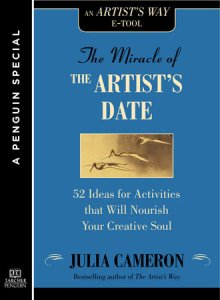 In The Miracle of the Artist’s Date Julia Cameron explores what I think is the key to feeding your creative muse—the artist’s date. Long before I read Cameron’s book, I went on what I called creative encounters. My encounters included museums, musicals, one-day trips, hikes, and more. Those creative encounters did exactly what Cameron says an artist’s date does, they nourished my creative spirit, my creative muse.
I recommend treating your muse to a creative encounter at least once a month. What ignites your creative energy and inspires your writing muse will be unique to you. For some it may be live theater, a concert, or another kind of performance. For others it may be touring an art installation, gallery, or museum. Others may benefit from a trip to the beach or time to think during a walk through the woods. Scouring cookbooks, trying out a new recipe, or recreating a family meal from years gone by may inspire someone else. Whatever you choose, I recommend that you let your creative encounter be something out of your normal routine, something special for you, and not something related to research for an upcoming project. I have found that creative encounters are most effective for me when I experience them alone—but that may vary from person to person.
The teacher in me also thinks there’s a need to reflect after a creative encounter to help your logical self realize what has impacted your creative self. Whether it be the day after, the next week, or a month later, think back on the creative encounter, what you enjoyed about the experience, and what changes you noticed in your creativity following the experience. Don’t get hung up on results since your muse may be inspired by an encounter months later, but do reflect so you can determine which creative encounters are most meaningful and helpful to you.
Here’s a goal for you—how about planning one creative encounter each month in 2026? Feed your creative muse and see what results come from it. Don’t wait for inspiration to strike—though it might. If inspiration is everywhere, grab it and hold on to it. But feed your creative muse, too. Now, go enjoy a creative encounter!

Rob Sanders, from Brandon, Florida, is a teacher who writes and a writer who teaches. He is known for his funny and fierce fiction and nonfiction picture books and is recognized as one of the pioneers in the arena of LGBTQ+ literary nonfiction picture books. Rob’s nonfiction books continue to break new ground, including the first picture books about the Pride Flag, the Stonewall Uprising, a transgender Civil War soldier, a gay presidential candidate, and the first gay marriage in America. His work also continues to introduce readers to heroes of the LGBTQ+ community—from Harvey Milk to Gilbert Baker, from Cleve Jones to Bayard Rustin, and more. His fiction explores friendship, relationships, standing up for others, and being allies. Blood Brothers, his first middle grade novel, written in powerful, raw verse released in July 2022 and was named an NCTE 2023 Notable Novel in Verse. 2025 releases included the warm-hearted story, Book Comes Home: A Banned Book’s Journey and André: André Leon Talley—A Fabulously Fashionable Fairy Tale, co-authored with Carol Boston Weatherford. 2025 will see the release of A Family of Readers (Charlesbridge) and Play Proud: Fiercely Fabulous Queer Athletes (Beaming Books). Rob believes in paying it forward. He serves on the SCBWI Impact and Legacy Fund Steering Committee and is a frequent speaker, teacher, mentor, coach, and critiquer. Rob is represented by Rubin Pfeffer and Amy Flynn of Aevitas Creative Management. Visit him at robsanderswrites.com and on Instagram @RobSandersWrites.

 Lisa Tolin is a children’s book writer and the editorial director of PEN America. Her debut picture book, HOW TO BE A ROCK STAR, with Daniel Duncan, was a Junior Library Guild gold standard selection. CAN YOU IMAGINE? THE ART AND LIFE OF YOKO ONO won the Society of Illustrators Silver Medal for illustrator Yas Imamura. Find Lisa on Instagram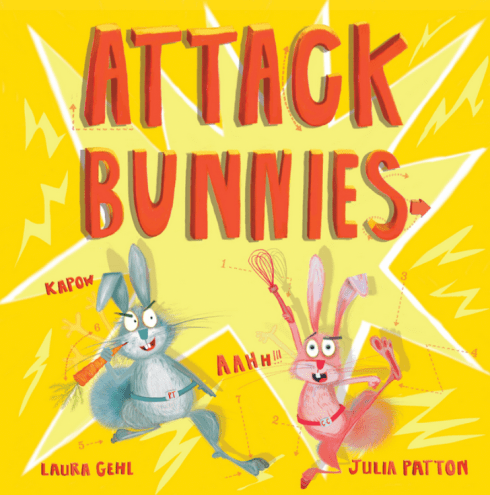
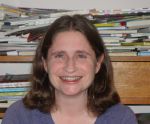 Laura Gehl is the award-winning author of more than fifty books for kids, from board books to picture books to early readers. Her 2026 titles include ATTACK BUNNIES (Beaming Books), PUPPIES KNOW AND GROW and BUNNIES KNOW AND GROW (Barefoot Books), ODD BUGS (Abrams), and BUBBE AND BECCA’S BUCKET LIST (Penguin Random House). You can often find Laura in an ice cream shop, or in the woods in Maryland, where she lives with her husband and four kids. You can also visit her online at
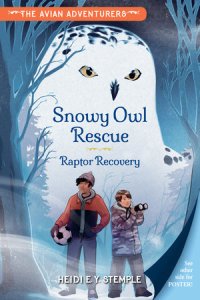
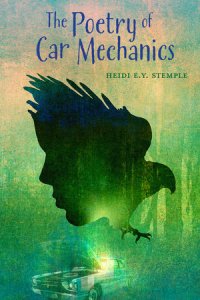 I live on a farm so there is always something interesting out there—a predator alarming the crows and blue jays (they made it into my verse novel THE POETRY OF CAR MECHANICS), a nest with baby birds squawking and parents flitting in and out (WREN’S NEST), a friend’s backhoe digging up the farmland for a new crop (Book #2 of The AVIAN ADVENTURERS)… but sometimes, even though the idea is obvious, the story doesn’t preset itself right away. One day, around 2014, I looked out my window, across the expanse of the back acres of our farm. There are always deer back there and a regular bobcat. I also have fox and coyote and some really fat groundhogs. But, on that day I saw something completely different. Bigger. MUCH bigger. A young moose! I had never seen a moose in the wild before—let alone in my own backyard. I grabbed my binoculars and raised them to my eyes yelling what everyone yells when they see a moose, “that thing is ENORMOUS!” My writer brain, though, was not satisfied with that. It started playing around with the word.
 Enormous…
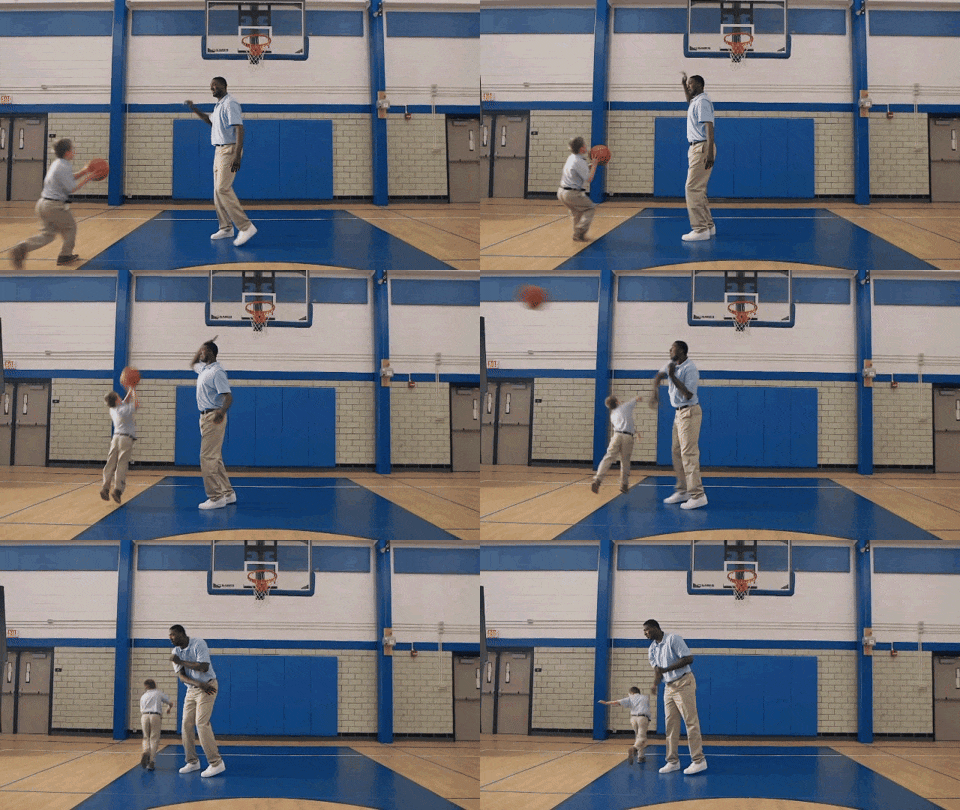
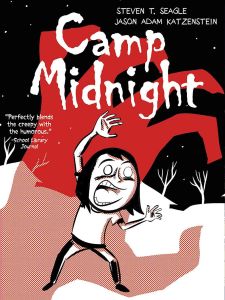
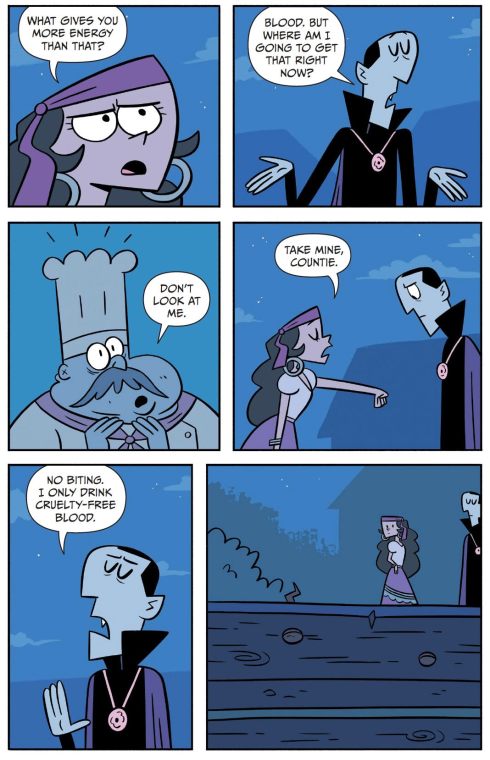
 Brian Gonsar is an award-winning producer with a resume of feature films, music videos, art installations, and even a Super Bowl commercial. He is also a self-proclaimed donut aficionado, who has traveled the world to find the best donut. DRACULA’S BRUNCH CLUB (Oni Press, 2025) is Brian’s debut graphic novel. When he’s not writing and creating, Brian’s most likely reliving his glory days on the soccer field. He is a proud #girldad and lives with his wife and daughter in New Jersey. You can find more about him at
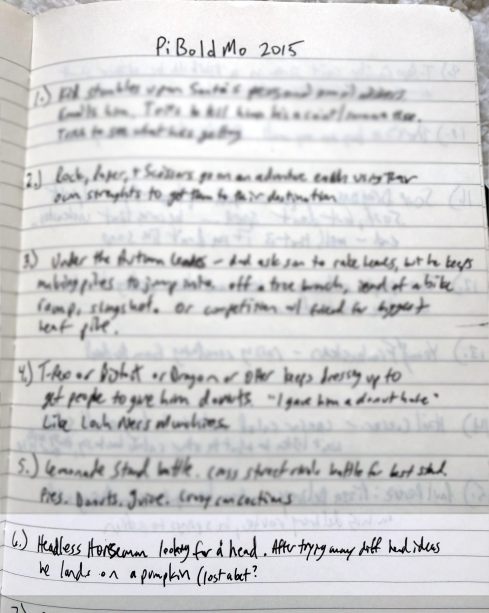
  Thank you, Tara, for starting Storystorm all the way back in 2009 when it was PiBoIdMo. Just think of all the wonderful ideas that have been generated in this community since then! I am excited to start off the New Year with a bunch of new ideas!
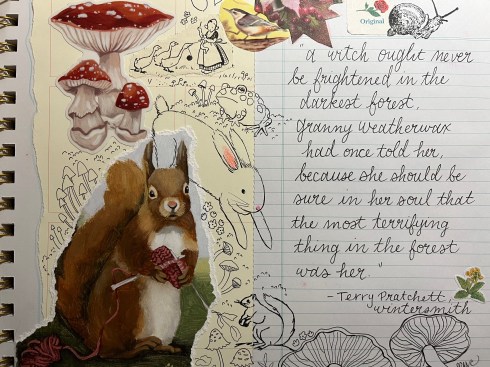
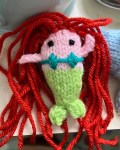 I’m the illustrator of two picture books and the author/illustrator of THE THREE LITTLE PUGS, a picture book that was published in 2018. A couple years later, during the pandemic, I was diagnosed with
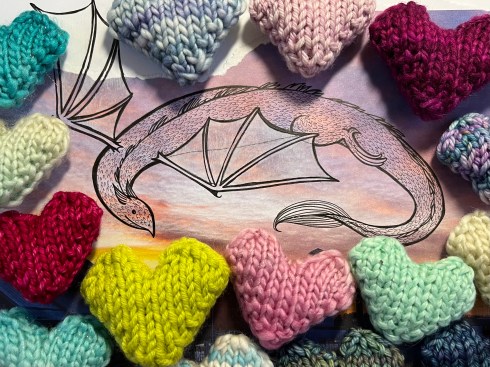
 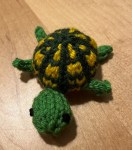 Knitting has truly been a lifeline for me. I owe a huge debt of gratitude to all my knitting friends, with an extra special thank you to Anna Hrachovec of
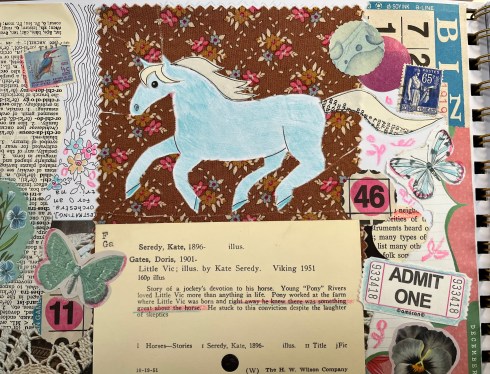
 Nina Victor Crittenden is an illustrator/author, certified veterinary technician, and knitter. She works traditionally with ink and watercolor. Nina is the illustrator of CEDRIC AND THE DRAGON and CHICKEN LILY, and the author/illustrator of THE THREE LITTLE PUGS. She lives in Minnesota with her husband, kids, four cats, and one really old dog.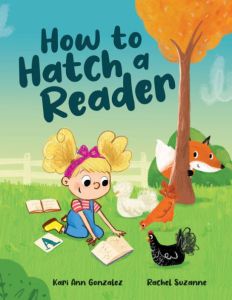
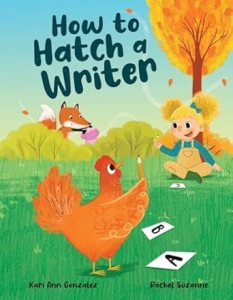
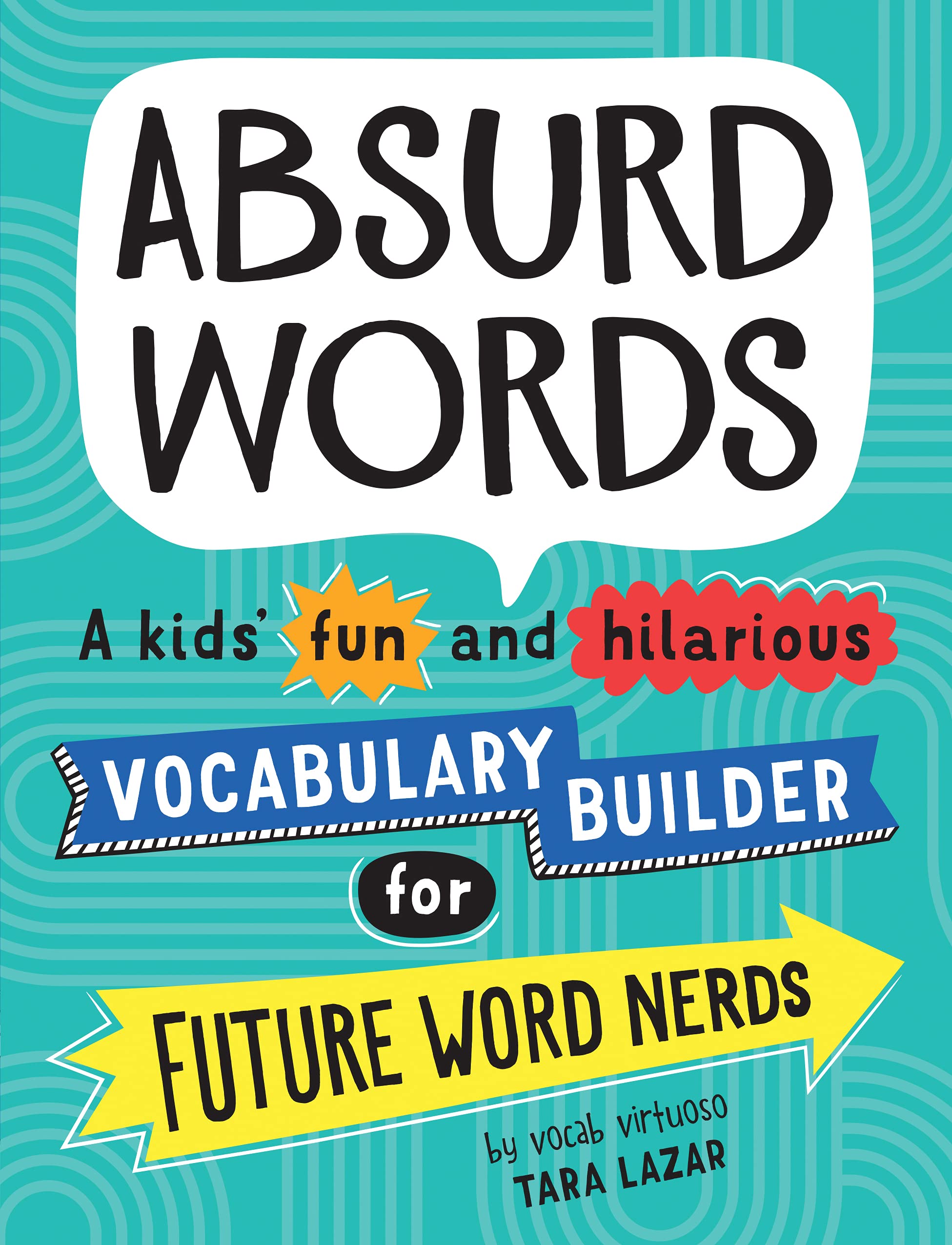
 In my latest book, HOW TO HATCH A WRITER (illustrated by Rachel Suzanne), I focus on building blocks for sentences…with a cast of plucky chickens! Every sentence tells a little story, but how do you come up with those stories? A technique I use with kids to build writing muscle is practicing sentence elaboration. I use this same technique when generating story ideas. Pick a favorite word and build a story around it. How do you pick a word? What’s the right word to start with you might ask? Anything goes! Pick a word from your new favorite picture book, the news, a word you heard taking your kids to the playground, a grocery list, or snag a word AND enrich your vocabulary with ABSURD WORDS by Storystorm creator Tara Lazar!
 Kari Ann Gonzalez is a children’s writer who loves tending to her tiny hobby farm and stuffing her little free library full of books. Her debut picture book HOW TO HATCH A READER won the Northern Lights Picture Book award for humor, while HOW TO HATCH A WRITER has been named Hot Off The Press by CBC, and Reviewer’s Choice on Midwest Book Review’s Children’s Bookwatch. She is excited to share her newest titles, IF YOU LIVE ON A FARM, GOAT MAA-TH in 2026, and more titles to be announced soon! A flock of plucky chickens are kind enough to share their home with Kari, her husband, and their two little girls. For more information, please visit Kari’s website at
 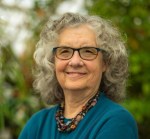 Stephanie Wildman, author of six children’s books, became a Professor Emerita after serving as the John A. and Elizabeth H. Sutro Chair at Santa Clara Law. She is a grandmother, mother, spouse, friend, good listener, who can sit “criss-cross apple sauce” thanks to her yoga practice.