You are currently browsing Tara Lazar’s articles.
When Tara asked me to write a blog post for Storystorm about Inspiration, I knew this would be my Finest Achievement Ever. I’m so excited to share with you my brilliant, awe-inspiring Process for Picking the Perfect Ideas.
Prepare to be Astounded!
Astonished!
Amazed!
Because I’m about to share a technique so Overwhelmingly Fabulous that it’s sure to leave you completely speechless!
Are you ready for this??
Creating new story ideas is just like baking cookies!
*sigh*
Okay … You’ve caught me …
I’m a total inspiration cheater.
Shh … Don’t tell Tara. She’s expecting me to share some brilliant tips with you, and I didn’t have the heart to tell her I’m a con-artist.
The truth is, I’ve never had a truly Original Idea. Instead, I spy, snoop, and steal from the things I read and my real-life experiences … Then I twist, combine, substitute, and reconfigure those ideas until I’ve come up with something sweet that I can call my own.
When I’m not writing, I spend a lot of time in the kitchen. I like to create new and delicious cookie recipes with unexpected flavor combinations to impress my friends and neighbors. But I’ve never created a brand-new cookie recipe entirely from scratch.
Yep. I cheat.
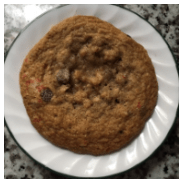 When I want a new cookie flavor, I first find a familiar, tried and tested recipe, like this original recipe for Nestle chocolate chip cookies. Then, I start making changes.
I usually put walnuts in my chocolate chip cookies, but what if I only have almonds? What if I’m making cookies for my friend on a gluten-free diet? Or what if I’m out of chocolate chips? Will craisins work? What if I accidentally spill some sage or basil into the batter? What would happen if I threw all of these changes together at once? Suddenly, I have a brand-new cookie recipe that looks totally original. And no one knows that I cheated. (Remember, this is our little secret. If you promise not to tell Tara, I’ll even share my recipe for Cranberry Sage Cookies with Almonds at the end of this post.)
I cheat the same way with my writing.
I’m constantly snooping, sneaking, and spying on my friends, family, and the total strangers I pass on the street. I keep files of my favorite fairy tales, inspirational quotes, and out-of-context bits of conversation.

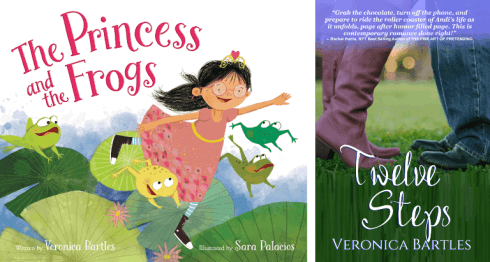
For my debut picture book THE PRINCESS AND THE FROGS (Balzer & Bray, November 15, 2016), I totally cheated.
I started with one of my favorite fairy tales, “The Frog Prince.” In the original story, the princess is rather spoiled and selfish, who only wants to marry the perfect prince and live happily ever after in the lap of luxury. And she nearly misses her Happily Ever After when she resists kissing the frog, who can’t transform into a prince without a proper smooch. But I believe that most people are truly good at heart, so I wanted to rewrite her story.
I remembered tromping through the fields behind my house when I was a little girl, searching for toads to play with. I remember catching dozens of toads, and building little houses for them with my friends. I thought about the little girls I know, who love dressing up in fancy, frilly dresses with sparkly jewels and hair clips or tiaras. Most of these part-time princesses will happily lace up their worn-out sneakers with their fancy dresses, so they can be ready for whatever adventure they may find.
And I couldn’t help but wonder: What if there was a princess who just really, really loved frogs? What if she doesn’t want a prince? What if she’d rather have a frog? But what if she kept kissing them anyway (because she loved them so much, she couldn’t resist a little goodnight smooch), and she ended up with a castle full of princes, all proposing marriage?
Starting with familiar characters and stories is like starting with a familiar recipe in baking. I can bend and twist and substitute ingredients until the story is uniquely delicious, and if it flops (as sometimes happens both in baking and in writing), I can go back to the “reset point” (the original story, recipe, or real-life event) and try again.
Cranberry Sage Cookies with Almonds

1 c. butter
1 c. brown sugar
½ c. sugar
1 ½ tsp. rubbed sage
1 ½ tsp. basil
2 eggs
½ tsp. salt
1 tsp. baking soda
1 ½ tsp. vanilla extract
4 Tbsp. cornstarch
2 1/3 c. Gluten-Free All-Purpose Flour (or omit the cornstarch and use 2 ½ c. plain all-purpose flour, if gluten isn’t a concern)
1 c. craisins
½ c. sliced almonds (opt.)
- Cream together butter and sugars.
- Add eggs, baking soda, salt, sage, basil, vanilla extract, and cornstarch. Beat until light and fluffy.
- Mix in flour.
- Stir in craisins and almonds. Chill dough 1-2 hours.
- Preheat oven to 350 degrees Fahrenheit.
- Portion dough into 1-inch balls, and place on parchment-lined baking sheets. Bake 12-15 minutes until lightly browned. Remove to a wire rack to cool.
 Veronica Bartles, author of THE PRINCESS AND THE FROGS (PB), and TWELVE STEPS (YA), has spent most of her life wondering “What If?” She believes there are many sides to every story, and she’s determined to discover every single one of them. Veronica believes every princess deserves a frog, because princes aren’t pets. And she’s an incurable optimist who loves gray, drizzly days because that’s when rainbows come out to play. Visit her online at vbartles.com, her I Am So Grateful Blog, Facebook, Twitter @vbartles, Pinterest, and GoodReads.
Veronica is giving away one signed copy of THE PRINCESS AND THE FROGS plus a set of 5 custom buttons featuring the original artwork from the book … & a TWELVE STEPS postcard that features the recipe for Giant Brownie Sundaes that Andi and Jarod (aka “Prince Charming”) enjoy.
Leave ONE COMMENT below to enter. You are eligible to win if you are a registered Storystorm participant and you have commented once on this blog post. Prizes will be given away at the conclusion of the event.
Good luck!
This past November, the world shifted. For some, that feels like a good thing—they see things in our world that frighten or disgust them and believe that huge changes are needed to set us back on the right course. For others, it feels just the opposite—this new world looks like a dark, dangerous place that threatens to undo much of the progress that has been made. Whichever side of the political divide you find yourself on, one thing is certain: the times, they are a changin’.
Children are feeling those changes, too. Even prior to the election, Time magazine reported that “anxiety and depression in high school kids have been on the rise since 2012 after several years of stability.” And shortly after the election, the Southern Poverty Law Center’s Teaching Tolerance project conducted an online survey of K-12 educators from across the United States. Of the more than 10,000 respondents, “A full 80 percent describe heightened anxiety and concern on the part of students worried about the impact of the election on themselves and their families.”
As artists, we tend to be even more sensitive to what’s going on around us, and these unsettling times are impacting us as well. I’ve heard many of my colleagues say they don’t know what to write about anymore—that their old ideas feel irrelevant in today’s view. Or they’re worried about how the changing publishing market will value the work they are creating now. Or they wish there was something more important they could contribute to push things in the direction they wish them to go.
via quotesjunk.com
Fortunately, as writers, we have a superpower: the ability to make our readers feel, and it is through the experience of those feelings that hearts and minds—particularly those of young readers—are forever changed. Story can serve as a mirror, after all, helping the reader validate and make sense of their own experiences. Or it can function as a window, allowing readers, in the words of Joyce Carol Oates, to “slip, involuntarily, often helplessly, into another’s skin.” Both can be invaluable in shaping who those readers ultimately become.
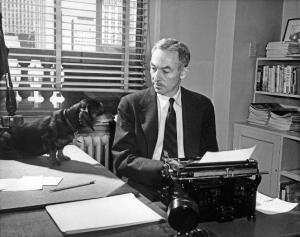 They say, however, that with great power comes great responsibility. Does that mean we all need to start writing about heavy, serious topics, to make kids understand? No, absolutely not! In 1968, E.B. White told The Paris Review, “A writer should concern himself with whatever absorbs his fancy, stirs his heart, and unlimbers his typewriter. I feel no obligation to deal with politics. I do feel a responsibility to society because of going into print: a writer has the duty to be good, not lousy; true, not false; lively, not dull; accurate, not full of error. He should tend to lift people up, not lower them down. Writers do not merely reflect and interpret life, they inform and shape life.”
 Does it mean we have to write happy books with no undue stresses or negativity? Again, no! As Maurice Sendak said, “You must tell the truth about a subject to a child as well as you are able, without any mitigating of that truth. You must allow that children are small, courageous people who deal every day with a multitude of problems, just as adults do, and that they are unprepared for most things. What they yearn for most is a bit of truth somewhere.” (from The Art of Maurice Sendak, by Selma G. Lanes)
What is your role as author, then? To connect with your own deepest emotions and find a way to share them with your readers. You can start by choosing any emotion—happy, sad, scared, angry, excited… you name it (you can even pick a random one from the list here)—then make a list of everything that makes you feel that way and why. Or, simply notice whenever you’re struck by an emotion as you’re going about your day. In either case, ask yourself: Is there a story here?
Once you’ve collected those story ideas, be fearless. Do the work. Grapple with the feeling until you begin to understand it. Write unabashedly from your heart. Be as honest as possible with whatever you are writing, honor the universal humanness of your stories, and make your readers feel the emotions that you feel, whether that’s silly or serious, confident or broken, skeptical or curious, hopeless or optimistic… or the messy reality of experiencing all of those emotions mixed together at the same time. Then leave room for readers to meet you halfway and take whatever they may need from you at the time.
This makes your writing stronger, too. You may be writing about fuzzy bunnies, but your story will only work when you add real human emotion to it. You may be retelling a fairy tale, but readers will only care if they can relate it to their real lives. You may be writing narrative nonfiction, but pieces of why it matters to you–and your reader–must still shine through. The best stories give us something to think about long after we close the book because they gave us something to feel.
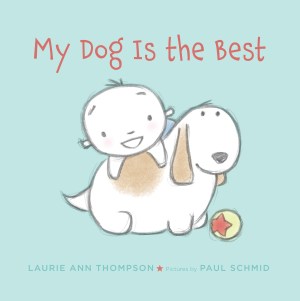 My first two books, EMMANUEL’S DREAM and BE A CHANGEMAKER, are quite serious and earnest. My third book, MY DOG IS THE BEST, is a lighthearted, funny picture book about a boy and a dog with mismatched energy levels. I wrote all of them, and I think they work because they reveal some of my deepest feelings, which happen to be feelings most of us can relate to on some level. It can be terrifying to put ourselves out there in that way, but I’ve come to believe it’s worth it. We write, after all, because we have something to say, whether we realize it or not.
So create boldly, share generously, and connect fearlessly. I think having a child connect with and remember our work is ultimately why we do what we do, and that connection might be just what a young reader needs to see the world in a different light. As Jeanette Winterson said in an interview on CBC Radio, “Art can make a difference because it pulls people up short. It says, don’t accept things for their face value; you don’t have to go along with any of this; you can think for yourself.”
And isn’t that the most important gift you could ever give to anyone?

Photo credit: Mary Balmaceda
Laurie Ann Thompson writes for children and young adults to help her readers–and herself–make better sense of the world we all live in, so we can contribute to making it a better place for all of us. She strives to write nonfiction that gives wings to active imaginations and fiction that taps into our universal human truths, as seen in her books BE A CHANGEMAKER: HOW TO START SOMETHING THAT MATTERS, a teen how-to guide filled with practical advice and inspiration for young social entrepreneurs; EMMANUEL’S DREAM: THE TRUE STORY OF EMMANUEL OFOSU YEBOAH, a picture book biography of a young man who changed Ghana’s perception of people with disabilities; MY DOG IS THE BEST, a fiction picture book about the bond that exists between a child and a beloved family pet; and the upcoming TWO TRUTHS & A LIE: IT’S ALIVE! (co-authored with Ammi-Joan Paquette), which seeks to help readers learn to recognize the difference between hard-to-believe truths and outright lies. Learn more at lauriethompson.com and on Twitter @lauriethompson.
Laurie is giving away two copies of BE A CHANGEMAKER.

Leave ONE COMMENT below to enter. You are eligible to win if you are a registered Storystorm participant and you have commented once on this blog post. Prizes will be given away at the conclusion of the event.
Good luck!
As writers, we must ALL strike while the iron is hot. Every writer tries to get into the castle (the publishing houses) over the drawbridge. The drawbridge however is crowded, heavy laden from the weight of writers that would love a meeting with the Queen or the King, (the editors). It is necessary, and beneficial to keep your eyes wide open for a secret passage that presents itself to you where nobody else is looking.

This is EXACTLY how my newest picture book, STILL A FAMILY, Albert Whitman & Company, illustrated by Jo-Shin Lee, was conceived and transpired. I was trolling on Facebook one day, and there was a conversation that began on the wall of Tracey Adams, co-founder of the esteemed literary agency, Adams Literary. Josh Adams was my first agent, and so we have a wonderful relationship still, and I frequently read their posts as they are the most amazing people and such incredible agents. Tracey was in Maine visiting, and her daughter made a comment wondering why there were so many homeless people in Maine.
Tracey wondered why a book about the homeless, and how to explain homelessness to children, hadn’t been written yet. I was circling the castle and I saw that small light in the window of opportunity open. Nobody else had yet discovered it, and so I sat down and wrote a first draft of Still a Family. In doing so, I struck while the iron was hot.
It was quick writing session, 30-minutes maybe. I originally didn’t write STILL A FAMILY to sell it. I wrote it because I truly wanted to write something for Tracey’s daughter. It was a story written in rhyme, and I posted it on my Facebook wall.
Immediately…within seconds, I got a message from a Facebook friend who works in a homeless shelter saying, “This is GREAT! Can I share it with people at my shelter?”
I was encouraged by this response, and answered with, “Let me run this by my agent, the beautiful-friend-to-all Karen Grencik, of Red Fox Literary to see if there might be a calling for a book like this,” and I took the story off my Facebook wall if there were indeed a need for this story.
I sent Karen a message. “Do you think there is a calling for a book about a child living in a homeless shelter?” She pinged back a response…”No, I don’t really think there is a calling for a book like this, sorry.”
Well, I continued walking around the castle, and I saw another door open that nobody had yet seen, as two editors had responded on Tracey’s Facebook wall post. Their commentaries went like this. “I would LOVE a book like this for OUR house.” “YES, us too, we would like a book like this.” I scribbled down names, and found out what houses the editors worked at. I ping-ponged back another message to Karen. “There are two editors asking for this manuscript, will you send it?”
And just like that, before the day was over, we were out on submission with STILL A FAMILY.
I know this is highly unusual, I know the way this happened was nothing short of a miracle, but in saying this, had I not been open to getting into the castle other then over the drawbridge, had I not been willing to write something on cue, to write to what a specific editor had requested, STILL A FAMILY might never have come to fruition.
 Karen and I received immediate responses (within a day or two) regarding this manuscript. And within 6-weeks, STILL A FAMILY was sold to Albert Whitman & Co, this is record speed in the land of publishing. The manuscript changed a LOT, it was revised and revised, rewritten and tweaked, it went from rhyme, to prose. I had never written in prose before and it was a scary process for me, but I listened intently to my editor, Andrea Hall, and I was able to write the story (which took just about a year of revision) and is now being released on January 31st.
Albert Whitman wanted the story to be about a family, and how a family STAYS a family while living in different homeless shelters. Oftentimes families are separated, the mom lives with the children in one shelter, and the dad lives in a different shelter with men. I researched and wanted to write a story that would speak to the homeless, but also to librarians, educators, parents, grandparents, depicting the story compassionately, and with respect, it is a story of hope but most of all it is a story about LOVE.
I wrote the story to bring the plight of the homeless to light, to humanize this epidemic that is taking over our country and enveloping our world. 2.5 million children are affected by homelessness every single year. Sometimes the ONLY thing that separates the homeless from people with a home is a medical crisis and/or a few paychecks.

One thing led to another, Kirkus and Publisher’s Weekly have given STILL A FAMILY glowing reviews. There is a news anchor in New York that is going to blog about this book and report on it, and I have paired with Schinnell Leake, an Oprah Woman of the Year and founder of Extra-Ordinary Birthdays, an organization that provides birthday parties to children in homeless shelters. This is quickly becoming my life’s work, getting STILL A FAMILY to the children that need it most, to the children in the shelters, to the families to give them hope, to the schools for understanding and educational purposes…this is my new mission.
In closing, I reiterate to you to keep looking, keep searching, keep writing, and keep walking around the castle trying to get an audience with the Queen or the King. Keep your eyes open for trap doors, for a different access, for another way in, because you just never know how wonderful it all might be and how what YOU have to say can make a difference. Not only for people that you didn’t even know needed you, but for your own life, your unique purpose and your individual writing journey as well.
A percentage of every sale of STILL A FAMILY will be donated to homeless shelters across the country.
 Brenda Reeves Sturgis is the author of 10 TURKEYS IN THE ROAD, illustrated by David Slonim, THE LAKE WHERE LOON LIVES, a cumulative rhyming book, illustrated by Brooke Carlton, and TOUCHDOWN, illustrated by Trey Chavez.
Brenda is the winner of the 2007 Smart Writer’s contest and the Grand Prize winner of the 2014 MeeGenius Author Challenge contest. Her latest picture book, STILL A FAMILY, will be released by Albert Whitman & Co on January 31st, 2017. You can visit her at BrendaReevesSturgis.com, or on Facebook, and you can see the trailer of STILL A FAMILY on You Tube.
Brenda is giving away three copies of STILL A FAMILY—one to a winner here, one to a homeless shelter of the winner’s choice and one to a children’s library selected by the winner.
If you can stick with this post all the way to the end, you’ll find my little bio where it is clearly states that “author/illustrator” is not my day job. Most days I get up a little too early for my taste, and head into Manhattan where I work as a set designer for television. Mostly, I work in talk shows, having spent the bulk of my career doing late night shows like Late Night with Conan O’Brien and The Late Show with David Letterman. When the taping wraps, I go home, kiss my wife, pat my kids on the head and head up to my attic studio where I make books for kids.

Sometimes (almost never) I’m asked how the day job informs the night one. What have I learned working in TV that applies to making books?
 Sense of humor is one answer. I think I’m irrevocably scarred … sorry skewed—(either works actually) from years of designing weird sets and goofy props. Late night humor and the way the writers craft their comedy has had a big influence on me.
On the illustration side, I’m heavily influenced by the way the camera is used to shoot a scene. I try to set up scenes in my books using time-honored camera shots like using wide establishing shots to set a scene or close-ups for comedic moments.
 I think the biggest takeaway has to do with pace. I’ve got one book out on the shelves (go get yourself a copy) and more to come but I still can’t get over the difference in pace between writing/illustrating a picture book and making a daily television show. It really messes with me.
At my day job, I get multiple scripts a day that I need to break down, sketch out, draw up, and then source any necessary props or create them from scratch. Every day. We produce a show, sometimes two, every day. And then we come in the next day and do it again. What this all means is that there’s very little time to plan and strategize. When I’m handed a project, I make a plan and I go. It really trains you to problem solve and think on your feet. There’s no rehashing. There’s no switching direction midstream. There’s just a steady march towards getting the set or prop to stage for rehearsal and, later that day, the show. That same afternoon we tape a show and it’s over. My set or prop gets used on air and then…Done. Whole new show tomorrow. You move on.
Having worked this way for so many years might explain why the open-ended, no time-limit, move-at-your-own-pace process of creating a book is difficult for me sometimes. So much time to rethink and revise. Don’t get me wrong. I see the benefit of it all but I sometimes think too much time is… well… too much time.
So, when I find myself going in circles on a manuscript or illustration, or endlessly staring at a blank page, I implement day-job rule:
Do it in one day. Get it done TODAY. Pick a path and move forward. Whether it be an outline, a picture book manuscript, or a chapter of your novel — see it through to it’s conclusion. Get it to stage before showtime.
Ultimately, you might choose incorrectly. You might not love every sentence you write that day and I’m certain there will be details you’d like to change. If you picked the wrong story path, you’ve at least narrowed down the possibilities of where your story goes. You certainly wont be staring at a blank page. That’s progress.
The beauty of this is, unlike my day job, the show is not over and done at the end of the day. You do have tomorrow to edit and revise. For me, the best making-a-book timeline is a mix of the two. Hurry up and get it done and then slow down and take your time to make sure it’s perfect.
If you find yourself stuck on your latest project, give it a try. Set yourself an end-of-day deadline and pretend there’s a national tv audience and a grouchy host waiting for your work. I can almost guarantee some progress by day’s end.
 Here’s the bio I told you about at the beginning. I knew you’d make it.
By day, Jason is a set designer for television, with credits that include Harry, The Meredith Vieira Show, Late Night with Conan O’Brien, and The Late Show with David Letterman. By night, Jason is an author and illustrator of children’s books. You can find his debut picture book, MR. PARTICULAR: The World’s Choosiest Champion on shelves in bookstores everywhere. See Jason’s work, both illustrations and set designs, at jasonkirschner.com. Follow him on twitter @jason_kirschner. You can also read more of his blogs and some of his friends’ at DrawntoPictureBooks.blogspot.com.
Jason is giving away a copy of his debut picture book, MR. PARTICULAR.

Leave ONE COMMENT below to enter. You are eligible to win if you are a registered Storystorm participant and you have commented once on this blog post. Prizes will be given away at the conclusion of the event.
Good luck!
When Tara asked me to blog for Storystorm I knew right away that there were two points I wanted to make.
- Ideas can come from the most random and wackiest places.
- A good idea is invaluable and must be guarded like gold.
To illustrate, I will tell a story from my own writing journey.
It was February 2012 and I was attending my first SCBWI conference in New York City.
Excited and eager to soak up all knowledge about kidlit that I could, I sat in the ballroom and listened to a keynote given by bestselling author, Cassandra Clare. The title of the keynote was “Love Triangles and Forbidden Love: Creating and Maintaining Romantic Tension in YA Literature.” Much of what she had to say made me blush.
I turned to picture book author Jodi Moore, who was sitting next to me, and jokingly whispered, “Doubt I will use anything from THIS in a picture book.”
Jodi responded, “You never know.”
That planted the seed. At that moment, I wondered if there was any way I could possibly write a “love triangle” picture book.
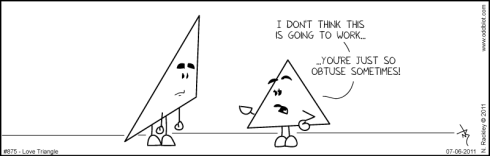
For some time, I mulled over the idea and, a little over a year later, the premise finally came to me:
- Circle and Square are best friends until a more interesting Triangle shows up. Then they both want to be best friends with Triangle, instead.
Now, having a stellar idea doesn’t always lead to immediately being able to draft up the story. Some things take time. At least for me.
Although I had a premise and knew that I wanted to infuse the story with lots of pun-filled, geometry-related humor, I wasn’t quite ready to start drafting.
Fast forward to May of 2013. I just happened to pitch LOVE, TRIANGLE to my agent and she was immediately interested.
“Oooh! Send it to me,” she said.
“Oh, I haven’t written it yet,” I answered.
“Well, you need to.”
A year passed and my agent asked for LOVE, TRIANGLE four times! Finally, she painted me into a corner by pitching it to an editor who also got excited by the concept.
“Now you must write it,” she said with a smile.
Finally, I did.
In November 2014 LOVE, TRIANGLE was sold in a five-house publishing auction to Balzer + Bray/HarperCollins.
Now, look closely at my timeline.
- First inspiration: Feb 2012
- Casual brainstorming: Feb 2012 – May 2013
- Drafting, writing, rewriting: May 2013 – Nov 2014
- Sold at auction: Nov 2014
So, to my opening points, ideas come from everywhere. Some of them are ready to be birthed right away. Others need some more incubation time. LOVE, TRIANGLE needed over two years and that’s ok.
However, I was particularly careful about keeping my idea to myself. Sure, a few close writer friends and my agent knew what I was working on. But over-sharing it might have led to someone else using my concept to write a similar story. And in all actuality, with the story taking years to develop, it is quite possible someone could have beaten me to the chase.
At times, it was a struggle to not tell everyone about something I was so excited about. But, in the long run, keeping it to myself proved beneficial and allowed me to tell the story when I was ready.
So, go out there and gather ideas.
Soak up life.
Listen to keynotes you might not necessary think you can use in your work.
Gather lots of ideas.
And guard them like gold.
Then, when the time is right, write. If it takes time, that’s fine. I am still working through some ideas I came up with five years ago.
No. I will not share what they are.
But I can’t wait to share LOVE, TRIANGLE with the world when it finally publishes later this year.
 Marcie Colleen has been a teacher, an actress, and a nanny, but now she spends her days writing children’s books. Her debut picture book, LOVE TRIANGLE, illustrated by Bob Shea (Balzer + Bray/HarperCollins, Fall 2017) sold in a five-house auction. It is about best friends Circle and Square, and Triangle who comes between them. Other upcoming picture books include THE ADVENTURE OF THE PENGUINAUT (Scholastic, Fall 2018) which will be illustrated by Emma Yarlett. Marcie is also the author of the SUPER HAPPY PARTY BEARS chapter book series (Macmillan/Imprint). Marcie is a frequent presenter at conferences for SCBWI, as well as a faculty member for Kidlit Writing School offering courses with a focus on plotting and revising picture books. She lives in San Diego, California with her husband and their mischievous sock monkey. Visit her at thisismarciecolleen.com or on Twitter @MarcieColleen1.
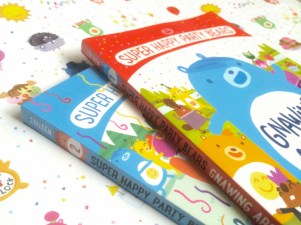
Marcie is giving away Books 1 & 2 from the SUPER HAPPY PARTY BEARS chapter book series.
Leave ONE COMMENT below to enter. You are eligible to win if you are a registered Storystorm participant and you have commented once on this blog post. Prizes will be given away at the conclusion of the event.
Good luck!
by Colby Sharp
One of my favorite things to do with my students is a Mock Caldecott unit. Each year, my friend Mr. Schu and I select 20 books for the study. Mr. Schu posts the list on his blog with a whole bunch of resources. I kick off the unit by sharing Mr. Schu’s post with my students, and then we get to work.

During the unit my students read and reread and reread the books on the list. We discuss the Caldecott criteria. They quickly develop favorites. Those favorites often change as they dig deeper and look more closely at the books.
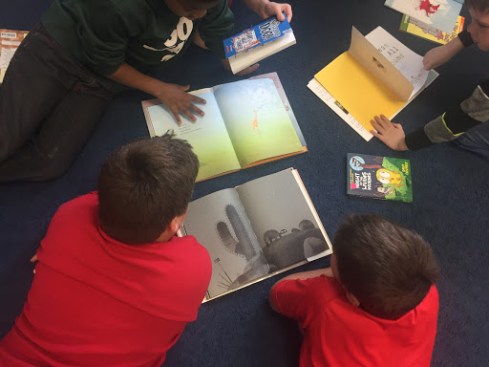
Once they’ve become experts on the 20 picture books they select a favorite. Then they talk all of their mad persuasive writing skills and create a video essay trying to convince their classmates which book they think should be honored by our pretend Caldecott committee.
After watching the videos, students can come to the front of the classroom and give their final arguments. I love watching an 8-year-old kid beg their classmates to vote for the book that they hold closest to their hearts.
After everyone has said all that they have to say about the books, I pass out the ballet. Each student is allowed to vote for up to four books. This year the first round of voting resulted in 5 books receiving a significant amount of votes.
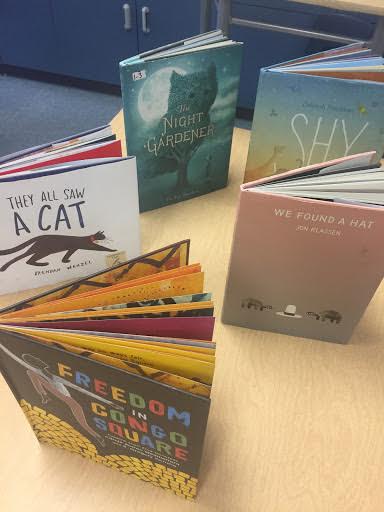
On to round two.
I love watching the kids react to their favorite book not making it to round two. We talk about how important it is that they respect the opinion of the committee, and that they finish the job that they started. Even though the book they loved the most didn’t win, doesn’t mean they can check out.
During the second round of voting students select two books. This year Deborah Freedman’s SHY and Jon Klassen’s WE FOUND A HAT received the most votes.

Time for the final round!
Before this round we have another round of debates. I really enjoy watching kids get behind a new book, and try to convince their classmates why that book is the one they should vote for.
For the final tabulation of votes, I read the anonymous votes out loud one by one. It creates a fun and dramatic environment.
By a vote of 18-9 SHY took home this year’s top prize.

Deborah Freedman saw some of the tweets that I posted about our little project, and she offered to Skype with our class. The day after we selected SHY as our Mock Caldecott winner we spent a half hour chatting with Deborah about books, chasing your dreams, and how she became an a creator of books.
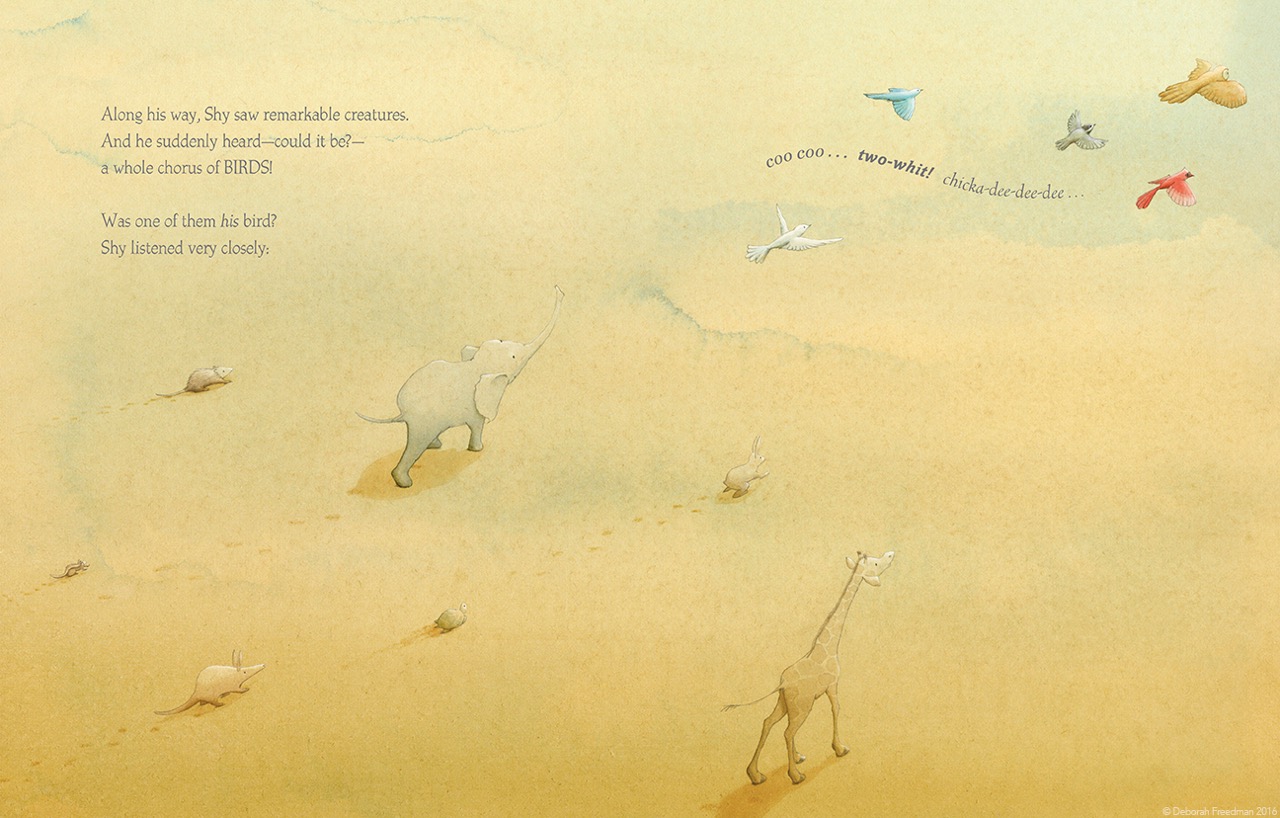
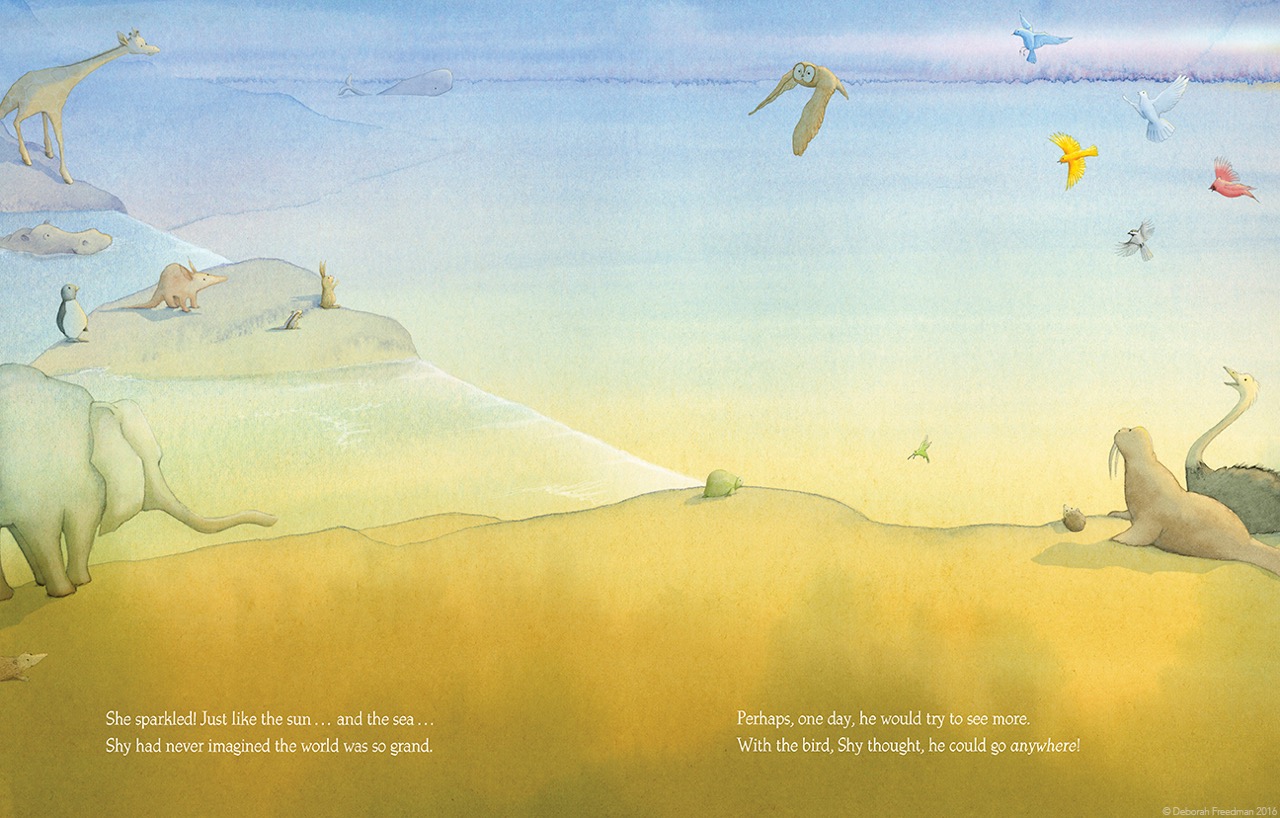
It is my hope that we can work together to help the kids in our lives realize that you don’t ever have to ever outgrow picture books.
 Colby Sharp is a third grade teacher in Parma, Michigan. He is the co-founder of Nerdy Book Club, Nerd Camp, and the #SharpSchu Twitter book club. He co-hosts The Yarn podcast with Travis Jonker. Mr. Sharp is currently working on THE CREATIVITY PROJECT with a bunch of his friends. Visit him online at mrcolbysharp.com and on Twitter @colbysharp.
Viking is generously giving away a copy of Deborah Freedman’s SHY to accompany today’s Storystorm post.
Leave ONE COMMENT below to enter. You are eligible to win if you are a registered Storystorm participant and you have commented once on this blog post. Prizes will be given away at the conclusion of the event.
Good luck!
by Julie McGann

My name is Julie McGann and I am a wish-granting digital artist who captures the imagination of little dreamers worldwide by giving them the dream pet they have always wanted. Children have a deep connection with animals, but much differently than we as adults feel towards them. This friendly connection is why I created dream pet portraits, so children could live out their fantasies of having any animal in the world as their best friend!
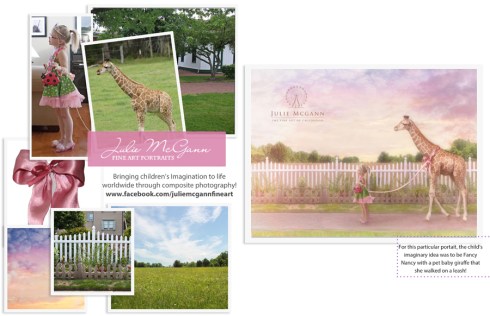
Each portrait is made up of several images that I have blended together in Photoshop to bring my imaginary idea to life! It is like finding all the pieces of the puzzle and putting them together as I see it in my brain. Each tiny little detail, I have captured with my own camera! Sometimes as many as 50 images come together to create a final portrait! It is exciting to watch it come to life!
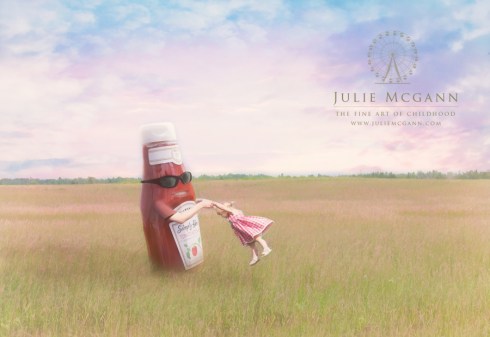
Sometimes children wish their imaginary friends were real. This little girl loves ketchup so much, she wished it was her best friend. Since I use real life objects and people, her imaginary vision could actually come to life right before her eyes! She could see what it would look like in the real world! I find myself drawn into the stories and the characters I create, as if I am living right in the portrait. I am taken to another world that I am passionate about creating.
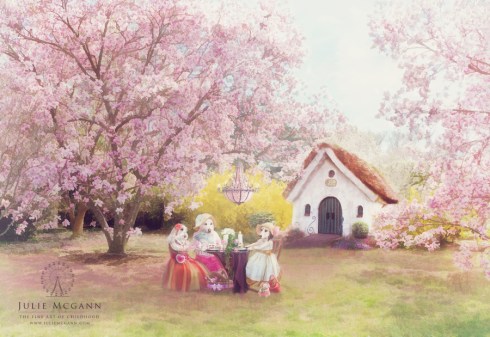
Many parents want to create portraits for their furry children too! When I made this tea party portrait, I felt was like I was actually there getting to know the dogs, even though I have never met them! Most of my work is done through email, which gives me the opportunity to offer portraits to families across the globe. Katie is the beautiful sophisticated senior dog fanning herself. She prefers the coolness of the shade. Emma is the diva of the group. She is the leader of the pack and a total drama queen, which is why she refuses to wear a hat and is texting at the table. Bailie is the baby of the group and looks up to the other two dogs. She wants to be just like them, but still a baby at heart with her little stuffed bunny.
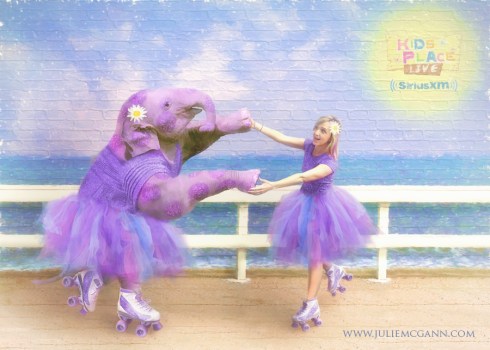
My most favorite moment in my career so far is when I interviewed my idol Mindy Thomas of the “Absolutely Mindy Show” on Sirius XM’s Kids Place Live! She is like a super cool babysitter to entertain your kids while you drive, so you can gain back (some of) your sanity. She has the incredible magical powers of an imaginary Fairy Godmother, granting the wishes of all her listeners!
My kids are HUGE fans and wanted to ask Mindy their own Would-You-Rather question,“When you were a child, would you have rather played on the monkey bars with a wolf wearing a blue sparkly dress or gone roller skating with a purple polka dotted elephant?” As it turns out, Mindy LOVES rollerskating, both when she was a child and still now very much as an adult. I was so excited to create this picture for her!

So, how did I decide to write and illustrate children’s books using my photography? Since all of the tiny details of my portraits portray a story, I often hear people tell me I should write children’s books. They wanted to know more about the characters in the portrait. I didn’t actually take the plunge until about a year and half ago, when I accidentally printed these mini glossy board books. I thought I was printing slightly larger albums to showcase my work at a local show, but misread the dimensions.
My youngest daughter was immediately drawn to them and asked to keep one. She carried it with her wherever she went. I was so happy that I had found someone to appreciate the little mistake I made. I put the other copy in my purse to show anyone who asked me what I did for a living.
When my youngest was in Daisies, someone asked me about my photography. I brought out my mini board book and immediately every single Daisy girl flocked towards my tiny little book, fascinated by every little picture in the book. The girls were begging me to let them keep that book. That was the exact moment that I decided my art should be in children’s books.
My pictures were wasting away on social media when they could be in the hands of young children all over the world who would truly appreciate their whimsical wonder. From that day on, I decided that I would both create for families, as well as write and illustrate numerous children’s books for all the little dreamers out there!

2016 was a great year, because it brought me my dream agent Jen Hunt from the Booker Albert Agency! Here’s hoping 2017 brings me my dream publisher and one for you too!
 Julie McGann is an internationally award-winning creative photographer and digital artist who brings children’s imagination to life through Illustrative Portraiture. Part painting, part photograph, her whimsical dream portraits have captivated families across the globe. Julie is well-known for her ability to turn ordinary personal photos into extraordinary imaginary masterpieces.
Visit find Julie online at juliemcgann.com, Facebook at Julie McGann Fine Art, Twitter @juliemcgannart and Instagram @juliemcgannfineart.
She invites you to visit her fun links:
- Finding Inspiration Tutorial: Thinking Outside The Box
- 50 Imaginary Game Ideas
- Sirius XM Kids Place Live Mindy Thomas Interview
Julie is giving away a copy of her 2017 wall calendar.
Leave ONE COMMENT below to enter. You are eligible to win if you are a registered Storystorm participant and you have commented once on this blog post. Prizes will be given away at the conclusion of the event.
Good luck!
Well, Storystormers. We have made it to January 11 already. While many of us have developed an aversion to the news these days, I encourage you to give your morning newspaper a second chance. Why? Because your newspaper is chock full of book ideas! Here’s how it works:
- Brew a cup of coffee.
- Sit down with your favorite newspaper—or online equivalent. (I still prefer the paper kind.)
- Scan the headlines cover to cover.
- When a story idea jumps out at you, STOP! Rrrrrrip out the article. (Warning: Get permission from other house dwellers first. If you’re reading online, just save and print.)
- Change a few words in the headline and . . . eureka! An idea!
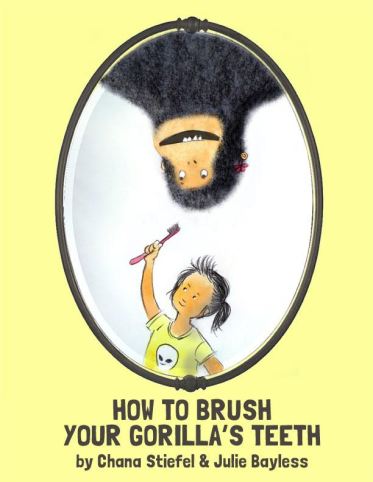
This tried-and-true method has worked for me for both fiction and non-fiction book ideas. Last year, I saw a headline in the New York Times Magazine that read, “How to Brush a Gorilla’s Teeth.” Rrrrrip! The article was about a primatologist who brushes gorillas’ teeth at the Bronx Zoo. Based on the headline, I wrote a fictional picture book called HOW TO BRUSH YOUR GORILLA’S TEETH. It was a funny how-to about tooth-brushing antics and anarchy. My agent loved it and invited illustrator extraordinaire Julie Bayless to sketch a dummy. (We got some nibbles from editors, but no bites…yet!)
A few years ago, I started a file of clips about creepy critters. They slowly evolved into a book idea, which I pitched to National Geographic Kids. While I can’t divulge the title yet, that book is coming out in 2018.
Two recent headlines that have inspired other book ideas:
- “Inky the Octopus Escapes from New Zealand Aquarium” (NYTimes 4/13/16)
The soccerball-size critter slithered out of its tank and down a drain pipe leading to the sea! - “British Parrot Missing for Four Years Returns Speaking Spanish” (Telegraph, 12/15/16)
Hola! Do you see the multicultural possibilities here?
Some pointers: Magazines work too. (If you’re in a doctor’s office, cough loudly while ripping.) Make sure to scan all sections, including sports, business news, ads, and even obituaries. A well-written obit will make you laugh, cry, and give you a jolt of inspiration…all elements of a perfect picture book. Remember all those icons we lost in 2016? Maybe you’ll be the one to write a picture book biography about Prince, David Bowie, Gwen Ifill, or Carrie Fisher!
Or perhaps a biography of a lesser-known individual will give you the motivation to start writing. Here’s an obit about Norma Lyon, a farmer’s wife, mother of nine, and butter sculptor at the Iowa State Fair. Lyon is famous for sculpting tons of salted butter into life-size cows, Barack Obama, and a diorama of the Last Supper.
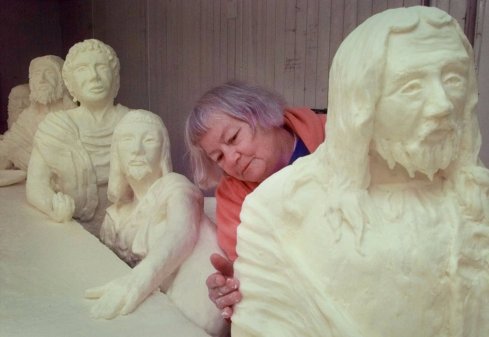
Rodney White/Associated Press
Jus’ sayin’. Keep an open mind. The possibilities are as endless as the AP newswire. At the very least, you’ll be recycling and repurposing your daily newspaper.
So rrrrip away and story on!
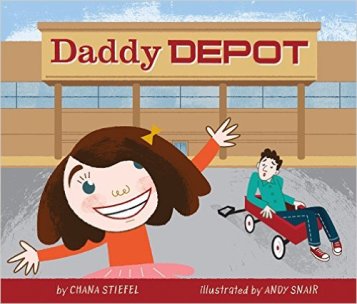
 When she’s not shredding her family’s New York Times, Chana Stiefel is writing books for kids. Her debut picture book, DADDY DEPOT (Feiwel & Friends), hits bookshelves on May 16, 2017. Chana’s book about creepy critters will be coming out from NatGeoKids in 2018, and WAKAWAKALOCH, a semi-autobiographical picture book (and Storystorm success story) about a cave girl who wants to change her unpronounceable name, will be published by Houghton Mifflin Harcourt in 2019. Chana has also written 20+ non-fiction children’s books for the educational market. She has a Master’s degree in Science Journalism from NYU. Chana is represented by agent John M. Cusick at Folio Literary. Follow her on Twitter @chanastiefel and visit her at http://www.chanastiefel.com, her authors’ blog kidlittakeaways.com and picturethebooks2017.wordpress.com.
Chana will be giving away one signed copy of her debut picture book, DADDY DEPOT (after 5.16.17), and a written picture book critique up to 500 words.
Leave ONE COMMENT below to enter. You are eligible to win if you are a registered Storystorm participant and you have commented once on this blog post. Prizes will be given away at the conclusion of the event.
Good luck!
If I had a nickel for every time someone asked me if I was going to quit my job now that my first book has been published, I’d have…a couple of dollars. Which is not enough to quit my job and write picture books full-time.
But here’s the thing. For me and for many of you who are juggling writing with other obligations, whether they are full-time jobs, part-time jobs or taking care of your family (or any combination or permutation of the above), your other life can be a source of ideas.
I’m the theater critic for The Dallas Morning News. There’s no obvious correlation between that job and writing picture books. And yet, it was in the course of doing my job that I found the first picture book idea that I sold.
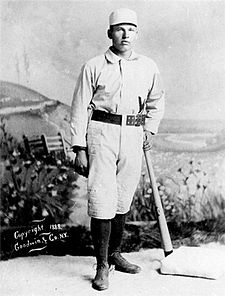 Now I didn’t realize I had come up with a picture book idea when I decided to write an article about a fascinating play, “The Signal Season of Dummy Hoy,” that was being produced at a local high school in Garland. I was intrigued with the subject of a baseball player who was deaf and taught signals to major league umpires so he could play the game he loved. But once the article was written and published, I moved on to other articles. After all, I write several articles a week and I’ve learned to go go go, so I don’t fall behind.
Then I received a thank you email from a man named Steve Sandy who is a friend of the Hoy family. Steve is deaf and shared with me that his life’s dream is to get William Hoy in the National Baseball Hall of Fame where he would be the first deaf player honored there. We emailed back and forth and I found myself on board with his dream and eager to help.
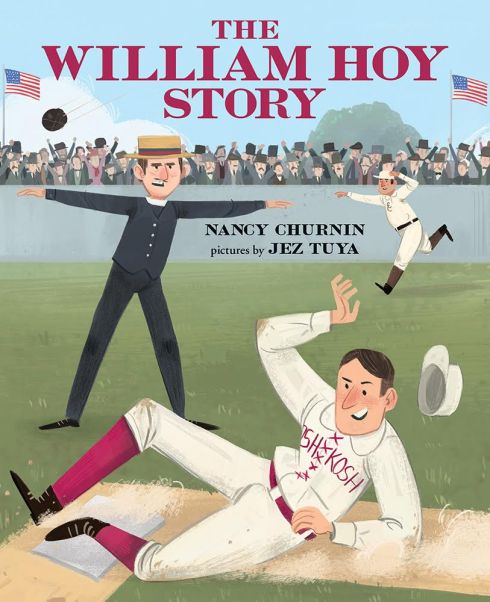
Suddenly, I had my Storystorm moment: What if I write a children’s book about William Hoy and the kids help Hoy by writing letters for him to the Hall of Fame? I asked Steve if he’d help with the research and he said he would. It took me YEARS to turn that idea into a story, mainly because I had no clue about the craft of picture book writing when I started, but that did become the story that got me my agent (the wonderful Karen Grencik of Red Fox Literary) and became my debut picture book in March 2016 from Albert Whitman. We’ve sold three books since.
It’s not every day that a story idea hits you while you’re working and won’t let you go until you transform it into a manuscript. And yet, consider, that those ideas may be kicking around your office or your home, waiting for you to recognize them for the great possibilities they are.
Maybe someone at the office tells you a story you can’t get out of your head or you are working on a project and your mind starts wandering on an only remotely related line of thought. Perhaps someone asks a question or is frustrated because there’s a person or a subject that should be better known or understood. Maybe you overhear a child, or your own child, with a concern or an anecdote that cradles the seed of something bigger.
In fact, I’m willing to bet you could meet your StoryStorm goal of 30 IN ONE DAY, if you weren’t on the go go go to finish all those important things you have to get done.
 John Lennon once wrote, “Life is what happens to you while you’re busy making other plans.” Yes, you’re busy, but don’t forget that life and ideas are waiting like treasures in plain sight to be discovered and savored while you’re shushing the distractions that, in the end, may turn out to be the best part of your day. Slow down and think twice—or thrice!—about all the off topic observations, off track remarks and the many moments between the boxes you check off on your to-do list. Consider that the busy job you have that steals your writing time may also be a repository of ideas!
Here’s another story I like. Atalanta, the original woman in a hurry, refused to marry anyone that couldn’t beat her in a race. Most suitors didn’t try because the penalty for losing the race meant death, which had a way of dampening the ardor. One young man wasn’t deterred. He was not as fast as Atalanta, but he had an idea. He brought three golden apples to the race and as they ran, he threw one, then two, then the third golden apple just before the finish line. Atalanta veered off the beaten track to get those apples and the young man won.
Personally, I think Atalanta won, too. She got herself a clever and determined young man, three golden apples and a break from all the running and executions. So, I guess what I’m saying, is if life throws you golden apples, chase them and turn them into stories. Or golden cider. Either way, you win.
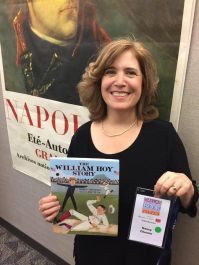 Nancy Churnin is the theater critic for The Dallas Morning News and the author of THE WILLIAM HOY STORY, How a Deaf Baseball Player Changed the Game (Albert Whitman & Company, March 1, 2016).
Her next book, MANJHI MOVES A MOUNTAIN, will be published by Creston Books Sept. 1, 2017. Next up: MAKING HIS SHOT, How Charlie Sifford Broke the Color Barrier in Golf and THE PRINCESS AND THE TREE, both from Albert Whitman. Visit her online at nancychurnin.com and on Twitter @nchurnin.
In lieu of golden apples, Nancy Churnin will toss one winner a signed copy of THE WILLIAM HOY STORY, How a Deaf Baseball Player Changed the Game…and another winner a picture book critique.
Leave ONE COMMENT below to enter. You are eligible to win if you are a registered Storystorm participant and you have commented once on this blog post. Prizes will be given away at the conclusion of the event.
Good luck!
by Salina Yoon & Christopher Polentz
People often ask me if my characters come first, or the story. Which inspires the other? Each book is different, but it’s an interesting question, and fun to reflect on. In my case, envisioning a character helps me to tell his or her story with authenticity. But they are often not fully fleshed out until my story is complete. My husband, however, fleshes his characters out with extravagant detail before the story is ever conceived.
I’d like to introduce you to my husband, artist Christopher Polentz, an aspiring writer and illustrator. He paints portraits with stunning realism inspired by actual vintage photographs he finds at antique shops. These portraits inspire stories!
I never simply copy the photograph. Over the hours of painting we spend together, developing a tangible painting, a thought process is at work. Beyond this picture; who is this person? Who were their friends? What was their position in life? Jotting down notes, organizing thoughts in my head, a real person emerges from this simple inspiration found in an antique store for $3.00.
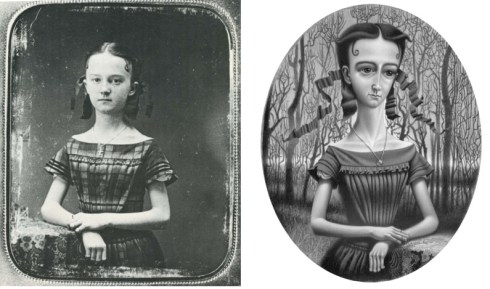
My mental notes encourage more imagery, a background environment, she should appear emaciated-why? She’s wearing a necklace, what should be hanging from that necklace I ask myself. And so the conversation goes. And from this single photograph an imagined world of complexity evolves. None of which was planned, yet happened, spontaneously. Over the years I have found my paintings feeling incomplete in some way. My viewers had questions. A natural human curiosity wanted answers. I found myself retelling, and embellishing on my own original thoughts. And listening to my audience-they have some of the most compelling thoughts about my characters, and I take it-it’s great! Then, tying one character to another, it all slowly came together and made sense. They all belonged together, as they all came from me. I realized the need to put these stories, previously confined to my mind, on paper.
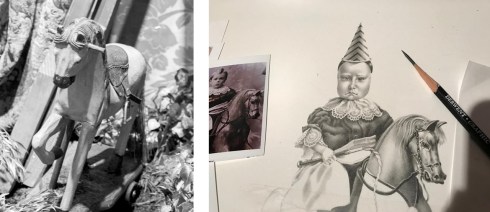
My portrait has not inspired just one idea, but several, because they are all inner-connected like a family tree. I now have a story of pictures supported by the movie of my mind that is always different and ever changing-one photograph, object, or maybe a past experience all play a role. So this is what I do. I shop, hunt, and think, never knowing where or what that next thing is adding to another piece of my puzzle, a new chapter in MY Twilight Zone.
My finished portraits are not finished at all. It’s just the beginning. A character is born with a story to tell, and we, the creator, are the ones to tell it.
Try this.
Go to an antique or thrift store. Scan through photographs of real life people or things people have owned. There are games, tools, dishes, toys, jewelry, and all kinds of unexpected treasures! Each one has a story to tell, and only you can tell it because it’s from your own imagination. Let an object or photograph trigger a story. Don’t simply interpret it. Make it your own! Elaborate and invent. Even inanimate objects can come to life if you’re using your imagination. What is their story?
Have fun browsing and imagining. Find something ordinary and make it extraordinary!
Pictured: Portraits by Christopher Polentz that have inspired stories. Feel free to let them trigger stories of your own!
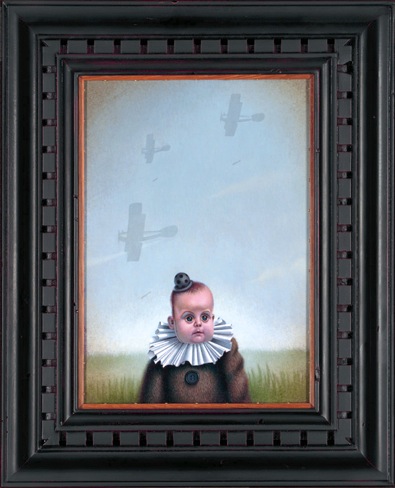
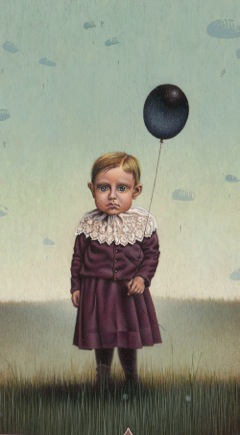
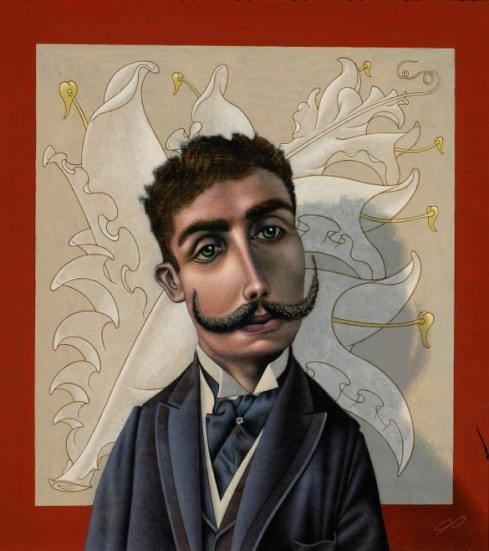
 Christopher Polentz graduated with honors from Art Center College of Design in 1985 earning his BFA degree. After a long career as a freelance artist working with clients such as; Atlantic Records, MGM/UA Entertainment, Mattel Toys and Reebok, Chris returned to college earning his MA degree from Syracuse University in 2001. Chris now pursues gallery work and has exhibited with galleries including; CoproNason Gallery-Santa Monica, La Luz de Jesus Gallery-Culver City, Sparks Gallery- San Diego and Cannon Gallery-Carlsbad. He continues to teach, and likes to think of himself as more technician than artist, working traditionally in his preferred medium of graphite and acrylic. Chris has been teaching art for over thirty years, including twenty years at both Art Center College of Design and Palomar Community College.
You can learn more about Christopher Polentz and his art at christopherpolentz.com.
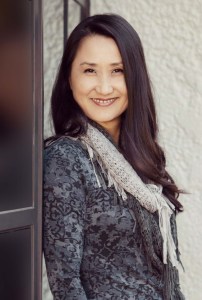 Salina Yoon is an award winning author and illustrator of over 160 books for young children, including the popular Penguin picture book series and the new Duck Duck Porcupine beginning reader series. She was the featured author for the 2016 Kohl’s Cares Summer Campaign, and her awards include the 2015 Award for Excellence in a Picture Book for FOUND, by the Children’s Literature Council of Southern California, the 2015 International Literacy Association’s Children’s Choice Reading List for FOUND, and much more.
You can learn more about Salina Yoon and her books at salinayoon.com or follow Salina on Twitter at @salinayoon.
Chris and Salina have two boys, one more artistically inclined than the other (but they won’t name names) and they share one agent, Jamie Weiss Chilton, of the Andrea Brown Literary Agency.
Christopher is giving away a print of one of his portraits (that you can use to inspire a new character).
Leave ONE COMMENT below to enter. You are eligible to win if you are a registered Storystorm participant and you have commented once on this blog post. Prizes will be given away at the conclusion of the event.
Good luck!





 Writing for Kids (While Raising Them)