You are currently browsing Tara Lazar’s articles.
Now that you have your ideas written down, it’s time to flesh them out.
Need help deciding which ideas have potential?
Check out Laura Purdie Salas’s post Seeds vs. Pebbles.
And Laura Gehl’s Diagram Method.
Plus, if you’ve registered and signed the Storystorm Pledge (posted January 31), you’re eligible to be randomly chosen for a Grand Prize.
The Grand Prizes for Storystorm are feedback on your best five ideas from one of these amazing picture book literary agents! So start expanding those ideas into elevator pitches. Don’t know how to do that? Check this out:
Without further ado…which is certainly NOT about nothing…let me introduce the Grand Prize agents to you.
Holly M. McGhee, President and Creative Director, Pippin Properties
 Holly M. McGhee still carried MADELINE around in 3rd grade—until Mrs. Carrier, her school librarian, tricked her into reading longer books by giving her one with her name on it, HOLLY IN THE SNOW. After college, Holly headed straight into the book world of New York City, where she has enjoyed being a secretary, an advertising manager, a sales rep (for one month), and in the six years prior to opening the doors at Pippin, an executive editor at HarperCollins.
Now, as the President and Creative Director of Pippin she is dedicated to shepherding books that make a difference into the world.
Ammi-Joan Paquette, Senior Agent, Erin Murphy Literary Agency
 Ammi-Joan Paquette is a senior agent with Erin Murphy Literary Agency, representing all types of children’s and YA literature. She is also the author of the Princess Juniper series, the MG novel The Train of Lost Things, and picture books including Ghost in the House, Elf in the House, Bunny Bus, and The Tiptoe Guide to Tracking Fairies. With acclaimed author Laurie Ann Thompson, she is also the co-author of the “nonfiction with a twist” series, Two Truths and a Lie. In her agent acquisitions, Joan is particularly drawn to richly voiced, unforgettable characters and settings, as well as tightly-paced, well-plotted stories with twists and turns that keep you guessing right until the end. Visit her on the web at: ajpaquette.com. (P.S. Joan represents Tara.)
Tricia Lawrence, Agent, Erin Murphy Literary Agency
 Tricia is the “Pacific Northwest branch” of EMLA—born and raised in Oregon, and now lives in Seattle. After 22 years of working as a developmental and production-based editor (from kids books to college textbooks, but mostly college textbooks), she joined the EMLA team in March 2011 as a social media strategist.
As agent, Tricia represents picture books/chapter books that look at the world in a unique and unusual way, with characters that are alive both on and off the page, and middle grade and young adult fiction and nonfiction that offers strong worldbuilding, wounded narrators, and stories that grab a reader and won’t let go.
Tricia loves hiking, camping out in the woods, and collecting rocks. She loves BBC America and anything British. She has way too many books and not enough bookshelves. You can find Tricia’s writing about blogging, Tweeting, Facebooking, and other social media topics (for authors and the publishing industry at large) at authorblogger.net and tricialawrence.com.
Erin Murphy, President, Erin Murphy Literary Agency
 Erin was born and raised in Arizona, and founded EMLA in Flagstaff in 1999. She cut her teeth in regional publishing at Northland Publishing/Rising Moon Books for Young Readers, a beloved decades-old Flagstaff company that was bought out in 2007, where she was editor-in-chief. As founder of EMLA she has focused not just on publishing books, but on building careers—and creating a sense of community, as well. In 2016, she relocated the agency headquarters to southern Maine.
Erin represents writers and writer-illustrators of picture books, novels for middle-graders and young adults, and strong nonfiction. Her favorite reads feel timeless, have strong voices, and express unique creative visions. Because of her full client list, she rarely signs new writers or illustrators, but she is particularly interested in adding cultural diversity to her client list. In addition to reading, her interests include traveling, knitting, walking, kayaking, watching movies, and figuring out How People Work.
 Liza Fleissig, with her partner Ginger Harris-Dontzin, opened the Liza Royce Agency (LRA) in early 2011. A cross-platform company providing development, representation, and strategic career management for clients in all media, their goal is to represent clients in all stages of their careers, from the most established to those developing their craft, as well as debuts. Both former partners in NYC based litigation law firms, Liza and Ginger bring a combined 40 years of negotiating experience to the field. This background, along with connections rooted in publishing, movies and television, allowed them to focus and build on a referral based clientele.
From picture books through adult projects, fiction and non-fiction, screenplays to stage works, LRA welcomes strong voices and plot driven works. Their inaugural books became available in stores January 2013. Their first was an Edgar nominee, another was an Indie Next Pick, and two others were optioned for film. LRA’s success began right out of the gate. Here’s to more great projects!
Linda Epstein, Agent, Emerald City Literary
 Linda is the eyes and ears of Emerald City Literary Agency in the east. Even though she’s a life-long New Yorker, her breath is still taken away every time she sees the New York City skyline. Besides being an agent, she’s also hard at work writing manuscripts of her own.
Linda represents picture books, middle grade and young adult fiction, as well as children’s nonfiction. She does not represent adult literature. Since joining the agency she has toyed with the idea of adding a G to the beginning of her name, but has come to the conclusion that she’s not exactly the good witch.
The archive of Linda’s blog, theblabbermouthblog.com, will give you a good sense of who she is, and you can follow her on Twitter @LindaEpstein, and at Manuscript Wish List. (P.S. She is not currently open to submissions.)
Victoria Selvaggio, Literary Agent/Partner, Storm Literary Agency
 Victoria Selvaggio, previously with The Jennifer De Chiara Literary Agency, was drawn to the publishing scene first as an author. She is a prior Regional Advisor for SCBWI: Northern Ohio, where her desire to help writers and illustrators reach their publications goals inspired her to become an agent.
With over twenty-five years as a business owner, Victoria is excited to help grow the agency’s client base with talented writers and illustrators, while also helping build the agency from within with motivated agents who possess the same ideals, literary interests, goals, and approaches to the industry.
As a frequent presenter at conferences, library events, contests, etc., Victoria is always interested in meeting writers and illustrators, and hearing about unique projects!
A sincere THANK YOU to all the participating agents!
Storystormers, get down to work refining, polishing and fleshing out your best ideas so you will be ready if you are randomly selected a Grand Prize Winner! Prizes will be announced next week!
Remember, slow and steady wins the race!
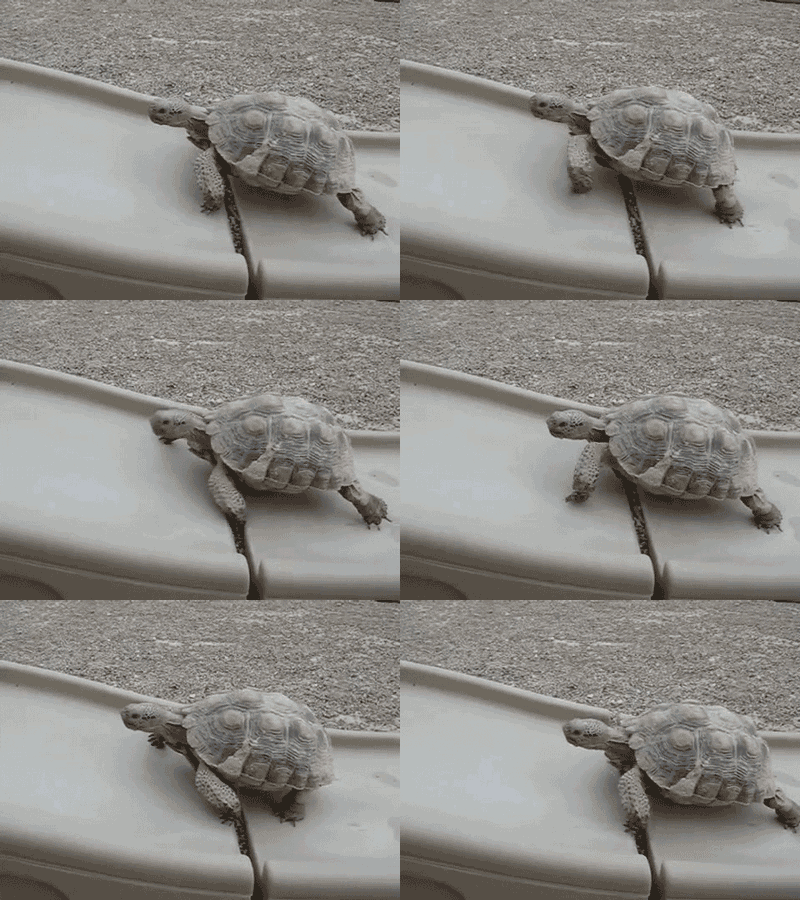
If you didn’t get to 30 ideas yet, you have a few more days!
Go back and re-read posts, browse posts from previous years (see category drop-down menu in the left column), or just take a shower. Showers ALWAYS work.
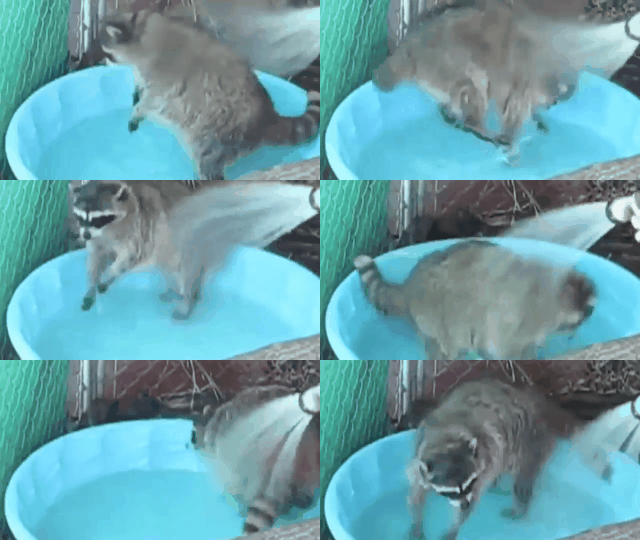
(See? Even this guy’s excited.)
When you have 30 ideas, you can qualify for one of our AMAZING Storystorm prizes (the daily giveaways and the Grand Prizes, feedback from a kidlit agent) just by taking the following pledge. Put your right hand on a picture book and repeat after me:
I do solemnly swear that I have faithfully executed
the Storystorm 30-ideas-in-30-days challenge,
and will, to the best of my ability,
parlay my ideas into picture book manuscripts.
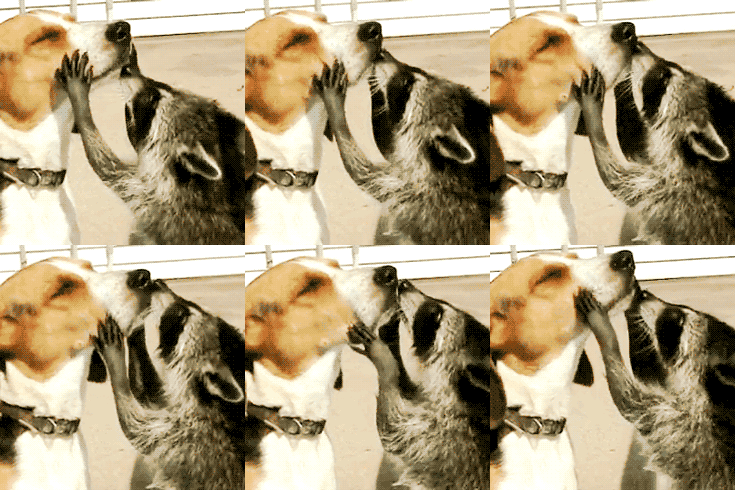
Now I’m not saying all 30 ideas have to be good. Some may just be titles, some may be character quirks. Some may be problems and some may create problems when you sit down to write. Some may be high-concept and some barely a concept. But…they’re yours, all yours! Give them a big, fat, juicy smacker! SMOOCH!
You have until February 5th at 11:59:59PM EST to sign the pledge by leaving a comment on this post.
PLEASE COMMENT ONLY ONCE.
The name or email you left on the registration post and the name or email you leave on this winner’s pledge SHOULD MATCH. If you want to check the registration post, it is here.
Again, please COMMENT ONLY ONCE. If you make a mistake, contact me instead of leaving a second comment.
Remember, this is an honor system pledge. You don’t have to send in your ideas to prove you’ve got 30 of them. If you say so, I’ll believe you! Honestly, it’s that simple. (Wouldn’t it be nice if real life were that straightforward.)
If your name appears on both the registration post AND this winner’s pledge, you’ll be entered into the drawings for the daily giveaways and the Grand Prizes: feedback on your best 5 ideas from a literary agent. (I will announce the agents tomorrow.)
So what should you do now? Start fleshing out your best ideas! Write them as elevator pitches. Get ready because YOU might be a CHOSEN ONE.
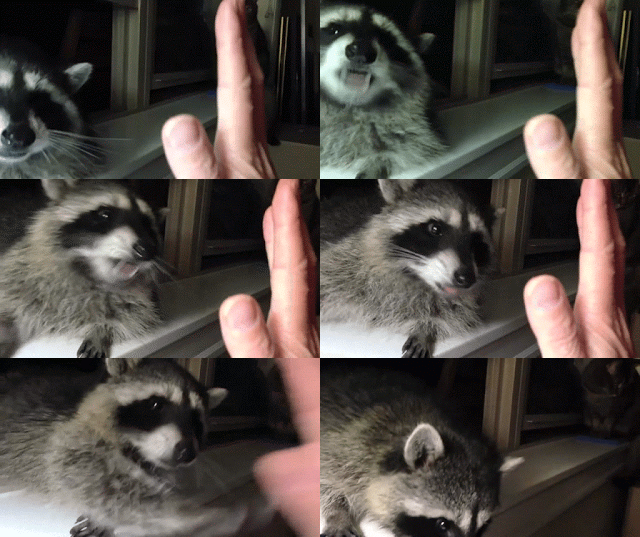
The daily giveaway prizes include picture books, manuscript critiques—all the stuff you saw during the month. All winners will be randomly selected by Random.org and announced next week.
So, sign away and pick up your winner’s badge to proudly display anywhere you choose:
(Once again, thank you to Melissa Crowton for the Storystorm 2019 logo and badges!)
CONGRATULATIONS! YOU’VE EARNED IT, STORYSTORMER!
But remember, Storystorm doesn’t necessarily have to end here. Hopefully idea generation has become a habit and you will continue to jot down ideas throughout the year. Don’t stop! Keep it going!
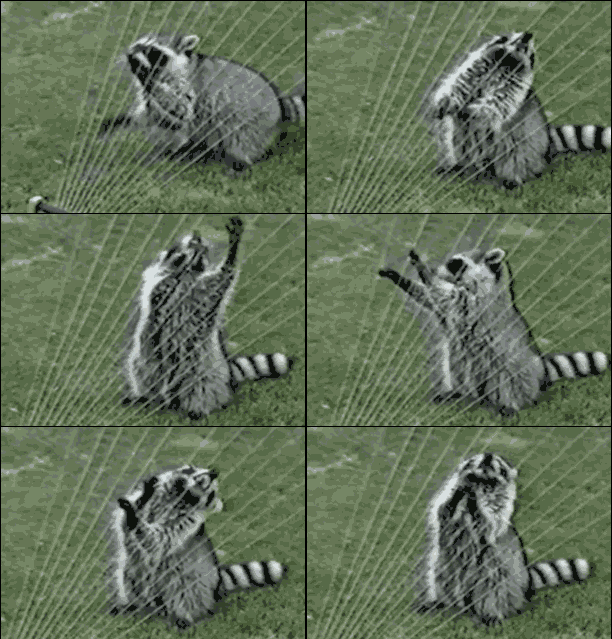
 Hello Storystormers!!! You did it! You’re rounding the bases, and it’s time to bring it home. Can’t you hear the roar of the crowd cheering you on??
Wait! Is that the roar of the crowd or the sound of stampeding hooves??
When I think about ideas, I like to think of them as wild horses galloping across my mind. Growing up, I remember reading Marguerite Henry’s Misty of Chincoteague and being introduced to the idea of an island full of wild horses. Imagine the freedom, wildness and possibility of such a place!
Well, our minds are just that—islands of cavorting, galloping, prancing wild ideas just waiting to be discovered. But half the time we’re so distracted (mobile phones, social media, etc, I’m looking at you!) that we don’t even recognize the brilliance that is racing around in there.
Ideas are just like wild horses—blink once and they’re gone! How many times have you had that AMAZING idea that you promised yourself you’d remember when you woke up in the morning or as soon as you got back from the grocery store? Yep, not gonna happen. If you’ve got an idea, you need to rope it, and rope it QUICK!
So grab your lasso (ie; trusty pen and notebook, voice recorder, a new doc on your computer) and get that horse into a stable. You don’t need to know all there is to know about your new idea, but you do need it in a safe place so you can come back to it later!
Now that you’ve roped that horse (or 30!), it’s yours! Woohoo! Time to start training. WHOOOAAAAA!! Just where do you think you’re going?
All I can tell you about this step is—prepare for a WILD ride! No two horses are alike. Every idea is going to require its own special treatment. So you, as the trainer, must be FLEXIBLE!
There are some authors who are very methodical, using the same process for every project they approach. That has never been my experience. Every idea I’ve worked with has been completely different and has required something different from me.
Some horses are docile. They’ll let you take the reins easily. (I have one PB under contract right now that was like that. I wrote it in one afternoon in between working on other ideas.)
But other ideas (dare I say, the majority!) WHOAAAA NELLIE! Hold onto your hats because they are like bucking broncos. You try to climb on but end up on the ground. UGH! But this was such a great idea!! Why isn’t it coming together?
That’s when you have a choice.
Will you. . .
A) steer clear of that horse?
B) climb back on?
I know what you’re thinking. The right answer is B!!! Well, not always. Sometimes when a horse keeps throwing you to the ground, it’s best to move on for awhile. Give that horse some space. Rome wasn’t built in a day, and wild horses aren’t trained in a day either.
Sometimes ideas need to breathe, and sometimes, you, the trainer, need the fresh perspective that comes from time, space and experience in order to make your idea work.
The best part about Storystorm is that you’ve got 30 ideas to work with. 30 different horses to choose from. In this moment, don’t stress about which one’s going to get you the agent or the big contract. Instead, look at your stable and ENJOY your horses. They’re yours! And now it’s time for the fun to begin – take them out for a ride. You may find yourself galloping, trotting, or getting pulled in a direction you never imagined.
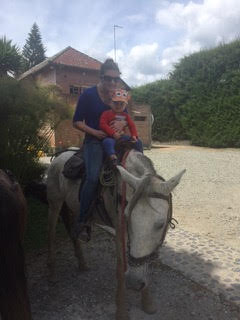
So climb on and enjoy the ride, because as my almost-2-year-old already knows, horses (and ideas!) are the coolest!
NOTE: This post is not an endorsement for capturing/training wild animals! It is an endorsement for capturing/training WILD IDEAS!

Lindsay Bonilla spent her childhood voraciously reading books, scribbling stories, and taking the lead roles in her solo front porch stage plays. While a theatre major at Northwestern University, she fell in love with folktales and world travel. Later she spent a year and a half touring Spain and Portugal teaching ESL with the audience-participatory theatre company, Interacting. Since then she’s had the opportunity to tell stories to school children in Haiti and Ghana, teach workshops to youth pastors in Guatemala and El Salvador and even perform street theatre in Puerto Rico and New York City. All of these experiences have made her passionate about building understanding and relationships across cultures while inspiring the imagination. When she’s not telling stories or acting them out with her sons, she’s busy writing them from my office or a library in North Canton, Ohio.
Lindsay is a member of the National Storytelling Network (NSN) and the Society for Children’s Book Writers and Illustrators (SCBWI). She is also a teaching artist with Arts in Stark. Visit her at lindsaybonilla.com.

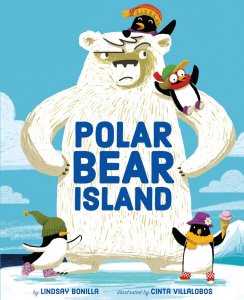
Lindsay is giving away a copy of her newest book POLAR BEAR ISLAND and a Skype session with the classroom of your choice.
There will be two winners of one prize each.
Simply leave ONE COMMENT below to enter.
You’re eligible to win if you’re a registered Storystorm participant and you have commented once below. Prizes will be given away at the conclusion of the event.
Good luck!
by Diana Murray
I recently found an old high school journal in my basement. In it are some real gems, such as quotes from my awesome 11th grade Creative Writing teacher, Mr. Zavatsky. He once said, “Don’t wait for flaming asteroids to fly down and sit on your tongue.” I thought that was a delightful way to put it! Basically, you don’t need to sit passively waiting for inspiration. Sure, sometimes inspiration hits out of the blue, but you can also go out there and seek it or actively drum it up. Here are just a few ways to do that, as well as some personal examples.
Recycle by Switching Genres: 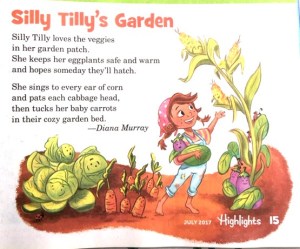 A few years ago, I had a pun-filled, garden-themed short poem published in Highlights magazine. It was one of my favorites. I liked it so much, I thought, hey, maybe I can recycle this idea into a picture book. And that’s when I began to write “Goodnight Veggies.” The new manuscript was also pun-filled and garden-themed, but it had all the elements one commonly finds in a picture book (story arc, take-away message, enough room left for illustrations, etc.). I’m happy to say it will be published by HMH in 2020, and illustrated by the amazing Zachariah OHora. I was recently reviewing rough illustrations and noticed that Zach placed the garden on an urban rooftop. I thought that was brilliant! So I took THAT idea and wrote another short poem about a child planting a garden on his roof. Double recycling! Yet another time, I took a short High Five poem that I wrote (“Four Fun Chicks”) and re-imagined it as a goodnight/counting concept book (FIVE FUZZY CHICKS, Imprint/Macmillan, 2020). Again, this meant starting from scratch and adding things like a climax, and giving thought to page turns and so on. It’s not just a matter of slapping a different label on it. But if you have favorites in one genre, see if you can rework them to fit into another.
Pop Out a Character:
You can take a secondary character in an existing work and give them their own story. What if the cat in my witch story had an adventure on his own? Or what if he had to adjust to a new pet in the household? Or what if the shy turtle in PIZZA PIG had her own story in which she had to overcome her shyness? You don’t have to approach this with “sequel” mentality. You can just pull on character traits that you’re already familiar with and create something completely new and different. When I was first looking at illustrations for my forthcoming book UNICORN DAY (Sourcebooks, June 2019), I was immediately drawn to a particular background character–an edgy, goth unicorn that the illustrator, Luke Flowers, imaginatively included toward the end. My kids commented on their love for the character, as well. I mean, come on. How cool would that be to give the goth-icorn his/her own story?! If only I had a knack for writing novels.
Look for Holes in Your List:
What don’t you have yet? Surely anyone can put their own unique twist on a pirate book or goodnight book or holiday book. Think of all the super common themes that you always see in books. If there’s a theme you haven’t considered yet, consider it! Bring your own perspective to it. While I’m not a knitter, I used to work in the fashion industry and that helped inform my unique take on a pirate book with NED THE KNITTING PIRATE. You can even take an idea you already have and apply one of these second themes to it. What would happen if you turned an existing idea into a goodnight book? Or what if you turned your characters into pirates? Or dinosaurs? How would that change the story?
Have you tried a cumulative tale yet? A mirror tale? A circular story? A concept book? A fractured fairytale? Exhaust all possibilities! Go to the extreme. And don’t let your inner critic get involved at this point. Let your mind roam free, because even a bad idea could lead to a good idea in the end.
Many years ago, before I had an agent or any published books on the horizon, I had a book idea about a chef who was a cow. Her name was “Chef Moodette” and she made perfect dishes for everyone who came into her cafe. I kept wondering what the twist would be. Would a pair of human kids finally walk in? And she wouldn’t be able to figure out what they wanted? Did they want milkshakes? Ewwwww. No! I kept trying to make “Chef Moodette” work (I’m talking, over the course of a few years), but it was just terrible. I couldn’t get the ending right. But my work was not wasted. Years later I began to write PIZZA PIG and “Chef Moodette” jumped back into my mind. But this time, I finally figured out the ending (and lots of other issues)! So keep returning to your old manuscripts, folks. You never know when something will finally click. When you re-read your work, the stories simmer in the back of your brain, just waiting for the right moment to surface.
So don’t sit around waiting for “flaming asteroids” of inspiration. Get out there and wrangle them!

And in case anyone is interested, I’d like to note that I will be leading a detailed, online rhyming picture book workshop for the Highlights Foundation this fall. And here’s some fantastic news: Tara Lazar will be joining me on-site to lend her expertise!
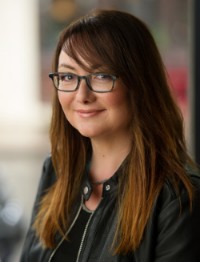 Diana Murray is the author of over a dozen books for children, including CITY SHAPES (Little, Brown, 2016), GRIMELDA THE VERY MESSY WITCH (Tegen Books/HarperCollins, 2016), NED THE KNITTING PIRATE (Roaring Brook/Macmillan, 2016), PIZZA PIG (Step-into-Reading/Random House, 2018), and UNICORN DAY (Sourcebooks, 2019). Her award-winning poems have appeared in magazines such as Highlights, High Five and Spider. Diana grew up in NYC and still lives nearby with her husband, two very messy children, and a motley crew of pets. Visit her at dianamurray.com.
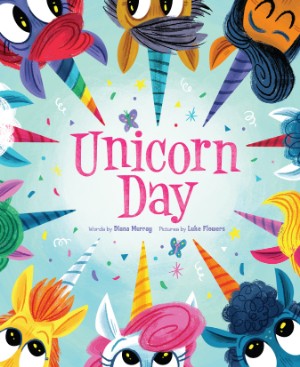
Diana is giving away an advanced edition of UNICORN DAY (Sourcebooks, June 2019).
Simply leave ONE COMMENT below to enter.
You’re eligible to win if you’re a registered Storystorm participant and you have commented once below. Prizes will be given away at the conclusion of the event.
Good luck!
I write picture books. That means that my readers are very short. I remember what it was like to be a kid, but it’s not as easy to remember what it feels like to be little in a world of big people. What do kids notice at that height? And more importantly, what am I missing? It was time for a change of perspective.
On my way to the New York Public Library, I stopped by Bryant Park to find out what a walk through the park would look like through the eyes of my readers. I held the camera at about 33” from the ground, and here’s what I saw…
The first thing I notice is legs. And butts. And the ground is much closer. Then I notice a little bird preening under a cafe table. Then a white wall—and I had to see what was on the other side of it. But first I had to chase a pigeon—I just HAD to.
I took a peek over the wall, and I saw one little fellow ice skating with a penguin. Then I’m drawn to the lights and sounds of the carousel with it’s toads, rabbits and horses flying through the air, and notice one unusual rider, as well.
A vine running up the side of a building is tempting to climb. I watch friendly jugglers and dream about joining the circus. And at the end of the day, I meet a friend and we play. Which is what our readers love to do most of all.
I hope this helps you come up with even more ideas this month. Our little ones are counting on you!
 Julie Gribble produces works for children and the children’s literature community in both the United States and Great Britain. While a Children’s Literature Fellow at Stony Brook Southampton, she founded KidLit TV to help inspire children to learn and read. Julie is also founder of the upcoming TeenLit TV which will feature video programs for YA fans. Julie has been nominated for two Emmy Awards and is a multi-award-winning writer, screenwriter, filmmaker, and producer. Her charming picture book, Bubblegum Princess, is based on a true story about Kate Middleton and was released on the day the first royal baby, who we now know as Prince George, arrived. Copies of the book have been donated to underprivileged children in the US and to children’s hospices in the UK. In addition to producing KidLit TV’s original shows, Julie co-produced Who Killed Nelson Nutmeg, a feature film shot in Dorset, England with Bonnie Wright of Harry Potter fame, and DOG BOWL, a short film by Gordy Hoffman which premiered at the 2015 Raindance International Film Festival in London. Julie sits on the Children’s Committee of the British Academy of Film and Television Arts: BAFTA-NY and is a member of the National Association of Latino Independent Producers, New York Women in Film and Television, and the Society of Children’s Book Writers and Illustrators. She has presented at the Texas Library Association Annual Conference, NYC School Library System Spring Institute, Connecticut Library Association, the Society of Children’s Book Writers and Illustrators, and the 21st Century Children’s Nonfiction Conference.
Find her on Facebook and Twitter @JulieGribbleNYC.
At the conclusion of Storystorm, prize packs will be given away (books, swag, writing tools). Comment once on this blog post to enter into the prize pack drawing.
You’re eligible to win if you’re a registered Storystorm participant and you have commented once below.
Good luck!
Let’s speed-date Storystorm ideas and take the winners on a date (where you can have fun, put in the time and emotional energy, and see if you’re the perfect match)!
Each of my children gave me a notebook for Christmas (they know me so well!) and this, from my middle child, is now officially my Journal of Misfit Ideas (thanks to Mike Allegra on Day 5)…filling up with lots of Storystorm ideas…

I hope you’re having as much fun coming up with lots of unfiltered ideas as I am-–thanks to so many excellent posts. We’re nearing the end of Storystorm 2019 (can I hear a collective sigh?), so how do we make the most of our ideas? Well here’s something we tried last year with our local SCBWI group here in Birmingham, UK (on a budget hostel weekend retreat just after Storystorm finished). It went down really well and this year, we’re doing it again with a much bigger group. If you’d like to try it, you will need:
[1] Your thirty Storystorm ideas (fewer is fine, but if you have more, stop at thirty, or take literally just a couple of minutes before you start to filter it down to thirty).
[2] Lots of paper-–thirty sheets of A3 (that’s approximately double US letter-sized paper); I used a cheap recycled low grade A3 pad or you can use a roll of wallpaper or the light brown paper that comes free as packaging…

[3] A couple of sheets of A4 (letter-size) paper
[4] A pen (and could use other coloured pens to identify certain ideas if you’re interested in them—and want an excuse to use coloured pens…)
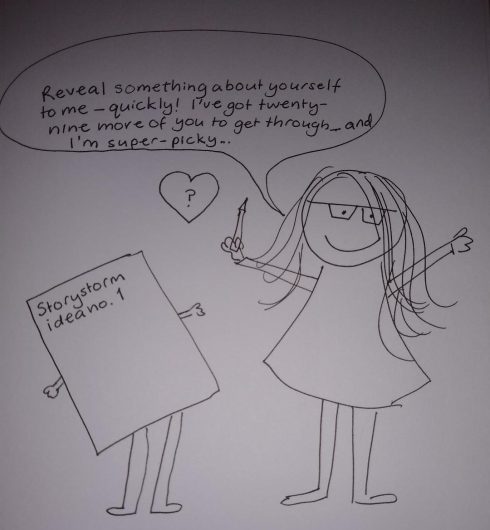
PART 1 (one hour): Speed-dating. Set a two-minute timer and press GO!
Brainstorm idea number one (on a big sheet)–quickly!- until the timer goes off. Start the two-minute timer again—and brainstorm idea number two… and work your way through all thirty in an hour. Be open and ready to be surprised by each of your thirty (idea) speed dates. Two minutes of consideration will often be enough to know whether there’s a spark, or something worth pursuing…
END OF PART 1: Take a break. Laugh with your friends. You might be buzzing or feeling emotionally drained.
PART 2 (one hour): (Not quite but fairly) snap decision time. Aim: to identify your top five and give each potential date some consideration before making your final choices…
Go through your ideas quickly and see which speak to you (or ‘spark joy’, anyone? So when you hold that piece of paper up to your chest it makes you go ‘eeeeeee!’)
Marie Kondo on sparking joy with clothes. Try it with your Storystorm ideas…
Choose five of those and spend about eight minutes on each one writing a short summary or pitch for it.
PART 3: Final hour—if you’re with a group (it’ll take less time with fewer people): Pitch a maximum of five ideas you like in no more than thirty seconds per idea. Have each of your fellow critique partners vote for the two they find most compelling. You may choose to ignore their thoughts but it was really interesting to hear the consensus (or lack of) on people’s preferred ones.
FINISH. With OPTIONAL PART 4: This year, at the end of the session, we will each decide on one to write up as a first draft manuscript for our March critique session, so that we don’t lose momentum (and those who aren’t able to write a draft by then will write a twelve-spread structure).
But what if you’re not in a critique group? I’d heartily advise joining one but you can do it easily on your own (without the vote), or if you have even one fellow Storystormer who you’re in contact with, you could do this whole process over Skype. I have an amazing fellow-Storystormer accountability partner and we Skype once a week and have committed to sending each other a picture book manuscript on the last day of each month for the whole of 2019 (and we hope, beyond) –it’s a great –if slightly terrifying- way of being proactive with your Storystorm ideas (and the many other ideas you will come up with over the course of the year if you continue to use your Storystorm techniques throughout the year. Remember, Storystorm’s for life, not just for January!
Of course, like some relationships, it might be that certain ideas are growers and need time to ferment. Great –just don’t throw your ideas out and you can see if any are slow burners by coming back to your discarded ideas in the future (or see if any of them make their own way back to you…). But treating your ideas professionally and respectfully –and efficiently, by the end of an afternoon or morning, you can have decided on which ones you’re most interested in taking out on a real date and spending some real time and emotional energy getting to know.
As a final note, I’ve never actually done speed-dating with people so apologies if the metaphor is a little off. Perhaps I should try it in the interests of blogging accuracy… I’m sure it would give me some more story ideas, though not, perhaps, for picture books…
 Juliet Clare Bell (always called Clare, just to confuse people) is the author of five picture books with more on the way (including a very exciting narrative non-fiction project which she hopes she can talk about soon). She also teaches writing picture books to adults, does professional critiques, writes for the joint blog Picture Book Den, runs creative writing sessions with children and does numerous author visits. She’s been heavily involved with SCBWI British Isles for fourteen years. Visit her at julietclarebell.com and www.picturebookden.blogspot.co.uk.
Clare is giving away a professional picture book critique which includes an optional one-hour skype session to discuss the feedback.
Simply leave ONE COMMENT below to enter.
You’re eligible to win if you’re a registered Storystorm participant and you have commented once below. Prizes will be given away at the conclusion of the event.
Good luck!
by Meredith Mundy (from 2015)
 I recently celebrated my 20th anniversary as a children’s book editor. (Still loving it as much as ever!) One of the questions I am still asked most often is why an author and illustrator so rarely collaborate directly. Why WOULDN’T it be a great thing for the two creative parents to discuss and brainstorm? Why don’t I encourage lengthy Skype chats about their amazing book-to-be? What’s up with those control-freak publishers anyway?!
Most people assume the worst: surely author and illustrator are kept apart so the publishers can hold all the cards, hoard all the power. But I am here to tell you this couldn’t be further from the truth! The reason editors and art directors keep the wordsmith separate from the artist is to allow for maximum inspiration and creative freedom on BOTH sides. Authors needn’t weigh down their manuscripts with descriptions of scenery or characters, and illustrators are allowed unencumbered freedom to conjure with paintbrush or pixels the story’s characters and surroundings without trying to match an author’s vision of them.
I’d like to share three very recent examples of how well it can work out when an author trusts an illustrator and refuses to define how a character should look or how a plot should unfold visually:
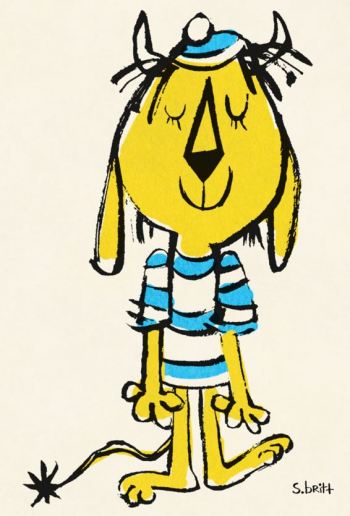
When Tara Lazar sent in her hilarious picture book manuscript for NORMAL NORMAN, in which a scientist attempts to pin down a definition for the word “normal,” I needled her to tell me more. Who exactly is this scientist? And who—or what—is Norman?? But Tara could not be persuaded—she had complete faith that illustrator Stephan Britt (AKA S.britt) would know exactly what to do with the scientist narrator and his or her mysterious test subject. It was fascinating to see Stephan experiment.
.
First Norman looked a bit like a lion.
Then he looked more like a friendly monster.

Finally Stephan found exactly the right Norman.

Who knew he would be a purple orangutan in square-frame glasses?!
And much to our surprise, the scientist turned out to be a young Latina girl in black Mary Janes and a stylish bob. This certainly would NOT have been the case had Tara (or art director Merideth Harte or I) attempted to sway Stephan in some definite direction.

Tammi Sauer is another author who very rarely includes illustration notes in her manuscripts. When I acquired YOUR ALIEN, I asked Tammi what the lost extraterrestrial in her story might look like, and all she would say is that she hoped it would be so adorable that readers everywhere would wish for an alien to crash land in THEIR front yards.
By giving illustrator Goro Fujita complete carte blanche to imagine the cutest alien in the whole universe, Tammi got exactly what she’d hoped for. See for yourself!

My final example of an author bravely allowing an illustrator’s inspiration to take the driver’s seat is Kim Norman and her charming THIS OLD VAN, sung to the tune of “This Old Man.”
.
Not only did she boldly leave wide open what exactly the characters should look like . . . she also left the entire ending up for grabs! In this rollicking picture book road trip, a pair of hippie grandparents receive a very important invitation from their grandson. Soon they are zipping cross-country in their trusty old van, which must deliver them to their destination in time for The Big Event. But WHAT IS THAT EVENT?, I kept asking Kim. She assured me that illustrator Carolyn Conahan would come up with something PERFECT, but I was too anxious. Surely an illustrator would want some guidance from the author on something as crucial as the ending, wouldn’t she?? Reluctantly, at my insistence, Kim brainstormed a few ideas—perhaps the grandson was starring in the school play or had a big solo in a recital? Carolyn wisely ignored the illustration notes and surprised us with a grand finale so clever that any alternative is unthinkable now: of course the grandson is racing his own miniature version of the old van in the Downhill Derby!

For those of you writing picture books, I challenge you to leave 50% of the inspiration to an illustrator. You are not alone and by no means have to do all the heavy lifting. Write the story and then step away. And for those of you illustrating picture books, I challenge you to ignore any illustration notes that don’t inspire you! Trust one another from afar, inspire one another at a distance, and then get together AFTER the book is printed to celebrate what your wonderful, individual, untainted visions brought into the world.
Meredith Mundy was formerly Executive Editor at Sterling Children’s Books. She now serves as Executive Editor of the Appleseed imprint at Abrams.
At the conclusion of Storystorm, prize packs will be given away (books, swag, writing tools). Comment once on this blog post to enter into the prize pack drawing.
You’re eligible to win if you’re a registered Storystorm participant and you have commented once below.
Good luck!
by Alli Brydon
Do you pride yourself on being an eco-conscious person? Do you chuckle every time you toss a metal can into the recycling bin? Do you even—GASP!—collect and compost your food waste?

Congratulations! Now take that recycling muscle and apply it to your children’s book writing.
There are so many fun ways you can recycle your own notes, storylines, and even the words spoken by perfect strangers. No, I’m not talking about plagiarizing. I’m talking about…
EAVESDROPPING!
Many prior Storystorm bloggers have already mentioned this gem of a tip, but it bears repeating: keep your eyes and, more importantly, your ears open wherever you go. Especially if you frequent places teeming with children. Children who say hilarious things! Children who feel all the feels, right in front of you! Children who enact imaginative play.

For example, one Saturday morning I was sipping coffee in my living room while my two sons play-acted something from Minecraft. One of them said, “I have a diamond sword,” which I actually heard as, “I have a dinosaur.” When I realized what he actually said and how my brain twisted his words into something else, I grabbed my notebook and began to write:
Diamond Sword
Dinosaur
Spying lord
Lying gourd
Words: recycled! OK, so maybe my notes went a bit off the rails, but this activity started me off on some book ideas and fun…
WORD ASSOCIATIONS!
Word association/word play unlocks your subconscious brain and turns it into a recycling center—where you can toss words around, melt them down, and maybe meld them together to create new things. One of the ways I like to announce that my recycling center is open for business is by opening my journal and doing some free writing. Don’t even pay attention to your ego telling you the words are no good. Let the subconscious junk flow! Metal, plastic, cardboard, paper—throw it all out there and onto the page, single-stream recycling style. Then go back and underline those hidden gems among your junky lines. Or maybe even scour some of your ancient journals for…
OLD IDEAS!
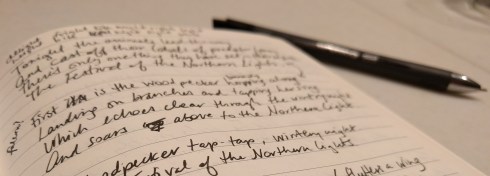
Don’t feel shy about dusting off old and once-rejected ideas, half-written manuscripts, or writing snippets that didn’t work the first time. Even if you haven’t participated in Storystorm since it was PiBoIdMo, you’ve probably still got lists upon lists of book ideas. Go back to those, see if any of them jump out at you now, maybe fuse two of them together, or see if they spark new ideas.
Now get out there, Storystormers, and recycle! It’s good for the whole planet.
 Alli Brydon is a freelance children’s book editor, writer, and lifelong New Yorker who has recently moved to the UK with her family. She is the editor of the #1 New York Times bestselling picture book Last Week Tonight with John Oliver presents A Day in the Life of Marlon Bundo and writer of nonfiction books for Scholastic, Lonely Planet, Quarto, and NatGeo Kids. She is always adding to her list of ideas and crafting them into picture book manuscripts. With nearly 15 years of experience developing, editing, writing, and selling books with almost every US publisher, Alli has spent a large part of her career nurturing authors and illustrators to improve their craft and create outstanding children’s books. Please drop in at allibrydon.com to learn more, sign up to receive her blog posts by email, or just say “hi!”
Alli is giving away a picture book critique.
Simply leave ONE COMMENT below to enter.
You’re eligible to win if you’re a registered Storystorm participant and you have commented once below. Prizes will be given away at the conclusion of the event.
Good luck!
by Pam Calvert (from Thanksgiving 2010)
So, today you’re supposed to be eating lots of turkey, stuffing, mashed potatoes, dressing, pies (emphasis on the plural here)…AND talking (not fighting) with your relatives. Enjoying your day! But still…it IS Picture Book Idea Month and so you’re also supposed to be thinking of a blockbuster picture book idea today as well. But I’m not thinking about today. No. I’m thinking about tomorrow.
 BLACK FRIDAY!
Mwahahahaaaa!
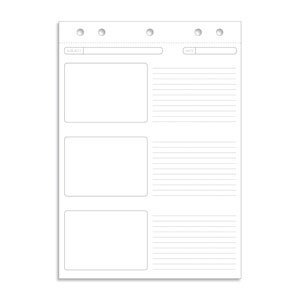
And in honor of Black Friday, I’m going to veer off from the normal “how I get my ideas” blog post to a more material slant—something all picture book writers should have sitting with them when they’re about to brainstorm. Something you should ask for Christmas so you can weave all those good ideas into editor-loving stories. It’s something I bought myself (SPLURGED on) several years ago and it helped me brainstorm two of my upcoming picture books.
It’s called the Magna Storyboard Pad (pictured). Notice it has three areas where you can draw and lines for writing. “But WAIT!” you say. “I’M NOT AN ILLUSTRATOR!”
Well, I’m not either, but if you’re going to be a picture book author, you better be visualizing your story even before you start writing. This pad forces you to think in pictures. A lot of times, it’s easy for me to get swept away by my words when I should be visualizing my story first. And since I bought this pad, thinking in pictures has never been easier. And another secret?
No one has to see your pictures!
But I’ll show you some of mine so you’ll feel better about your artistic talent (because it’s gotta be better).
When I started on the sequel to my math adventure, MULTIPLYING MENACE, my editor told me I needed to meld one of my contracted stories with an earlier version of the sequel, MULTIPLYING MENACE DIVIDES. The contracted story was entitled, THE FROG PRINCE IN FRACTIONLAND. That meant I had to apply frogs throughout my original (that didn’t even have a frog in the background.) And I had to apply fractions throughout. This required pictures. Oh yeah, and I needed another villain. Panicking, I grabbed my math books, desperately searching for an idea. But then I remembered the storyboard pads. I hadn’t used them (even though it was at the top of my things to do list). I started with the new villain…

Her name was Diva Divine in a feeble attempt to use a play on words with division. Of course, through revision her name ended up being Matilda, but this is what she ended up looking like in the book:

There’s quite a bit of resemblance and I never had a talk with the illustrator, Wayne Geehan, about the witch. He suspected what she’d be like from her actions. But without my visualization on paper, her character may not have come out so well.
Now, the witch was the easy part. So much fun. I had her reading In Stye magazine and wearing Jimmy Ooze shoes (um…that never made it in the book…ha!).
The next part was thinking in fractions. So, I plotted out every element. Here’s one page example when I had to show how the division magic worked with dividing twelve kittens. I brainstormed some ways I could show this on the storyboard paper:
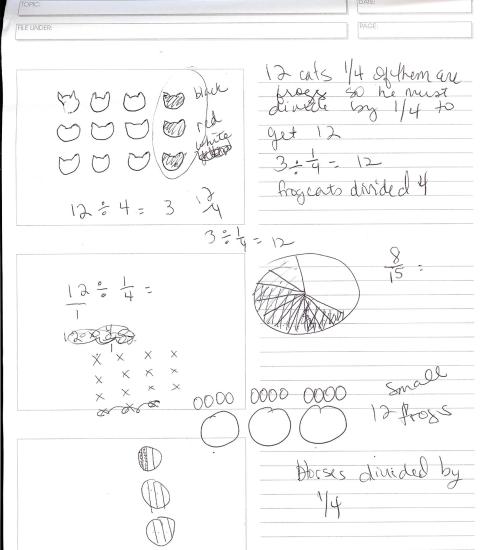
Not only did I brainstorm dividing the kittens into frogs, but I had to divide things by fractions, which makes a larger number. In the storyboard picture I used frogs, but they ended up being pigs. Here’s the finished page of the kittens.

After I completed this story, I was hooked! I would never again brainstorm without my storypad.
Here’s another example using my newest PRINCESS PEEPERS book entitled, PRINCESS PEEPERS PICKS A PET. These are the initial thoughts. Notice, I’m terrible at illustrating, but the ideas flow much more freely when I use it, and I can tell if my story would lend itself well to illustration. You need at least sixteen different scene changes for a picture book.
Here is Peepers trying to find a pet for the pet show:
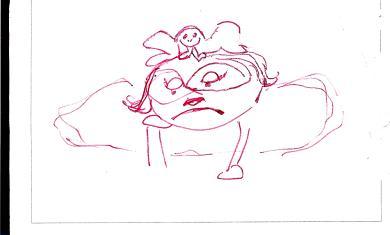
She’s frustrated because she can’t find anything (that’s a frog on her head!) In the finished book, she does find the frog and it looks like this:

Before I leave you with your Black Friday find, I’ll show you my newest picture book idea brainstorm.
HAPPY THANKSGIVING!
 Pam Calvert is the author of seven picture books. Her most recent title is BRIANNA BRIGHT, BALLERINA KNIGHT illustrated by Liana Hee (Two Lions), about a spunky princess who’s trying to find her talent. Pam is well-known for her award-winning PRINCESS PEEPERS books as well as her math adventure series and is happy to announce that her newest title, FLASH: THE LITTLE FIRE ENGINE, is forthcoming in November 2019! She offers a free picture book workshop, Picture Book University, on her blog as well as a highly praised critique service. You can find Pam on Twitter @pammcalvert.
At the conclusion of Storystorm, prize packs will be given away (books, swag, writing tools). Comment once on this blog post to enter into the prize pack drawing.
You’re eligible to win if you’re a registered Storystorm participant and you have commented once below.
Good luck!
In November 2011, I secretly stalked Storystorm (then PiBoIdMo) from afar. I wanted to write picture books, but I didn’t take myself seriously as a writer. So I lurked in the shadows, read the inspirational blog posts, and soaked up everything I could without thinking of ideas, putting myself out there, or participating in the group’s Facebook page in any way whatsoever.
By Storystorm 2012, I had boldly joined a local critique group of other greenhorn picture book writers, and had resolved to stop being so secretive about my desire and efforts to write for children. I decided it was time to publicly try on my new identity, and I hoped that it would fit. So when Maria Burel posted on the Storystorm Facebook wall (with similar trepidation) that she lived in my area and was looking to join an in-person critique group, I invited her to join mine.
You see, for me, Storystorm wasn’t about generating picture book ideas. It was about the people. The community of writers who shared a love for children’s literature and a desire to write stories that would touch a child’s heart, or funny bone, or soul. While I’m constantly grateful for the blog posts and for the opportunity to learn from shared resources, mostly, what drove my desire to participate in Storystorm was engaging with others. I loved interacting in the comments on the Facebook wall! The Storystorm community provided the much needed infusion of interpersonal connection in my otherwise solitary writing effort.
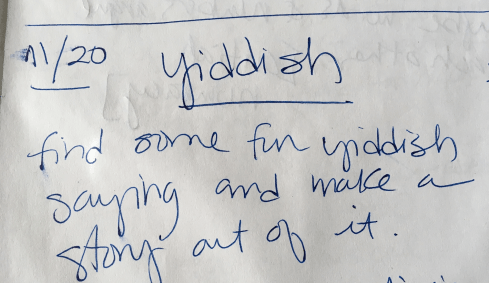
That said, when November 2013 rolled around, I was also in it for the ideas! I was writing more seriously, meeting regularly with my critique group (including Maria), and learning everything I could about the children’s book business and craft. That year, I was deliberate about capturing every idea in my idea notebook, including, on November 20, when I documented the idea, “Find some fun Yiddish saying and make a story out of it.”
This idea surfaced while reading a bedtime story to my son that included Yiddish vocabulary. I have always loved Yiddish, and I think Yiddish proverbs are the perfect combination of hilarious and profound. My father’s parents spoke Yiddish, and I have fond memories of my grandfather teaching me to swear in Yiddish while my grandmother yelled at him to stop corrupting me.
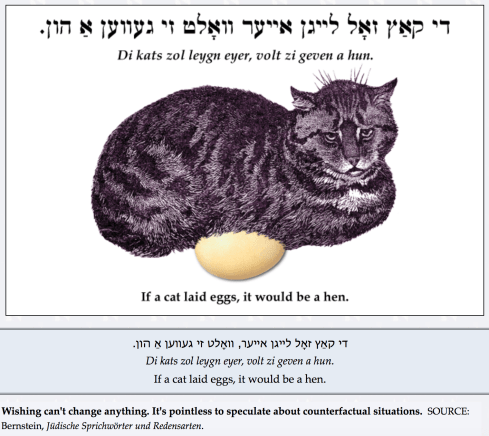
Later that same night, I continued thinking about my grandfather, and decided to spend a few minutes researching Yiddish proverbs. I came across the proverb that became the first line of my book—“If the cat laid an egg, it would be a hen.” (It loosely means, you can’t wish for something to be different from what it is because wishing won’t make it so.) The proverb inspired me to write more words about different types of animals, and ultimately a full meta-fiction author-illustrator conflict story spilled out.
As far as I was concerned, though, I was merely entertaining myself by writing a funny story based on that day’s Storystorm idea. It was a fun night. But, a few weeks later, I was still amused by the story, so I emailed it to my critique partner, Maria. Maria replied: “JULIE! I LOVE this. Your natural voice comes through so clearly here. Like you allowed yourself to be silly and THIS came out!”
I still get chills when I read her message, because I think Maria’s point—allowing yourself to be silly—is another gift of Storystorm. Sure it’s important to generate lots of picture book ideas. But I think Tara Lazar’s genius in creating Storystorm was in creating an environment that allows us—even requires us—to just be creative. And silly. It’s a brainstorm with no room for an internal editor. It doesn’t require industry savvy, or story arc, or plotting. Storystorm frees our imaginations, and sometimes an unburdened inspiration results in a book.
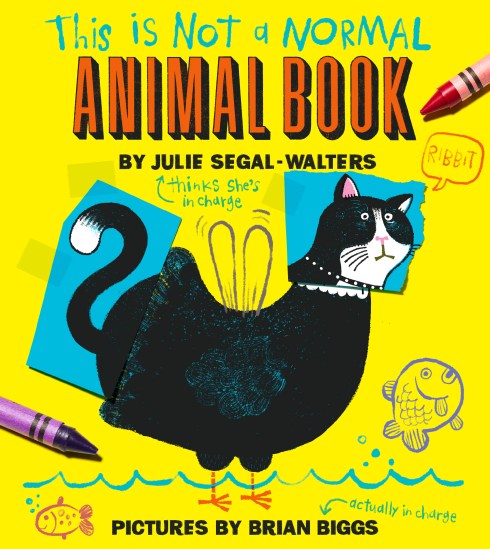
That book I wrote in November 2013, THIS IS NOT A NORMAL ANIMAL BOOK, sold in May 2014 to Simon and Schuster, and released in November 2017. While I will NEVER write or sell a book that quickly again, I always try to return to that zone of unburdened creative freedom that I learned and nurtured through participation in Storystorm when I think of story ideas or write something new.
All of this was possible thanks to Tara Lazar and the Storystorm community, and I will be forever grateful to you all. But Tara can only lead a horse to water (and, you know, provide the water). It’s up to each of us to drink the Storystorm opportunities. I’m proud that I chose to take a risk, participate in the challenge, and engage with the community. Thanks to Storystorm, I thought of the idea for my debut picture book. But more importantly, I met the critique partner who encouraged me to pursue the book, as well as dozens of other incredible picture book writers and friends. I also learned about Julie Hedlund’s 12×12 [http://12x12challenge.com/] from Storystorm. Through 12×12, I received further critiques on my book, and met the people with whom I would later form Picture the Books, [https://picturethebooks2017.wordpress.com/] the group of 2017 debut authors and illustrators who have become some of my most trusted colleagues and dear friends.
To me, my true triumph, and the real Storystorm success story here, is an achievement we all have the opportunity to share — the enduring gift of creativity, and of connecting with this committed, generous, and supportive community of writers and illustrators.
Thank you all for everything!
 Julie Segal Walters is the author of THIS IS NOT A NORMAL ANIMAL BOOK (illustrated by Brian Biggs) (Simon and Schuster 2017). She lives in Washington, DC, with her husband, son, and pesky cat. Before writing for children, Julie was a lawyer and advocate for civil rights and civil liberties, and an international democracy and civil society development specialist. These days, she can be found advocating for her many favorite children’s books to anyone who will listen. Julie is fluent in Spanish and loves to cook, but not bake. She thinks baking has too many rules. You can find her online at juliesegalwalters.com.
Julie is giving away a picture book critique.
Simply leave ONE COMMENT below to enter.
You’re eligible to win if you’re a registered Storystorm participant and you have commented once below. Prizes will be given away at the conclusion of the event.
Good luck!





 Writing for Kids (While Raising Them)