You are currently browsing Tara Lazar’s articles.
I’m a doctor as well as a writer. I take care of grownups all day, and write stories for kids all night…well, actually pretty much every minute of the day not spent taking care of my patients or my family. And as a doctor and a writer, there’s one thing I know for sure:
We write with our brains.

Photo by Robina Weermeijer on Unsplash
OK, not literally with our brains—writing usually involves hands. But the work of writing comes from our brains.
Duh, Rajani, you may say. We don’t need to be doctors to know that!
Aha, gentle writer, I say to you. But what part of our brains?
I’m not going to go deep into brain science here. I’m not going to delve into the workings of the cerebral cortex, the hippocampus, or the amygdala.
I’m talking about the conscious vs. the subconscious.
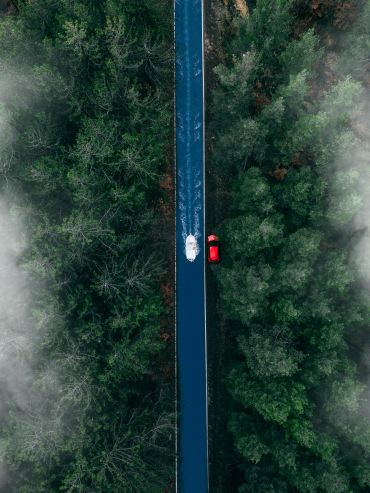
Photo by Christopher Rusev on Unsplash
Most of the time, we use our conscious mind. It’s the stuff we are aware of right now—the input from our senses, our actions, and our thoughts.
But there are times when the conscious mind gets stumped. You can’t figure out what happens next in your novel—all your ideas are predictable and boring. You have no idea how to make the rhyme work in a stanza of your hilarious picture book about unicorn hats. You cannot imagine coming up with thirty different story ideas in thirty-one days to start off 2020. You think, and you think, and you think with your conscious mind, and you’re coming up empty.
But the conscious mind is only the tip of the iceberg.

Photo by Derek Oyen on Unsplash
Most of what our brains do is actually under the surface of all that stuff we’re thinking about. The subconscious mind makes connections, draws conclusions, and remembers things we thought we’d forgotten. It helps us solve problems when our conscious minds are stumped. It might just be the wellspring from which all our creativity flows.

Photo by Ezra Jeffrey-Comeau on Unsplash
But how do we access the subconscious mind? How do we demand that something work when we can’t consciously ask it to work? How do we catch a cloud and pin it down?
Well, there are lots of ways.
1. Meditate. This is a tried and true practice for calming the conscious mind and accessing the subconscious more easily.

Photo by Deniz Altindas on Unsplash
2. Exercise. Getting your muscles pumping makes your conscious mind stop focusing on the problem at hand and can allow your subconscious mind to take over. I’ve gotten many ideas at the gym — including a tricky little plot point for my debut novel, MIDSUMMER’S MAYHEM, that had me laughing out loud and taking desperate notes on my phone while trying not to fall off the elliptical.

Photo by Thomas Park on Unsplash
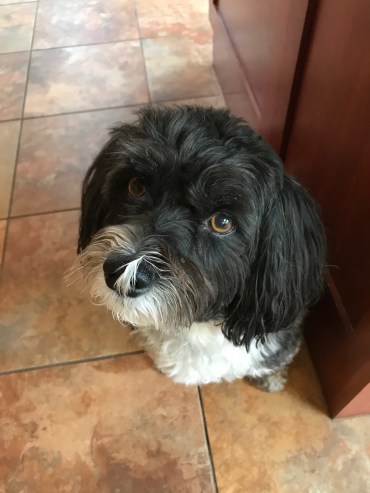
3. Be in nature. If you can exercise in nature, even better! And if you can do it with a friend who is a good listener, even even better. Here’s my favorite friend exploring nature with me:
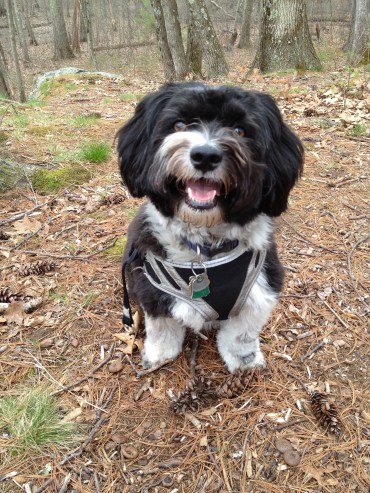
His name is Boomer. And yes, he’s impossibly cute.
4. Shower. I cannot tell you why, but the feeling of warm water running over your head can prod your subconscious into action like nothing else! I get ideas in the shower all the time; you can even get a special notepad to jot down ideas during your ablutions.
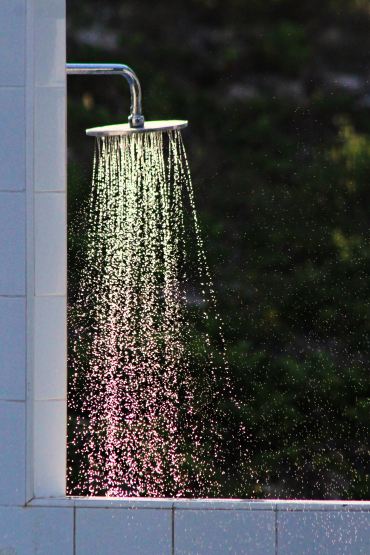
Photo by Chandler Cruttenden on Unsplash
5. Work on a different task that requires your attention. People often ask me how I can be a doctor and a writer. The truth is, I often feel that I’m a better writer because I’m a doctor. My day job requires intense focus, and when I take a break from it, my subconscious mind has often figured out something for my writing that my conscious mind couldn’t access.
I also like to shift between projects, especially if one project is long (like a novel) and the other is short (a picture book or essay…or, perhaps, a blog post). After I’ve finished working on one thing, I move to the other and find that the ideas are flowing again.

Photo by Joe Green on Unsplash
6. Sleep. Seriously! It gives your brain time to rest and rejuvenate. Even a nap can help. For rhyme, I find that a good night’s sleep often leads to discovering just the right turn of phrase first thing in the morning. While my conscious mind went night-night, my subconscious worked on finding the perfect combination of words.

During this Storystorm month, I hope you find your own ways to tap into your subconscious and get your ideas flowing like never before. As a parting gift, you are free to meditate and exercise in an outdoor shower while contemplating this lovely photo before taking a nice long nap:
 Rajani LaRocca practices medicine and writes middle grade novels and picture books in the Boston area. In her free time, she enjoys reading, traveling, and baking too many sweet treats.
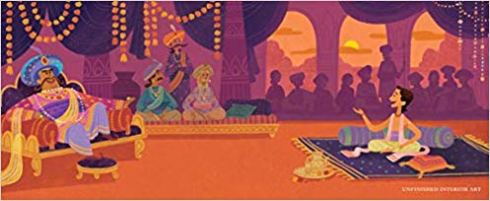
Her debut novel, MIDSUMMER’S MAYHEM (Yellow Jacket/Little Bee Books) was a 2019 Indies Introduce title and a 2019 Kirkus Reviews Best Middle Grade Novel. Her debut picture book, SEVEN GOLDEN RINGS: A TALE OF MUSIC AND MATH (Lee & Low, July 2020) is set in ancient India and introduces the concept of binary numbers. Learn more about her and her other forthcoming books at RajaniLaRocca.com and on Twitter and Instagram @rajanilarocca.
Rajani giving away a picture book critique and a copy of her debut picture book, SEVEN GOLDEN RINGS: A TALE OF MUSIC AND MATH (July 2020) to two different winners.
Leave one comment below to enter.
You’re eligible to win if you’re a registered Storystorm participant and you have commented once below.
Good luck!
Storystorm is all about ideas. Seeing them, searching for them, compiling them, listing them, gathering them…

I’m excited to be teaching about nonfiction ideas at the Storystorm Highlights retreat this spring because I love finding nonfiction ideas. I find them in news clippings, in the google doodle, on the radio, at museums, while reading. I stumble upon nonfiction ideas while researching other stories. I have been hit in the face by them while walking in nature or driving down the road (not literally, of course). They are everywhere.
But, once you have an idea, what do you do with it?
A nonfiction idea is different, in many ways, than any other idea. It comes with rules. If it is a biography or history, it can come with a plot built-in. You are presented with the entire story—beginning, middle, end. It has an armature already in place. But, the story already being set, can be deceptive.
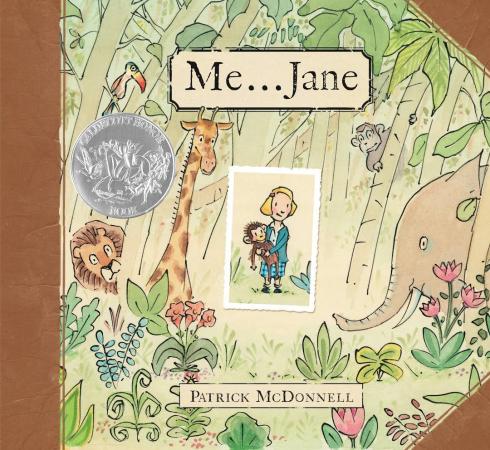
Let’s take Jane Goodall’s story. You could tell her story about working with the chimps, whole-cloth, cradle to grave (though, her conclusion is far from written since she is still very much alive and still changing the world). Go find yourself a copy of the book ME JANE (by Patrick McDonnell). This book takes a unique look at Goodall’s origin story. The author found a small story arc in Goodall’s childhood and pulled it out of the larger story arc of her life. Imagine how many stories can be written about this one subject. You could come up with a story idea every day this month just for Jane Goodall! But, how do you make that story stand out? That is the REAL question. How do you take that idea and make it into something unique?
If you are talking about a nonfiction idea that has less strict lines, perhaps a science or nature-based book, it still has rules—you can’t plop in a fairy or a stream that rushes UP a mountain and call it nonfiction. So, how can it be different from what’s already out there?
Let’s take a look at some books about nests. In my bookshelves alone, I can find a couple dozen books about nests. Fiction and nonfiction, narrative and expository. So many books on the same subject. And, no two are alike (insert birds of a feather joke here). Here are three books on that same subject and all are different in the way they take it on:
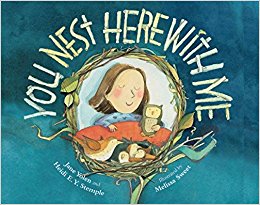
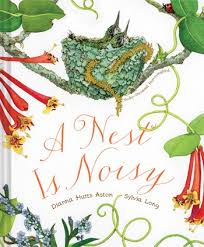
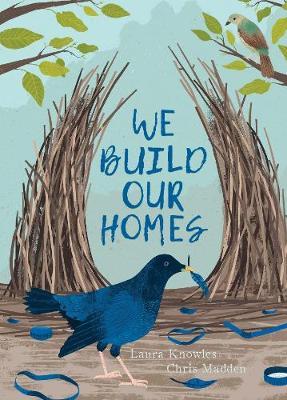
What makes each of these books, written after each author had the same idea—to write about nests—completely unique?
The magic is in taking that idea and making it your own. What perspective you take to look at the subject. Will you look at the birds (or other nest builders) from an outside observer’s point of view? Or from the bird’s? What voice will you use to tell your story? Will it be poetic? Scientific? A combination of the two? Will you choose, and make the most of, a literary device? Will you rhyme? Use alliteration or pack it with similes? Be silly or serious.
Go further: Look to the history or nature of the story to inform your story voice.
In LIGHTS, CAMERA, ALICE (by Mara Rockliff, illustrated by Simona Ciraolo) the story is about a woman in the film industry and parts of the story are told in old fashion (silent film) movie placards. That sets the book apart from any other book I’ve seen. Is your books about a mathematician? Can you integrate numbers into your story?
Does your protagonist have a catch phrase (look at I DISSENT by Debbie Levy, illustrated by Elizabeth Baddeley).
Carole Boston Weatherford uses rhythmic words to tell the story of John Coltrane in BEFORE JOHN WAS A JAZZ GIANT (illustrated by Sean Qualls) which makes the reader really feel the music that informed every aspect of Coltrane’s life.
What if you have a ridiculous idea? My book EEK YOU REEK (co-authored by Jane Yolen and illustrated by Eugenia Nobati) is about stinky animals. We chose humorous poems to be the vehicle to drive this subject. But, there is lots of nonfiction packed in those rhymes—even the really short ones:
The Shore Earwig (A Haiku)
Eat me. I dare you.
I’m a nasty stink bomb—POW!
Not so tasty now.
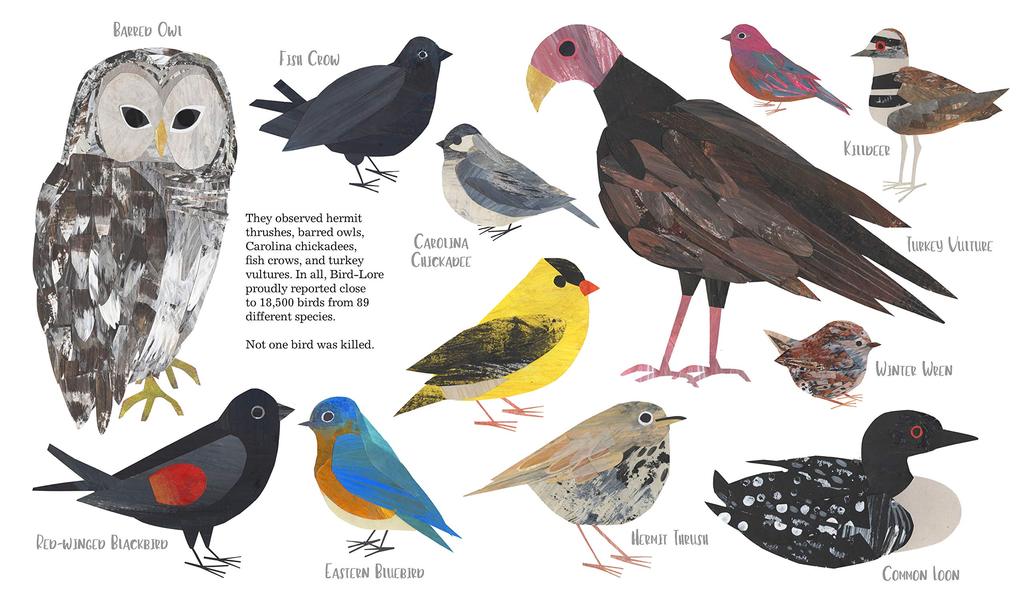
One more thing to think about—where it gets even more interesting—if you have a nonfiction idea, there is no rule saying you need to write a nonfiction book. Take, for example, the Audubon Christmas Bird Count. My book COUNTING BIRDS (illustrated by Clover Robin) is the nonfiction account of its history. Since it published, two other books about the same subject, though in a fictional way, have come out (FINDING A DOVE FOR GRAMPS, Amstutz/Di Gravino, and BIRD COUNT, Richmand/Coleman) and each has a new way to look at the same subject. Far from competing, these books work together for the bird-loving child.
So, don’t be afraid. Feel free to take a nonfiction idea and move away from it. Write something completely fictional or even fantastical. That nonfiction idea is your seed—the tree you grow from it is your choice.
 Heidi didn’t want to be a writer when she grew up. In fact, after she graduated from college, she became a probation officer in Florida. It wasn’t until she was 28 years old that she gave in and joined the family business, publishing her first short story in a book called Famous Writers and Their Kids Write Spooky Stories. The famous writer was her mom, author Jane Yolen. Since then, she has published more than 20 books including You Nest Here With Me, Not All Princesses Dress In Pink, and 2 Fairy Tale Feasts cookbooks, as well as numerous short stories and poems, mostly for children.
Heidi lives on an old tobacco farm in western Massachusetts where she writes, reads, cooks, sews, and once a year, calls and counts owls for the Audubon Christmas Bird Count.
Her website is HeidiEYStemple.com and she’s on Twitter @heidieys.
Heidi is giving away a copy of EEK YOU REEK when it’s released.
Leave one comment below to enter.
You’re eligible to win if you’re a registered Storystorm participant and you have commented once below.
Good luck!
Picture this: you’re at a midtown restaurant and you see two people having an animated conversation about books. You know this is a favorite lunch spot for publishing folk, so you guess (correctly), you’re witnessing one of those fabled agent/editor lunches. No, there are no empty martini glasses rolling across the table—you can just tell from the way one diner is animatedly talking about a new manuscript she’s working on. As she describes the plot, you find yourself pulled in—you’re intrigued by the details, maybe a few of them even make you smile. And just when you think “hey that’s a pretty clever idea,” the speaker presents another twist, another layer of tension of complication, and before you know it, you’re thinking “I’ve got to read this!”

We typically think about agents pitching projects to editors, and it’s true that as an agent I’m presenting new stories and manuscripts to my editor colleagues all the time. But oftentimes, at lunches like the one described above, the person raving about the wonderful new book they’ve acquired is just as likely to be the editor. And that’s great! As an agent, I want to know what my editors are excited about. What are they working on that’s inspiring them? What new book are they dying to share with the world?
I wish aspiring writers could hear how editors talk about their books at lunches and in-person meetings like these. I think it would be such an education for authors looking to generate compelling and commercial ideas of their own. On the one hand, editors speak from a place of pure, genuine enthusiasm—these are the books they’ve already fallen in love with, offered on, bought, reread a dozen times, and thought about for hours on end. At the same time, editors are often able to speak about their current titles with a kind of focus and precision that many struggling pitch-writers could learn from. Not only does the editor know her book inside out, she’s also a) had it pitched to her (by the author’s agent), and b) has had to pitch it herself—to her team, her publisher, her sales and marketing departments.
Firstly, editors often start with a compelling detail (usually with a smile on their face as they recall a favorite image or concept): “So, she’s a roller-derby all-star,” or, “His best friend is his hairless cat.” Instantly there’s something different or unusual to pull you in, snag your interest.
Secondly, there’s a layer of conflict (another opportunity for a unique detail): “She’s got to save her mom’s holistic pottery center” or “He’s finding first love against the backdrop of the Challenger shuttle disaster.”
This is often where most author pitches begin and end— with the set up and the basic conflict. But editors often go further in their off-the-cuff (or sometimes very polished) descriptions. There’s almost always a third layer, the thing that happens as the story unfolds: “She meets her idol who turns out to be her enemy,” or “He gets expelled for something his brother did.” Etc. etc.
The point is, you’ll notice that published books often have interesting details and “hooks” stacked on top of each other. There are multiple ins to the story, multiple elements that can potentially pull in a reader. If the roller-derby bit didn’t catch your attention, the holistic pottery center or star-crossed lovers might.
And my reaction is almost always, “Oh wow that’s cool. Hey that’s even cooler! And THAT happens too!?”
When building your story world, first, get creative and specific with your details. Instead of your main character working at a generic restaurant, why not have your hero be an entertainer at an off-brand Discovery Zone who has to dress as a giant frog (how embarrassing!).
Next, see if it’s possible to layer your “hooks,” giving your manuscript multiple points of interest for the reader browsing their local bookstore. One way to do this is by combining pre-existing ideas. That romcom about the typewriter repairman? Why not blend it with the detective story you’ve been toying with? Now you’ve got a mystery-rom-com about a typewriter repairman who falls in love with the prime suspect against the backdrop of the space race. Layered concepts equals more points of interest, more complexity, and more intrigue.
It can be tricky to stand out in the crowded market, but building in eccentric and memorable details, as well as combining story-concepts, can help your work rise above the static. Writing well is essential, the base line, but it’s only the start. Take the idea you began with and add your own layers of complexity. Tweak the details and embellish the conflicts, and the next time an editor is gushing about their favorite new manuscript over dim sum or lattes, that book might be yours.
 John Cusick is a VP and literary agent with Folio Literary Management, representing a diverse list of award winners and New York Times bestsellers. His focus is middle grade, young adult, and crossover fiction. He is also the author of the YA novels Girl Parts and Cherry Money Baby (Candlewick Press), and the forthcoming middle-grade Dimension Why: How to Save the Universe Without Really Trying (HarperCollins). He tweets at @johnmcusick and discusses the craft and business of writing on YouTube at youtube.com/c/AgentBrainWriterBrain. His submission guidelines are available on Publishers Marketplace.
John Cusick will be one of the Storystorm Grand Prizes.
No, we’re not wrapping him in a bow and shipping him to you.
At the end of Storystorm, if you’ve completed the challenge and have at least 30 ideas, you can sign the Storystorm Pledge. If you have registered and signed the pledge, you will go into a random drawing for a Grand Prize. An agent will review your best 5 ideas and give you feedback regarding which ideas would be best to pursue as manuscripts.
So, no need to comment below today…but if you would like to, Storystorm loves feedback!
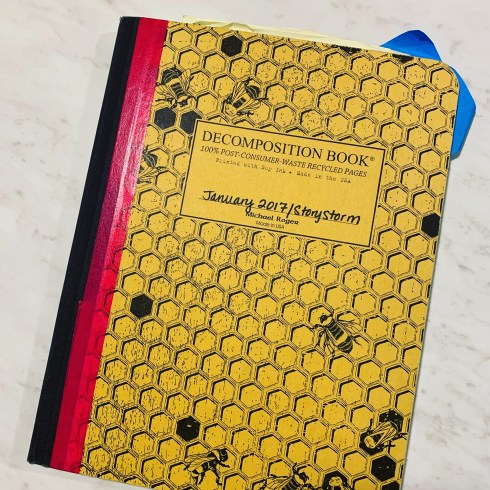
In January 2017, I participated in Storystorm for the first time. While I’ve wanted to be a writer pretty much since childhood, perfectionism always got in the way. I rarely, if ever, finished a story because it wouldn’t do exactly what I wanted it to on the first attempt. So, when I heard about thirty days of generating ideas-only? Especially when I had limited time and brain space as a working parent? Sign. Me. Up.
Storystorm was the first time I tried a sustained, daily practice of cultivating ideas without judging them, and without trying to turn each idea into a perfectly polished piece. Although I didn’t know it at the time, I was doing more with less. Building this habit was helping me shake off the grip of ol’ perfectionism. I jotted ideas down each morning, didn’t love any of them in particular, January ended and I felt pretty good about it.
And then.
A month later.
The video.

A brief segue (it will come back around, I promise): In 2017, I was living and working in Albuquerque, New Mexico at a dual-language school where the student body was (and is) 98% Latinx and 100% free/reduced lunch. Much of my job as a school librarian was outreach: outreach to reluctant readers. Outreach to students who didn’t see themselves in books. Outreach to families who might be hesitant to use public services (like libraries) due to immigration status, or the fear of incurring library fines they couldn’t afford to pay. I talked to students and teachers and families about books day in and day out, and I absolutely loved my job.
And, in my off hours, colleagues and friends, who knew how much I loved my job, often shared library-related articles and memes on Facebook.
So. Back to the video.
It’s February 2017. I just completed my first Storystorm. And one of those feel-good videos about a library popped in my feed.

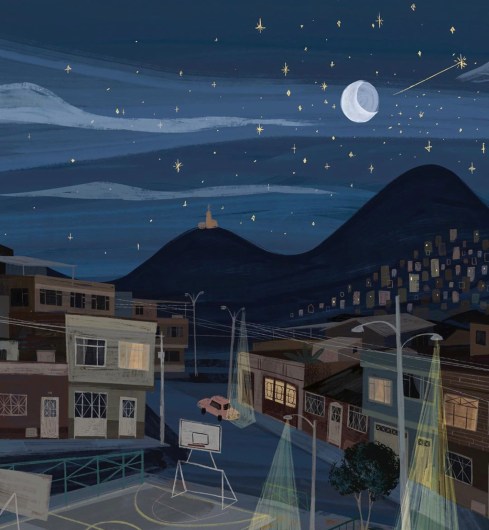
It was a quick, upbeat story about José Alberto Gutiérrez, a garbage collector in Bogotá, Colombia who discovered a single discarded book on his route, only to build a collection that became an entire library for the children of his neighborhood. This is especially important because, in a city of ten million, Bogotá has only 19 public libraries. And Jose’s barrio had none.
It was a viral video, yes. And it was on Facebook, which I spend entirely too much time on and has tons of problematic content, yes. And it was probably going to be the next repeatedly-shared library-themed post on social media and yeah, I’ve seen it, Aunt Karen (just kidding, don’t have an Aunt Karen).
But still. Something hummed.
It was my newly-honed ability to recognize the seed of an idea.
The idea would not be quiet. I watched the video repeatedly. And my inner perfectionist was really annoying me and I told her I did not have the time, because I’d just spent a solid month of generating ideas, thankyouverymuch.
I returned to the video yet again. In the faces of José’s young friends, in their excitement to browse a library and hold up books of their own, I saw my students. It was an idea I loved because it was a flash of recognition.

So, I put the perfectionist in time out and drafted a beginning-to-end story in my composition book, sitting in Starbucks and frantically scribbling in a stolen 30 minutes before I saw those same students at work.
Some things were clear from the video and from that very first draft—the Spanish interspersed throughout the text, the child and adult characters both named José, the circular ending—I made those choices right away, and they remain in the book.

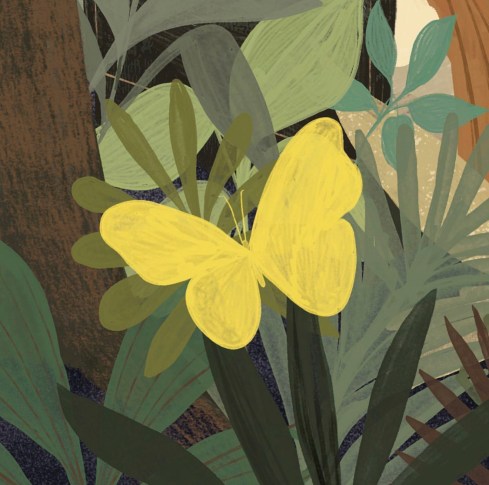
However, it’s important to note that defining my personal connection to the idea gave me not only the confidence to write that first draft, but the stamina to continue revising it. As 2017 progressed, I researched Jose’s library, seeking out news articles and videos in both English and Spanish. I shared multiple drafts with critique partners, benefited from professional feedback at a conference, and made several rounds of sketch dummies to get the pacing right. Finally, José read a Spanish translation of the manuscript in the summer of 2017 and gave the project his blessing. And, like José’s single book, my single idea had become this:

And then, thanks to illustrator Paola Escobar’s talented hand, it became this:
If I can leave you with any advice, Storystormers, it’s this: Get those ideas down without wondering what will become of them. It’s the habit, not the single idea, that will set you on a creative journey you can’t even anticipate. You can find inspiration in the least likely or most mundane of places—recognize it means to you and your ideal reader. That is what can take something from viral to vibrant, no matter how many times it has been viewed (in the case of that original video, 8.3 million times).
You can view the original video here.
 Angela Burke Kunkel is the author of the forthcoming DIGGING FOR WORDS: JOSÉ ALBERTO GUTIÉRREZ AND THE LIBRARY HE BUILT, illustrated by Paola Escobar and published by Random House/Schwartz and Wade. Look for both English and Spanish editions in September 2020!
In addition to writing, Angela is a current school librarian and former English Language Arts teacher. After soaking up the sun in the Southwest for a number of years, she now lives in Vermont with her family, two dogs, two guinea pigs, and one rapidly-growing bearded dragon (really, it’s rather alarming). Right now, she’s just trying to get through another Vermont winter by knitting an enormous blanket and baking sourdough bread.
You can subscribe to Angela’s author newsletter here. You can also find her on Twitter and Instagram @angkunkel, or check out her website at angelakunkel.com.
Angela is giving one prize winner a choice between a picture book critique or a copy of DIGGING once it is released in September.
Leave one comment below to enter.
You’re eligible to win if you’re a registered Storystorm participant and you have commented once below.
Good luck!
Rejection is an unavoidable part of a writer’s life. In fact, the more diligently we pursue our writing dreams, the more we increase our chances of being rejected. (Hey, I don’t make the rules.)
Receiving a “no” from your dream agent or editor stings. I want to tell you that it gets easier with time, but I ravenously ate a chocolate bar after receiving a couple of rejections just a few months ago. Once that passed, I had to do something that was actually useful. I took a break. It doesn’t help to think about a rejection while still emotional about it.
What I did next is something that helps me to think of a “no” as a necessary pitstop towards my final destination of a “yes”. Instead of feeling defeated from a “no”, I started looking to it for inspiration to make my manuscript even better.
Learn from it.
You’re a writer, so take notes. Make a note of the suggestions that you receive. Write them down and turn them into a checklist even if you don’t agree with them at first.
Once you have your initial list, strike out any feedback that you don’t agree with. Specifically, dismiss any feedback that completely goes against your vision for the story.
Review your manuscript, list in hand and make the appropriate revisions.
Grow from it.
Query your shiny new manuscript that was inspired from the feedback you received by the rejection.
Put the manuscript to the side. Perhaps you’ve realized that the manuscript truly wasn’t ready and you need to work more on your craft. Perhaps you’ve realized this manuscript truly wasn’t the right fit for those you queried. Either way, you’ve grown as a writer.
We all hate form rejections. “No response” rejections are even worse. While both make it more difficult to assess what you can gain from them, it’s not impossible. You can still take apart your manuscript and read it as a reader (not as a writer). Look for parts that you don’t necessarily connect with. See if the pacing drags in places. Double-check for continuity in longer works. Nobody knows your work better than you do, and nobody knows your strengths and weaknesses as a writer like you do (just be honest with yourself!). Look past the passion of your passion project and get to work!
Once you’ve gotten to intimately know the no that you’ve received, you’ll be in a better headspace that allows your creativity to flourish.
Then, you’ll be that much closer to your YES!
 Ashley Franklin is a writer, mother, and adjunct college professor. She received her M.A. from the University of Delaware in English Literature, where she reaffirmed her love of writing but realized she had NO IDEA what she wanted to do about it. Ashley currently resides in Arkansas with her family. Her debut picture book, NOT QUITE SNOW WHITE, was published in 2019 by HarperCollins.
Social media savvy? You can find Ashley on Twitter @differentashley, Instagram @ashleyfranklinwrites and Facebook at Ashley Franklin.
Ashley is giving away a non-rhyming fiction picture book critique.
Leave one message below to enter.
You’re eligible to win if you’re a registered Storystorm participant and you have commented once below.
Good luck!
by Dawn Young
It’s 2020, a brand new year, and thanks to STORYSTORM we get off to a running start with a daily flash of inspiration and a stash of ideas to turn into stories.
Let’s imagine those moments when inspiration strikes. Do you envision a flurry of fairy dust? Do you picture rainbows and unicorns? Do you feel all warm and fuzzy? And when inspiration strikes…does everything fall neatly into place?
I like to think that my moments of inspiration will feel magical and I hope that someday inspiration will strike as the whole package‒‒an amazing idea, complete with the story beginning, middle and end‒‒and that I’ll be miraculously overcome by an endless flow of words. As if seeds would somehow transform into a glorious garden simply by opening the packet.
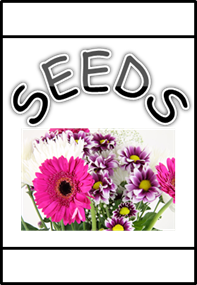
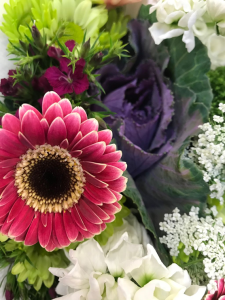
For some writers that may happen‒‒every idea makes them dizzy with delight, the words flow and entire stories are written, but it hasn’t happened for me. Not yet, anyway. My stories take time, and some have stemmed from ideas that came without fairy dust, rainbows or unicorns. No warmth. No fuzziness. The ones I believed were not really ideas but merely fillers for that day. Fortunately, I didn’t dismiss them but instead, feeling the pressure of meeting my daily quota, I wrote them down. And I’m so glad I did. Note to self and anyone else who may be guilty of dismissing ideas/words/snippets that don’t seem worthy… don’t judge, just jot. Jot them down. All of them.
That’s why Storystorm is so wonderful. When you acknowledge anything that stands out in your mind and everything that strikes you, whether it’s a snippet, a title, a silly word, a rhyming couplet, a pun, a character name, a sound and write it down on your Storystorm list, you’re collecting story seeds. Those ideas, as simple, random or obscure as they may seem, are worthy of being on your Storystorm list. So…
Write. Them. Down.
When they’re on a list they leave a mark and they marinate. They sit in your mind, like seeds sit in the soil, and they begin to grow. But just as seeds don’t become flowers because you opened the packet, ideas don’t become stories because you wrote them down. Like seeds need soil, water, sunlight and time to grow into a garden, ideas need nourishment and time as well. Feed your seeds by writing, reading and learning. Nurture them with your creativity and let time run its course and someday they may surprise you. While you’re sleeping, showering, walking, cooking, painting , doing something, anything‒‒usually something other than writing‒‒your ideas may call on you. Maybe they teamed up or battled each other or became unlikely friends and the formed the foundation for a story.
I’ve been an active participant in STORYSTORM for years, going back to when it was called PiBoIdMo. Each year I completed my list of more than 30 ideas. One of my 2013 PiBoIdMo ideas, a battle book, like Shark versus Train, involved my other passion, math. But at the time I didn’t know what to do with it. How in the world would Addition battle Subtraction? Then in 2015, while feeling at a loss for new ideas, I decided to visit my old PiBoIdMo lists, and that battle book idea spoke to me. Addition versus Subtraction was calling out to me. Pick me! It was ready to be a story.

As a writer and a math enthusiast, I brainstormed ways to merge my two passions. I thought about ways to convey the essence of addition and subtraction. I imagined an addition character, counting items, while a subtraction character made them disappear. Of course, having things disappear led me to magic and, voila, that’s when the magician became the nemesis to my counter. The elephants were in my head begging to be counted. I wanted chaos and miscommunication and most of all, tons of fun!
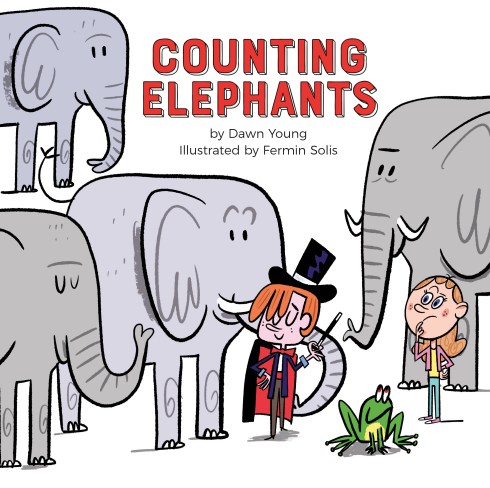
This year, I hope you build your Storystorm list without hesitation. Don’t judge your ideas, just jot them down. Jot down anything and everything that strikes you – those snippets, titles, silly words, rhyming couplets, puns, character names, sounds that left mark on you, may eventually spark something in you. Keep your old lists. Visit them and check on the seeds you planted in the past and someday, maybe even years from now, you may find that a story has sprouted.
 Dawn Young graduated with a Bachelor’s degree in Mechanical Engineering, and later with an MBA. For years, Dawn worked as an engineer and, later, manager at a large aerospace company, until her creative side called her to pursue her dream of writing children’s books. After reading and writing hundreds of corporate documents, none of which were titled The Little Engineer Who Could or Don’t Let the Pigeon Fly the Airbus, Dawn is thrilled to now be reading and writing picture books instead.
 Dawn is also a math enthusiast. When she’s not busy writing and reading, she can be found doing math problems, sometimes just because… In high school, Dawn’s dream was to have a math equation named after her, but now, she believes having her name on the cover of books is a million times better! Dawn lives with her husband, three children and golden retriever in sunny Arizona. Counting Elephants is her second book. Her first book The Night Baafore Christmas released in October 2019. Find her online at dawnyoungbooks.com, on Twitter @dawnyoungPB and Instagram @dawnyoungbooks.
Dawn is giving away a copy of COUNTING ELEPHANTS.
Leave one comment below to enter.
You’re eligible to win if you’re a registered Storystorm participant and you have commented once below.
Good luck!
by Abi Cushman
I’m always envious of other people’s sketchbooks. You know the ones I mean. The pages are brimming with beautiful figure drawings, gorgeous color studies, and without fail—cool-person handwriting. There’s always cool-person handwriting.

And then there’s my sketchbook:
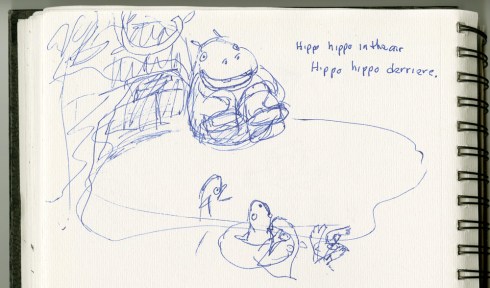
I never did have cool-person handwriting. BUT—as much as those beautiful sketchbooks have value and have a place, so too do ugly sketchbooks. And that’s what I want to encourage you to try, whether you consider yourself an artist or not.
The beauty of ugly sketchbooks (see what I did there) is that they are just for you. To capture all your ideas or even just inklings of ideas in whatever form is easiest and quickest to mark down—a roughly-scribbled facial expression, a scene with stick people, a weird rhyme about a hippo’s butt. Get them all down on paper, however silly or embarrassing or unfunny or clichéd they are.

Once you do that, you will have a collection of truly terrible drawings and bad ideas all safely tucked away in one place, ready to be accidentally discovered by someone really good-looking that you were trying to impress. But you will also have a treasure trove of great stuff peppered in there that you can pick through and develop into future storylines, iconic scenes, or memorable characters.
In fact, this is how I developed the story that would become my debut picture book, SOAKED!, which will be published by Viking Children’s Books in July 2020.

Here’s a line I wrote in my sketchbook in the summer of 2017:

Getting caught in rain—first drops not nice but reach pt when so soaked it’s not bad—liberating—now can actually enjoy it.
And that remains the major theme in my book.
Above that, on the same page, I wrote:

Time when Pete accidentally weedwhacked tomato plant [I’d] lovingly grown from seed for months.
So… not all the ideas were winners that day. And unfortunately for Pete, the incident is now recorded in my sketchbook, keeping my memory of it alive and well.
But the rain idea did resonate with me, and soggy bear drawings started showing up regularly in my sketchbook.

I experimented with facial expressions and props.
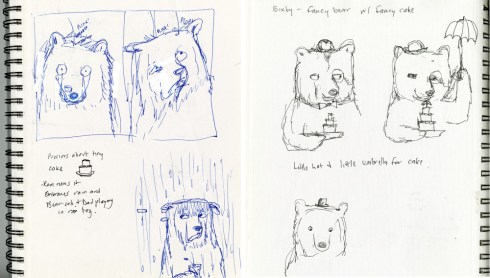
I started capturing different scenes in the story. But I didn’t have to come up with a beginning, middle and end in order, or even all at once. I could fit them all together eventually. My ugly sketchbook allowed me not only to think visually, but also in a non-linear way.
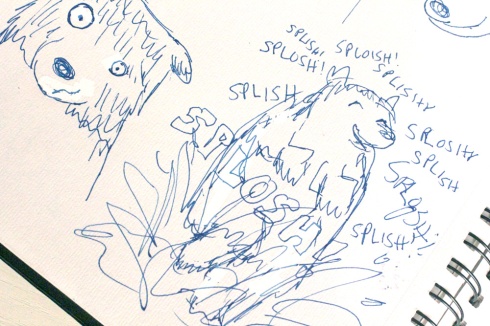
I continued adding snippets of text and little drawings as they came to me, until one day, the voice of the story popped into my head. That was the missing key. I brain-dumped all my thoughts onto a page that evening and set the story in motion.

I was able to do this because I wasn’t being held back by the need to draw something pretty or the fear of writing something stupid. In this space, I felt safe to try a kind of humor that might be considered weird. And being vulnerable allowed me to push my story further and in more interesting ways.
Like including a dancing moose in a dark cave with glow sticks.

Just kidding. Of course that part didn’t make it into the book.
See? The moose has glow-in-the dark Hula-Hoops, not glow sticks.

So whether you are a professional illustrator, a bit of a dabbler, or a stick figure aficionado, go ahead and scribble down those ugly drawings and write in your ugliest handwriting. That way, you too can let loose and discover that inkling of an idea that might just lead to your next great story.
And if you don’t, I’ll sic this vengeful sketchbook chipmunk on you.
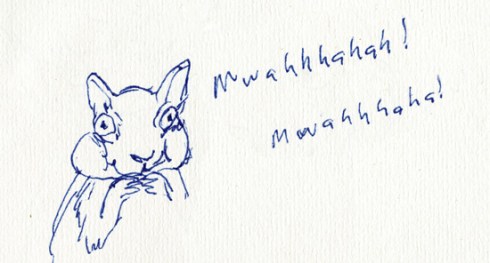
 Abi Cushman is a children’s book author-illustrator. Her debut picture book, SOAKED!, comes out in July 2020 from Viking Children’s Books, with a second book, ANIMALS GO VROOM!, to follow in 2021.
Abi has also worked as a web designer for over 15 years, creating websites for libraries, towns, and local businesses. She runs two popular websites of her own: My House Rabbit, a pet rabbit care resource, and Animal Fact Guide, which was named a Great Website for Kids by the American Library Association.
In her spare time, Abi enjoys running, playing tennis, and eating nachos. (Yes, at the same time.) She lives on the Connecticut shoreline with her husband and two kids.
For exclusive sneak peeks, wombats, and giveaways, join Abi’s email list. You can also find her on Twitter at @AbiCushman, on Instagram at @Abi.Cushman, or at her website at abicushman.com.
Abi is giving away a signed copy of SOAKED! after its release in July.
Write one comment below to enter.
You’re eligible to win if you’re a registered Storystorm participant and you have commented once below.
Good luck!
by Tammi Sauer
I have been doing this Storystorm business since the very beginning. Oh, people. I have loved the experience, and it has served me well.
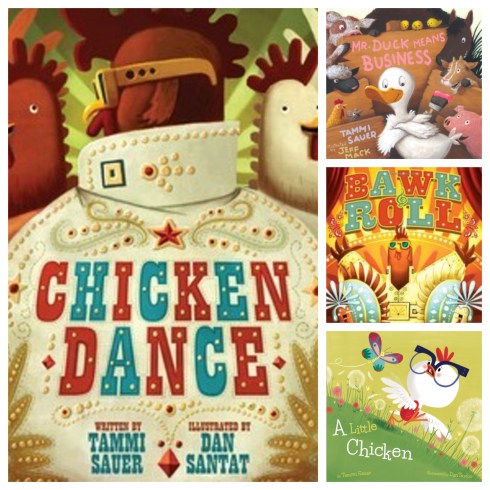
More than a dozen of my books got their start in Storystorm. These are just a few of them:
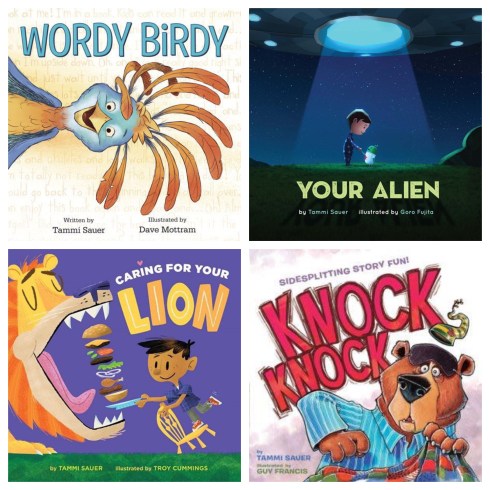
Over the years, I have not only participated in the wonder that is Storystorm, but I have shared all sorts of idea-getting strategies as well. Today, I have a new one to pass along.
It’s simple.
Embrace the opening of a certain soap opera.
But I don’t want you to think about just any days. I’m talking those early days. Let’s go back to childhood.
Mine was spent on a farm.
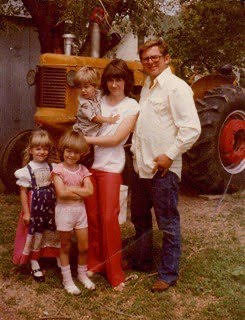
When I was a kid, my family had a horse, cows, chickens, geese, ducks, dogs, cats, and hundreds of pigs. Is it any coincidence that many of my books feature barnyard animals?
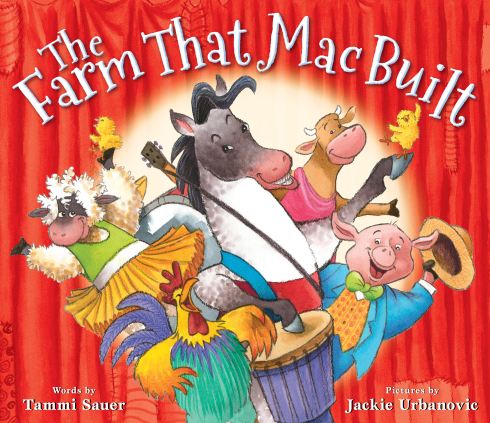
Even my August 2020 release stars my favorite kind of cast. See?
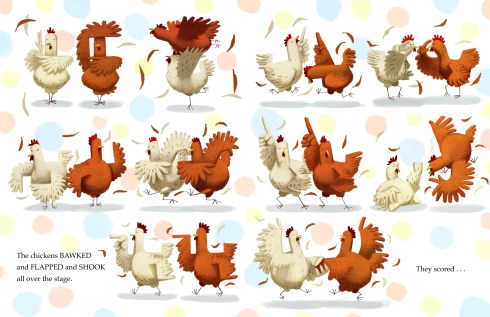
My childhood included more than just animals, though. I also had an assortment of relatives with varied dispositions. Remember Mr. Duck? That bird is actually my great aunt Florence.
I want you to take a moment to think about your childhood. What was it like? Did you live in a bustling city? Did you grow up with siblings? What sorts of things did you do with your free time? Who made an impression? Did you have an imaginary friend? Did you want to name your baby brother PeePee Garbage? My niece Madison sure did. Did you ever run away from home? If so, why, what did you pack, and how far did you get? What sorts of things did you stash under your bed? What was your most embarrassing moment? What did you want more than anything?
Jot down a few of your childhood memories, hopes, and/or snippets of the funny stories your uncle Bob told each Thanksgiving. Remember what it felt like to be a child…the joys, the frustrations, the fact that the world is designed for people twice your size.
Let the days of childhood open you up to some new ideas.
Keep in mind, though, that when you are ready to shape some of those ideas into stories, you shouldn’t lock yourself into making them historically accurate. Nope, nope, nope. Use those memories as a starting point. I mean, I’m pretty sure our barnyard animals never held a talent show after my family had gone to bed, but I’m not going to lie. I sure hope they did.
 Tammi Sauer, a former teacher and library media specialist, is a full-time children’s book author who presents at schools and conferences across the nation. She currently has 29 published books, but many more are on the way. Getting kids excited about reading and writing is Tammi’s passion. Her other passion is mango tea.
To learn more about Tammi and her books, visit her on the web at tammisauer.com and at picturebookbuilders.com. You can also find her on Twitter at @SauerTammi.
Tammi is giving away a picture book critique to one winner AND a copy of A LITTLE CHICKEN to another.
Write one comment below to enter.
You’re eligible to win if you’re a registered Storystorm participant and you have commented once below.
Good luck!
by Shutta Crum
Intention: that’s an important word—especially now as we celebrate the month of Janus (the god of beginnings) and when we make our resolutions, or we begin Storystorm month. But, like Janus, intention is a two-faced concept. It makes all the difference in the world—and, ultimately, none. Let me explain . . .
It’s a necessary word when I ask myself, what do I intend to get accomplished today—in addition to my picture book idea for Storystorm? When I write, intention is critical. Crafting characters, I need to know what each one’s intentions are so I can intertwine them and build the overall structure of the story, scene by scene. But how do you get a grasp on fictional character intentions? Well . . . first, you start off simply assigning what seems like the obvious intention for that character based on the his/her background and a sketchy idea for a plot. Let’s say your main character needs to get home because his father is gravely ill. That’s his primary intention.
 Ok. You start writing. His path crosses with others who prevent him from hurrying home, and you make him choose between two honorable tasks which undermines his intention of doing that. (You’re using all the good things you’ve learned about plotting.) Then suddenly, you get the urge to have your main character turn onto a path you hadn’t expected him to take. This is good! You should be open to serendipity and surprise while you write. Now, you slowly begin to discover that your main character’s real intention is not just to get home to see his father, but to get home and make sure the father’s will gets changed in your main character’s favor before the old man croaks.
What I have come to understand is that clarifying intention happens through a process of discovery; the more you write the clearer all your characters’ intentions become. And this may not happen until you’ve written a couple of drafts. Once the true intentions of your characters are revealed you can begin to honestly revise. Yes, it can be a lot of work wandering around lost for a good deal of time to get clear on intention. But it is clarity of intention that will then allow you to lead your reader to the heart of your story and to create a riveting plot. And while it’s important for you, the author, to be clear about intention it may be that you will want to obscure that intention intentionally for your reader—depending upon the age of your audience.
In many picture books for very young readers/listeners we need to know right away what the goal of the hero/heroine is. Lizard has to get the birthday cake safely to the party despite the hot sands of the desert. The child has lost polka-dot baby and can’t go to sleep without it, etc. But often it is the slow reveal of multi-faceted intention that’s critically important to sustain a reader’s attention. It’s the surprises, the freshness, the sudden turns, and the realistic and humble bumbling toward enlightenment that can entice and keep a reader reading. This then leads to the satisfying ending that either rewards or thwarts your characters’ intentions.
 Finally, let me say that all this butt-in-chair work on intention is critical. But it’s also, ultimately, not important. But-but-but you’ve just spent all this time getting to know intention—and now we have an about-face! (Hey there, Janus! Or, “embrace the ambiguity,” as writer Uma Krishnaswami says.)
What’s going on? Well, when your book is out, your poem published, your play performed, your music sung, or your artwork viewed, intention—like an untrustworthy friend—takes a scamper. Whatever you, as the creator of your work, intended your creation to do does not matter much. All that’s important is the perception and personally altered conception of it by your audience.
I’ve gotten reviews that made me scratch my head and say, “Oh! Is that what I wrote?” I had no idea. And that is okay!
Enjoying art is a personal experience. Your overall intentions as a creator should, rightly, not dictate how your art is taken in by the art lover. The audience can, and does, internalize your work. Readers/listeners/viewers will compare it against a multitude of life experiences and bases of knowledge—whatever the age of those art appreciators. This is good. Art is not static. It’s a reenergizing force that zooms onward and outward to become . . . who knows? It takes on a life of its own—regardless of whatever you intended your work to do. And isn’t that wonderful?
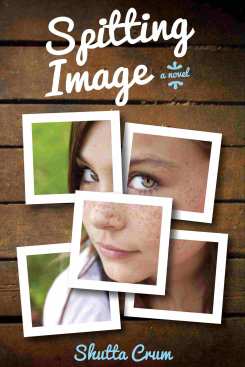
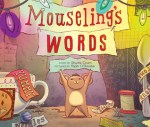
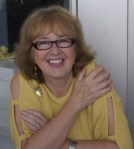 Shutta Crum is the author of several middle-grade novels and many picture books, poems and magazine articles, as well as an oft-requested presenter and speaker. THUNDER-BOOMER! was an ALA and a Smithsonian “Notable Book.” MINE! was reviewed by the N.Y. Times as “a delightful example of the drama and emotion that a nearly wordless book can convey.” Her books have made Bank Street College lists as well as state award lists. MOUSELING’S WORDS (2017) and a reprint of the Kentucky-based SPITTING IMAGE (2018) are her latest books. WHEN YOU GET HERE, a collection of poems for adults, will be published in 2020. More info: www.shutta.com.
Shutta is giving away a picture book critique.
Write one comment below to enter.
You’re eligible to win if you’re a registered Storystorm participant and you have commented once below.
Good luck!
by Tara Lazar
OK, I don’t mean this one…

Or even this one…
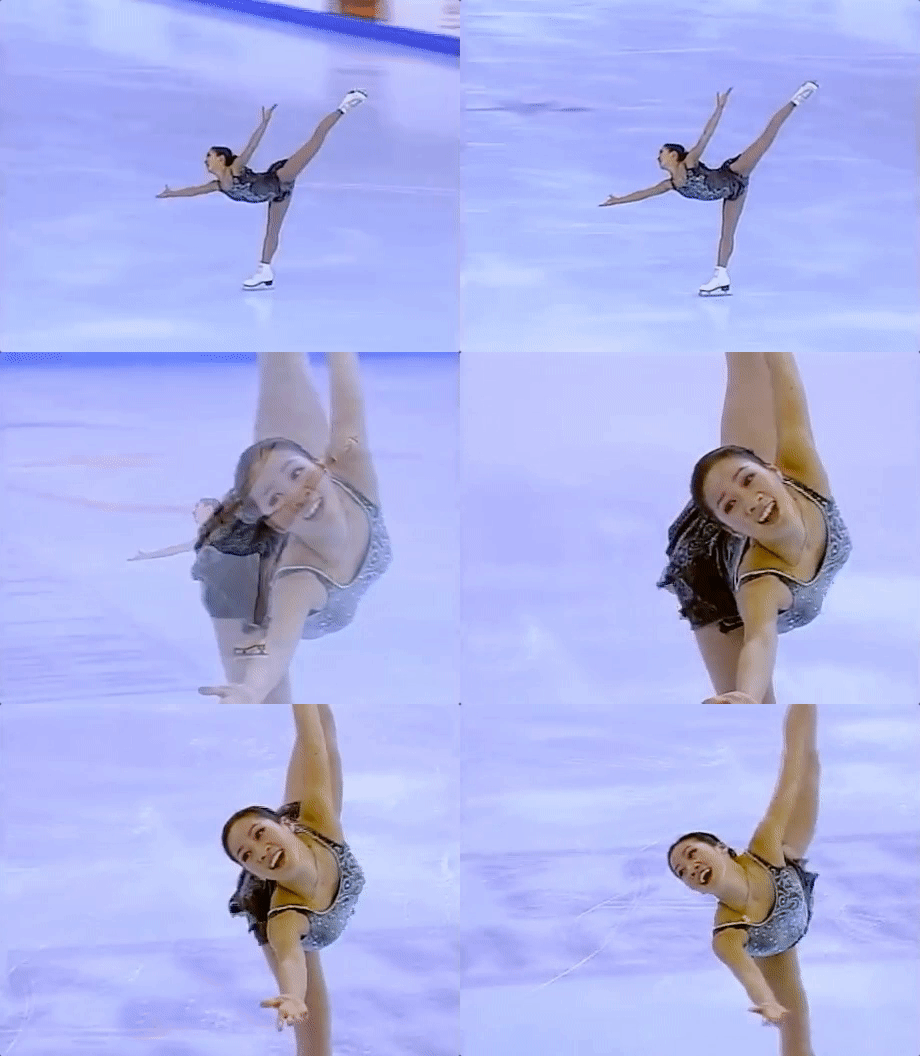
I’m talking about this ice, captured by Melissa Sheperd at the Highlights Foundation in November:
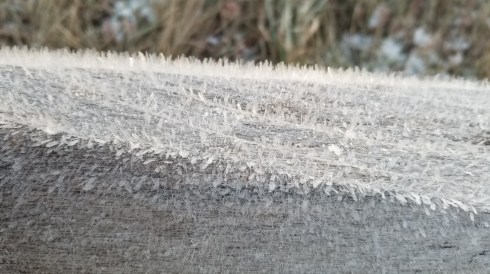
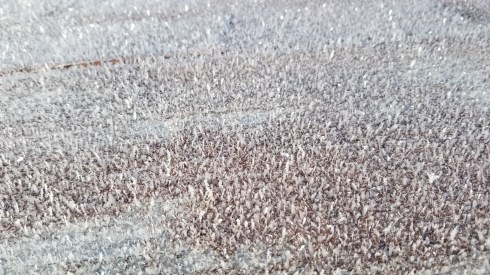

We awoke Saturday at Highlights to a frosty morning. Fuzzy shards of ice covered every surface, the world blurred by the cold. Melissa, a former professional photographer, skipped breakfast to document that amazing, glittery morning. (How she had the willpower to skip Chef Amanda’s scrumptious breakfast, I’ll never know.)
Now, I bet you think today’s Storystorm suggestion is to get outside and appreciate nature in all its splendor, and that would be an inspiring way to kick off this year. But, sorry, no.
I want to focus on those frost crystals.
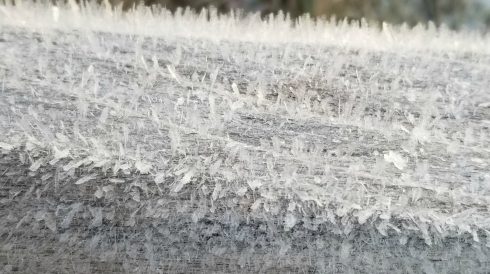
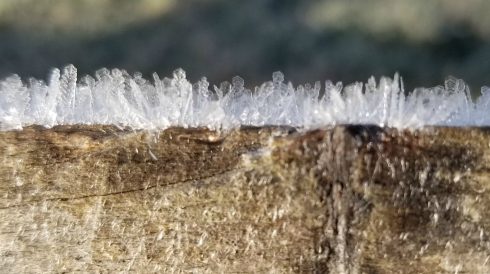
This kind of frost is called “radiation frost” or “hoarfrost” and forms when objects become colder than the air surrounding them. Warm air rises and cool air falls, settling into valleys, like it descended upon us that morning. But instead of producing dew, the condensation forms as ice crystals on surfaces that have retained moisture, like a wood table or grass and leaves.
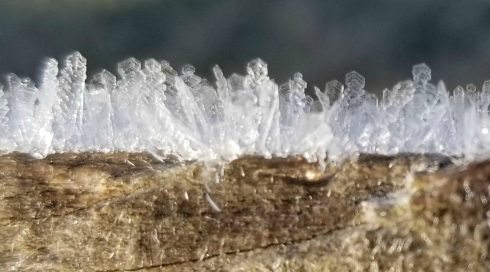
If you look closely at the hoarfrost, you see part of the hexagonal structure of ice crystals—the pointed top is half a hexagon and it keeps repeating, interlocking, to create a tree-like structure.
It builds upon itself.
This is the basic core of Storystorm—ideas will continue to build from other ideas.
One idea alone may not be an entire story concept, but add it to another idea and they interlock and grow.
Many of you have participated in past years and have lists of ideas lurking in notebooks and .doc files. Even if you haven’t participated before, as a writer and creative, you have ideas stashed everywhere, be it on the back of envelopes, scrawled across torn napkins, or rattling around in that gloriously jumbled brain of yours.
Today, I challenge you to take a past idea and build upon it.
If the idea was a character, fill that character with more life. What do they love? What will stop them from getting it?
If the idea was a problem, what are the stakes? What disaster will befall your character if the problem isn’t sorted?
If the idea was an opening line, what is the closing line?
Take what you have and flesh it out. Remember you can do this all month long. Ideally, I hope you will continue this practice as long as you’re a writer.
And if you have to go outside into the beautiful, bitter cold to figure it out, that’s fine, too. Just bring your camera along.
 Tara Lazar is your host for Storystorm 2020. Her next book is THREE WAYS TO TRAP A LEPRECHAUN, illustrated by Vivienne To, releasing January 7th from HarperCollins.
Join Tara and an exceptional picture book faculty at The Highlights Foundation for the Storystorm 2020 Retreat, March 5-8. More details here.
Tara is giving away a fiction picture book critique.
Write one comment below to enter.
You’re eligible to win if you’re a registered Storystorm participant and you have commented once below.
Good luck!





 Writing for Kids (While Raising Them)